
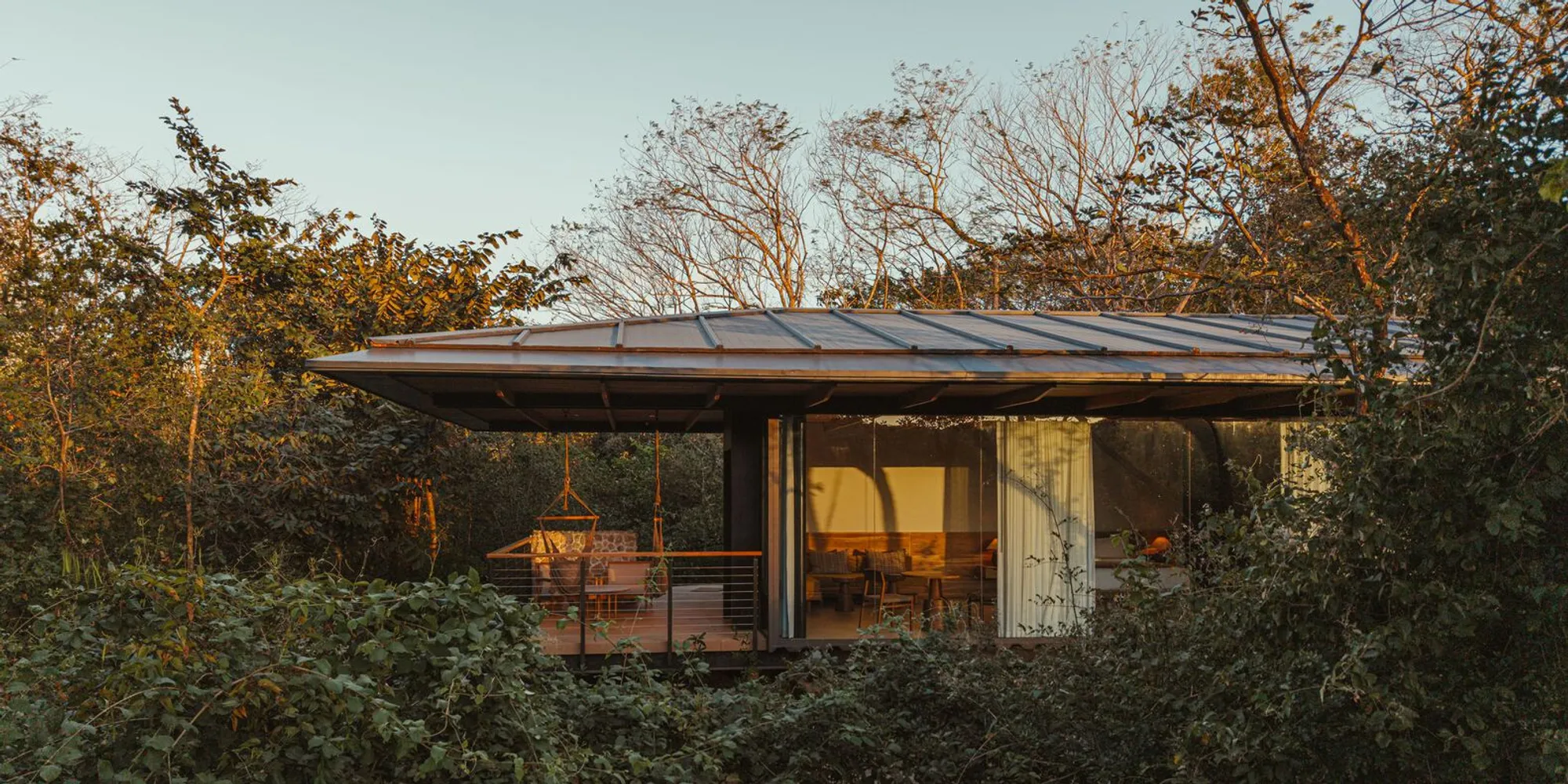
Rio Perdido West Bungalows Costa Rica: Elevated Eco-Luxury by Studio Saxe
Studio Saxe elevates eco-luxury hospitality in Bagaces with stilted bungalows, canyon views, and low-impact tropical architecture embracing nature and culture.


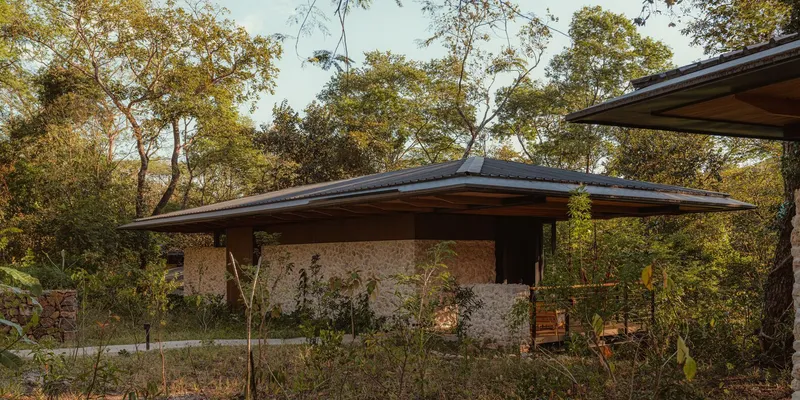
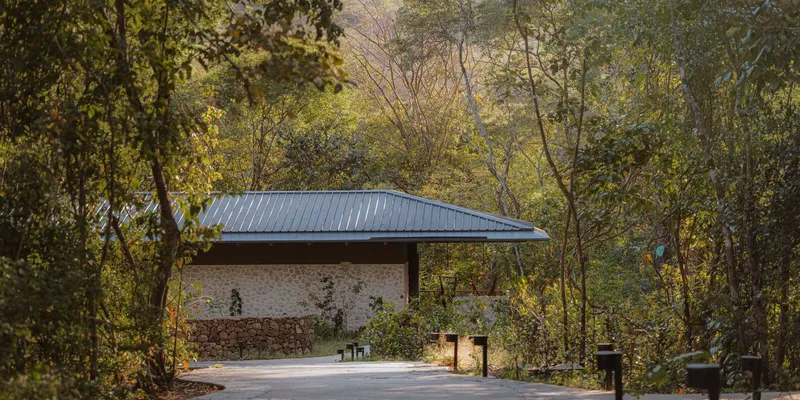
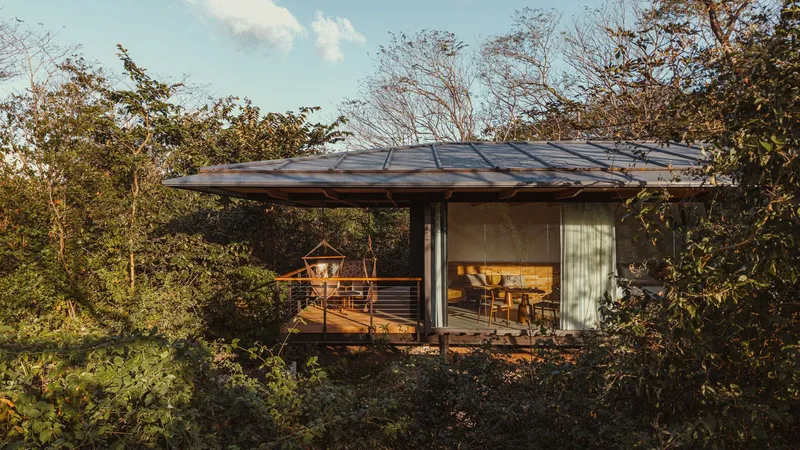
The Rio Perdido West Bungalows by Studio Saxe reimagine low-impact eco-hospitality in Bagaces, Costa Rica, where volcanic highlands, converging river canyons, and dense tropical forest meet. Conceived as a series of lightweight, floating pavilion suites that perch delicately above the land, the project creates intimate, climate-responsive retreats that immerse guests in raw landscape while delivering refined comfort and privacy.
Site and Setting in the Canyon Forest
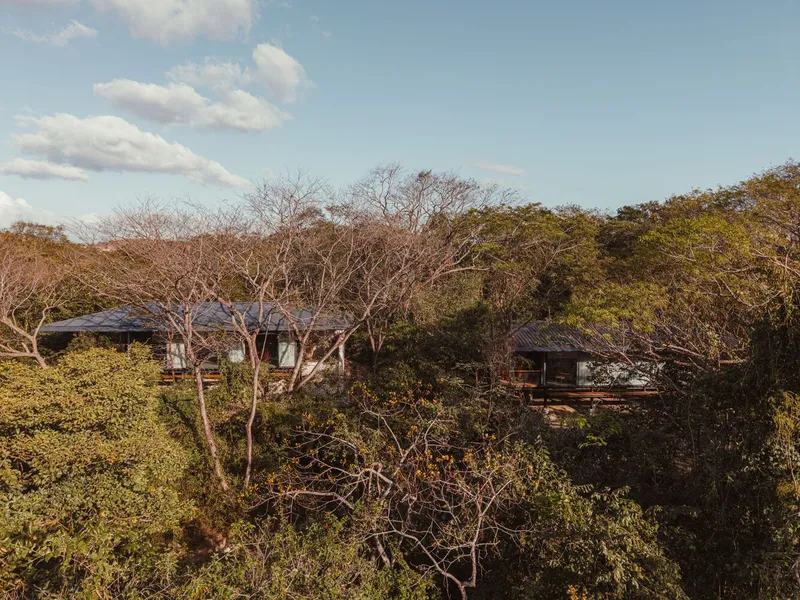
The site occupies a raised peninsula carved where two dramatic canyons converge and where the cool Rio Blanco joins the warm mineral-rich Rio Perdido. Historically underused because of difficult access and rugged topography, the area shelters lush vegetation, steep stone escarpments, and hidden river corridors that shift with light and season. Studio Saxe seized this overlooked terrain to extend the Rio Perdido hospitality experience deeper into the forest, positioning each bungalow to capture framed canyon vistas and sonic cues from flowing water.
Concept of Floating Pavilions on Pilotis
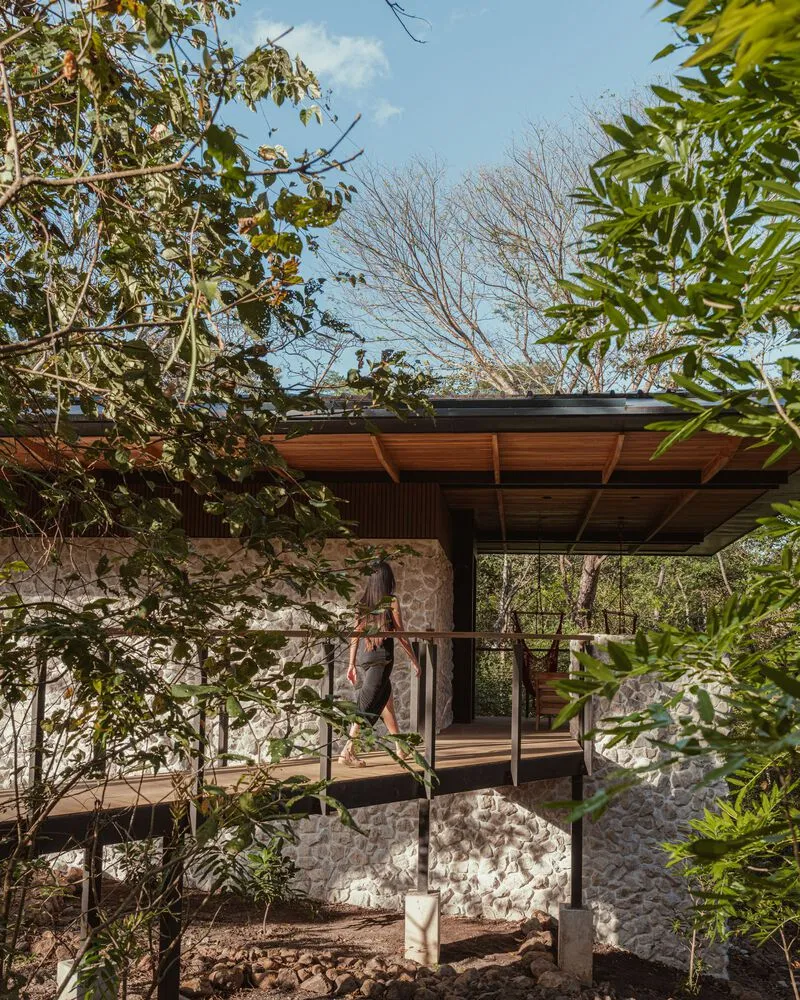
Rather than cut and level the forest floor, the design lifts bungalows on slender pilotis so the land, rainwater runoff, and wildlife circulation remain largely undisturbed beneath. This light-touch strategy reduces earthwork, preserves root zones, and allows natural hydrology to continue unimpeded through wet and dry seasons. Elevation also heightens the experiential moment: guests move up into the canopy layer where breezes, birdsong, and filtered light animate daily rhythms.
Framing Vistas, Filtering Privacy
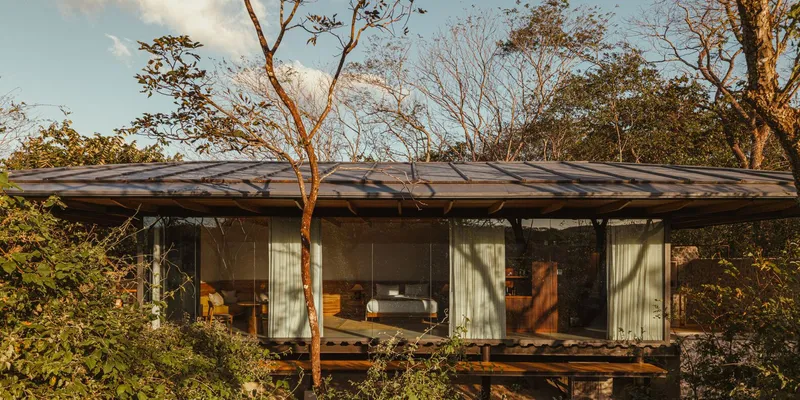
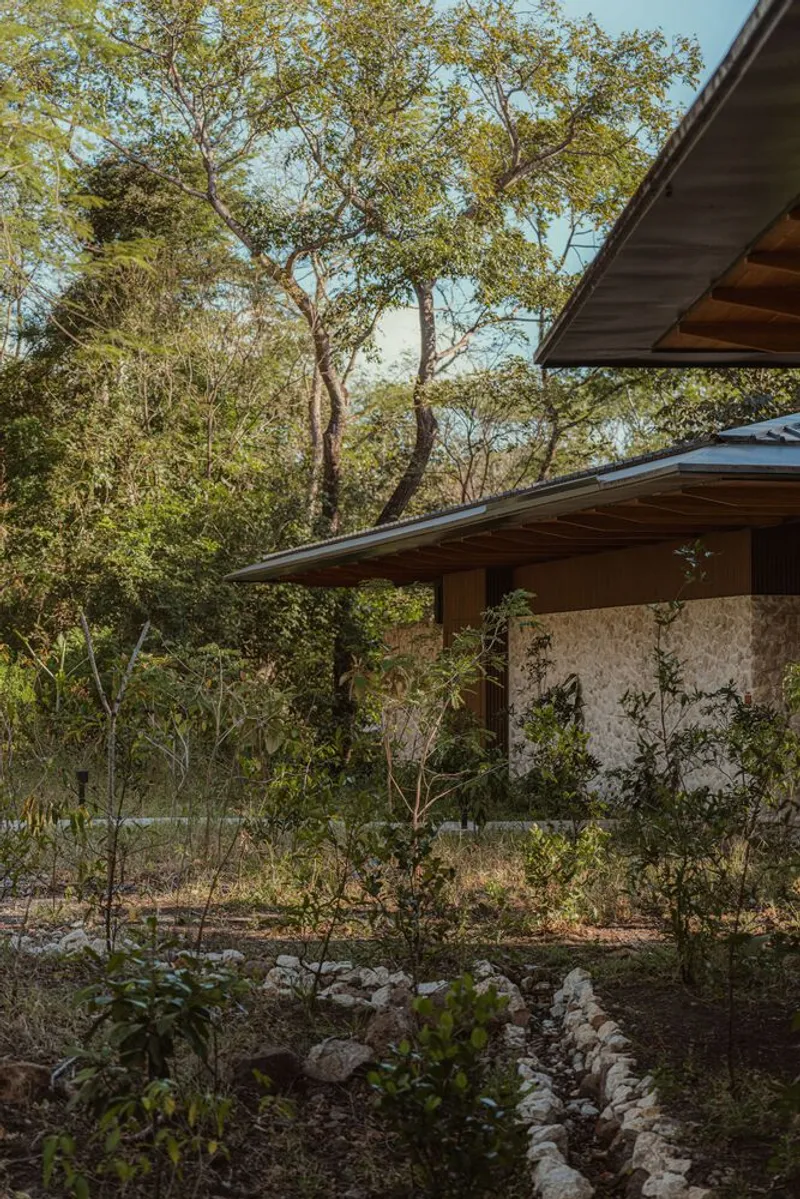
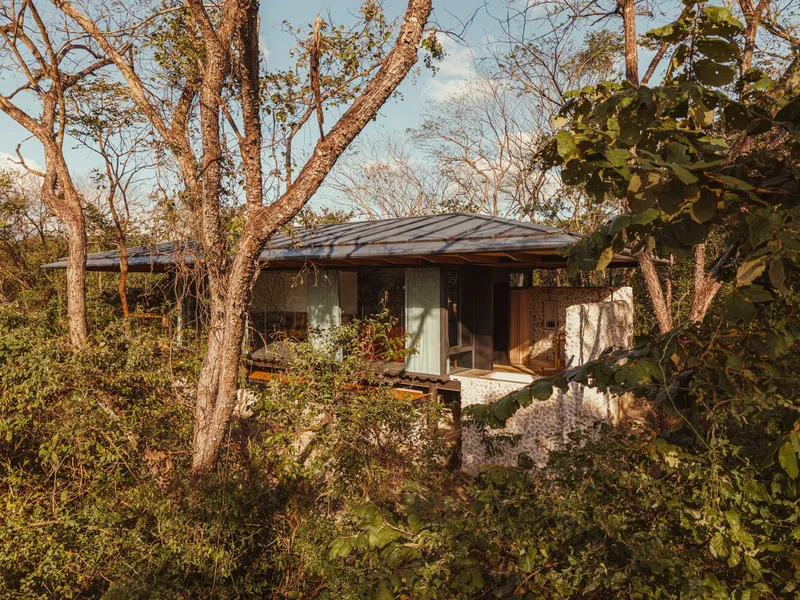
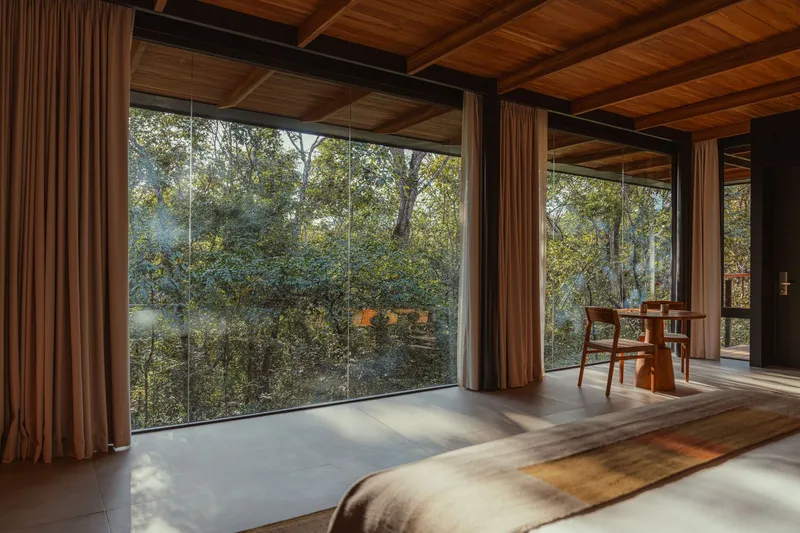
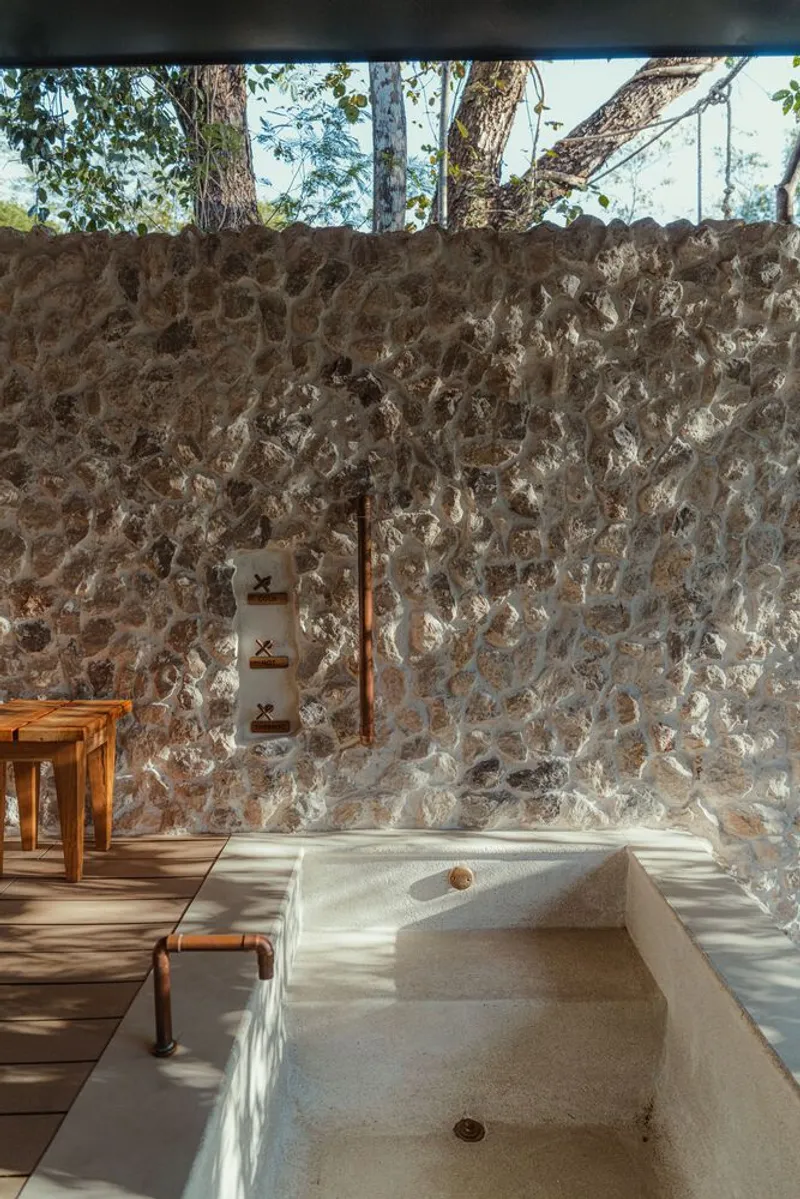
Each pavilion is sited and rotated for layered prospect and refuge. Frameless or minimally framed glass openings extend uninterrupted sightlines through forest clearings toward canyon voids, while carefully placed solid elements manage privacy between neighboring units and shared paths. A strategically placed stone wall operates as both visual screen and anchoring mass, registering the bungalow to ground while directing attention outward to long views. The result is simultaneous seclusion and immersion—a key hospitality balance in remote eco-destinations.
Spatial Gradient from Shared Arrival to Secluded Suite
Arrival sequences move from shared circulation decks through screened transition zones into private indoor-outdoor living areas. The stone privacy wall and projecting roof planes choreograph thresholds without heavy enclosure, echoing the layered topography of ridge, ledge, and canyon drop. Inside, a discreet partition demarcates bedroom and bath while maintaining extended sightlines toward the landscape; guests remain visually connected to nature even in moments of retreat.
Indoor–Outdoor Living: Terraces, Showers, and Continuous Openings
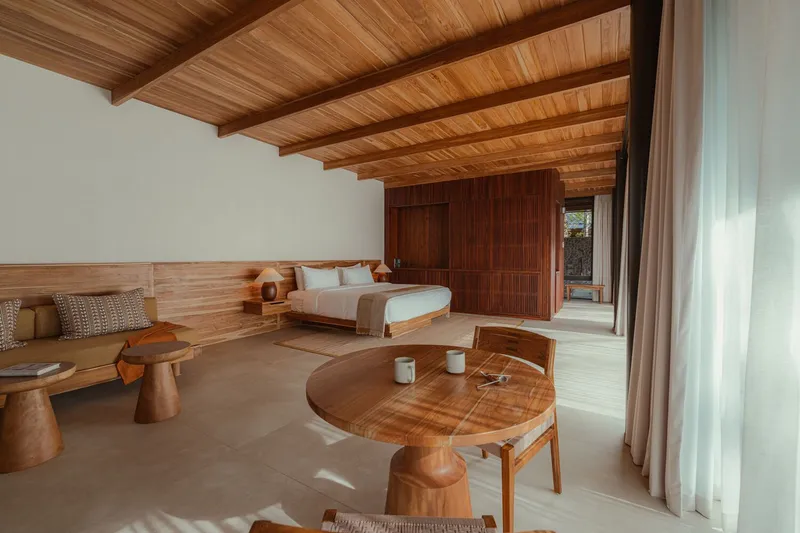
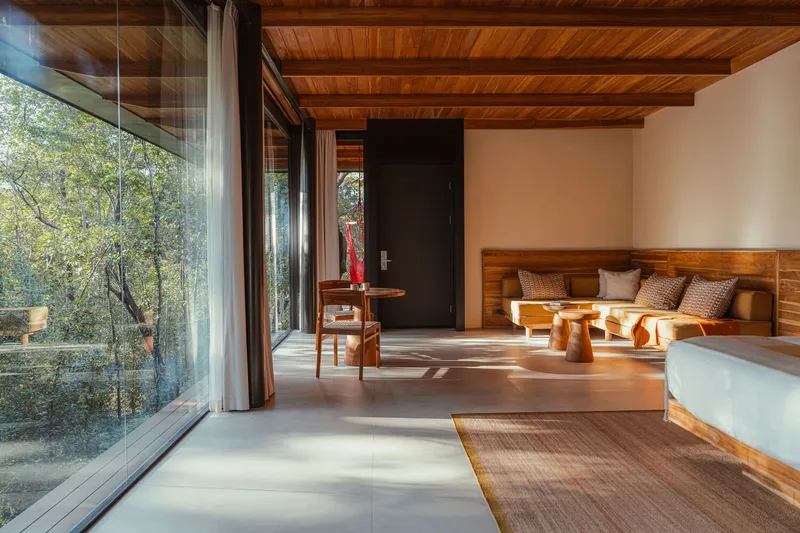
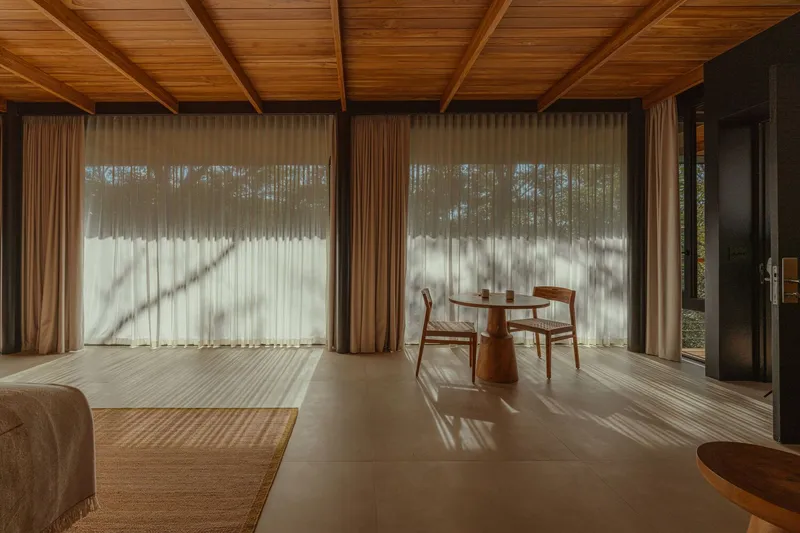
Expansive terraces extend primary living space into the forest canopy. Outdoor showers tucked within screened alcoves reinforce sensory connection to humidity, rainfall, and vegetation scents. Long horizontal glazing bands—some at eye level from the bed—turn the canyon into a panoramic mural that shifts from misted dawn to star-filled night. Sliding panels modulate exposure, airflow, and intimacy, giving guests agency over how open or sheltered their experience feels.
Material Language Rooted in Place
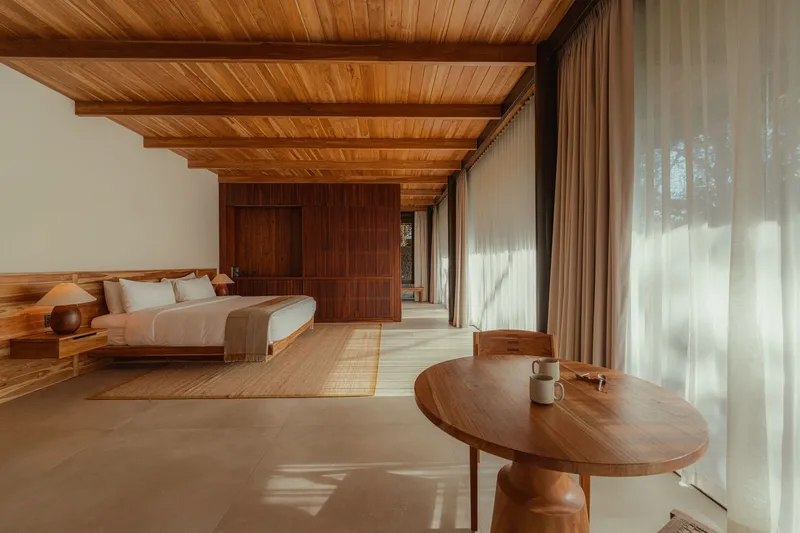
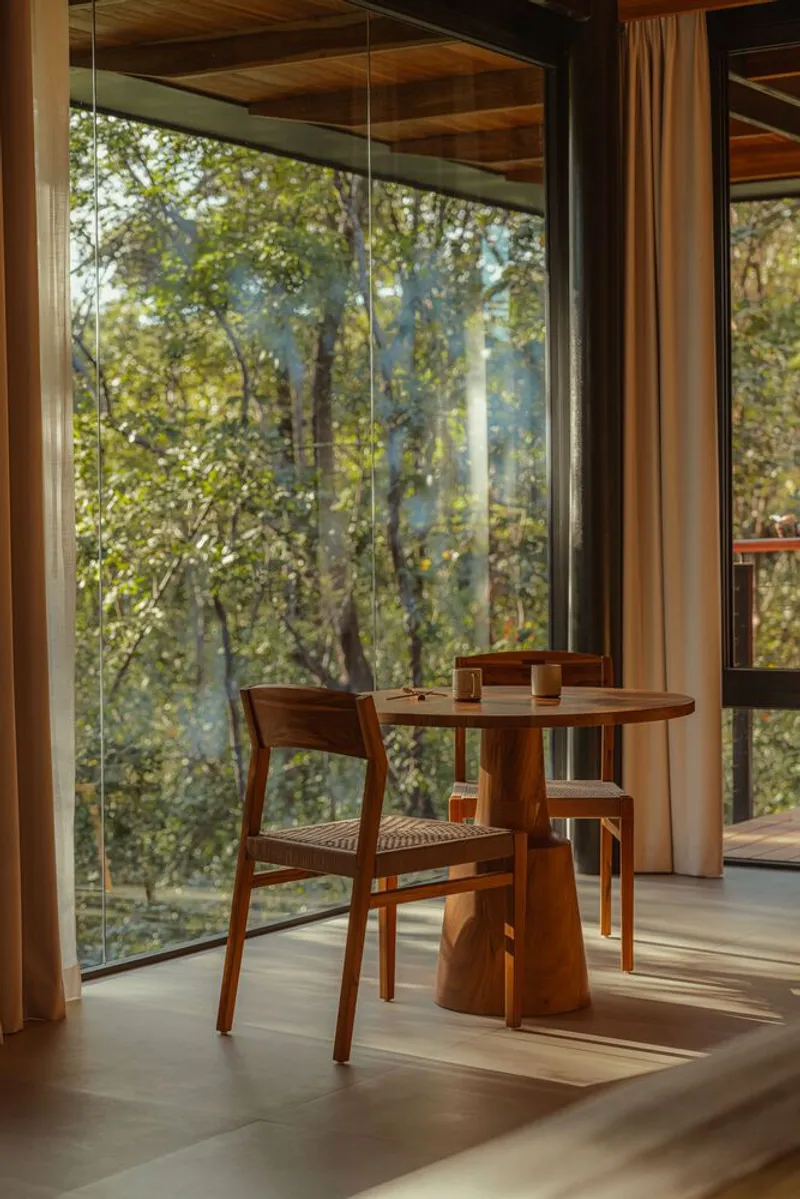
Locally sourced wood clads structural and finish elements, weathering toward the tones of surrounding trunks and understory. Regionally gathered stone grounds the privacy walls and platform interfaces, tying built elements to the canyon geology. Concrete is used selectively for durability in high-wear zones yet kept visually quiet so timber warmth and forest color dominate. Natural textures and woven surfaces soften interior edges and bridge architectural lines with handcrafted regional traditions.
Interior Design Cohesion
Interior designer Dania Saragovia curated furnishings around a warm, earth-toned palette that supports rest and sensory comfort without distracting from exterior views. Textiles, woven accents, and tactile finishes echo the layered canopy and canyon strata seen through the glazing. The furniture scale respects the compact footprint of each bungalow while encouraging relaxed lounging oriented to view corridors. Material and color continuity between architecture and interiors produces a seamless guest impression of one integrated experience.
Climate Response and Passive Performance
Extended roof overhangs shade glazing from high tropical sun angles and shield façades from heavy seasonal rains. Elevated floor systems encourage airflow beneath the structures, aiding passive cooling and reducing radiant heat buildup. Cross-ventilation paths through operable openings lessen reliance on mechanical conditioning. By combining shading, lift, and material massing, the bungalows achieve environmental comfort with reduced operational energy demand—an essential sustainability target in remote eco-lodge settings.
Light-Touch Construction and Prefabrication
Terrain variability across the peninsula demanded adaptable construction. Studio Saxe employed prefabricated structural modules sized for transport and efficient on-site assembly atop the pilotis grid, minimizing disturbance to the forest floor. While the design language is unified, each bungalow’s support height and access connection adjust to local slopes and vegetation, yielding a site-responsive constellation rather than a repetitive field. Careful electromechanical coordination allowed services to thread discreetly through slim structural cavities, preserving the light visual profile.
Ecological Stewardship and Hospitality Narrative
Hovering architecture, restrained clearing, and reliance on local materials translate sustainability goals into a guest-visible narrative: you are in the forest, not removed from it. Wildlife can pass under decks; rainfall patterns remain legible; tree canopies dominate sightlines. By aligning ecological stewardship with experiential luxury, the Rio Perdido West Bungalows strengthen the resort’s identity as a destination where conservation, comfort, and culture coexist.
Experiential Impact
Morning mist rising from the warm-cool confluence below, afternoon light raking across stone canyon faces, nocturnal insect chorus drifting through screened openings—these phenomena define the sensory memory of a stay here. Architecture frames but does not overpower them. Guests leave with a heightened awareness of place, which is the ultimate ambition of eco-hospitality design.
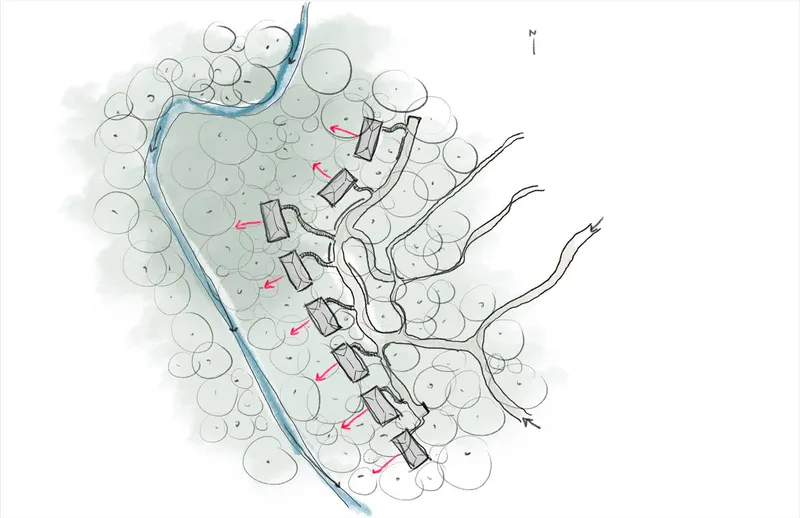
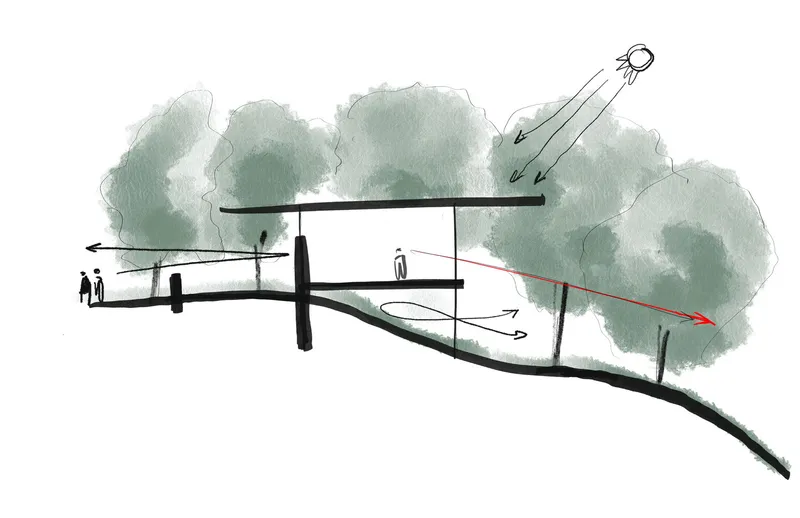
The Rio Perdido West Bungalows Costa Rica project by Studio Saxe elevates eco-luxury through restraint. By floating on pilotis, framing canyon horizons, integrating privacy with openness, sourcing local materials, and deploying passive climatic strategies, the bungalows create immersive, low-impact retreats that honor the volcanic forest landscape of Bagaces. Light touch, deep experience—this is tropical architecture in balance with its environment.
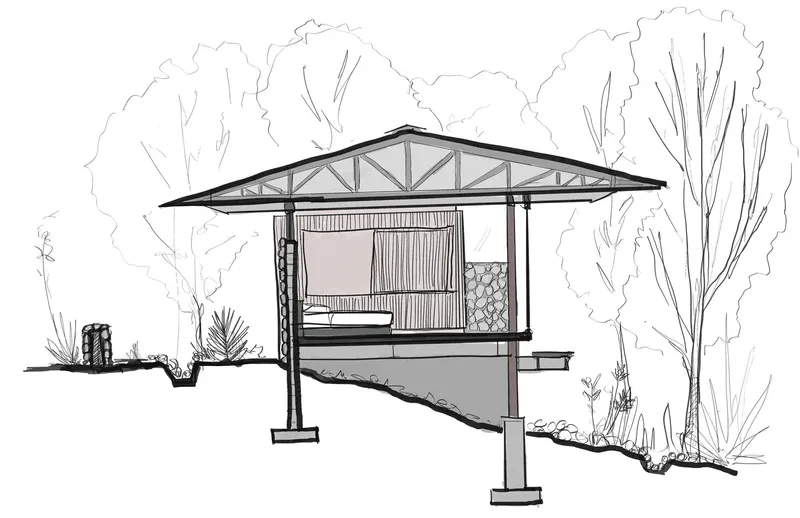
All the photographs are works of Alvaro Fonseca



Popular Articles
Popular articles from the community


The Musturak Paradise: Senior Living Architecture for a Connected Future in Temara, Morocco
The Musturak Paradise reimagines senior living architecture in Temara via private homes, social spaces, culture, community, and shared care.

Co-life: Sustainable Architecture for Age-Friendly Community Living
Co-life reimagines sustainable architecture for seniors through courtyards, rammed earth, shared gardens, and spaces designed for belonging.

Conexión: Biophilic Design Reimagines High-Rise Living in Hong Kong
Conexión reimagines high-rise living in Hong Kong through biophilic design, green facades, shared spaces, daylight, water and nature within.

Co-Life: Senior Housing Design That Reconnects Older Adults With the City
Co-Life reimagines senior housing design through healing gardens, shared streets, workshops, and a sustainable community across generations.


Similar Reads
You might also enjoy these articles

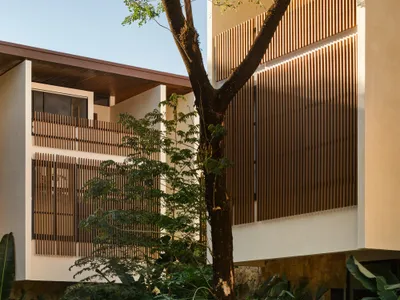
FAMM Arquitectura Organizes Ten Villas Around Courtyards and Jungle in Nosara, Costa Rica
El Molino pairs two elongated volumes with deep overhangs and timber louvers to build a compact coastal community five minutes from the beach.
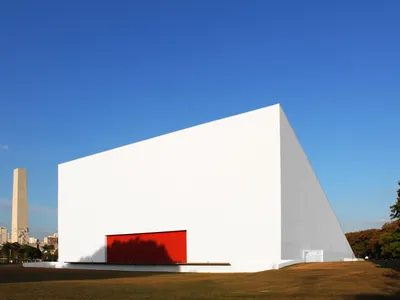
Oscar Niemeyer's Ibirapuera Park Pavilions Define São Paulo's Cultural Identity in Concrete and Curve
A constellation of modernist volumes set within São Paulo's most important urban park, conceived for the city's 400th anniversary in 1954.
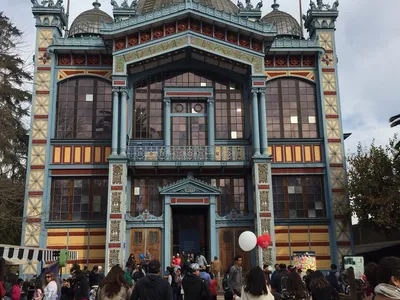
How Henri Picq's 1889 Paris Pavilion Traveled 11,000 Kilometers to Become Santiago's Artequín Museum
A prefabricated iron and glass pavilion built for the Paris Universal Exposition found a second life as a children's art museum in Chile.
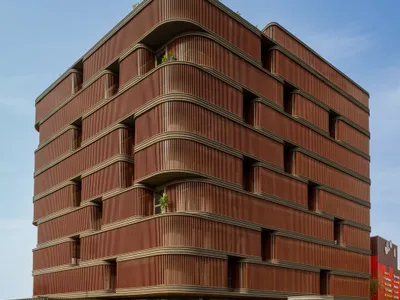
Sanjay Puri Architects Wraps a Jaipur Office Tower in Capsule-Shaped Green Buffers
A nine-level climate-responsive workplace near Jaipur Airport uses stacked planter terraces and aluminium screens to fight 40°C heat.

Explore Architecture Competitions
Discover active competitions in this discipline



Challenge to reimagine the Iron Throne


Photograph architecture without architects


Illustrate the lost glory of Angkor Wat - Render Challenge


Design challenge to reuse E-waste
Comments (0)
Please login or sign up to add comments
No comments yet. Be the first to comment!