
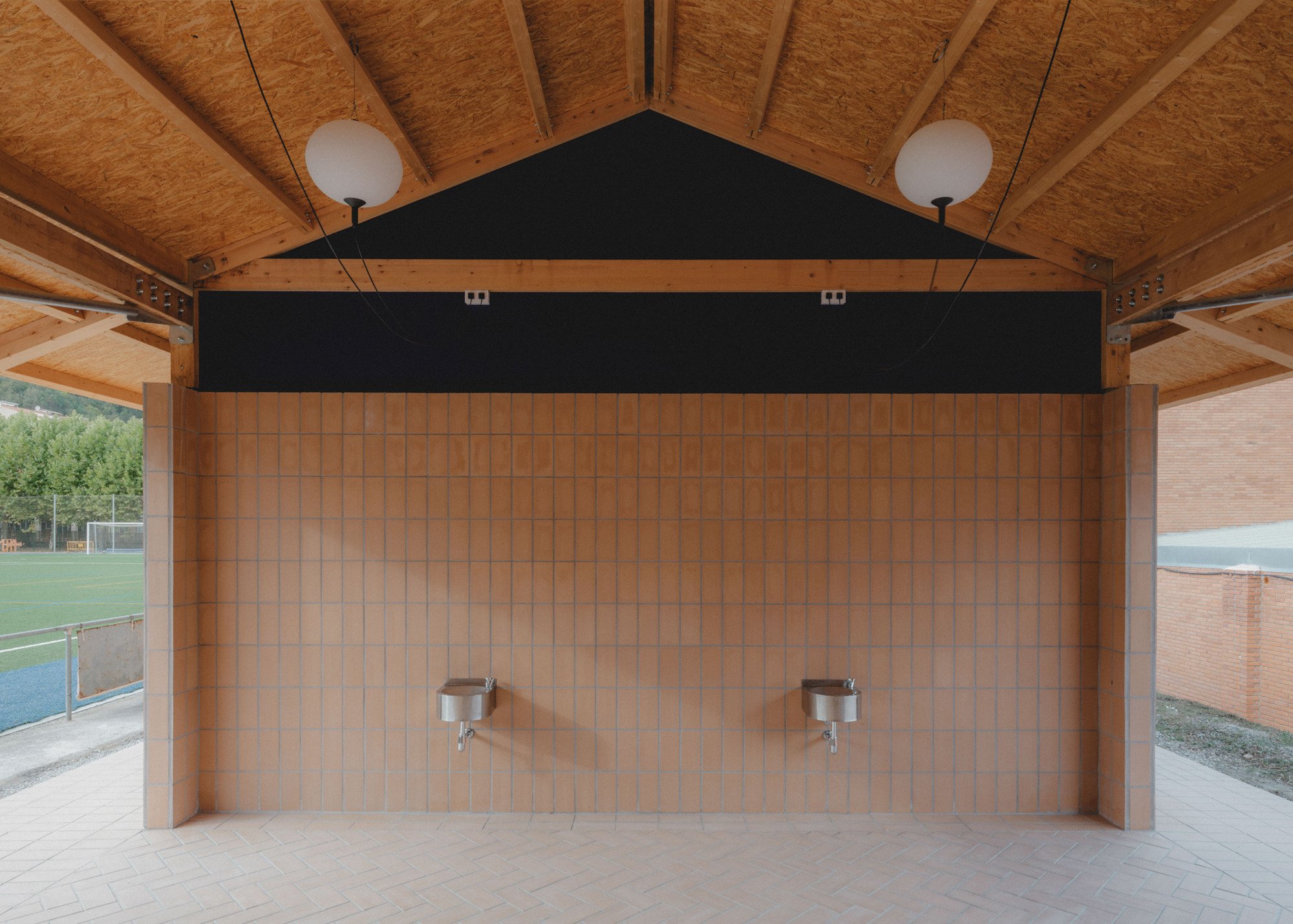
Ripoll – Changing Rooms and a Multi-Purpose Hall by MH.AP Studio + Sergi Serrat
A modest yet robust sports facility in Ripoll, integrating changing rooms and a multi-purpose hall through continuity, structure, and context.

Set within the mountainous landscape of Ripoll, Catalonia, this new changing rooms and multi-purpose hall forms part of an existing sports complex organized around a football pitch. Designed by MH.AP Studio in collaboration with Sergi Serrat, the 710 m² project is conceived not as an isolated object, but as a carefully integrated addition—a new neighborthat completes and reinforces the identity of the site.
Architecture as Continuity
The sports complex already possessed a strong character, shaped by a series of modest buildings—bleachers, a bar, and auxiliary structures—arranged around the field. Rather than introducing a disruptive form, the architects chose to extend the existing architectural language, respecting scale, proportions, and material presence.
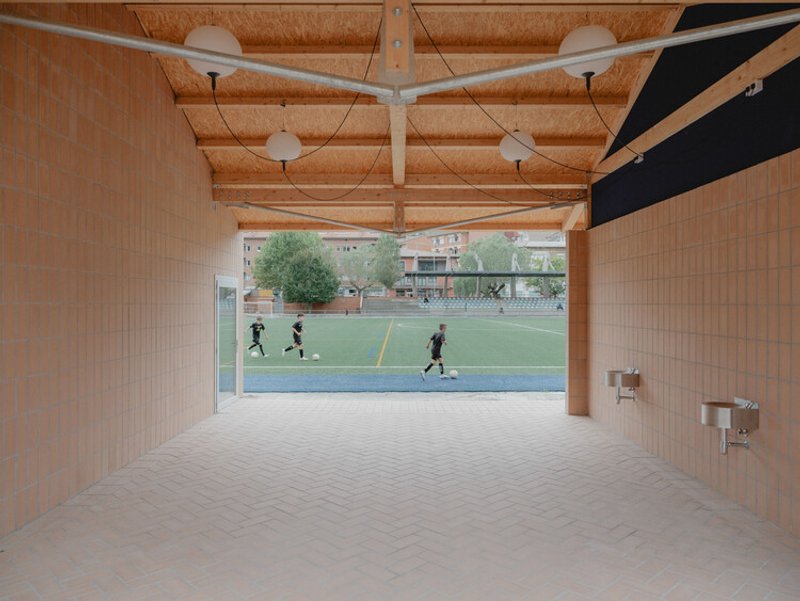
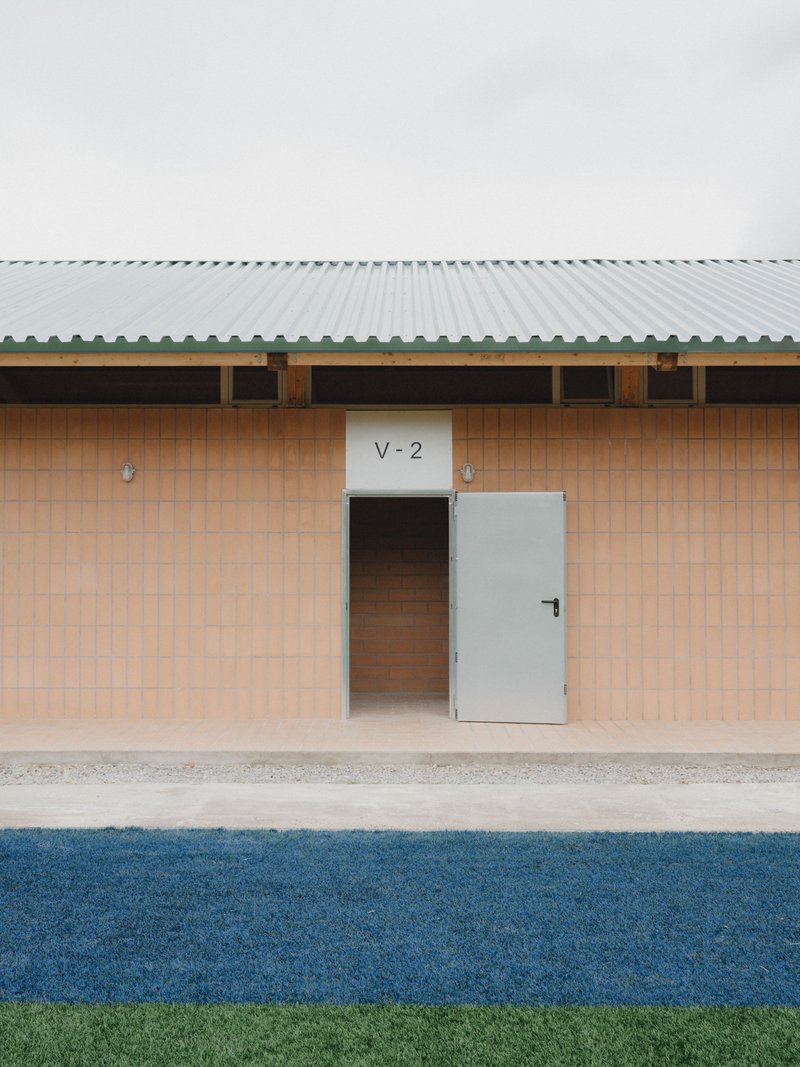
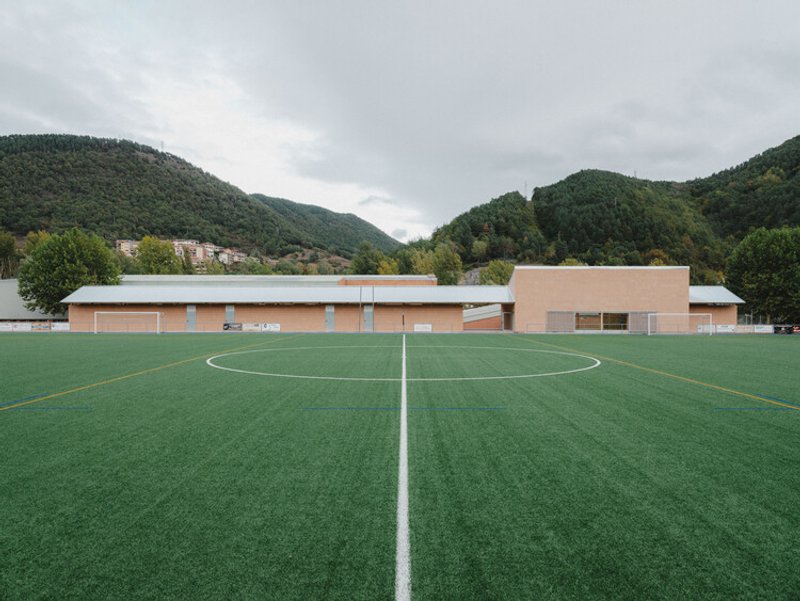
The new building follows the horizontal logic of a low brick structure located opposite the pitch, reinforcing spatial continuity and visual balance across the field.
A Linear Plan, Two Volumes
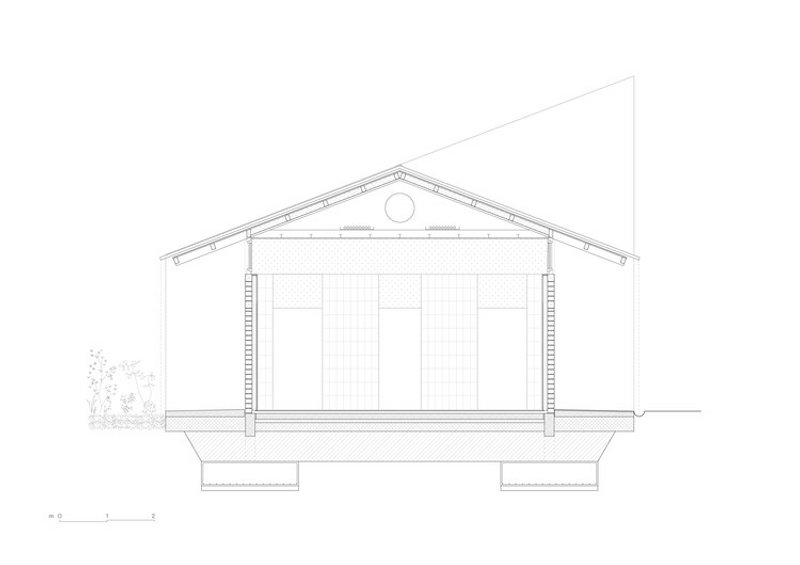
The project is organized along a longitudinal floor plan, divided into two clearly articulated volumes.
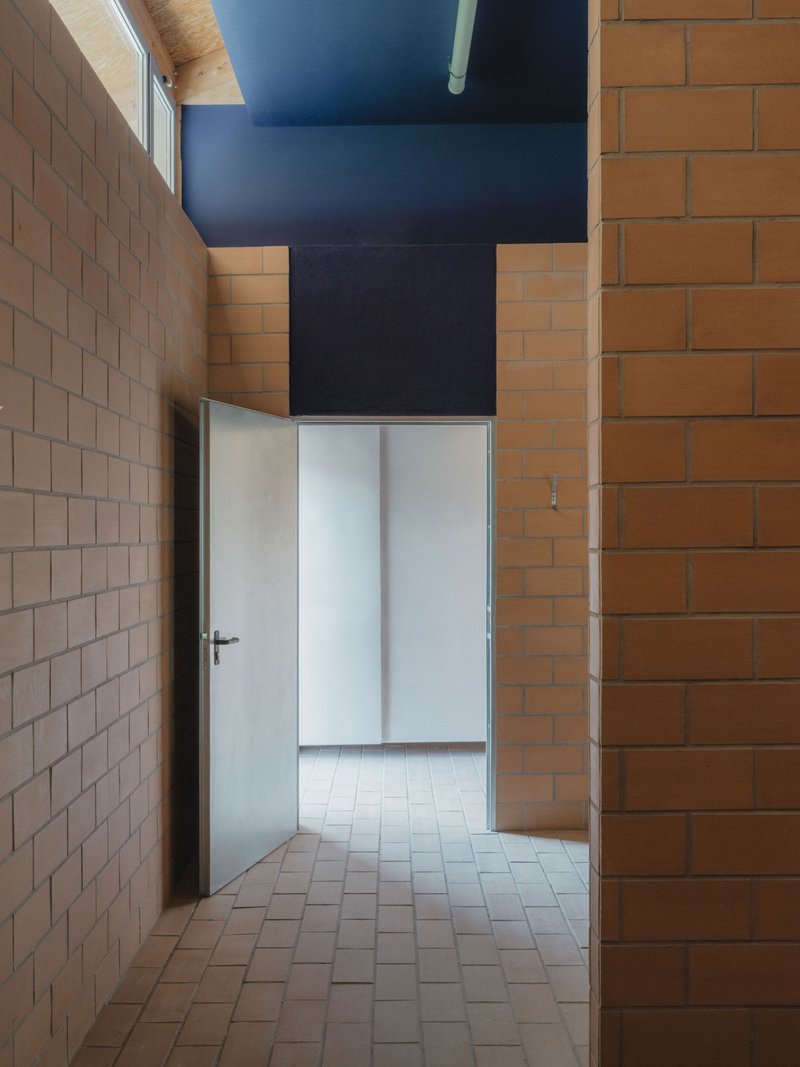
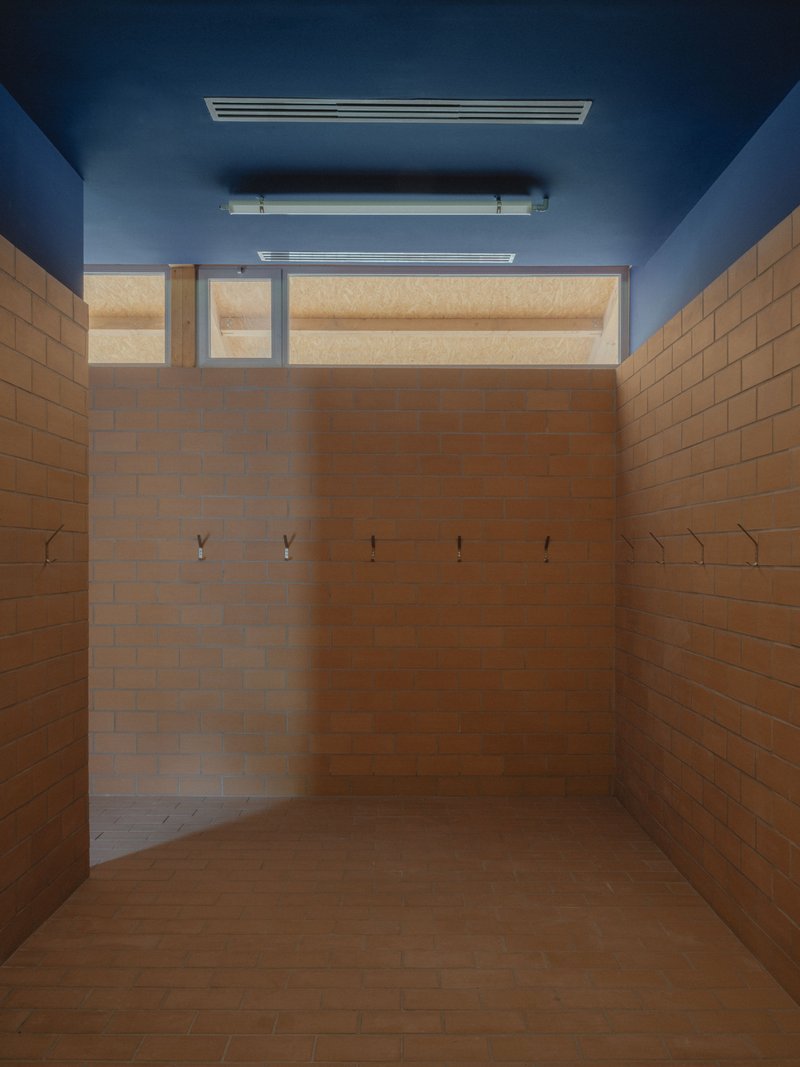
- The first volume houses the changing rooms and trainers’ facilities, sheltered beneath a traditional gable roof.
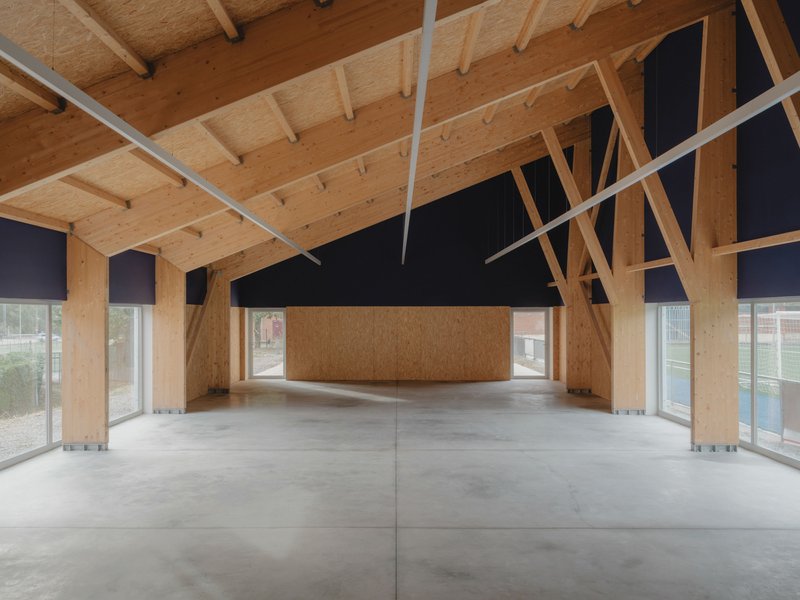
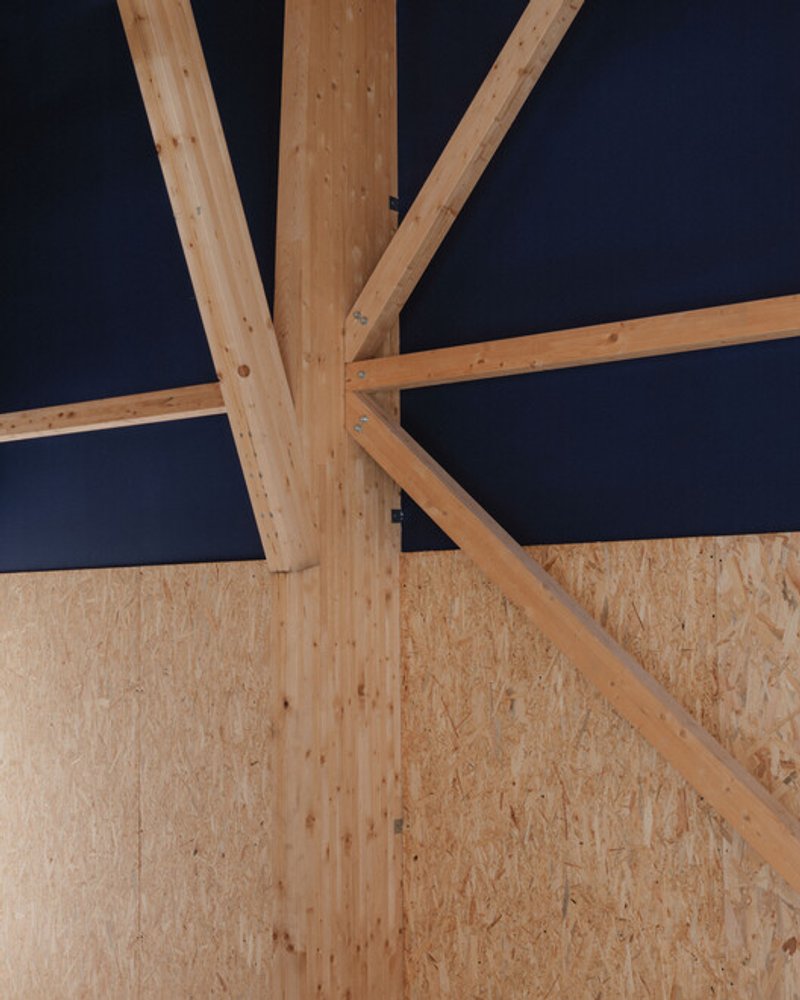
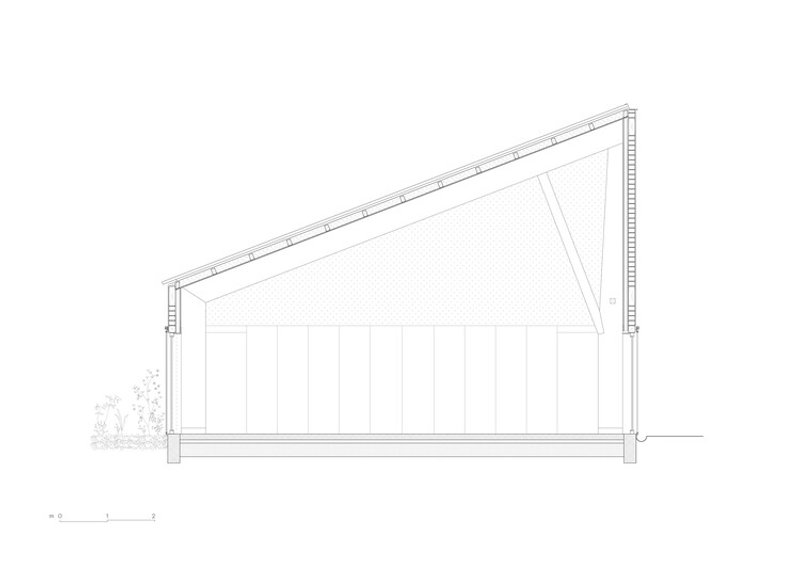
- The second volume rises gradually, transforming the roof into a single sloping plane that accommodates the larger, more flexible multi-purpose hall.
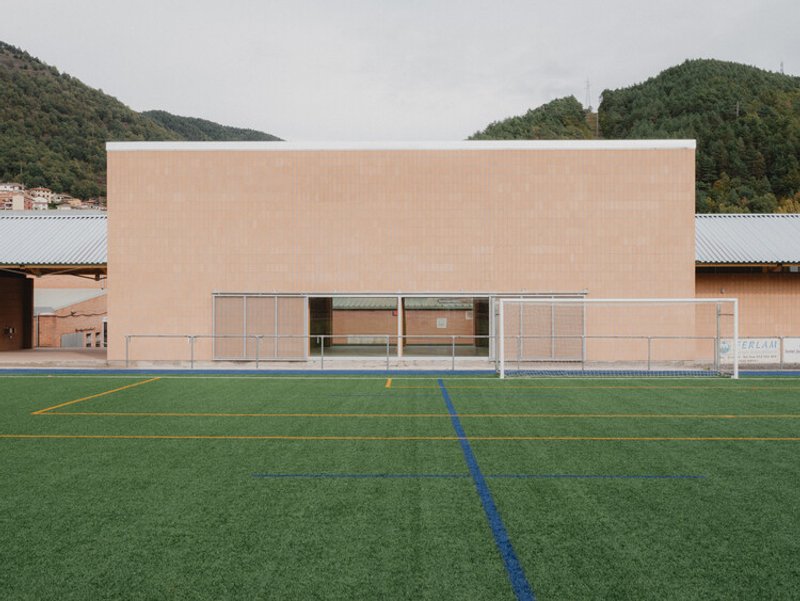
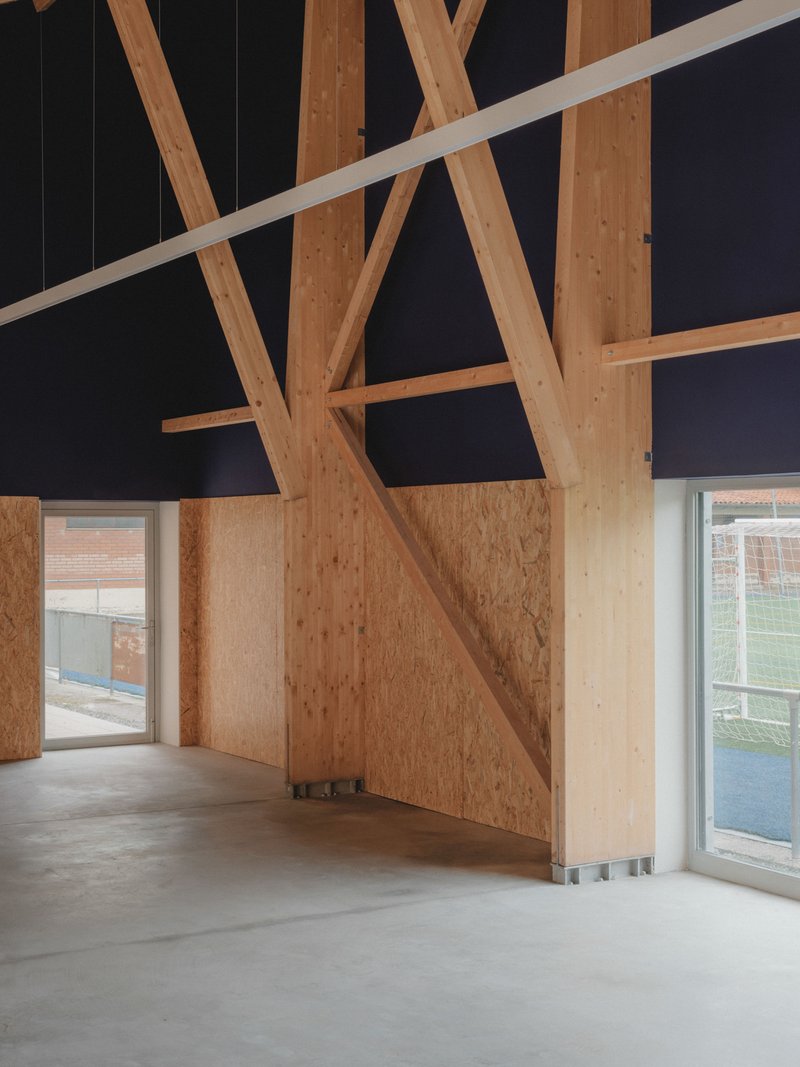
This controlled change in section allows the building to grow in scale without losing its grounded, human proportion.
Circulation and Thresholds
A defining feature of the project is the presence of double exterior corridors running along the perimeter of the building. Protected by generous eaves, these semi-covered paths provide shaded circulation and reinforce the building’s relationship with outdoor activity.
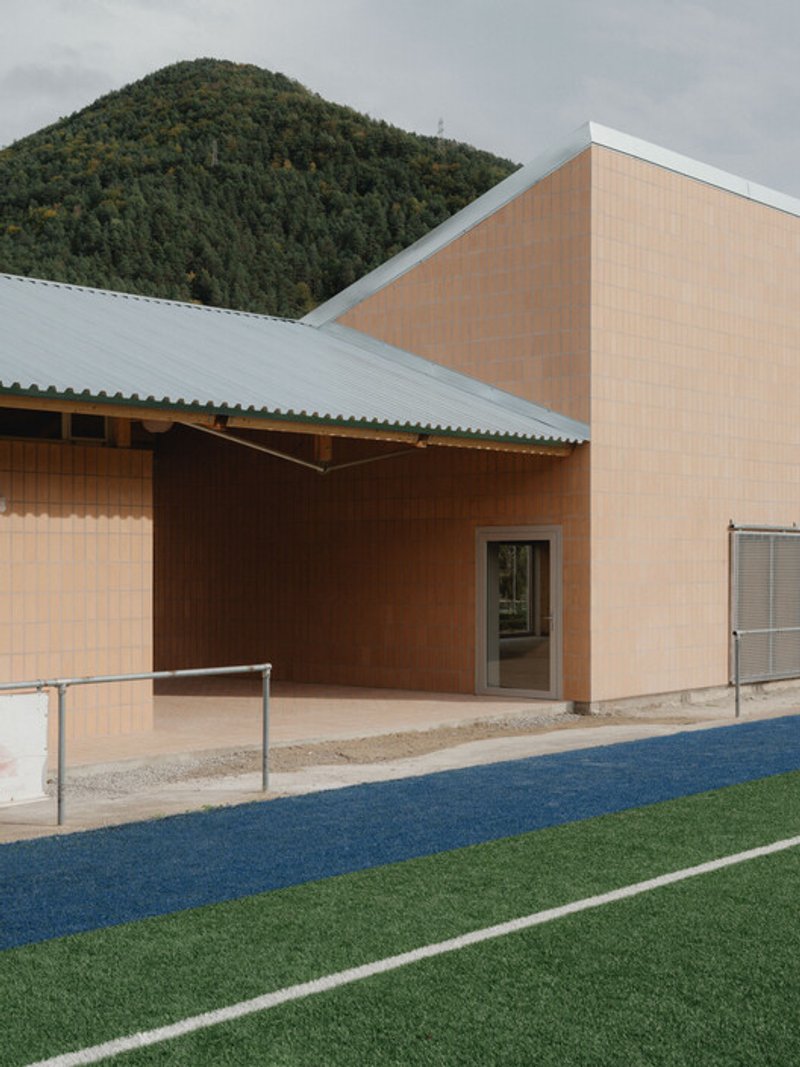
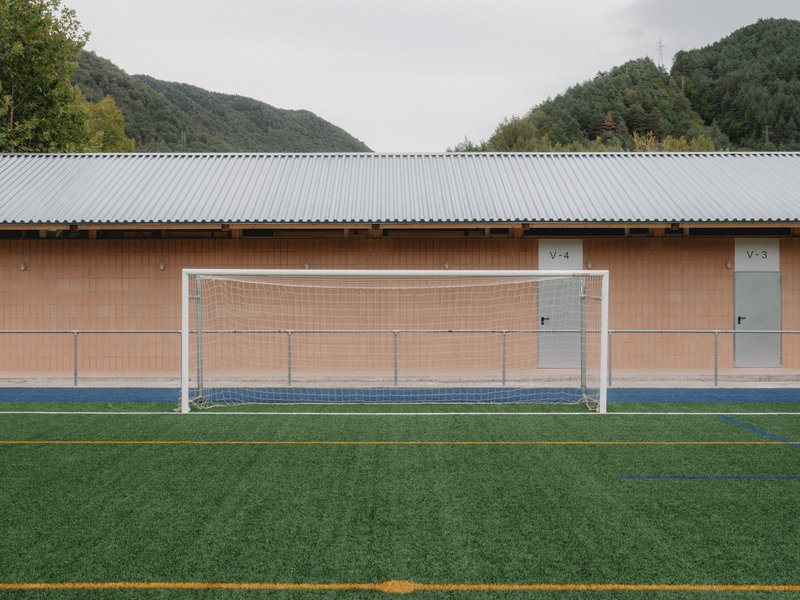
Between the two main volumes, a semi-covered intermediate space functions as a sheltered access area to the football field—an informal gathering zone that mediates between interior programs and open-air sports life.
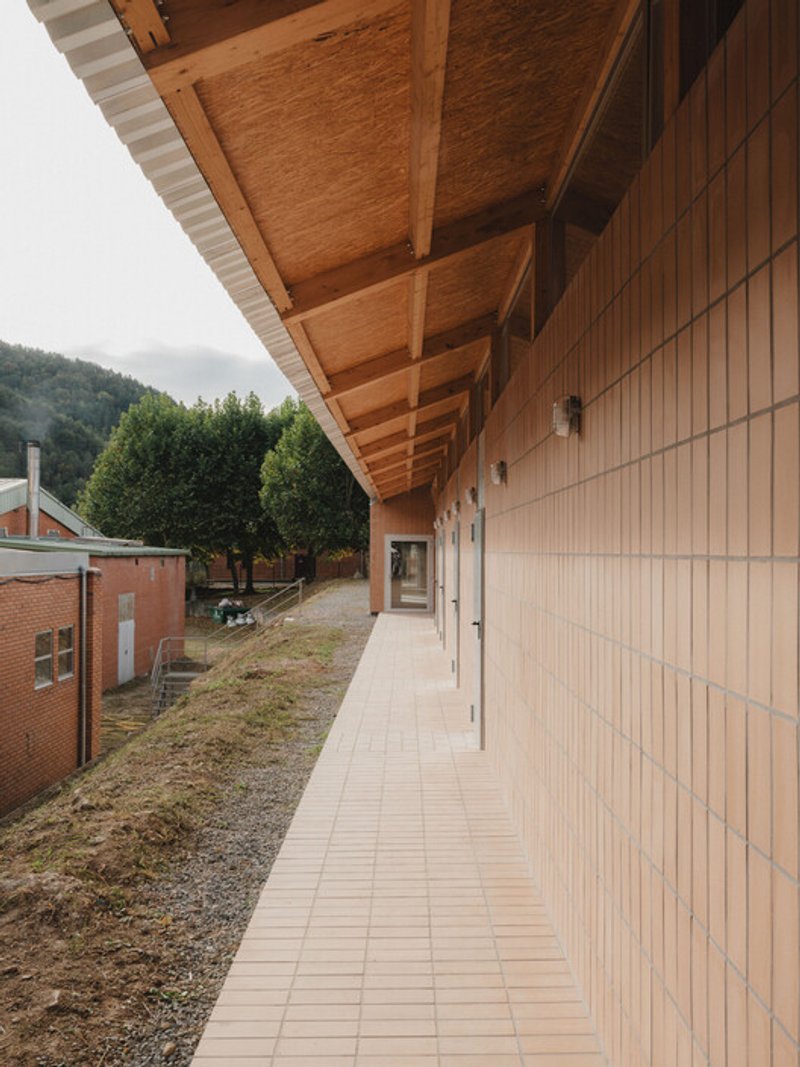
Structure and Material Logic
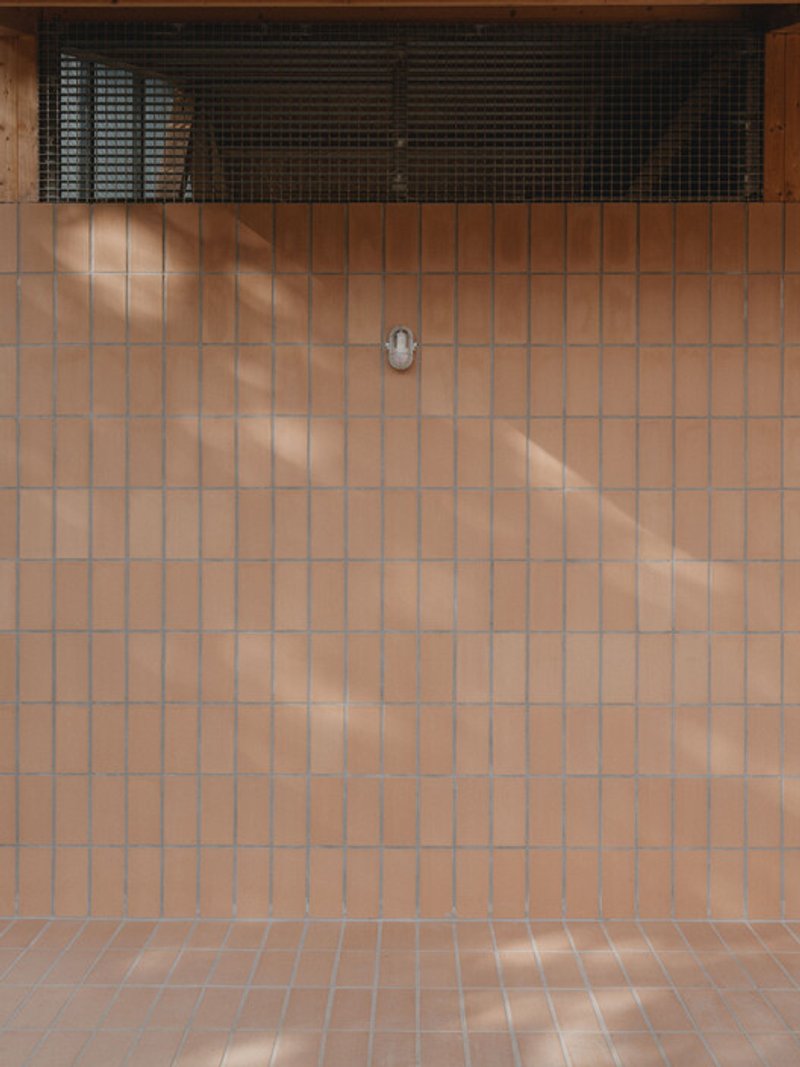
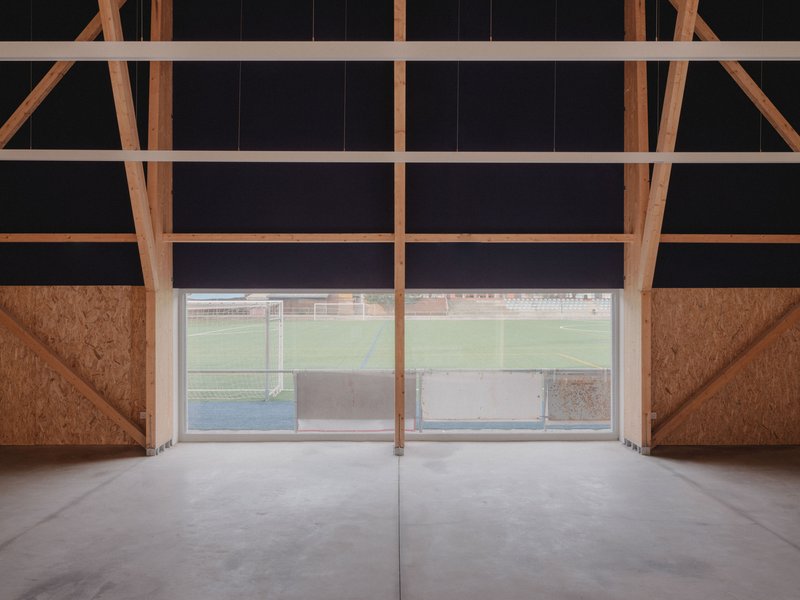
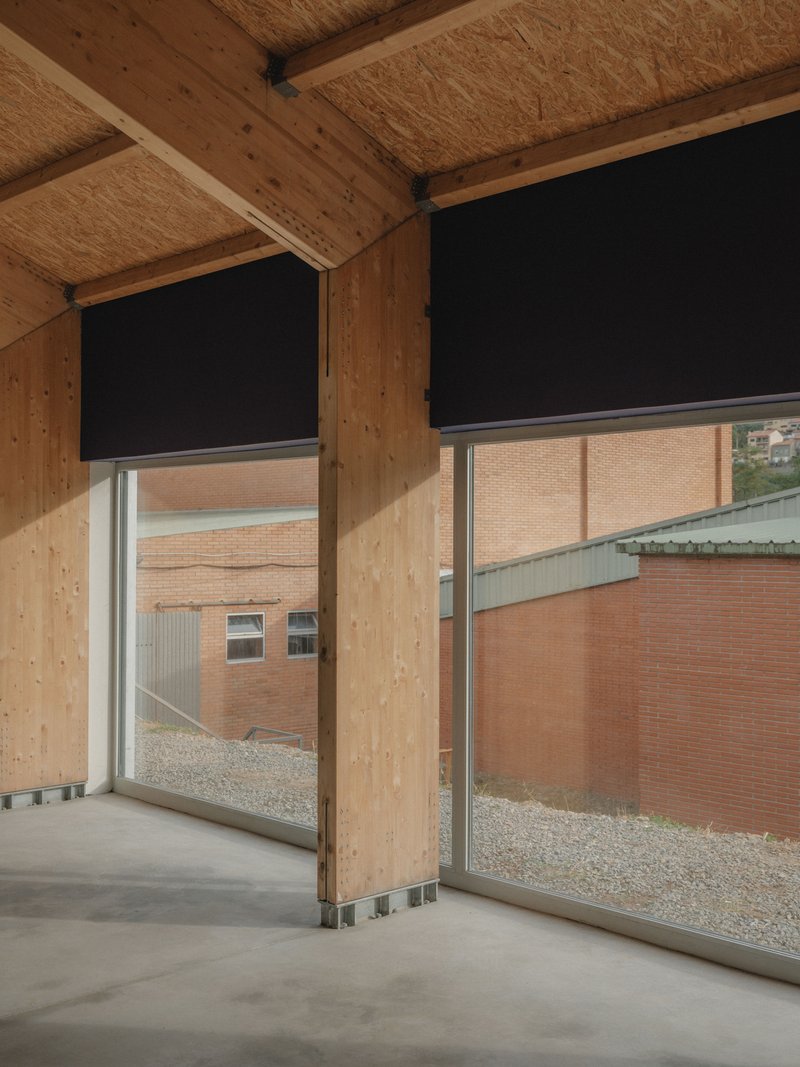
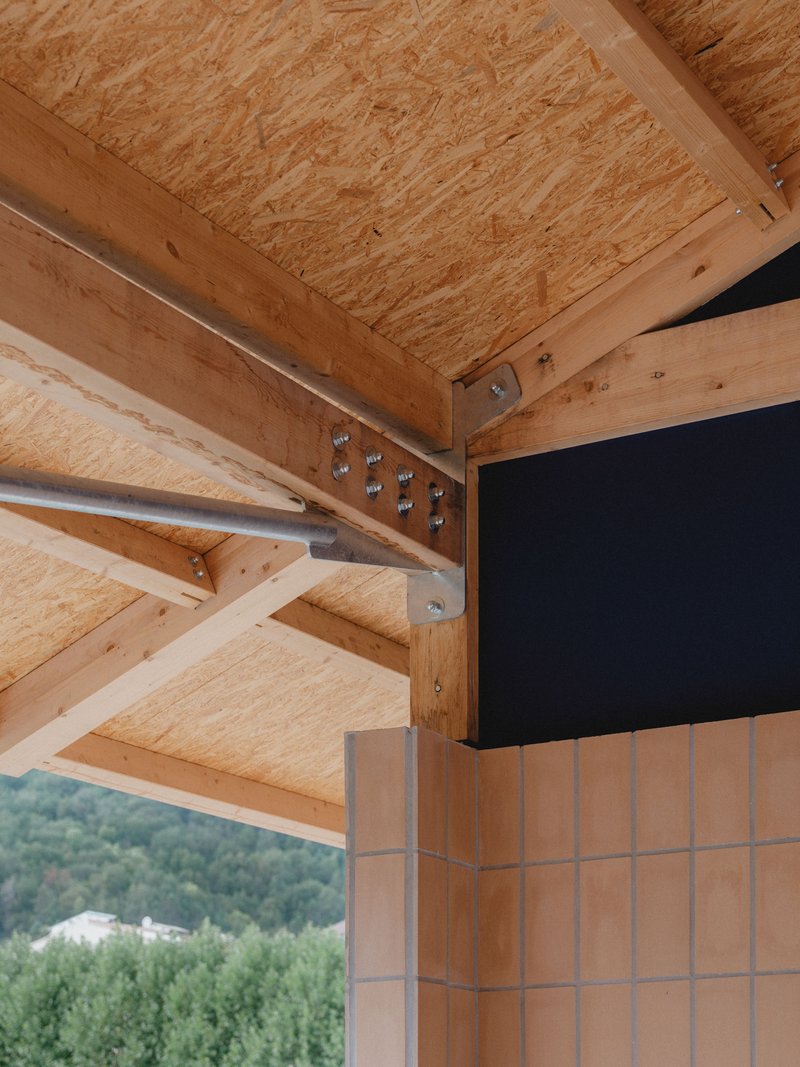
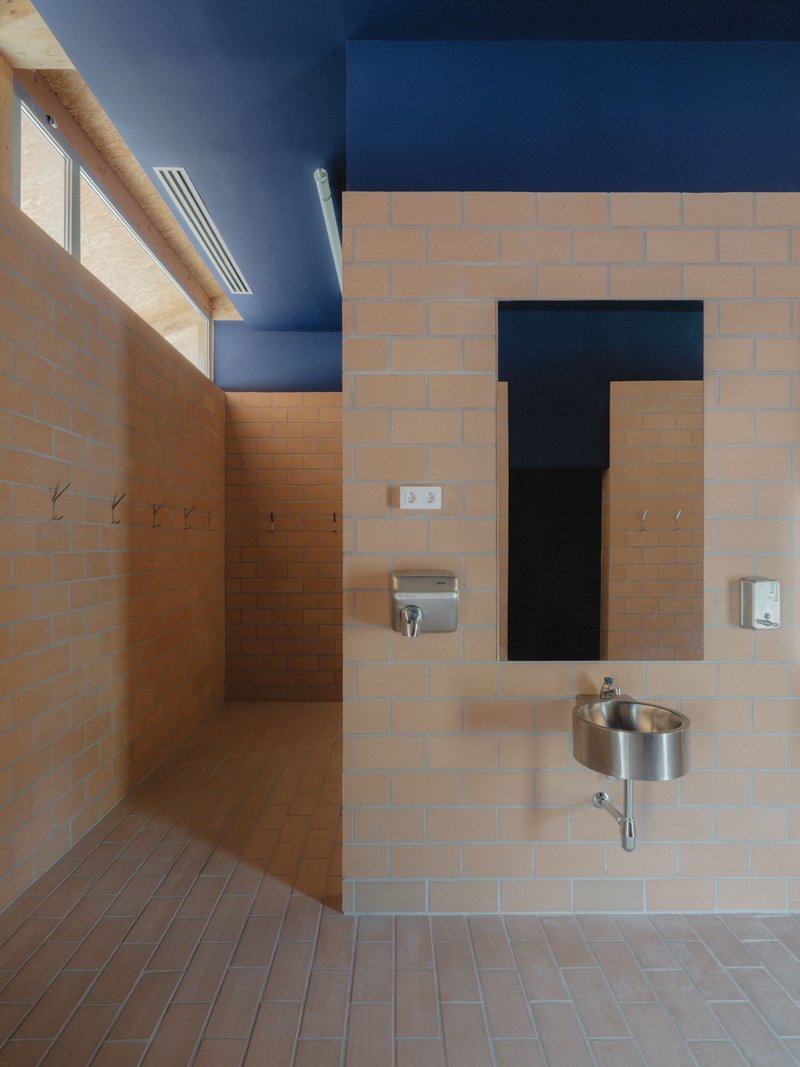
The changing rooms are supported by brick load-bearing walls and a modular system of timber trusses, emphasizing construction clarity and durability. In contrast, the multi-purpose hall employs a portal frame system, where steel tension rods mitigate wind loads and allow for slimmer columns—an efficient structural strategy that reduces material use and construction costs.
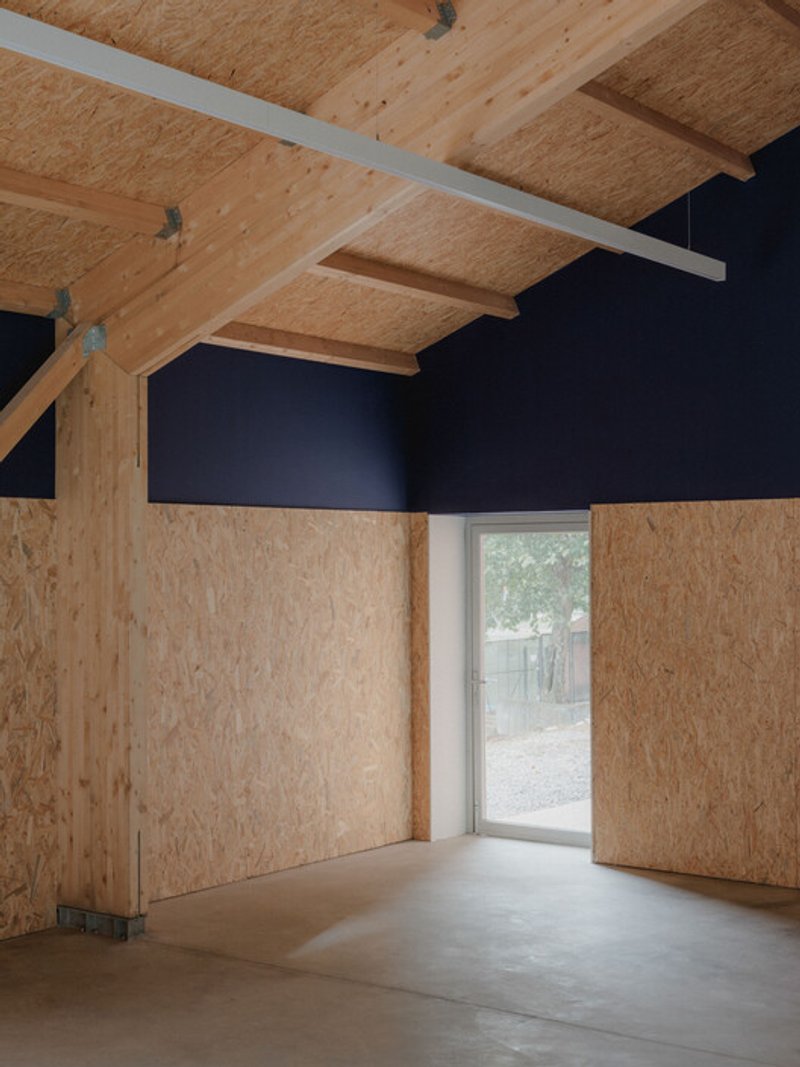
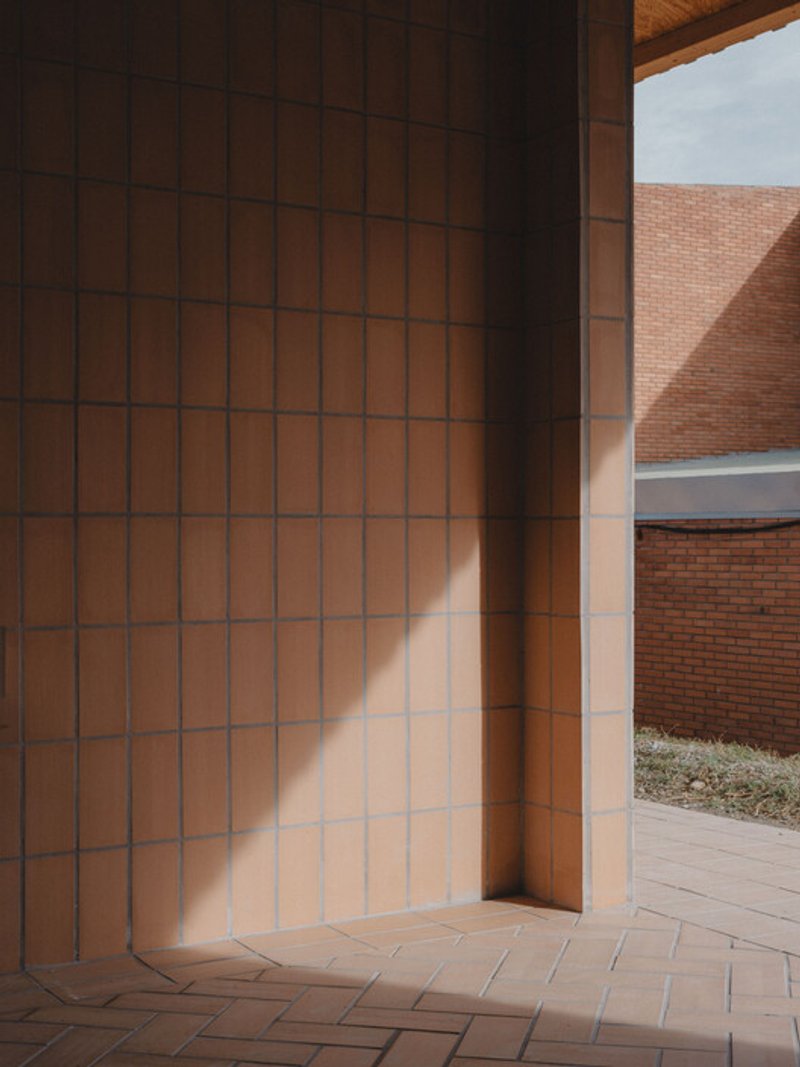
This combination of brick, timber, and steel reflects a pragmatic yet expressive approach, aligning technical decisions with spatial needs.
A Building Rooted in Place
The architecture balances robustness and restraint, echoing the utilitarian nature of sports facilities while responding sensitively to Ripoll’s rural and mountainous context. Its modest scale, material honesty, and functional clarity ensure that the building feels familiar to users and coherent within its surroundings.
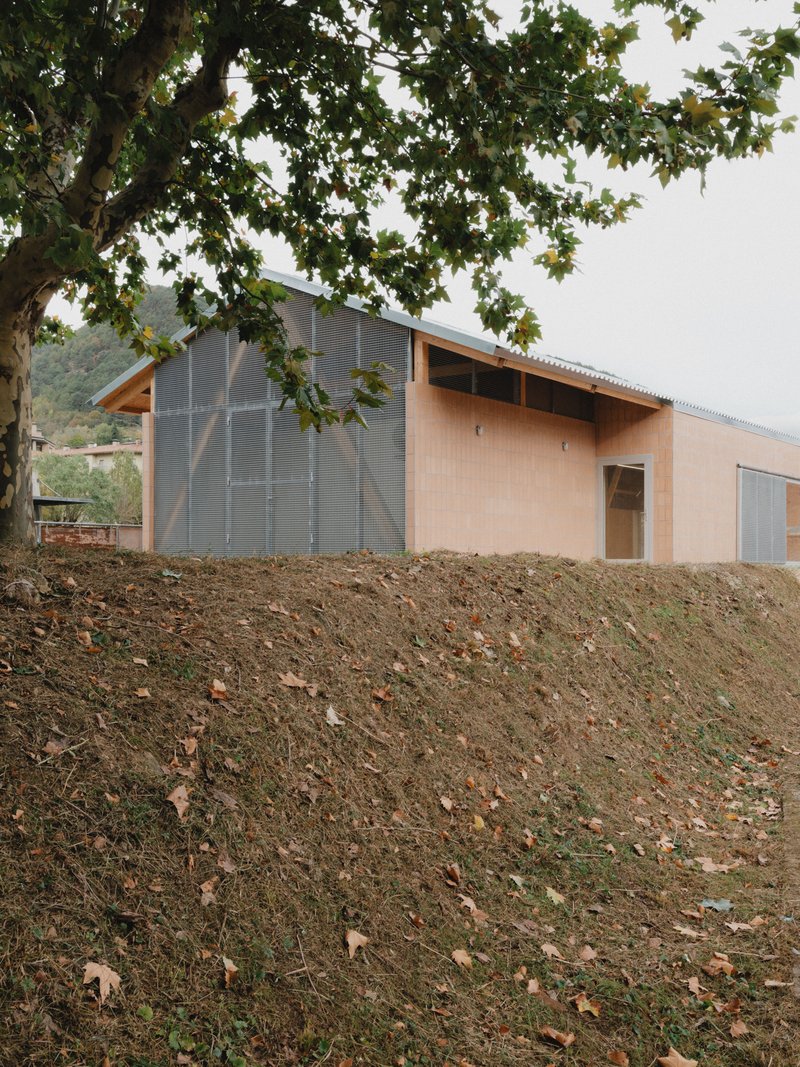
Rather than seeking monumentality, the project succeeds through integration, proportion, and everyday usability—qualities that reinforce its role as a civic and communal space.
All the Photographs are works of Pol Masip




Popular Articles
Popular articles from the community

The Faith: Modular Architecture for Play, Learning, and Hope in Kutupalong Refugee Camp
A modular playground architecture project in Bangladesh where play, learning, safety, and hope rebuild childhood inside a refugee camp anew.
IKC de Geluksvogel: Sustainable School Architecture Designed for Free Movement and Digital Learning
IKC de Geluksvogel turns sustainable school architecture into a flexible Maastricht campus for digital learning, nature, and free movement.

Kerry Kounnapis Packs 800 Daily Coffees into a 43-Square-Metre Melbourne Laneway Bar
Palace Coffee channels Pellegrini's and European standing bars through oxide-red steel and spotted gum timber in a Ridgway Place sliver.
Eco Chapel: A Green Architecture Pavilion Designed in Symbiosis with the Forest
Eco Chapel uses green architecture to weave prayer, learning and reuse into a forest pavilion shaped by modular hexagonal canopies for life.


Similar Reads
You might also enjoy these articles

Olio Towers: A Mid-Rise for Performers That Fuses Housing, Rehearsal, and Stage
Located blocks from Houston's Theater District, this modular tower stacks living units around a central performance atrium.

Oasis: Modular Green Housing Carved into Dhaka's Urban Fabric
A shortlisted Plugin Housing entry reclaims unauthorized settlements in Dhaka with stepped concrete volumes, green roofs, and ventilation-driven design.

Black Hole: A Floating Megastructure for the Post-Physical Era
Emiliano Mazzarotto envisions a spherical, self-scaling arena where e-sports, digital hotels, and holographic stadiums replace traditional public space.
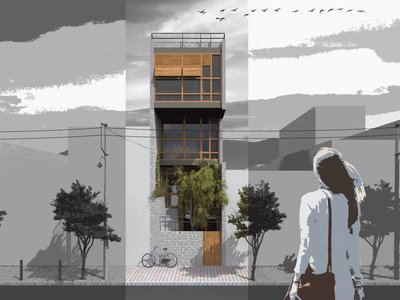
Compact & Sustainable Living in Piraeus: A Four-Level Family Home Built Around Light and Air
A narrow townhouse in one of Greece's densest port cities uses a central atrium and passive strategies to house three generations under one roof.


Explore Sports Architecture Competitions
Discover active competitions in this discipline




The International Standard for Design Portfolios


The Global Benchmark for Architecture Dissertation Awards


The Global Benchmark for Graduation Excellence


Challenge to design a barrier free sports center
Comments (0)
Please login or sign up to add comments
No comments yet. Be the first to comment!