

Ripple House by Atlas Architects: Sculptural, Sustainable, and Site-Specific Living in Glen Iris
Ripple House by Atlas Architects is a sculptural, sustainable Glen Iris home, blending aging-in-place design, passive solar strategies, and seamless indoor-outdoor living.


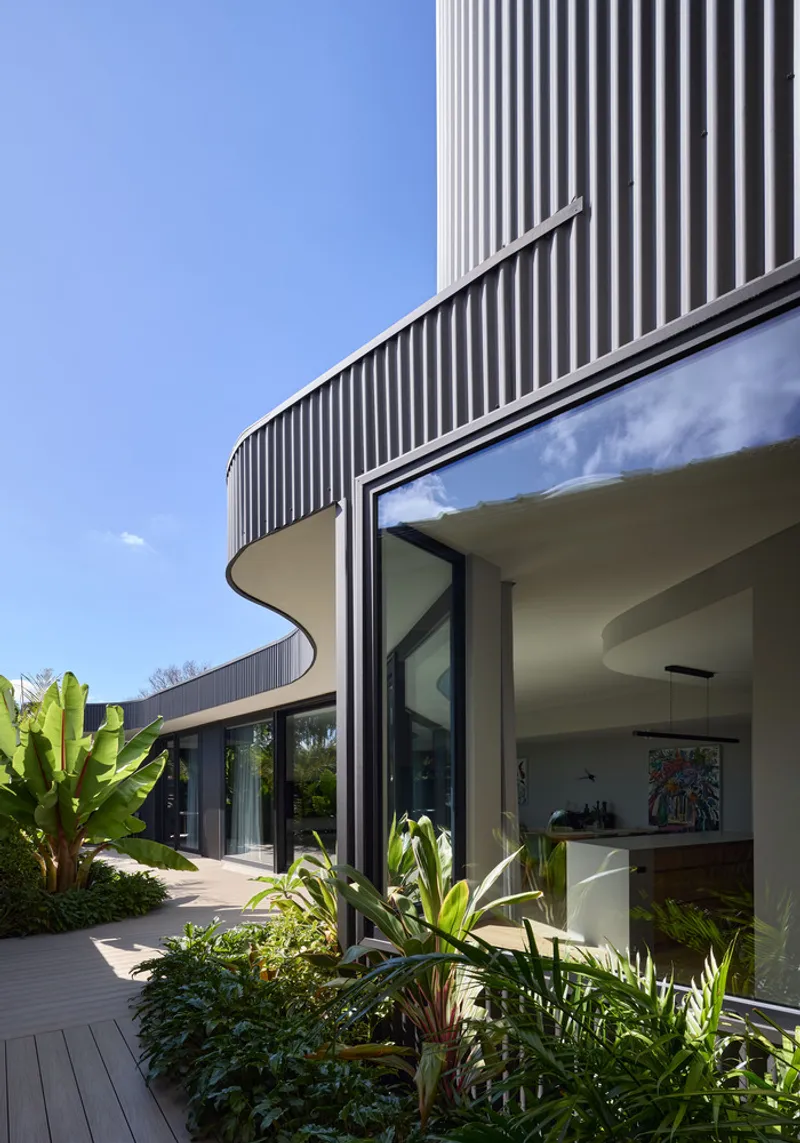
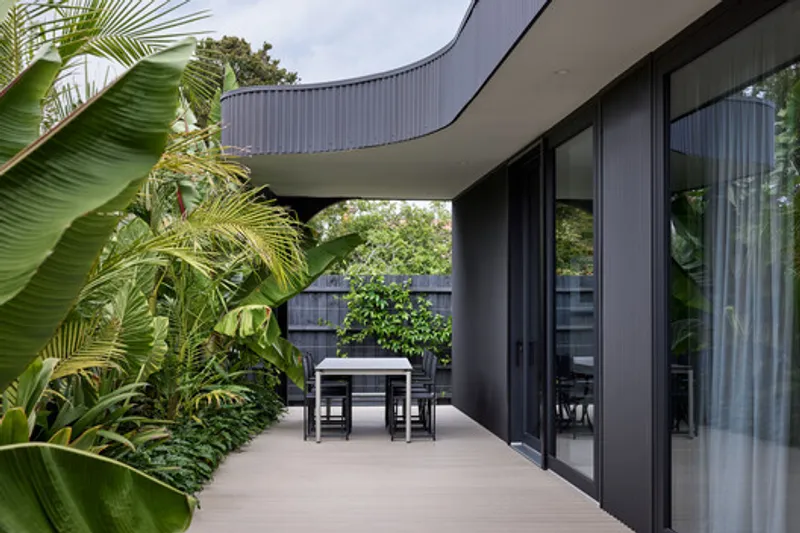
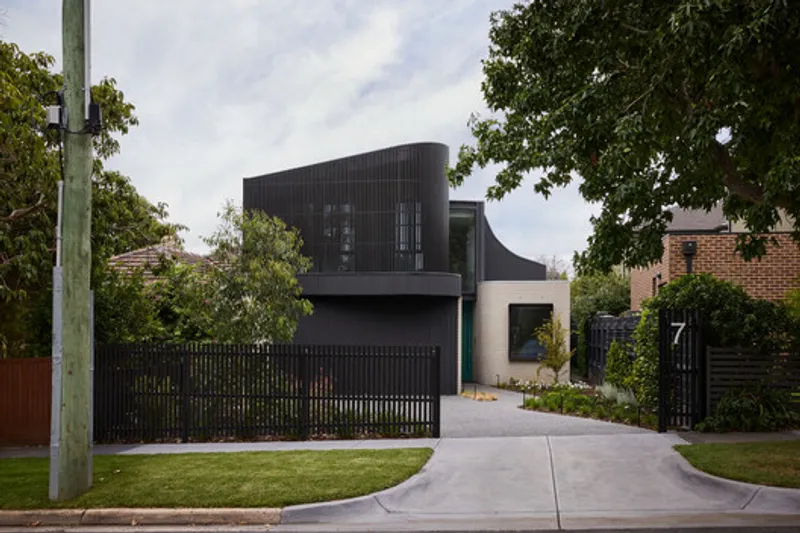
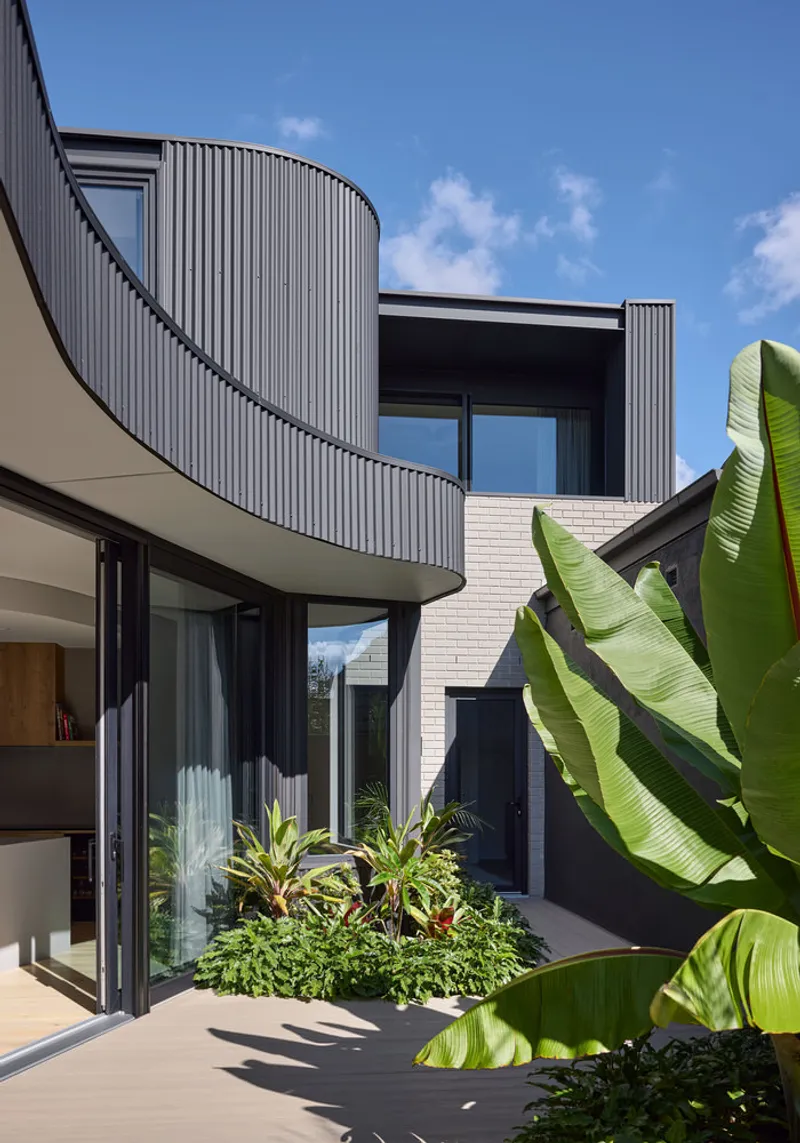
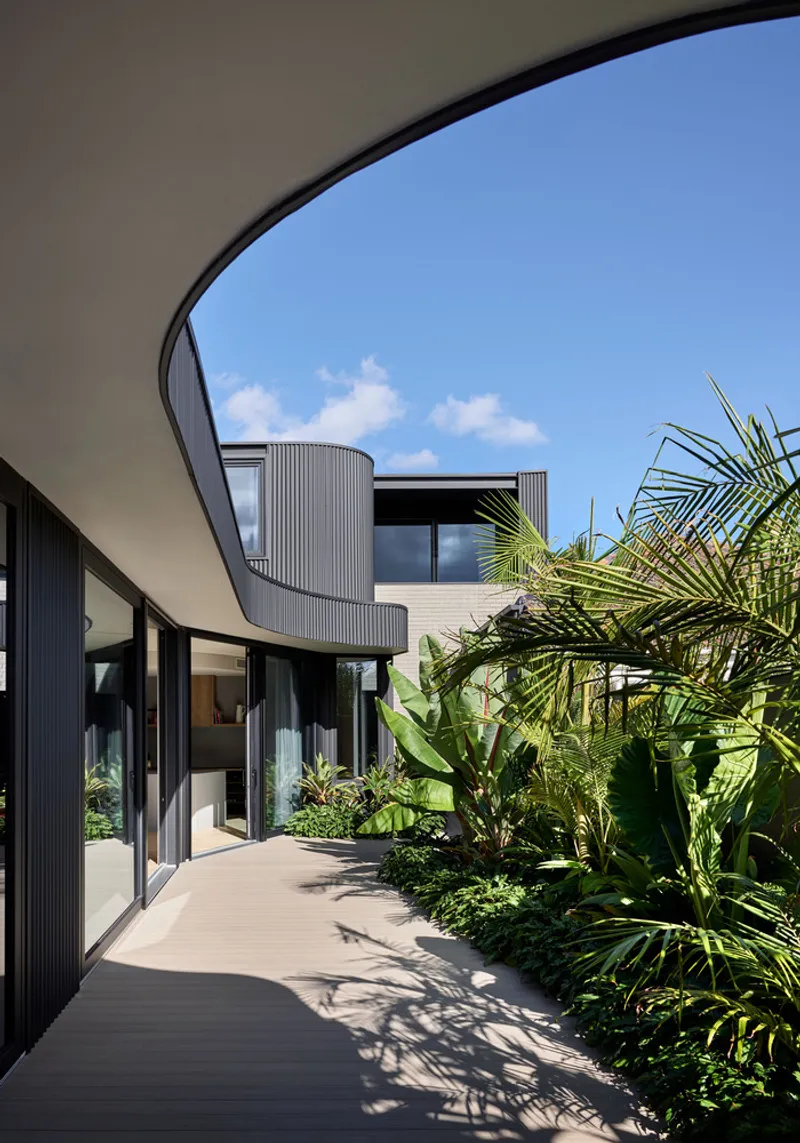
Ripple House, designed by Atlas Architects, is a sculptural, site-specific residence in Glen Iris that redefines suburban living. Conceived as a forever home for a couple entering the next stage of life, this innovative project harmoniously blends aging-in-place design, sustainable architecture, and contemporary sculptural form.
A Bold Response to Suburban Infill
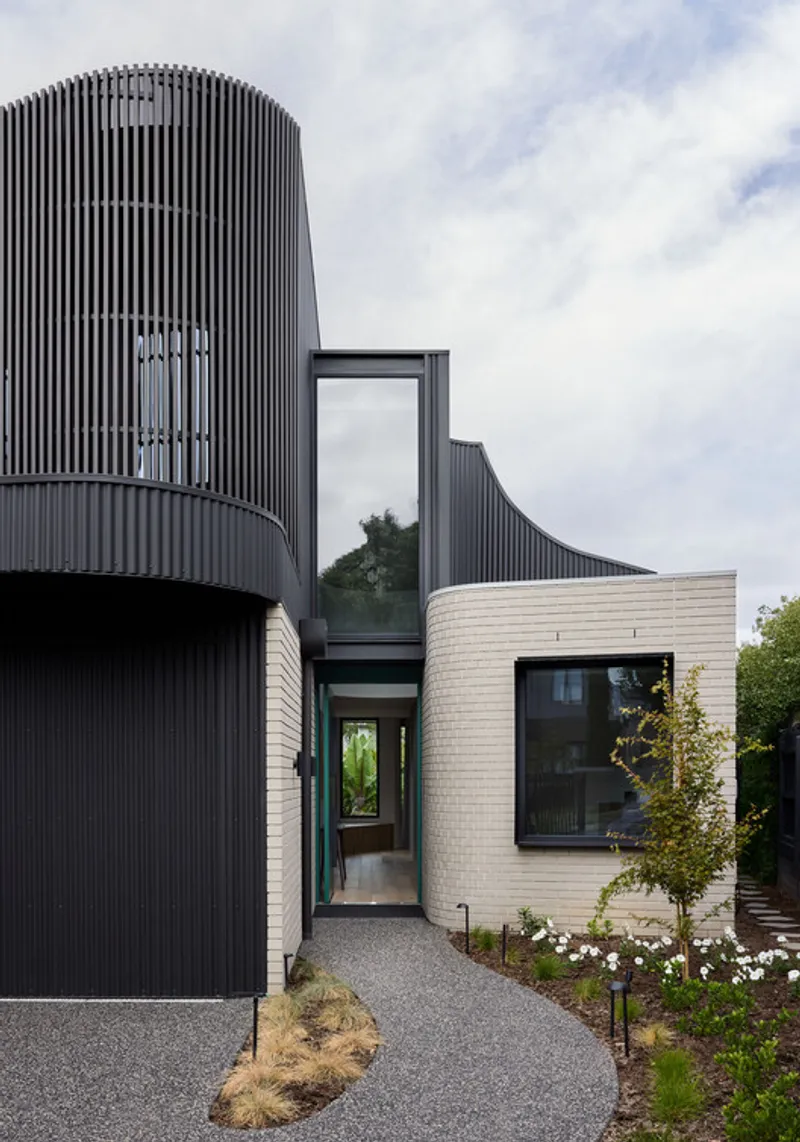
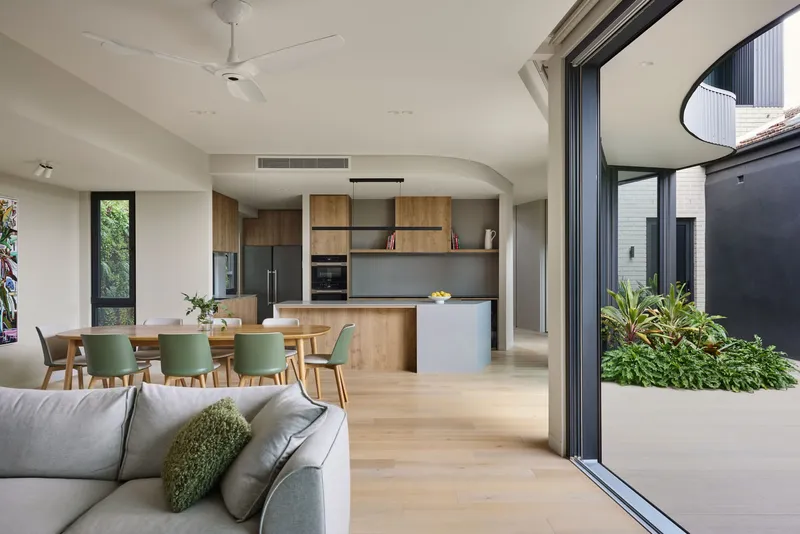
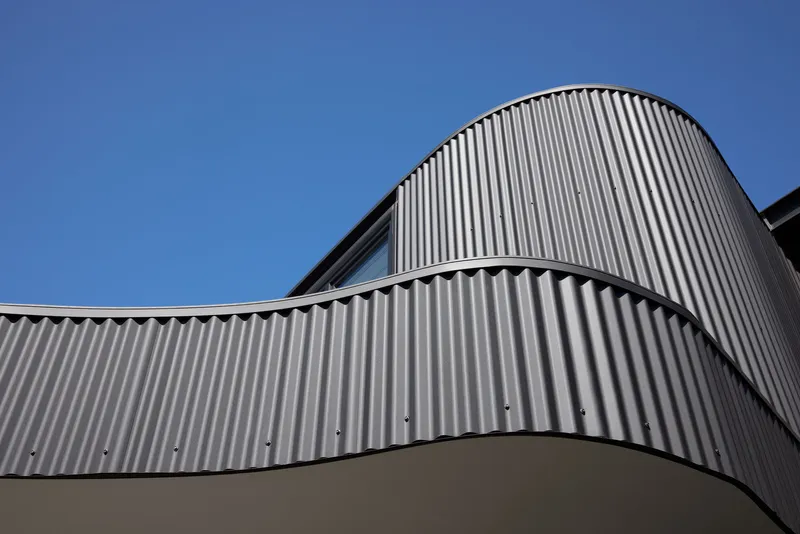
The brief for Ripple House demanded a low-maintenance sanctuary with all essential living on the ground floor, while the upper level provides flexible space for guests or future live-in care. Breaking away from the typical long, narrow suburban lot, the home introduces a gently bending plan that prioritizes visual connections between interior and exterior spaces. At its heart lies a north-facing courtyard, creating moments of openness, privacy, and calm.
Materials, Form, and Interior Design
Construction began with the demolition of a semi-detached structure, allowing for a fresh architectural start. The material palette balances durability, elegance, and low maintenance:
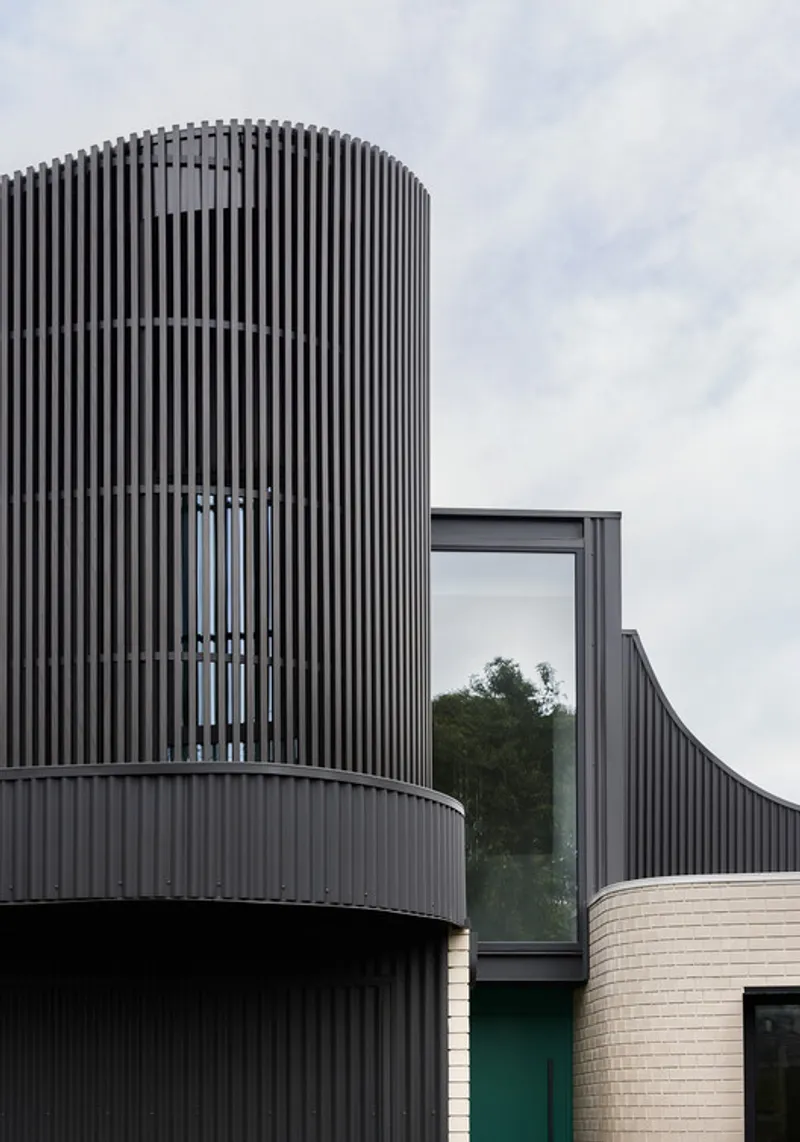
- Exterior: Light grey brick, custom orb corrugated steel, and aluminum battens.
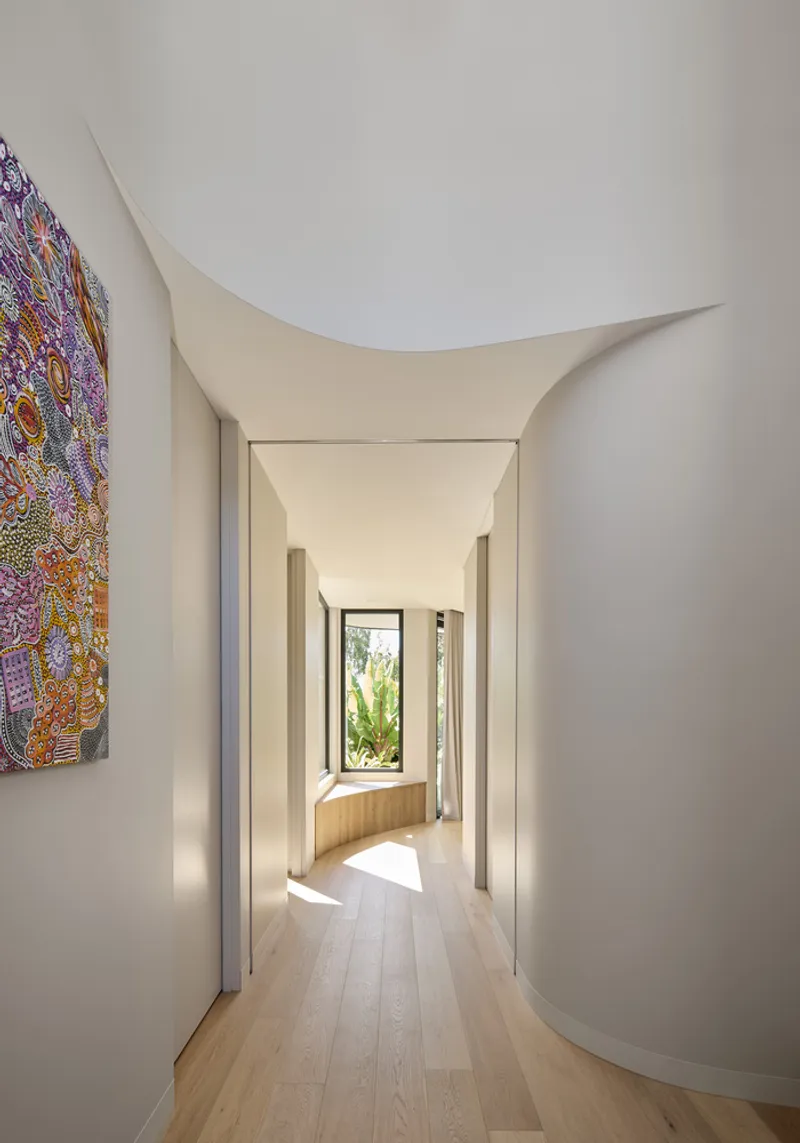
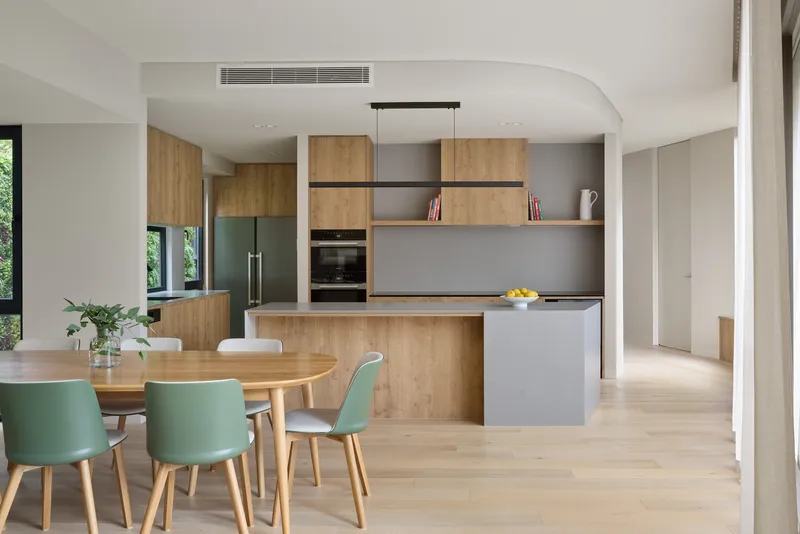
- Interior: Warm, tactile finishes featuring concrete, stone-look tiles, and timber-look laminates.
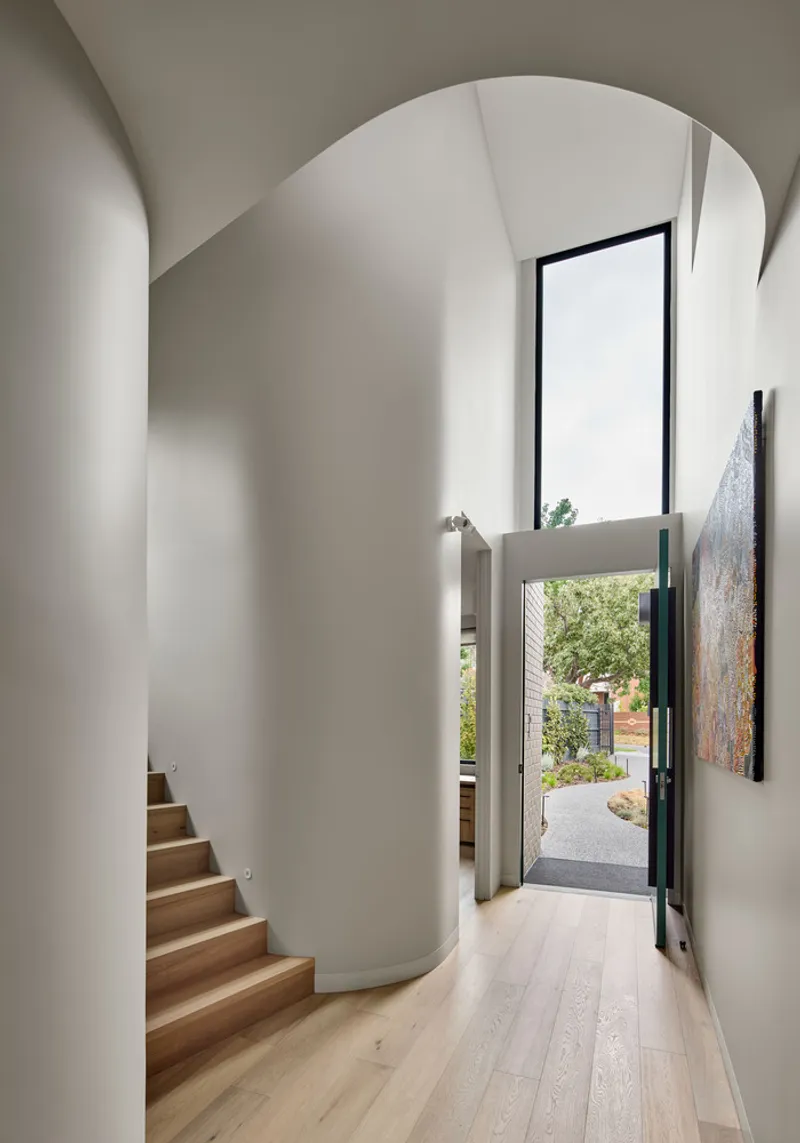
A sculptural concrete kitchen island and curved ceiling forms mirror the building’s exterior language, promoting fluid movement and a sense of cohesion throughout the home.
Overcoming Site Challenges
Ripple House faced several design constraints, including planning restrictions from the original party wall, overshadowing concerns, and neighborhood character controls. Atlas Architects addressed these through responsive massing, careful orientation, and strategic articulation, respecting the streetscape while pushing suburban design boundaries.
Sustainability and Passive Design
Sustainability is integral to Ripple House’s design. Features include:
- Passive solar strategies for energy efficiency.
- Natural cross-ventilation to reduce reliance on mechanical cooling.
- Double glazing to enhance thermal performance.
- Rooftop solar panels for long-term energy savings.
The result is a home that feels grounded, adaptable, and intuitively responsive to its occupants and environment.
A Progressive Vision for Suburban Living
Ripple House challenges conventional notions of suburban development, questioning whether neighborhood character must equate to conformity. It demonstrates a future where beauty, functionality, and environmental responsibility coexist, offering a model for thoughtful, progressive urban residential design.
All photographs are works of Tess Kelly Photography


Popular Articles
Popular articles from the community

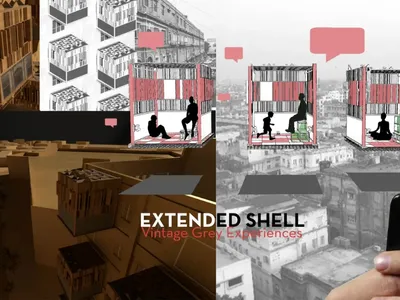
Extended Shell: Retrofitting Kolkata's Balconies as Living Urban Thresholds
A modular retrofit system recovers the social and environmental intelligence of Kolkata's historic verandas for contemporary Park Street residents.
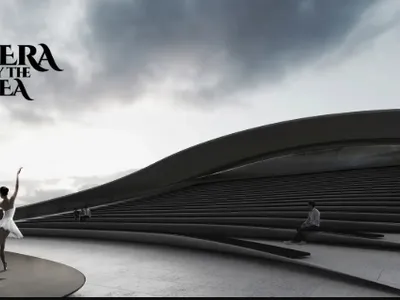
Opera by the Sea Estonia: Three Shells Dissolving Architecture into Tallinn's Coastline
A winning opera house proposal replaces monumental form with interconnected shells that blur the boundary between building, park and Baltic Sea.
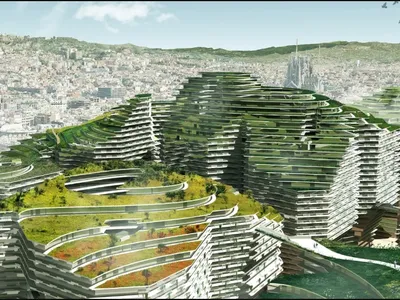
Manzana Morphosis: Stretching Barcelona's Grid into a Living Landscape for 2050
A radical reworking of the Eixample manzana turns density into a tool for generous public space, vertical ecology, and environmental performance.
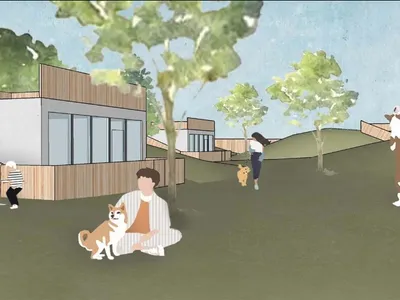
Temporary Home for Dogs: A Reversed Zoo Rethinks Animal Shelter Architecture
In Bucharest, a sinuous corridor and freed landscape flip the logic of containment, designing a shelter that works to make itself unnecessary.

Similar Reads
You might also enjoy these articles


Hodi-Mandai Geram
Project Function: Preservation and revitalization of the Intangible heritage and socio-spatial identity of the Hodi by Housing, Cultural Memory Center, Sacred Grove, landscape, local tourism economy


Olio Towers: A Mid-Rise for Performers That Fuses Housing, Rehearsal, and Stage
Located blocks from Houston's Theater District, this modular tower stacks living units around a central performance atrium.

Oasis: Modular Green Housing Carved into Dhaka's Urban Fabric
A shortlisted Plugin Housing entry reclaims unauthorized settlements in Dhaka with stepped concrete volumes, green roofs, and ventilation-driven design.

Black Hole: A Floating Megastructure for the Post-Physical Era
Emiliano Mazzarotto envisions a spherical, self-scaling arena where e-sports, digital hotels, and holographic stadiums replace traditional public space.

Explore Housing Competitions
Discover active competitions in this discipline

Challenge to reimagine the Iron Throne

Photograph architecture without architects

Illustrate the lost glory of Angkor Wat - Render Challenge

Design challenge to reuse E-waste
Comments (0)
Please login or sign up to add comments
No comments yet. Be the first to comment!