
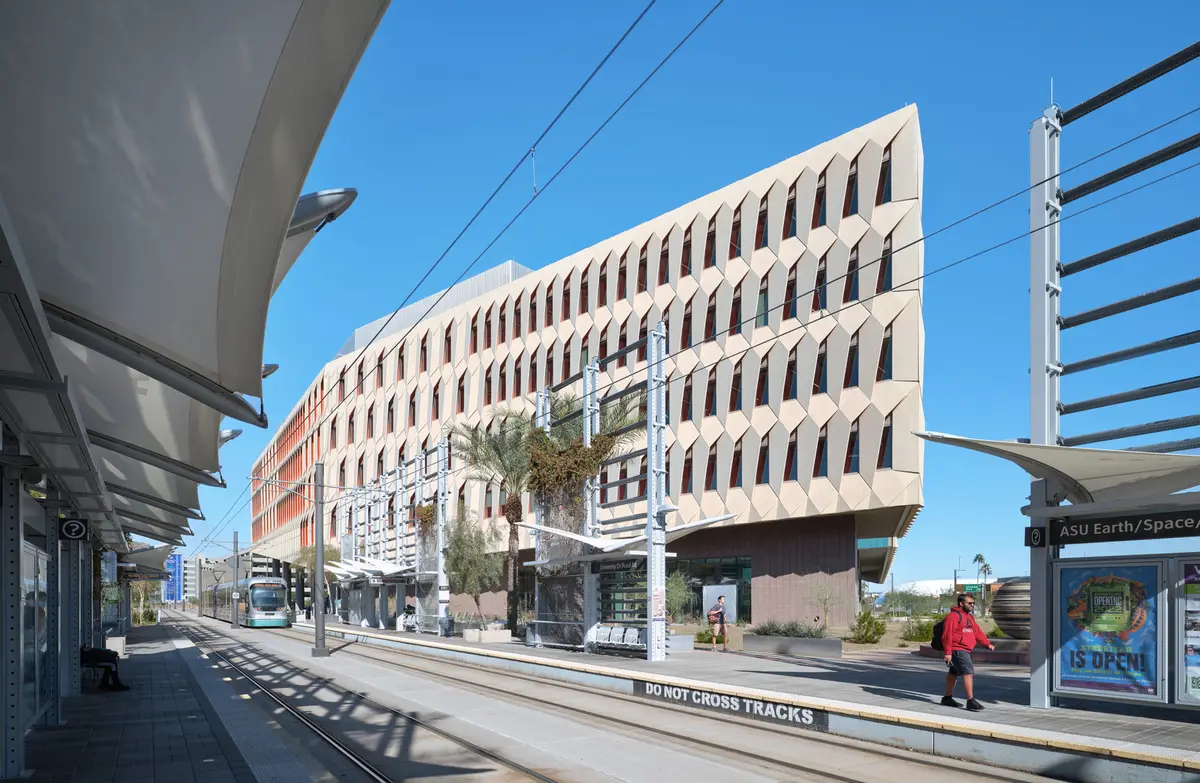
Rob and Melani Walton Center for Planetary Health
Sustainable research hub at ASU blending regenerative design, desert ecology, and interdisciplinary collaboration for global health and environmental innovation.


A Climate-Conscious Innovation Hub by Grimshaw and Architekton at ASU Tempe Campus
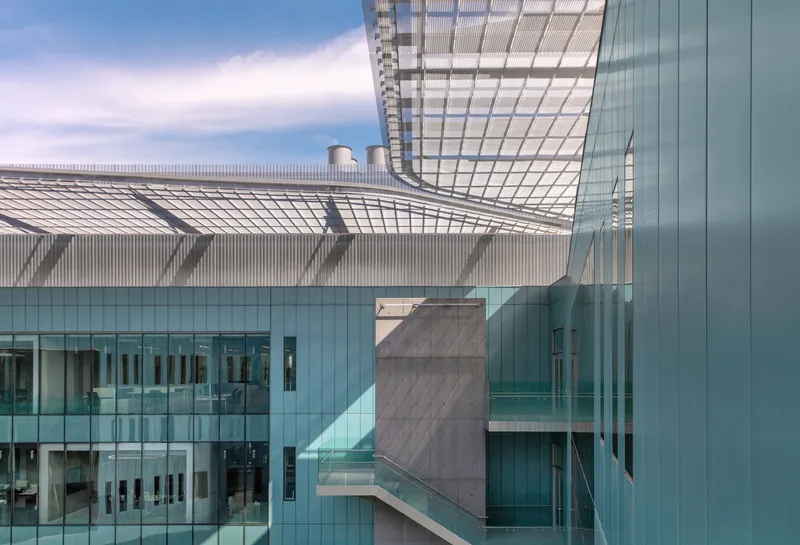
The Rob and Melani Walton Center for Planetary Health at Arizona State University’s Tempe campus stands as a transformative academic and research facility, designed collaboratively by Grimshaw and Architekton. With its completion in 2022, the 26,105-square-meter complex serves as a new epicenter for planetary health research, interdisciplinary collaboration, and community engagement.
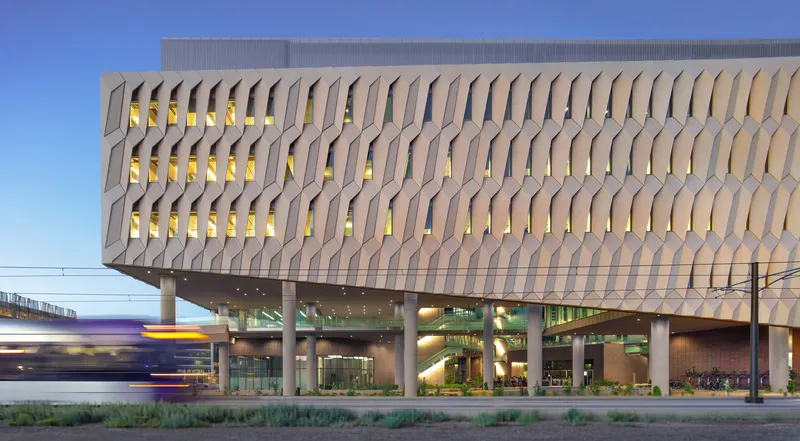
Architecture Rooted in Resilience and Sustainability
Strategically positioned at one of the busiest intersections in Arizona and adjacent to a historic canal network engineered by the indigenous Hohokam people, the Walton Center responds to both historic context and modern infrastructure demands. The site also features vital utility lines and light rail tracks, requiring a sensitive and adaptive design strategy.
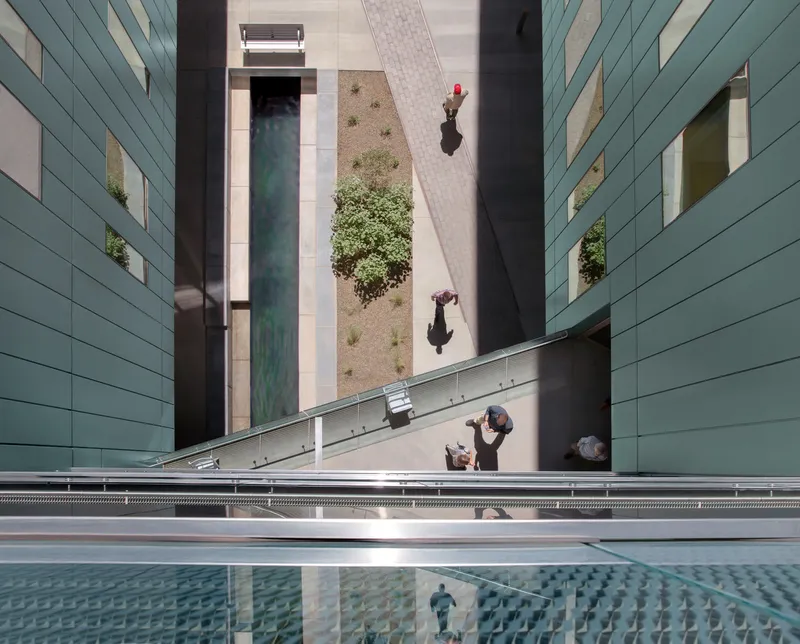
The result is a structure that opens generously at ground level, inviting wind, light, and pedestrian movement through a central courtyard. This open configuration not only fosters environmental responsiveness but also encourages campus connectivity and community integration.
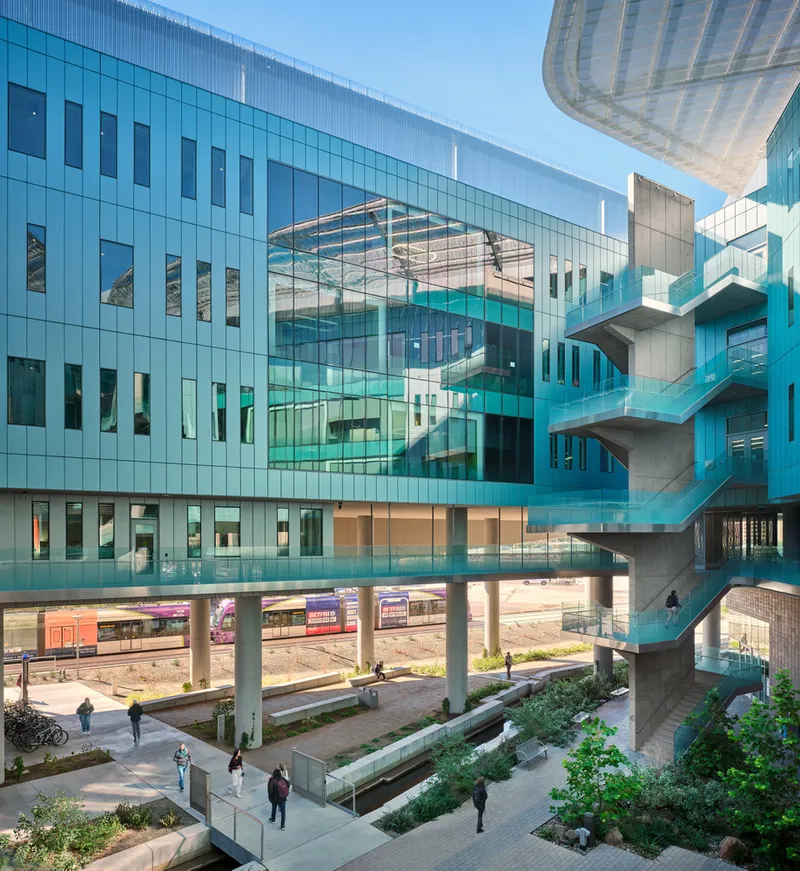
A Regenerative Landscape Tied to the Sonoran Desert
At the heart of the project is a regenerative landscape design that grounds the building in its Sonoran Desert ecology and agricultural legacy. This landscape concept serves multiple functions:
- Facilitating multimodal circulation across bikes, pedestrians, and public transport
- Honoring the cultural heritage of the Tempe region
- Creating a welcoming campus gateway for students, researchers, and the wider community
The landscape strategy extends the building’s ethos of resilience and site-specificity, positioning the Walton Center as both an academic anchor and civic landmark.
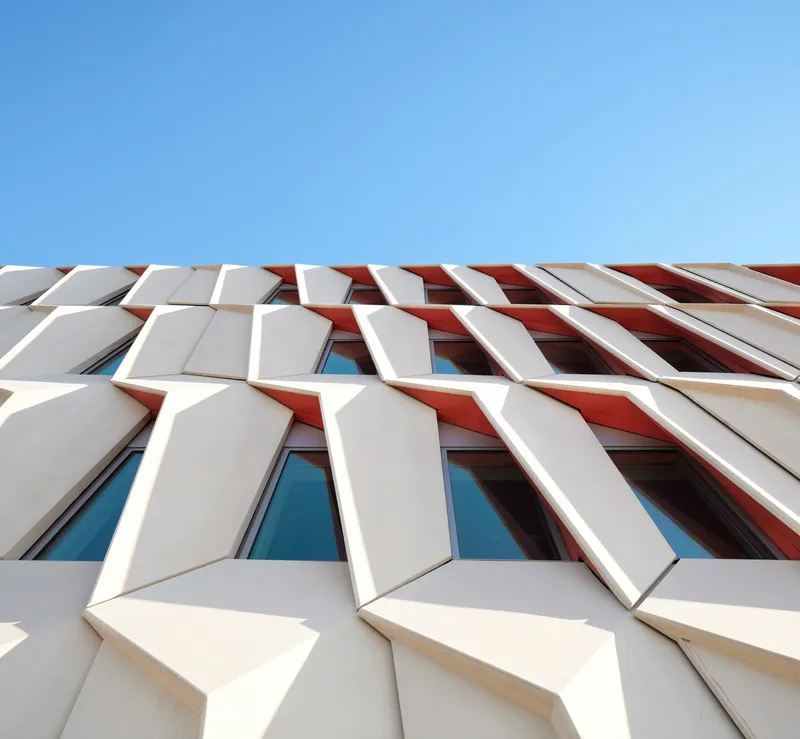
A Home for Global Sustainability Leadership
The Walton Center is home to several of Arizona State University’s most impactful research institutes:
- Global Institute of Sustainability (GIOS)
- Institute for Human Origins (IHO)
- Global Futures Initiative (GFI)
- School of Sustainability (SoS)
To serve these diverse occupants, the building provides a robust mix of shared and specialized spaces. These include:
- Flexible teaching laboratories
- Modular conference rooms
- Collaborative classrooms and break areas
- Dedicated research labs tailored to focused disciplines, including a high-bay laboratory
The architectural challenge—successfully met—was to balance opportunities for interdisciplinary collaboration with the need for individual institutional identity. Each organization enjoys a unique ‘front door’ within a cohesive, integrated structure.
Design and Engineering Excellence
- Architecture: Grimshaw + Architekton
- Structural Engineering: Buro Happold Consulting Engineers P.C.
- Civil Engineering: Sherwood Design Engineers
- Photography: Dror Baldinger, Bill Timmerman
Grimshaw and Architekton’s architectural approach demonstrates how climate-responsive design and institutional functionality can merge to create a forward-thinking academic environment. The Walton Center exemplifies a new model for planetary health research facilities—anchored in resilience, inclusivity, and sustainability.
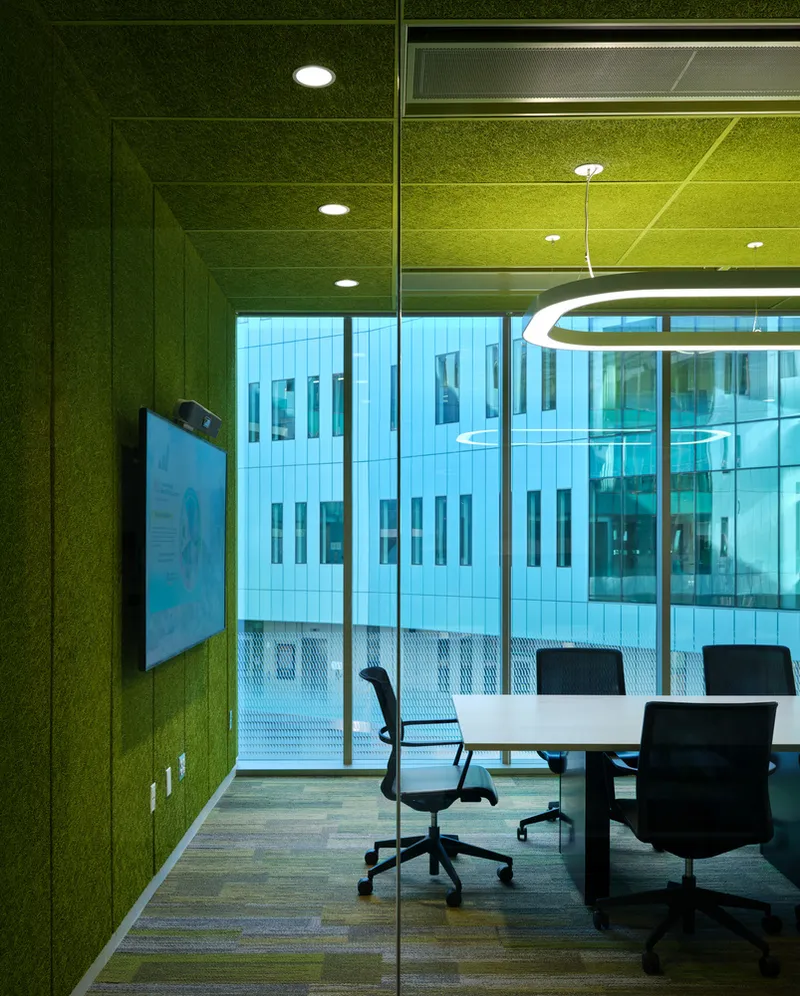
The Rob and Melani Walton Center for Planetary Health is more than a university building—it's a visionary prototype for future research hubs that place planetary well-being, indigenous respect, and interdisciplinary innovation at the forefront of architecture. It embodies the spirit of academic sustainability and strengthens the bond between the university and its urban context.
All photographs are works of
Dror Baldinger, Bill Timmerman


Popular Articles
Popular articles from the community


Hill & Cross Opera: Sculptural Opera House Architecture Shaped by Tallinn’s Landscape and Identity
Hill & Cross Opera reimagines opera house architecture in Tallinn through its sculptural hill, civic plaza, glass wave and a luminous cross.

Co-life: Sustainable Architecture for Age-Friendly Community Living
Co-life reimagines sustainable architecture for seniors through courtyards, rammed earth, shared gardens, and spaces designed for belonging.

Co-Life: Senior Housing Design That Reconnects Older Adults With the City
Co-Life reimagines senior housing design through healing gardens, shared streets, workshops, and a sustainable community across generations.

The Ocean Hive: Sustainable Architecture for a Self-Sufficient Civilization at Sea
The Ocean Hive imagines sustainable architecture at sea, where modular habitats, algae, wave power and ocean waste sustain a growing colony.

Similar Reads
You might also enjoy these articles


Hodi-Mandai Geram
Project Function: Preservation and revitalization of the Intangible heritage and socio-spatial identity of the Hodi by Housing, Cultural Memory Center, Sacred Grove, landscape, local tourism economy


Olio Towers: A Mid-Rise for Performers That Fuses Housing, Rehearsal, and Stage
Located blocks from Houston's Theater District, this modular tower stacks living units around a central performance atrium.

Oasis: Modular Green Housing Carved into Dhaka's Urban Fabric
A shortlisted Plugin Housing entry reclaims unauthorized settlements in Dhaka with stepped concrete volumes, green roofs, and ventilation-driven design.

Black Hole: A Floating Megastructure for the Post-Physical Era
Emiliano Mazzarotto envisions a spherical, self-scaling arena where e-sports, digital hotels, and holographic stadiums replace traditional public space.

Explore Sustainable Design Competitions
Discover active competitions in this discipline

Challenge to reimagine the Iron Throne

Photograph architecture without architects

Illustrate the lost glory of Angkor Wat - Render Challenge

Design challenge to reuse E-waste
Comments (0)
Please login or sign up to add comments
No comments yet. Be the first to comment!