
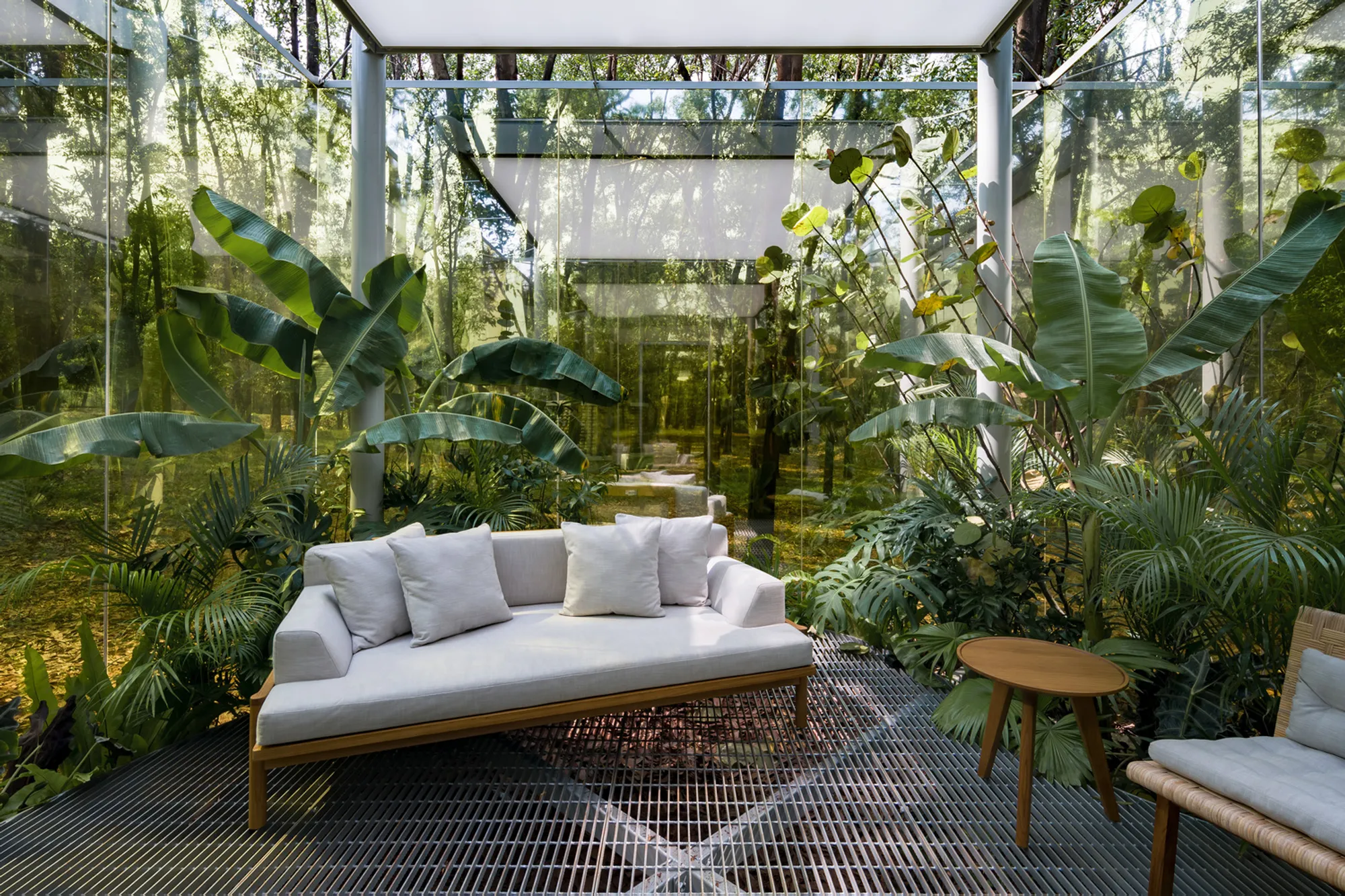
Room Installation by Tamara Wibowo Architects: A Meditation on Duality in Architectural Installations
Room Installation by Tamara Wibowo Architects is a reflective architectural installation exploring duality, perception, and the relationship between nature and design.


Architectural installations often serve as experimental platforms where architects can explore ideas beyond the constraints of traditional buildings. The Room Installation by Tamara Wibowo Architects in Ciputat Timur, Indonesia, is a powerful example of how architecture and nature can coexist in a carefully balanced dialogue. Designed in 2023, this 20 m² temporary pavilion is more than a spatial experiment; it is a meditation on duality and perception, reflecting how built forms can transform depending on time, light, and the presence of nature.
Concept: Duality as the Heart of Design
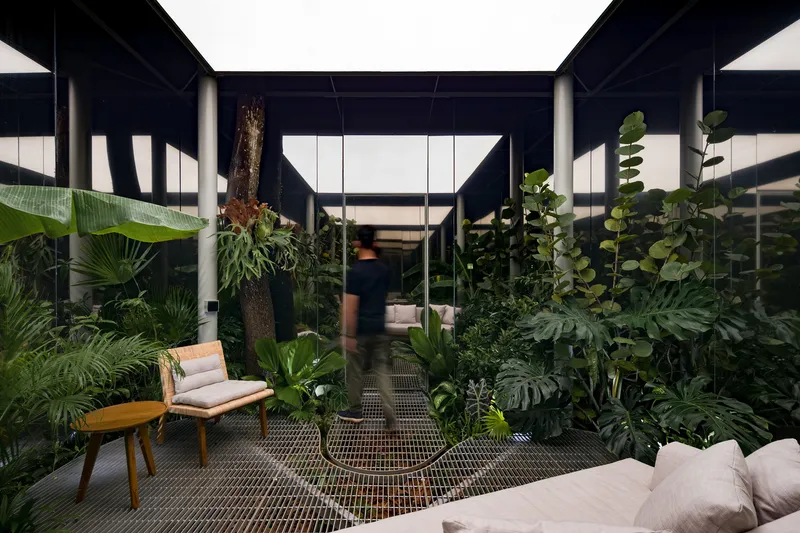
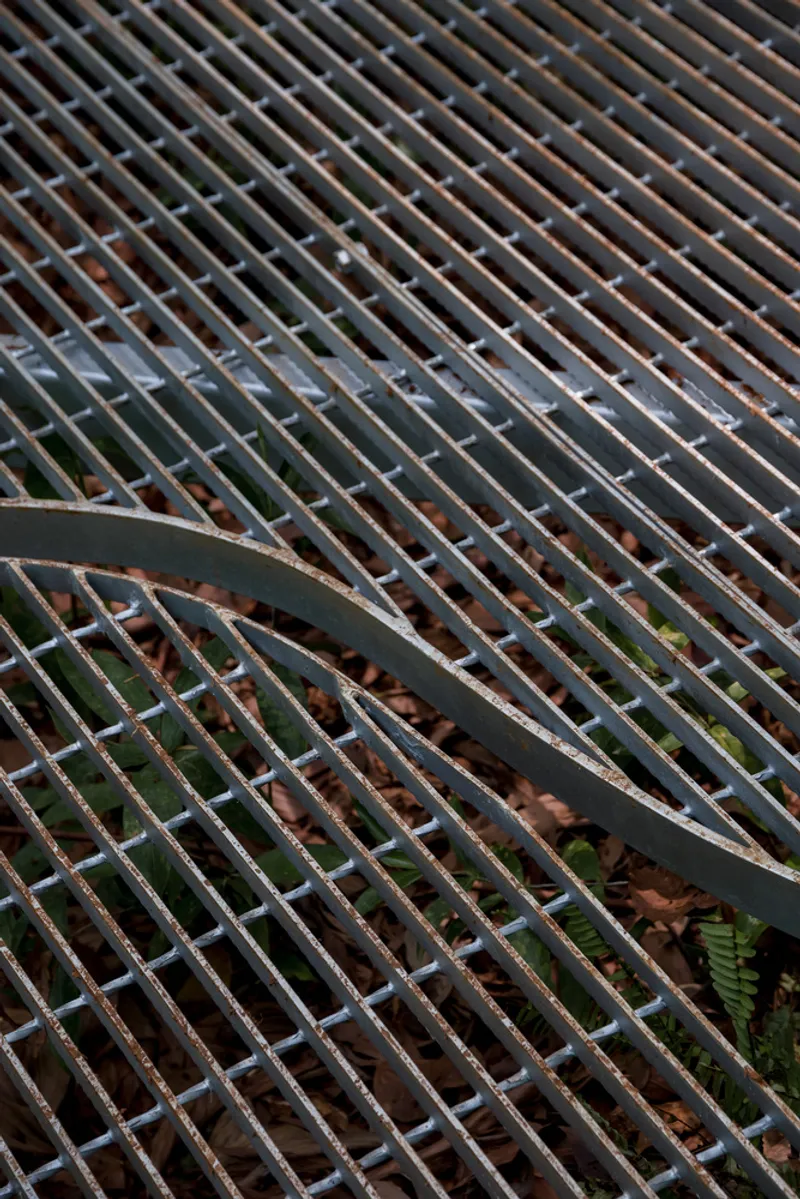
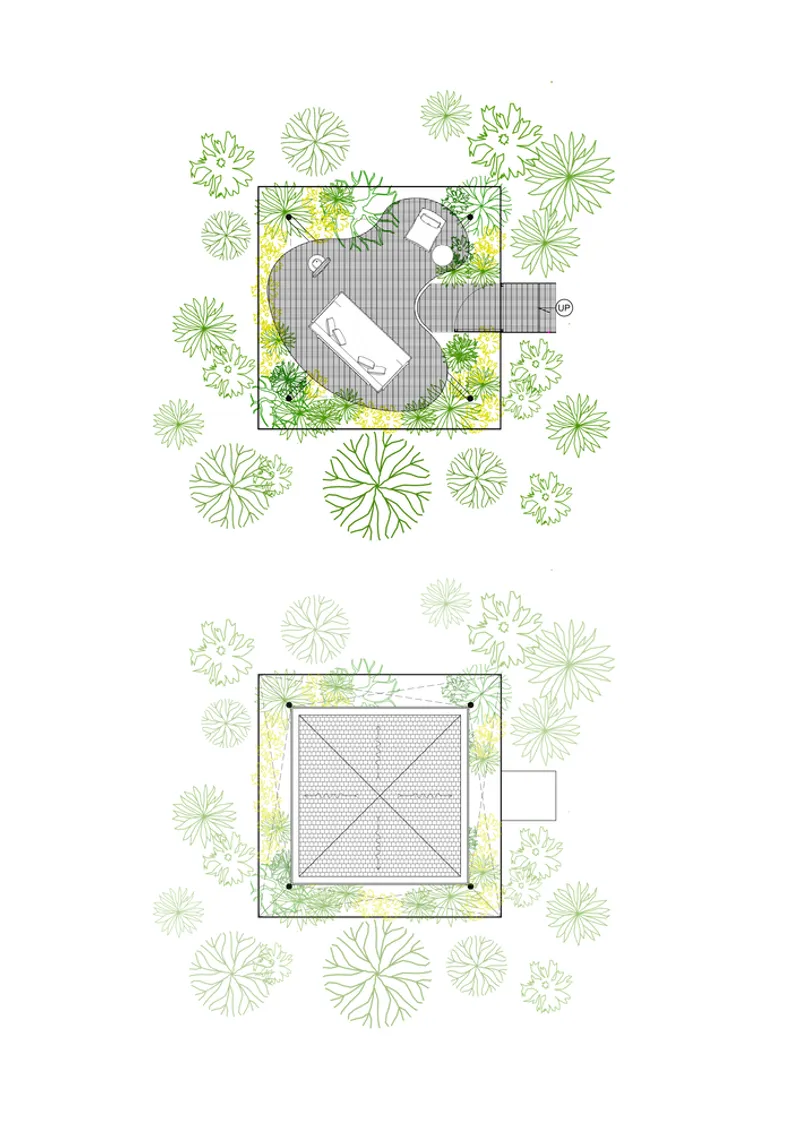
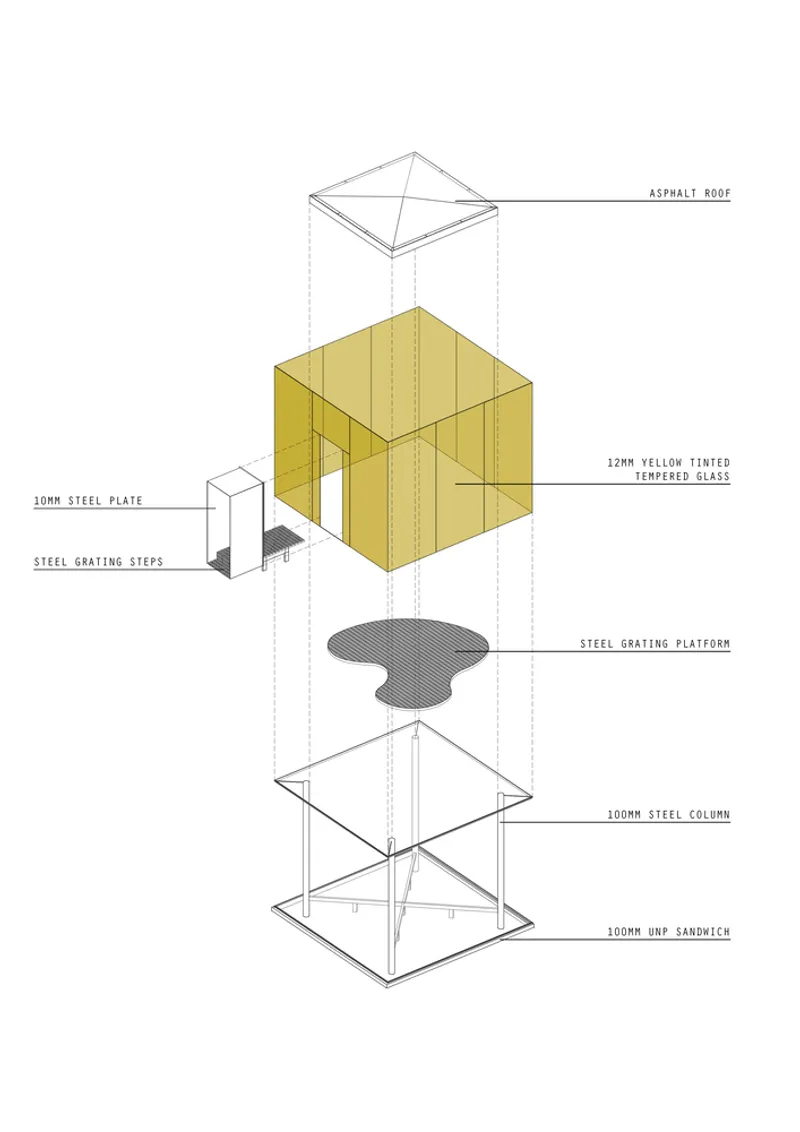
"Room" is conceived as an architectural diptych—two realities existing within one installation. The project challenges binary understandings of space, materiality, and perception, asking whether architecture should dominate nature or blend into it. By using tinted glass, wood, and orthogonal geometry, the installation embodies both order and organicity, both concealment and revelation.
Exterior: A Reflective Mirror in the Forest
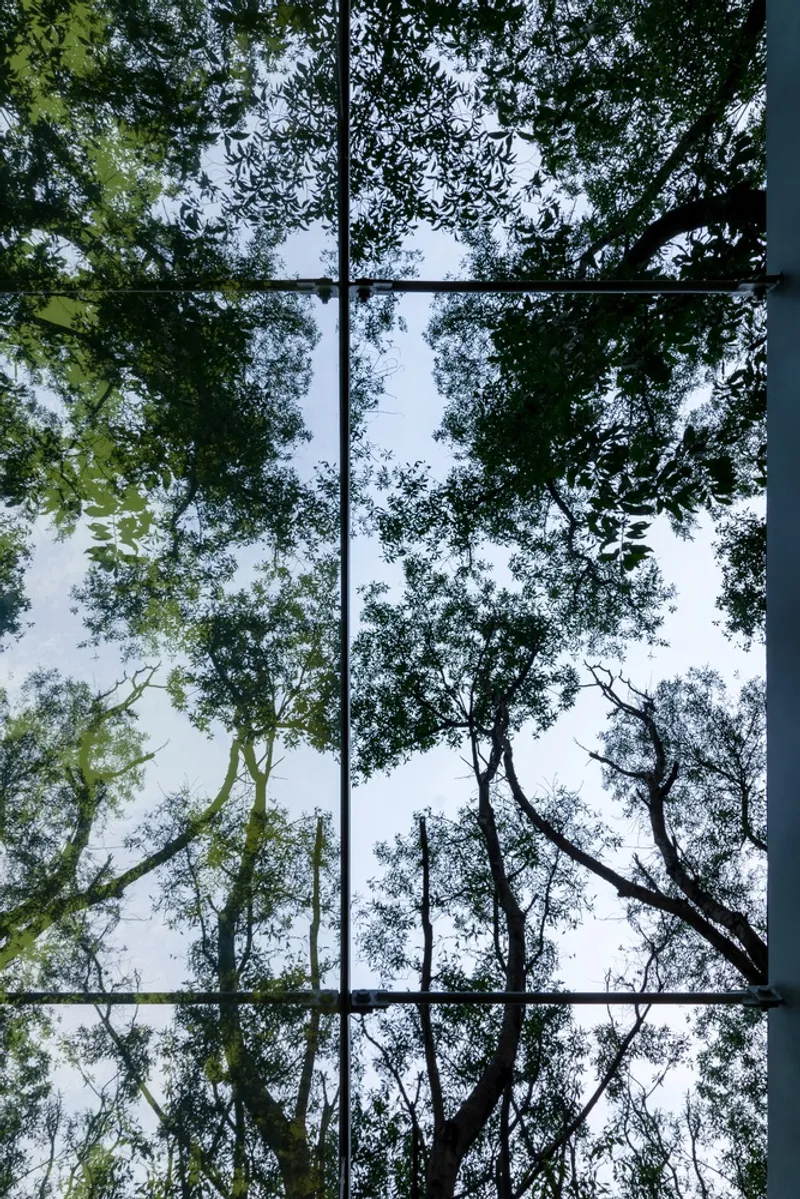
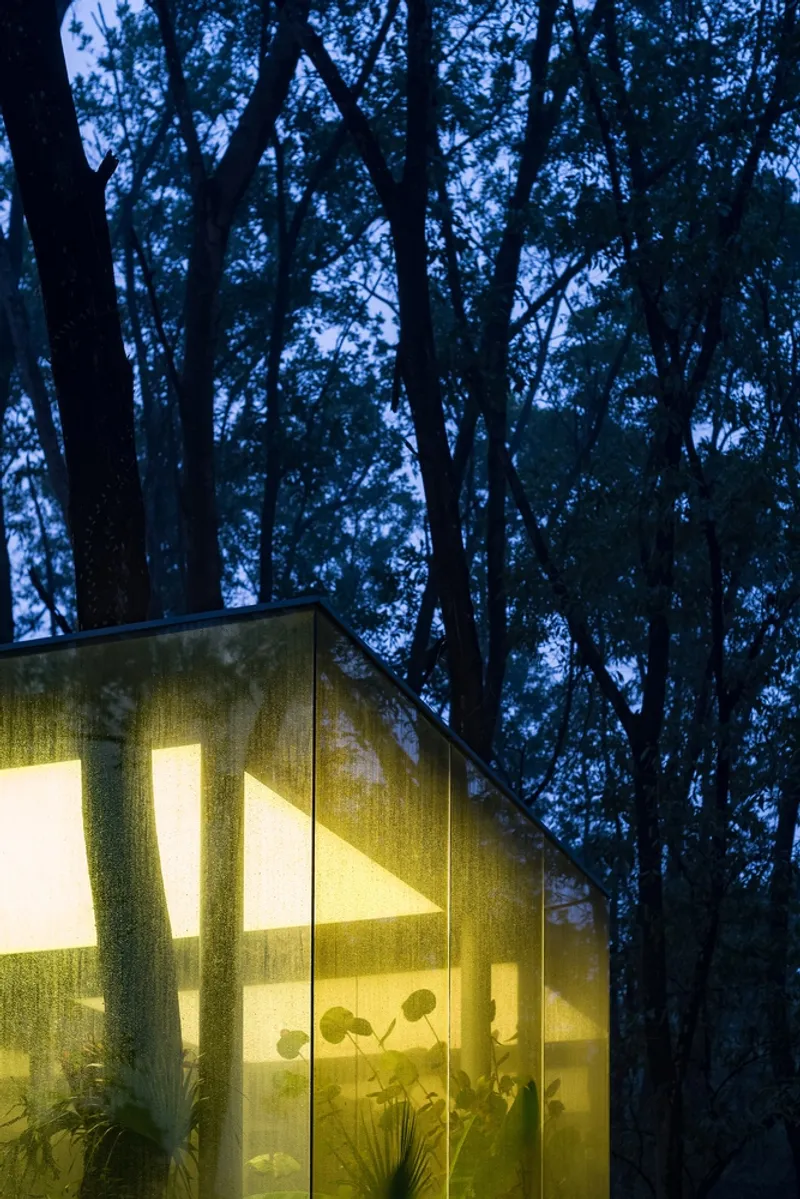
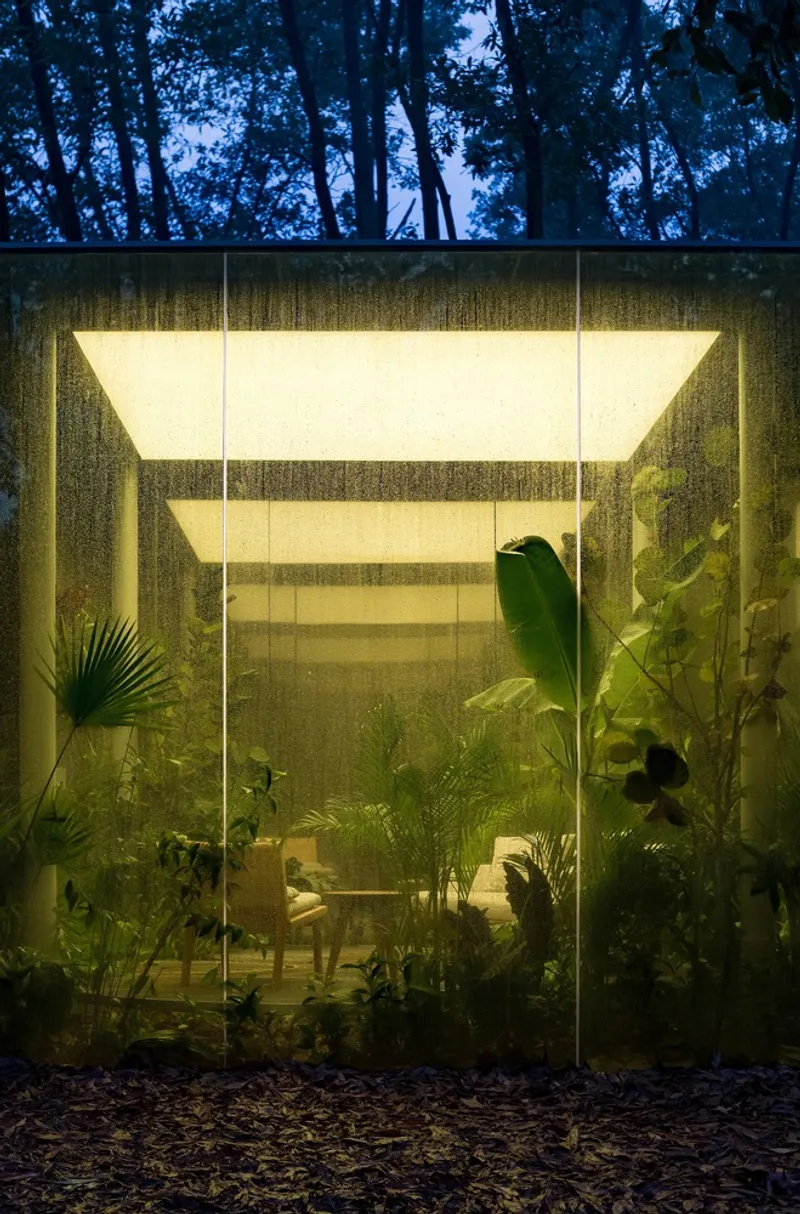
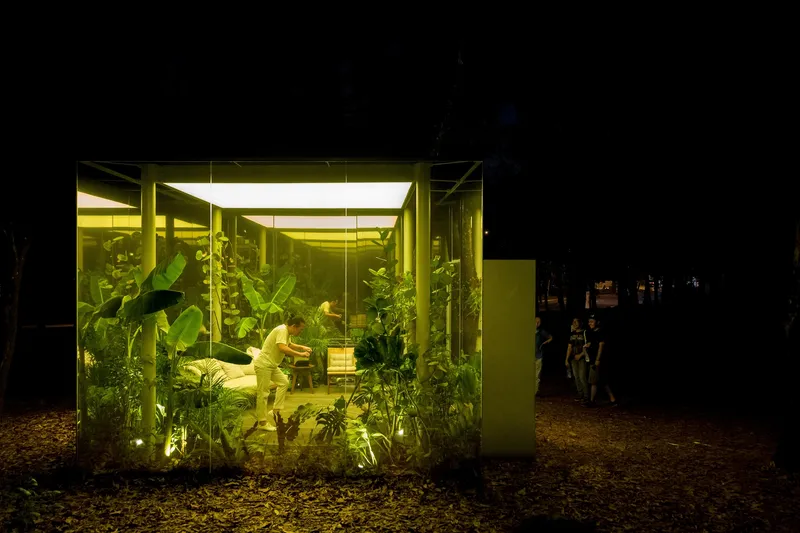
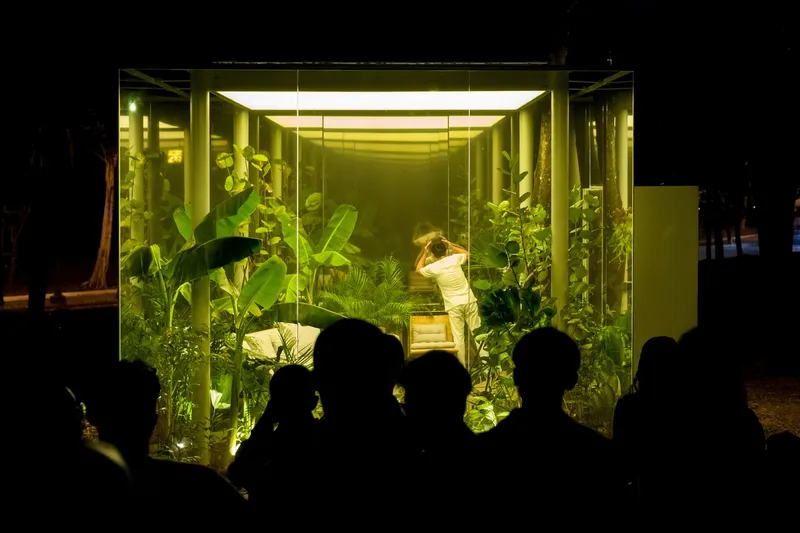
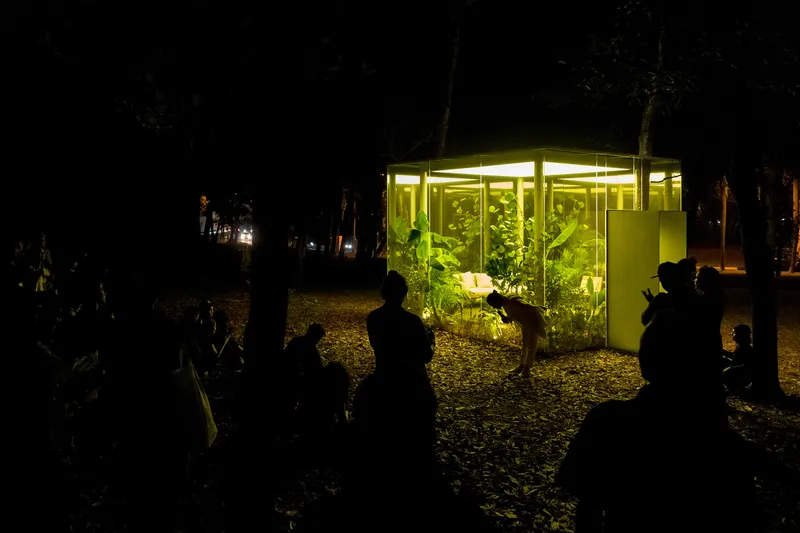
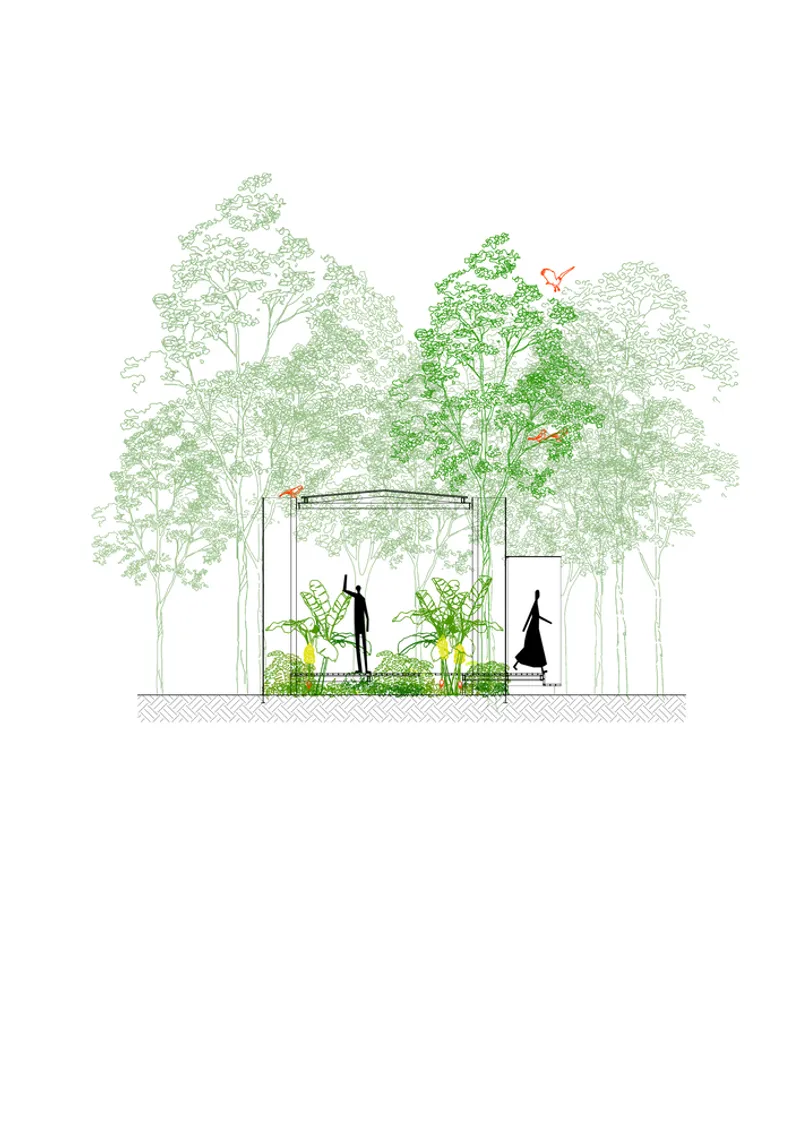
From the outside, the installation appears as a tinted-glass façade surrounded by a dense canopy of trees. By day, the semi-reflective surface mirrors its surroundings, making the structure nearly dissolve into the forest. By night, when illuminated, the pavilion becomes a glowing lantern, its transparency revealing an entirely different character. This transformation highlights how architectural installations can shift identities based on environmental conditions.
Interior: Transparency, Reflection, and Framing Nature
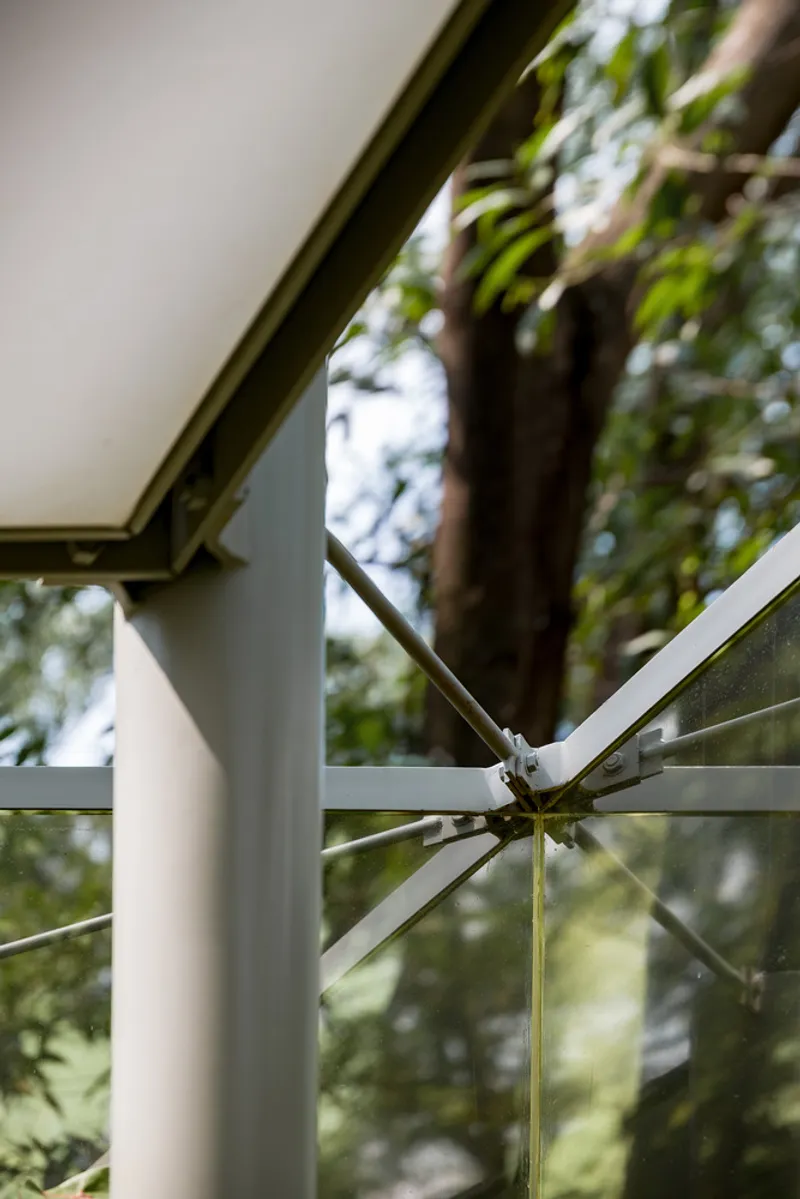
Stepping inside, the glass transforms the user’s perception. In daylight, it acts as a clear frame to the surrounding forest, creating a seamless visual connection. At night, the surface becomes a reflective veil, concealing the inhabitants while casting the forest back into view. The orthogonal planes of the installation soften against the organic patterns of the trees, reinforcing the installation’s dialogue between architectural order and natural irregularity.
The Dialogue Between Architecture and Nature
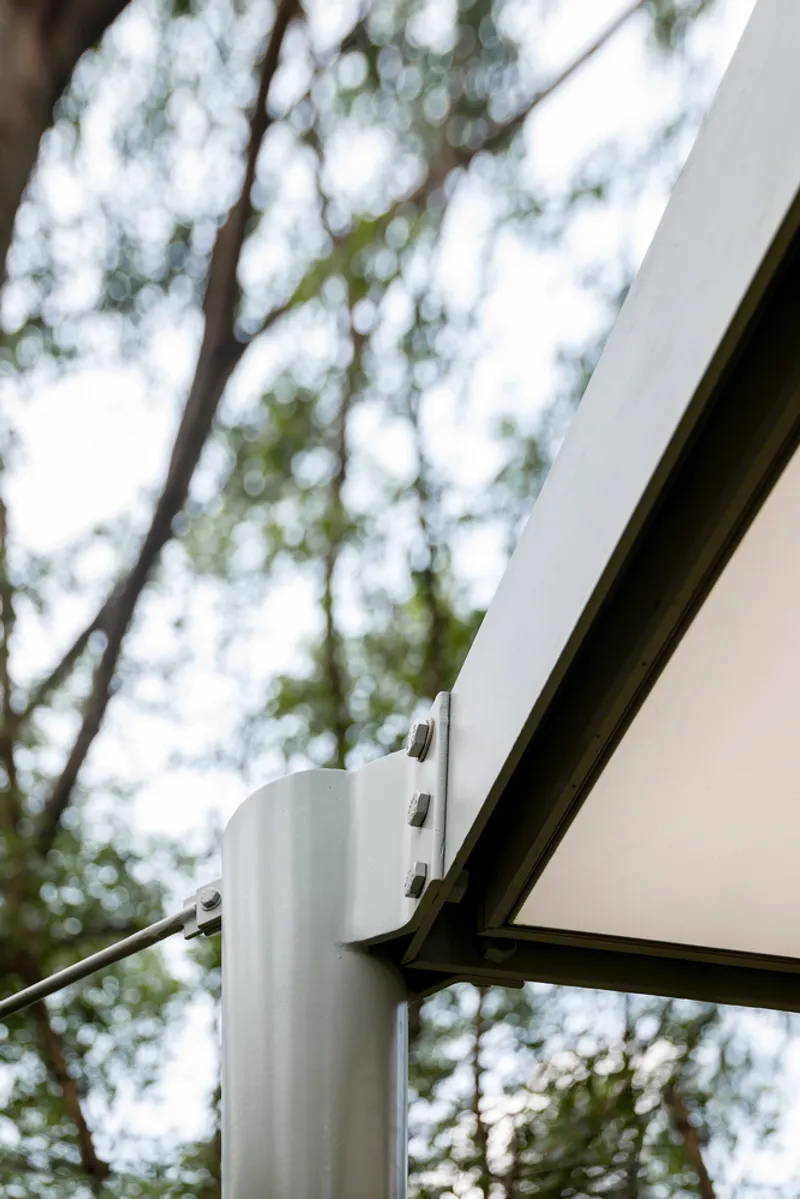
The installation raises critical questions about how we appropriate nature within architecture. Should architecture bend natural surroundings for comfort and clarity, or should it allow itself to be absorbed into natural rhythms? The Room Installation resists giving definitive answers, instead creating a stage for visitors to reflect on the relationship between architectural geometry and organic landscapes.
Experience: Negotiating Boundaries
Every view from within the Room Installation becomes an act of negotiation. Visitors find themselves shifting between interior and exterior awareness, between the tension of being seen and unseen. This collapsing of public and private boundaries reveals the true strength of the installation: it transforms into a space of contemplation where dualities merge into a continuum.
A Landmark in Architectural Installations
By embracing dualities—reflective and transparent, simple and complex, real and imaginary—Tamara Wibowo Architects offers more than just a temporary structure. The Room Installation is a profound exploration of how architectural installations can redefine our relationship with nature, perception, and space itself. It is both architecture and philosophy, both structure and spectacle, leaving its visitors questioning the very thresholds that define their world.
All Photographs are works of Andreas Widi



Popular Articles
Popular articles from the community


The Musturak Paradise: Senior Living Architecture for a Connected Future in Temara, Morocco
The Musturak Paradise reimagines senior living architecture in Temara via private homes, social spaces, culture, community, and shared care.

Co-life: Sustainable Architecture for Age-Friendly Community Living
Co-life reimagines sustainable architecture for seniors through courtyards, rammed earth, shared gardens, and spaces designed for belonging.

Hill & Cross Opera: Sculptural Opera House Architecture Shaped by Tallinn’s Landscape and Identity
Hill & Cross Opera reimagines opera house architecture in Tallinn through its sculptural hill, civic plaza, glass wave and a luminous cross.

EW PARK: Sustainable Architecture Reimagines the Future of Urban Parking
EW PARK reimagines city parking as a modular wooden tower combining automation, solar energy, electric mobility, and adaptable urban design.

Similar Reads
You might also enjoy these articles

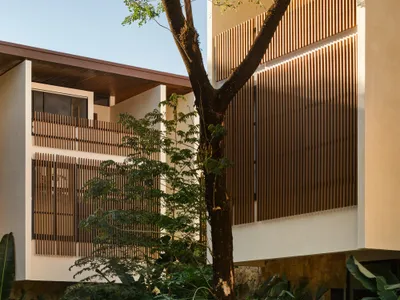
FAMM Arquitectura Organizes Ten Villas Around Courtyards and Jungle in Nosara, Costa Rica
El Molino pairs two elongated volumes with deep overhangs and timber louvers to build a compact coastal community five minutes from the beach.
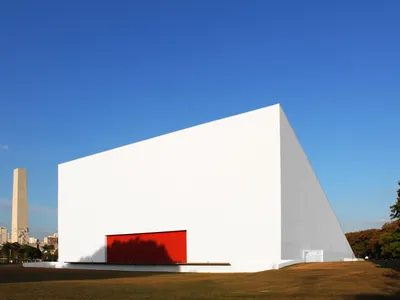
Oscar Niemeyer's Ibirapuera Park Pavilions Define São Paulo's Cultural Identity in Concrete and Curve
A constellation of modernist volumes set within São Paulo's most important urban park, conceived for the city's 400th anniversary in 1954.
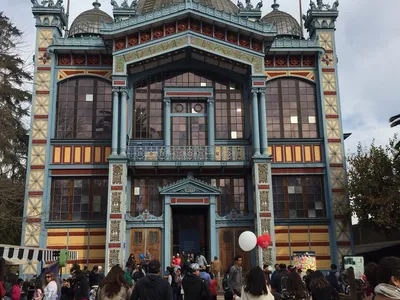
How Henri Picq's 1889 Paris Pavilion Traveled 11,000 Kilometers to Become Santiago's Artequín Museum
A prefabricated iron and glass pavilion built for the Paris Universal Exposition found a second life as a children's art museum in Chile.
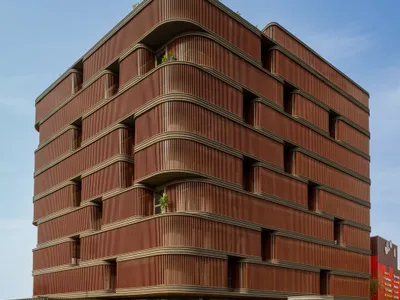
Sanjay Puri Architects Wraps a Jaipur Office Tower in Capsule-Shaped Green Buffers
A nine-level climate-responsive workplace near Jaipur Airport uses stacked planter terraces and aluminium screens to fight 40°C heat.


Explore Architecture Competitions
Discover active competitions in this discipline



Challenge to reimagine the Iron Throne


Photograph architecture without architects


Illustrate the lost glory of Angkor Wat - Render Challenge


Design challenge to reuse E-waste
Comments (0)
Please login or sign up to add comments
No comments yet. Be the first to comment!