

Rosa Rowhouse Renovation and Extension by Atlas Architecture – A Contemporary Pink Brick Transformation in Bussum
A pink brick extension transforms a 1960s rowhouse with a multifunctional masonry block, expanded kitchen, and seamless indoor–outdoor living.


A Sensitive Renovation that Reimagines a 1960s Rowhouse
The Rosa Rowhouse Renovation and Extension by Atlas Architecture breathes new life into a modest 1960s brown-brick home in Bussum, The Netherlands. Designed by Carlos Callejo and Jordy Vos, the project blends heritage sensitivity, material warmth, and playful modernity, transforming the ground floor into an open, multifunctional space centered around a distinctive pink design language.
This renovation exemplifies how a compact 20-square-meter extension can profoundly reshape daily living, using color, texture, and smart spatial strategy to enhance both interior flow and outdoor connection.
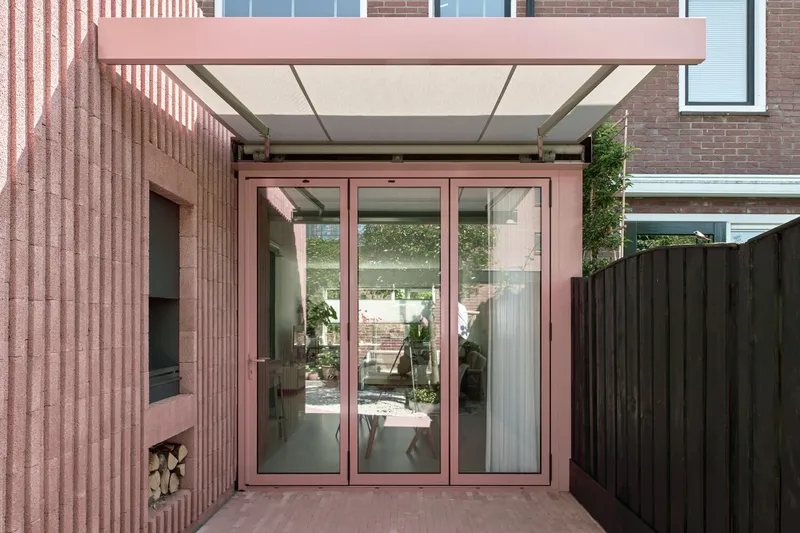
A Cohesive Pink Palette that Defines Identity
At the heart of the design is a bold yet elegant pink concrete masonry block, which anchors the new addition both visually and functionally. Carefully crafted and installed with vertically glued concrete bricks, this signature element embodies the project’s blend of craftsmanship and contemporary architectural expression.
The block integrates multiple built-in functions—cabinetry, storage, and even an outdoor fireplace—showing how thoughtful detailing can maximize use while maintaining a clean, minimalist presence. Its vertical patterning adds rhythm and a sculptural feel, creating a smooth dialogue with the original brown-brick façade.
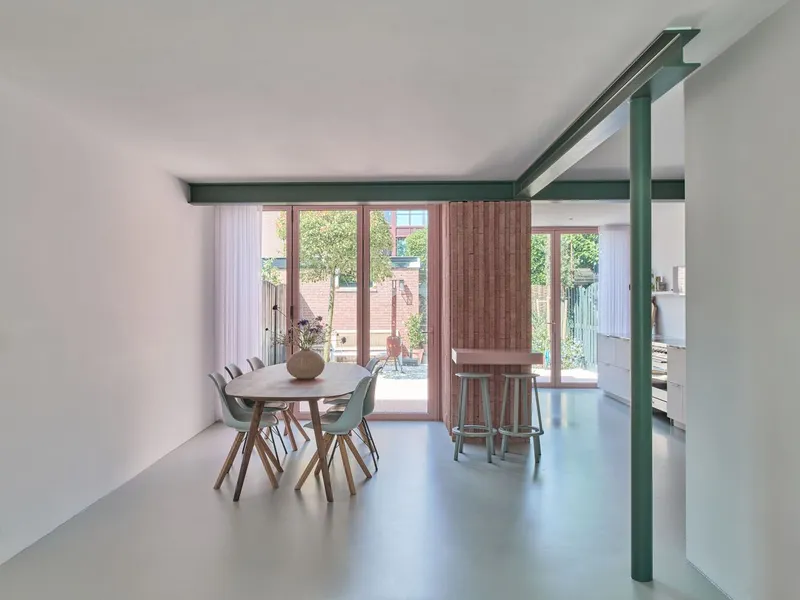
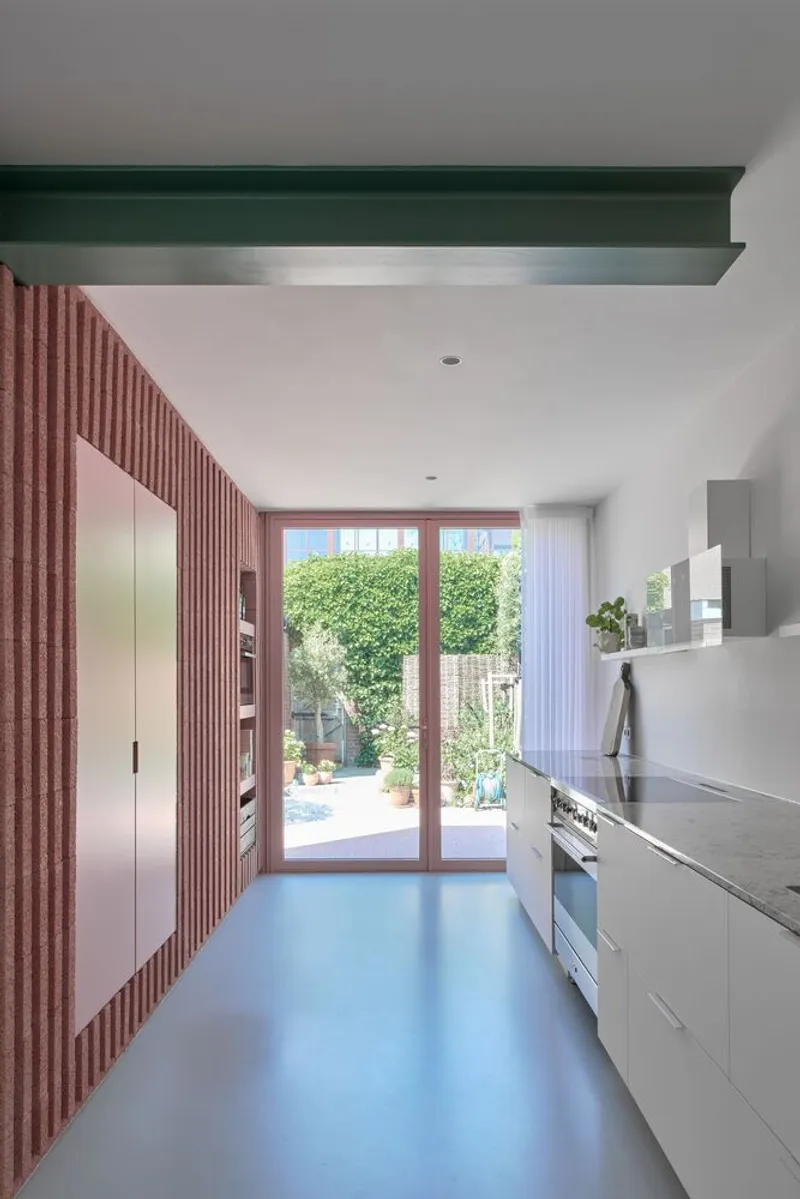
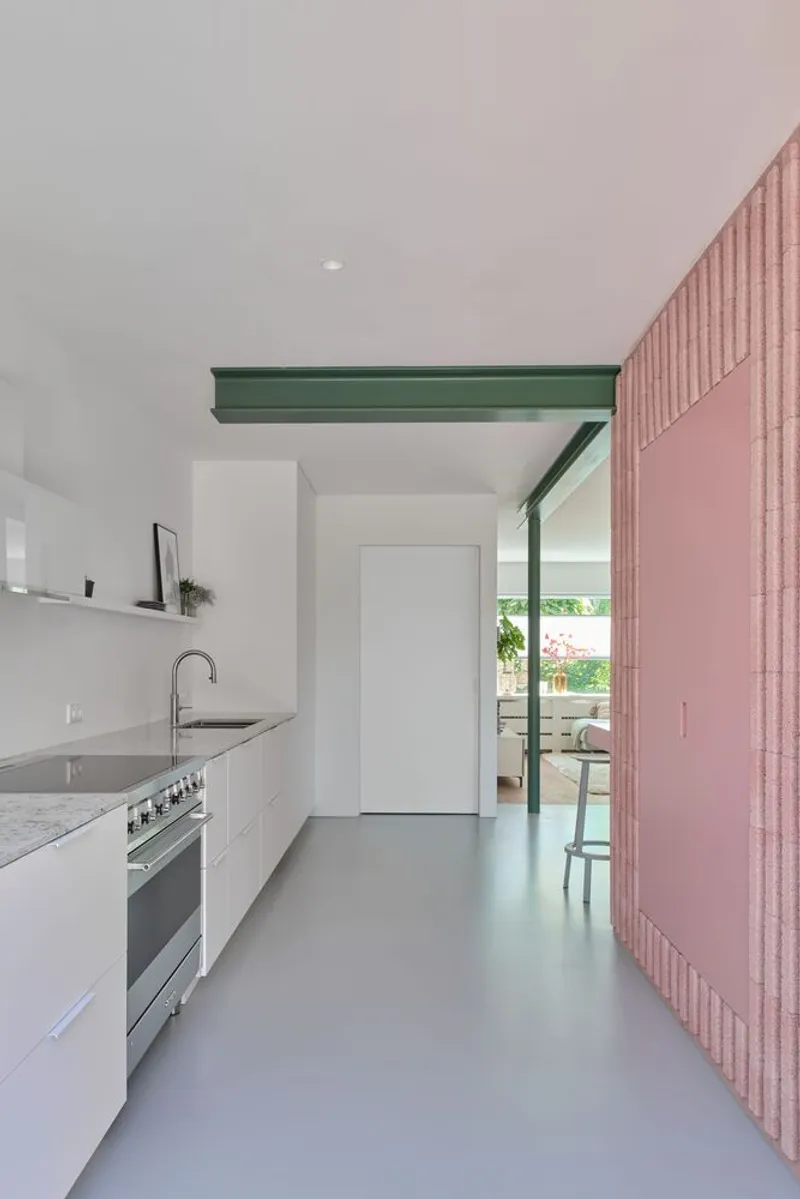
Expanding the Kitchen and Dining Spaces
The renovation primarily expands the kitchen and dining area, turning previously confined rooms into a bright, open hub for family life. Large folding doors open onto the garden, dissolving the boundary between indoors and outdoors.
The designers extend the same pink masonry into the garden terrace, creating a seamless ground-plane connection between the interior extension and the landscaped exterior. Paired with aluminum window frames in a matching hue, the palette creates a unified architectural identity throughout the project.
A hidden sunscreen, subtly integrated behind the aluminum frames, offers sun protection without compromising the refined minimalism of the façade—an example of the project’s careful balance between aesthetics and daily functionality.
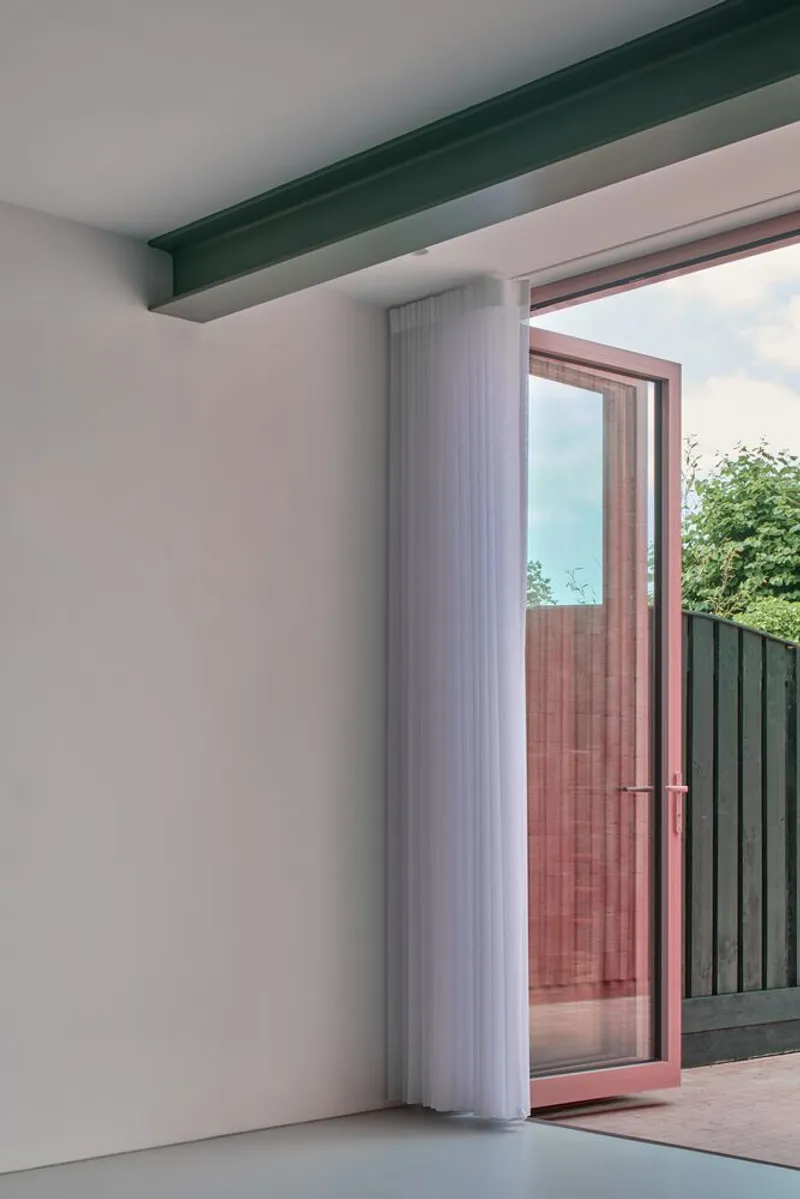
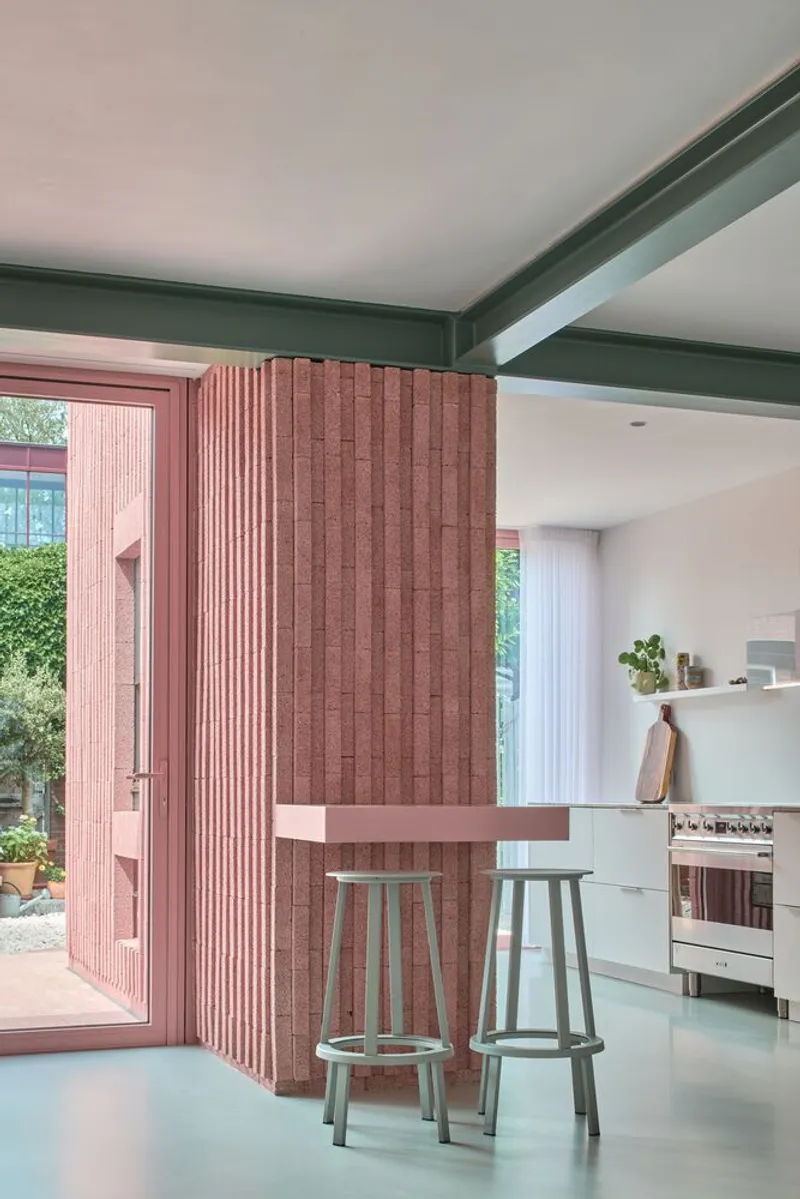
Craftsmanship and Material Clarity
From the precisely laid vertical brickwork to the gentle tonal variations across the pink elements, the renovation showcases a dedication to material honesty and craftsmanship. The selection of BIA Beton bricks and Reynears aluminum frames supports the project’s commitment to durability and precision.
The result is a warm, inviting environment that honors the character of the original rowhouse while elevating it through strategic contemporary interventions.
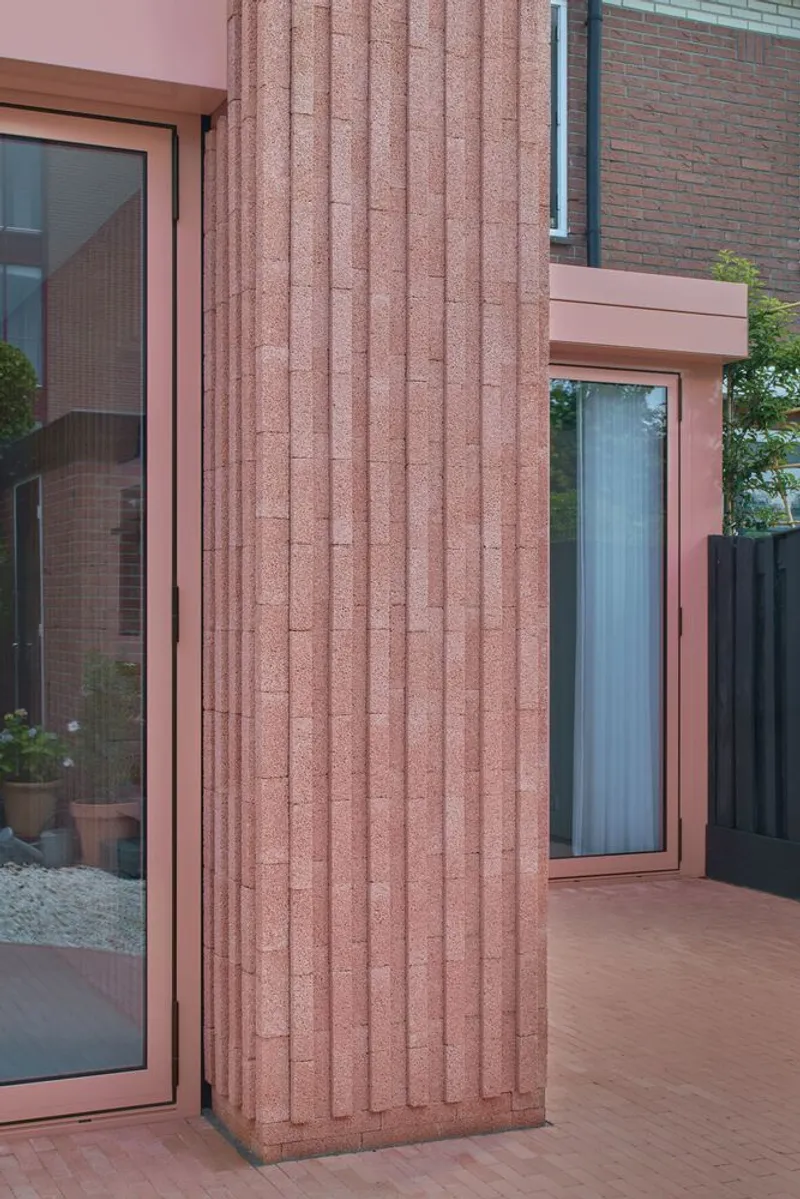
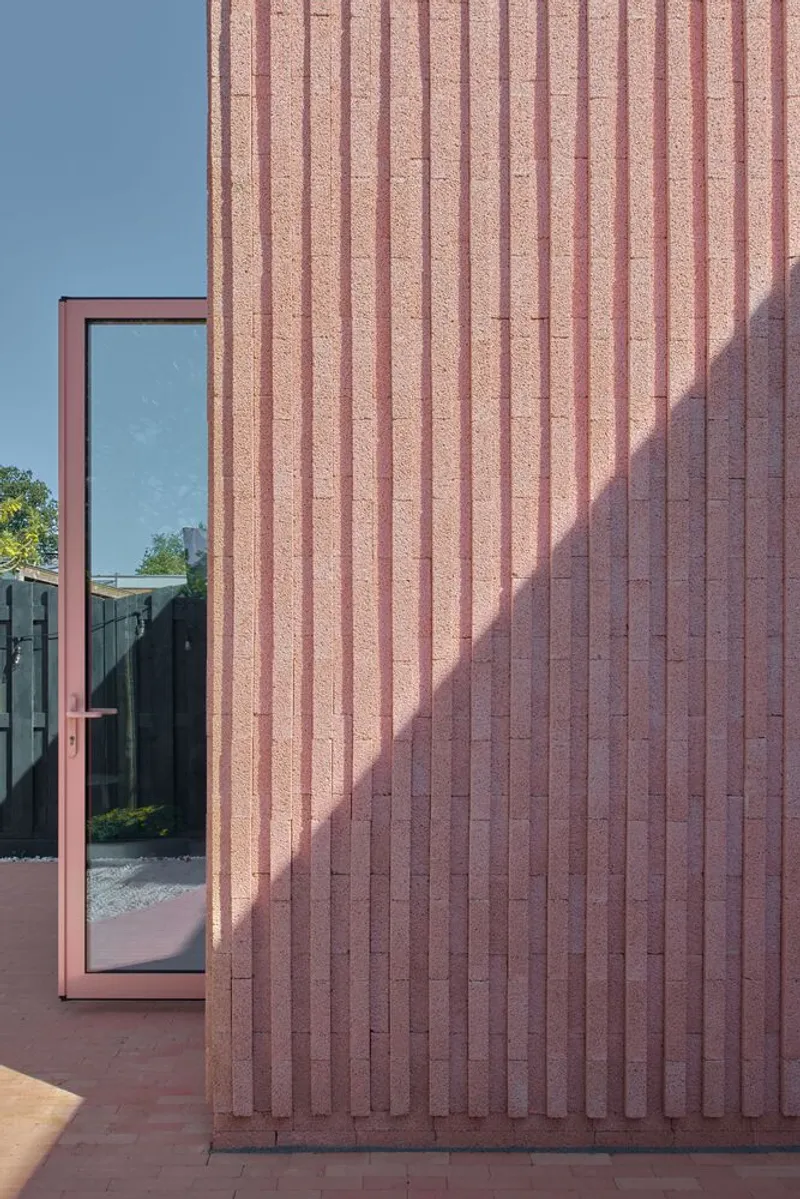
A Modern Extension Rooted in Context
"Rosa" demonstrates how a restrained color palette, purpose-driven design, and multifunctional architectural elements can redefine a compact rowhouse. The project succeeds in creating a cohesive living environment where past and present coexist, offering modern comfort while honoring the home’s mid-century identity.
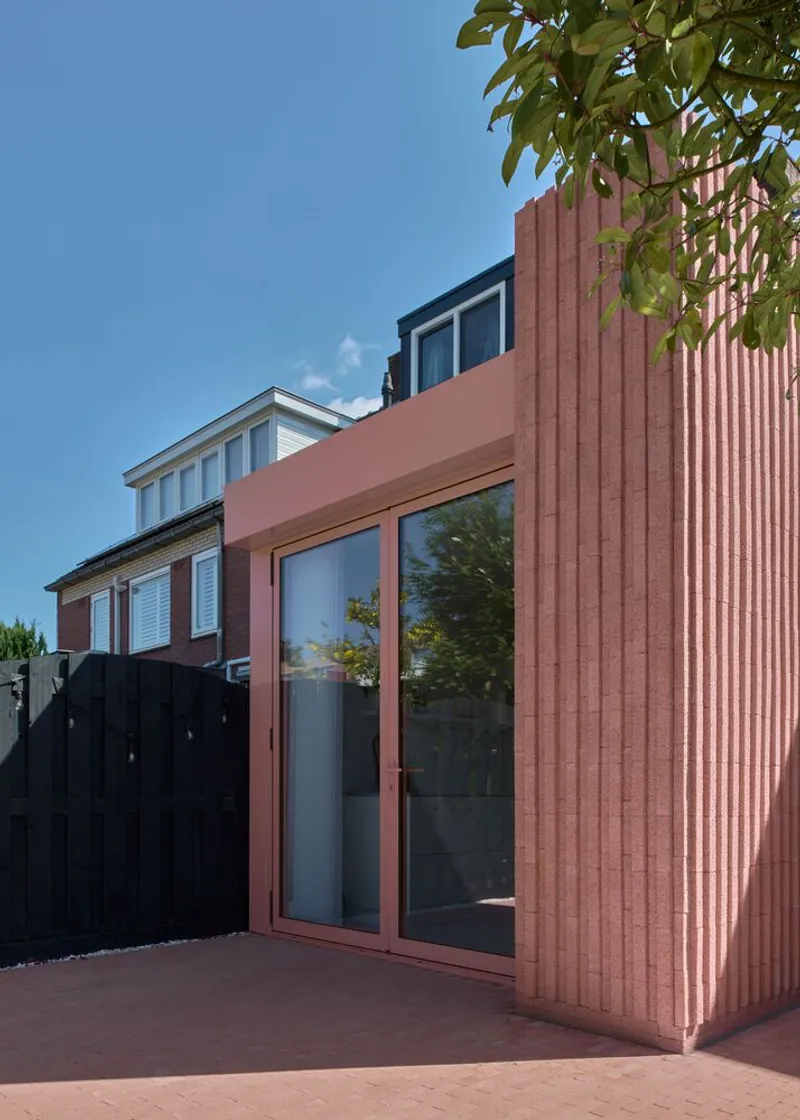
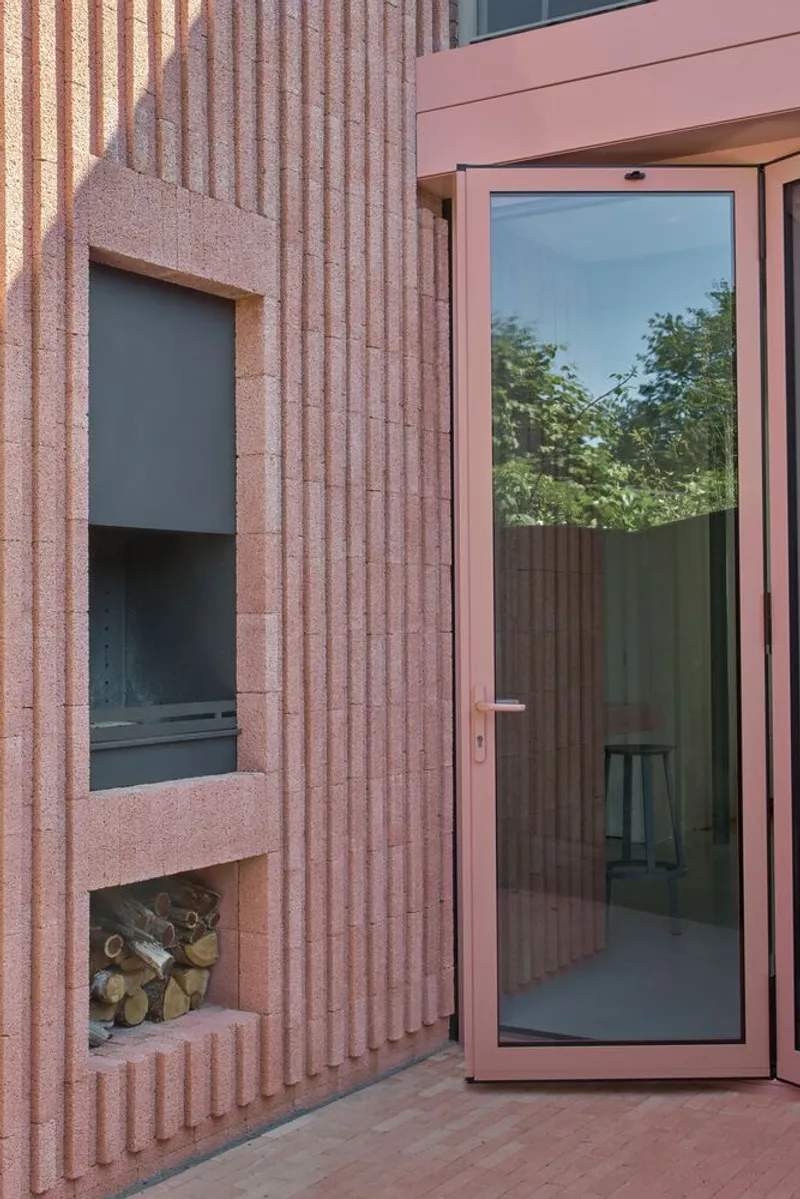
All photographs are works of Max Hart Nibbrig


Popular Articles
Popular articles from the community

Opera by the Sea Estonia: Three Shells Dissolving Architecture into Tallinn's Coastline
A winning opera house proposal replaces monumental form with interconnected shells that blur the boundary between building, park and Baltic Sea.
Temporary Home for Dogs: A Reversed Zoo Rethinks Animal Shelter Architecture
In Bucharest, a sinuous corridor and freed landscape flip the logic of containment, designing a shelter that works to make itself unnecessary.
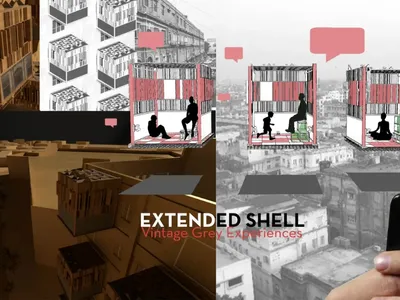
Extended Shell: Retrofitting Kolkata's Balconies as Living Urban Thresholds
A modular retrofit system recovers the social and environmental intelligence of Kolkata's historic verandas for contemporary Park Street residents.
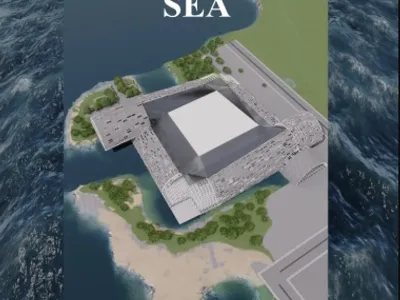
Opera on the Sea: Driftwood Logic Shapes a Timber Opera House on Estonia's Coast
Trevor Orgill's opera house translates the entangled drift of floating timber into a civic building where wood, water, and music converge.

Similar Reads
You might also enjoy these articles


Hodi-Mandai Geram
Project Function: Preservation and revitalization of the Intangible heritage and socio-spatial identity of the Hodi by Housing, Cultural Memory Center, Sacred Grove, landscape, local tourism economy

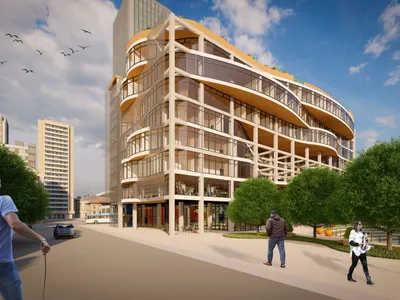
Olio Towers: A Mid-Rise for Performers That Fuses Housing, Rehearsal, and Stage
Located blocks from Houston's Theater District, this modular tower stacks living units around a central performance atrium.
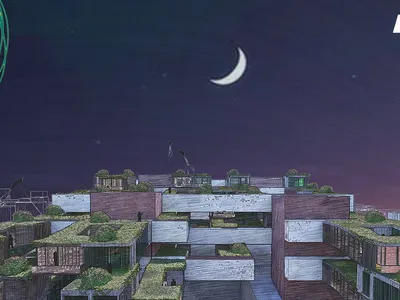
Oasis: Modular Green Housing Carved into Dhaka's Urban Fabric
A shortlisted Plugin Housing entry reclaims unauthorized settlements in Dhaka with stepped concrete volumes, green roofs, and ventilation-driven design.

Black Hole: A Floating Megastructure for the Post-Physical Era
Emiliano Mazzarotto envisions a spherical, self-scaling arena where e-sports, digital hotels, and holographic stadiums replace traditional public space.

Explore Exposed Brick Competitions
Discover active competitions in this discipline

Challenge to reimagine the Iron Throne

Photograph architecture without architects

Illustrate the lost glory of Angkor Wat - Render Challenge

Design challenge to reuse E-waste
Comments (0)
Please login or sign up to add comments
No comments yet. Be the first to comment!