
Round House Estate Bungalow: A Forest-Inspired Circular Retreat Shaped by Landscape and Light
Circular timber bungalow in cinnamon estate, blending forest-like spaces, filtered light, and panoramic views with minimal-impact design and natural landscape integration.

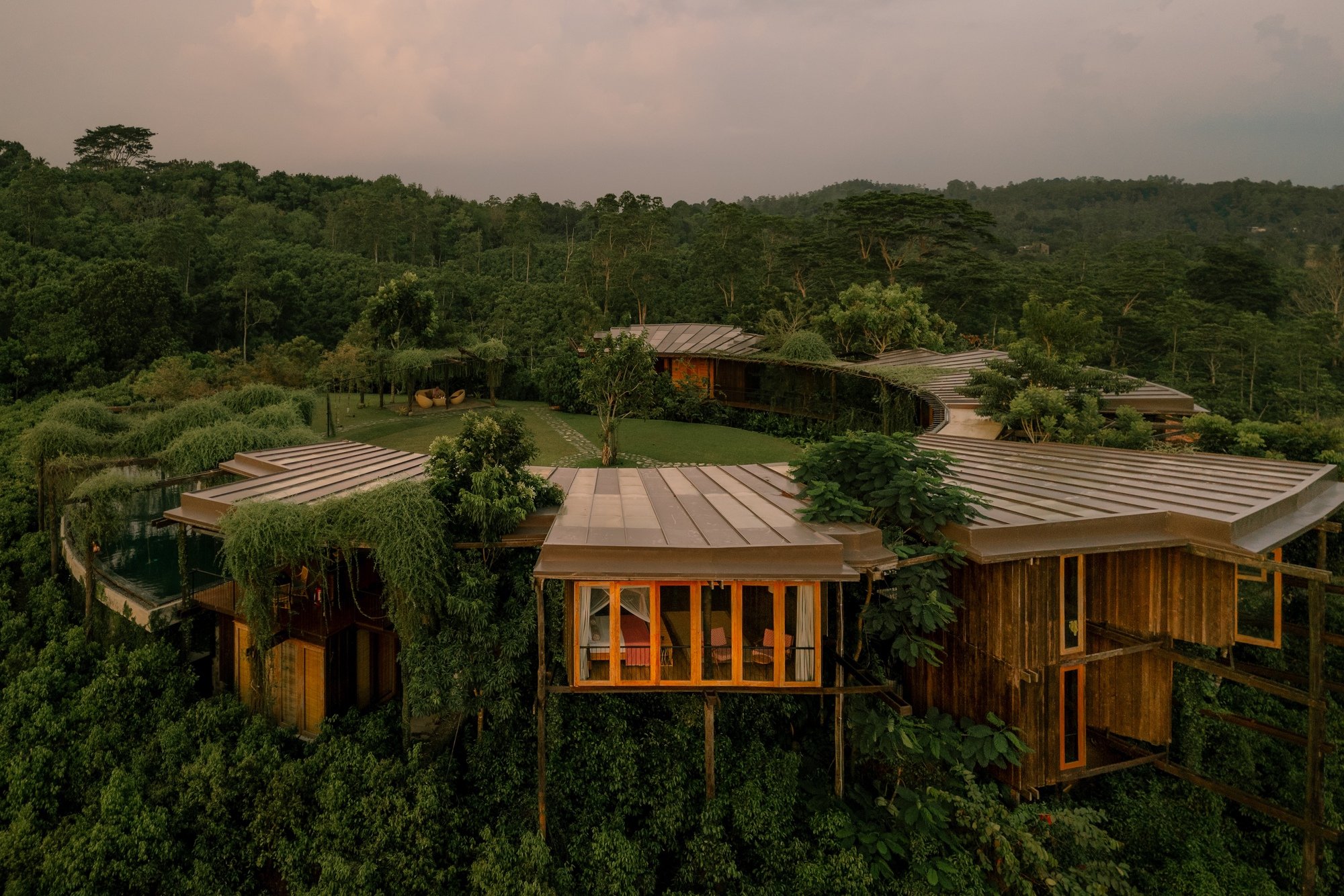
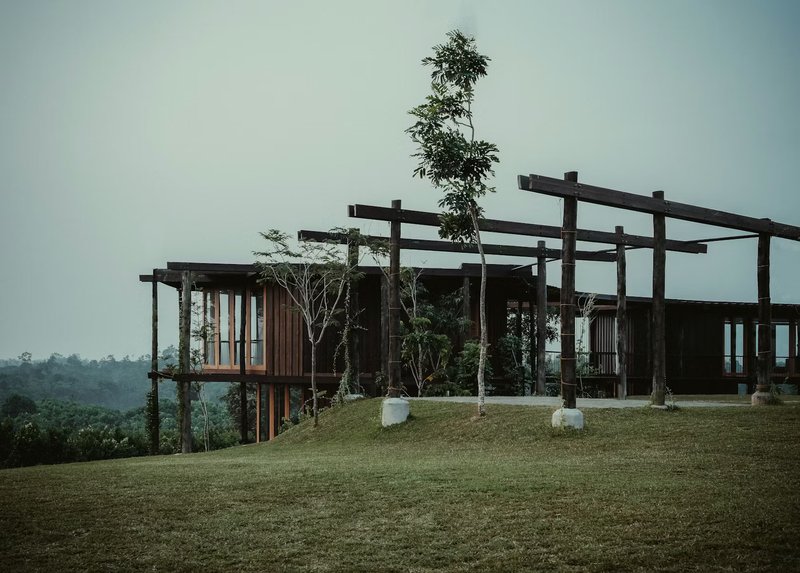
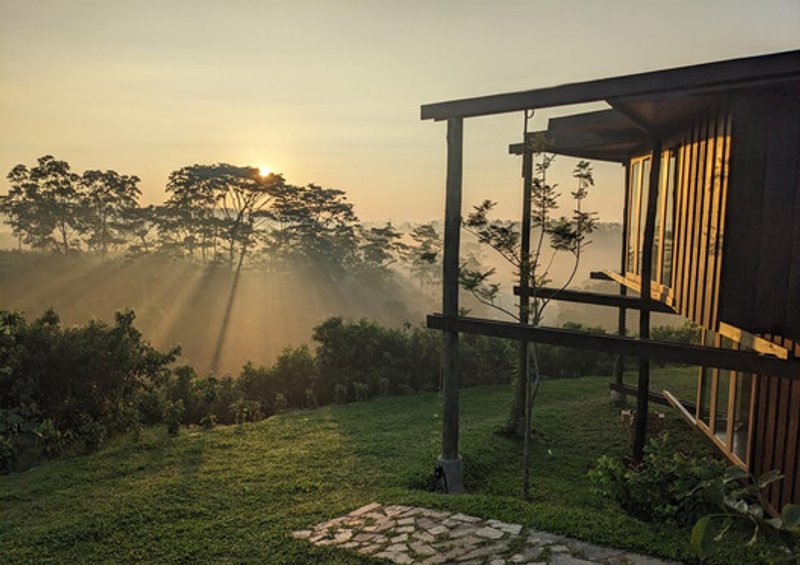
Perched atop the highest point of a cinnamon estate in Ahangama, Sri Lanka, the Round House Estate Bungalow by Narein Perera is a deeply site-responsive project that transforms landscape into architecture. Surrounded by vast paddy fields, the estate rises like a 12-acre island, offering uninterrupted 360-degree views of the horizon. This unique condition becomes the primary generator of the design, shaping both form and spatial experience.
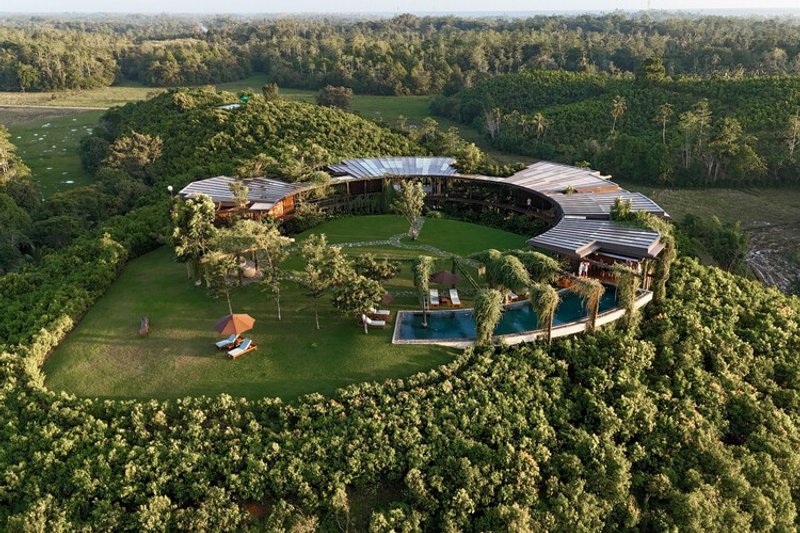
The architectural concept emerges from the idea of a forest clearing. Rather than imposing a rigid geometry onto the land, the bungalow is conceived as a circular edge, defining an inner boundary while allowing the outer perimeter to dissolve organically into the surrounding plantation. This strategy enables the building to merge seamlessly with its environment, appearing less as an object and more as a continuation of the landscape itself.
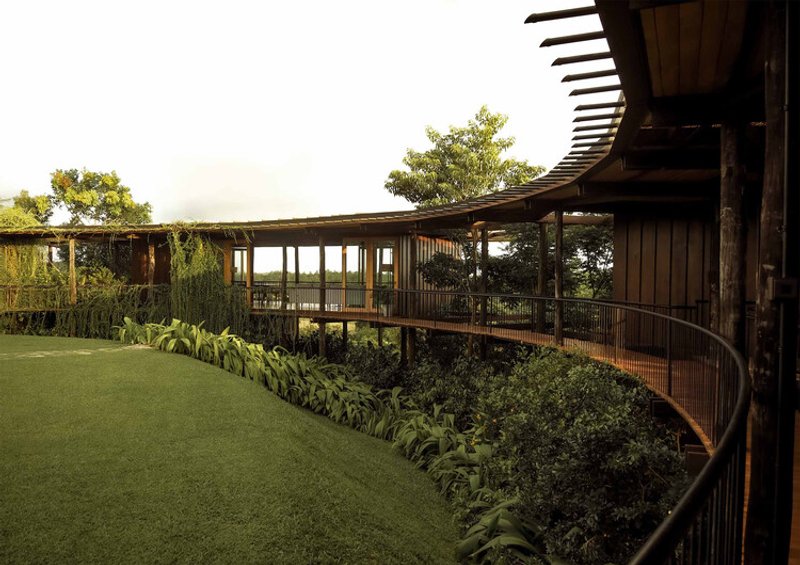
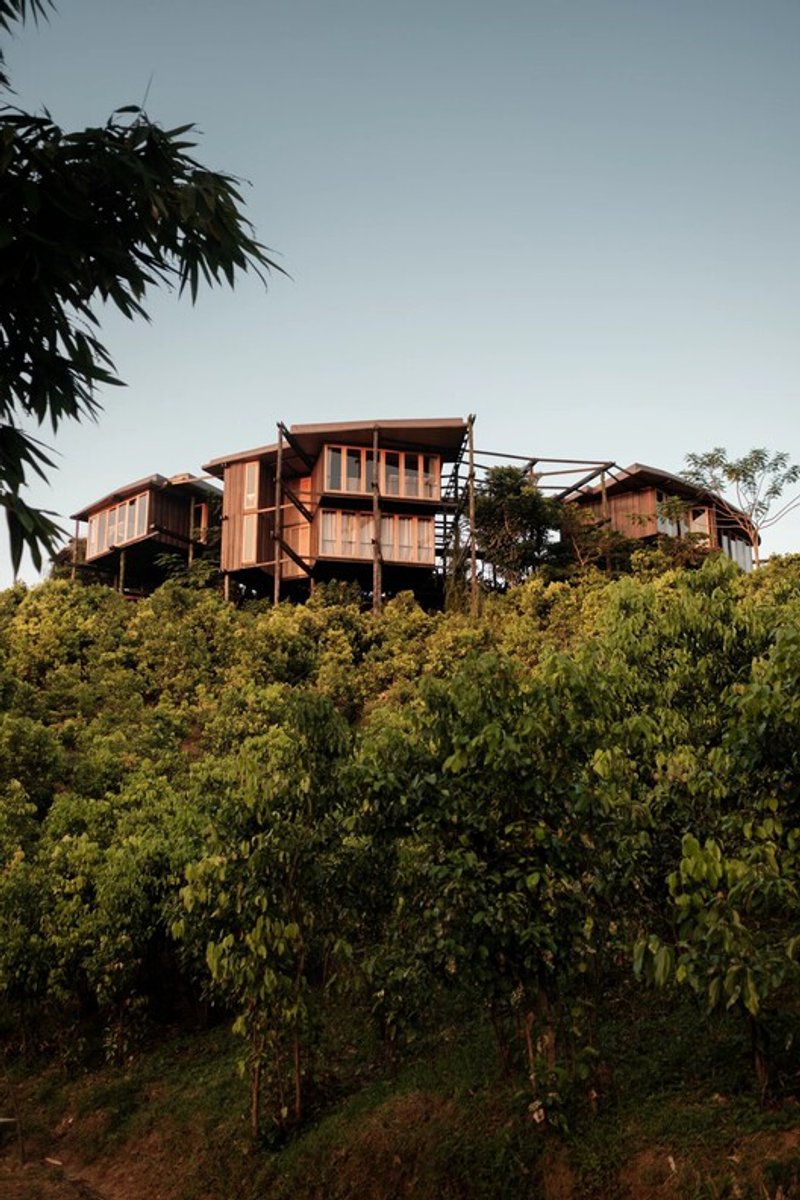
The approach to the house is intentionally experiential. Moving through dense vegetation, the path gradually opens up to reveal the expansive plateau and sky beyond. This transition from compression to openness mirrors the spatial organization of the house, where views are not immediately exposed but carefully revealed. Once inside, the architecture frames the surrounding landscape in multiple ways, borrowing distant vistas while maintaining a strong connection to the immediate context.
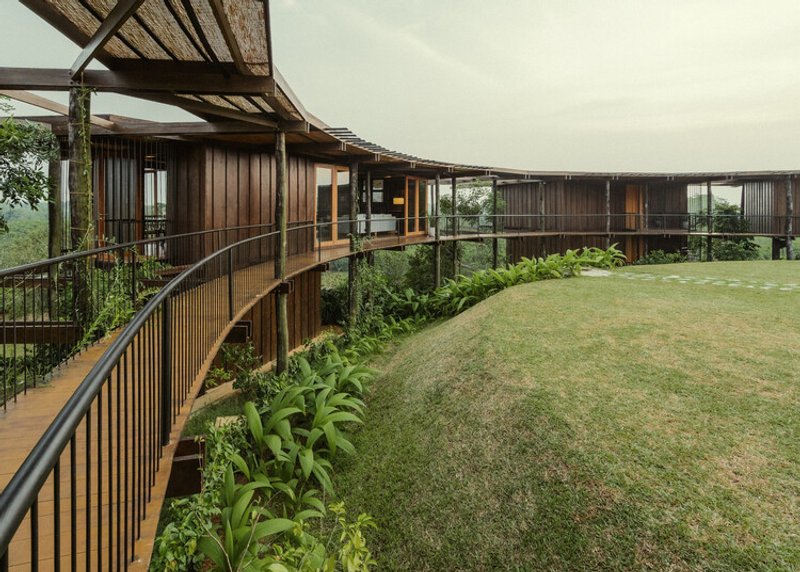
The internal layout is organized into a series of distinct zones, composed as an interplay of solids and voids. Rejecting symmetry, the design mimics the irregularity of a forest, where shifting perspectives and layered elements create varied experiences from different vantage points. Spaces are arranged to offer unique visual relationships with the landscape, allowing occupants to engage with the environment in dynamic and personal ways.
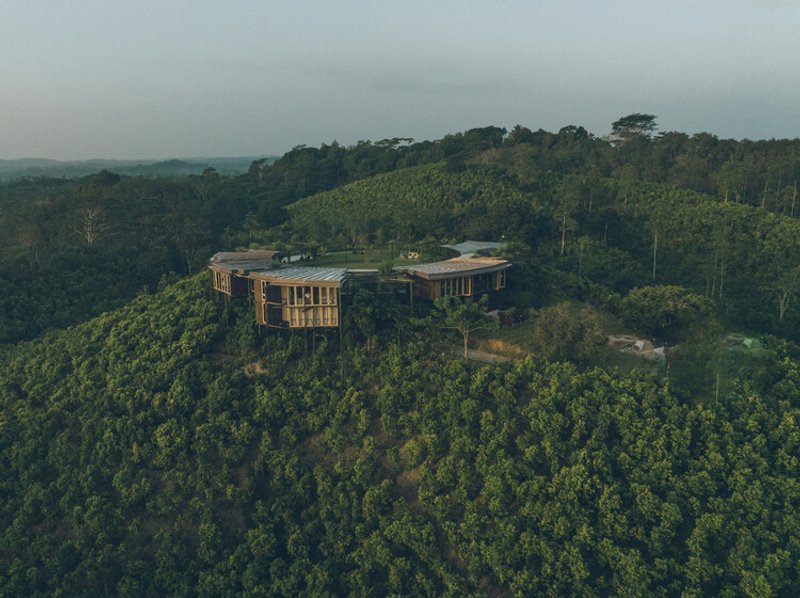
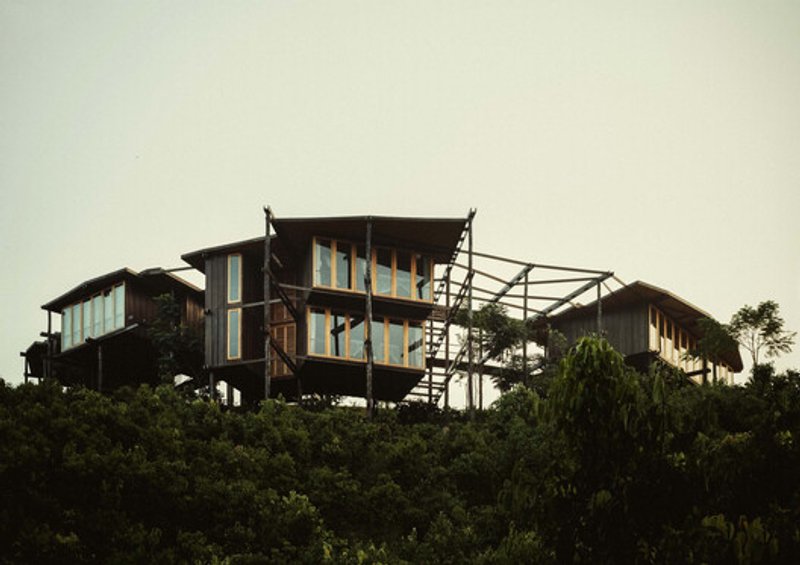
The roof, while fundamentally radial, is deliberately fragmented by the positioning of individual volumes. This break in uniformity reinforces the organic character of the design, echoing the randomness of natural growth. At the center of the composition, a banyan tree is envisioned as a living anchor. As it matures, its aerial roots are expected to intertwine with the structure, further blurring the boundary between built form and nature.
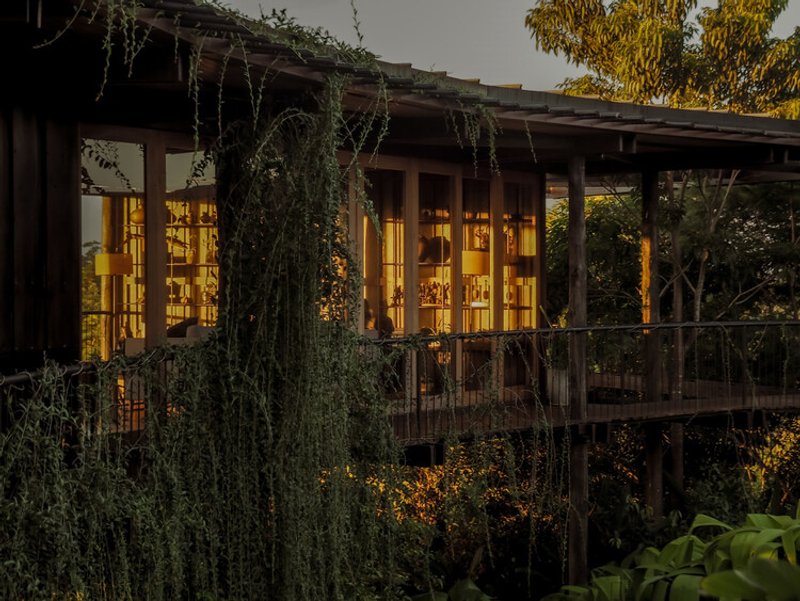
Light plays a central role in shaping the atmosphere of the interiors. Skylights are strategically placed to replicate the effect of sunlight filtering through a forest canopy, creating shifting patterns of illumination throughout the day. These pools of light move across surfaces in response to the sun’s path, introducing a temporal dimension to the spatial experience and enhancing the sense of connection to nature.
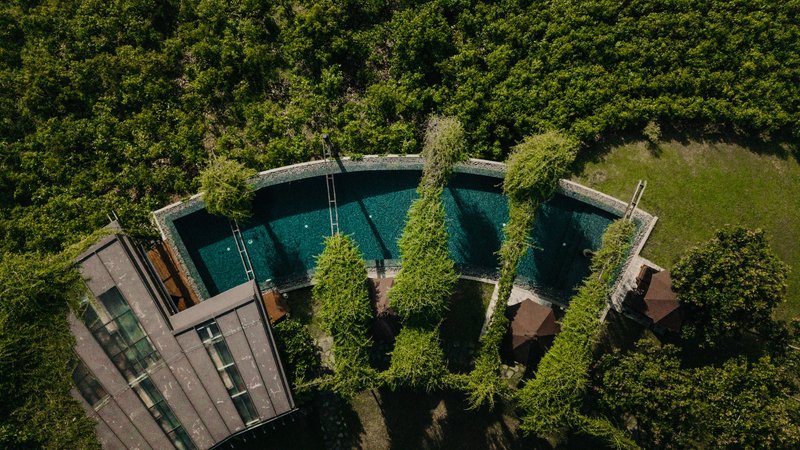
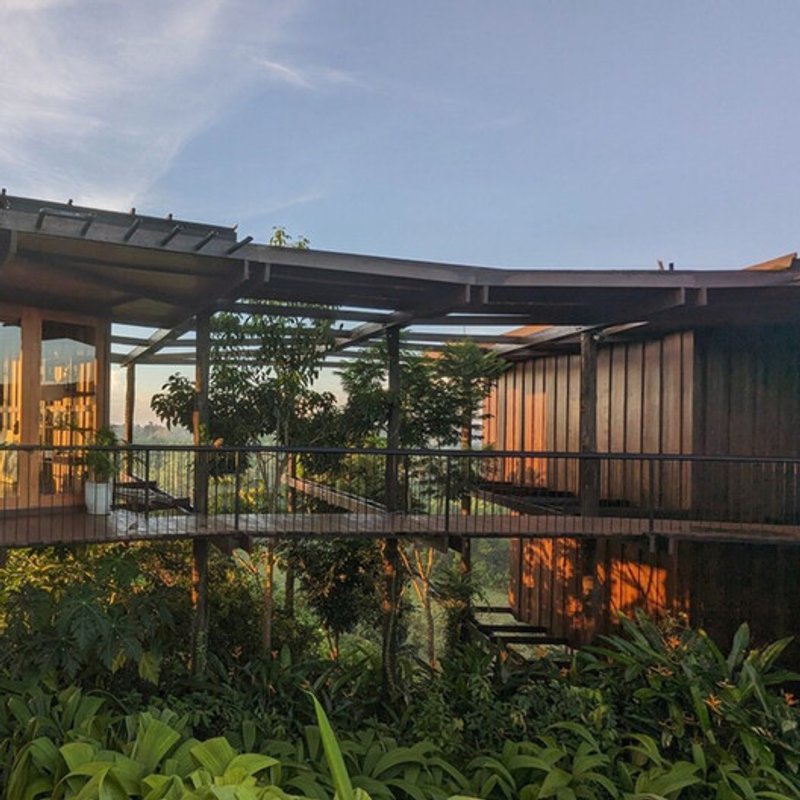
Materiality reinforces this integration. The bungalow is constructed entirely from timber, embracing natural textures and tones that resonate with the surrounding landscape. The lightweight structure is elevated above the ground, minimizing its physical impact and allowing the natural contours of the site to remain intact. This elevated design not only reduces environmental disturbance but also enhances ventilation and thermal comfort.
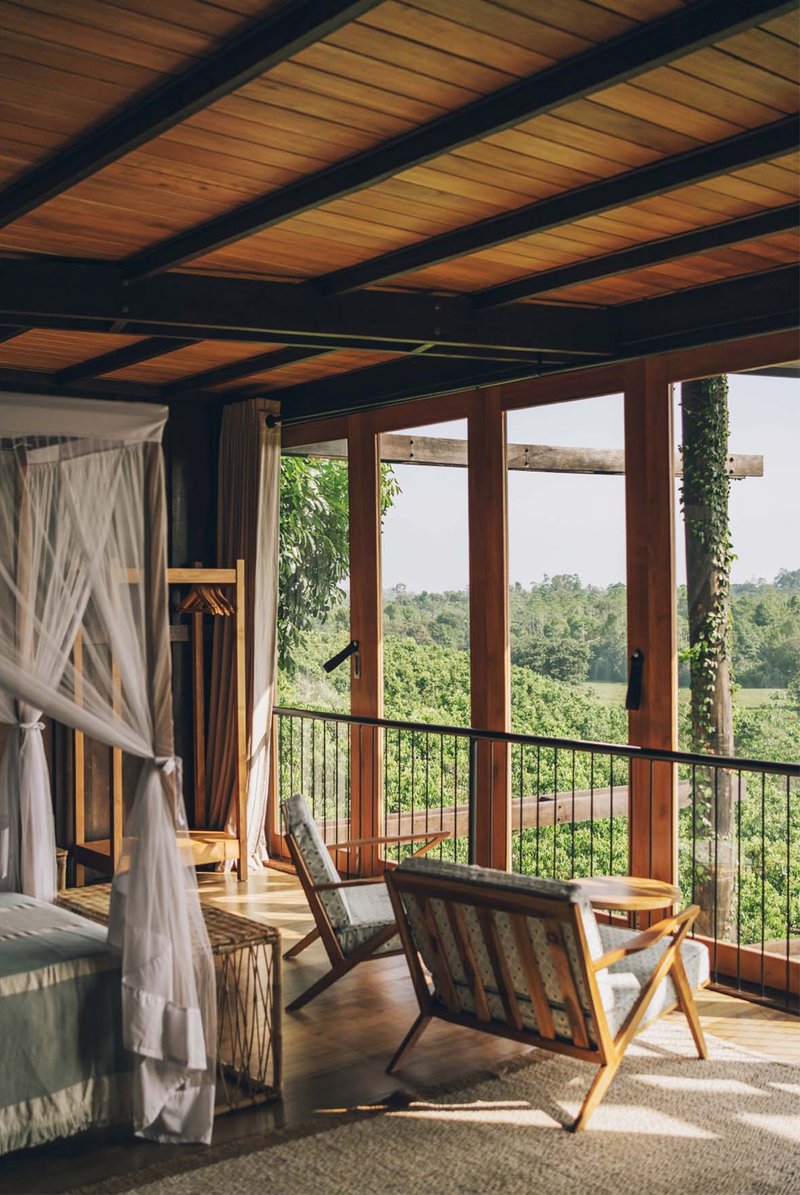
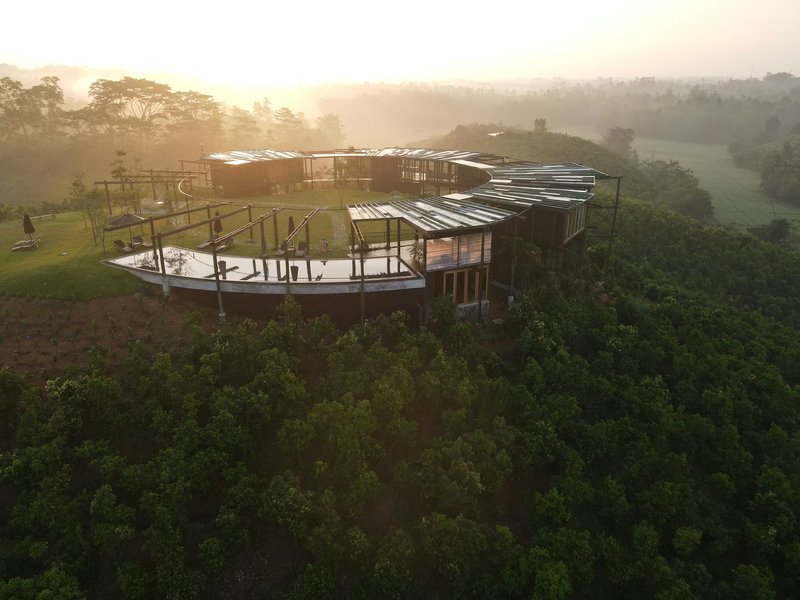
Sustainability is embedded in both concept and execution. The building is designed as a low embodied energy intervention, touching the earth lightly while maximizing the benefits of natural light and airflow. By maintaining the site’s topography and integrating passive design strategies, the project achieves a balance between environmental responsibility and spatial quality.
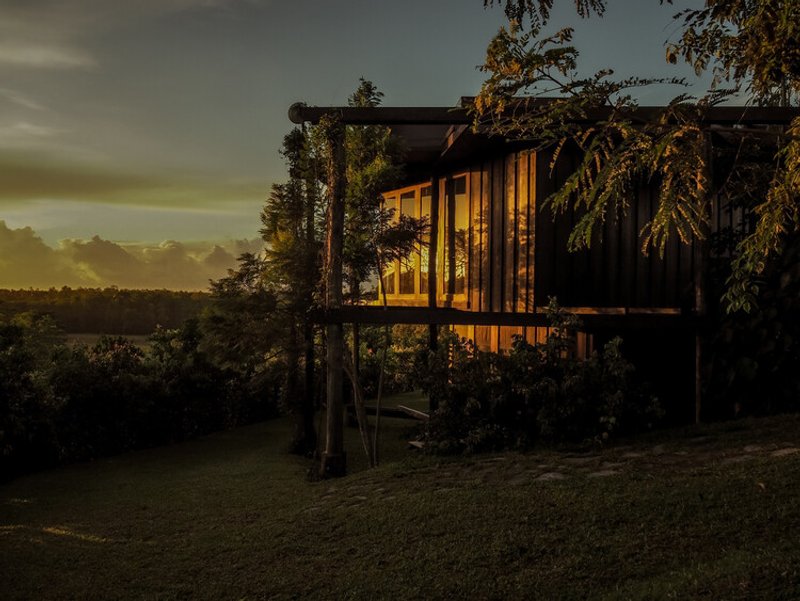
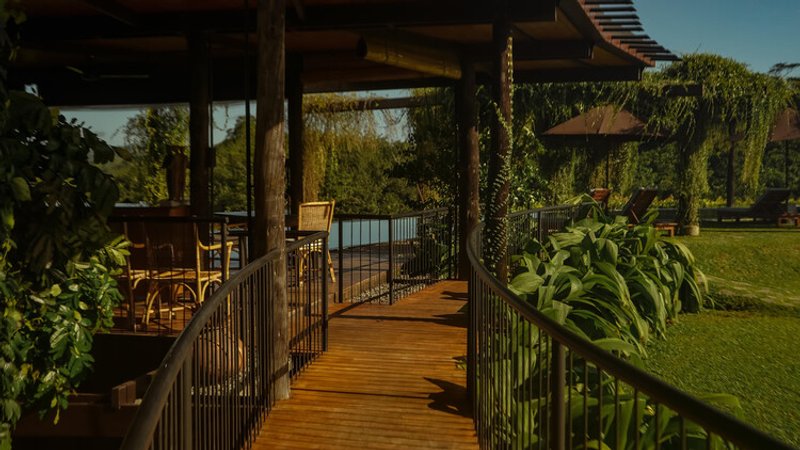
The interplay between architecture and landscape extends beyond the physical structure. Vegetation is incorporated at multiple levels: on the building envelope, as shading elements, and as part of the broader visual field. The design continuously negotiates between what is built and what is borrowed, creating a layered relationship between foreground and distant views.
Ultimately, the Round House Estate Bungalow is an exploration of coexistence: between architecture and nature, structure and growth, permanence and change. Through its circular form, organic planning, and sensitivity to light and material, the project creates a living environment that evolves with time, offering a deeply immersive and contemplative experience rooted in its landscape.
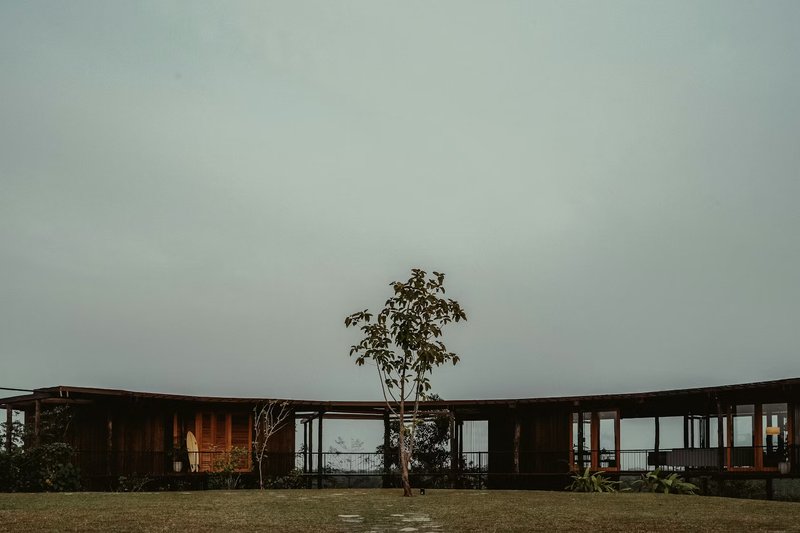
All the Photographs are works of Willem Keuppens, Patrick Latham, Fiona Walker-Arnott



Popular Articles
Popular articles from the community

3dor Concepts Wraps a Kerala Home in Mirrored Concrete Arcs Around a Courtyard Tree
In the Western Ghats foothills of Thamarassery, a 270 m² single-story house uses two curved volumes to frame nature as its center.
HCCH Studio Wraps a Shanghai High-Rise Office in Curved Walls of Translucent Glass
A 1,000 square meter fit-out in Lujiazui replaces the typical tech-office palette with layered glass, micro-cement, and quiet rigor.
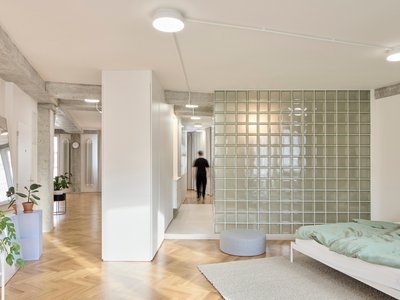
RDTH architekti Rips Out Nearly Every Wall in a Prague Apartment and Replaces Them with Furniture
A 101-square-meter post-war flat in Prague trades rigid partitions for a single rotated furniture block, curtains, and glass concrete.
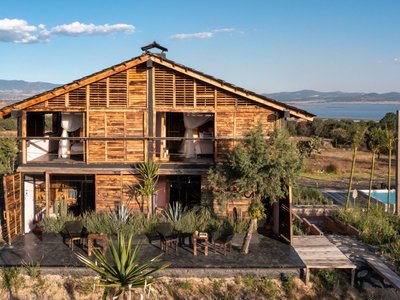
Fausto Terán and Toro Fuse Japanese Craft with Mexican Tradition in a Lakeside Retreat
Nakamura House pairs Shou-Sugi-Ban charred pine with handmade clay tile at the foot of Atlangatepec Lagoon in Mexico.

Similar Reads
You might also enjoy these articles

Kokaistudios Wraps a Shanghai Retail Podium in Horizontal Louvers That Echo Its Foster + Partners Neighbor
A four-storey glass-roofed gateway links an underground commercial valley to the revitalized north bank of Shanghai's Suzhou River.
Fausto Terán and Toro Fuse Japanese Craft with Mexican Tradition in a Lakeside Retreat
Nakamura House pairs Shou-Sugi-Ban charred pine with handmade clay tile at the foot of Atlangatepec Lagoon in Mexico.
RDTH architekti Rips Out Nearly Every Wall in a Prague Apartment and Replaces Them with Furniture
A 101-square-meter post-war flat in Prague trades rigid partitions for a single rotated furniture block, curtains, and glass concrete.

SWA Group Spirals a Landscape Memorial into the Woods of Sandy Hook
A 1.8-acre clearing in Newtown, Connecticut, honors 26 lives lost with water, stone, and a single sycamore tree.

Explore Architecture Competitions
Discover active competitions in this discipline




The International Standard for Design Portfolios


The Global Benchmark for Architecture Dissertation Awards


The Global Benchmark for Graduation Excellence


Challenge to reimagine the Iron Throne
Comments (0)
Please login or sign up to add comments
No comments yet. Be the first to comment!