
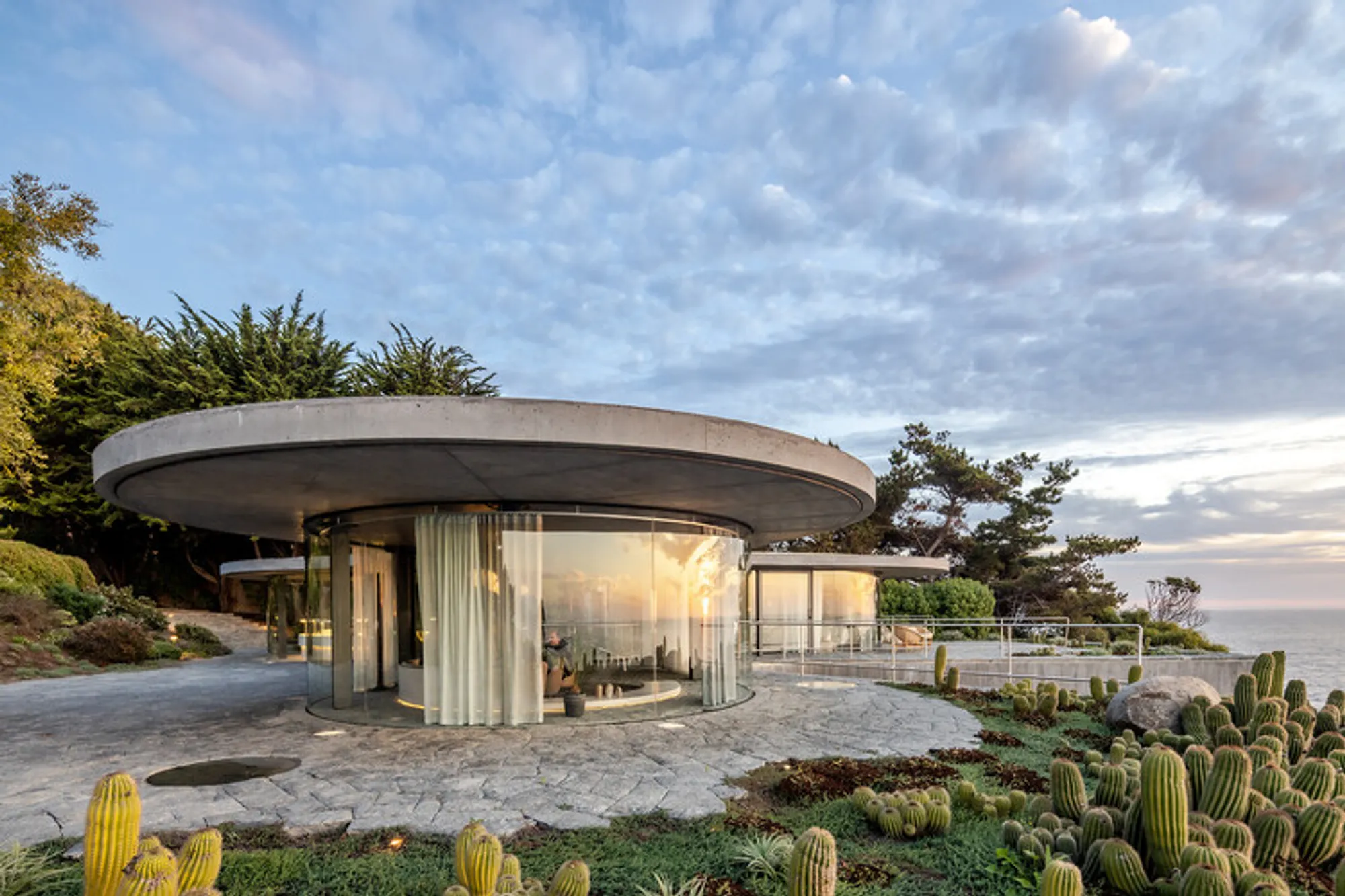
S House By Gubbins Polidura Arquitectos + MasArquitectos
Coastal Chilean residence integrating concrete podium and transparent pavilion, shaping horizontality and blending architecture seamlessly with rugged sloping landscape.


Located in Punta Pite, between Zapallar and Papudo along the Chilean coast, “S” House by Gubbins Polidura Arquitectos in collaboration with MasArquitectos is a compelling exploration of architecture embedded within landscape. Completed in 2020, the 4,521-square-foot residence was conceived as a second home for a family of five, set on a dramatic 6,500 m² plot defined by a steep 20-meter slope descending toward the Pacific Ocean.
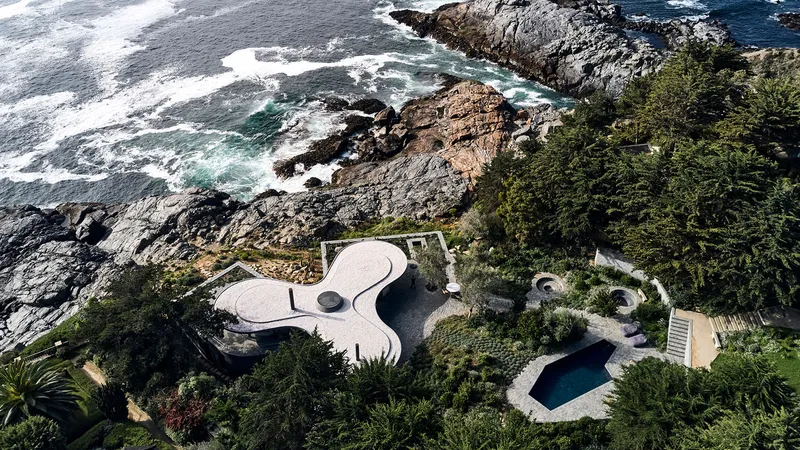
Rather than resisting the terrain, the project embraces it—transforming topographic constraint into its primary architectural driver. Through excavation, layering, and a precise manipulation of horizontality, the house establishes a dialogue between built form and the vast natural horizon.
Constructing a Horizontal Plane
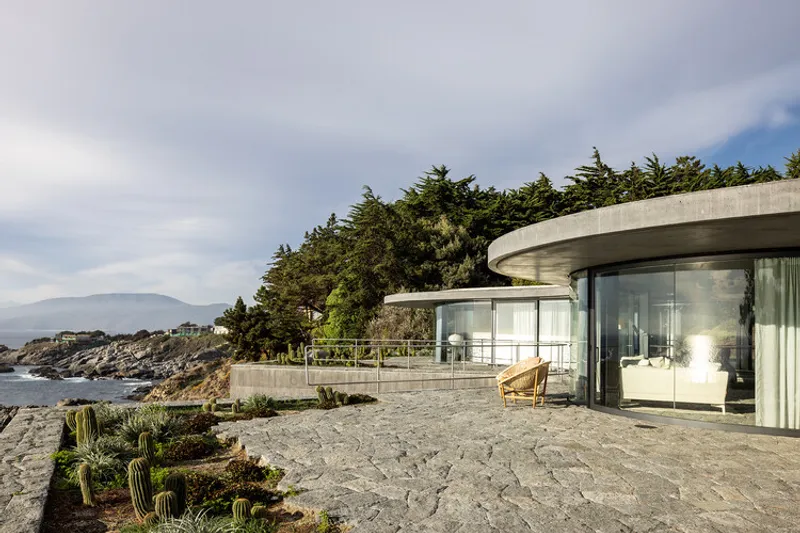
The site’s steep incline posed a fundamental challenge: how to inhabit a sloping terrain while maintaining spatial continuity and comfort. The architects responded by introducing a large horizontal podium carved into the hillside. This intervention creates a stable plane from which the house can engage the surrounding landscape.
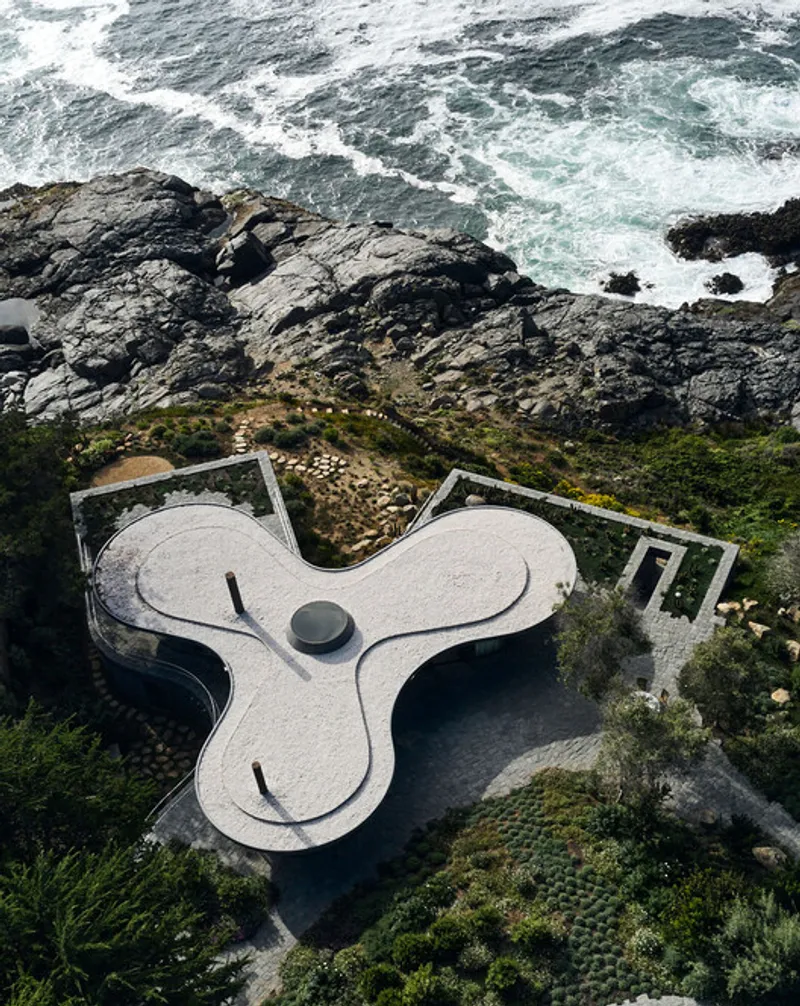
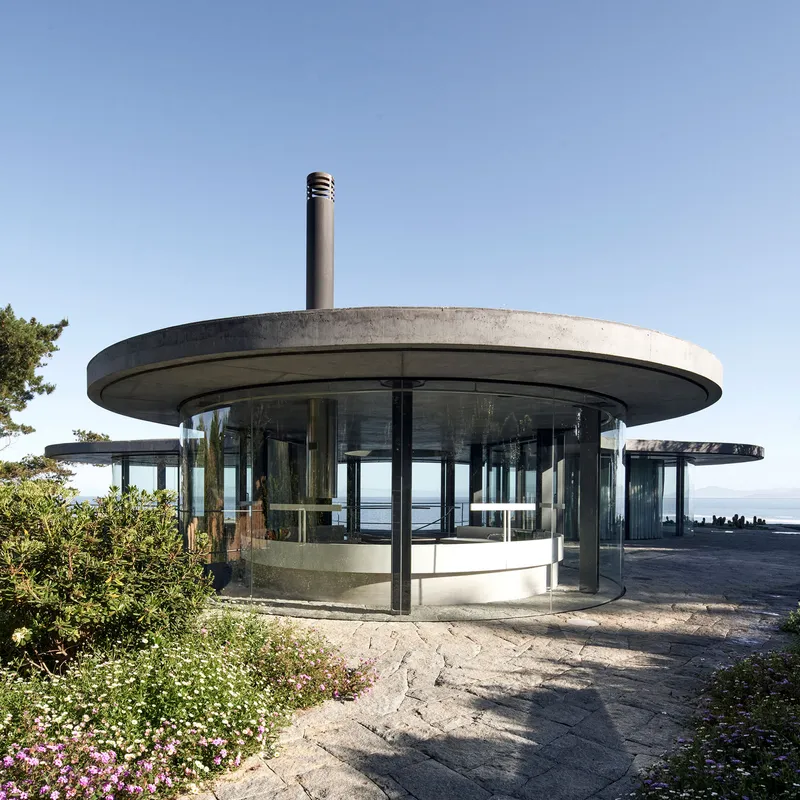
More than a technical solution, the podium becomes an architectural statement. It frames the ocean, anchors the building within the rocky terrain, and emphasizes the immensity of the natural setting. By establishing horizontality against the slope, the design intensifies the perception of the horizon—particularly at sunset, when the line between sea and sky becomes most pronounced.
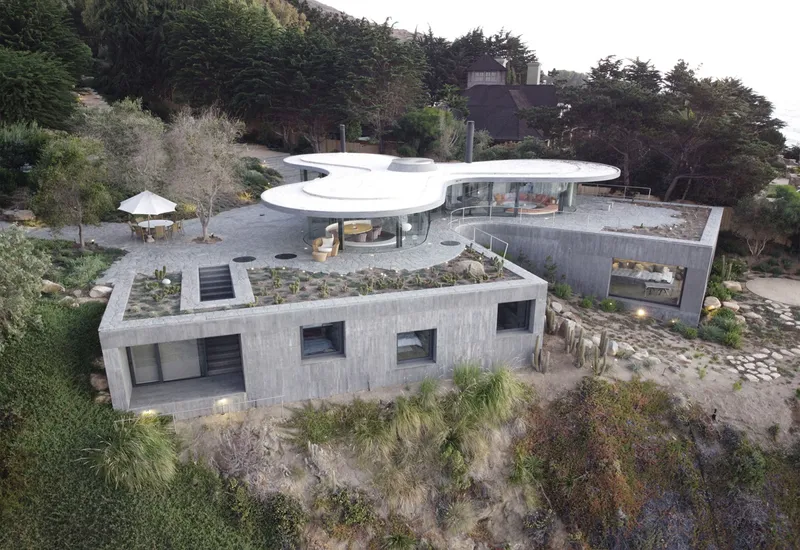
This platform does not dominate the landscape; instead, it acts as an extension of it. Its materiality and form echo the rugged geology of the site, allowing the house to emerge as a continuation of the terrain rather than an imposition upon it.
Programmatic Separation and Overlap
A key organizational strategy of the project is the separation of public and private functions into two overlapping volumes. This division allows each programmatic layer to engage the site differently while maintaining a cohesive architectural language.
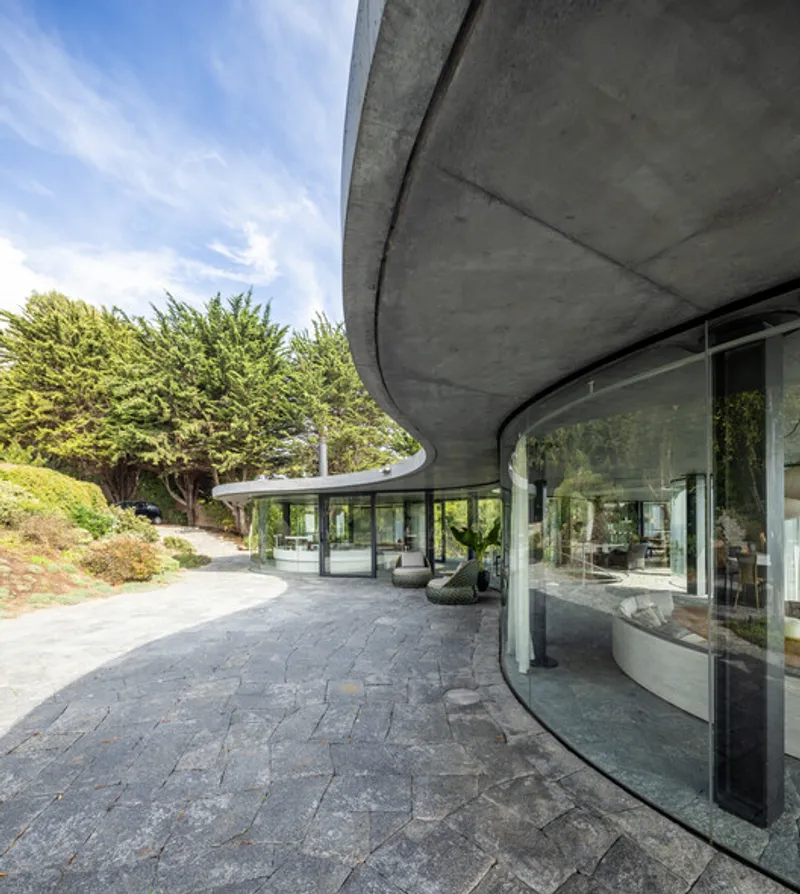
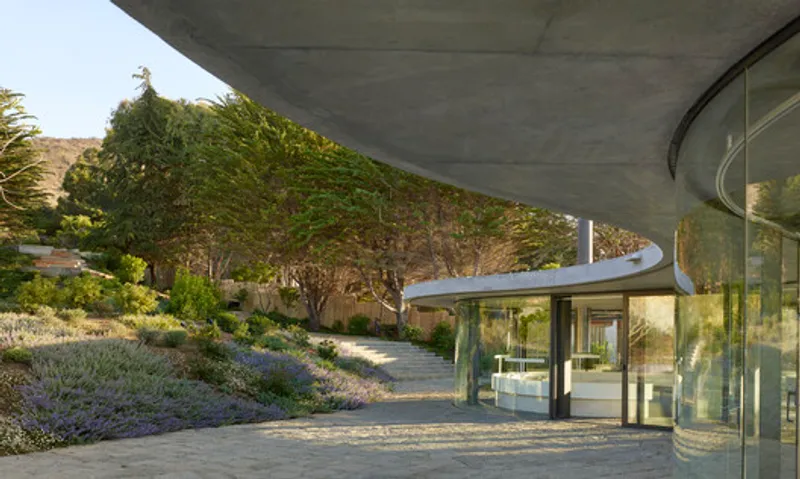
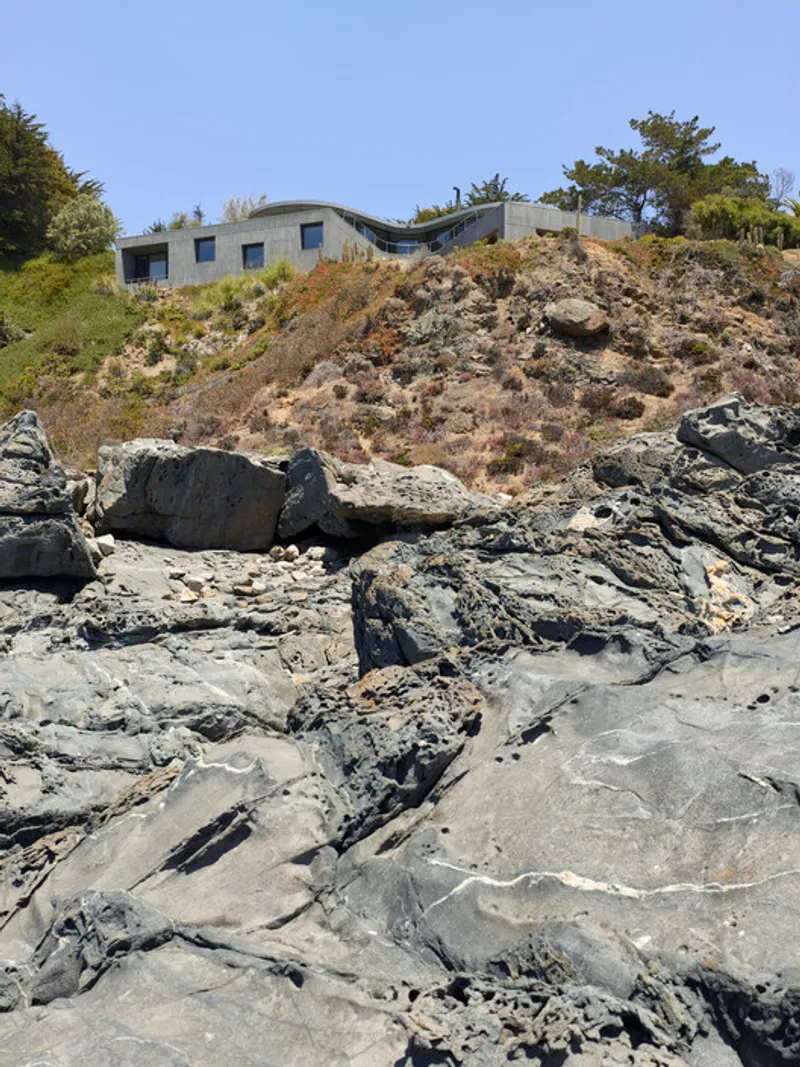
The lower volume, containing bedrooms and private spaces, is embedded directly into the slope. Excavated from the terrain, it minimizes its visual impact and establishes a strong connection with the earth. In contrast, the upper volume—housing living, dining, and kitchen areas—rests lightly above, forming a transparent pavilion that opens toward the landscape.
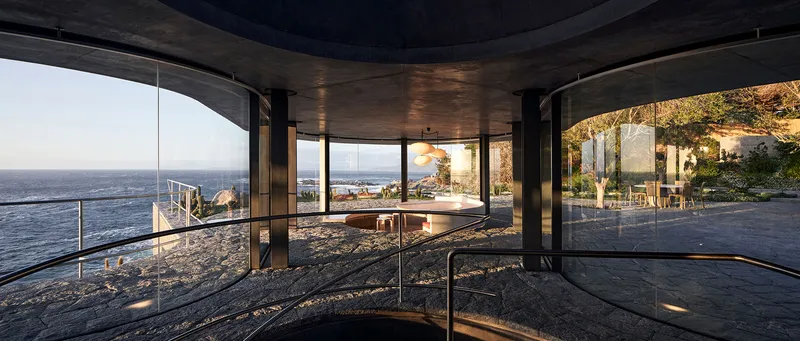
This overlapping arrangement reduces the perceived mass of the house. When occupying the upper pavilion, the lower level disappears from view, reinforcing the sensation of floating above the terrain. The architecture becomes visually fragmented, allowing nature to dominate.
The Concrete Podium: Material and Time
The lower level is constructed as a concrete podium, dyed with black pigments and finished using unbrushed board formwork. This choice of material is both aesthetic and conceptual. The textured concrete surface is designed to age gracefully, collecting patina over time and gradually blending with the surrounding rocks.
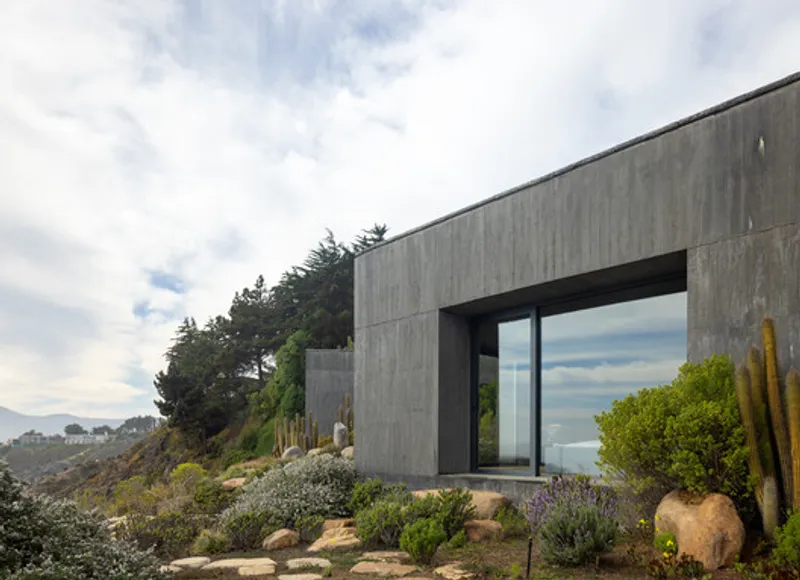
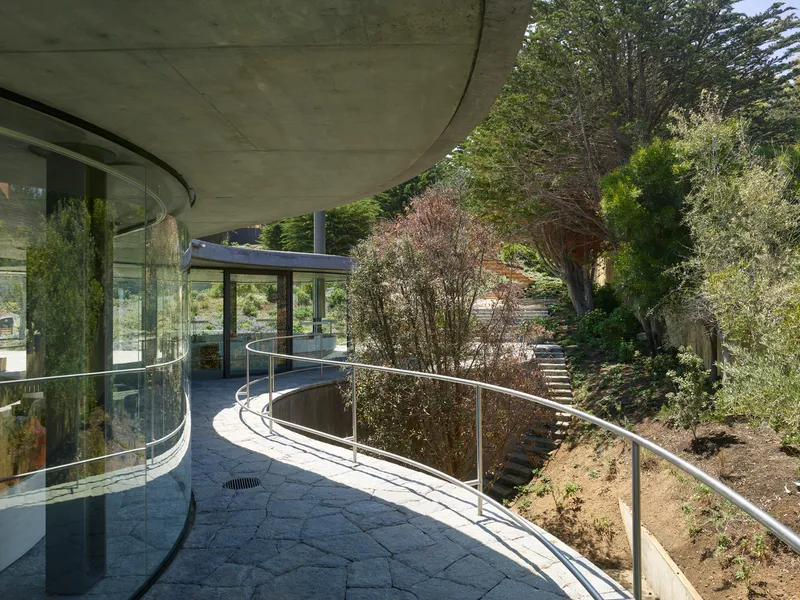
By embracing weathering as part of the design process, the architects ensure that the house evolves with its environment. The podium does not remain static; it transforms, absorbing traces of climate and time. This approach aligns the building with the natural processes shaping the ravine, reinforcing its integration into the landscape.
The Pavilion: Transparency and Lightness
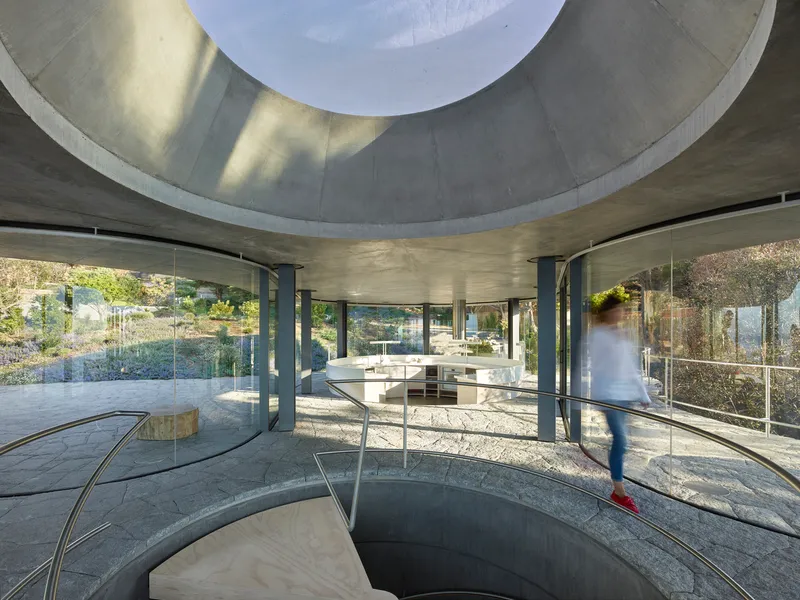
Resting atop the concrete base is a radically different architectural element: a transparent pavilion defined by a large concrete slab supported by 21 slender steel columns. This upper level houses the public areas of the home and is conceived as an open, unobstructed space.
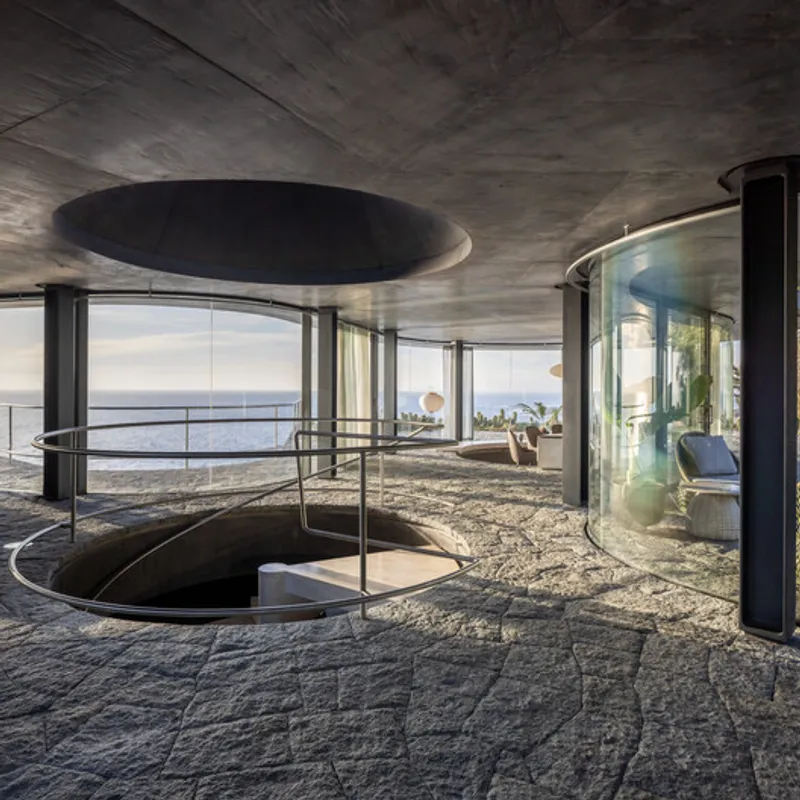
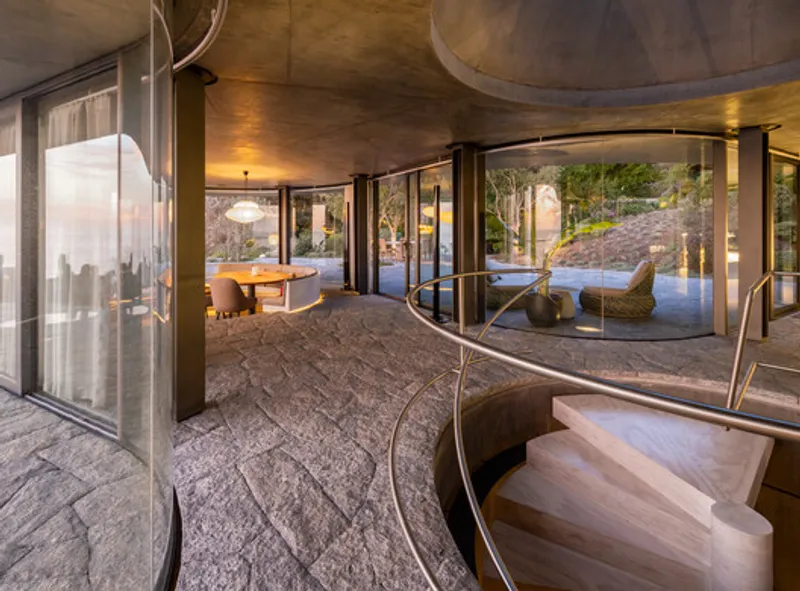
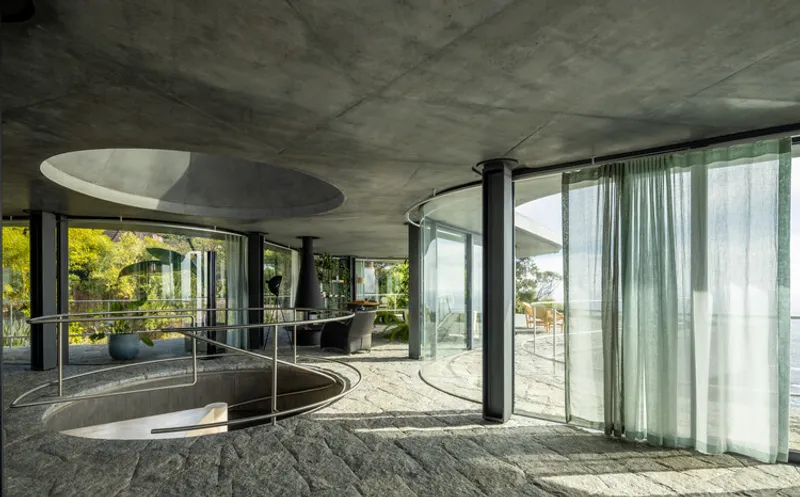
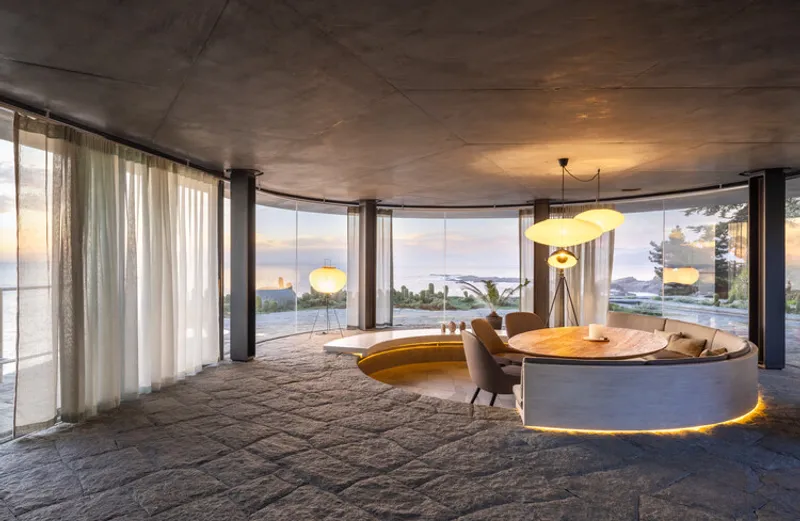
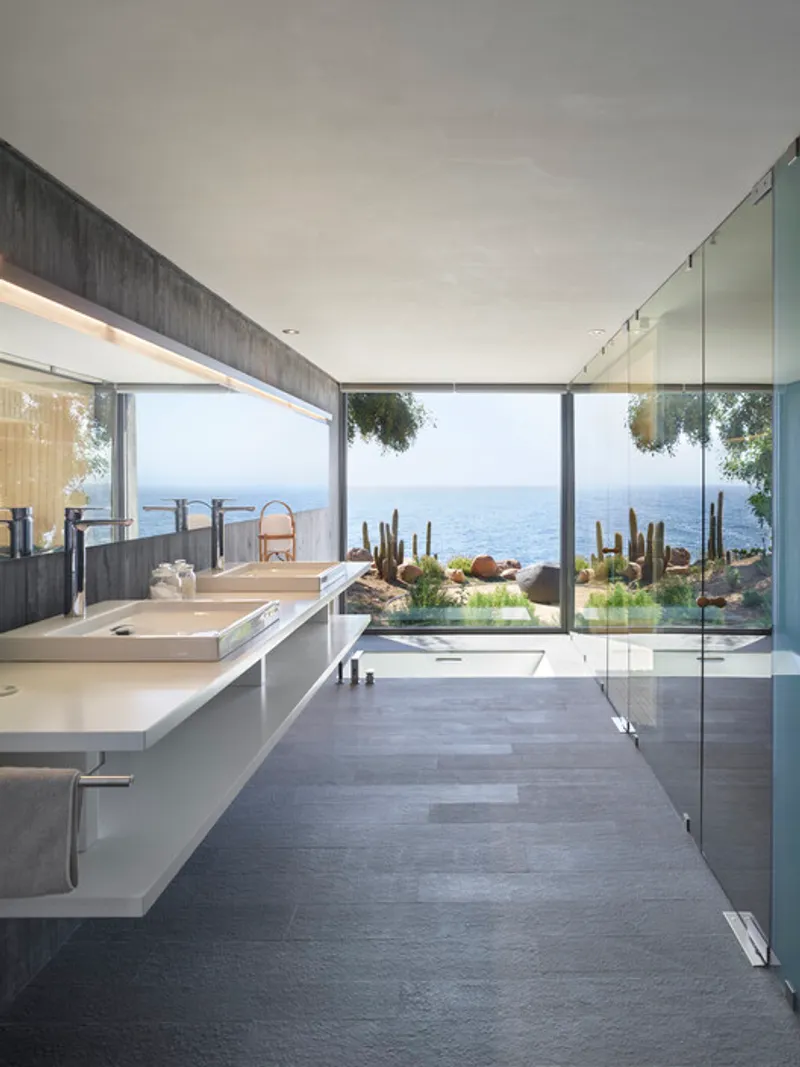
The pavilion is described as a “large shadow”—a horizontal plane hovering above the terrain. Its transparency dissolves the boundary between interior and exterior, allowing uninterrupted views of the ocean and sky. Glass walls eliminate visual barriers, creating a continuous relationship with the surrounding environment.
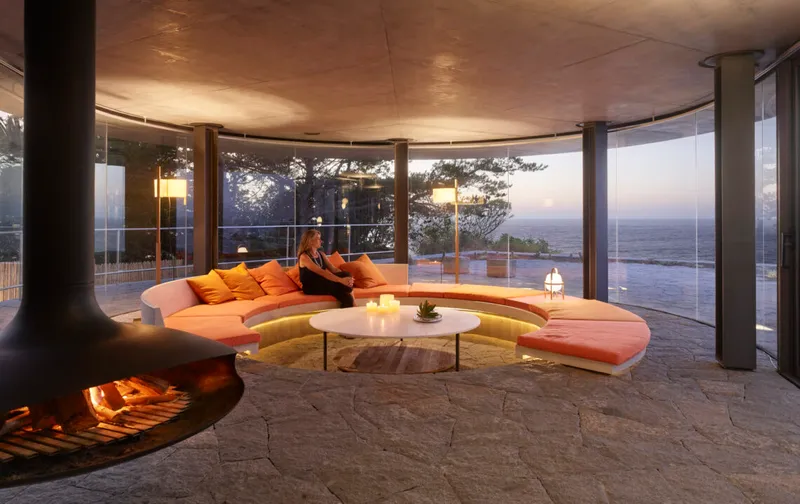
To avoid the need for additional bracing elements such as diagonal supports or solid walls, the architects carefully minimized the height of the steel columns to 230 cm. This low ceiling height intensifies the horizontal perspective, aligning the occupant’s line of sight closely with the horizon. The result is a heightened awareness of the landscape’s vastness.
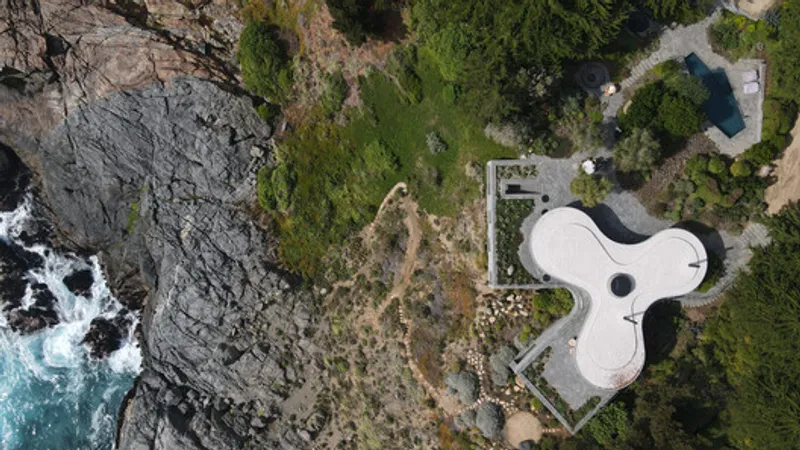
Geometry and Spatial Organization
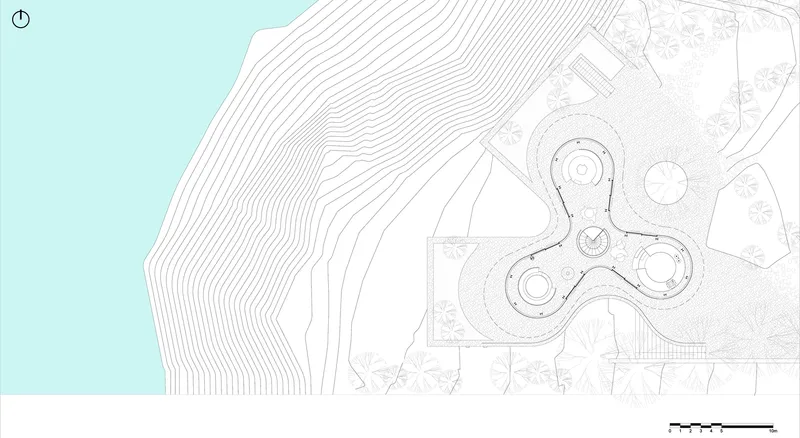
The structural logic of the pavilion is further refined through its unique geometric configuration. The plan adopts a three-sided, amoeba-like shape, which enhances seismic performance while also organizing the interior program.
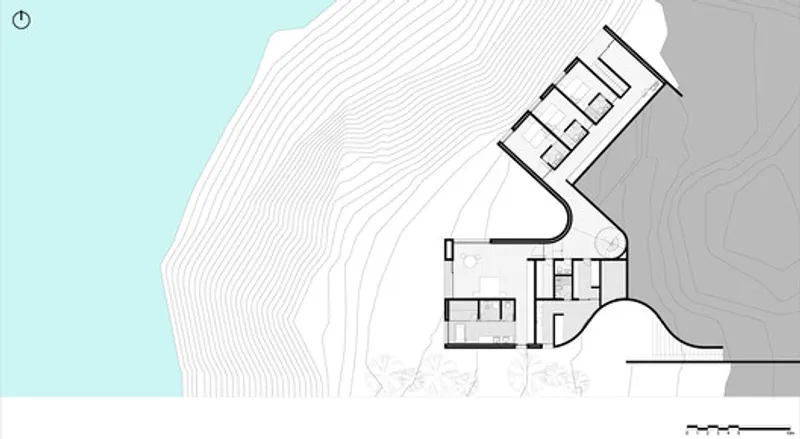
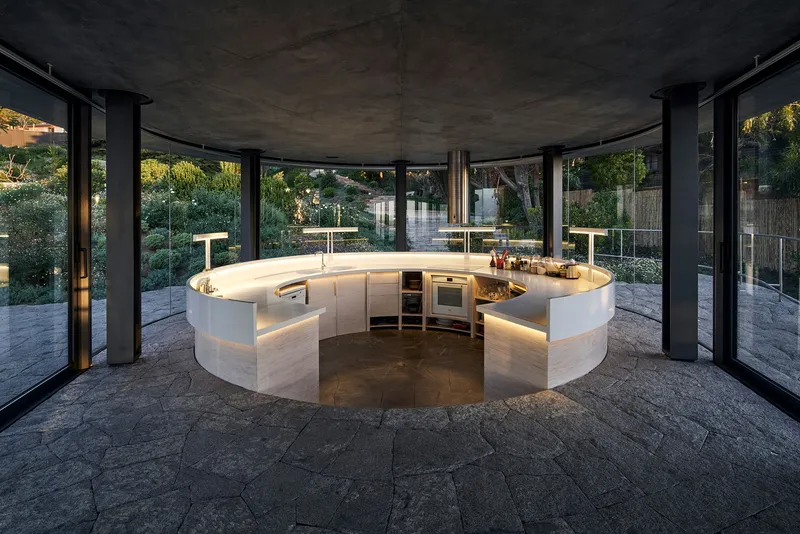
Within this geometry, the three primary public functions—living room, dining area, and kitchen—are arranged as recessed circular spaces along each side of the form. These circular zones subtly define different activities without the need for partitions, maintaining the openness of the pavilion.
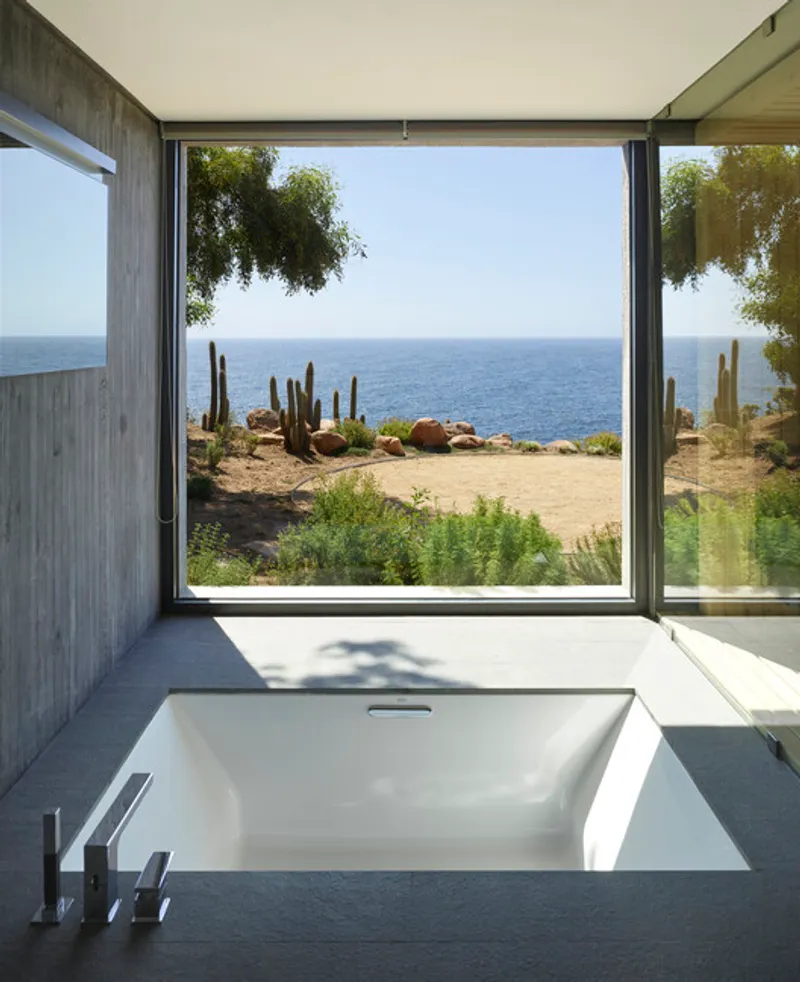
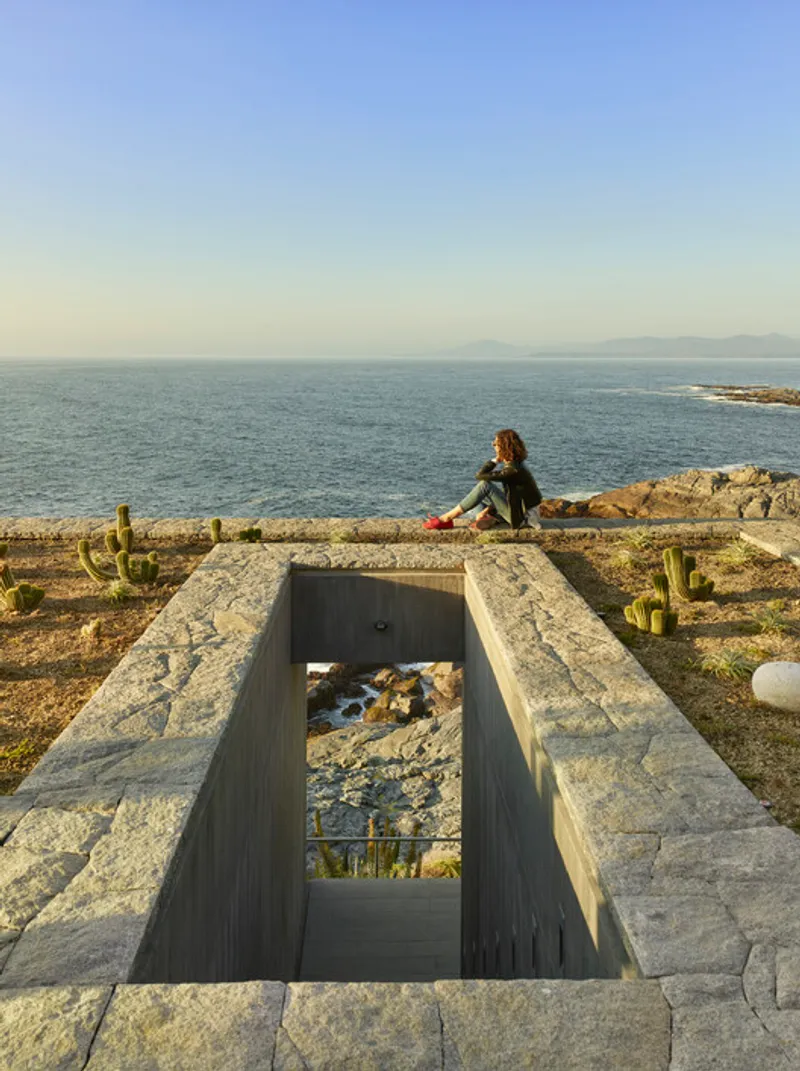
This configuration allows for fluid movement and visual continuity. Spaces flow into one another while remaining distinct, creating a balance between unity and differentiation.
Landscape as Continuation
The landscape design, led by Juan Grimm, plays a crucial role in completing the project. Rather than introducing new ornamental elements, the landscaping focuses on restoring native flora and fauna. The intention is to recover what existed before construction and allow nature to reclaim the site.
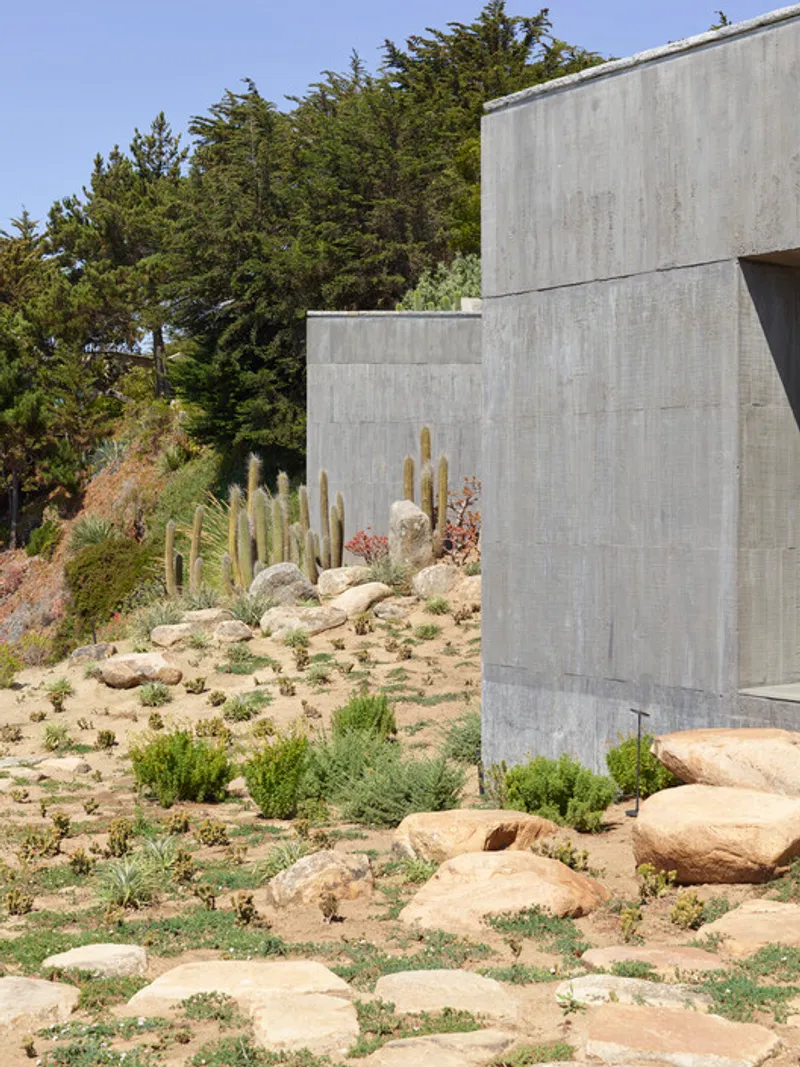
Over time, vegetation will fill the gaps between architectural elements, softening edges and further embedding the house within its environment. This strategy reinforces the idea that the building is not a foreign object but a natural extension of the ravine.
The collaboration between architecture and landscape ensures that the project evolves continuously. As plants grow and materials weather, the house will increasingly appear as though it has always belonged to the site.
A Dialogue Between Presence and Disappearance
“S” House operates through a delicate balance between presence and disappearance. The concrete podium anchors the building, giving it weight and permanence. In contrast, the transparent pavilion dissolves into the horizon, emphasizing lightness and openness.
This duality allows the house to engage the landscape in multiple ways. It is both grounded and elevated, solid and transparent, embedded and exposed. The overlapping volumes create a layered spatial experience that shifts depending on one’s position within the house.
Ultimately, the project redefines the relationship between architecture and topography. Rather than imposing form onto the land, it allows the land to shape the architecture. Through careful manipulation of material, geometry, and spatial organization, “S” House becomes an extension of its environment—a quiet yet powerful presence along the Chilean coast.
All the Photograhps are works of Aryeh Kornfeld, Roland Halbe



Popular Articles
Popular articles from the community


The Musturak Paradise: Senior Living Architecture for a Connected Future in Temara, Morocco
The Musturak Paradise reimagines senior living architecture in Temara via private homes, social spaces, culture, community, and shared care.

Riyadh For All: Intergenerational Urban Design for Active Aging in Rabat
Riyadh For All reimagines urban design in Rabat with intergenerational co-living, adaptive courtyards, and Moroccan cultural exchange today.

Co-life: Sustainable Architecture for Age-Friendly Community Living
Co-life reimagines sustainable architecture for seniors through courtyards, rammed earth, shared gardens, and spaces designed for belonging.

Conexión: Biophilic Design Reimagines High-Rise Living in Hong Kong
Conexión reimagines high-rise living in Hong Kong through biophilic design, green facades, shared spaces, daylight, water and nature within.


Similar Reads
You might also enjoy these articles


Hodi-Mandai Geram
Project Function: Preservation and revitalization of the Intangible heritage and socio-spatial identity of the Hodi by Housing, Cultural Memory Center, Sacred Grove, landscape, local tourism economy


Olio Towers: A Mid-Rise for Performers That Fuses Housing, Rehearsal, and Stage
Located blocks from Houston's Theater District, this modular tower stacks living units around a central performance atrium.

Oasis: Modular Green Housing Carved into Dhaka's Urban Fabric
A shortlisted Plugin Housing entry reclaims unauthorized settlements in Dhaka with stepped concrete volumes, green roofs, and ventilation-driven design.

Black Hole: A Floating Megastructure for the Post-Physical Era
Emiliano Mazzarotto envisions a spherical, self-scaling arena where e-sports, digital hotels, and holographic stadiums replace traditional public space.

Explore Architecture Competitions
Discover active competitions in this discipline



Challenge to reimagine the Iron Throne


Photograph architecture without architects


Illustrate the lost glory of Angkor Wat - Render Challenge


Design challenge to reuse E-waste
Comments (0)
Please login or sign up to add comments
No comments yet. Be the first to comment!