
Salgar Reconstruction: A Community-Centered Rebuilding Model for Resilient Housing in Colombia
A resilient reconstruction project creating urban and rural homes that honor local traditions, improve safety, and rebuild community after Salgar’s devastating landslide.


The Salgar Reconstruction initiative, led by Taller Síntesis and Ana Elvira Vélez, stands as one of Colombia’s most significant post-disaster architectural interventions. Completed in 2017, the 17,900 m² project transforms the devastating impact of the 2015 landslide into an opportunity to rebuild a safer, more resilient, and socially integrated municipality.
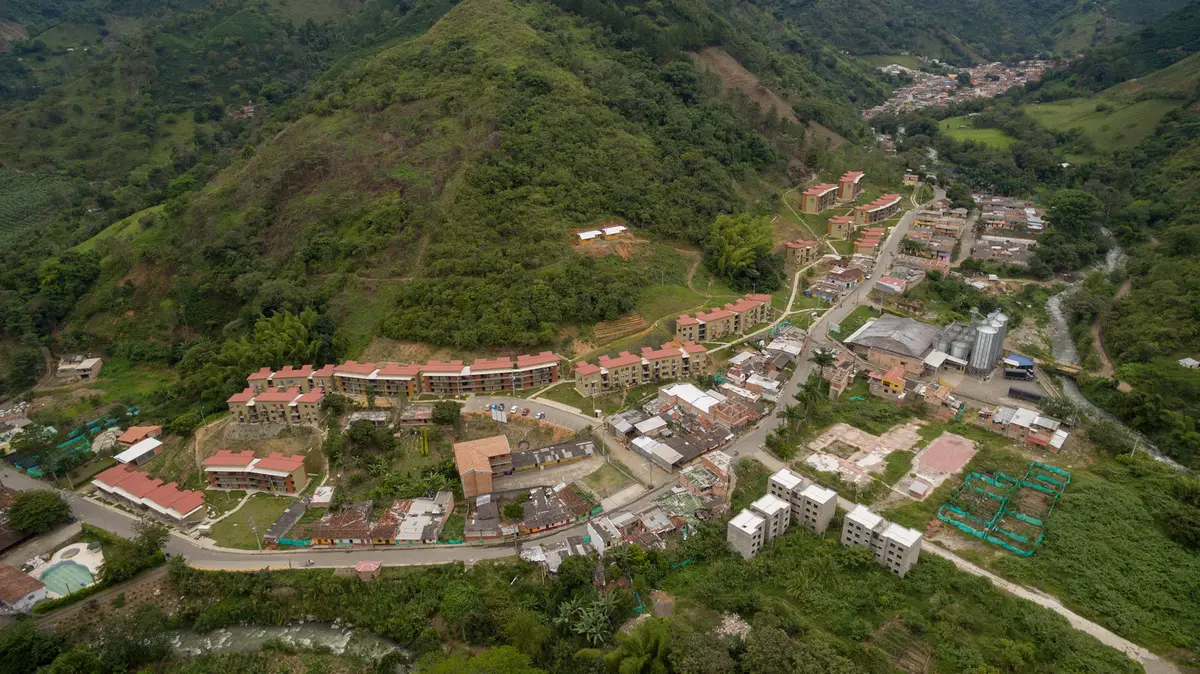
Situated in Salgar, a Colombian town nestled within a narrow valley carved by the La Liboriana stream, the project addresses both immediate reconstruction needs and long-term territorial planning. By combining social participation, environmental analysis, and architectural innovation, the initiative redefines disaster recovery as a holistic urban transformation.

A Tragedy That Redefined Urban Resilience
On May 18, 2015, intense rainfall triggered a landslide that devastated Salgar and its Las Margaritas district. The catastrophe resulted in:
- 93 fatalities
- 1,397 people affected
- 384 destroyed homes
- 17 collapsed bridges
This event demanded a response that went beyond rebuilding. It required a new urban model that would be safer, more inclusive, and deeply connected to community identity.
A Public–Private Alliance for Transformation
Following the disaster, a coordinated initiative emerged between governmental entities and private foundations in Antioquia. This partnership developed two parallel missions:
- A prevention plan to mitigate future risks
- A reconstruction plan to restore housing and municipal infrastructure
The design team began with an extensive social and spatial diagnosis. They identified cultural traditions, housing habits, family structures, and community needs to ensure that new homes aligned with local life. This participatory process continued throughout construction, promoting a deep sense of ownership and belonging.
Key Urban and Territorial Insights
Environmental and urban studies revealed critical conditions that shaped the reconstruction strategy:
1. Limited Urban Expansion
The narrow valley provided little room for growth, constrained by mountains on one side and the stream on the other.
2. Safe Zones for New Development
New residential centers needed to be located outside the stream’s risk areas while remaining close to essential services.
3. Strengthening Existing Infrastructure
The reconstruction plan reactivated amenities such as the central park, pedestrian pathways, vehicular bridges, and the local nursing home.
4. Multi-Zone Interventions for Greater Impact
Rather than concentrating efforts in one area, the plan distributed improvements throughout the municipality to strengthen the urban network.
A Multi-Site Housing Strategy: 309 New Homes
The reconstruction initiative encompassed three simultaneous projects:
- La Habana: 42 units
- La Florida: 186 units
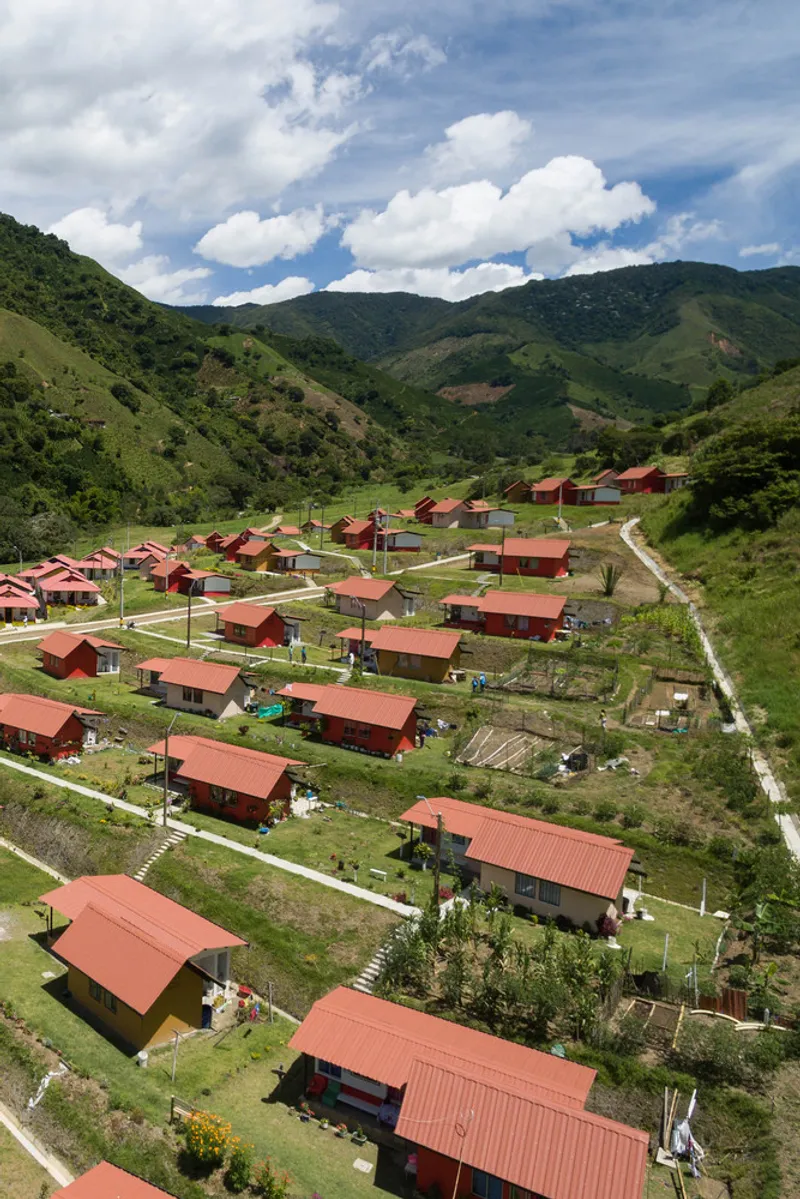
- La Pradera: 50 rural units
- Plus 31 additional units integrated across the municipality
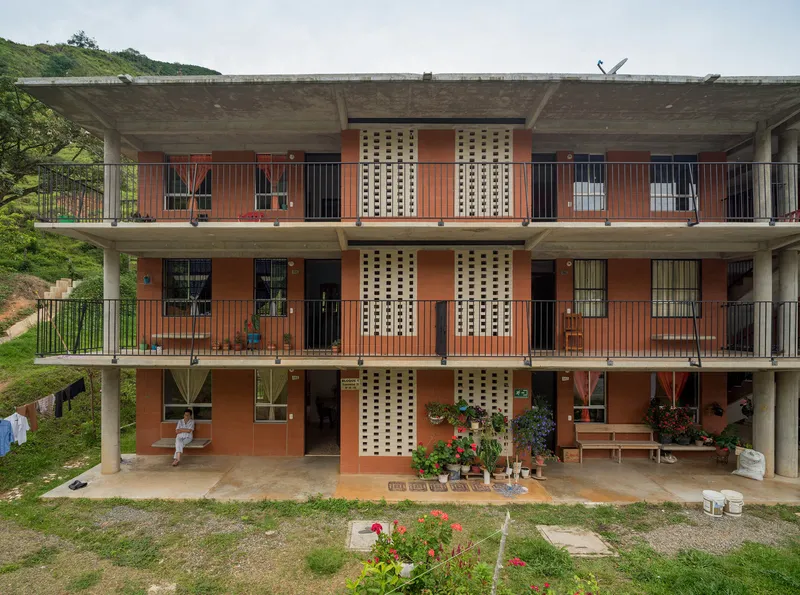
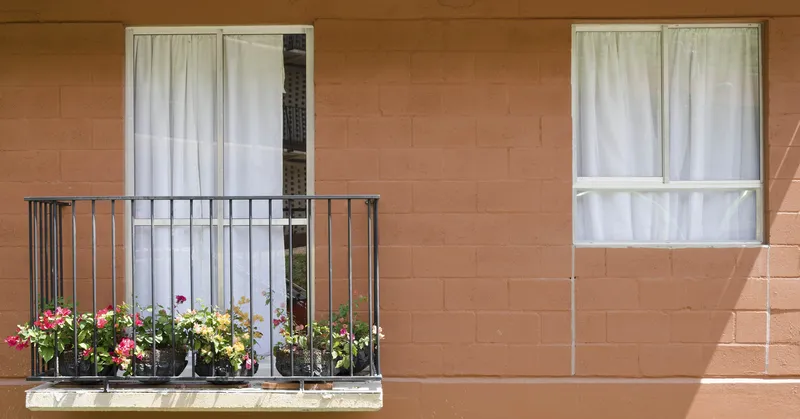
These developments prioritized socio-spatial value over cost efficiency. The result is a diverse set of housing typologies carefully adapted to topography, environmental risks, climate, and social patterns. Each home includes a transitional social space—such as a gallery, terrace, balcony, or corridor—to foster community interaction and environmental comfort.
Project Breakdown
La Habana – Housing Adapted to Slope and Landscape
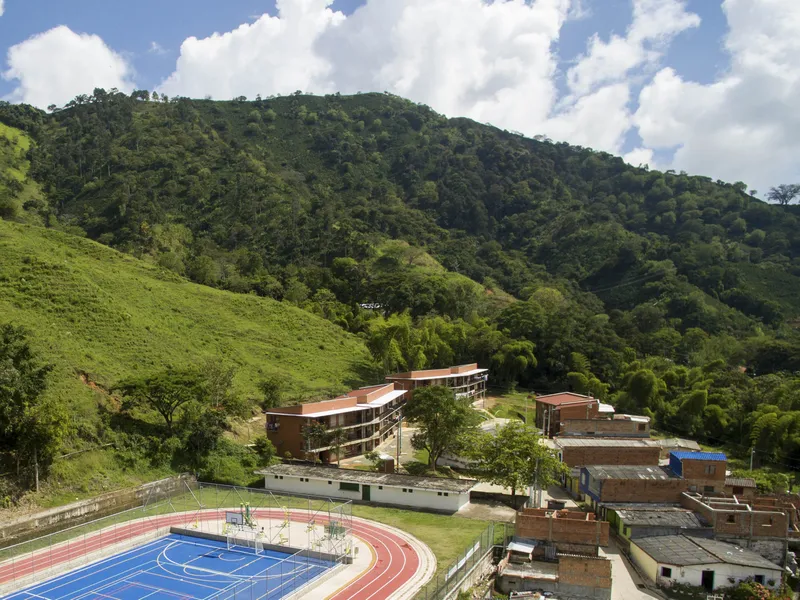
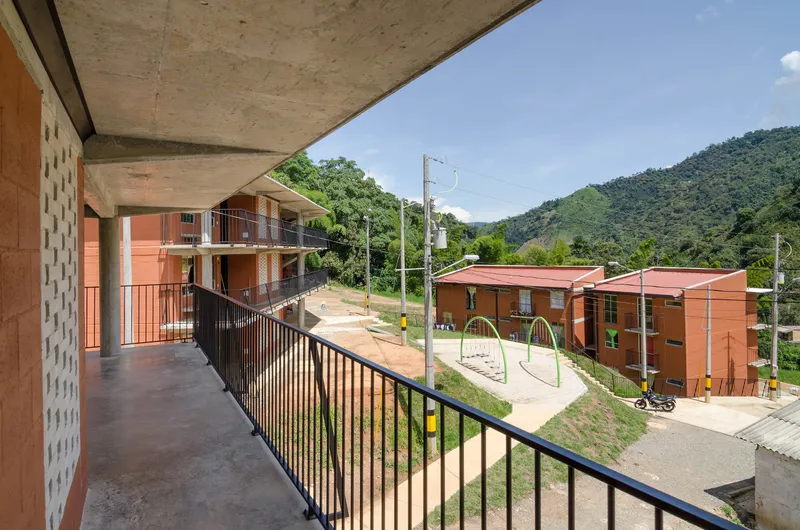
Located on a steep, irregular site adjacent to a sports facility, La Habana organizes 42 units in three linear bands aligned with the terrain’s contour lines.
Design Highlights
- Fluid adaptation to natural topography
- Seamless integration with surrounding landscape
- Terraced layout ensuring views and ventilation
- Social spaces reinforcing neighborhood ties
This site-sensitive arrangement allows all homes to maintain visual continuity with the valley, creating a strong connection between housing and terrain.
La Florida – Strengthening Urban Entrance and Connectivity
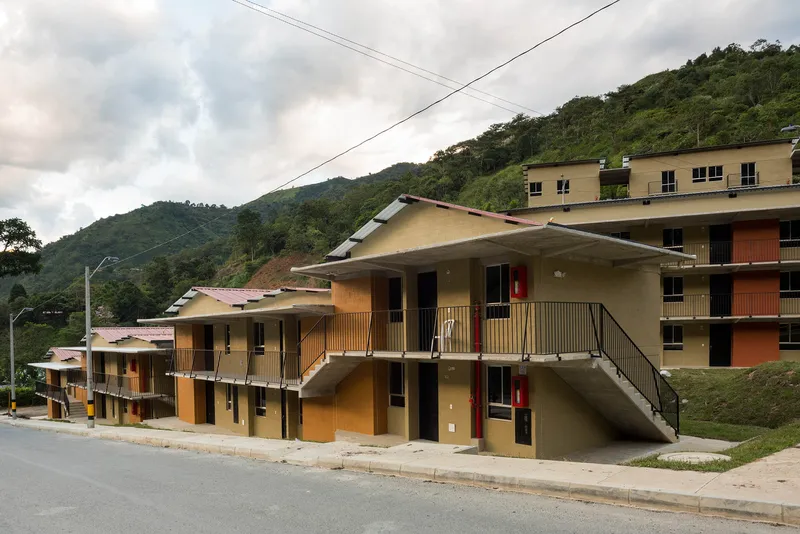
As the largest project of the reconstruction, La Florida spans 3.2 hectares at the town’s main entrance. Its masterplan strengthens mobility, community interaction, and local identity.
Key Features
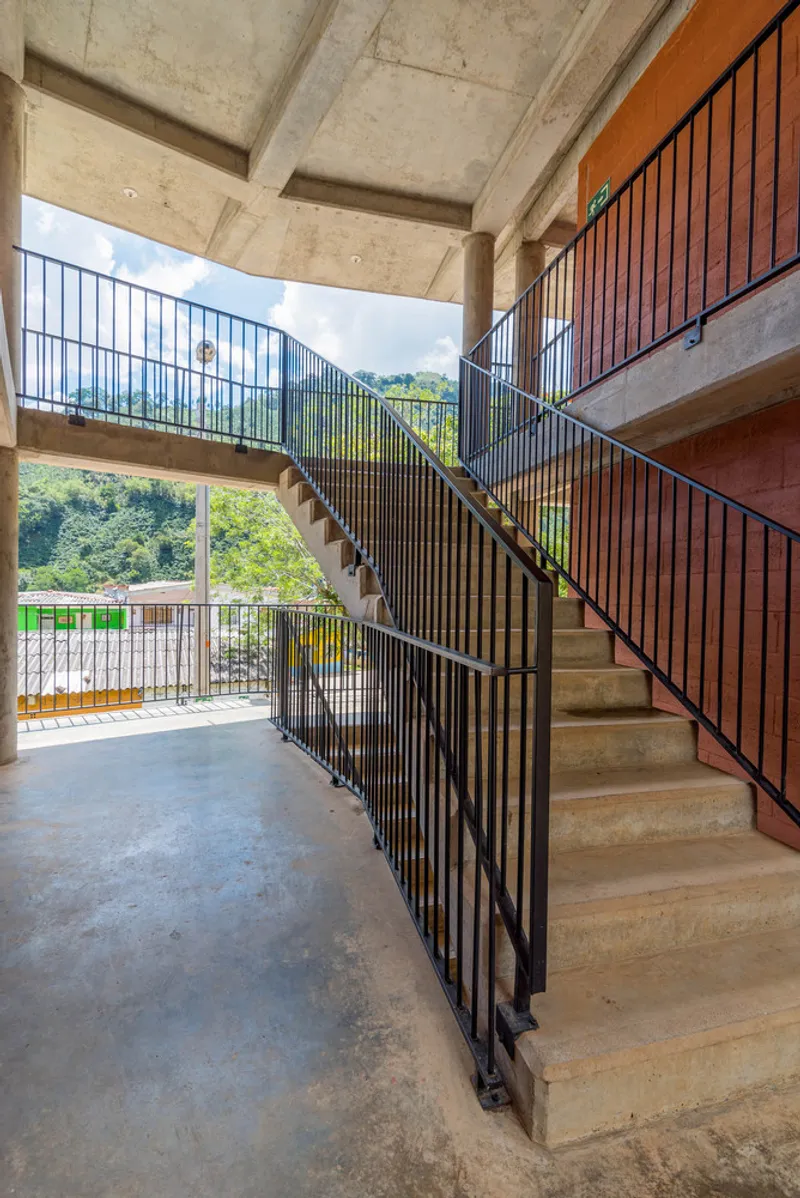
- 186 homes distributed across 13 blocks
- Varied building heights (2–4 levels) responding to slope and context
- Two typologies: gallery-type housing and central-core housing
- A central pedestrian corridor linking the entire neighborhood
This diversity of architectural expressions brings richness to the urban fabric, while the pedestrian spine fosters safe and vibrant everyday movement.
La Pradera – Rural Housing Rooted in Cultural Heritage
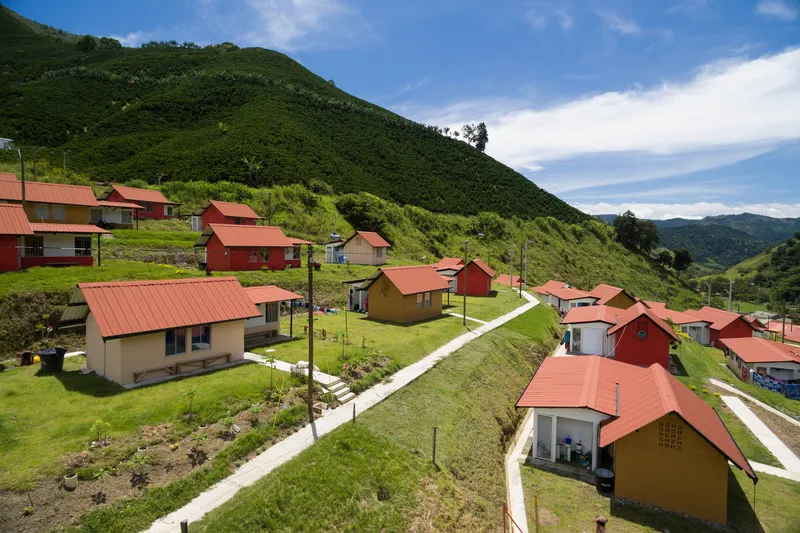
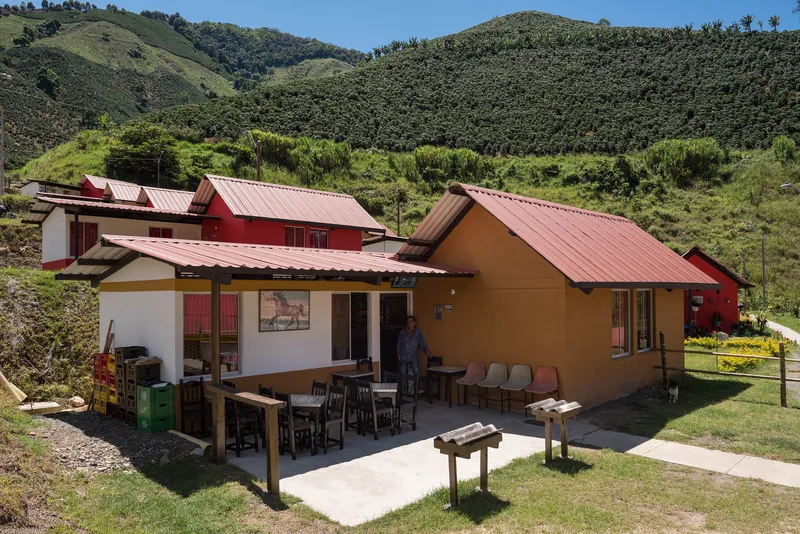
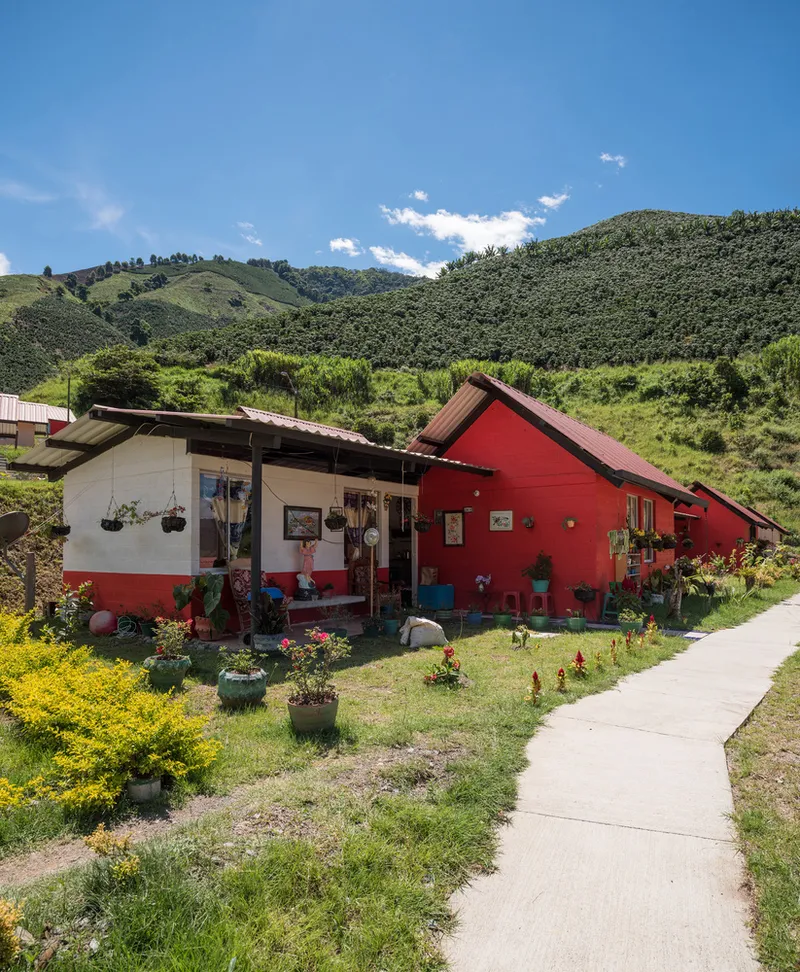
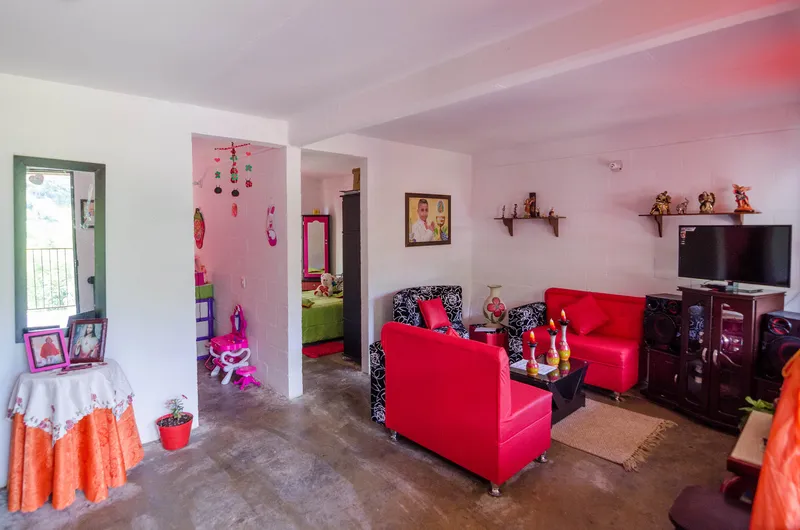
Located in the Las Margaritas district—one of the hardest-hit areas—La Pradera offers 50 rural homes designed to preserve traditional ways of living.
Rural Identity and Functionality
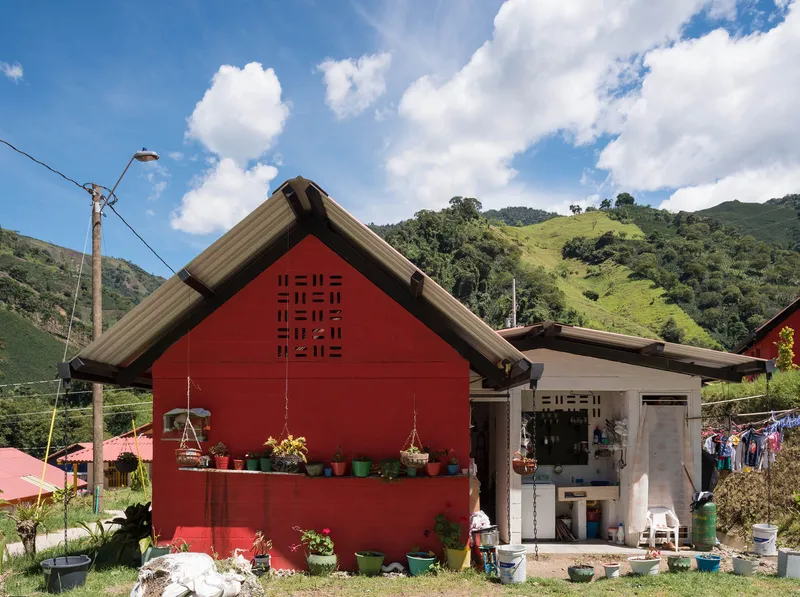
- Each home: 60 m² built area on a 260 m² plot
- Two offset volumes forming: A welcoming entry patio with a covered porch A service patio at the rear
- A welcoming entry patio with a covered porch
- A service patio at the rear
- Space for gardens and small agricultural cultivation
- Reinterpretation of regional color palettes
These homes were so successful that they influenced national rural housing standards, becoming the prototype for future government-led rural housing programs.

A National Model for Post-Disaster Housing
The Salgar Reconstruction Project goes beyond rebuilding homes—it redefines how architecture can drive social recovery, environmental resilience, and urban regeneration after a catastrophe.
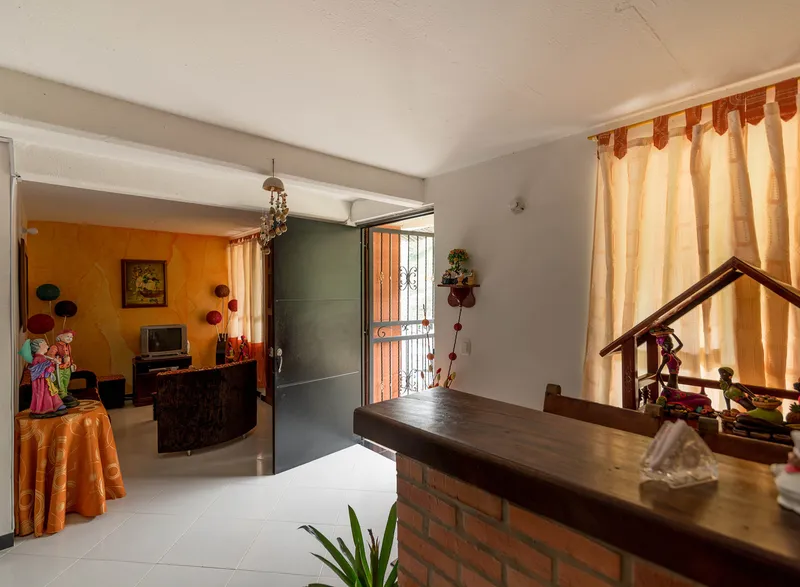
By integrating local culture, community participation, and thoughtful territorial planning, the project has become a benchmark for resilient architecture in Colombia and Latin America. It demonstrates how collective efforts can transform tragedy into an opportunity to build safer, more dignified, and more connected living environments.


Popular Articles
Popular articles from the community


Aquadapt: An Underwater Habitat That Rewrites Its Rooms by the Hour
Curved modules ring the seabed while one shell shifts from breakfast room to cinema, farm and football pitch as residents' needs change.


FCC Arquitectura Expands a Portuguese Granite House with a Board-Marked Concrete Wing
In Portugal, JV House pairs a cleaned-up whitewashed and granite dwelling with a timber-shuttered concrete extension, courtyards and a garden pool.

Cube Design Draws an Ecological Corridor Between Two Shenzhen Hills with the Nankai Building
Beside Shenzhen's container docks, the Nankai Building pairs stacked balconies with a climbing green screen to connect two hillsides across its height.

The Amber Palace Opera: A Geological Fiction Surfaces on Tallinn's Baltic Waterfront
Pierre Brillard reimagines a Baltic legend as a public landscape, opera house, and waterfront promenade rooted in Tallinn's coastal identity.

Similar Reads
You might also enjoy these articles


Hodi-Mandai Geram
Project Function: Preservation and revitalization of the Intangible heritage and socio-spatial identity of the Hodi by Housing, Cultural Memory Center, Sacred Grove, landscape, local tourism economy


Olio Towers: A Mid-Rise for Performers That Fuses Housing, Rehearsal, and Stage
Located blocks from Houston's Theater District, this modular tower stacks living units around a central performance atrium.

Oasis: Modular Green Housing Carved into Dhaka's Urban Fabric
A shortlisted Plugin Housing entry reclaims unauthorized settlements in Dhaka with stepped concrete volumes, green roofs, and ventilation-driven design.

Black Hole: A Floating Megastructure for the Post-Physical Era
Emiliano Mazzarotto envisions a spherical, self-scaling arena where e-sports, digital hotels, and holographic stadiums replace traditional public space.

Explore Community Reconstruction Competitions
Discover active competitions in this discipline

Challenge to reimagine the Iron Throne

Photograph architecture without architects

Illustrate the lost glory of Angkor Wat - Render Challenge

Design challenge to reuse E-waste
Comments (0)
Please login or sign up to add comments
No comments yet. Be the first to comment!