

SAP Labs Munich Campus by SCOPE Architekten: A Benchmark in Collaborative Office Architecture
SAP Labs Munich Campus by SCOPE Architekten blends collaborative workspaces, sustainable design, and interdisciplinary research within a modern, innovative micro-campus environment.


Located in the heart of Science City Garching, one of Europe’s foremost hubs for research and higher education, the SAP Labs Munich Campus by SCOPE Architekten sets a new standard for modern office architecture. Completed in 2024, the 25,500 m² campus exemplifies a forward-thinking approach to corporate and academic collaboration, blending innovative workspace design with sustainable principles.
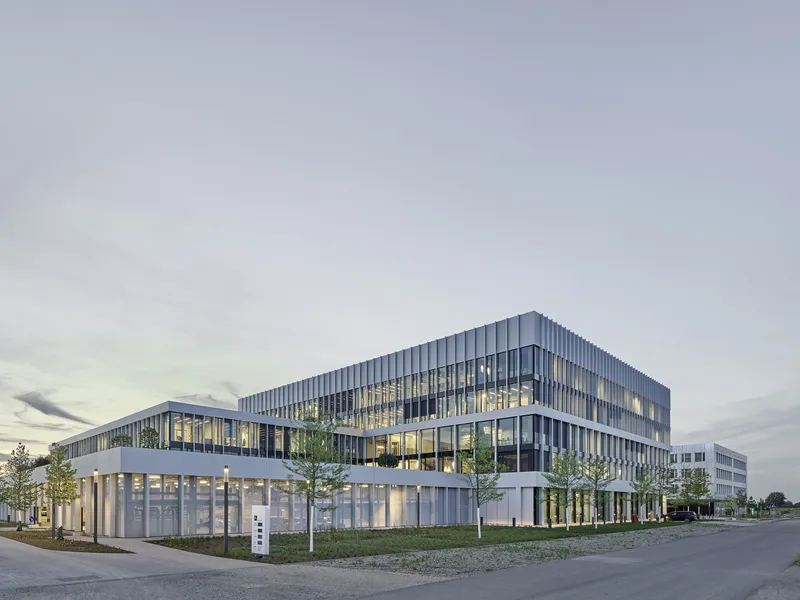
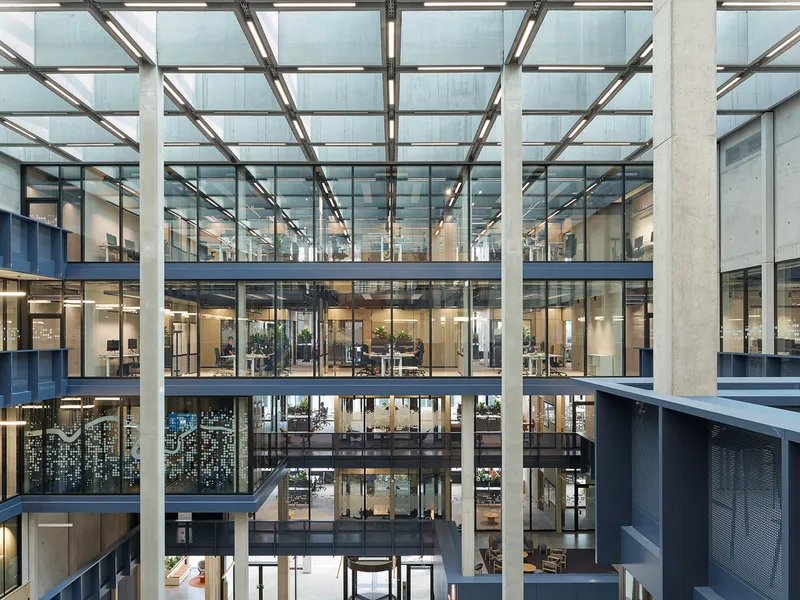
Positioned as a gateway to the Science Loop, a pedestrian corridor connecting major research clusters in Garching, the campus plays a pivotal role in fostering an integrated environment where business meets academia. Housing approximately 600 SAP employees alongside 120 researchers and students from the Technical University of Munich (TUM), the campus encourages cross-disciplinary exchange, making it a dynamic center for innovation, research, and collaboration.
Micro-Campus Design with a Central Atrium
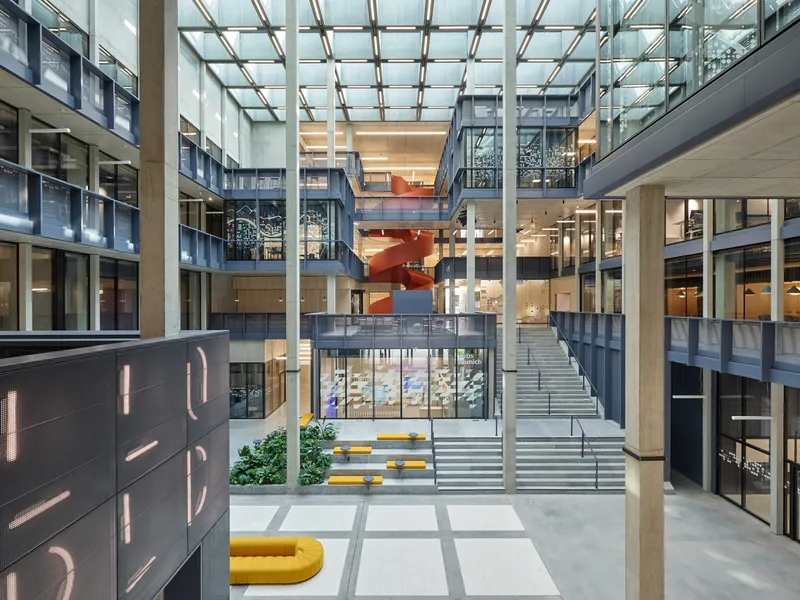
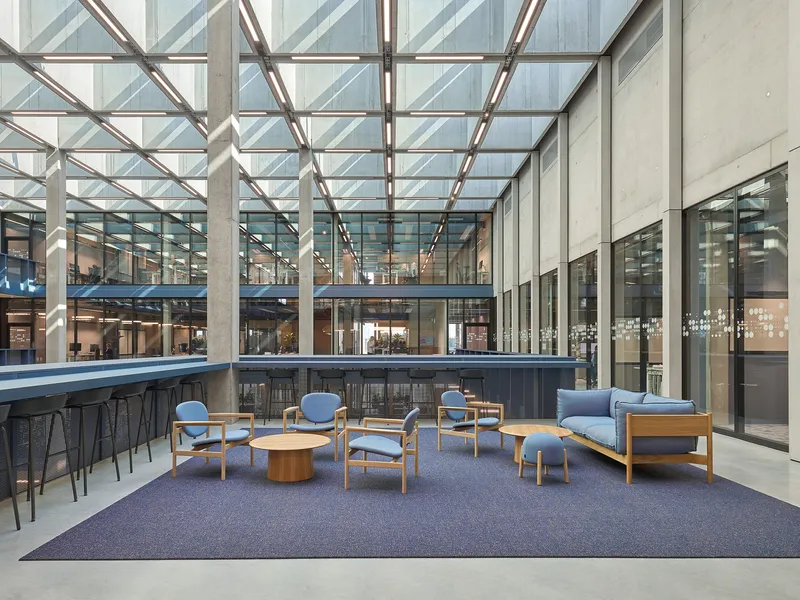
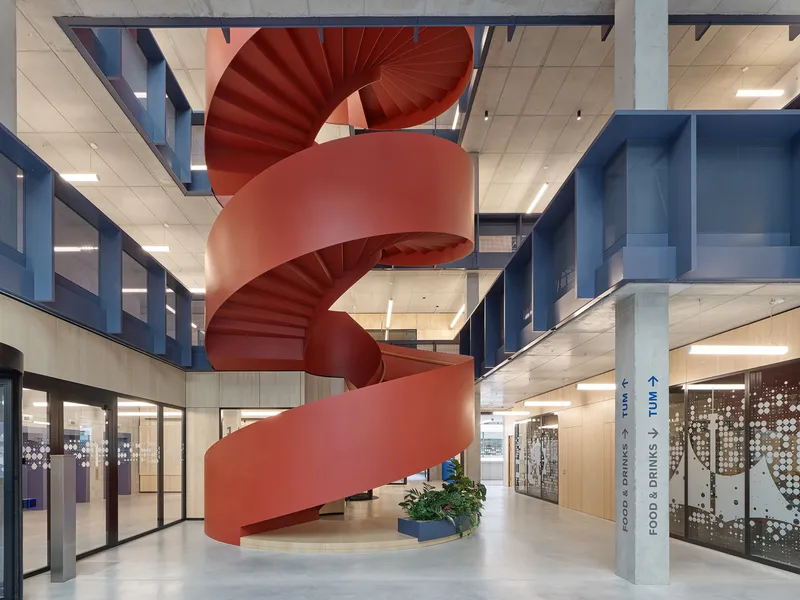
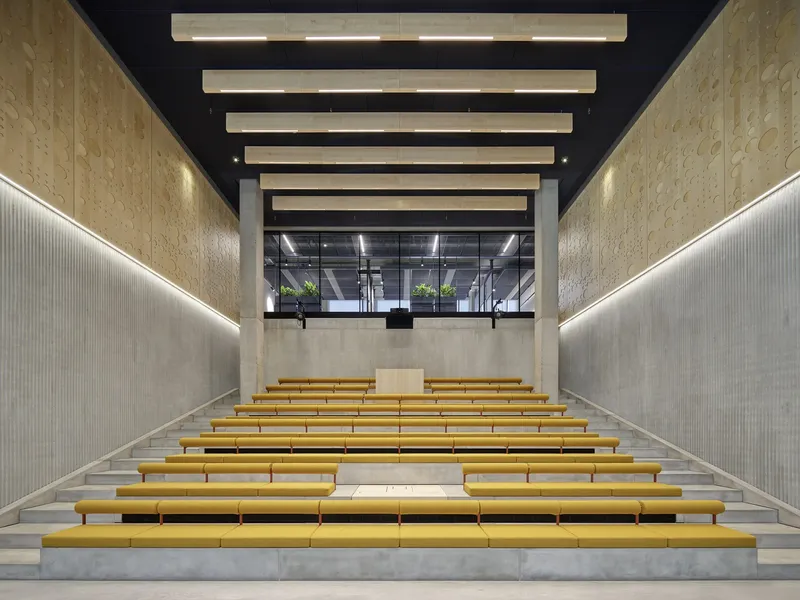
The campus is conceived as a micro-campus, composed of three staggered volumes surrounding a five-story central atrium—the architectural and social heart of the building. Acting as an interior public square, the atrium connects diverse functions, including research facilities, office workspaces, and communal zones, through open galleries, terraces, and expansive sightlines. A sculptural red spiral staircase and wide seating steps transform vertical circulation into a shared social experience.
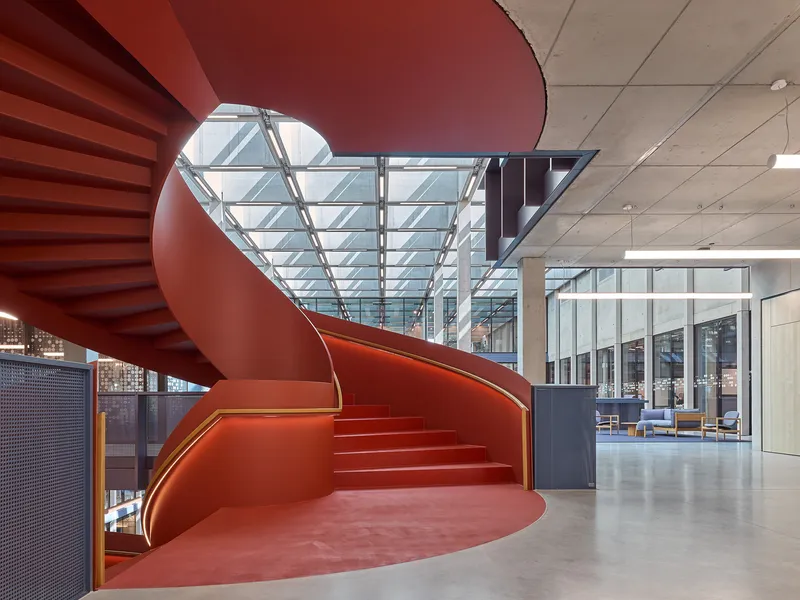
Key features surrounding the atrium include a publicly accessible Vital Bar, an auditorium, and an SAP experience area, creating spaces for both formal and informal interaction. This thoughtful spatial arrangement promotes spontaneous encounters and interdisciplinary dialogue between employees, researchers, and students.
Flexible Workspaces and Social Connectivity
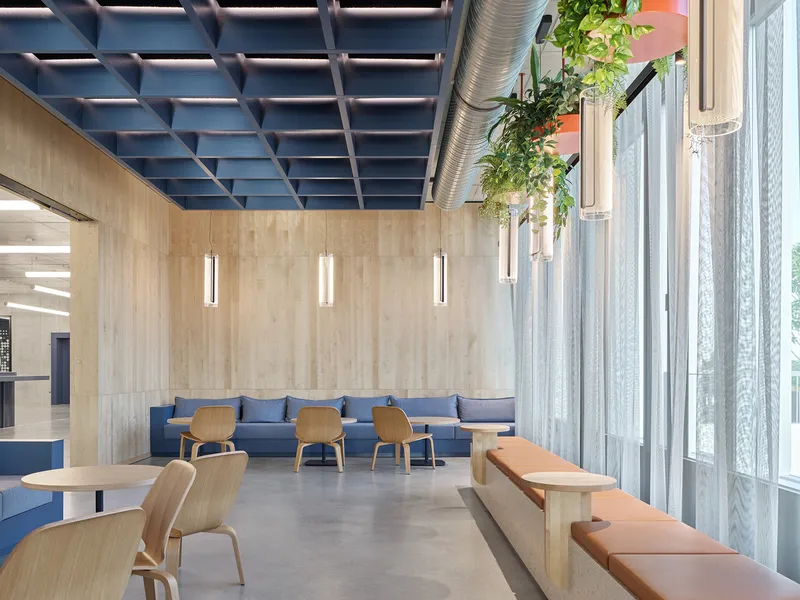
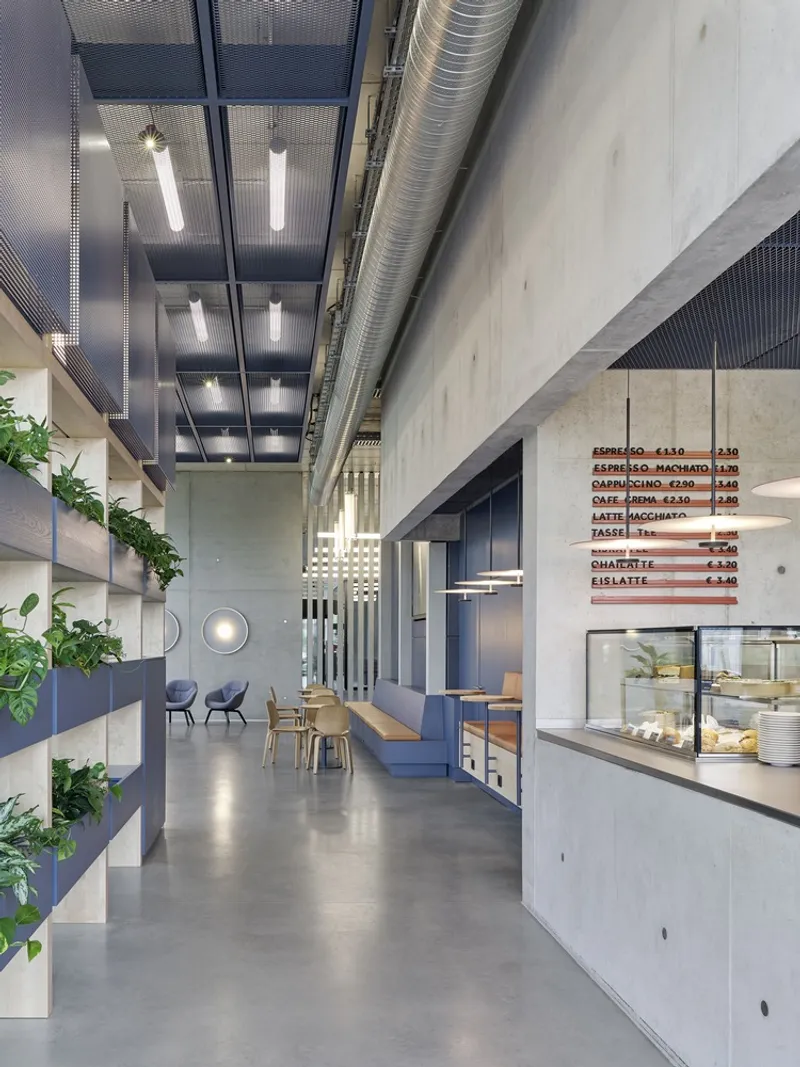
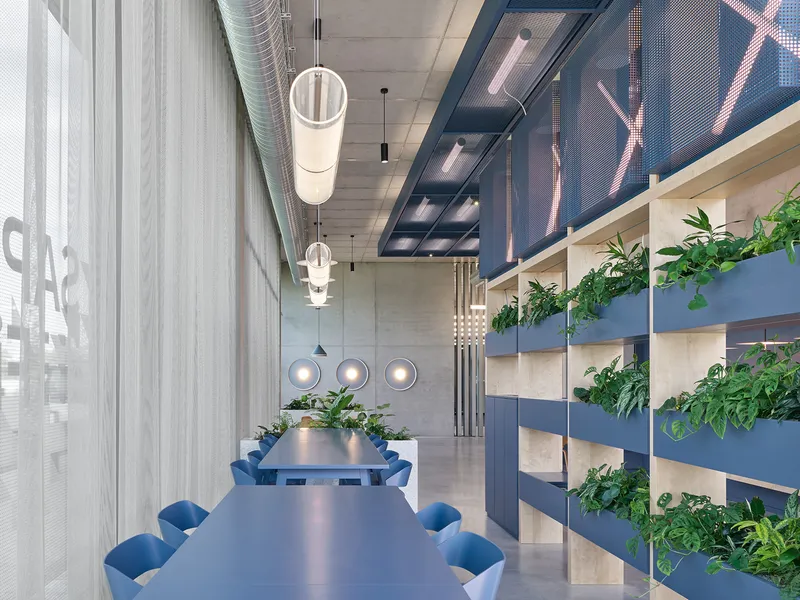
The campus design prioritizes flexible and collaborative workspaces, featuring open-plan offices, adaptable team areas, hybrid meeting zones, and private booths for focused work. The centrally located employee restaurant, with direct access to a rooftop terrace, doubles as a social hub, supporting informal meetings and cross-team engagement.
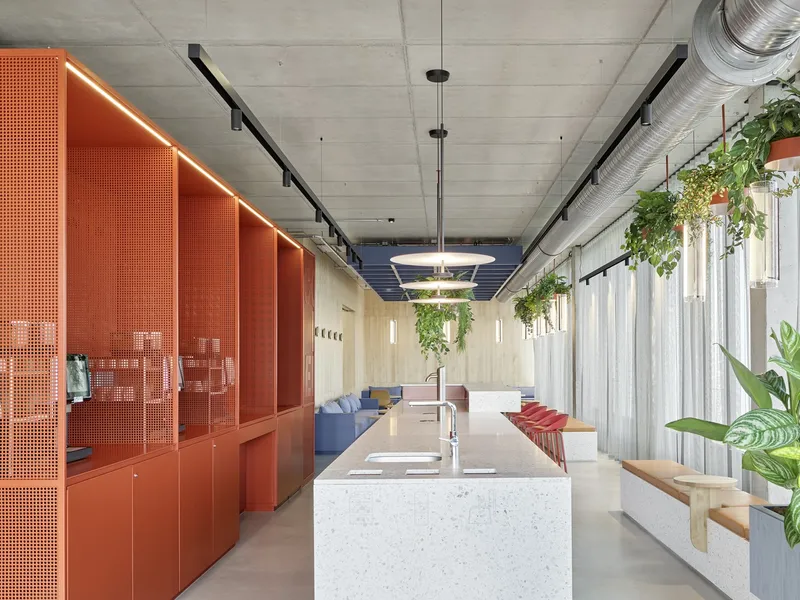
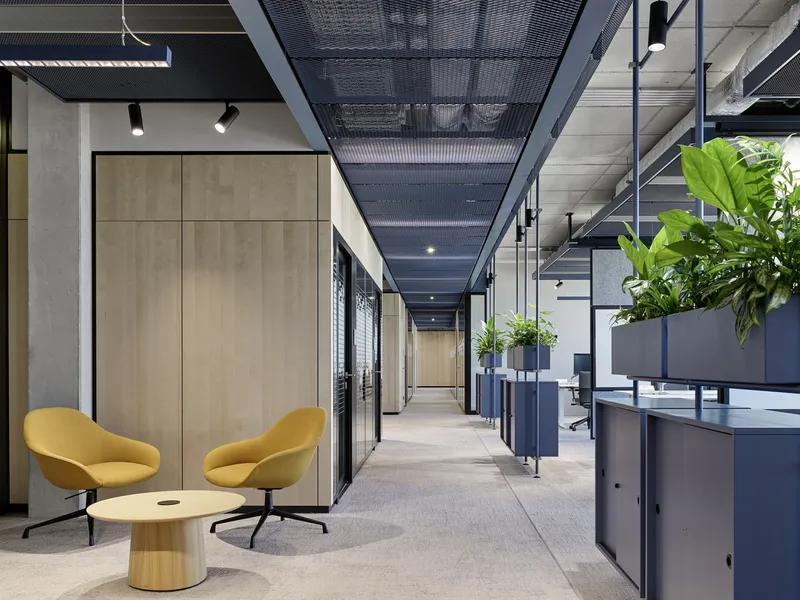
Architecturally, the building features silver-anodized pilasters and a clear structural rhythm on its façade, giving the campus a cohesive and modern appearance. Interior finishes highlight honest, raw materials such as exposed concrete, terrazzo, and aluminum surfaces, emphasizing durability and material authenticity while maintaining an elegant, contemporary aesthetic.
Sustainability and Circular Design Principles
Sustainability is integral to the SAP Labs Munich Campus. The project embraces circular design principles, using recyclable, low-maintenance materials, minimizing unnecessary finishes, and enabling long-term adaptability. The rooftop of the parking deck doubles as an accessible terrace, providing outdoor spaces that enhance well-being and encourage social interaction.
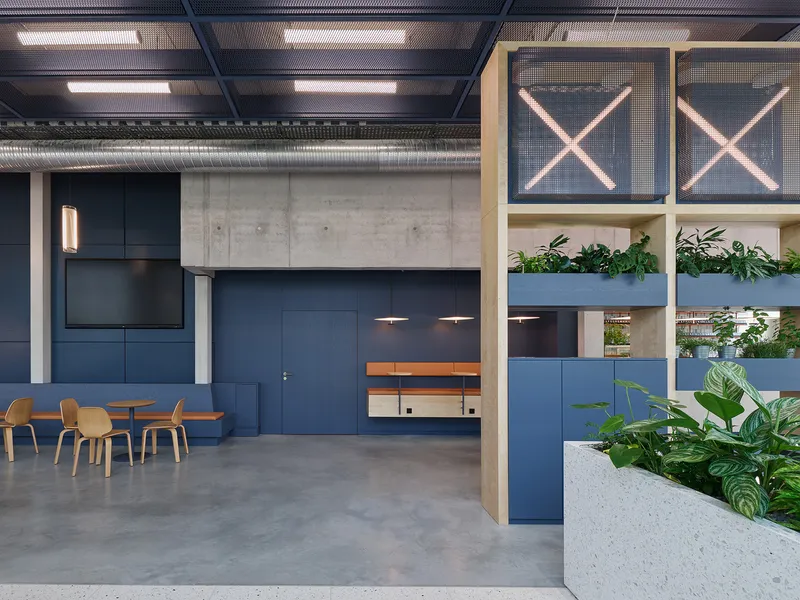
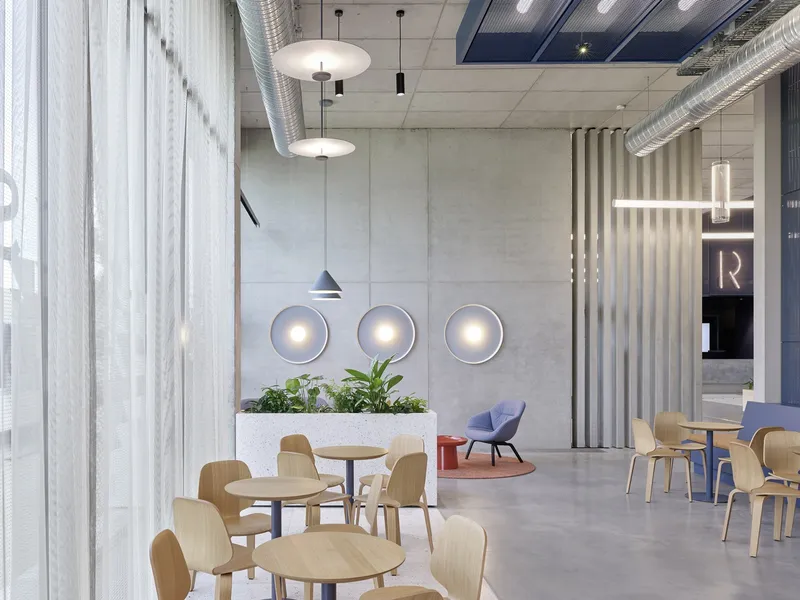
By merging cutting-edge architecture, sustainable design, and flexible collaborative spaces, the SAP Labs Munich Campus transcends traditional office buildings. It serves as a vibrant hub for innovation, interdisciplinary research, and future-ready work culture, reflecting the next generation of corporate and academic campuses.
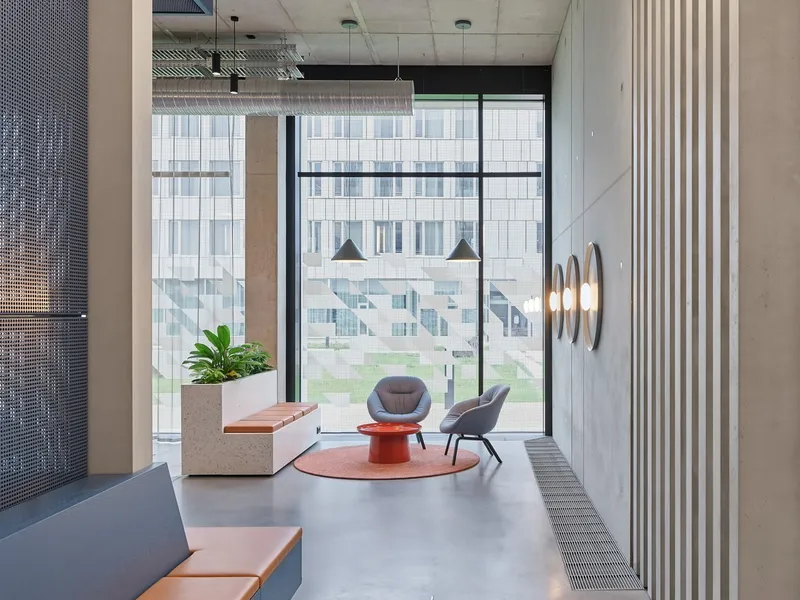


Popular Articles
Popular articles from the community


The Ocean Hive: Sustainable Architecture for a Self-Sufficient Civilization at Sea
The Ocean Hive imagines sustainable architecture at sea, where modular habitats, algae, wave power and ocean waste sustain a growing colony.

The Musturak Paradise: Senior Living Architecture for a Connected Future in Temara, Morocco
The Musturak Paradise reimagines senior living architecture in Temara via private homes, social spaces, culture, community, and shared care.

The Earth Pod: 3D Printed Homes for Resilient Refugee Communities
The Earth Pod reimagines refugee housing through 3D printed homes made from clay, combining resilience, self-sufficiency, and rapid shelter.

Riyadh For All: Intergenerational Urban Design for Active Aging in Rabat
Riyadh For All reimagines urban design in Rabat with intergenerational co-living, adaptive courtyards, and Moroccan cultural exchange today.


Similar Reads
You might also enjoy these articles


Hodi-Mandai Geram
Project Function: Preservation and revitalization of the Intangible heritage and socio-spatial identity of the Hodi by Housing, Cultural Memory Center, Sacred Grove, landscape, local tourism economy


Olio Towers: A Mid-Rise for Performers That Fuses Housing, Rehearsal, and Stage
Located blocks from Houston's Theater District, this modular tower stacks living units around a central performance atrium.

Oasis: Modular Green Housing Carved into Dhaka's Urban Fabric
A shortlisted Plugin Housing entry reclaims unauthorized settlements in Dhaka with stepped concrete volumes, green roofs, and ventilation-driven design.

Black Hole: A Floating Megastructure for the Post-Physical Era
Emiliano Mazzarotto envisions a spherical, self-scaling arena where e-sports, digital hotels, and holographic stadiums replace traditional public space.

Explore Architecture Competitions
Discover active competitions in this discipline



Challenge to reimagine the Iron Throne


Photograph architecture without architects


Illustrate the lost glory of Angkor Wat - Render Challenge


Design challenge to reuse E-waste
Comments (0)
Please login or sign up to add comments
No comments yet. Be the first to comment!