
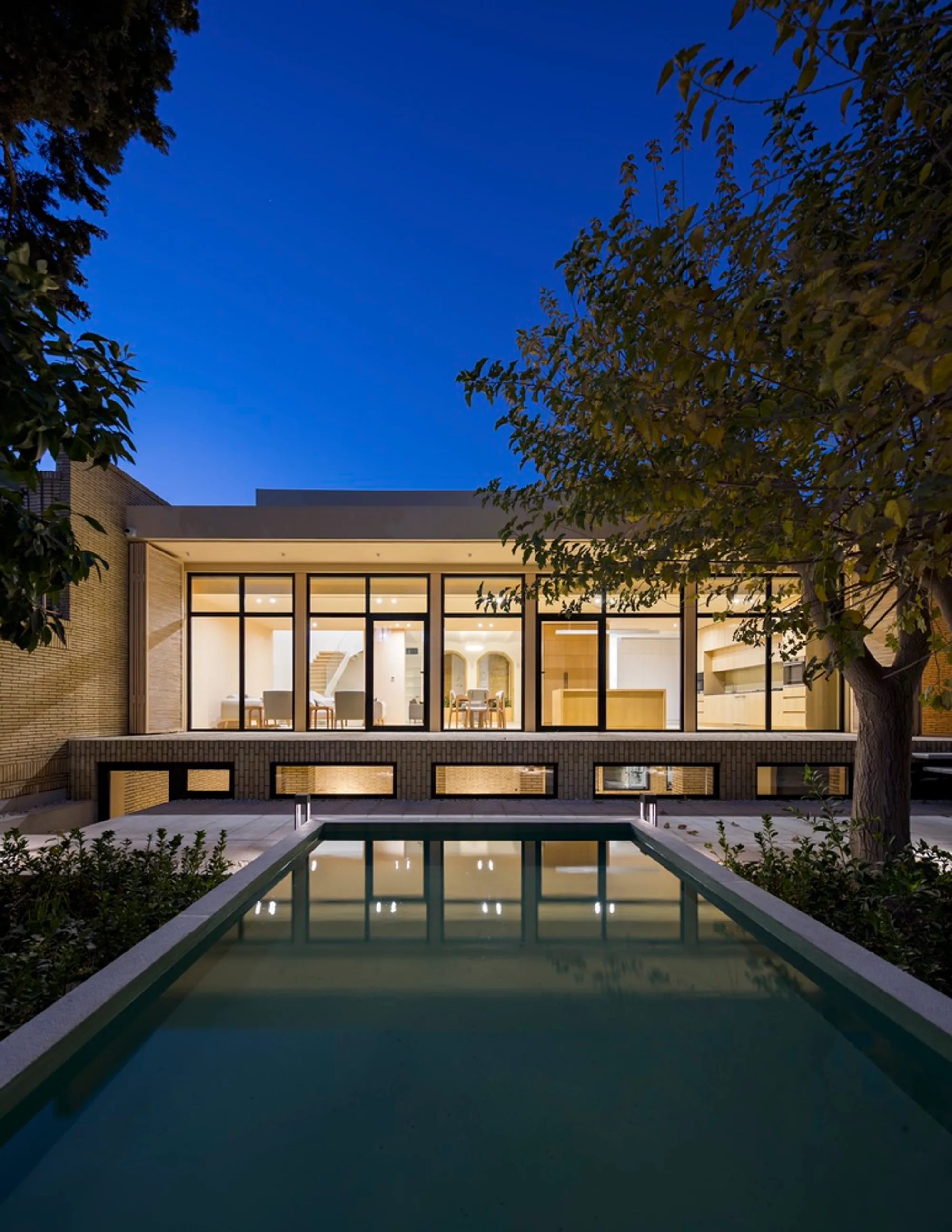
Sarv House by Dalan Office – A Contemporary Restoration of a 1970s Yazd Residence
Sarv House transforms a 1970s Yazd residence through restoration, volume reduction, and climate-responsive design, creating a modern home rooted in heritage.


Sarv House in Yazd, Iran, designed by Dalan Office, is a meticulous restoration project that transforms a 1970s residence into a contemporary home while preserving its architectural authenticity. Covering 466 m², the project reflects a sensitive balance between heritage conservation, modern living standards, and climatic adaptation in Yazd’s hot and dry environment.
Reevaluating an Existing Structure
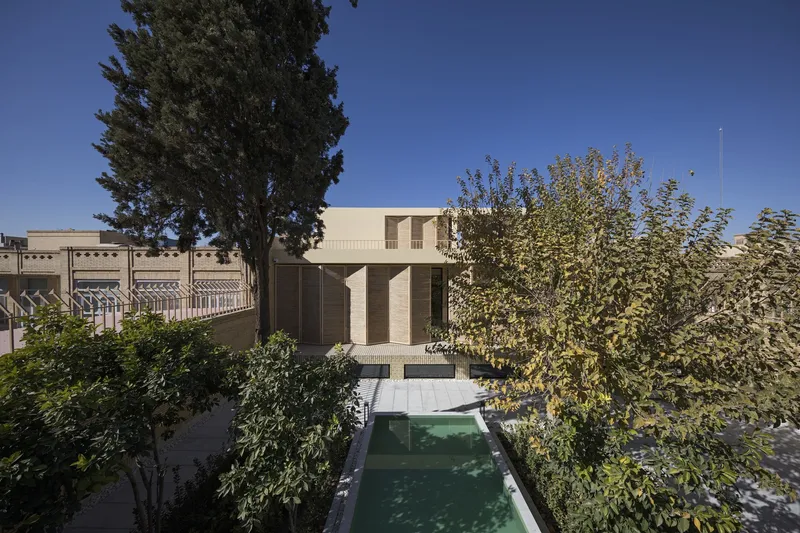
When the new owner acquired the house, the initial question was whether to demolish the old structure and build anew. However, upon inspecting the residence, the architects recognized the spatial potential, historical value, and structural integrity embedded in the home’s original geometry. This discovery became the foundation for a design concept rooted in respecting the past while reimagining the future.
Heritage Geometry as a Design Framework
The house was originally organized around a nine-square geometric pattern, a spatial system historically used in Yazd’s rural Koushk houses and later adapted for urban residences during the city’s early 20th-century transformation. Dalan Office embraced this geometry as a timeless organizational tool, reshaping it to support contemporary living patterns while enhancing the dialogue between indoor and outdoor spaces.
A Three-Part Reconstruction Strategy
The restoration process is structured around three key interventions:
1. Preservation and Restoration
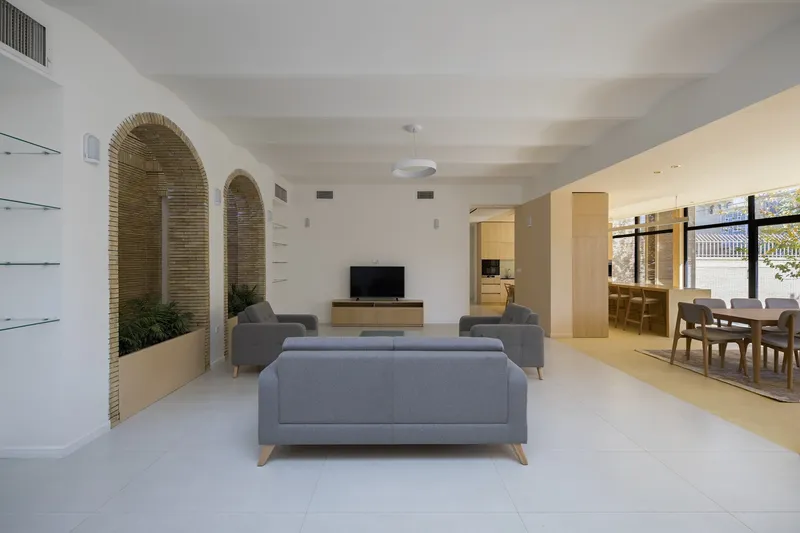
The primary structure was fully preserved and reinforced. Original bricks were cleaned and reused to maintain the tactile authenticity of the house. This phase focused on strengthening the existing fabric while setting the stage for new spatial flexibility.
2. Volume Reduction and Plan Transformation
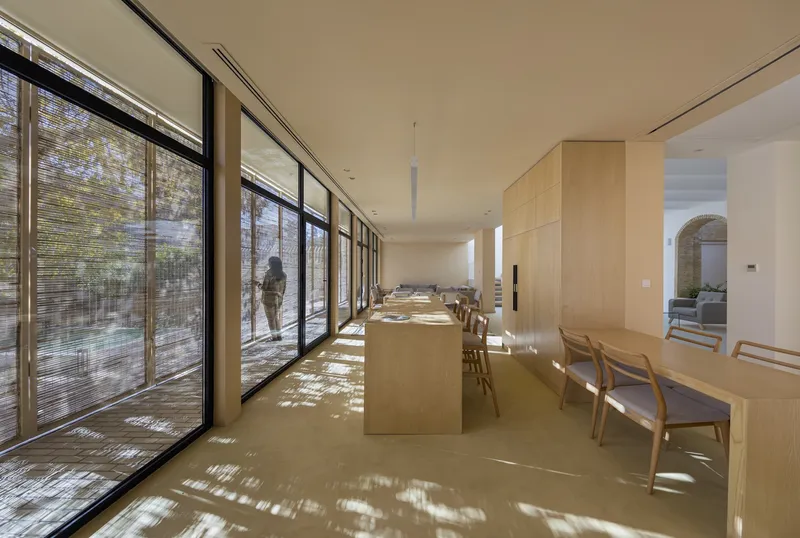
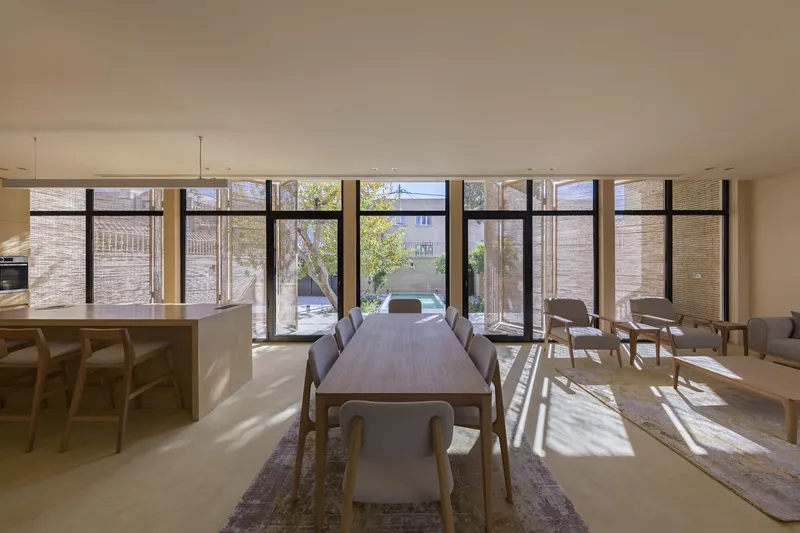
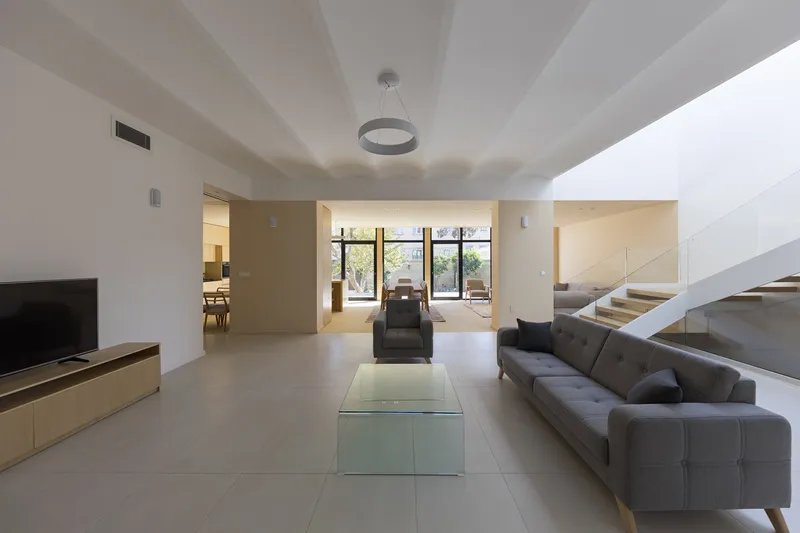
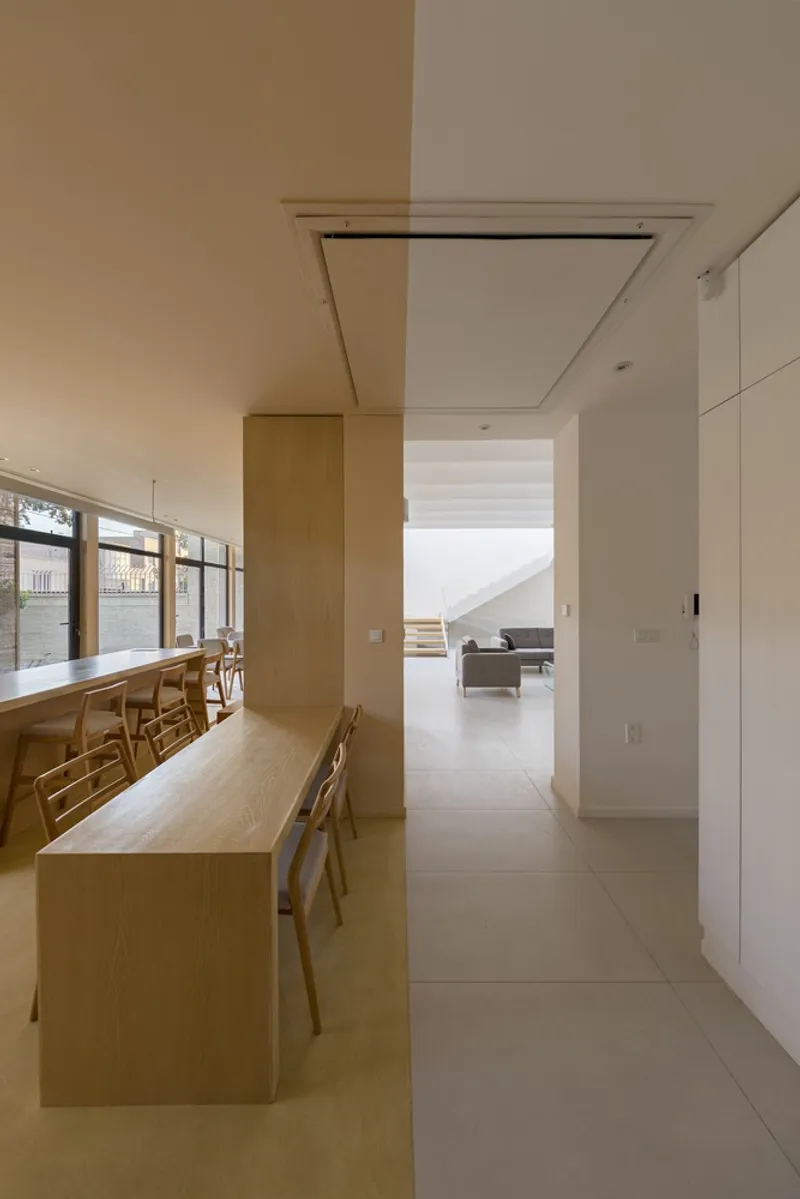
One of the project’s most transformative steps was the strategic reduction of built volume. By removing select interior walls, the thick south façade walls, and portions of the staircase volume, the design shifts from a closed layout to a semi-open ground floor plan. This restructuring improves:
- Visual connectivity to the courtyard
- Cross-floor communication
- Daylight penetration
- Spatial fluidity across functional zones
The removal of parapet walls and thinning of roof sections allowed the architects to lighten the overall mass, aligning the house with modern spatial expectations while retaining its historical character.
3. Targeted Additions to Activate the Roof
To expand usable space, the architects added a partially enclosed rooftop structure. This new volume echoes traditional Yazd culture, where roofs were once used for sleeping and gathering on warm summer nights. The addition creates a multi-functional roofscape that blends enclosed and semi-open areas.
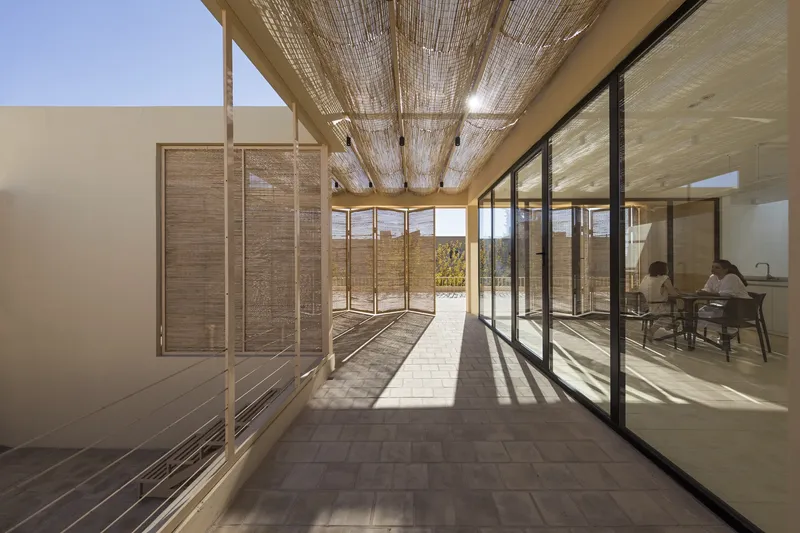
Climate-Responsive Design: The Two-Shell Façade
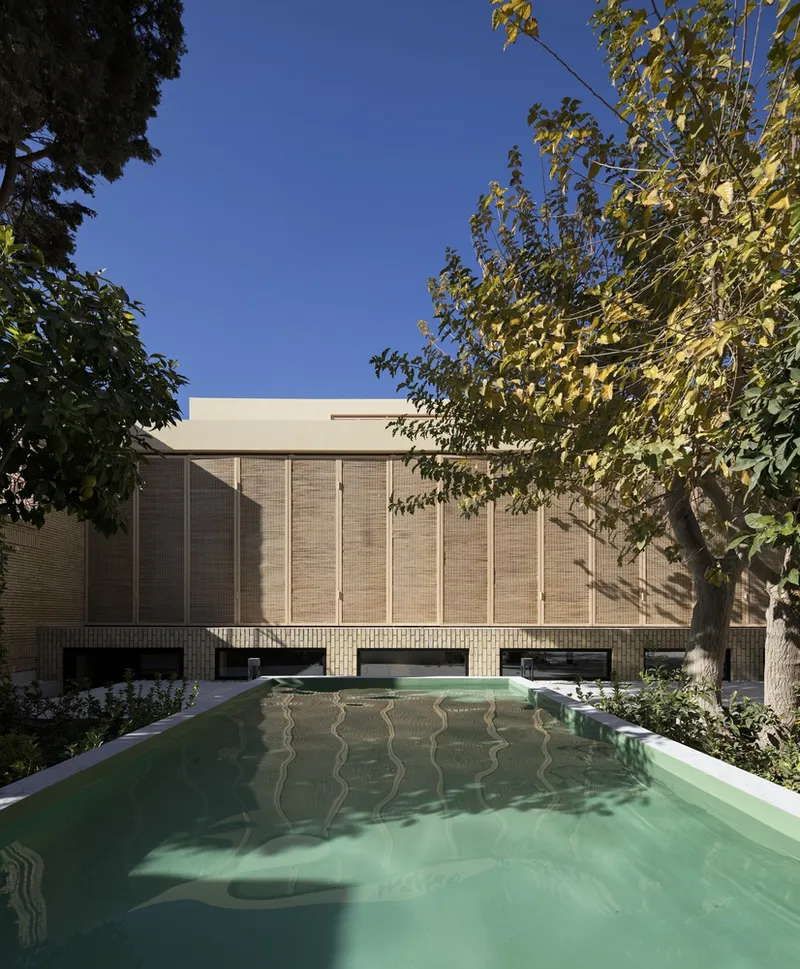
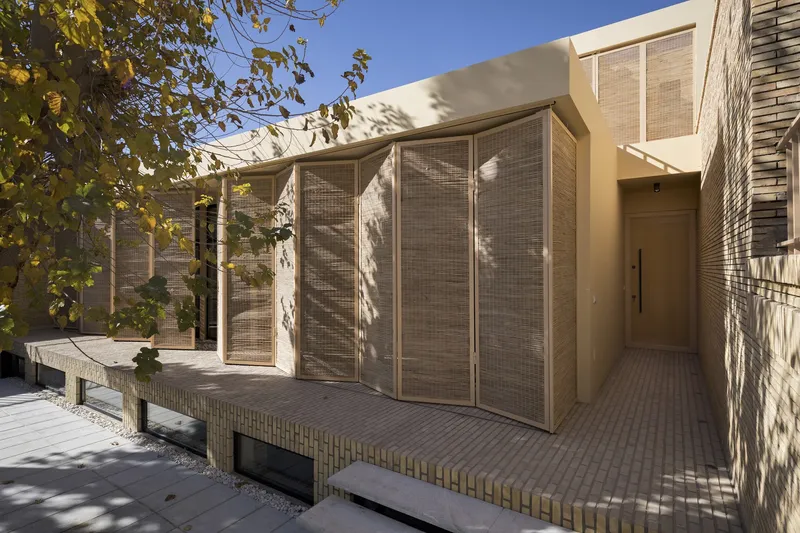
Yazd’s harsh climate required a thoughtful environmental strategy. Dalan Office introduced a movable wicker louver system as a secondary façade. This bioclimatic layer:
- Controls intense sunlight
- Enhances thermal comfort
- Preserves outward views
- Creates dynamic interior shadows and light patterns
- Adds a culturally resonant material expression
The double-layer façade is both functional and poetic, enriching the home’s atmosphere throughout the day.
Craftsmanship and Material Reuse
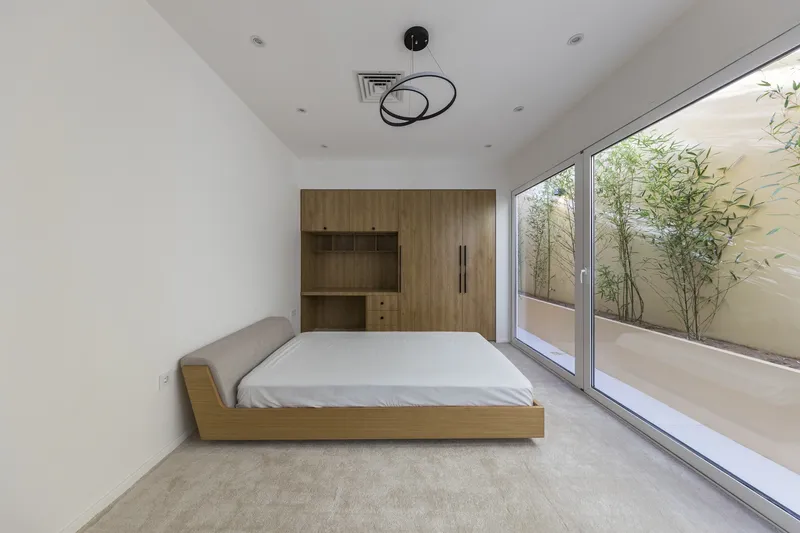
In line with sustainable practices, bricks from demolished sections were reused in new construction, reinforcing the home’s material continuity. This approach minimized waste while preserving the tactile narrative of the house’s original construction.
A Contemporary Home Rooted in History
Sarv House stands as a model for sustainable restoration in Iran, demonstrating how aging residential structures can be revived through sensitive design interventions. Dalan Office’s strategy preserves the home’s historical geometry while reshaping it for a modern lifestyle—balancing tradition, environmental performance, and spatial innovation.
All photographs are works of Mohammad Hassan Ettefagh




Popular Articles
Popular articles from the community


Hill & Cross Opera: Sculptural Opera House Architecture Shaped by Tallinn’s Landscape and Identity
Hill & Cross Opera reimagines opera house architecture in Tallinn through its sculptural hill, civic plaza, glass wave and a luminous cross.

Co-Life: Senior Housing Design That Reconnects Older Adults With the City
Co-Life reimagines senior housing design through healing gardens, shared streets, workshops, and a sustainable community across generations.

Riyadh For All: Intergenerational Urban Design for Active Aging in Rabat
Riyadh For All reimagines urban design in Rabat with intergenerational co-living, adaptive courtyards, and Moroccan cultural exchange today.

The Musturak Paradise: Senior Living Architecture for a Connected Future in Temara, Morocco
The Musturak Paradise reimagines senior living architecture in Temara via private homes, social spaces, culture, community, and shared care.

Similar Reads
You might also enjoy these articles


Hodi-Mandai Geram
Project Function: Preservation and revitalization of the Intangible heritage and socio-spatial identity of the Hodi by Housing, Cultural Memory Center, Sacred Grove, landscape, local tourism economy


Olio Towers: A Mid-Rise for Performers That Fuses Housing, Rehearsal, and Stage
Located blocks from Houston's Theater District, this modular tower stacks living units around a central performance atrium.

Oasis: Modular Green Housing Carved into Dhaka's Urban Fabric
A shortlisted Plugin Housing entry reclaims unauthorized settlements in Dhaka with stepped concrete volumes, green roofs, and ventilation-driven design.

Black Hole: A Floating Megastructure for the Post-Physical Era
Emiliano Mazzarotto envisions a spherical, self-scaling arena where e-sports, digital hotels, and holographic stadiums replace traditional public space.
Explore Architecture Competitions
Discover active competitions in this discipline



Challenge to reimagine the Iron Throne


Photograph architecture without architects


Illustrate the lost glory of Angkor Wat - Render Challenge


Design challenge to reuse E-waste
Comments (0)
Please login or sign up to add comments
No comments yet. Be the first to comment!