
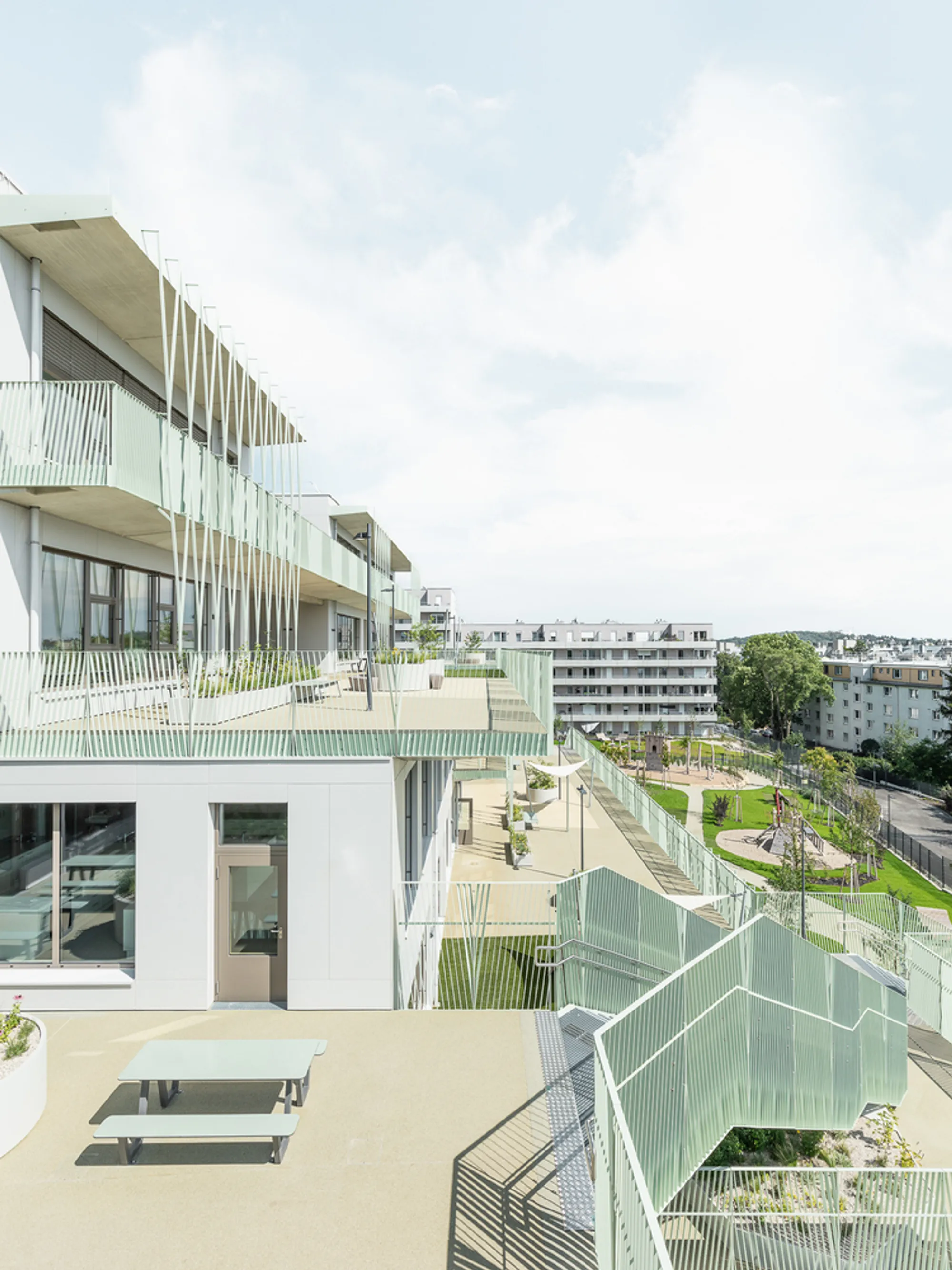
School Campus DOS by SHIBUKAWA EDER Architects
Terraced school in Vienna by SHIBUKAWA EDER Architects integrates inclusive learning clusters, outdoor terraces, and sustainable design for 1,100 students.


A Terraced Educational Environment Embracing Topography and Light
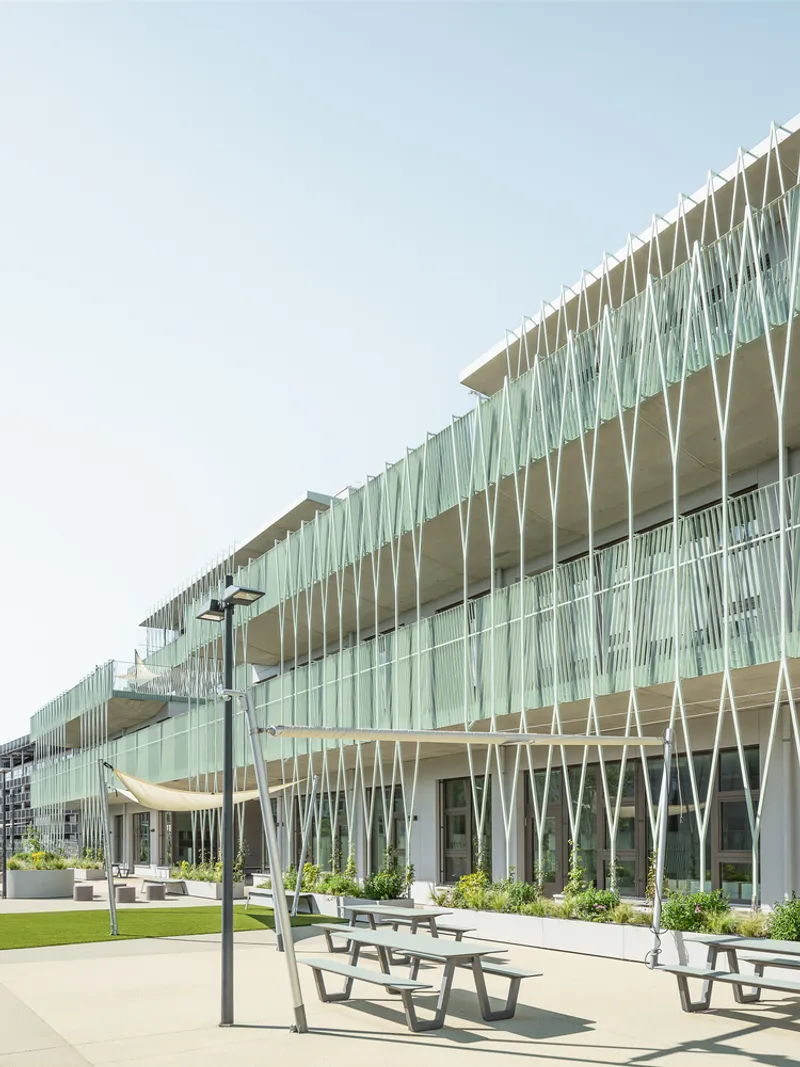
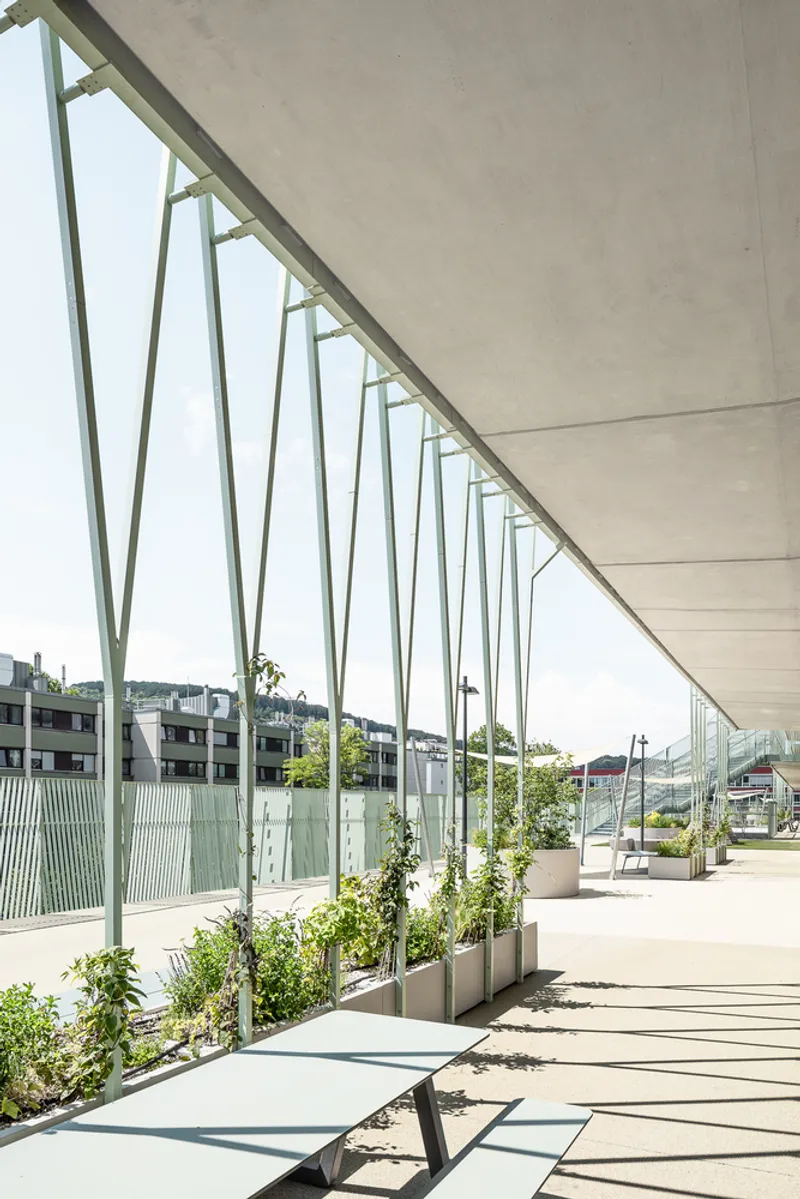
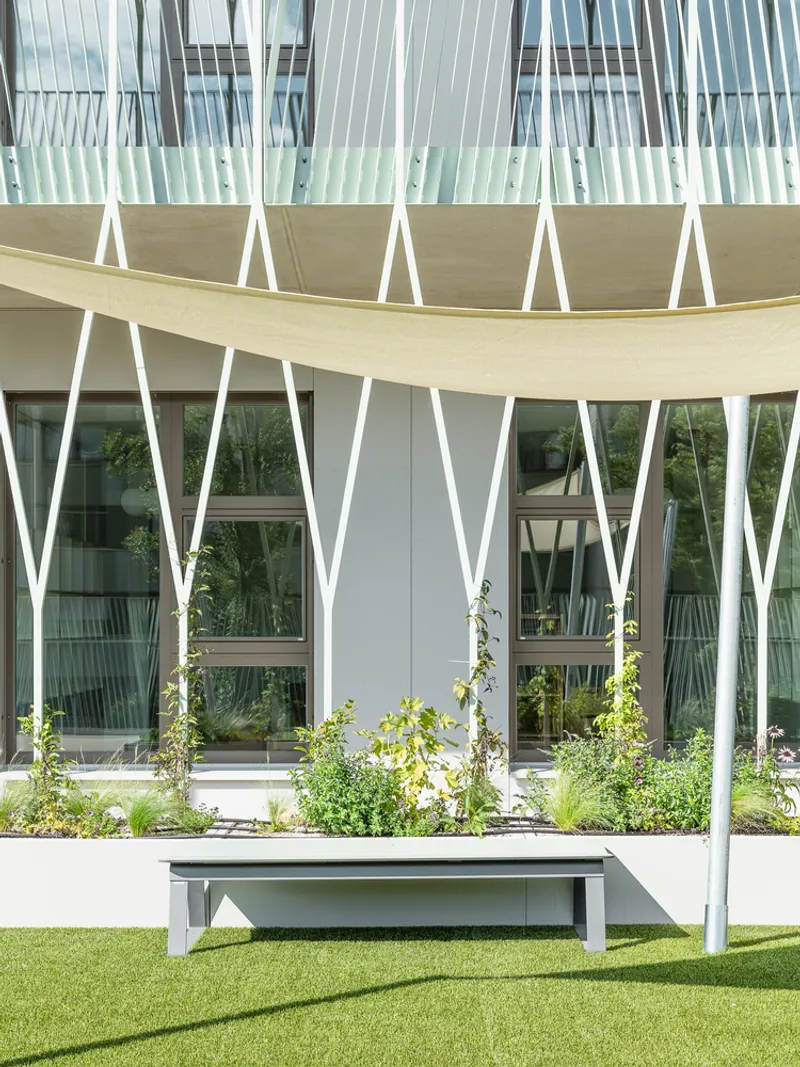
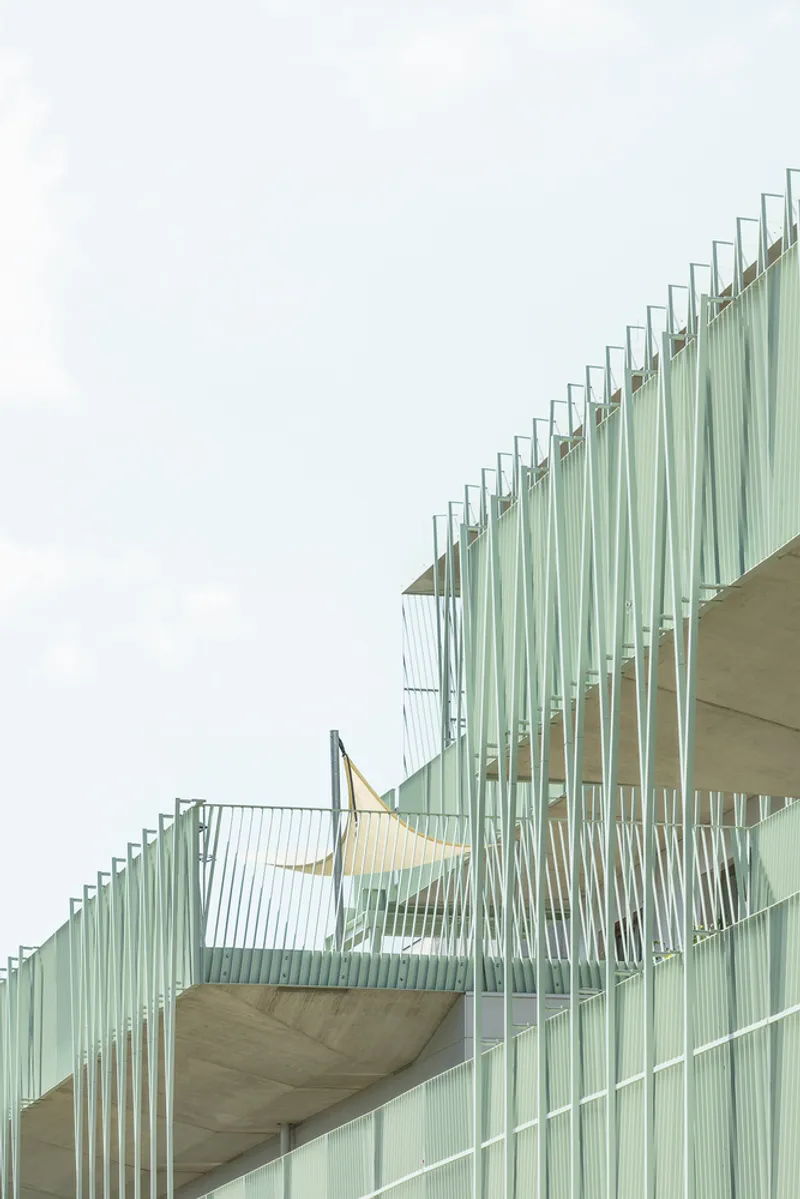
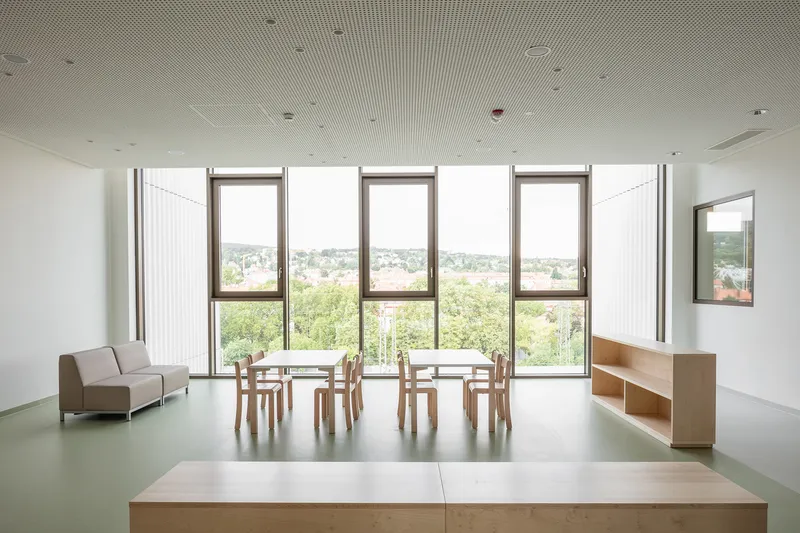
School Campus DOS, designed by SHIBUKAWA EDER Architects, redefines the traditional school typology with a terraced, south-facing structure that embraces Vienna’s natural topography. Organized in a stepping layout every two stories, the building features expansive terraces that extend directly from the classrooms and recreational areas. These terraces, paired with generous glazing, not only invite daylight deep into the interiors but also blur the boundaries between indoor and outdoor learning.
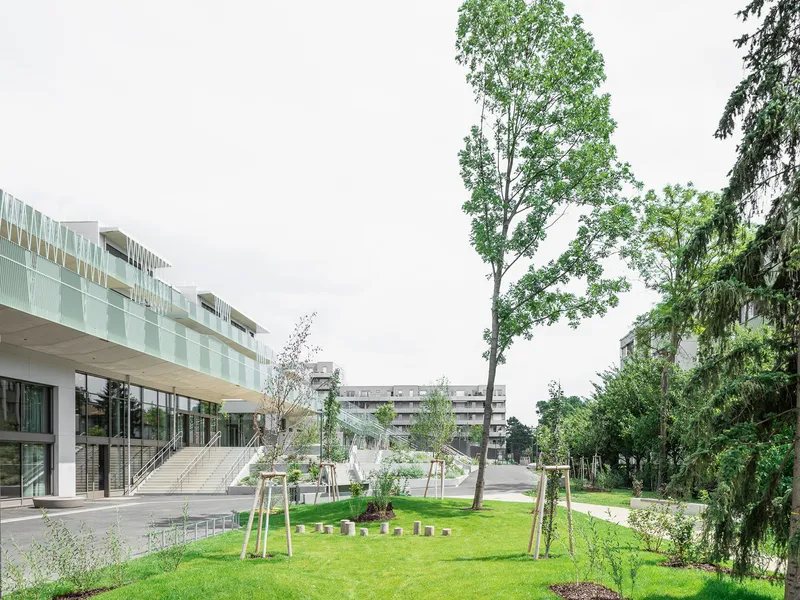
The southern façade’s tiered configuration seamlessly integrates with the landscaped promenade and outdoor playground at ground level. These elements create a continuous learning landscape, while the façade’s wide eaves and green curtain systems offer sun protection and thermal comfort. This transition zone, resembling a porch-like space, encourages outdoor learning and play across seasons.
Sound-Responsive Urban Design and Programmatic Zoning
To mitigate noise from the adjacent railway on the northern boundary, the architects introduced smaller openings on that side and strategically aligned three gymnasiums parallel to the tracks. This careful positioning forms a buffer zone and frames a quiet, secure courtyard to the south—enhancing the entrance experience for students and visitors.
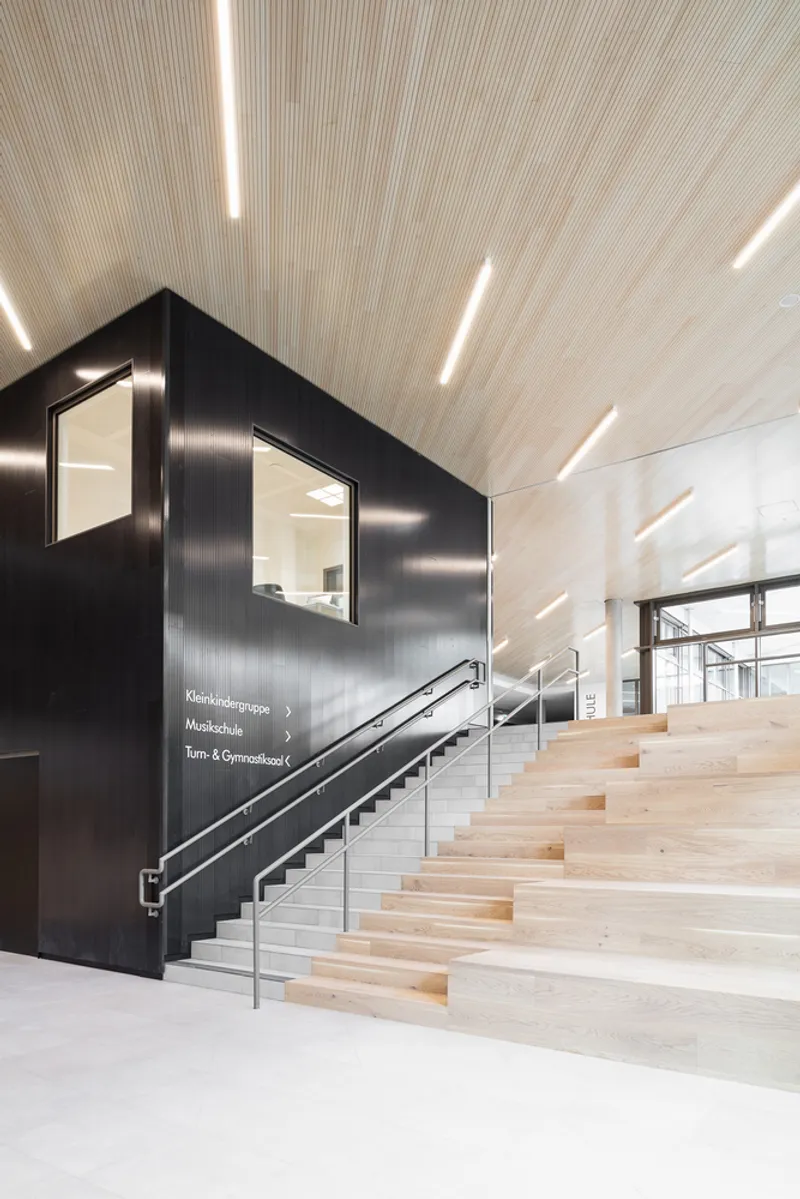
The dual-level entrance concept cleverly accommodates both public and school-related functions. A two-story transparent foyer visually connects these access points: the lower entrance provides access to multipurpose halls and gymnasiums after hours, while the upper entrance serves as the main daily school gateway. Two grand staircases anchor this central space, guiding movement vertically and enhancing visual openness.
Campus Plus: A Socially Inclusive Educational Model
The School Campus DOS was developed as part of Vienna’s progressive “Campus Plus” model, which fosters inter-age and inclusive learning. It accommodates 1,100 children across kindergarten, elementary, and middle school levels, as well as a music school.
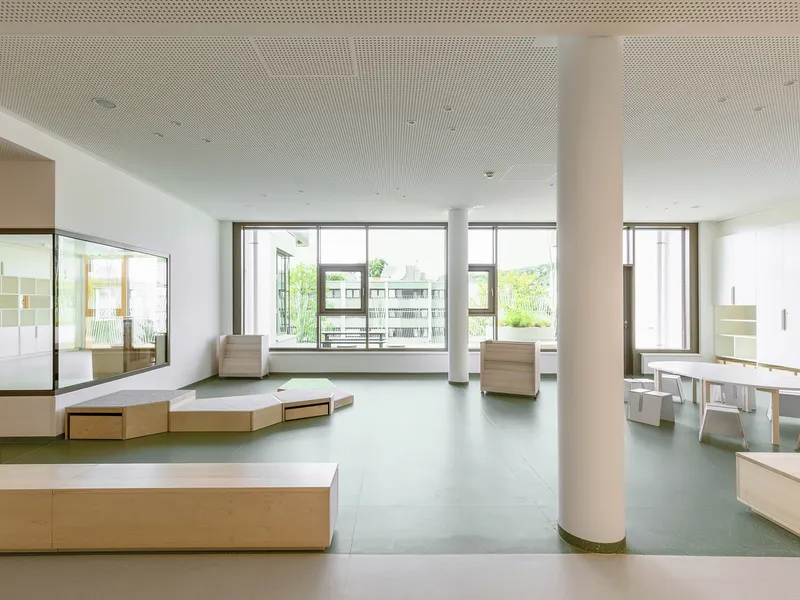
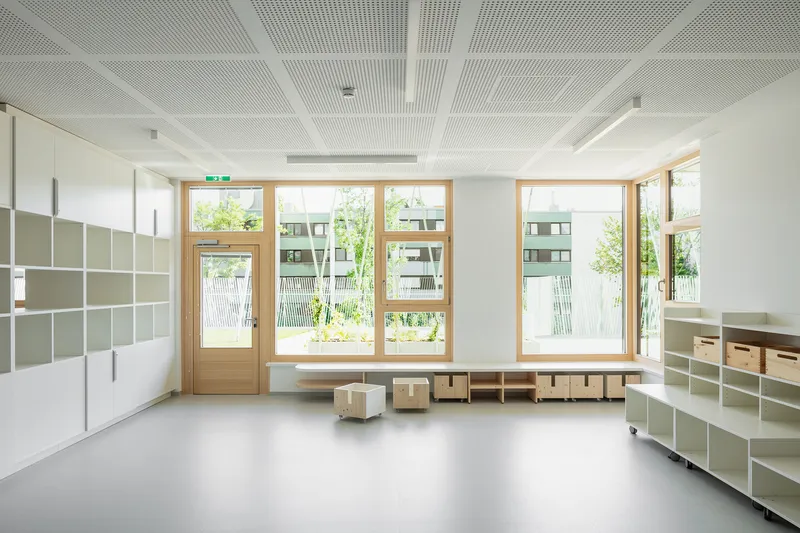
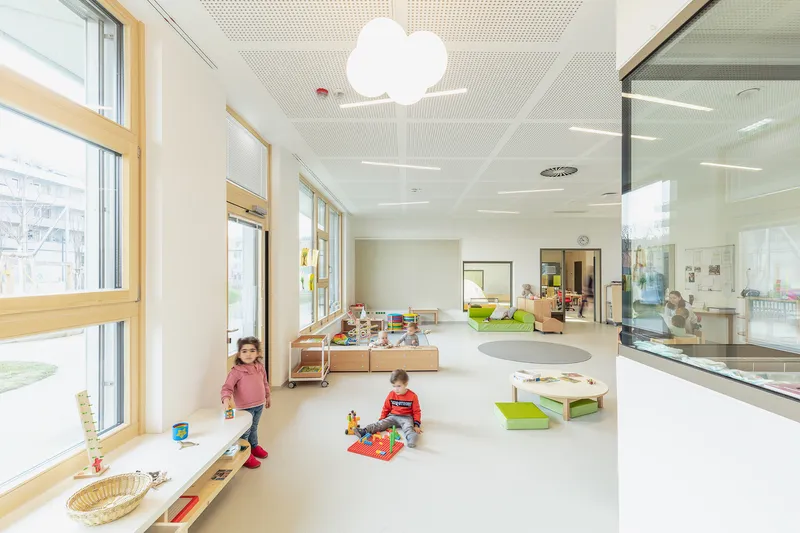
The school is organized into interconnected learning clusters. Each cluster integrates classrooms, multi-purpose breakout zones, creative studios, and communal dining areas, fostering collaboration and social interaction. Designed with maximum transparency and circulation, the clusters avoid dead ends and promote free movement. Around centralized cores housing kitchens, restrooms, and wardrobes, students can move fluidly, encounter peers, and discover spontaneous learning opportunities.
Architecture for Interaction, Transparency, and Flexibility
At the heart of the campus, shared facilities like cafeterias, creative labs, and open-plan learning spaces are distributed between floors. These central hubs promote inter-classroom dialogue and offer flexible zones for cross-disciplinary engagement.
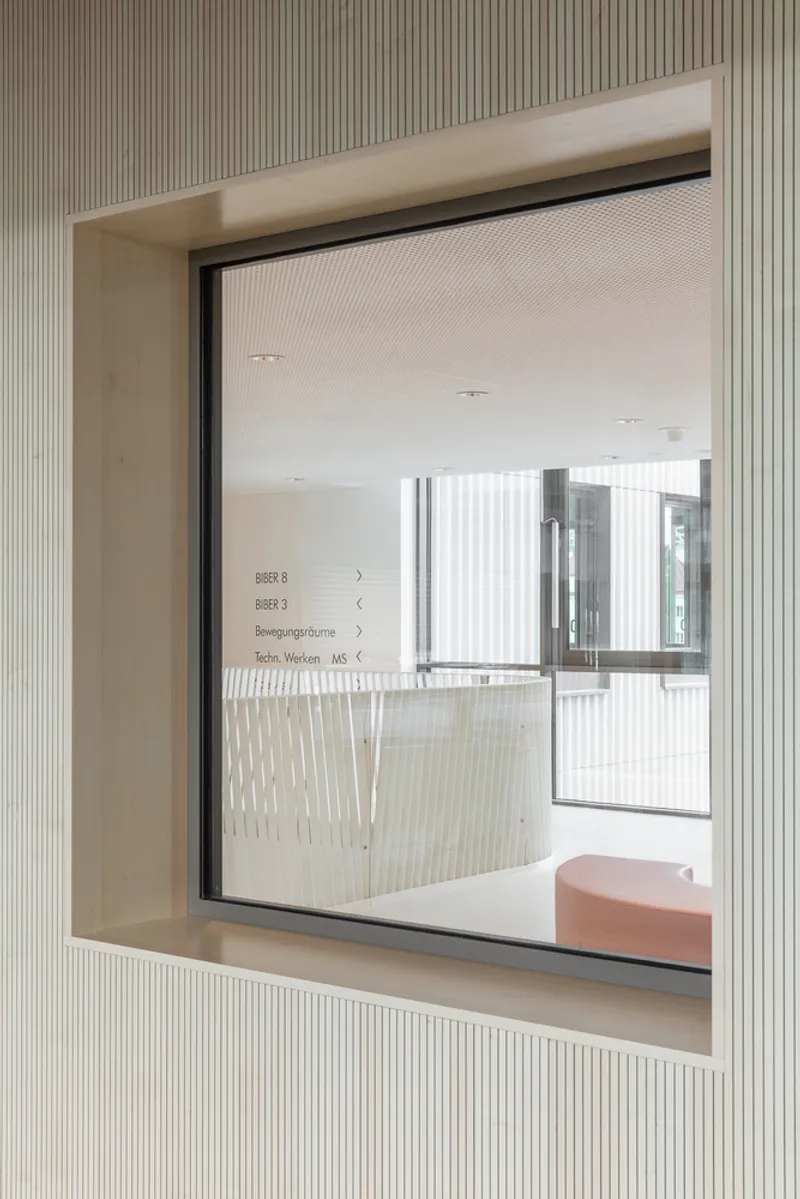
Throughout the school, visual connectivity is prioritized. Glass partitions and large windows maintain sightlines between learning areas, nurturing a sense of community and openness. Whether playing, studying, or relaxing, children are continuously surrounded by an architecture that celebrates movement, inclusivity, and shared discovery.
All Photographs ar works of tschinkersten fotografie, Daniel Hawelka




Popular Articles
Popular articles from the community


The Earth Pod: 3D Printed Homes for Resilient Refugee Communities
The Earth Pod reimagines refugee housing through 3D printed homes made from clay, combining resilience, self-sufficiency, and rapid shelter.

The Musturak Paradise: Senior Living Architecture for a Connected Future in Temara, Morocco
The Musturak Paradise reimagines senior living architecture in Temara via private homes, social spaces, culture, community, and shared care.

Co-Life: Senior Housing Design That Reconnects Older Adults With the City
Co-Life reimagines senior housing design through healing gardens, shared streets, workshops, and a sustainable community across generations.

Co-life: Sustainable Architecture for Age-Friendly Community Living
Co-life reimagines sustainable architecture for seniors through courtyards, rammed earth, shared gardens, and spaces designed for belonging.

Similar Reads
You might also enjoy these articles


Hodi-Mandai Geram
Project Function: Preservation and revitalization of the Intangible heritage and socio-spatial identity of the Hodi by Housing, Cultural Memory Center, Sacred Grove, landscape, local tourism economy


Olio Towers: A Mid-Rise for Performers That Fuses Housing, Rehearsal, and Stage
Located blocks from Houston's Theater District, this modular tower stacks living units around a central performance atrium.

Oasis: Modular Green Housing Carved into Dhaka's Urban Fabric
A shortlisted Plugin Housing entry reclaims unauthorized settlements in Dhaka with stepped concrete volumes, green roofs, and ventilation-driven design.

Black Hole: A Floating Megastructure for the Post-Physical Era
Emiliano Mazzarotto envisions a spherical, self-scaling arena where e-sports, digital hotels, and holographic stadiums replace traditional public space.

Explore School Building Competitions
Discover active competitions in this discipline



Challenge to design public laboratory


Challenge to reimagine the Iron Throne


Photograph architecture without architects


Illustrate the lost glory of Angkor Wat - Render Challenge
Comments (0)
Please login or sign up to add comments
No comments yet. Be the first to comment!