
Senior Housing Design: A Co‑Living Architecture Model for Elderly Communities
A human-centered senior housing design creating layered courtyards, social connection, and dignified co‑living for the elderly.


The global aging population is reshaping architectural priorities. Senior housing design is no longer limited to functional accommodation: it must foster dignity, independence, health, and meaningful social interaction. The project Co‑Living for Elderly People by Ирина Пехтер responds to this urgent architectural challenge with a layered co‑living system that integrates privacy, community, and spatial identity.
This senior housing architecture proposal addresses one of the most pressing social realities: elderly individuals increasingly experience isolation, reduced social relevance, and limited opportunities for active engagement. Rather than designing a traditional care facility, the project reimagines elderly housing as a vibrant architectural ecosystem built around communication, safety, and shared experience.
The Core Concept: Three Levels of Communication in Senior Living Architecture
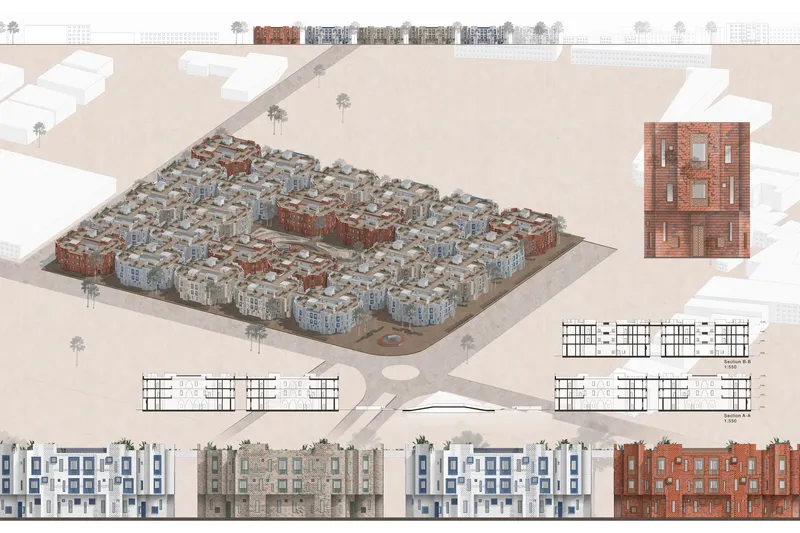
At the heart of this senior housing design lies a structured, three-tier communication system. The architectural logic organizes interaction in progressive scales, allowing residents to choose their level of social engagement while maintaining comfort and autonomy.
1. First Level: Residential Block + Private Courtyard
Each residential block functions as a micro-community. A dedicated inner courtyard forms the social nucleus of that block, encouraging neighbors to connect organically. This scale fosters familiarity and trust, critical elements in elderly community design.
2. Second Level: Four-Block Cluster Courtyard
Four residential blocks unite around a shared courtyard, expanding the circle of interaction. This intermediate scale balances intimacy and diversity, supporting group activities, outdoor recreation, and social gatherings while preserving navigational clarity.
3. Third Level: Central Courtyard
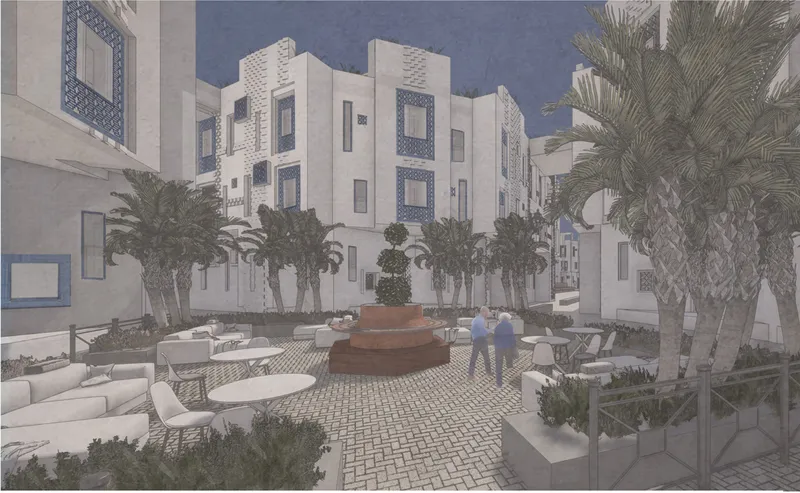
The largest communal space anchors the entire complex. The central courtyard acts as a civic heart: hosting events, cultural activities, walks, and collective leisure. This spatial hierarchy transforms senior housing architecture into a socially responsive urban organism.
By structuring communication spatially, the project ensures that elderly residents are never forced into isolation nor overwhelmed by scale.
Addressing Social Isolation Through Architectural Planning
Modern society often marginalizes older generations. Many seniors feel disconnected, misunderstood, or undervalued. This senior living community design directly confronts that condition by embedding communication into spatial form.
The architectural layout supports:
- Peer interaction within age groups
- Shared leisure and hobby spaces
- Opportunities for sports and daily walks
- Accessible cultural engagement
- Informal gathering zones
The design acknowledges that a healthy lifestyle for older adults requires more than medical infrastructure, it requires belonging.
Spatial Organization and Functional Strategy
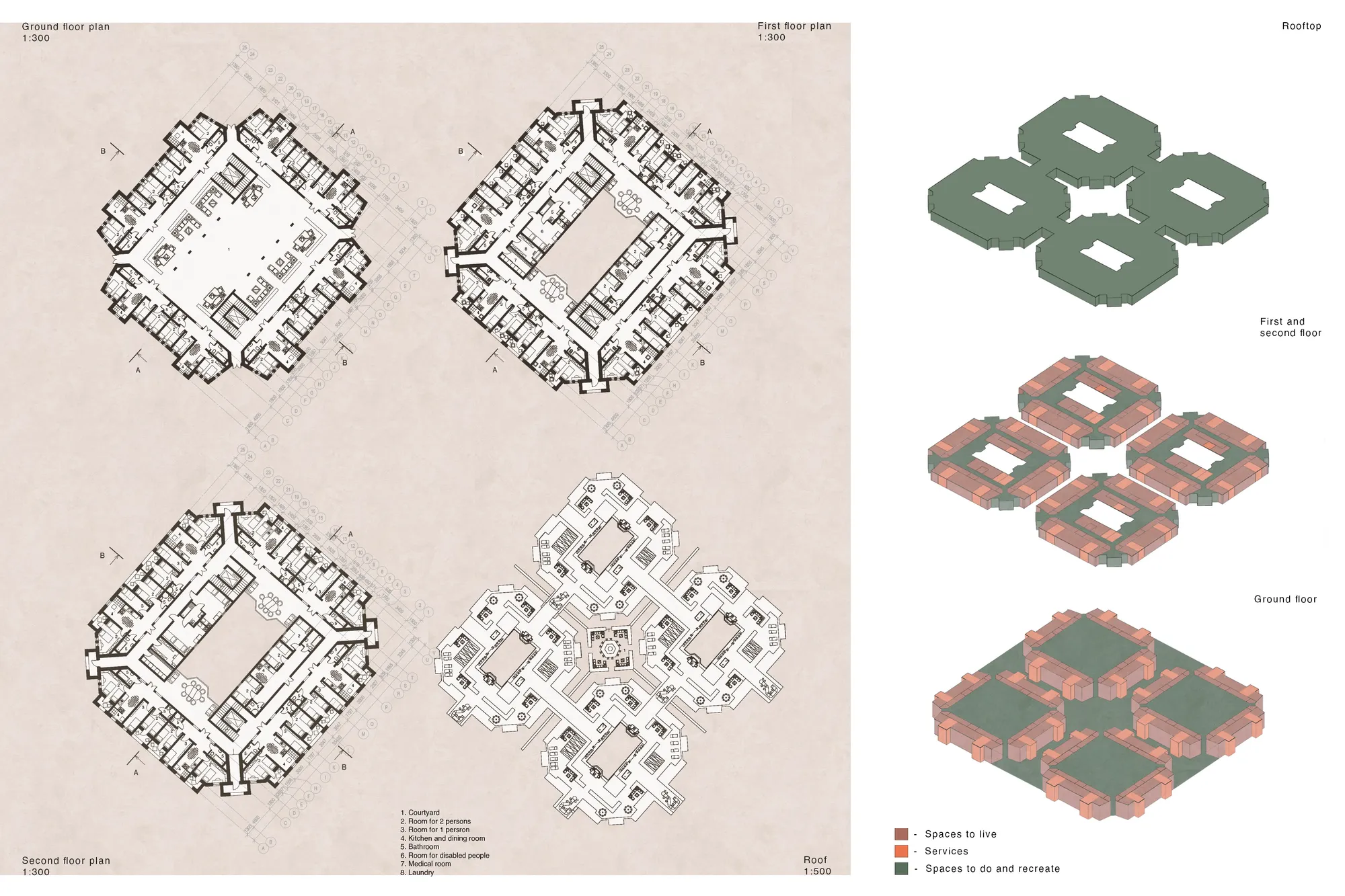
The architectural plans reveal a carefully structured modular grid of interconnected blocks. Each unit cluster includes:
- Private living spaces
- Shared kitchens and dining areas
- Accessible circulation routes
- Adapted rooms for residents with disabilities
- Laundry and service facilities
Three primary programmatic categories organize the building massing:
- Spaces to live
- Service areas
- Spaces to recreate and interact
This zoning ensures clarity in movement and psychological comfort. Accessibility and barrier-free design principles guide circulation throughout the complex.
Courtyard Typology as a Tool for Wellbeing
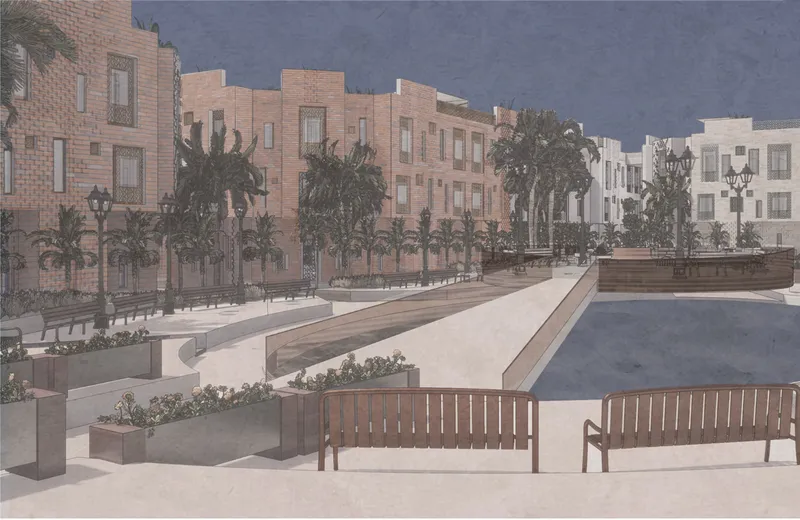
A defining feature of this senior housing architecture is the emphasis on courtyards. The project integrates three types of inner yards, each serving distinct social and environmental purposes.
Courtyards provide:
- Natural light and ventilation
- Visual orientation for easier navigation
- Safe outdoor environments
- Landscaped gathering zones
- Opportunities for passive recreation
The layered courtyard system creates a rhythm between enclosed protection and open community, enhancing emotional wellbeing.
Architectural Identity and Facade Strategy
Wayfinding and orientation are critical in elderly housing design. The project uses varied brick patterns, façade colors, and material differentiation to create recognizable identities for each block. This helps residents navigate intuitively without cognitive overload.
The architectural language combines contemporary massing with subtle regional references: arched passages, brick textures, and human-scaled proportions. The façades articulate individuality within a cohesive whole, reinforcing both community and belonging.
Interior-Exterior Continuity
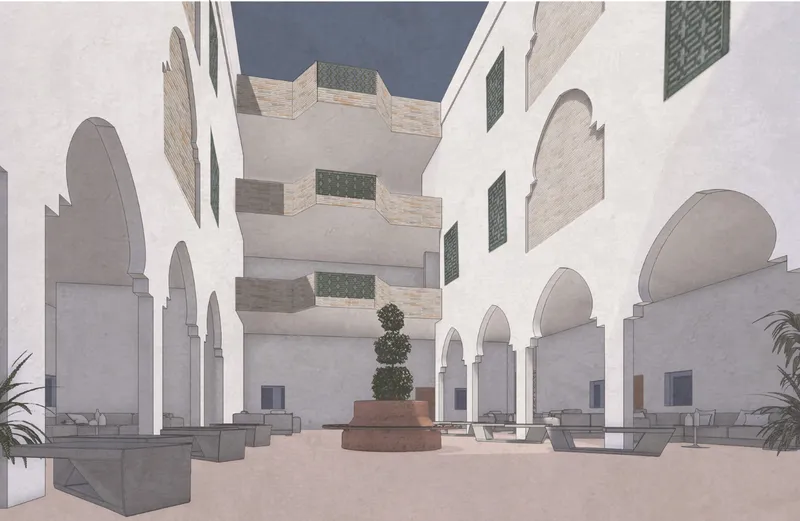
Renderings show arcaded walkways, shaded seating areas, palm-lined courtyards, and textured brick elevations. Semi-open corridors blur boundaries between interior and exterior space. This continuity encourages movement, spontaneous encounters, and passive supervision, essential for safe senior living environments.
The spatial experience is calm, legible, and dignified, avoiding institutional aesthetics often associated with elderly housing.
Designing for Comfort, Care, and Autonomy
When designing for seniors, key architectural considerations include:
- Comfortable and intuitive movement throughout the complex
- Clear visual hierarchy and orientation cues
- Proximity-based community formation
- Flexible social spaces
- Safety without confinement
The project deliberately gathers a manageable number of residents within each block, allowing them to form supportive micro-communities. The design encourages self-organization and mutual assistance.
A New Model for Senior Living Community Design
This co‑living model positions senior housing design as a proactive social framework rather than reactive accommodation. By embedding communication into architectural structure, the project redefines elderly housing as:
- A place of interaction, not isolation
- A system of support, not dependency
- A community, not an institution
In an era of rapid demographic change, senior housing architecture must evolve beyond standard typologies. The layered courtyard strategy, modular clustering, and human-centered design principles presented in this proposal offer a compelling direction for future elderly community developments.
The project by Ирина Пехтер demonstrates how thoughtful architectural planning can restore dignity, connection, and joy to later stages of life, proving that senior housing design can be both socially transformative and architecturally refined.




Popular Articles
Popular articles from the community


Lunar Spiral: Space Architecture Shaped by the Mathematics of the Universe
Lunar Spiral reimagines space architecture through Fibonacci geometry, lunar regolith, levitating habitats, and self-sustaining Moon living.

The Musturak Paradise: Senior Living Architecture for a Connected Future in Temara, Morocco
The Musturak Paradise reimagines senior living architecture in Temara via private homes, social spaces, culture, community, and shared care.

Riyadh For All: Intergenerational Urban Design for Active Aging in Rabat
Riyadh For All reimagines urban design in Rabat with intergenerational co-living, adaptive courtyards, and Moroccan cultural exchange today.

Conexión: Biophilic Design Reimagines High-Rise Living in Hong Kong
Conexión reimagines high-rise living in Hong Kong through biophilic design, green facades, shared spaces, daylight, water and nature within.


Similar Reads
You might also enjoy these articles

Eco Chapel: A Green Architecture Pavilion Designed in Symbiosis with the Forest
Eco Chapel uses green architecture to weave prayer, learning and reuse into a forest pavilion shaped by modular hexagonal canopies for life.
Kaffeebühnen: Coffee Shop Architecture Designed as a Civic Stage Between Vienna’s City and Park
Kaffeebühnen turns coffee shop architecture into a civic stage, linking Vienna’s park edge, urban life, warm timber yards, and coffee craft.
Healing Façade: Sustainable Architecture for Reforestation, Community, and Sacred Ecology in Ethiopia
Healing Façade reimagines sustainable architecture as a living wall that restores soil, catches water and renews Ethiopia's forest churches.


Urban Forest: A Vertical Ecosystem for 5,000 Workers in Singapore's Changi Business Park
Radially stacked pods and layered green decks turn a 7-acre plot into 47 acres of ecological workspace projected for 2040.




Comments (0)
Please login or sign up to add comments
No comments yet. Be the first to comment!