

Seocho Staircase Neighborhood Living Facilities by mlnp architects
A stepped mixed-use building in Seocho blends brick solidity, light interiors, and private terraces, redefining neighborhood living within dense urban Seoul.


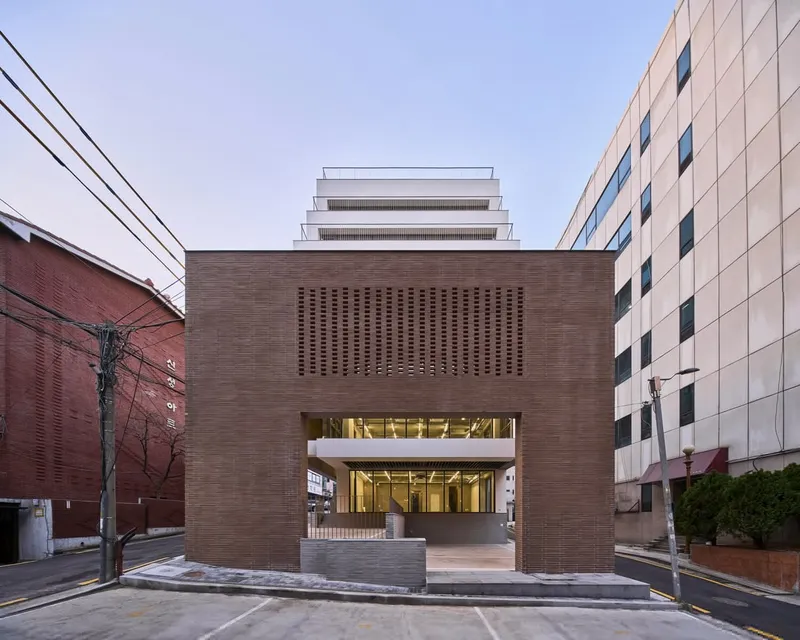
Located just a step away from the bustling arterial roads near Seocho Station, the Seocho Staircase Neighborhood Living Facilities by mlnp architects respond sensitively to Seoul’s dense urban fabric while engaging deeply with its regulatory and contextual constraints. Situated in Seocho-dong, South Korea, the project negotiates between vibrant city life and the quieter scale of its aging residential surroundings, proposing a refined model for contemporary mixed-use architecture.
Urban Context and Regulatory Response
The site is flanked by a 4-meter road on one side and a 6-meter road on the other, with strict northern sunlight regulations governing residential developments in the area. Rather than treating these constraints as limitations, the architects transformed them into defining architectural opportunities. The stepped massing strategy not only complies with daylight regulations but also generates a series of spatial setbacks that shape the building’s identity and functionality.
Positioned slightly withdrawn from the main road, the building maintains visual continuity with the city while offering a calmer interface with its immediate neighborhood. This careful placement allows the project to harmonize with both the energetic urban corridor and the smaller-scale structures nearby.
Brick Facade and Urban Presence
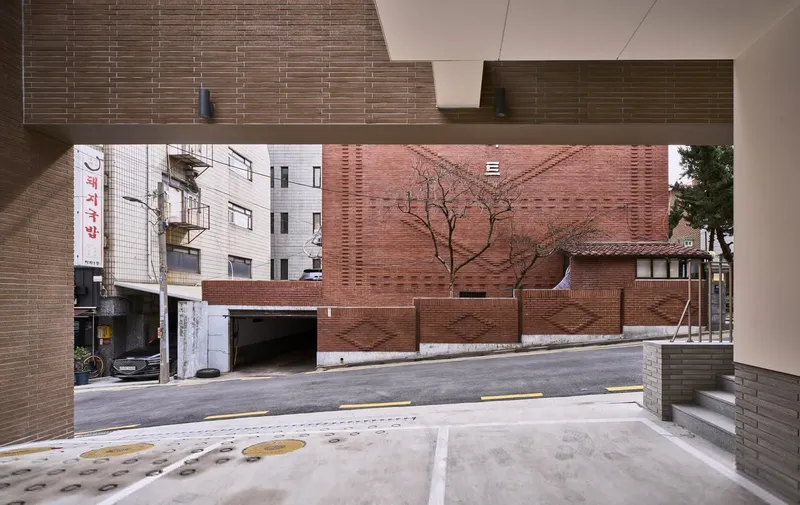
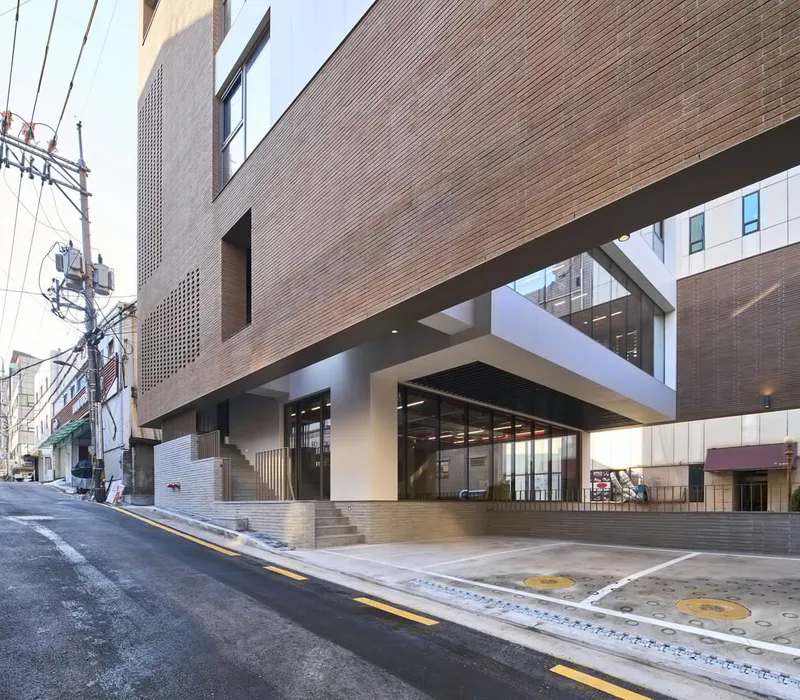
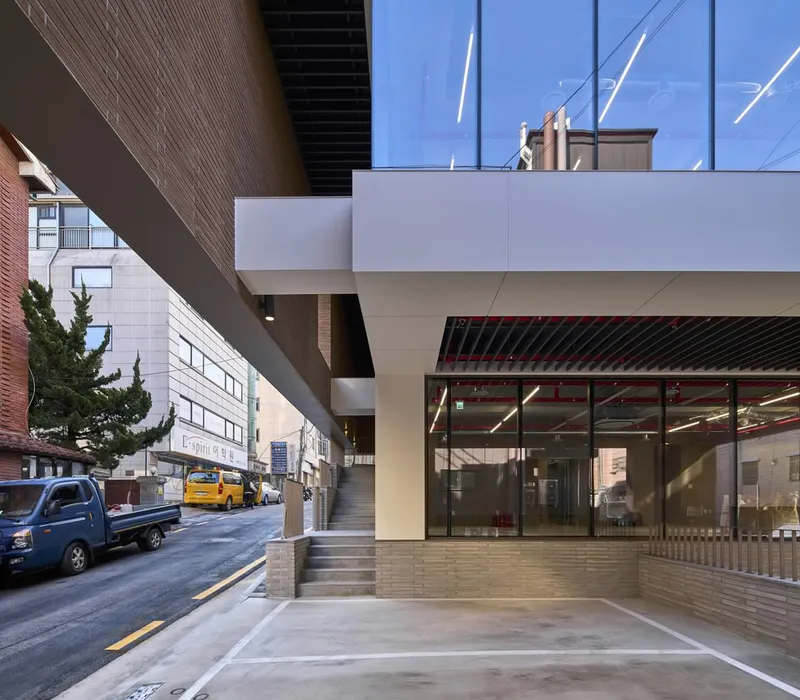
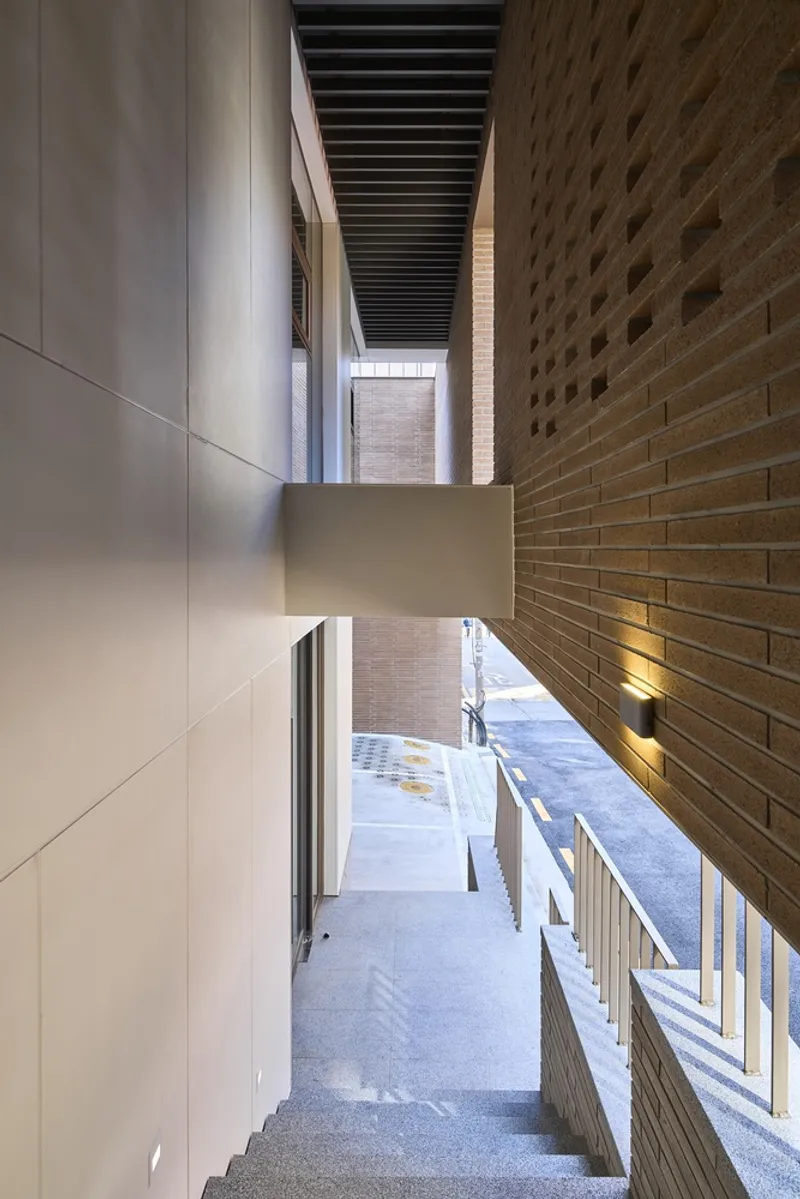
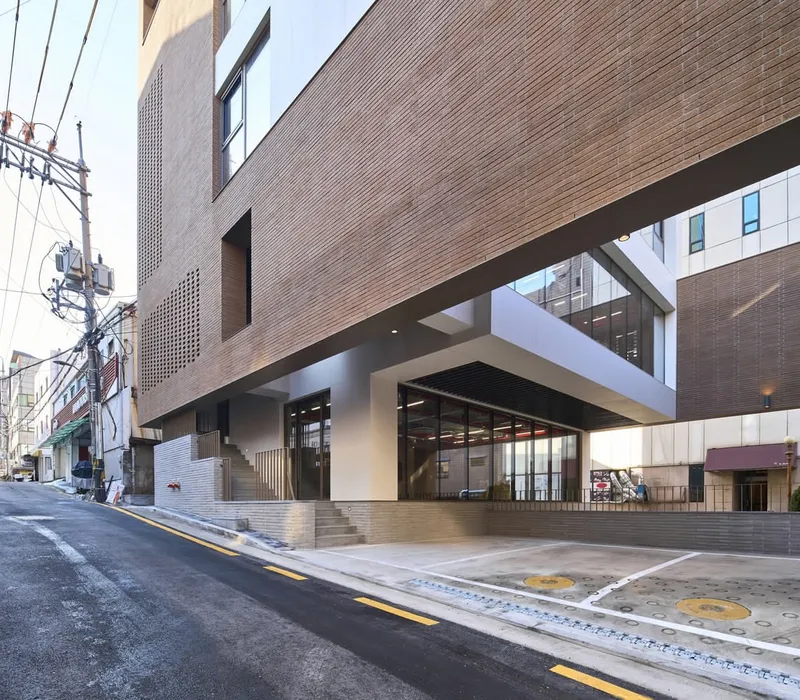
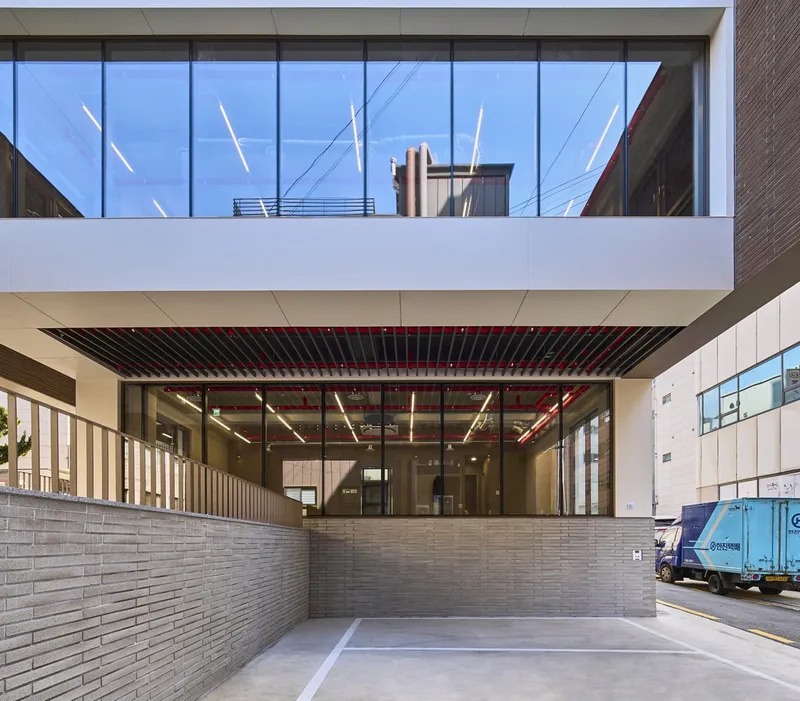
A defining feature of the Seocho Staircase Neighborhood Living Facilities is its brick-clad facade, which wraps the lower levels and the building core. This robust material strategy filters the surrounding urban noise while creating a strong architectural boundary without relying on fences or barriers. The brickwork clearly delineates interior and exterior zones, reinforcing the building’s volumetric clarity and urban presence.
On the first and second floors, which house commercial programs, the solid brick facade provides privacy while establishing a distinct atmosphere for public use. The tactile quality and weight of the brick contrast sharply with the lighter upper volumes, grounding the building within its urban context.
Material Contrast and Spatial Depth
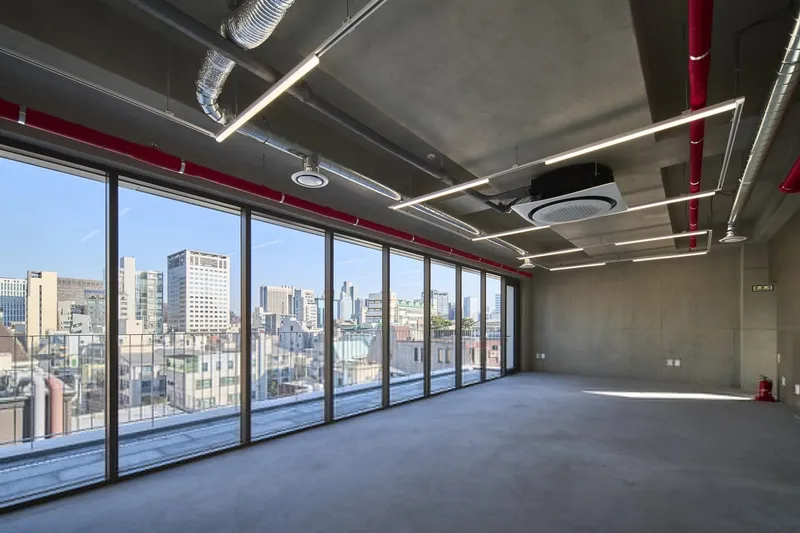
Material contrast plays a central role in articulating the building’s architectural language. The exterior expresses solidity through heavy brickwork, while the interiors introduce a softer, more refined palette. Light ceramic panels, transparent glass surfaces, and open spatial configurations create a calm and luminous interior environment.
This deliberate juxtaposition between exterior heaviness and interior lightness adds depth and texture to the overall composition. It allows the building to feel simultaneously protective and open, offering users a layered spatial experience that evolves from street level inward.
Commercial Spaces and Accessibility
The basement, first, and second floors are dedicated to commercial use, designed with a strong emphasis on accessibility and spatial efficiency. A screen wall along the lower levels defines the primary circulation route, shielding interior spaces from direct external views while guiding visitors intuitively through the building.
At night, integrated exterior lighting activates these commercial levels, enhancing visibility and contributing to the vibrancy of the street. The lighting strategy not only improves wayfinding but also transforms the building into an inviting urban landmark after dark.
Terraces as Urban Retreats
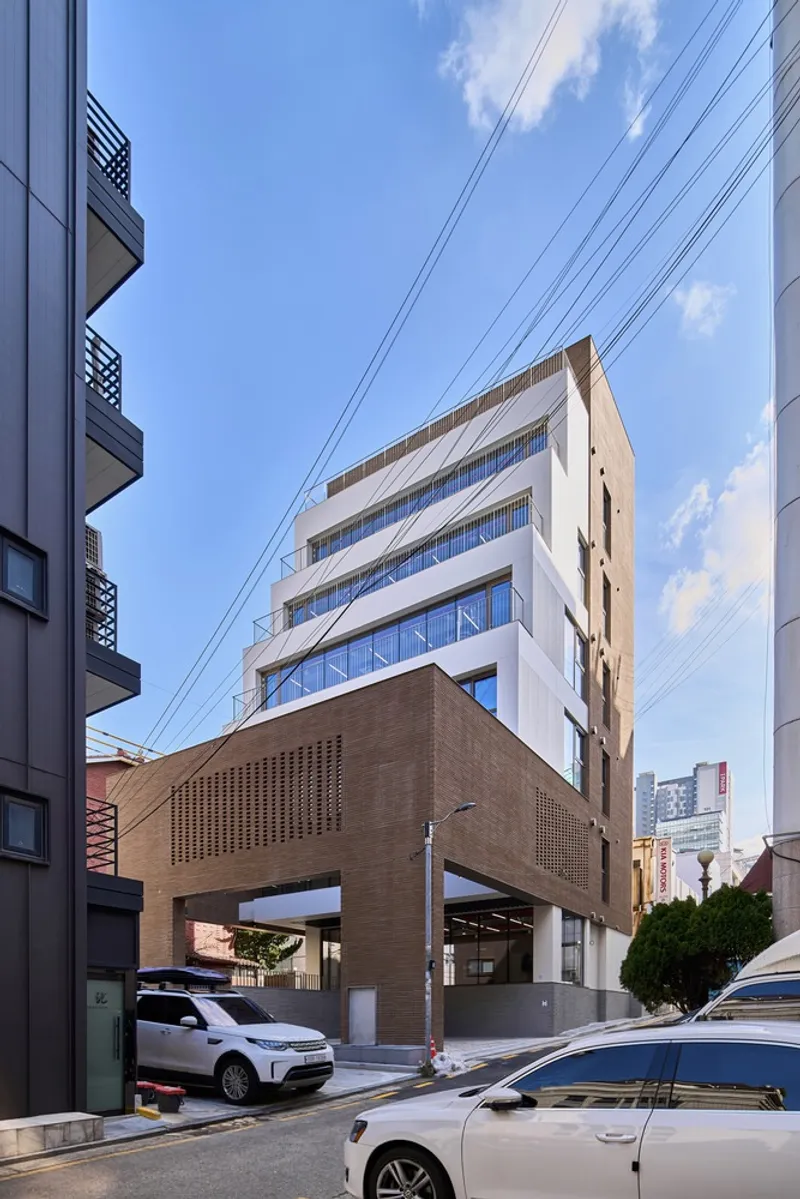
One of the project’s most distinctive features is the series of private terraces created through the stepped massing required by sunlight regulations. These compact outdoor spaces, excluded from the gross floor area calculations, offer valuable moments of openness within the dense city fabric.
Each terrace functions as a small urban refuge, allowing users to pause, rest, or engage in informal activities. These elevated outdoor spaces significantly enhance the building’s livability, reinforcing its role as a neighborhood-oriented facility rather than a purely commercial structure.
A New Model for Neighborhood Living
More than a conventional mixed-use building, the Seocho Staircase Neighborhood Living Facilities propose a new vision for urban living in Seoul. By carefully balancing commercial vitality, material expression, and human-scaled outdoor spaces, the project creates a nuanced architectural response to contemporary city life.
All photographs are works of Jin Bo Choi


Popular Articles
Popular articles from the community


David Macias Steps a Doorless Stone and Plaster House Down a Tropical Colombian Hillside
In the humid hills of Colombia, Threshold House replaces the front door with an open void and terraces its 850 m² down the slope instead of fighting it.

GROUP A Strips a 1969 Rotterdam Harbor Headquarters to Its Frame and Wraps It in Timber Louvers
In Rotterdam's M4H harbor district, Ferro Offices reuses a 1969 frame, adds one timber storey and reaches BREEAM-NL Outstanding.

Architekt Andreas Gruber Scatters 23 Dark Timber Chalets Across a South Tyrolean Forest Edge
In Molini di Tures, Amonti Chalets breaks a resort into a hamlet of gabled timber houses, with parking, storage and services pushed into the slope.

U.GA Architects Wraps an Oval Rooftop Pool in Curved Board-Formed Concrete on Busan's Jeollidan-gil
In Busan's Jeonpo-dong, a 454 m² mixed-use block stacks a neighborhood facility, guest rooms and an oval rooftop pool inside spiraling concrete walls.

Similar Reads
You might also enjoy these articles


Hodi-Mandai Geram
Project Function: Preservation and revitalization of the Intangible heritage and socio-spatial identity of the Hodi by Housing, Cultural Memory Center, Sacred Grove, landscape, local tourism economy


Olio Towers: A Mid-Rise for Performers That Fuses Housing, Rehearsal, and Stage
Located blocks from Houston's Theater District, this modular tower stacks living units around a central performance atrium.

Oasis: Modular Green Housing Carved into Dhaka's Urban Fabric
A shortlisted Plugin Housing entry reclaims unauthorized settlements in Dhaka with stepped concrete volumes, green roofs, and ventilation-driven design.

Black Hole: A Floating Megastructure for the Post-Physical Era
Emiliano Mazzarotto envisions a spherical, self-scaling arena where e-sports, digital hotels, and holographic stadiums replace traditional public space.

Explore Residential Building Competitions
Discover active competitions in this discipline

Challenge to design mud housing for contemporary communities

Challenge to reimagine the Iron Throne

Photograph architecture without architects

Illustrate the lost glory of Angkor Wat - Render Challenge
Comments (0)
Please login or sign up to add comments
No comments yet. Be the first to comment!