
Serpentine Bookhouse by ATELIER XI: A Spiral Landmark for Learning and Community in Shenzhen
The Serpentine Bookhouse by ATELIER XI blends spiral architecture, reading spaces, and nature, creating a cultural hub in Shenzhen’s ecological corridor.

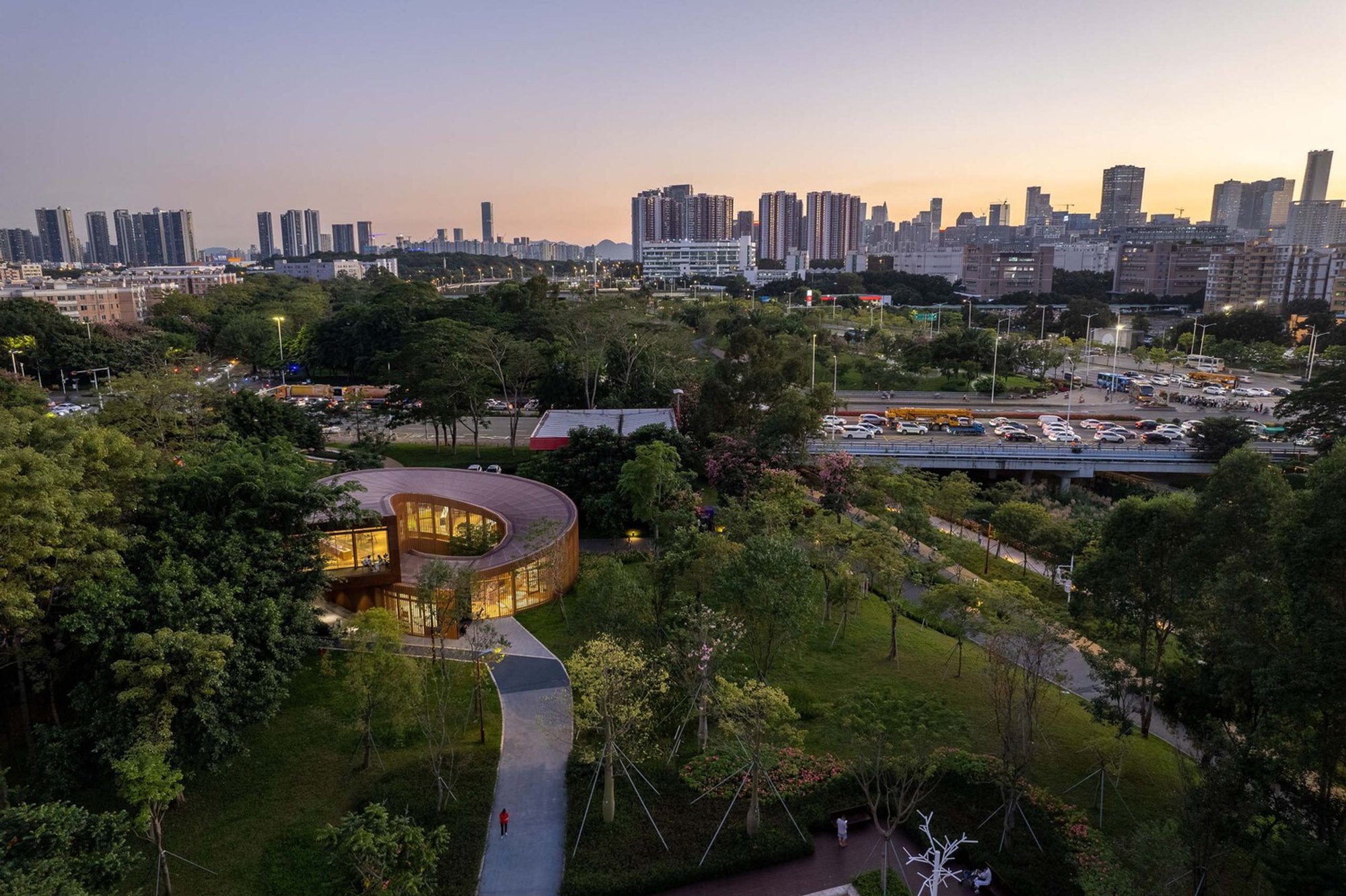
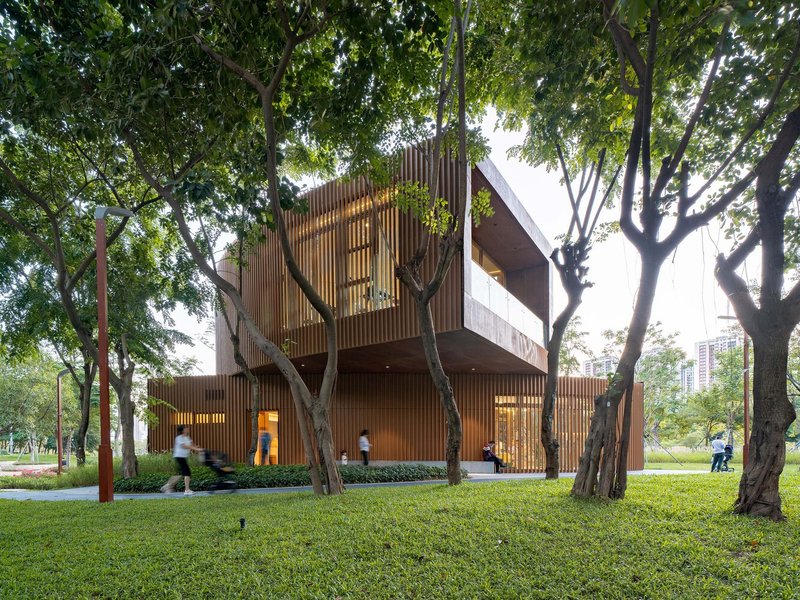
The Serpentine Bookhouse, designed by ATELIER XI, is a cultural and educational landmark located along the Dasha River Ecological Corridor in Shenzhen, China. Completed in 2022, the 396 m² project integrates nature, public life, and architectural storytelling, creating a space where children, families, and residents can gather, read, and connect with the environment.
Location and Context
Set amidst lush greenery, the bookhouse is surrounded by diverse urban activities:
- To the west lies the 13-kilometer scenic pathway of the Dasha River Ecological Corridor, attracting joggers and cyclists.
- To the north, a children’s park with sand pits welcomes families.
- To the east, dense residential communities bring a constant flow of visitors.
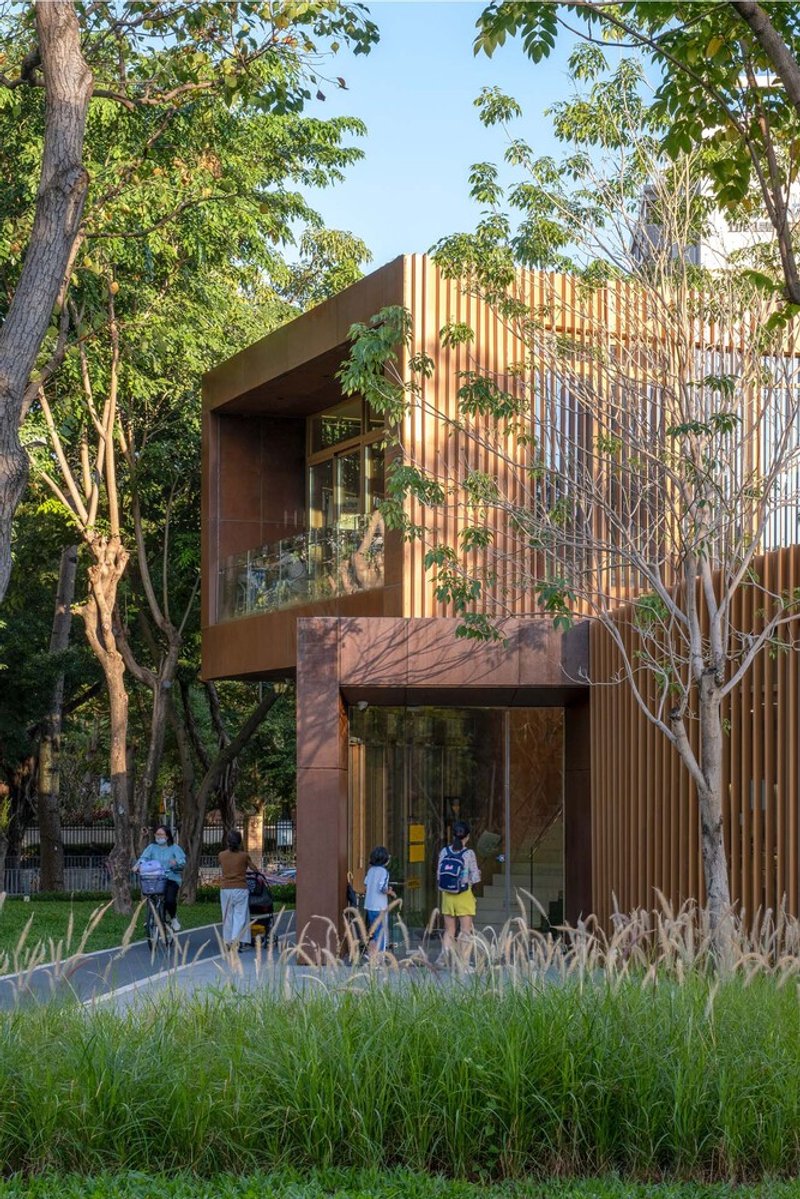
The building serves as a children’s reading room of 300 square meters and a 24/7 public restroom for park visitors, enriching community life with accessible cultural infrastructure.
Concept and Inspiration
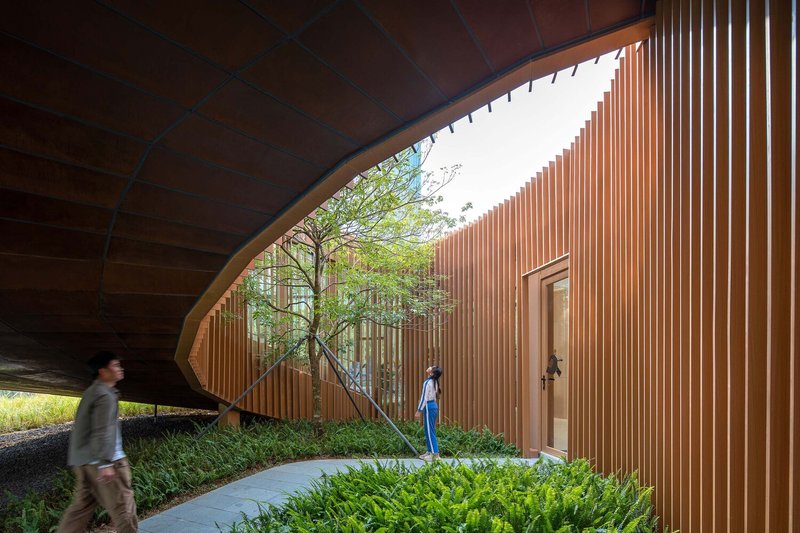
Inspired by the folklore of fishermen along the river, ATELIER XI envisioned the bookhouse as a “spiral conch” rising from the ground. Its sculptural form minimizes the building footprint, returning green space to the park. The spiral culminates in an open balcony overlooking the riverside treetops, where visitors can pause and reflect. Locals affectionately call it the “Serpentine Bookhouse.”
Spatial Experience
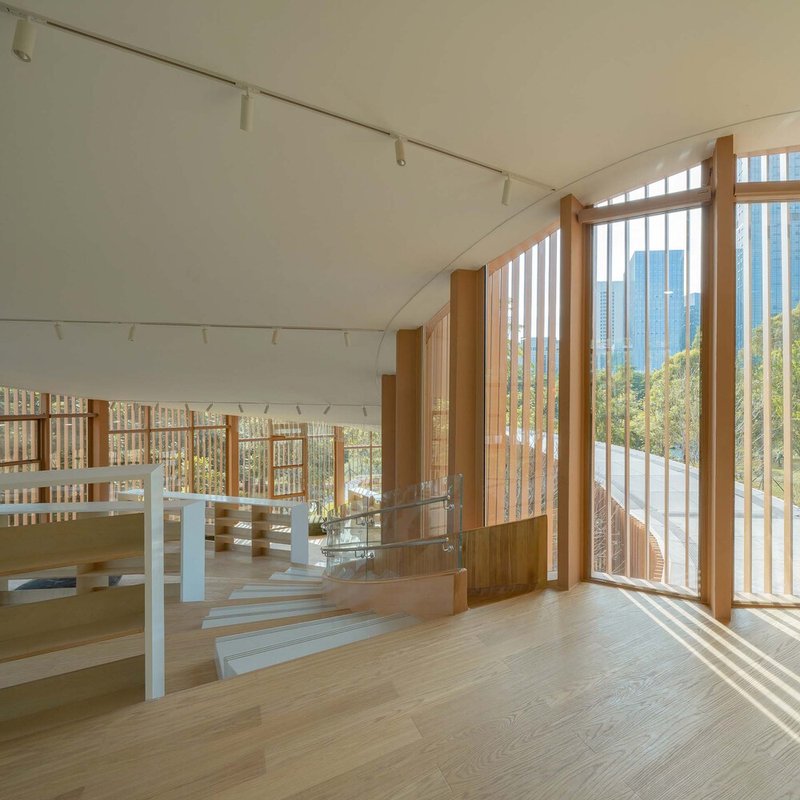
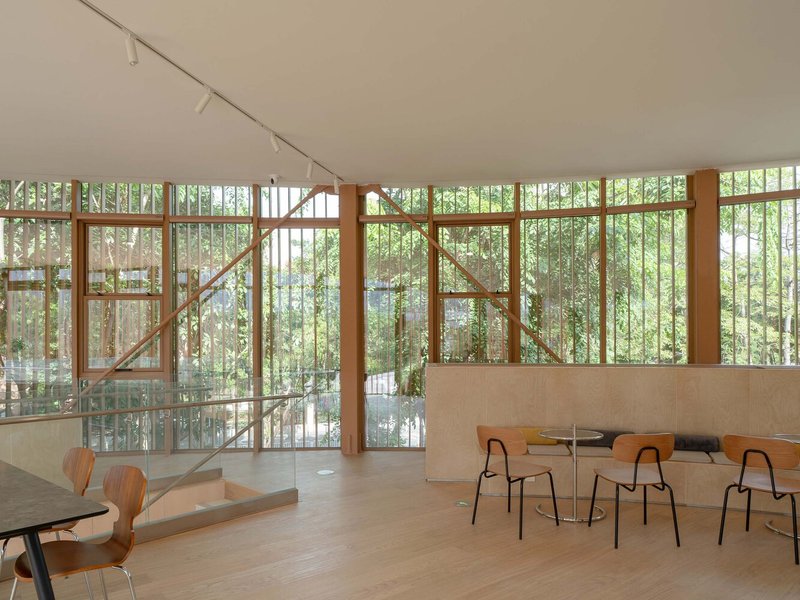
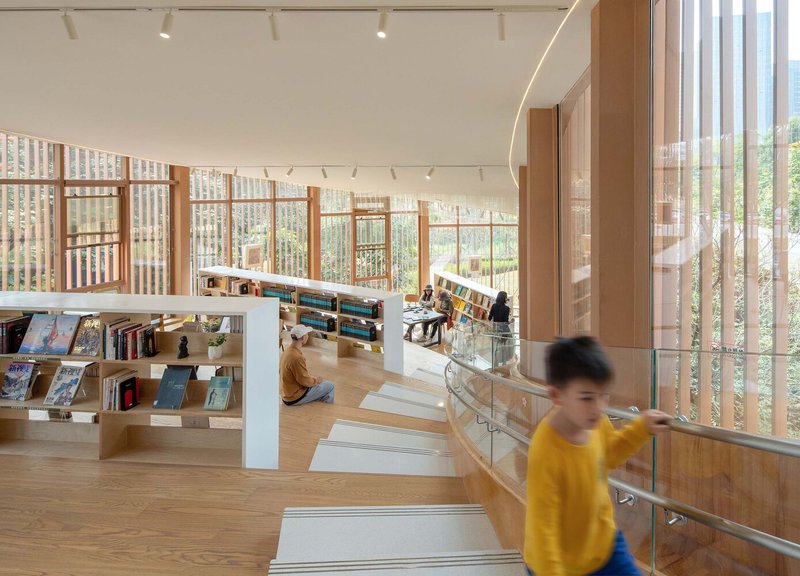
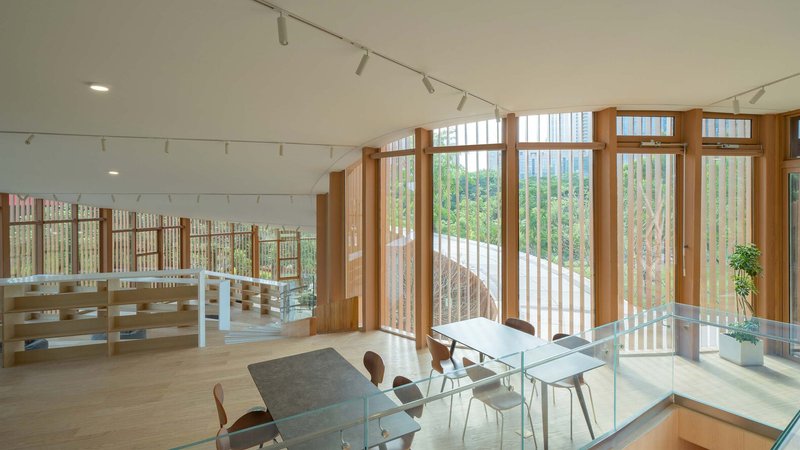
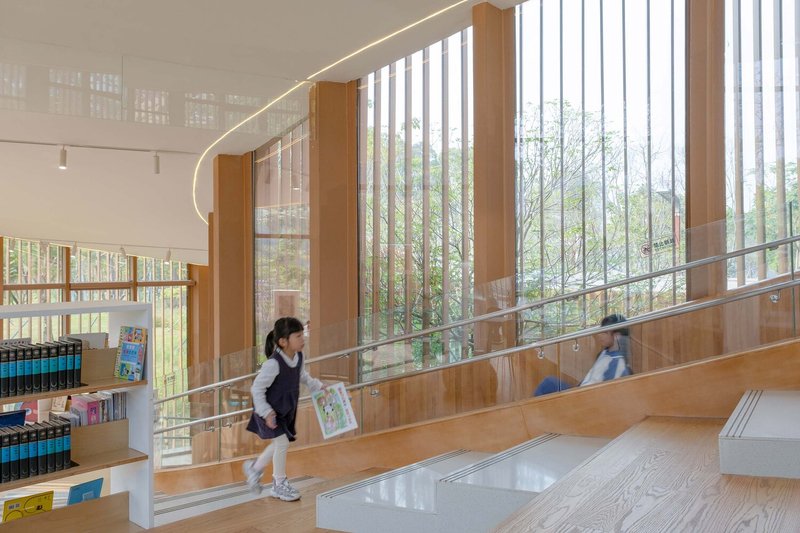
Inside, the architecture unfolds into stepped reading spaces winding around an atrium with trees. These levels create an immersive experience for children, encouraging exploration and independent learning. Floor-to-ceiling windows frame panoramic views of the surrounding landscape, blending reading with nature.
To make the space playful, the design integrates a children’s slide, open daily after school, transforming the reading room into a joyful destination.
Climate and Comfort
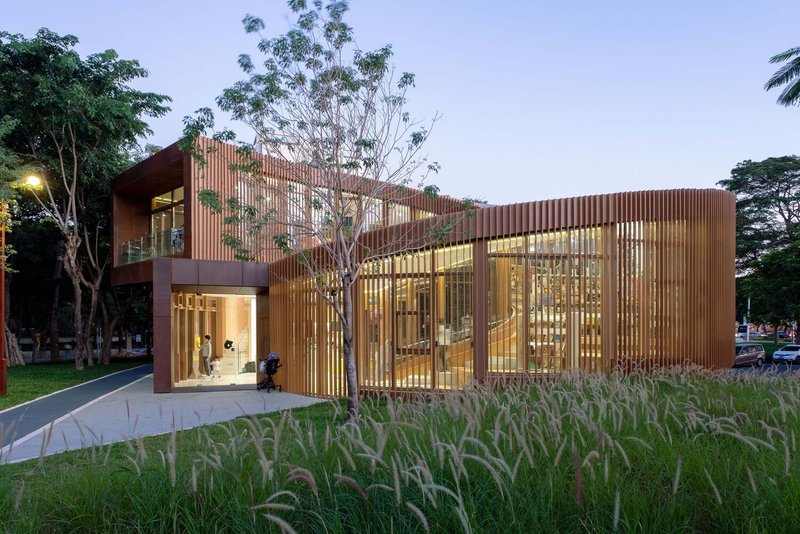
Shenzhen’s subtropical climate shaped the design strategy. Vertical sunshade grilles wrap the facade, filtering sunlight into dynamic patterns of light and shadow. Operable windows and fully openable sliding doors on the upper level ensure natural cross-ventilation, reducing reliance on air conditioning during cooler seasons.
Structure and Construction
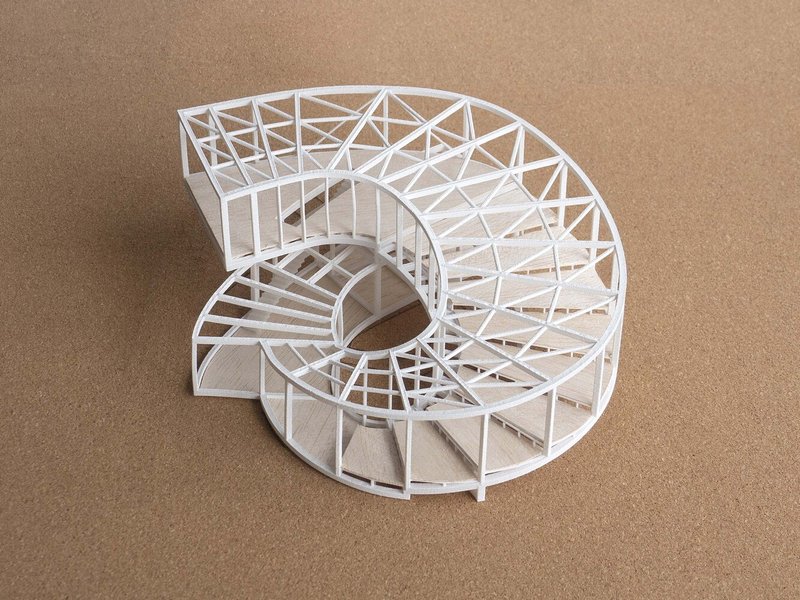
The building employs a steel framework with spiral Vierendeel trusses that define its flowing arcs. The dramatic cantilevered balcony is supported by oblique tension reinforcement, highlighting structural innovation. Prefabricated components were manufactured off-site and assembled on location, minimizing disruption to the ecological corridor and nearby residents.
Cultural Impact
Beyond its architectural presence, the Serpentine Bookhouse embodies Shenzhen’s urban revitalization strategy of adding small-scale civic and cultural buildings to parks and public spaces. Remarkably, the project progressed from design to completion in less than a year, demonstrating efficiency and collaboration.
Since opening, the bookhouse has become a cultural hub, hosting art exhibitions, reading clubs, and community events. It is now a cherished retreat where citizens can escape urban stress, reconnect with nature, and participate in cultural dialogue.
All Photographs are works of Chao Zhang




Popular Articles
Popular articles from the community

YOAP Architects Round a Corner in Yeongcheon with a Cylindrical Community Hub
A 197-square-meter brick and ribbed-clad tower turns a forgotten alley corner in South Korea into a public garden with a low threshold.
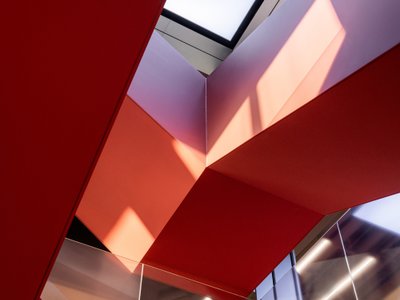
Ippolito Fleitz Group Identity Architects Turn Eight Floors in Shanghai into a Vertical Creative City
Publicis Groupe's new headquarters in Xintiandi reimagines the office as a courtyard-driven urban landscape stacked across eight floors.
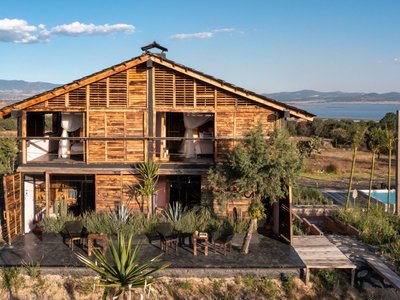
Fausto Terán and Toro Fuse Japanese Craft with Mexican Tradition in a Lakeside Retreat
Nakamura House pairs Shou-Sugi-Ban charred pine with handmade clay tile at the foot of Atlangatepec Lagoon in Mexico.
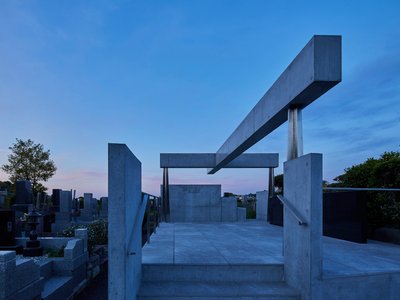
Takeshi Hosaka Architects Suspends a Concrete Cross Above a Yokohama Cemetery
A 28-square-meter burial renovation in Yokohama lifts the symbol of resurrection into the sky so mourners see it against heaven.


Similar Reads
You might also enjoy these articles

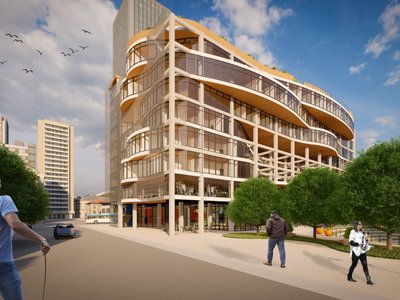
Olio Towers: A Mid-Rise for Performers That Fuses Housing, Rehearsal, and Stage
Located blocks from Houston's Theater District, this modular tower stacks living units around a central performance atrium.
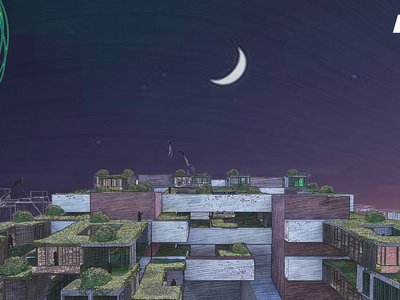
Oasis: Modular Green Housing Carved into Dhaka's Urban Fabric
A shortlisted Plugin Housing entry reclaims unauthorized settlements in Dhaka with stepped concrete volumes, green roofs, and ventilation-driven design.

Black Hole: A Floating Megastructure for the Post-Physical Era
Emiliano Mazzarotto envisions a spherical, self-scaling arena where e-sports, digital hotels, and holographic stadiums replace traditional public space.
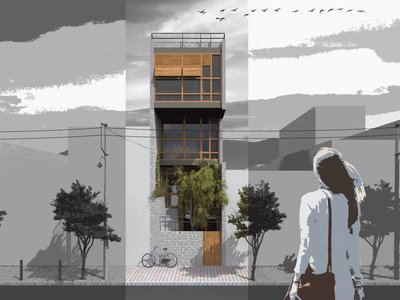
Compact & Sustainable Living in Piraeus: A Four-Level Family Home Built Around Light and Air
A narrow townhouse in one of Greece's densest port cities uses a central atrium and passive strategies to house three generations under one roof.

Explore Architecture Competitions
Discover active competitions in this discipline




The International Standard for Design Portfolios


The Global Benchmark for Architecture Dissertation Awards


The Global Benchmark for Graduation Excellence


Challenge to reimagine the Iron Throne
Comments (0)
Please login or sign up to add comments
No comments yet. Be the first to comment!