
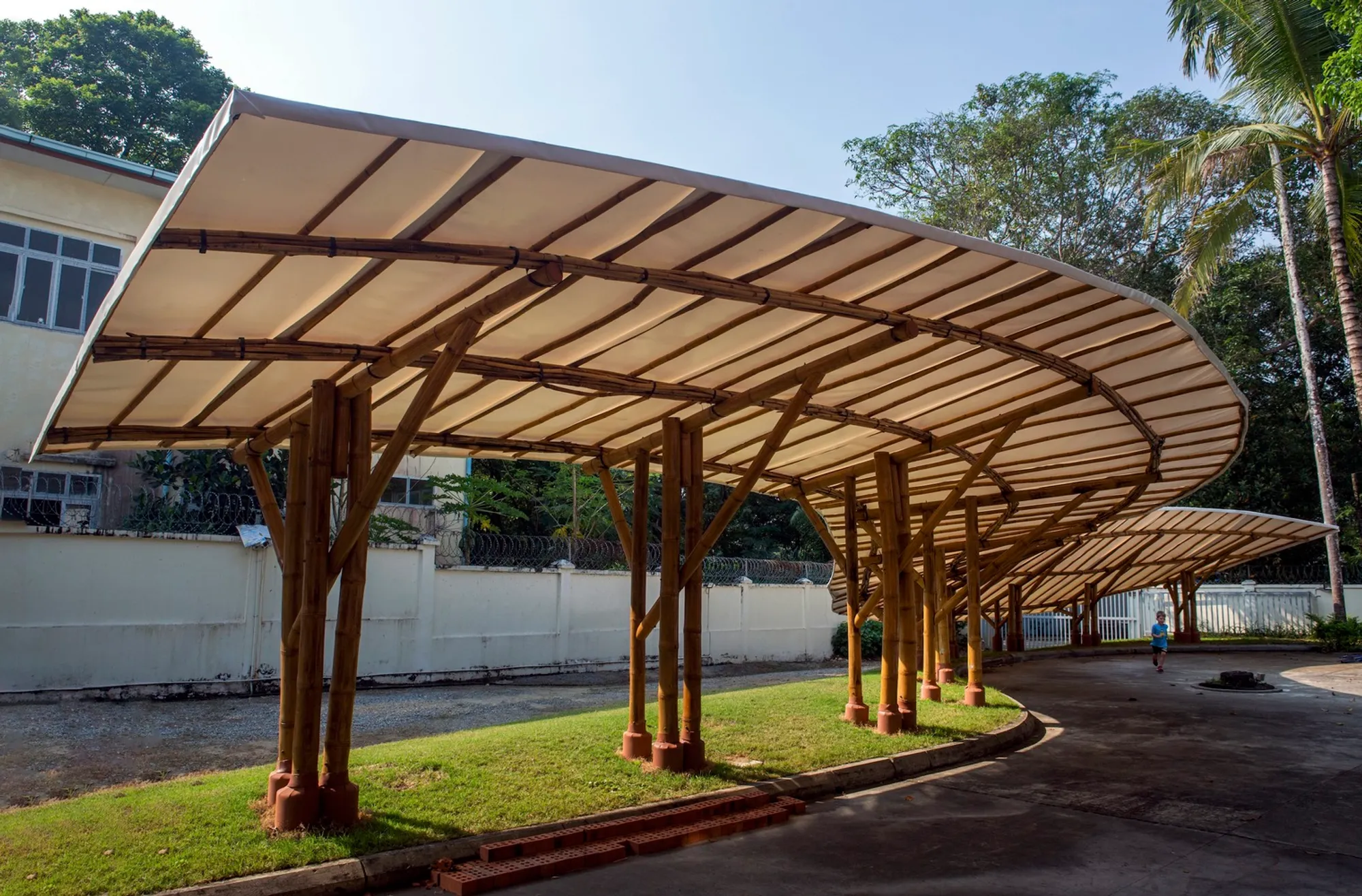
Shade School Playground Pavilion by Blue Temple
A lightweight bamboo pavilion provides effective playground shade while doubling as a flexible cultural event space, seamlessly integrated with school courtyard geometry.


Located in Yangon, the Shade School Playground Pavilion is a lightweight, climate-responsive structure designed byBlue Temple in 2023. Conceived as both a shading device and a cultural event pavilion, the project responds precisely to the environmental, spatial, and social needs of an elementary school campus in a dense urban context.
A Pavilion Shaped by Climate and Context
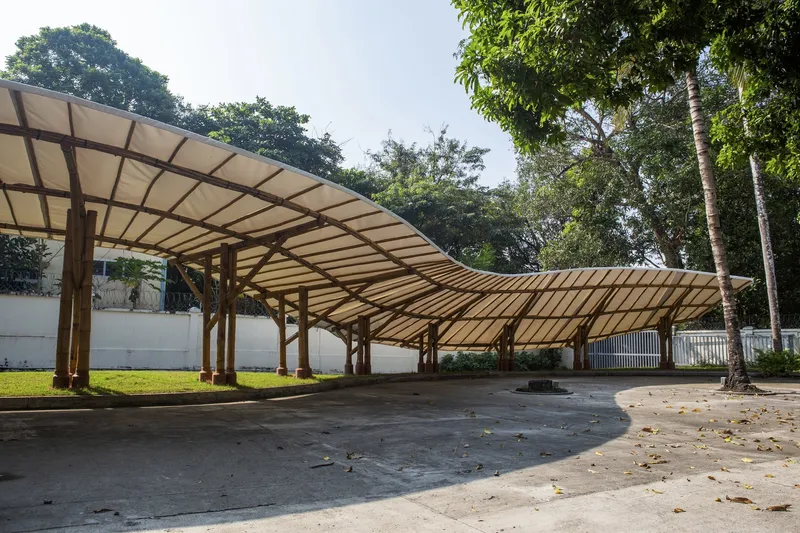
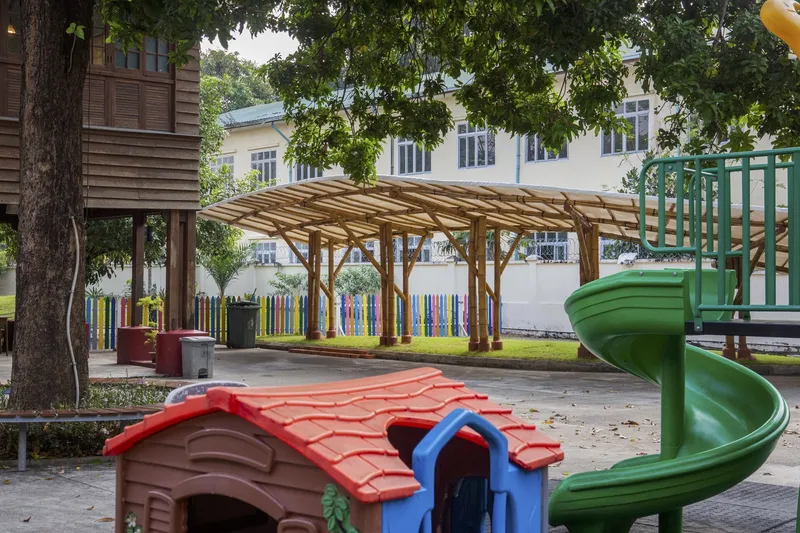
In Yangon’s hot and humid climate, outdoor school spaces require careful protection from direct sunlight while remaining open, flexible, and welcoming. The school’s primary request was clear: maximize shade coverage without occupying the courtyard itself. To meet this requirement, all structural footings were strategically positioned outside the paved playground area, resting on the surrounding grass instead.
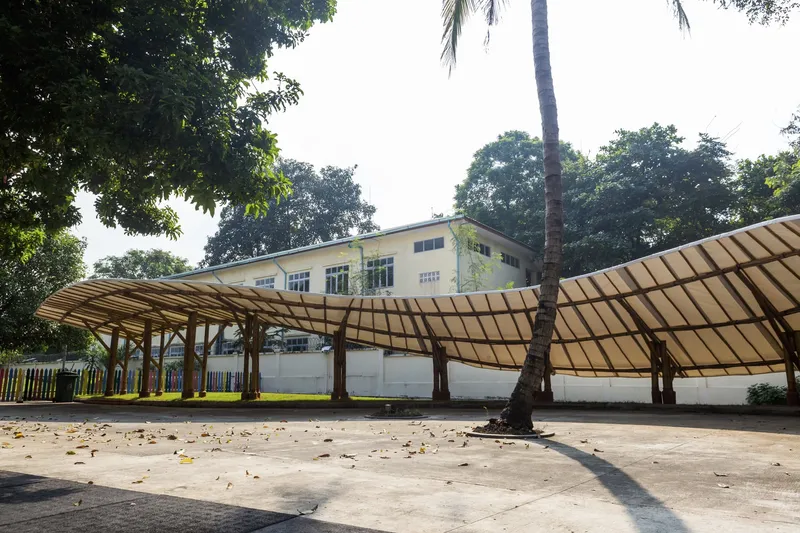
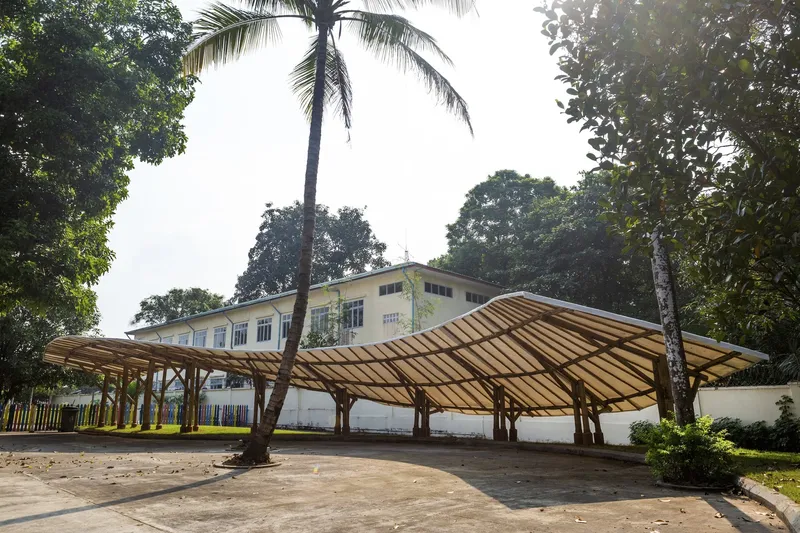
The pavilion spans 127 square meters, forming a linear yet fluid structure that gently frames the playground rather than enclosing it. This approach preserves openness, airflow, and visual continuity while significantly improving thermal comfort for students during daily play and school activities.
Performance-Driven Design
Environmental performance played a central role in the design process. The architects conducted detailed sunlight exposure studies, using computational tools to calculate the percentage of direct solar radiation throughout the day. This data-driven approach ensured the pavilion delivers effective shading during peak hours while maintaining a light, permeable architectural presence.
The curved geometry of the pavilion directly responds to the existing outline of the courtyard. This singular curvature informed both the overall layout and the flowing movement of the structure, resulting in an organic form that feels naturally integrated into the school grounds.
Structural Logic and Site Integration
The spacing of the pavilion’s footings aligns precisely with the entrance of an adjacent school building, reinforcing a strong spatial relationship between architecture and circulation. A mature coconut tree, preserved on site, defines the endpoint of the structure and further anchors the pavilion within its natural surroundings.
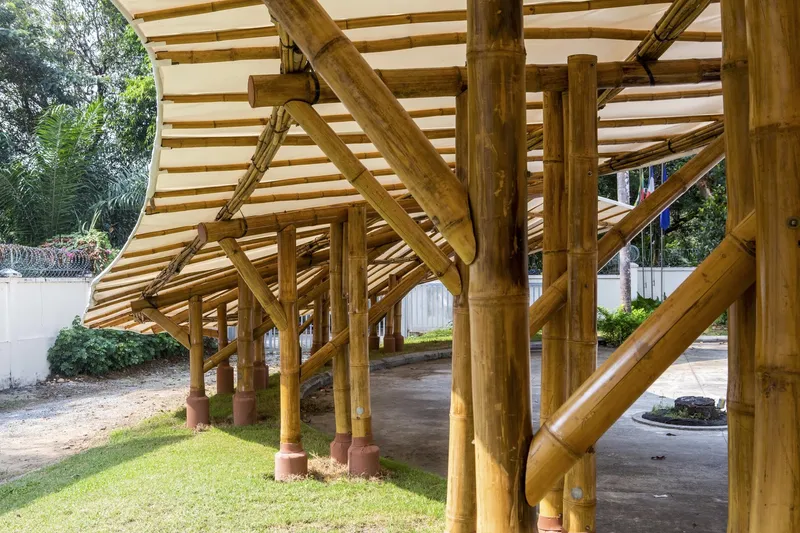
Constructed with the expertise of Monkey Joint, Bamboo Players, the pavilion demonstrates the potential of bamboo construction as a sustainable, locally appropriate building method. The material choice enhances the pavilion’s lightweight character while supporting local craftsmanship and environmentally responsible design.

A Space for Play and Culture
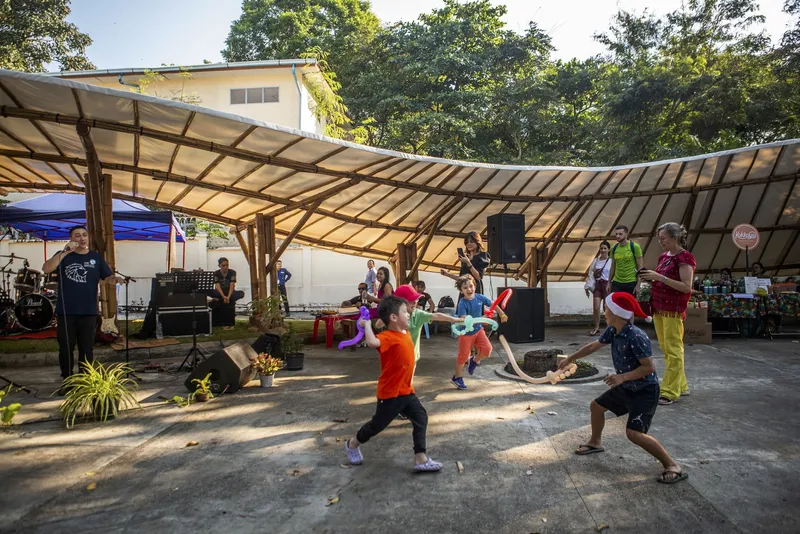
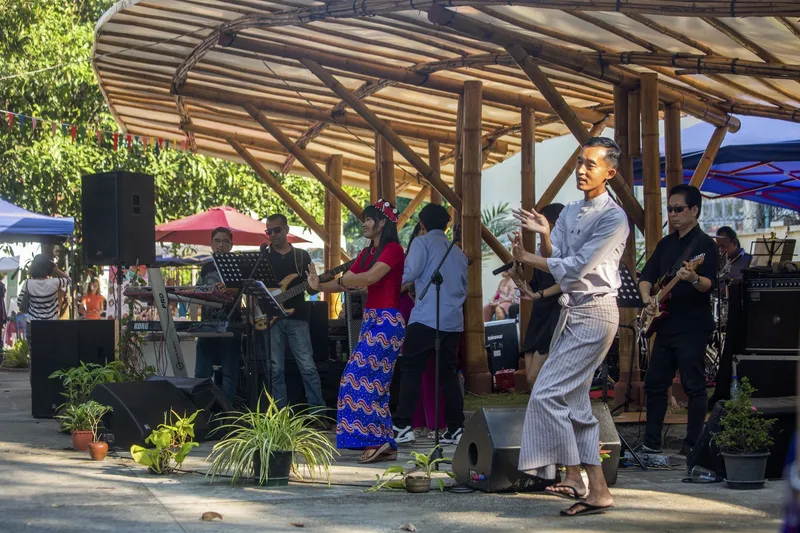
Beyond its everyday function as a shaded playground canopy, the pavilion transforms into a cultural event backdrop for school gatherings, performances, and community activities. Its linear structure accommodates temporary booths and exhibitors, turning the playground into a vibrant social space without the need for additional infrastructure.
By merging environmental performance, contextual sensitivity, and social flexibility, the Shade School Playground Pavilion exemplifies how small-scale educational architecture can deliver significant spatial and climatic impact.
Project Information
- Project: Shade School Playground Pavilion
- Architects: Blue Temple
- Lead Architect: Raphaël Ascoli
- Location: Yangon, Myanmar
- Area: 127 m²
- Year: 2023
- Contractors: Monkey Joint – Bamboo Players
- Photography: Nyan Zay Htet
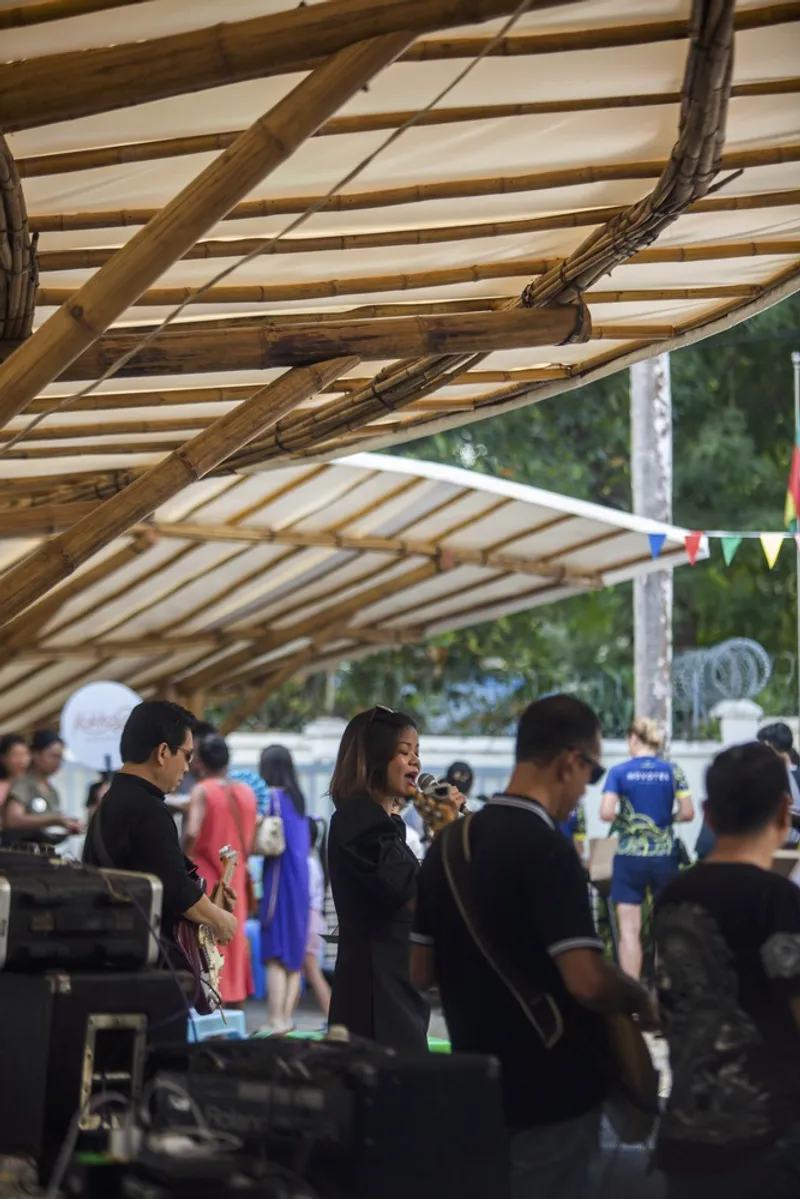
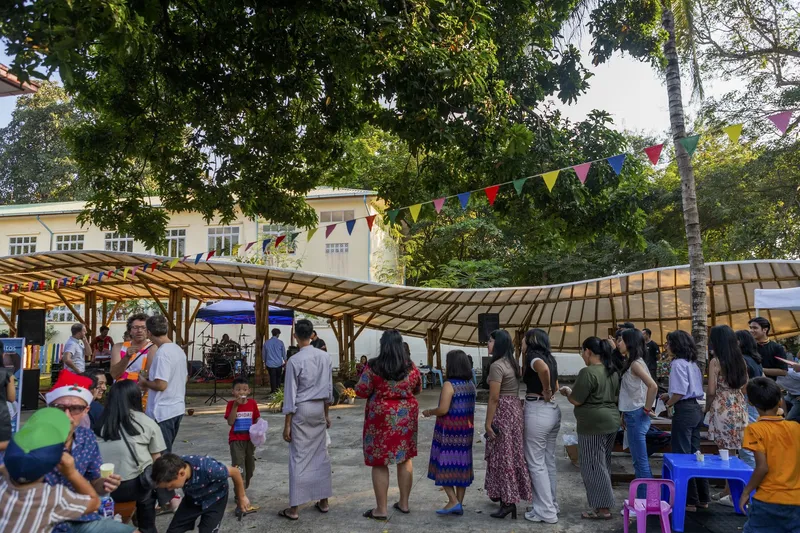
All photographs are works of
Nyan Zay Htet




Popular Articles
Popular articles from the community


Co-life: Sustainable Architecture for Age-Friendly Community Living
Co-life reimagines sustainable architecture for seniors through courtyards, rammed earth, shared gardens, and spaces designed for belonging.

Conexión: Biophilic Design Reimagines High-Rise Living in Hong Kong
Conexión reimagines high-rise living in Hong Kong through biophilic design, green facades, shared spaces, daylight, water and nature within.

The Ocean Hive: Sustainable Architecture for a Self-Sufficient Civilization at Sea
The Ocean Hive imagines sustainable architecture at sea, where modular habitats, algae, wave power and ocean waste sustain a growing colony.

Riyadh For All: Intergenerational Urban Design for Active Aging in Rabat
Riyadh For All reimagines urban design in Rabat with intergenerational co-living, adaptive courtyards, and Moroccan cultural exchange today.

Similar Reads
You might also enjoy these articles

FAMM Arquitectura Organizes Ten Villas Around Courtyards and Jungle in Nosara, Costa Rica
El Molino pairs two elongated volumes with deep overhangs and timber louvers to build a compact coastal community five minutes from the beach.
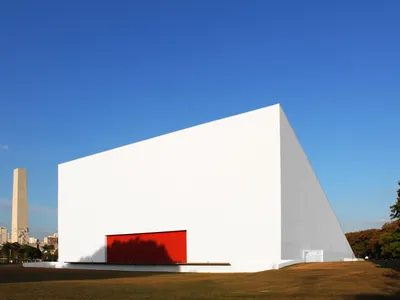
Oscar Niemeyer's Ibirapuera Park Pavilions Define São Paulo's Cultural Identity in Concrete and Curve
A constellation of modernist volumes set within São Paulo's most important urban park, conceived for the city's 400th anniversary in 1954.
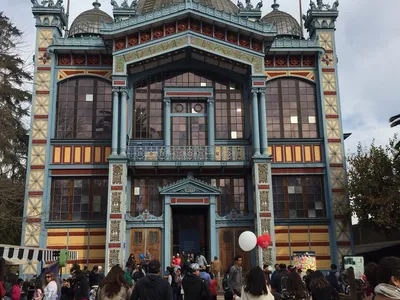
How Henri Picq's 1889 Paris Pavilion Traveled 11,000 Kilometers to Become Santiago's Artequín Museum
A prefabricated iron and glass pavilion built for the Paris Universal Exposition found a second life as a children's art museum in Chile.
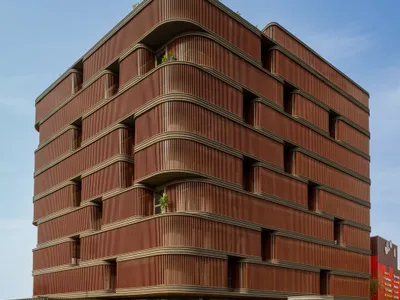
Sanjay Puri Architects Wraps a Jaipur Office Tower in Capsule-Shaped Green Buffers
A nine-level climate-responsive workplace near Jaipur Airport uses stacked planter terraces and aluminium screens to fight 40°C heat.

Explore Bamboo Construction Competitions
Discover active competitions in this discipline



Challenge to design a portable theatre


Challenge to design a portable music platform

Challenge to design an open learning module for the elderly
Comments (0)
Please login or sign up to add comments
No comments yet. Be the first to comment!