
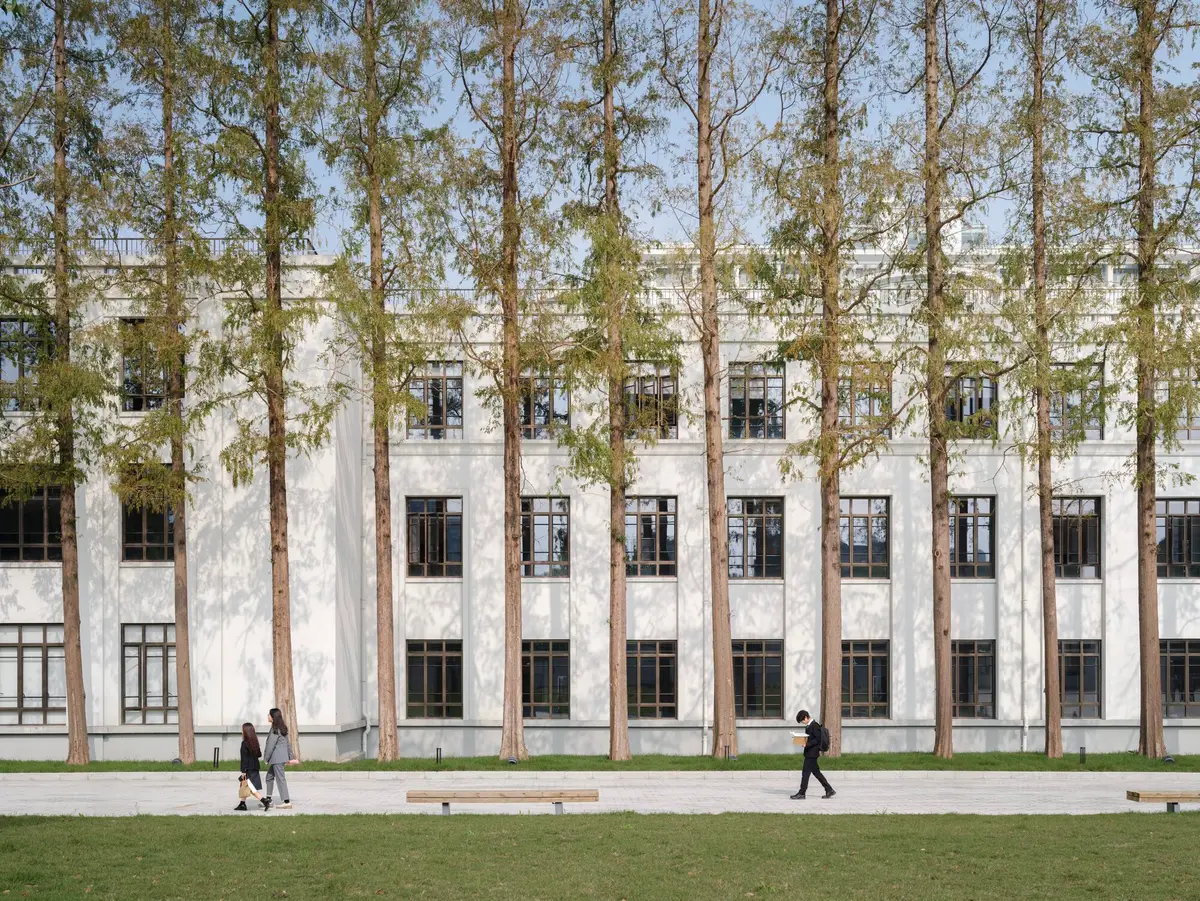
Shanghai Business School Caobao Road Campus – Adaptive Reuse by gmp Architects
A sensitively revitalized campus blending adaptive reuse, modern design, restored facades, preserved landscapes, and unified architecture to create a contemporary learning environment.


A Modern Transformation of a Historic Shanghai Campus
The Caobao Road Campus of Shanghai Business School, redesigned by gmp Architects, stands as a powerful example of adaptive reuse architecture, where a once-aging institutional site has been revived into a contemporary learning environment. Located in the Xuhui District of Shanghai, this newly transformed campus was originally home to the School of Metallurgy and Mechanical Engineering, founded in 1955 under the Shanghai Institute of Technology.
In 2024, the campus began its new chapter—evolving into a modern academic hub featuring a hospitality college created in partnership with the prestigious Lausanne College of Hospitality Management. The project breathes new life into the site while preserving its architectural legacy, merging historical value with future-focused educational design.
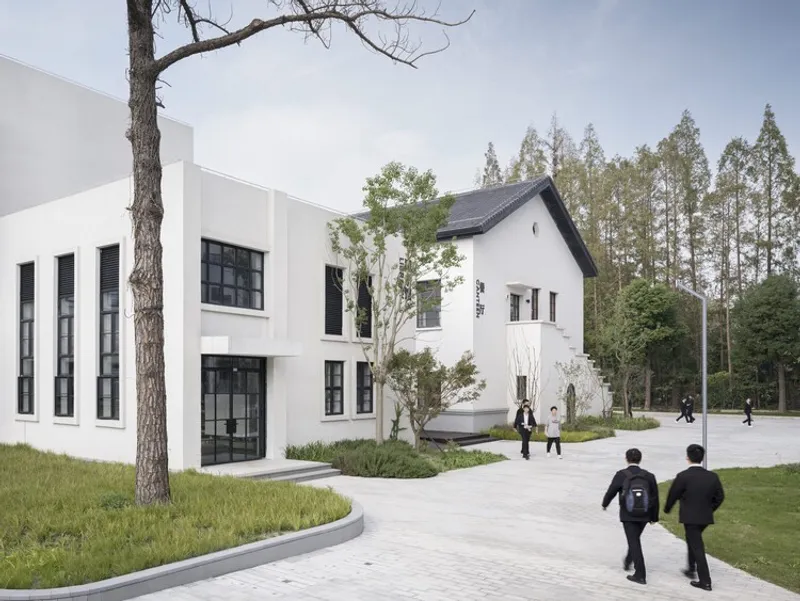
Revitalizing Four Key Buildings Through Adaptive Reuse
The first phase of the renovation focused on rejuvenating four major structures along Caobao Road:
- The main teaching building
- A student dormitory
- The western cafeteria
- An annex repurposed into a library, study lounges, and meeting rooms
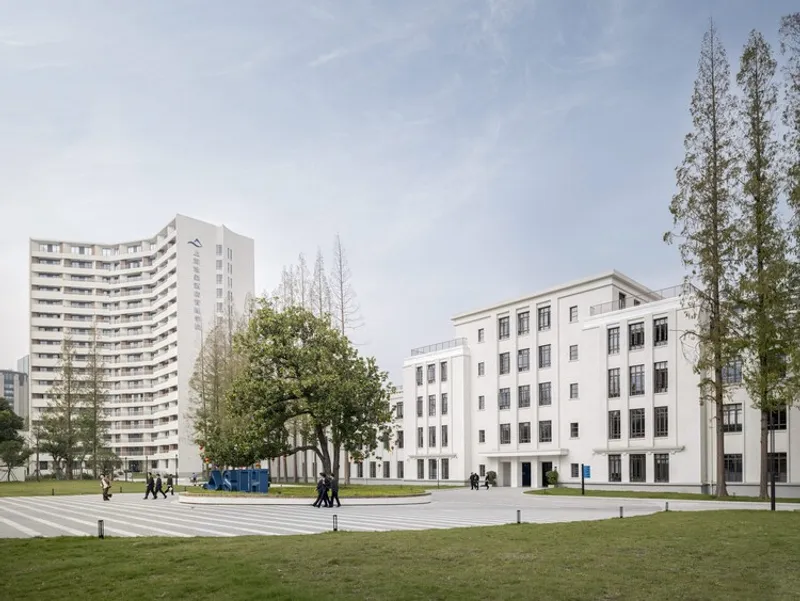
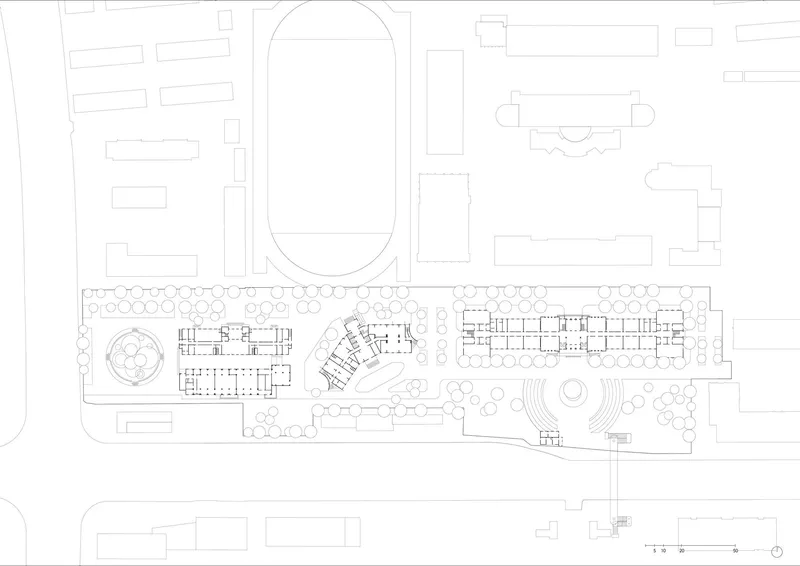
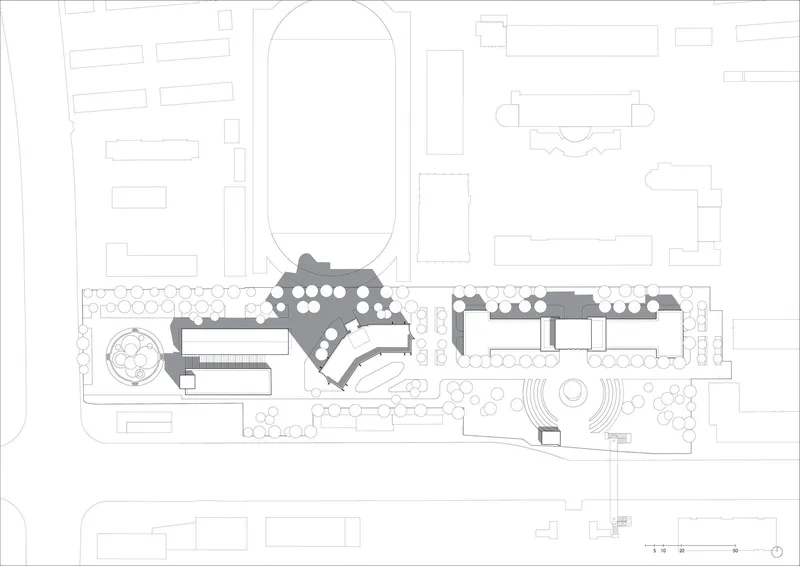
These buildings, constructed across multiple decades—from the 1950s to the 1990s—displayed stark stylistic contrasts. gmp Architects developed a unifying architectural language inspired by the elegant, restrained modernism of the original 1950s structures. The result is a cohesive campus environment capable of hosting more than 1,000 students in smart, functional spaces.
Facade Transformation and Architectural Consistency
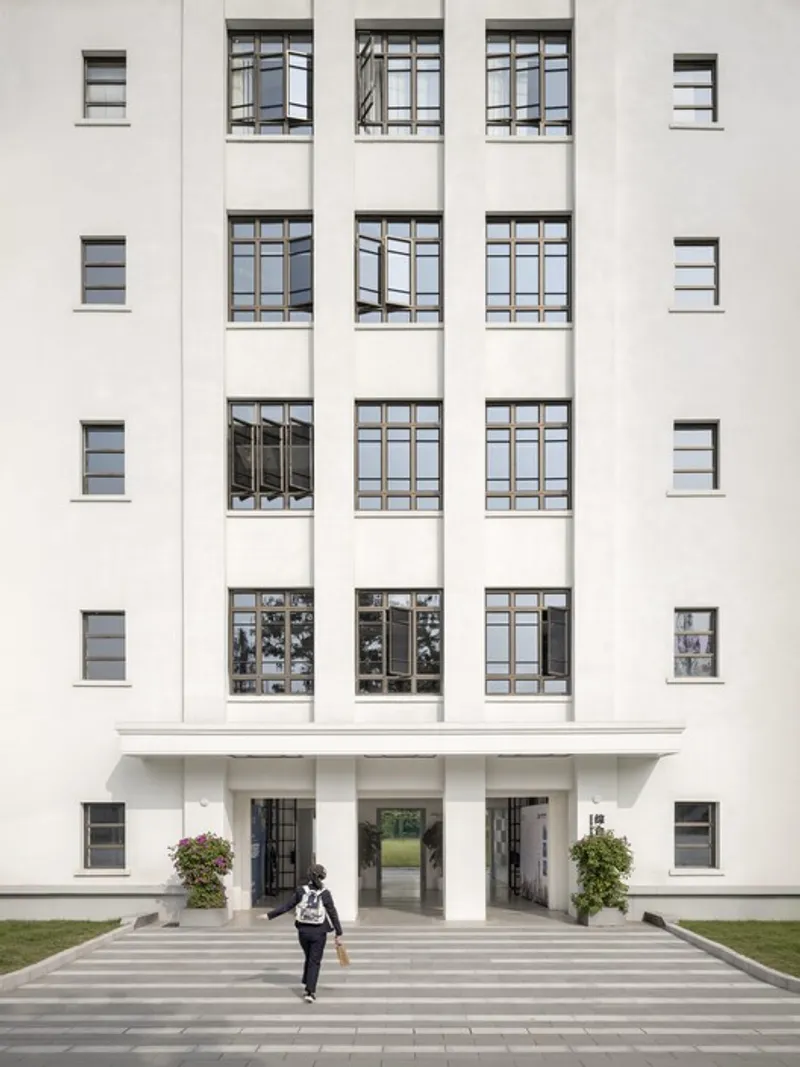
A central strategy of the redesign was to give the entire campus a shared identity.
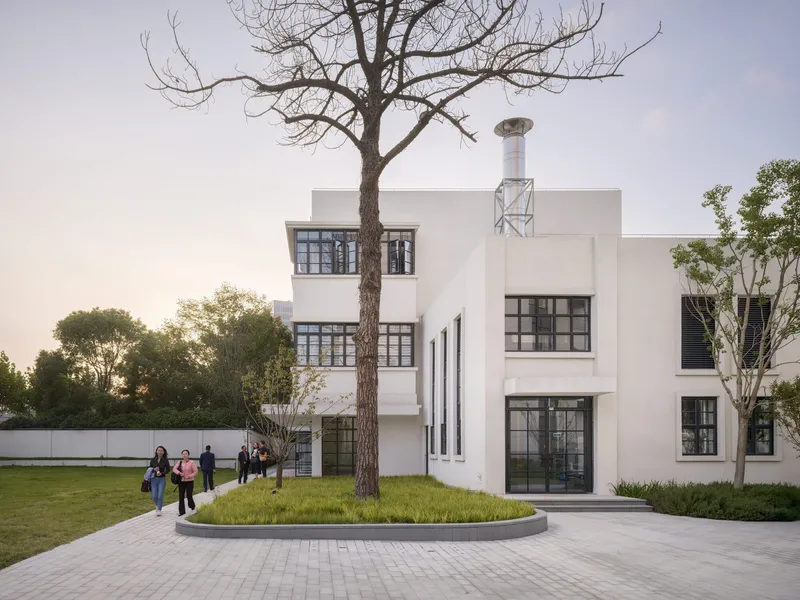
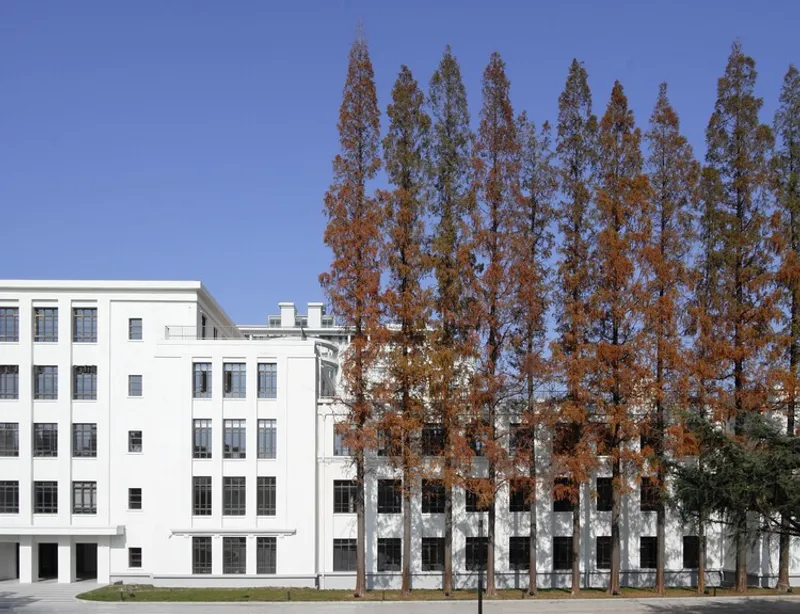
- The student dormitory was stripped of ornamental elements added in the 1990s, emphasizing clean and simple lines.
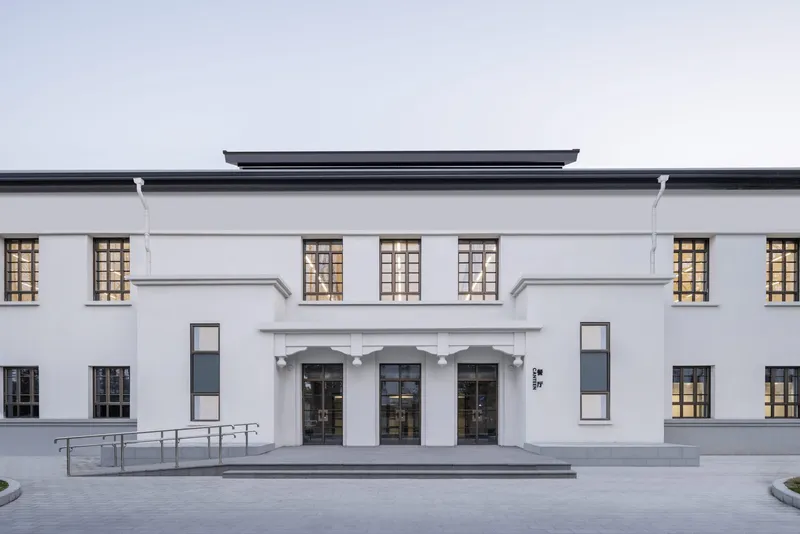
- The cafeteria underwent a meticulous restoration, where historic details—including the original steps, door lintels, and hanging awning ornaments—were reconstructed using archival city drawings.
- A crisp all-white facade palette visually connects the buildings, enhancing spatial clarity and creating a calm, contemporary atmosphere.
This unified exterior strengthens the sense of place while respecting the campus’s mid-century roots.
Minimalist Interior Design Rooted in History
Inside the renovated buildings, the design philosophy continues with minimalist aesthetics and material preservation.
- Original terrazzo floors in the teaching building were repaired and restored to their former beauty.
- In the cafeteria, the existing roof truss system was exposed and celebrated as a defining architectural feature.
- Large glass partitions, clean lines, and light-filled spaces establish a refined environment ideal for learning, collaboration, and relaxation.
The interiors reveal a thoughtful balance between old and new—highlighting heritage while supporting modern academic needs.
Landscape Design That Honors the Campus’s Natural Identity
Landscape architecture, developed with WES LandschaftsArchitektur, plays a pivotal role in shaping the campus’s experience. The outdoor spaces prioritize orientation, openness, and tranquility.
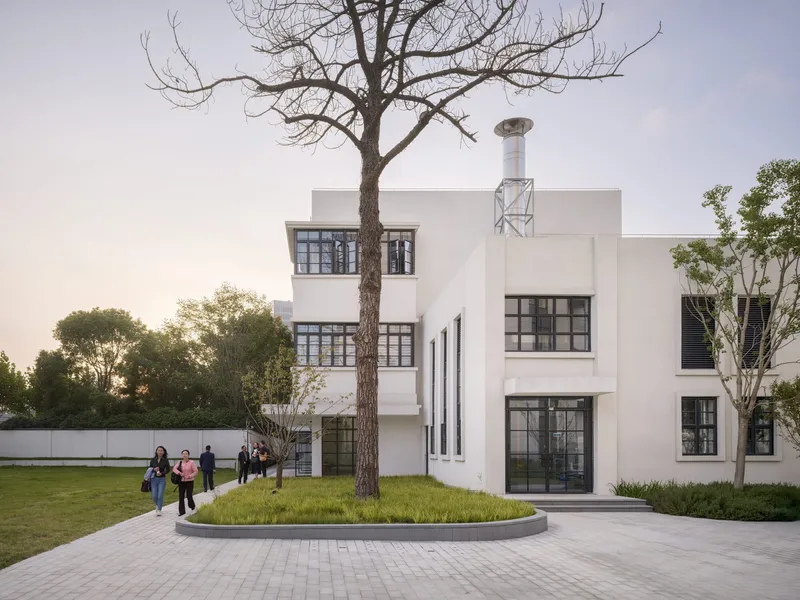
- Most mature trees were preserved, including a 70-year-old magnolia that now anchors the south plaza.
- Towering redwoods remain central to the site’s character, offering shade and continuity.
- Clear circulation paths and soft greenery enhance walkability and encourage daily interaction between students and nature.
The rejuvenated landscape reinforces the campus’s role as a community-oriented educational setting.
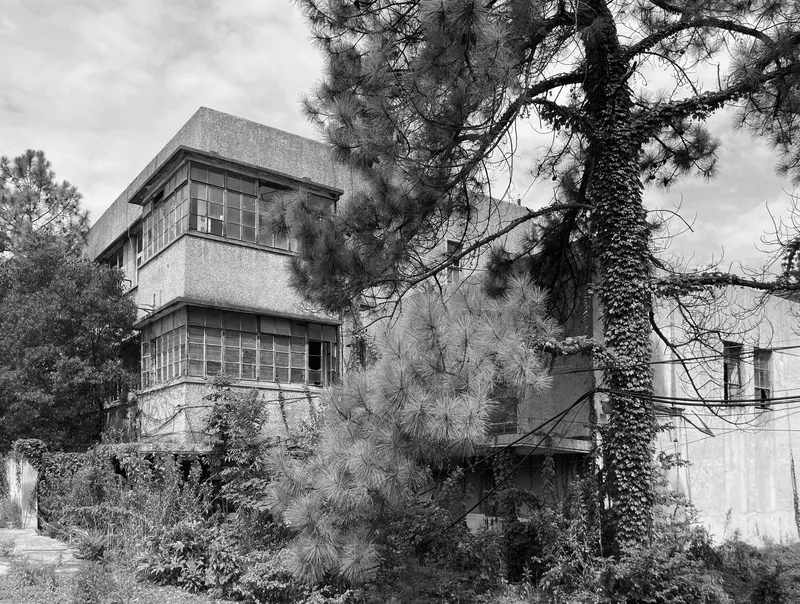
A Model of Sustainable, Sensitive Campus Revitalization
The new Shanghai Business School Caobao Road Campus stands as a benchmark for sustainable campus renovation, demonstrating how outdated institutional environments can be reinvented through preservation, thoughtful design, and adaptive reuse.
With its timeless facades, restored materials, and efficient green landscape, the campus embodies the future of environmentally conscious educational architecture in China.
All the photographs are works of Marcus Bredt, CreatAR Images


Popular Articles
Popular articles from the community


LT2A and OPEN Architectes Thread a Brick and Glass High School Through a Wooded Belgian Campus
In Braine-l'Alleud, a 3,000 m² wing for Collège Cardinal Mercier pairs pale brick with a glazed colonnade, deferring to a small chapel and a dense wood.

Cube Design Draws an Ecological Corridor Between Two Shenzhen Hills with the Nankai Building
Beside Shenzhen's container docks, the Nankai Building pairs stacked balconies with a climbing green screen to connect two hillsides across its height.

longwave studio Reorganizes a 112 m² Tainan Apartment Around the Daily Routines of a Family and Two Cats
In Tainan, Taiwan, birch plywood, rust-red furniture and a freestanding plaster wall link arrival, storage, work and family life in one apartment.

David Ortega Stacks a Two-Story Mexico City Penthouse Around a Steel Stair and a Pergola-Shaded Roof Terrace
In Colonia Roma, a 300 m² penthouse uses oak joinery, a planted steel stair and a slatted roof pergola to make a new-build apartment feel like a house.

Similar Reads
You might also enjoy these articles


Hodi-Mandai Geram
Project Function: Preservation and revitalization of the Intangible heritage and socio-spatial identity of the Hodi by Housing, Cultural Memory Center, Sacred Grove, landscape, local tourism economy


Olio Towers: A Mid-Rise for Performers That Fuses Housing, Rehearsal, and Stage
Located blocks from Houston's Theater District, this modular tower stacks living units around a central performance atrium.

Oasis: Modular Green Housing Carved into Dhaka's Urban Fabric
A shortlisted Plugin Housing entry reclaims unauthorized settlements in Dhaka with stepped concrete volumes, green roofs, and ventilation-driven design.

Black Hole: A Floating Megastructure for the Post-Physical Era
Emiliano Mazzarotto envisions a spherical, self-scaling arena where e-sports, digital hotels, and holographic stadiums replace traditional public space.

Explore Shanghai Competitions
Discover active competitions in this discipline

Challenge to design public laboratory

Challenge to reimagine the Iron Throne

Photograph architecture without architects

Illustrate the lost glory of Angkor Wat - Render Challenge
Comments (0)
Please login or sign up to add comments
No comments yet. Be the first to comment!