

Shanghai Yangpu Riverfront Power Station Auxiliary East Building
Adaptive reuse of Shanghai's industrial past into a vibrant riverside park blending architecture, landscape, and community engagement with minimal intervention.


Reimagining Industrial Memory on the Yangpu Riverfront
Located along the south bank of the Huangpu River, east of the Yangpu Bridge, the Power Station Auxiliary East Building forms part of a larger master plan to transform Shanghai’s Yangshupu Industrial Belt. Once a dense cluster of early 20th-century factories, this site reflects Shanghai’s emergence as a modern industrial city. With over 150,000 m² of land and 1.2 kilometers of riverfront, the revitalization plan preserves its industrial DNA while repurposing it as a multi-layered public park.
As part of the larger urban renewal initiative—developed collaboratively by Atelier Z+, Atelier Deshaus, and Atelier Liu Yuyang Architects—the East Building became a key node in re-establishing pedestrian and ecological continuity across fragmented industrial zones. The design embraces limited intervention and low-impact development, protecting the site's historic layers while accommodating new civic life.
Design Concept: Preserving Wildness and Introducing Gentle Interventions
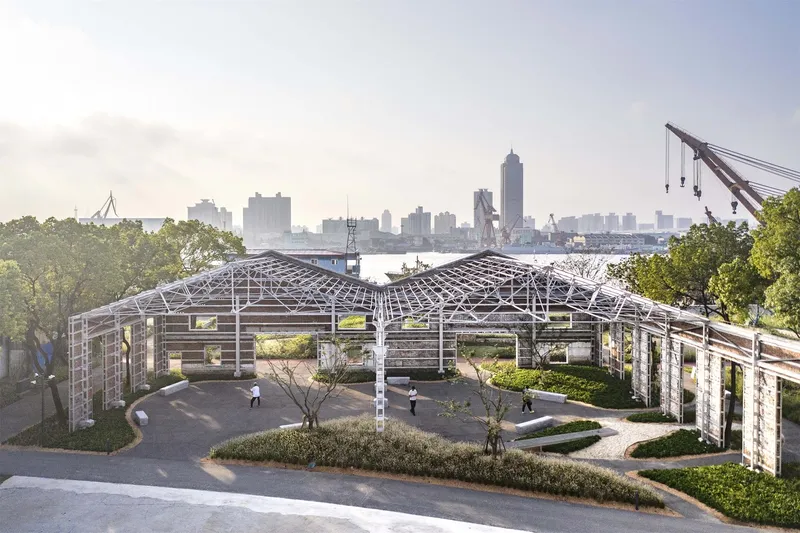
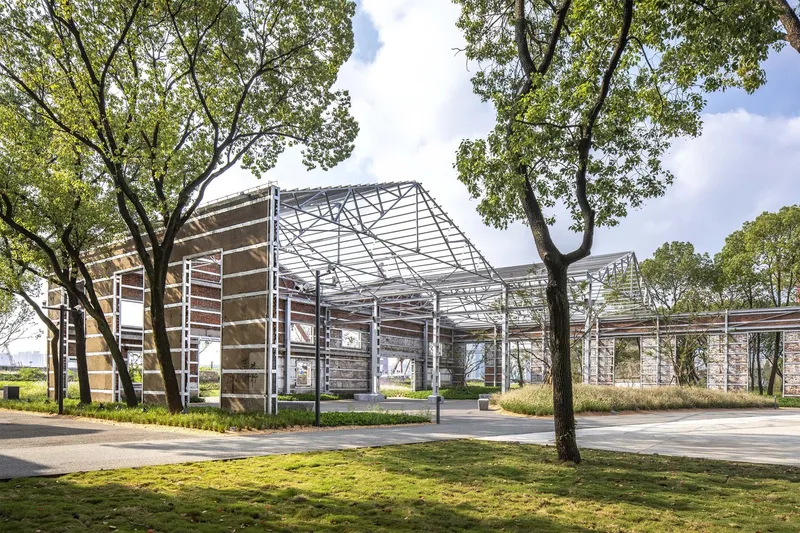
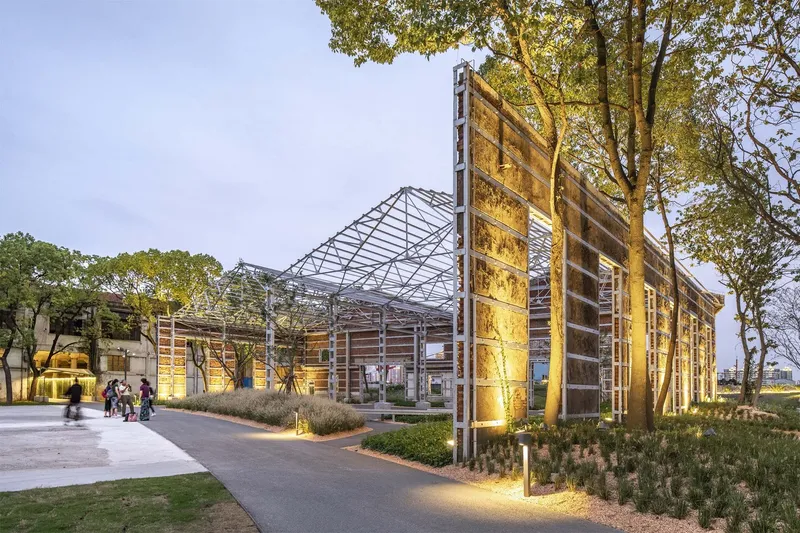
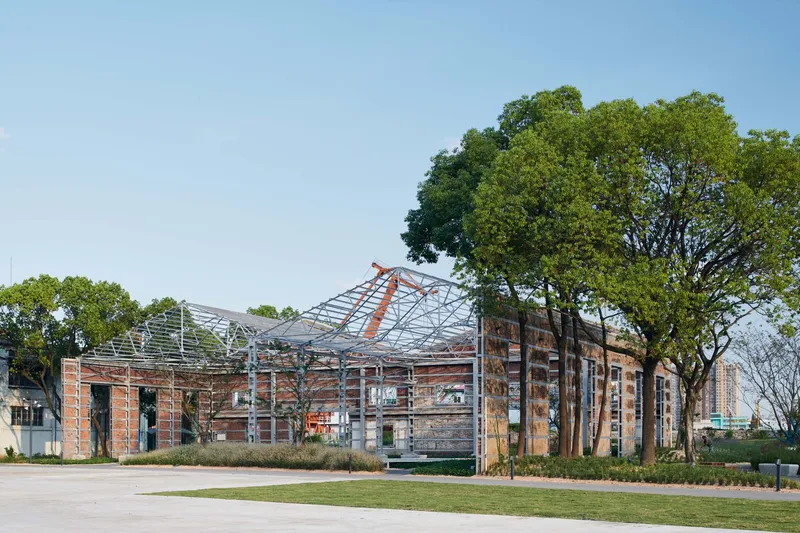
Rooted in the idea of minimal disturbance, the design for the Power Station Auxiliary East Building carefully integrates landscape and architecture. Existing camphor trees were preserved, while the remaining warehouse structure was adaptively reused as the Pavilion of Symbiosis—an open-air pavilion that invites public engagement, play, and reflection.
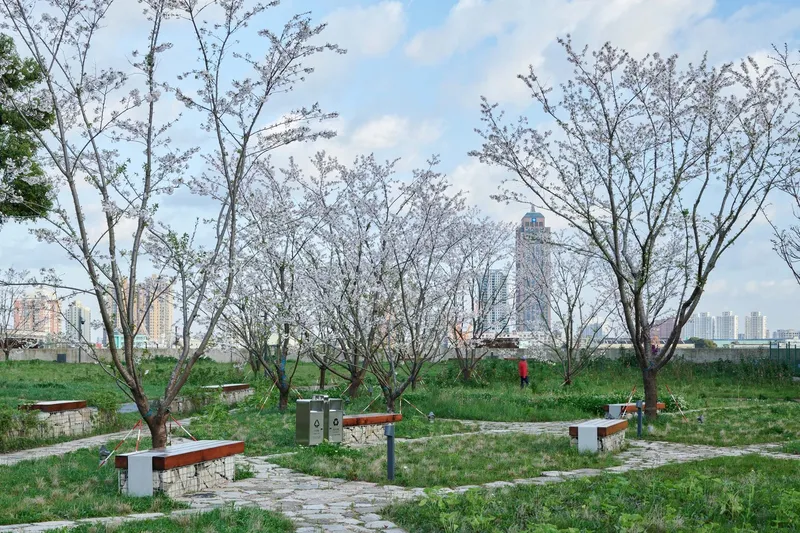
Newly introduced elements such as the Garden of Vestige, Meadow in Succession, and Eco Pond are grounded in the site’s original topography and historical remnants. The pedestrian and bicycle pathways create varied landscape experiences that echo the classical garden typologies of the Yangtze River Delta, allowing visitors to meander through spaces of contemplation, community, and ecological awareness.
Key Architectural Features
Pavilion of Symbiosis
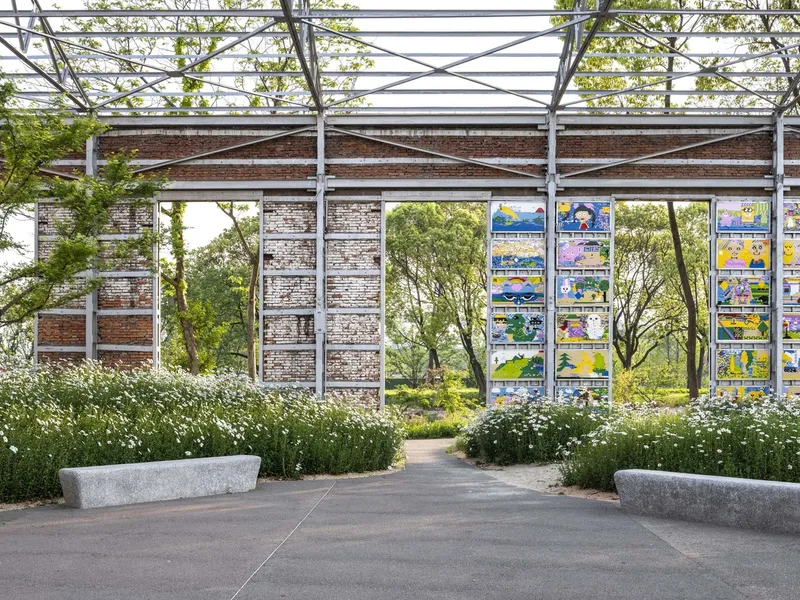
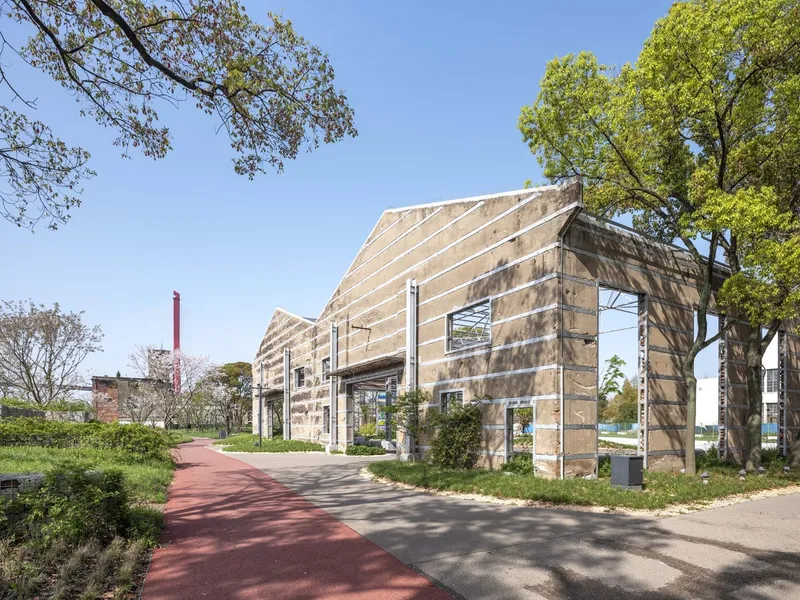
Once part of the Shanghai Boiler Works (1953–1979), this structure was originally slated for full demolition. However, the architects proposed retaining half of the building—redefining its spatial character while making room for a planned roadway. The roof was opened to the sky, inviting light, air, and vegetation to reclaim the space. This hybrid environment blurs the boundary between architecture and landscape, creating a vibrant civic platform that celebrates adaptive reuse.
Elements like a sandpit, restored windows and doors, and gentle topography create playful and inclusive zones within the pavilion, engaging both children and adults. The resulting space is a powerful statement on symbiosis between history, ecology, and urban life.
Garden of Vestige
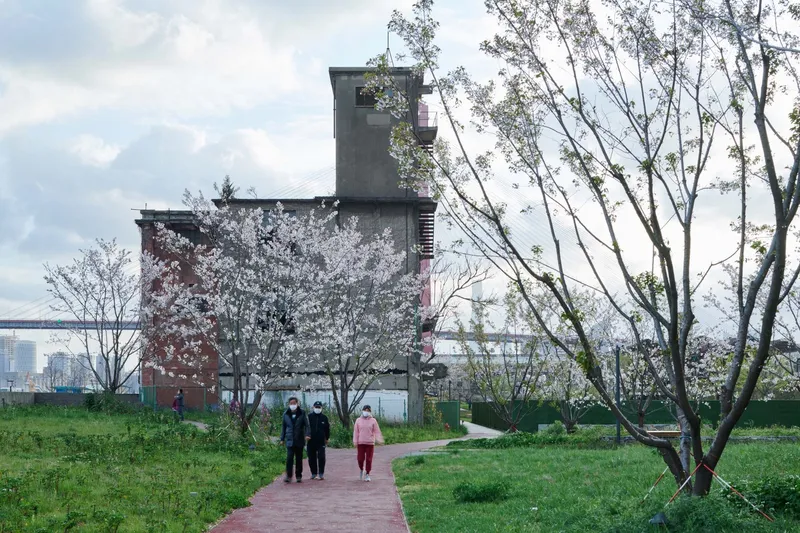
Utilizing fragments from demolished structures, this space serves as both a memorial to the site's industrial past and a new public garden. A sculpted landscape slope, meandering paths, and open views toward the Huangpu River frame moments of remembrance and discovery. The transition from indoor office space to garden environment further underscores the site’s commitment to transformation over replacement.
Urban Impact: A New Model of Riverfront Public Space
The Yangpu Riverfront Revitalization represents a broader shift in Shanghai’s urban strategy—moving from isolated redevelopment to integrated, heritage-conscious urban design. The Power Station Auxiliary East Building is not only a revitalized structure but also a catalyst for social interaction, cultural memory, and ecological sustainability.
By weaving together fragments of the past with contemporary urban life, Atelier Liu Yuyang Architects have created a public space that resonates with Shanghai’s industrial legacy while pointing toward a greener and more inclusive future.
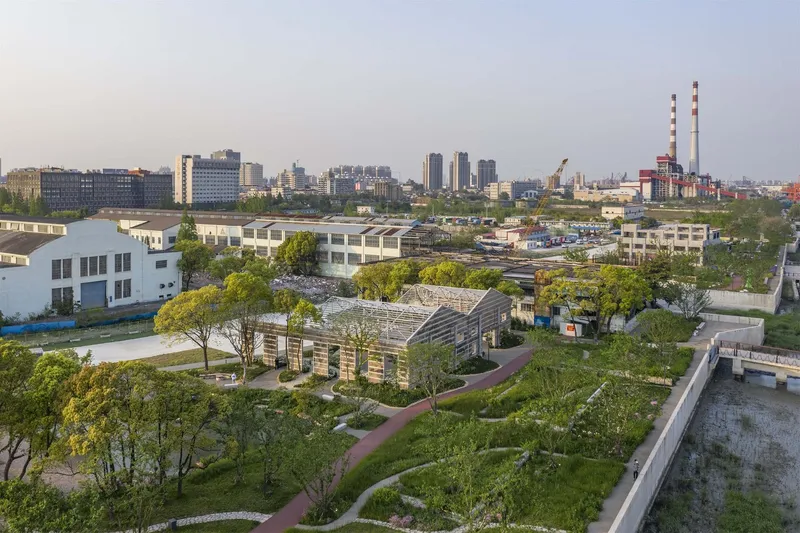
All Photographs are works of Hao Chen, Fangfang Tian


Popular Articles
Popular articles from the community


The Amber Palace Opera: A Geological Fiction Surfaces on Tallinn's Baltic Waterfront
Pierre Brillard reimagines a Baltic legend as a public landscape, opera house, and waterfront promenade rooted in Tallinn's coastal identity.


ETEH Reworks the Shared Spaces of São Domingos School in Brazil Around Timber, Color and Hanging Plants
At São Domingos School in Brazil, 436 m² of hall, refectory and library are recast with timber joinery, a yellow and blue code and trailing greenery.

Opera on the Sea: Driftwood Logic Shapes a Timber Opera House on Estonia's Coast
Trevor Orgill's opera house translates the entangled drift of floating timber into a civic building where wood, water, and music converge.

Aquadapt: An Underwater Habitat That Rewrites Its Rooms by the Hour
Curved modules ring the seabed while one shell shifts from breakfast room to cinema, farm and football pitch as residents' needs change.

Similar Reads
You might also enjoy these articles


Hodi-Mandai Geram
Project Function: Preservation and revitalization of the Intangible heritage and socio-spatial identity of the Hodi by Housing, Cultural Memory Center, Sacred Grove, landscape, local tourism economy


Olio Towers: A Mid-Rise for Performers That Fuses Housing, Rehearsal, and Stage
Located blocks from Houston's Theater District, this modular tower stacks living units around a central performance atrium.

Oasis: Modular Green Housing Carved into Dhaka's Urban Fabric
A shortlisted Plugin Housing entry reclaims unauthorized settlements in Dhaka with stepped concrete volumes, green roofs, and ventilation-driven design.

Black Hole: A Floating Megastructure for the Post-Physical Era
Emiliano Mazzarotto envisions a spherical, self-scaling arena where e-sports, digital hotels, and holographic stadiums replace traditional public space.

Explore Riverfront Development Competitions
Discover active competitions in this discipline

Challenge to reimagine the Iron Throne

Photograph architecture without architects

Illustrate the lost glory of Angkor Wat - Render Challenge

Design challenge to reuse E-waste
Comments (0)
Please login or sign up to add comments
No comments yet. Be the first to comment!