
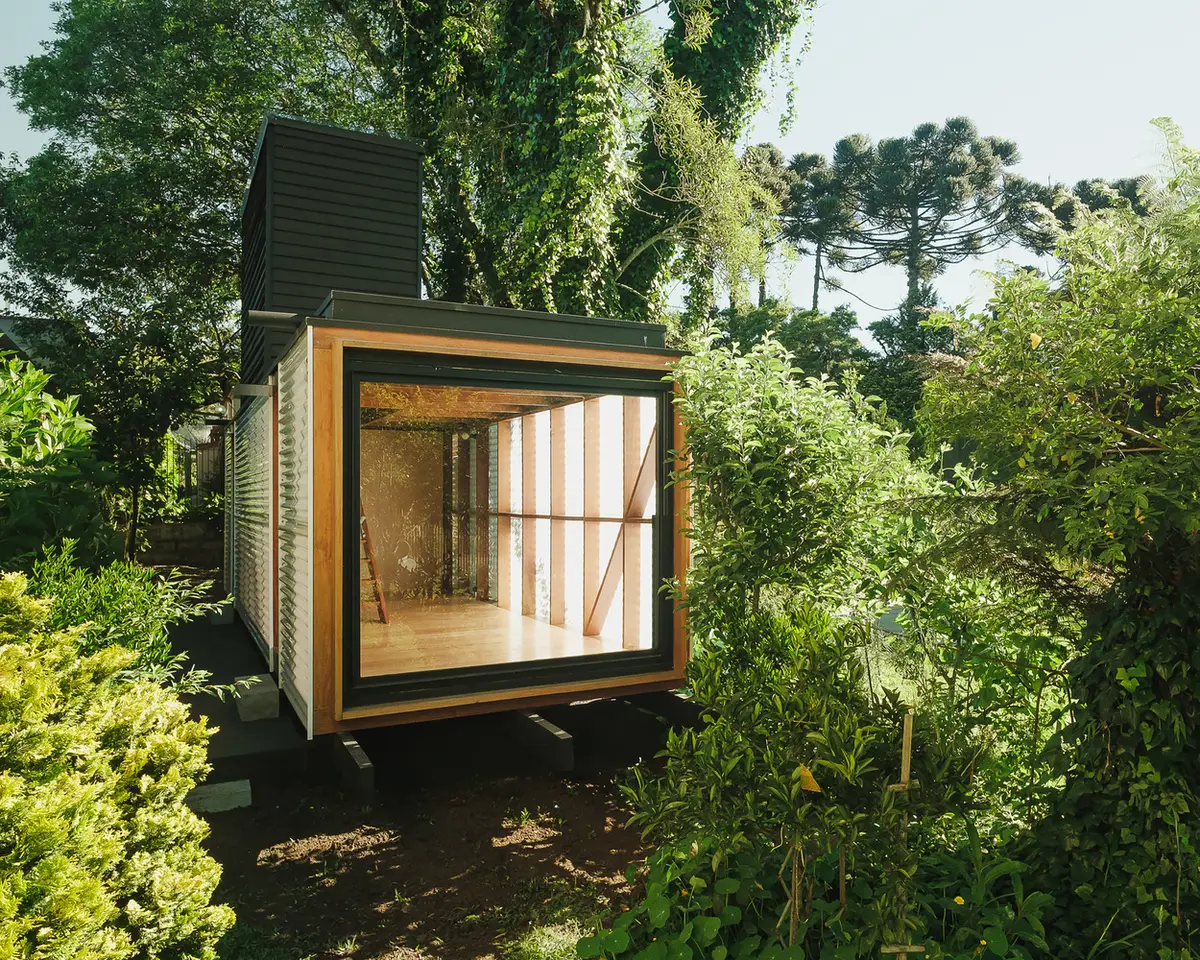
Shed by sauermartins: A Study in Vernacular Wood Construction
A sustainable wooden shed blending vernacular craftsmanship with modern design, featuring modular construction, natural light, and seamless indoor-outdoor integration.


Located in Canela, Brazil, the Shed by sauermartins is a small-scale architectural project that seamlessly integrates contemporary design with traditional wood construction techniques. Designed by architects Cássio Sauer and Elisa T. Martins, the project explores sustainable building methods, craftsmanship, and the relationship between built space and its natural surroundings.
A Dialogue Between Traditional and Contemporary Architecture
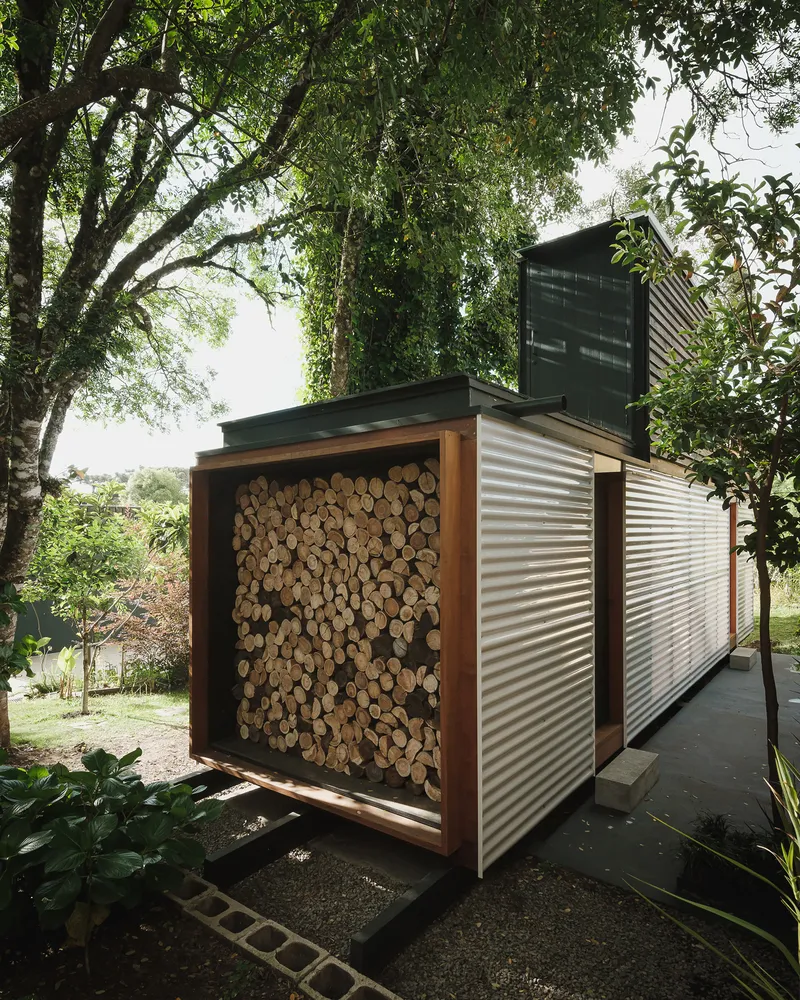
Positioned at the rear corner of a lush, tree-filled plot, the wooden shed serves as an atelier, storage space, and firewood rack, complementing the existing residence while contributing to the domestic landscape. The design is an architectural experiment that investigates modularity, spatial fluidity, and the interplay of light and transparency.
One of the core intentions of the project is to reclaim the value of artisanal craftsmanship, emphasizing the use of vernacular construction techniques and high-quality natural materials. In a time when mass production dominates the building industry, this shed serves as a statement on the importance of traditional woodworking skills and their role in shaping contemporary spaces.
Structural Composition: Wood, Transparency, and Light
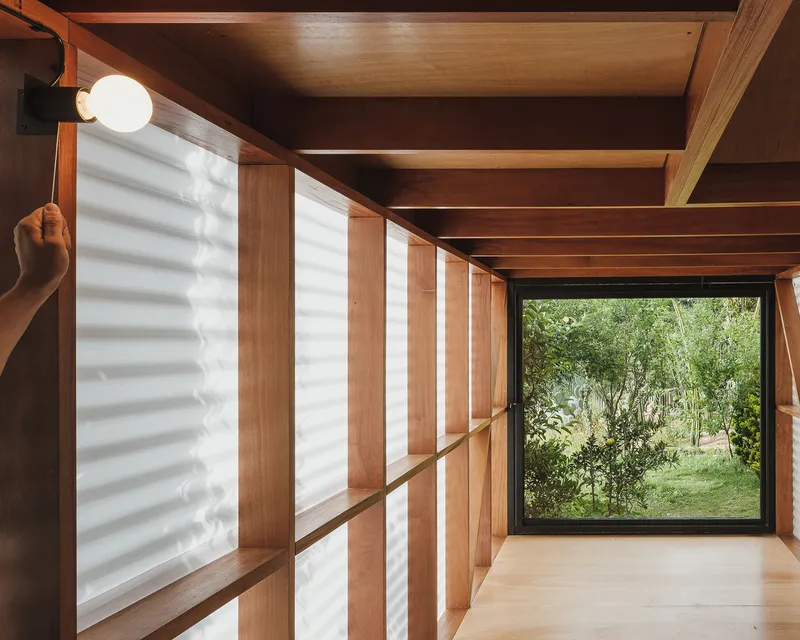
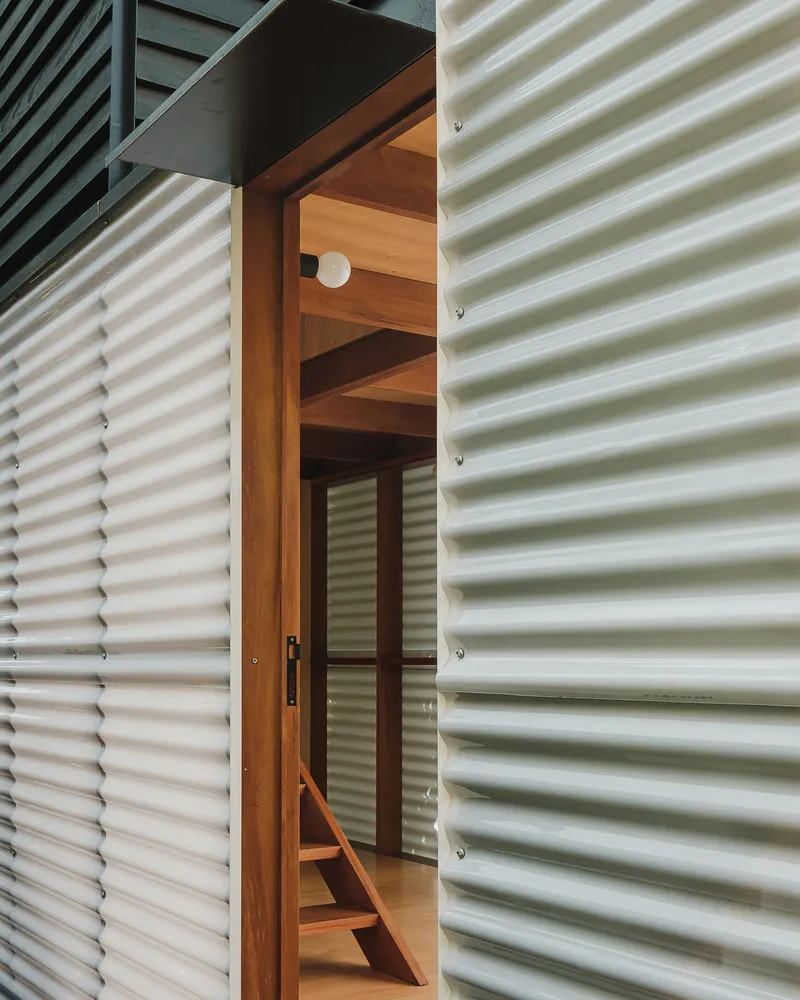
The wooden framework follows a rhythmic structural pattern, with beams and columns spaced at 80 cm intervals, revealing the meticulous joinery. The project contrasts solid timber elements with industrialized materials, such as polycarbonate cladding and laminated timber panels, offering a balance between robustness and lightness.
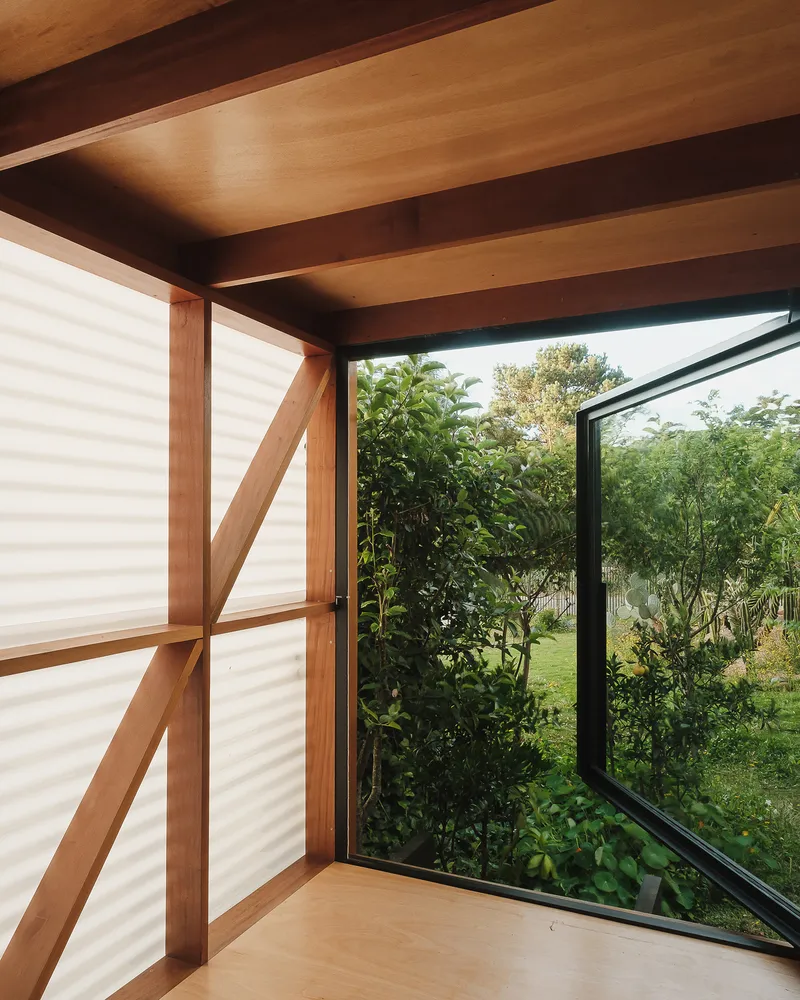
The polycarbonate façade functions as a translucent skin, filtering natural light into the interior while creating an ever-changing play of shadows from the surrounding vegetation. This dynamic interaction between inside and outside fosters a sense of openness, reinforcing the connection between architecture and nature.
Elevated Volumes and Multi-Functional Spaces
Set atop a solid concrete base, the structure is lifted from the ground to protect the timber from soil moisture while adapting to the natural topography. The base also forms an elevated entrance patio, enhancing the spatial experience.
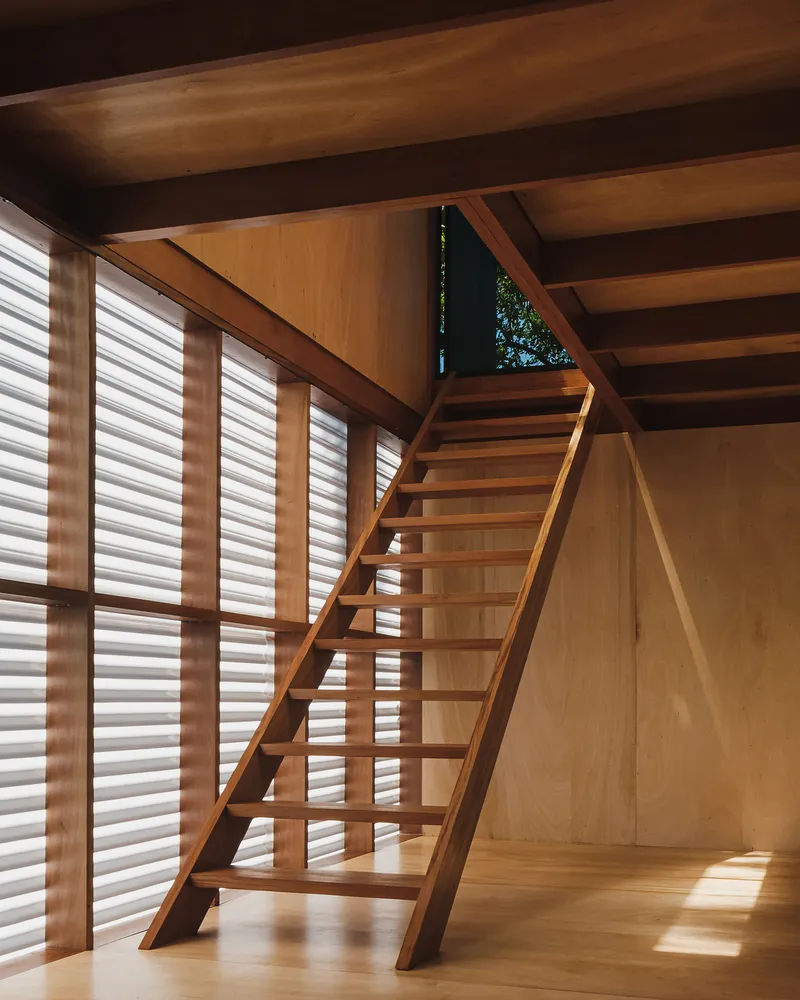
Despite its compact 25-square-meter footprint, the shed maximizes usability by extending upwards. The roof doubles as an elevated garden and seating area, offering an immersive perspective amidst the treetops. A skylight above the staircase provides framed views of the sky, while a north-facing pivot window captures the surrounding landscape.
Sustainability and Cultural Significance
More than just a functional annex, this wooden pavilion embodies a commitment to sustainable construction, demonstrating how small-scale architecture can preserve local identity while embracing modern efficiency. By utilizing wood as the primary material, the project minimizes environmental impact and ensures a low-disruption building process, making it an ideal solution for context-sensitive residential expansions.
This project is an architectural statement—a tribute to craftsmanship, cultural heritage, and the timeless relationship between architecture and nature.
All Photographs are works of Pedro Kok, Cássio Sauer


Popular Articles
Popular articles from the community


Co-Life: Senior Housing Design That Reconnects Older Adults With the City
Co-Life reimagines senior housing design through healing gardens, shared streets, workshops, and a sustainable community across generations.

Little Red Riding Hood: Architectural Design as a Journey Through Fear, Light, and Storytelling
Little Red Riding Hood reimagines the fairy tale through architectural design shaped by fear, light, scale, memory, uncertainty, and choice.

ALGAL REALM: A Bio-Integrated Lunar Habitat Design for Life Beyond Earth
ALGAL REALM reimagines lunar habitat design with algae-powered life support, 3D-printed regolith, and vertical living for a lunar future.

Conexión: Biophilic Design Reimagines High-Rise Living in Hong Kong
Conexión reimagines high-rise living in Hong Kong through biophilic design, green facades, shared spaces, daylight, water and nature within.

Similar Reads
You might also enjoy these articles


Hodi-Mandai Geram
Project Function: Preservation and revitalization of the Intangible heritage and socio-spatial identity of the Hodi by Housing, Cultural Memory Center, Sacred Grove, landscape, local tourism economy


Olio Towers: A Mid-Rise for Performers That Fuses Housing, Rehearsal, and Stage
Located blocks from Houston's Theater District, this modular tower stacks living units around a central performance atrium.

Oasis: Modular Green Housing Carved into Dhaka's Urban Fabric
A shortlisted Plugin Housing entry reclaims unauthorized settlements in Dhaka with stepped concrete volumes, green roofs, and ventilation-driven design.

Black Hole: A Floating Megastructure for the Post-Physical Era
Emiliano Mazzarotto envisions a spherical, self-scaling arena where e-sports, digital hotels, and holographic stadiums replace traditional public space.

Explore Wood Construction Competitions
Discover active competitions in this discipline

Challenge to design a portable theatre

Challenge to design a portable music platform

Challenge to design an open learning module for the elderly

Challenge to reimagine the Iron Throne
Comments (0)
Please login or sign up to add comments
No comments yet. Be the first to comment!