

Sheepfold House by Hilberinkbosch Architecten: Adaptive Reuse of a Historic Dutch Monument
Sheepfold House transforms a historic Dutch brick sheepfold into a light-filled recreational home through sensitive adaptive reuse and contemporary timber construction.


Sheepfold House by Hilberinkbosch Architecten: Adaptive Reuse of a Historic Dutch Monument
Sheepfold House by Hilberinkbosch Architecten is a sensitive architectural refurbishment that revives one of the last remaining brick sheepfolds in the Netherlands, transforming a fragile rural monument into a contemporary recreational dwelling. Located in the heart of the Dutch landscape, the project preserves a building typology first recorded in cadastral documents from 1832, ensuring its cultural and architectural legacy endures through thoughtful reuse.
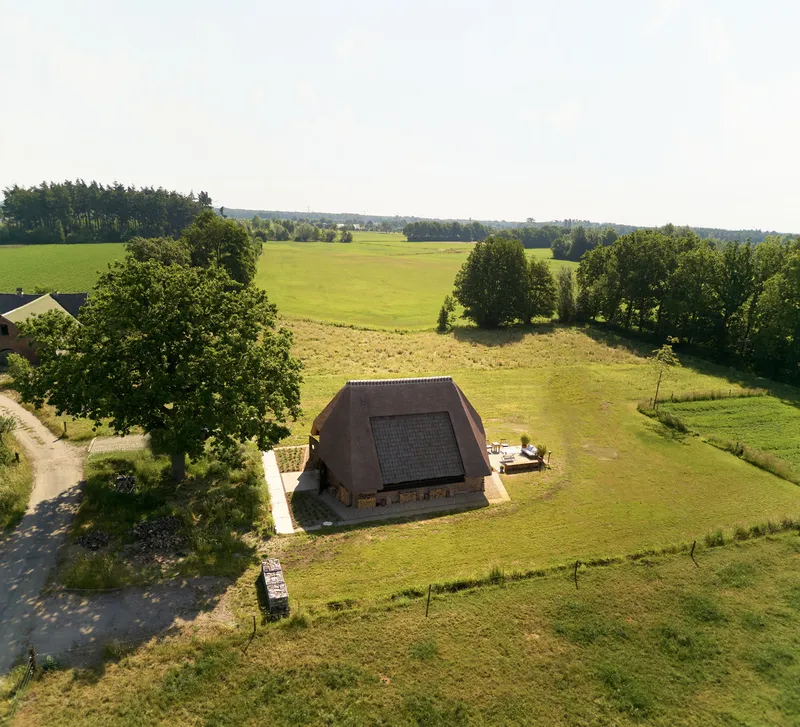
The original sheepfold follows a traditional rectangular plan with distinctive three-sided extended end gables, a form once common across heathland regions of the Netherlands. These structures played a vital role in agricultural life until the late nineteenth century, when the introduction of artificial fertilizers and large-scale land reclamation rendered sheep farming for manure obsolete. As a result, sheepfolds gradually fell into disuse, were briefly repurposed as pigsties, and eventually demolished. This particular sheepfold narrowly escaped total destruction and remained standing as a national monument, albeit in a severely deteriorated state, with only fragments of its original brick exterior walls intact.
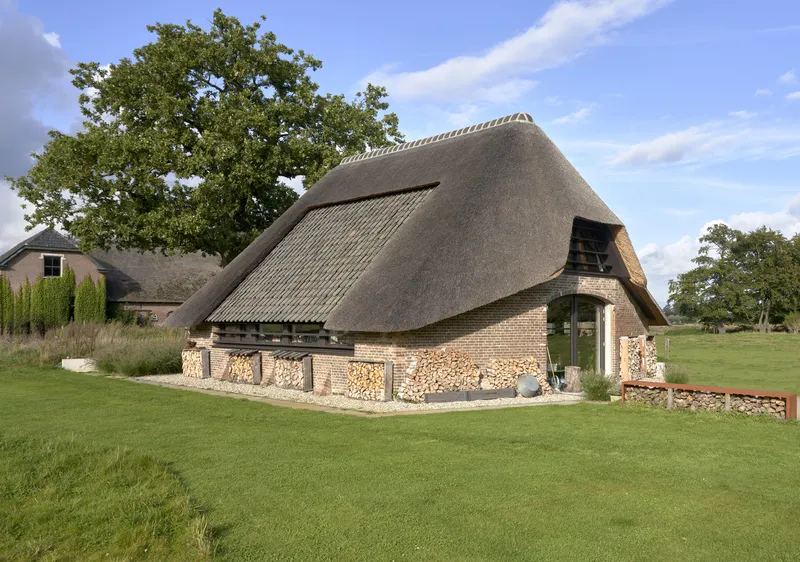
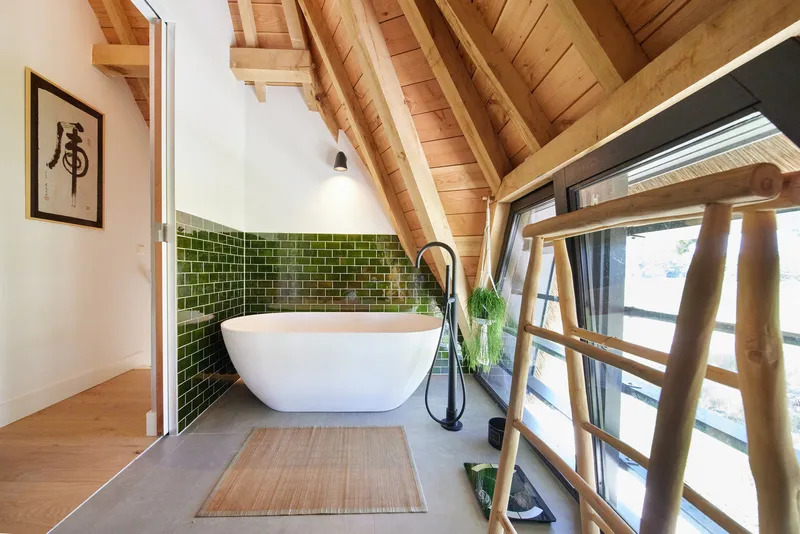
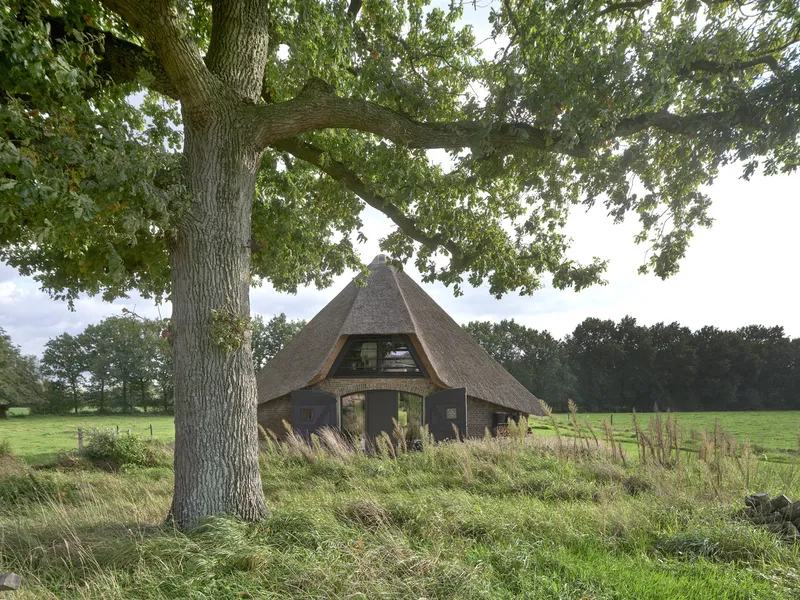
Recognizing the cultural significance of the structure, the new owner chose reconstruction over replacement, guided by the principle that reuse is the most effective form of preservation. The project reimagines the historic sheepfold as a modest recreational house while carefully restoring its characteristic volume and silhouette. The architectural intervention does not attempt to mimic the past, but instead establishes a clear dialogue between historic masonry and contemporary timber construction.
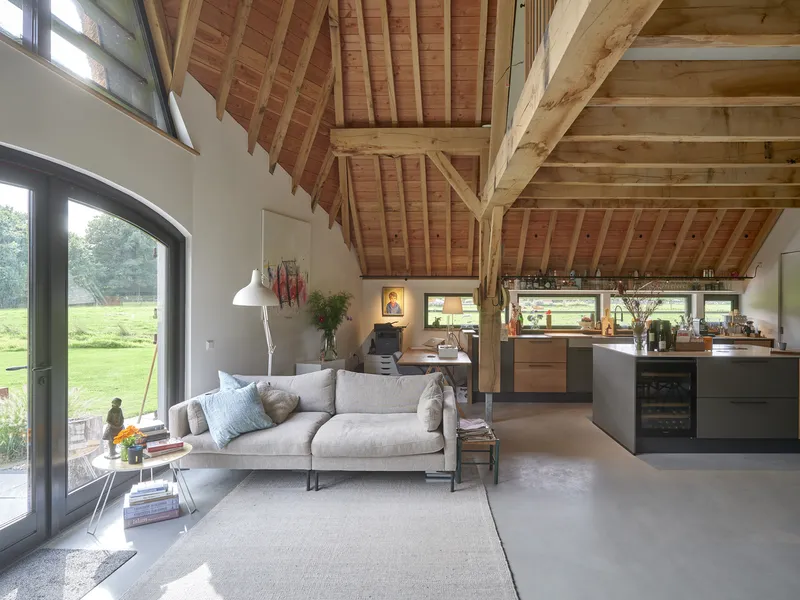
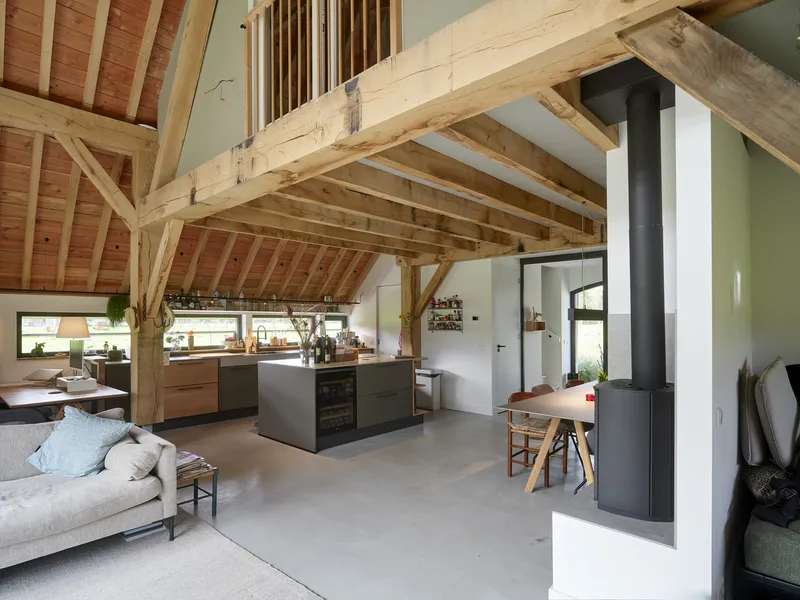
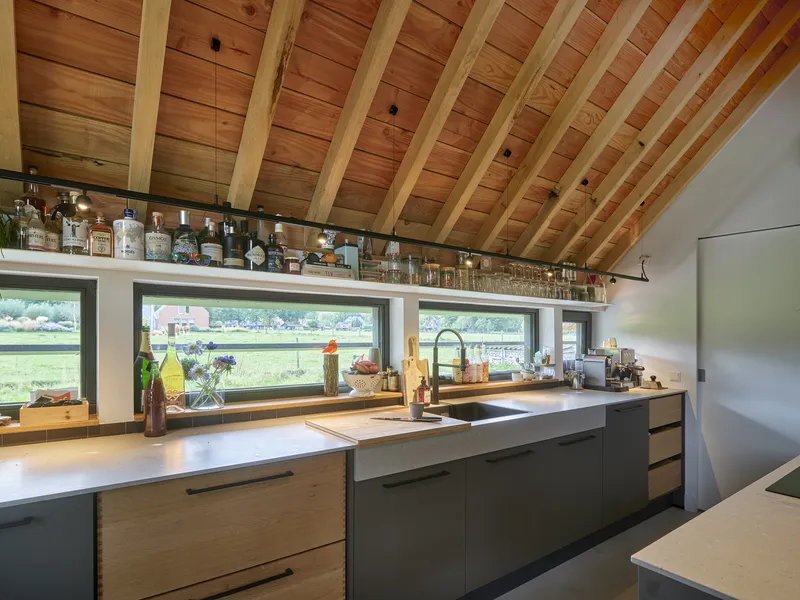
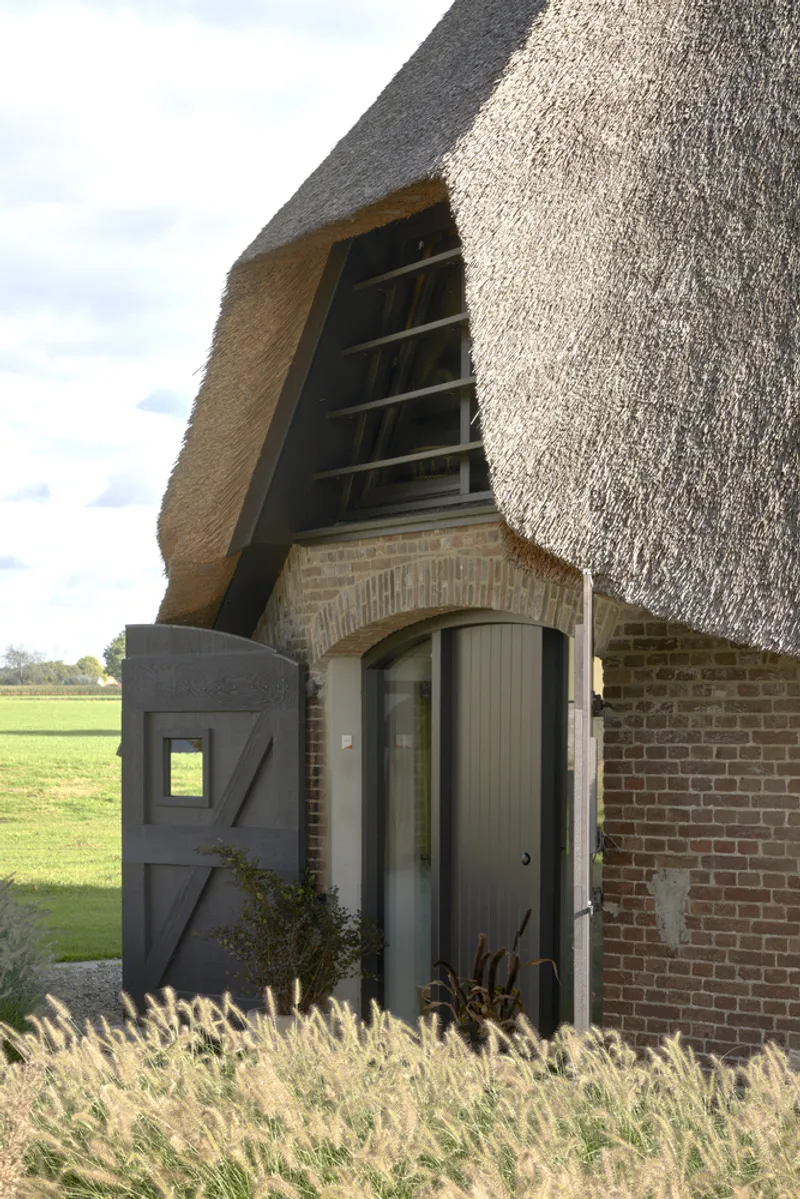
The remaining brick walls form the foundation of the renewed structure, while the wooden façade elements are opened with generous glass surfaces and vertical timber slats. Former stable doors are transformed into large window openings, allowing daylight to flood the interior and strengthening the visual connection between the house and its surrounding landscape. This transparency contrasts with the solidity of the original masonry, reinforcing the building’s layered history.

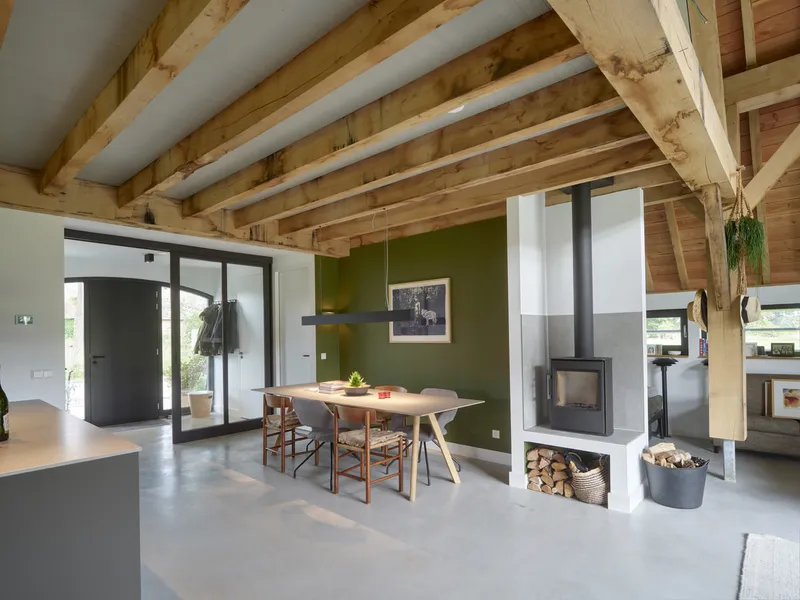
Modern timber construction techniques were employed to reconstruct the roof structure, including new trusses and rafters that echo the original form. Between these trusses, space has been subtly carved out for a bedroom and bathroom, inserted without disrupting the defining contours of the sheepfold. The interior remains largely open, with exposed timber elements shaping both the spatial experience and the atmosphere. The visible structure emphasizes craftsmanship and material honesty, while preserving the sense of scale associated with the original agricultural space.
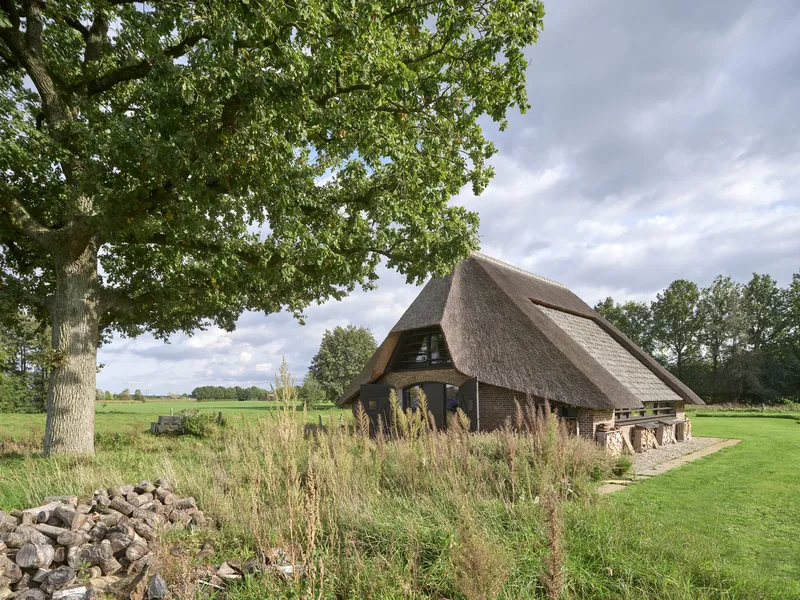
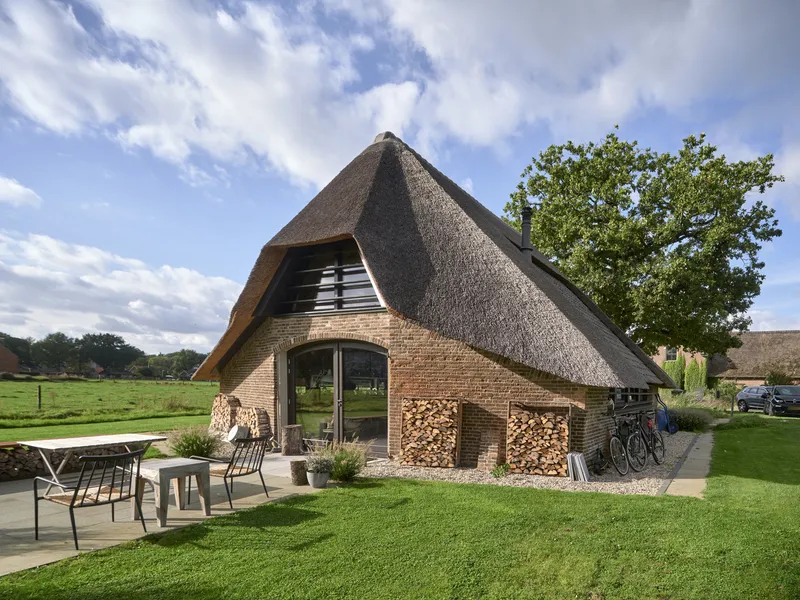
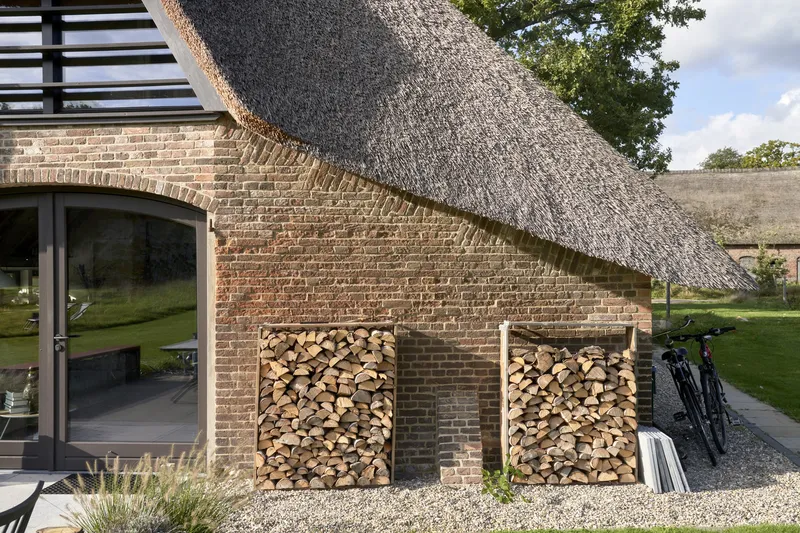
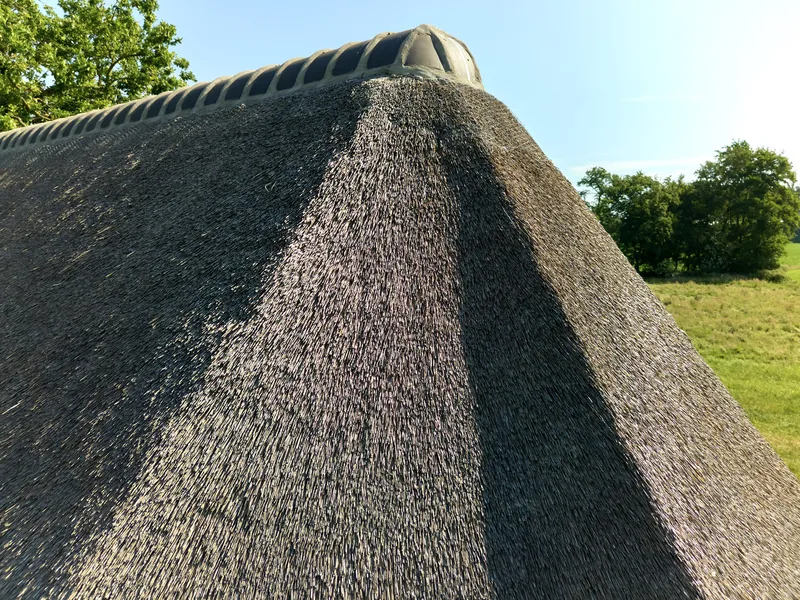
The restored volume reappears as a quiet yet powerful presence in the landscape, its historic outline clearly legible against the sky. Sheepfold House stands as an example of how adaptive reuse and heritage conservation can coexist with contemporary living needs. By reactivating a forgotten rural building, Hilberinkbosch Architecten have returned an authentic architectural form to the Dutch countryside, offering a place for rest, reflection, and renewed connection to cultural history.
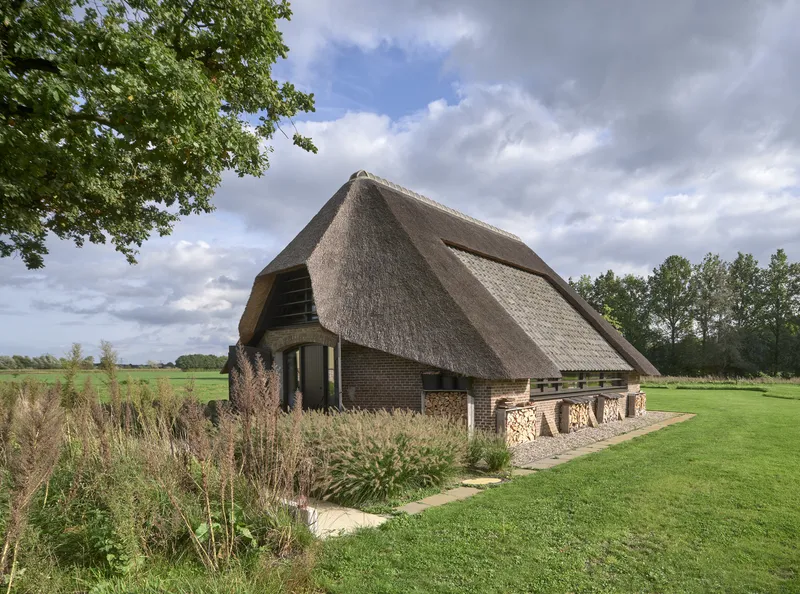
All photographs are works of
CheeseWorks




Popular Articles
Popular articles from the community


Co-Life: Senior Housing Design That Reconnects Older Adults With the City
Co-Life reimagines senior housing design through healing gardens, shared streets, workshops, and a sustainable community across generations.

Riyadh For All: Intergenerational Urban Design for Active Aging in Rabat
Riyadh For All reimagines urban design in Rabat with intergenerational co-living, adaptive courtyards, and Moroccan cultural exchange today.

The Earth Pod: 3D Printed Homes for Resilient Refugee Communities
The Earth Pod reimagines refugee housing through 3D printed homes made from clay, combining resilience, self-sufficiency, and rapid shelter.

Co-life: Sustainable Architecture for Age-Friendly Community Living
Co-life reimagines sustainable architecture for seniors through courtyards, rammed earth, shared gardens, and spaces designed for belonging.

Similar Reads
You might also enjoy these articles


Hodi-Mandai Geram
Project Function: Preservation and revitalization of the Intangible heritage and socio-spatial identity of the Hodi by Housing, Cultural Memory Center, Sacred Grove, landscape, local tourism economy


Olio Towers: A Mid-Rise for Performers That Fuses Housing, Rehearsal, and Stage
Located blocks from Houston's Theater District, this modular tower stacks living units around a central performance atrium.

Oasis: Modular Green Housing Carved into Dhaka's Urban Fabric
A shortlisted Plugin Housing entry reclaims unauthorized settlements in Dhaka with stepped concrete volumes, green roofs, and ventilation-driven design.

Black Hole: A Floating Megastructure for the Post-Physical Era
Emiliano Mazzarotto envisions a spherical, self-scaling arena where e-sports, digital hotels, and holographic stadiums replace traditional public space.

Explore Residential Building Competitions
Discover active competitions in this discipline


Challenge to design mud housing for contemporary communities


Challenge to reimagine the Iron Throne


Photograph architecture without architects


Illustrate the lost glory of Angkor Wat - Render Challenge
Comments (0)
Please login or sign up to add comments
No comments yet. Be the first to comment!