
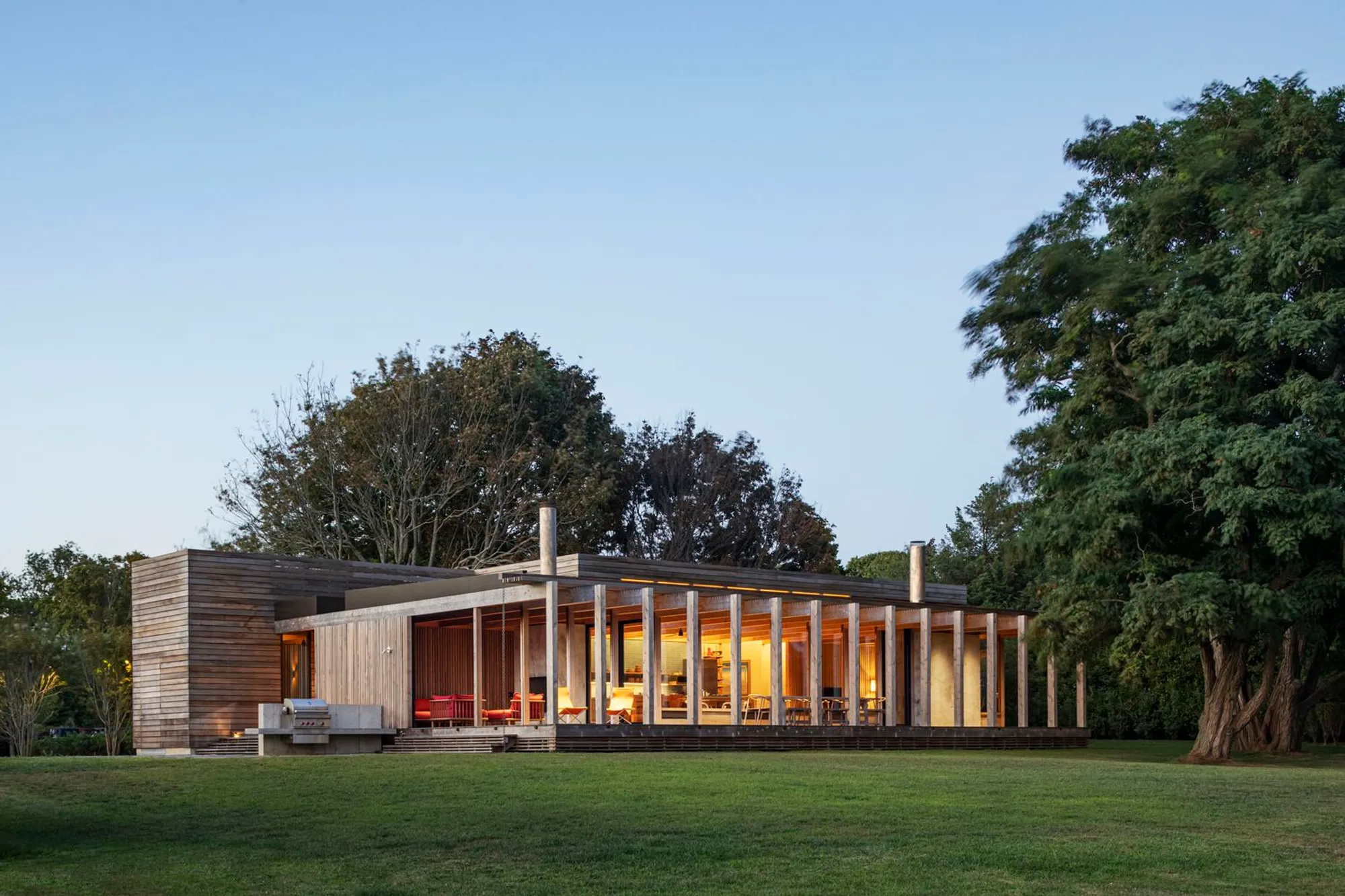
Shelter Island House by KoningEizenberg Architecture: A Contextual Retreat Embedded in Coastal Tranquility
Shelter Island House blends wood, concrete, and passive design into a sustainable coastal retreat harmonizing with nature and seasonal climate.


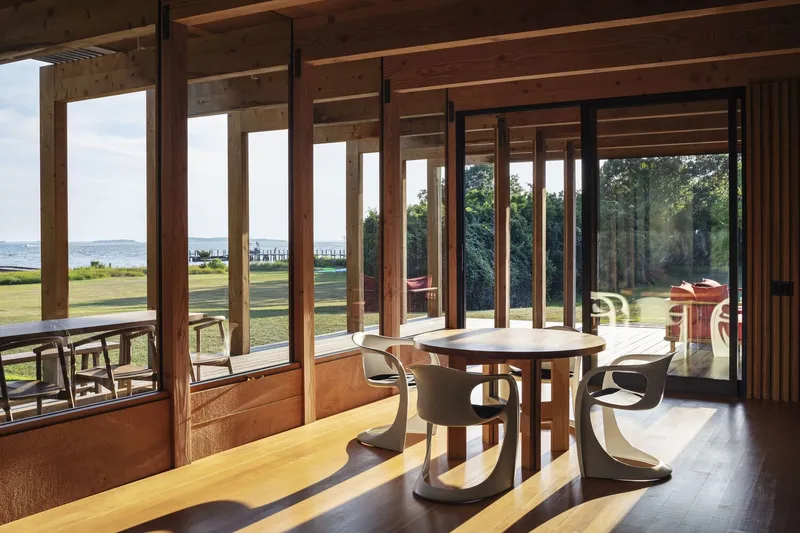
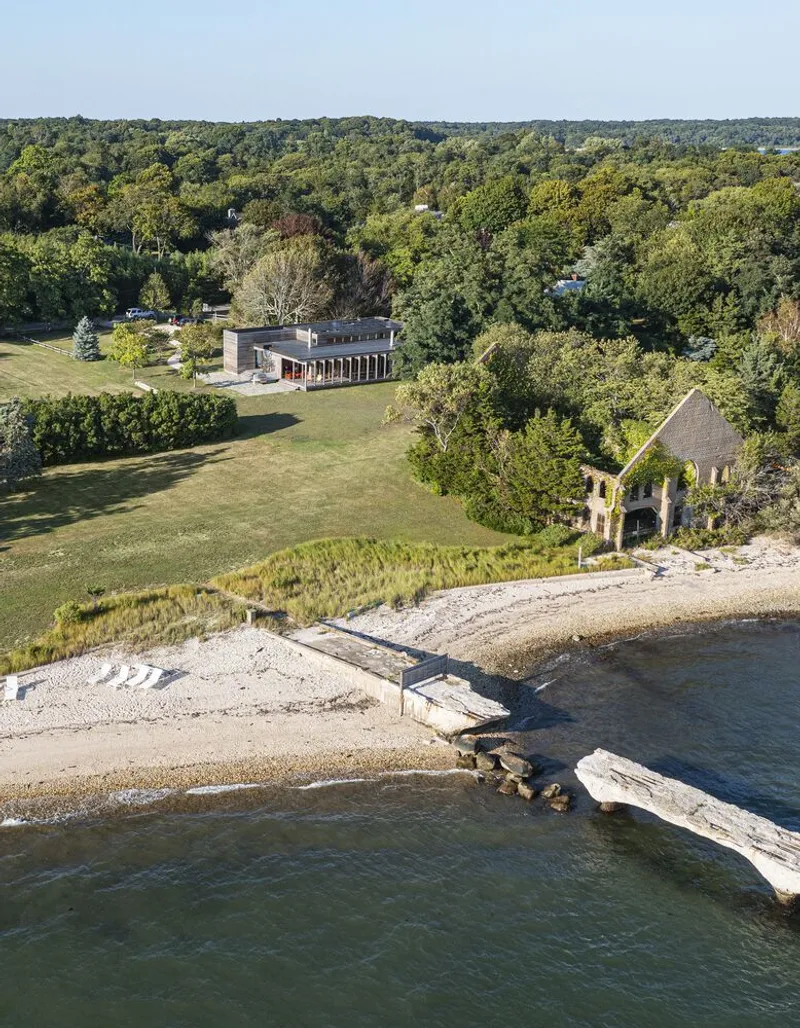
Nestled among Shelter Island’s hedgerows and mature trees, the Shelter Island House by KoningEizenberg Architecture is a weekend family retreat designed to harmonize with the wistful charm of its coastal setting. Framed by rolling lawns and a thin stretch of sandy beach, the home gazes out over expansive views of the South Bay—capturing sights of a weathered boathouse and a lone, windswept tree clinging to a crumbling pier.
A Site-Specific Response to Nature
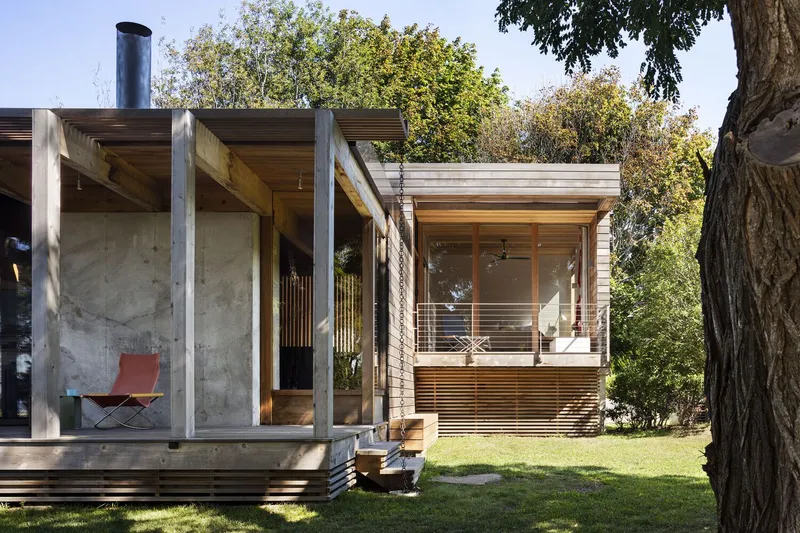
The design grew out of deep familiarity between the clients and the landscape. Longtime Shelter Island vacationers, the family of four collaborated closely with the architects to reimagine their aging property with clarity and intimacy. The guiding brief prioritized shade, cross-ventilation, outdoor living, and seasonal adaptability—essentials for navigating the region’s hot, humid summers and cold, snowy winters.
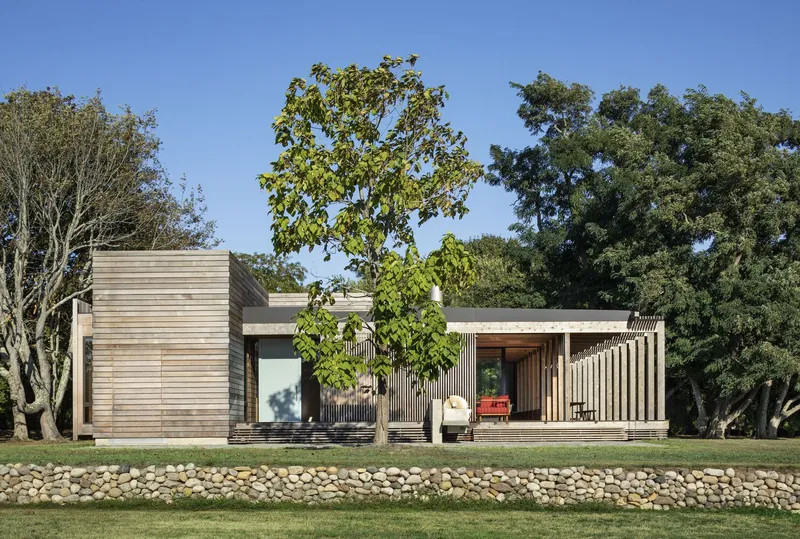
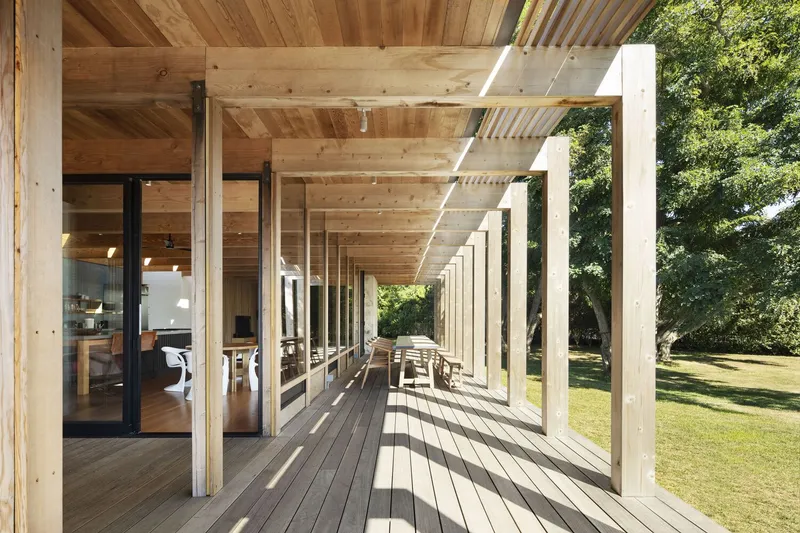
From these needs, the architects conceived a house that reads as a long, hovering porch, a typological reference that anchors the architecture in both function and place. Positioned on the footprint of the original house, the new structure is modestly concealed from the street by trees and hedges, only revealing its expansive, water-facing veranda upon approach.
Materials That Weather with Time
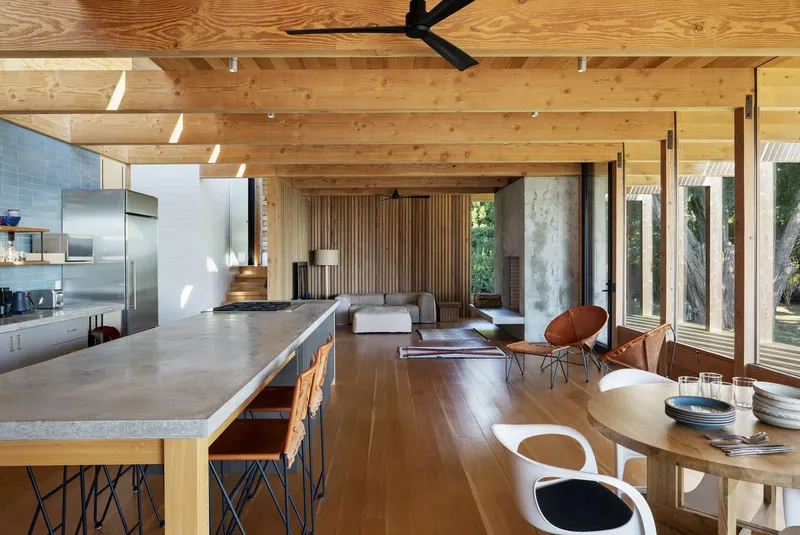
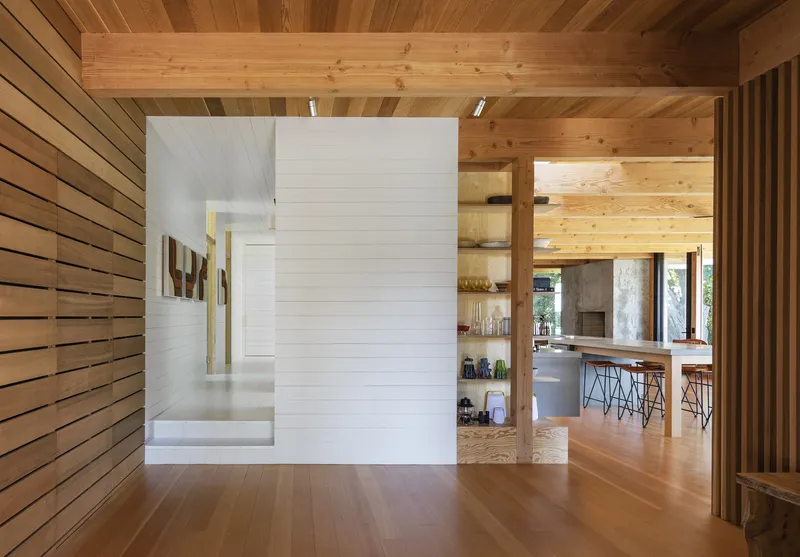
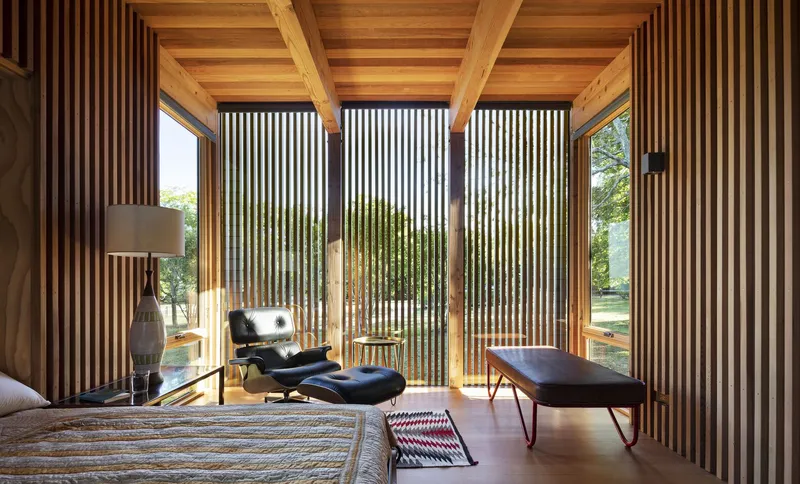
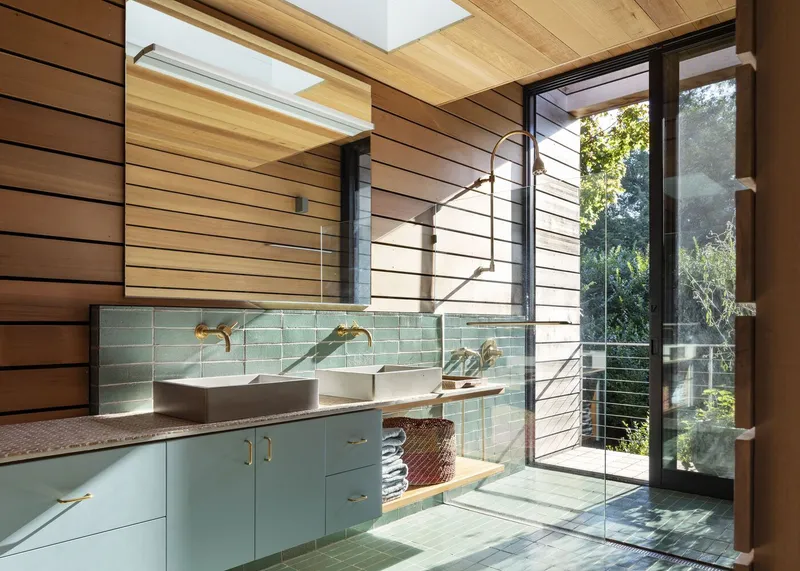
Constructed during the COVID-19 pandemic, the Shelter Island House champions natural materials, climate response, and longevity. Clad in cedar rain screen siding, the exterior is already gracefully weathering to gray, blending seamlessly into its wooded surroundings. Wood siding and exposed concrete, used both inside and out, emphasize the continuity between architecture and landscape, with 30-foot-long beams connecting deep interior spaces to the outward-facing porch.
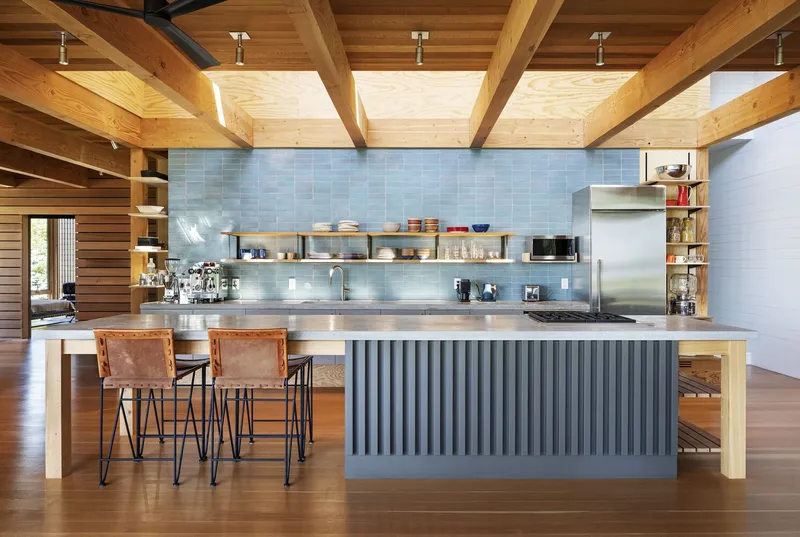
Inside, a clerestory window system allows sunlight to penetrate the home’s heart—the kitchen—while operable wood vents promote passive cooling. During winter, the low sun's angle warms the interiors naturally. The house also incorporates rooftop photovoltaic panels, significantly reducing its reliance on fossil fuels.
Landscape as Living Boundary
Patrick Conlan’s landscape design subtly reshapes the site to support ecological function and privacy without enclosure. A low hedge and crepe myrtle grove filter views between house and street, while a stone platform entry opens directly to ocean views. Cars are parked away from the house, preserving a serene pedestrian experience. There is no permanent irrigation, a decision made in response to local water scarcity, and a young shade tree has been planted to cool the western exposure in years to come.
A Handcrafted, Sustainable Retreat
Above all, the house is a tribute to craftsmanship and site-specific design. The contractor’s expertise in working with wood ensured that the architectural vision translated into a tactile, enduring home. It is a space that ages with dignity—environmentally attuned, deeply contextual, and rooted in both place and family ritual.
All Photographs are works of Michael Moran



Popular Articles
Popular articles from the community


Hill & Cross Opera: Sculptural Opera House Architecture Shaped by Tallinn’s Landscape and Identity
Hill & Cross Opera reimagines opera house architecture in Tallinn through its sculptural hill, civic plaza, glass wave and a luminous cross.

EW PARK: Sustainable Architecture Reimagines the Future of Urban Parking
EW PARK reimagines city parking as a modular wooden tower combining automation, solar energy, electric mobility, and adaptable urban design.

AL-JANNAH: Sustainable Architecture and Permaculture for Afghan Widows
AL-JANNAH uses sustainable architecture and permaculture to create resilient oasis of housing, learning, work and renewal for Afghan widows.

Co-Life: Senior Housing Design That Reconnects Older Adults With the City
Co-Life reimagines senior housing design through healing gardens, shared streets, workshops, and a sustainable community across generations.


Similar Reads
You might also enjoy these articles


Hodi-Mandai Geram
Project Function: Preservation and revitalization of the Intangible heritage and socio-spatial identity of the Hodi by Housing, Cultural Memory Center, Sacred Grove, landscape, local tourism economy


Olio Towers: A Mid-Rise for Performers That Fuses Housing, Rehearsal, and Stage
Located blocks from Houston's Theater District, this modular tower stacks living units around a central performance atrium.

Oasis: Modular Green Housing Carved into Dhaka's Urban Fabric
A shortlisted Plugin Housing entry reclaims unauthorized settlements in Dhaka with stepped concrete volumes, green roofs, and ventilation-driven design.

Black Hole: A Floating Megastructure for the Post-Physical Era
Emiliano Mazzarotto envisions a spherical, self-scaling arena where e-sports, digital hotels, and holographic stadiums replace traditional public space.


Explore Seaside Architecture Competitions
Discover active competitions in this discipline



Challenge to reimagine the Iron Throne


Photograph architecture without architects


Illustrate the lost glory of Angkor Wat - Render Challenge


Design challenge to reuse E-waste
Comments (0)
Please login or sign up to add comments
No comments yet. Be the first to comment!