
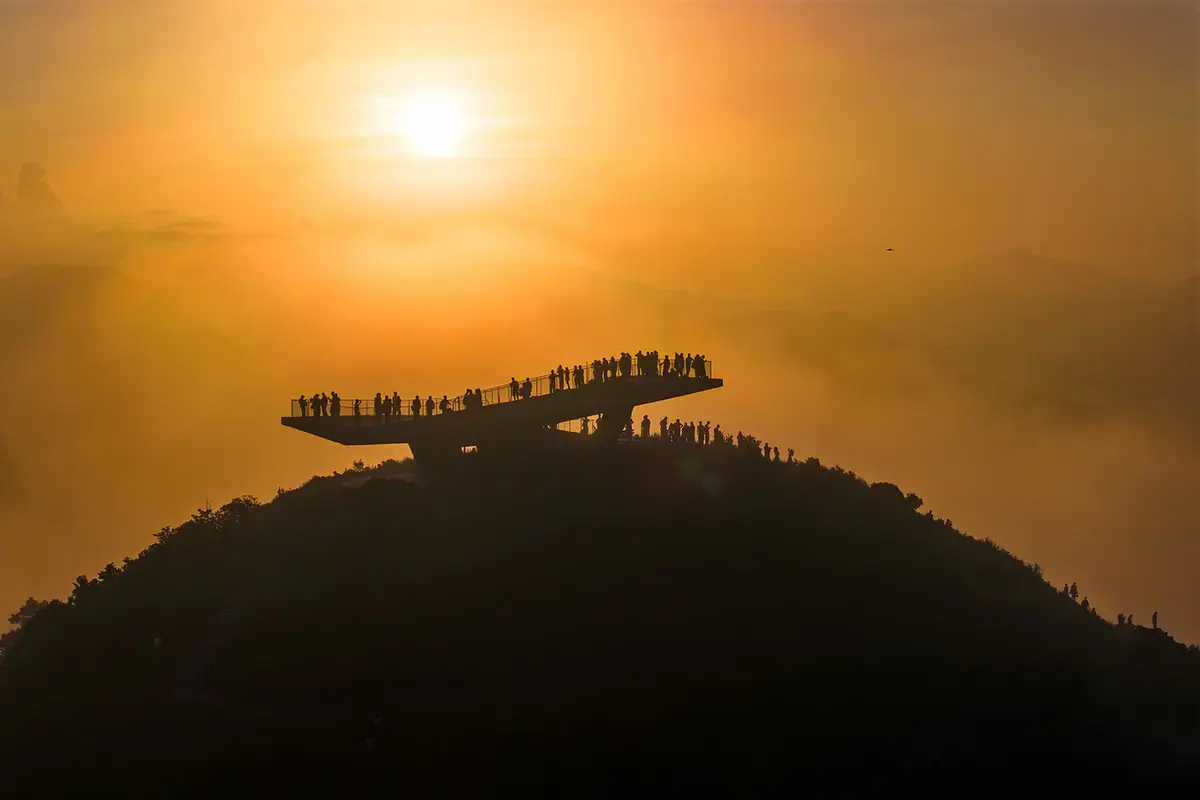
Shenzhen Meishajian Viewing Platform by line+ studio
A low-impact mountain platform blending concrete and landscape, offering panoramic views while minimizing environmental disturbance atop Shenzhen’s rugged Meishajian peak.


A Low-Impact Architectural Landmark in the Mountains of Shenzhen
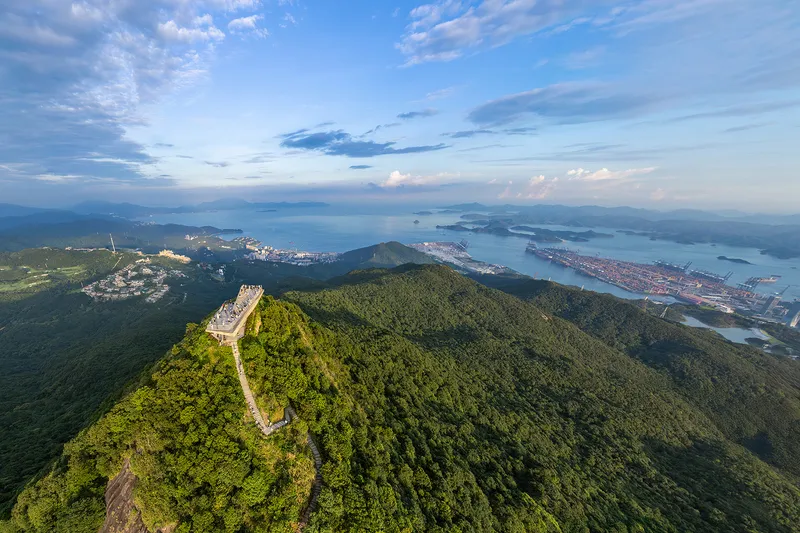
Perched 753 meters above sea level, the Shenzhen Meishajian Viewing Platform by line+ studio transforms one of the city’s most challenging mountain peaks into a subtle yet powerful architectural statement. Situated on Meishajian—the third-highest peak in Shenzhen—the project redefines how architecture can coexist with fragile natural landscapes through a philosophy of “repair rather than build.”
Context and Design Concept
The Meishajian peak is known for its steep trails, exposed bedrock, and easily eroded soil formations, attracting countless hikers yet posing immense construction challenges due to its remote location and limited access. In response, line+ studio was tasked with designing an observation station that would provide rest, shelter, and panoramic viewing opportunities—without disturbing the mountain’s delicate ecosystem.
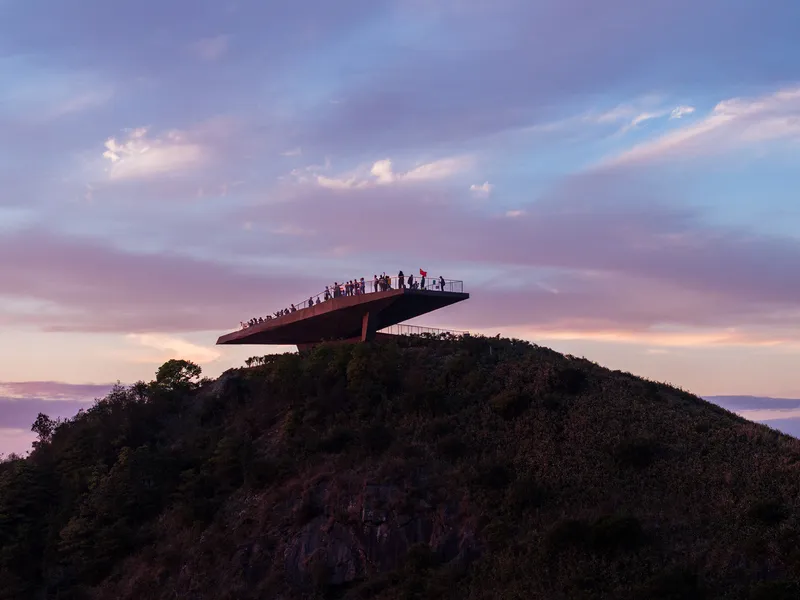
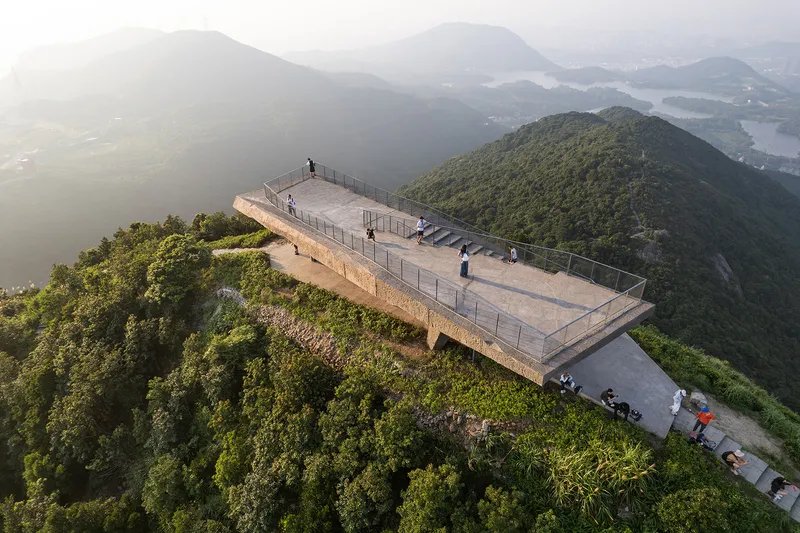
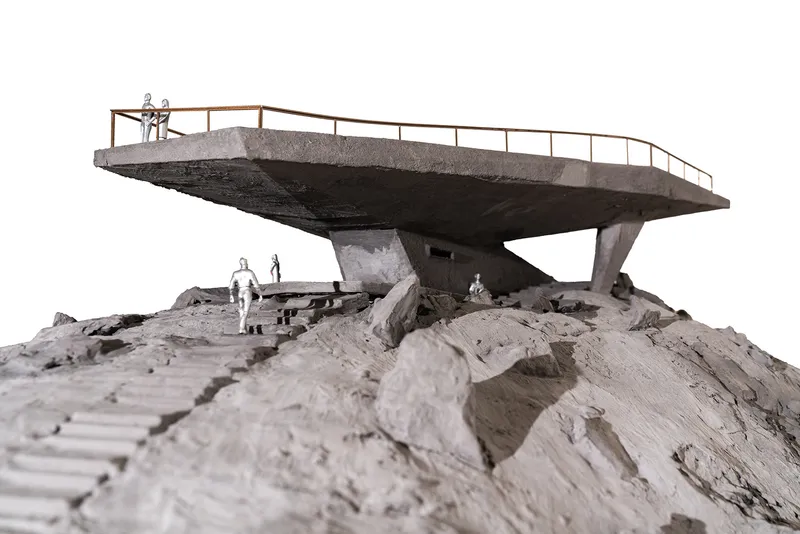
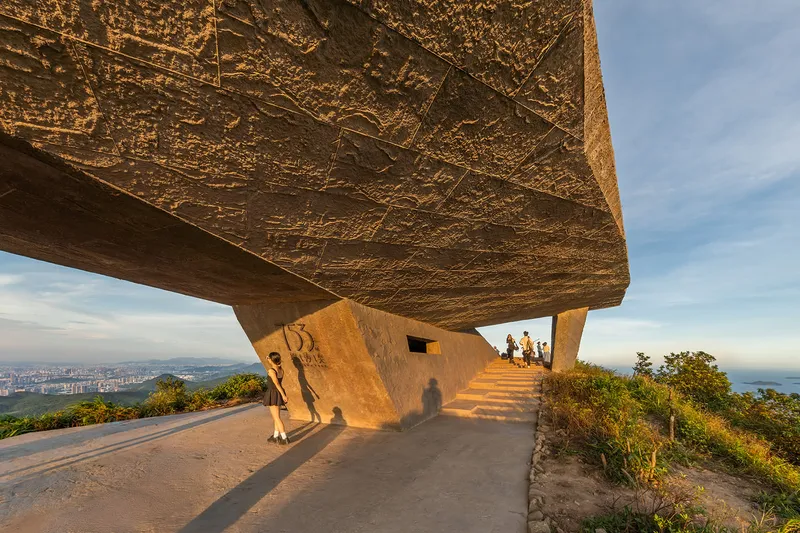
Rather than introducing a conventional architectural icon, the design embraces minimal intervention. The architects opted for a “de-architecturalized” approach, merging the structure with the landscape instead of imposing upon it. The design repurposes a pre-existing three-meter excavation pit left by previous activities, turning it into a sunken zone that houses service and support functions. Above this, a single monolithic structure—an “artificial stone”—was conceived to rise naturally from the ridge, visually continuing the language of surrounding rock formations.
This thoughtful configuration preserves the continuity of the existing hiking paths while creating a seamless viewing platform that feels like an organic extension of the terrain.
Materiality and Construction Strategy
Material selection became the cornerstone of the project’s environmental and aesthetic integrity. Ultra-High-Performance Concrete (UHPC) was chosen for its strength, weather resistance, and longevity, minimizing maintenance requirements over time. Through multiple rounds of prototyping, the team developed a coarse, rock-like surface texture that echoes the mountain’s natural geology.
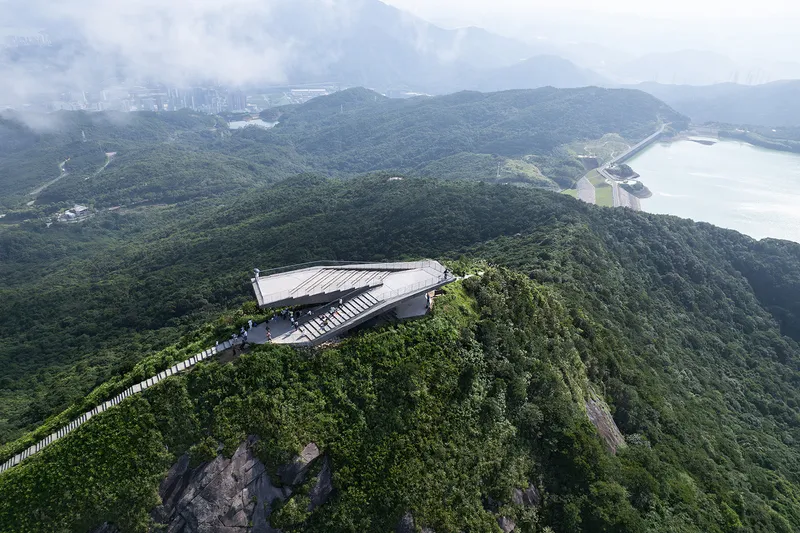
To achieve both durability and precision, the structure combines cast-in-place concrete for stability with a thin UHPC surface layer for refined texture and protection. The result is a structure that blends visually and physically with the surrounding rock, resisting weathering while maintaining visual harmony with its environment.
Extreme Construction Challenges
The Shenzhen Meishajian Viewing Platform has been referred to locally as the city’s “three-most project”—the highest altitude, most complex construction, and most extreme transportation undertaking in Shenzhen. Given the site’s inaccessibility, traditional vehicular delivery was impossible. All construction materials were transported using mules, drones, cableways, and manual relay systems, ensuring that the mountain’s natural environment remained undisturbed.
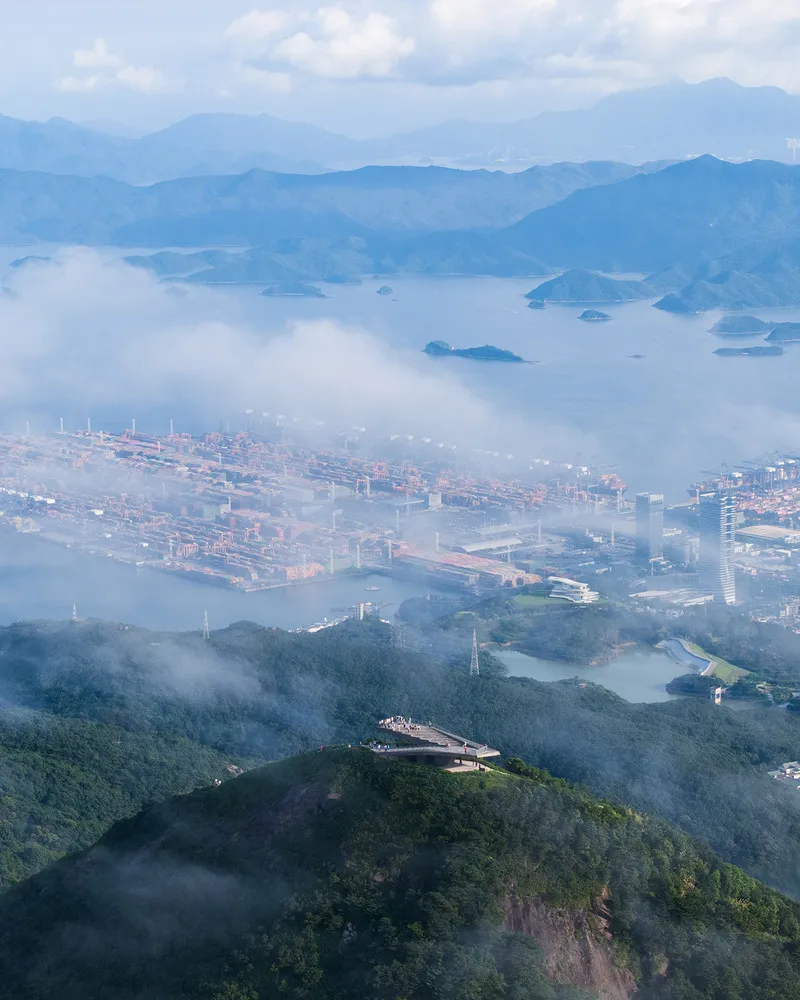
This highly controlled, low-impact construction process demonstrated the team’s commitment to environmental preservation and precision in execution despite logistical adversity.
Architecture That Blends Into Nature
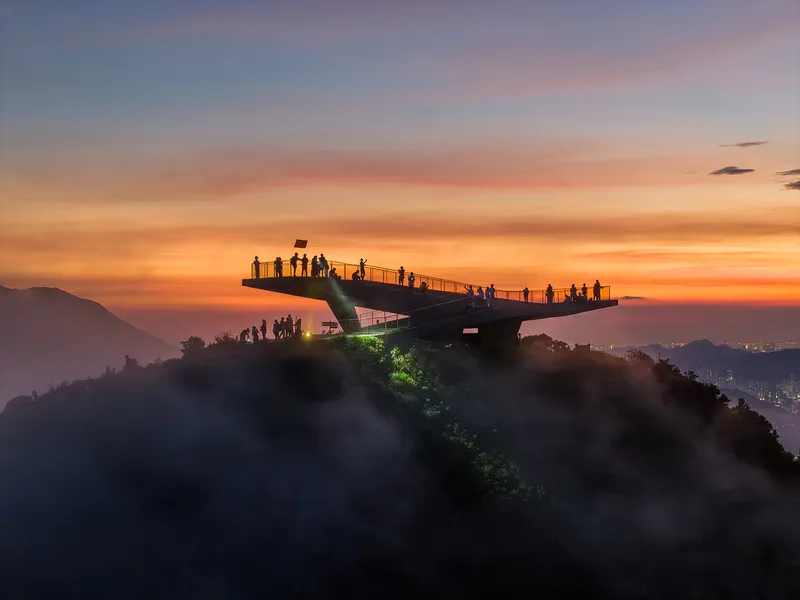
Upon completion, the Meishajian Viewing Platform appears as if it were carved directly from the mountain itself. The monolithic concrete form emerges from the terrain, offering hikers shelter from the elements and a resting place to experience sweeping views of Shenzhen’s skyline and mountain ridges. The structure functions both as a vantage point and a protective refuge, reinforcing the connection between human experience and geological time.
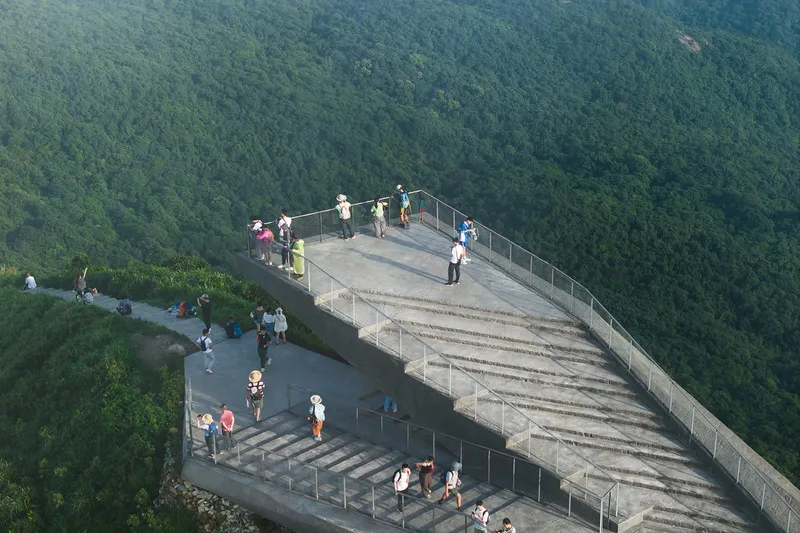
The project exemplifies sustainable mountain architecture, showing how contemporary design can integrate with natural landscapes through adaptive reuse, material innovation, and contextual humility. It reflects a broader commitment to ecological responsibility, proving that architecture in extreme environments can achieve beauty through restraint.
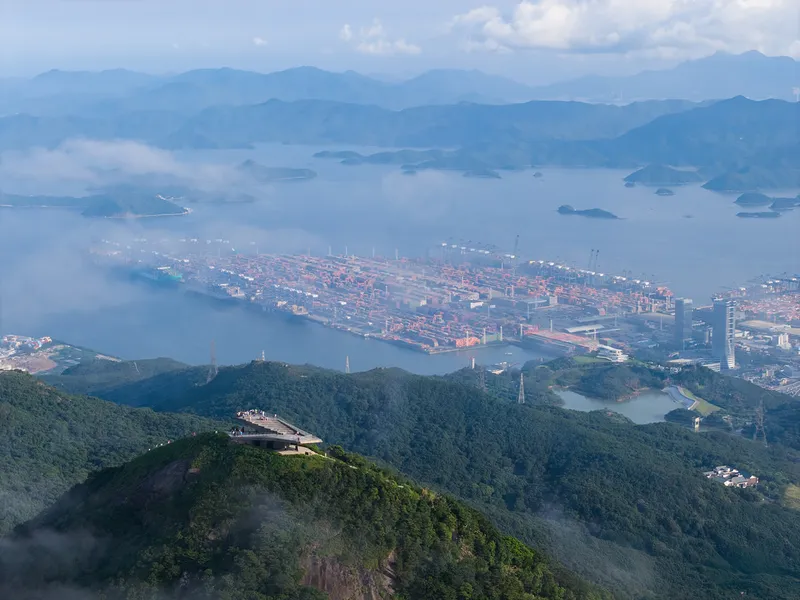
Project Details
Architects: line+ studio Lead Architect: Meng Fanhao Location: Shenzhen, China Area: 300 m² Year: 2025 Photographs: Yu Bai
The Shenzhen Meishajian Viewing Platform stands as a testament to architecture’s ability to enhance, rather than compete with, nature. Through low-impact construction, precise material craftsmanship, and a deep respect for the mountain’s ecology, line+ studio has created an enduring architectural landmark that feels timeless and grounded. It is not just a viewing platform—it is a dialogue between human ingenuity and geological majesty.
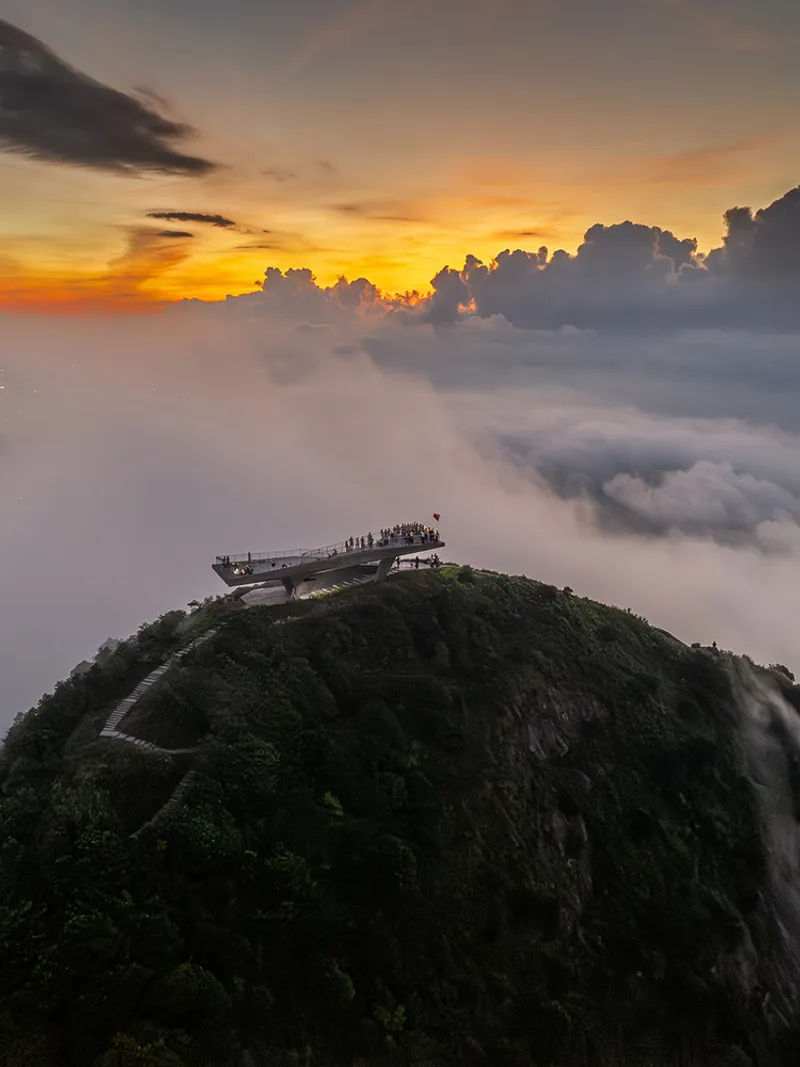
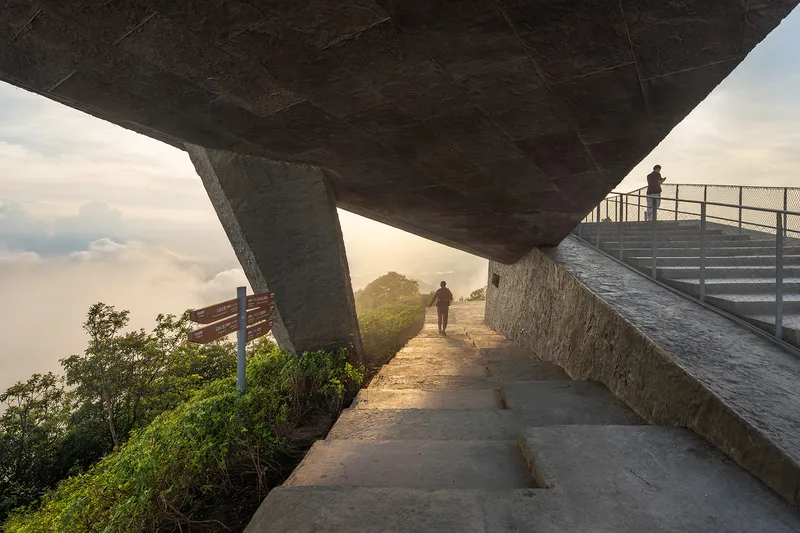
All photographs are works of Yu Bai


Popular Articles
Popular articles from the community


graciastudio Turns a Viewless Tijuana Lot Inward Around a Courtyard of Concrete, Timber and Trees
In Tijuana, Jorge Gracia's GA2 House stacks a timber-clad private floor over exposed concrete and replaces a missing view with a planted interior patio.


Opera on the Sea: Driftwood Logic Shapes a Timber Opera House on Estonia's Coast
Trevor Orgill's opera house translates the entangled drift of floating timber into a civic building where wood, water, and music converge.

Cube Design Draws an Ecological Corridor Between Two Shenzhen Hills with the Nankai Building
Beside Shenzhen's container docks, the Nankai Building pairs stacked balconies with a climbing green screen to connect two hillsides across its height.

FCC Arquitectura Expands a Portuguese Granite House with a Board-Marked Concrete Wing
In Portugal, JV House pairs a cleaned-up whitewashed and granite dwelling with a timber-shuttered concrete extension, courtyards and a garden pool.

Similar Reads
You might also enjoy these articles


Hodi-Mandai Geram
Project Function: Preservation and revitalization of the Intangible heritage and socio-spatial identity of the Hodi by Housing, Cultural Memory Center, Sacred Grove, landscape, local tourism economy


Olio Towers: A Mid-Rise for Performers That Fuses Housing, Rehearsal, and Stage
Located blocks from Houston's Theater District, this modular tower stacks living units around a central performance atrium.

Oasis: Modular Green Housing Carved into Dhaka's Urban Fabric
A shortlisted Plugin Housing entry reclaims unauthorized settlements in Dhaka with stepped concrete volumes, green roofs, and ventilation-driven design.

Black Hole: A Floating Megastructure for the Post-Physical Era
Emiliano Mazzarotto envisions a spherical, self-scaling arena where e-sports, digital hotels, and holographic stadiums replace traditional public space.

Explore Landscape Design Competitions
Discover active competitions in this discipline

Challenge to reimagine the Iron Throne

Photograph architecture without architects

Illustrate the lost glory of Angkor Wat - Render Challenge

Design challenge to reuse E-waste
Comments (0)
Please login or sign up to add comments
No comments yet. Be the first to comment!