

Shikoku Mura Entrance Design: A Gateway to Cultural Heritage
The article explores the design and architectural innovation of the "Oyane-San" Shikoku Mura Entrance by kousou.


The Shikoku Mura Entrance Design project by kousou architects represents a remarkable blend of innovation, tradition, and sustainability. Situated at the northern tip of Shikoku Island, Japan, this architectural masterpiece serves as the gateway to Shikoku Mura, an open-air museum dedicated to the preservation of the region's traditional houses. This article delves into the intricacies of the design and the architectural philosophy behind this transformative project.
The Architectural Challenge and Solution
The Context and Inspiration
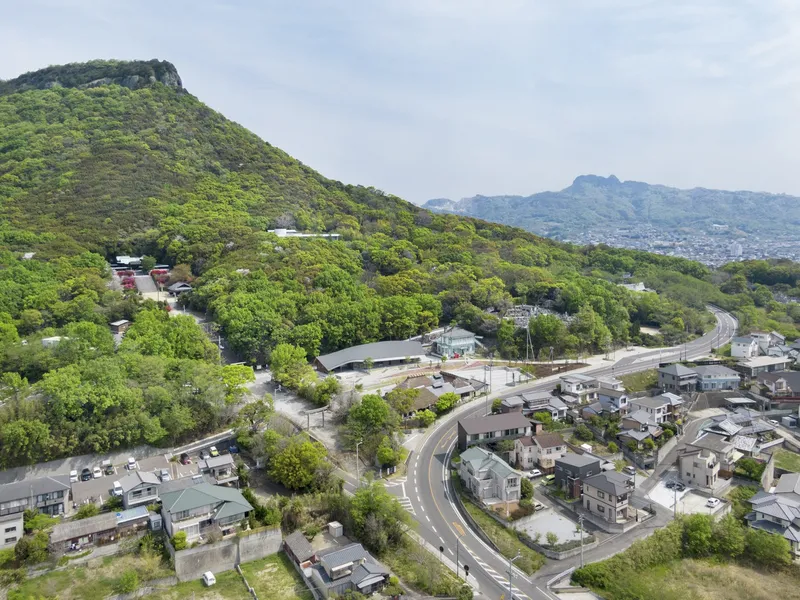
Nestled amidst the scenic backdrop of Mt. Yashima and the Seto Inland Sea, the project's site held a profound historical significance and a complex set of design challenges. The architects were tasked with transforming a mundane parking lot into a vibrant entrance complex that included information spaces, ticketing, restrooms, and a shop. The goal was not merely to create a building but to forge a seamless spatial narrative that connected the museum's disparate elements.


Integrating the Landscape
Collaboration with landscape planners from EAU was pivotal in reclaiming the original sloping topography buried under the parking lot. This strategic reshaping facilitated a natural progression towards the museum, enhancing the visual and spatial dialogue between the entrance and the adjacent traditional udon restaurant, Waraya.


Architectural Concept and Execution
A Symbol of Renewal
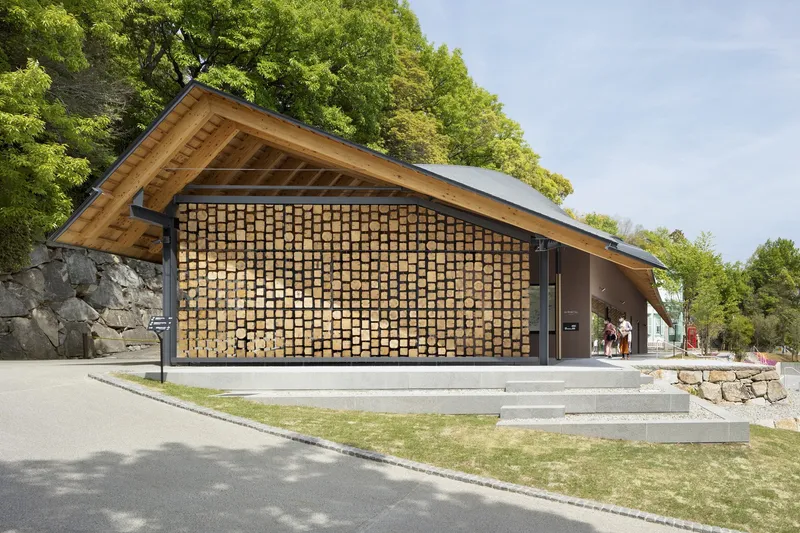
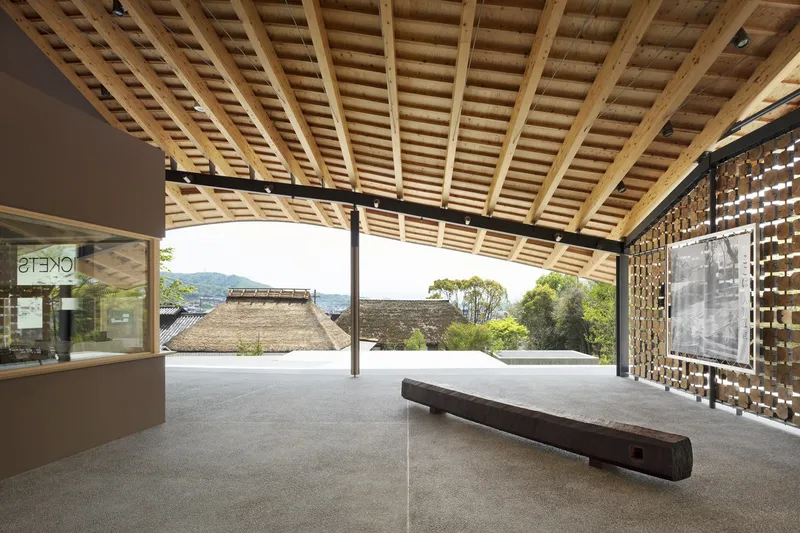
The design ethos centered around creating a structure that was both emblematic of renewal and deeply rooted in local tradition. The architects opted for a simple yet striking two-story configuration, with the lower level comprising reinforced concrete and the upper level adorned with a distinctive gabled roof made of 47 pairs of glulam beams. This innovative approach allowed for an organic silhouette that resonated with the essence of a living entity, aptly earning the building its nickname, "Oyane-san" or "big roof."


Sustainable Materiality
The project's sustainability narrative is compellingly told through the west façade, which marries aesthetic elegance with ecological consciousness. Repurposed 300-year-old columns and beams from a traditional house damaged in the 2011 Tohoku Earthquake were transformed into façade tiles. This not only provided shade but also created a mesmerizing light effect, akin to stained glass, celebrating the imperfections and unique characteristics of the old materials.


Dual Purpose and Cultural Impact
Oyane-san stands as a testament to the power of architecture in curating cultural experiences. It functions as both an informative gateway for visitors entering Shikoku Mura and a reflective space for knowledge consolidation upon exit. The building's recognition during the Seto Art Triennale further underscores its role in enhancing cultural exposure and appreciation for the architectural heritage of Shikoku.


The Shikoku Mura Entrance Design by kousou architects exemplifies how architectural interventions can transcend mere physical structures to become poignant narratives of culture, history, and sustainability. This project not only redefines the entrance to a museum but also serves as a beacon of architectural innovation, firmly rooted in the rich tapestry of Japanese tradition.

All photographs are work of Takumi Ota




Popular Articles
Popular articles from the community


Play: Fragments of Their World
Familiar architecture becomes modular playground design, creating safe spaces where displaced children can learn, connect, imagine and play.

Co-life: Sustainable Architecture for Age-Friendly Community Living
Co-life reimagines sustainable architecture for seniors through courtyards, rammed earth, shared gardens, and spaces designed for belonging.

Lunar Spiral: Space Architecture Shaped by the Mathematics of the Universe
Lunar Spiral reimagines space architecture through Fibonacci geometry, lunar regolith, levitating habitats, and self-sustaining Moon living.

Co-Life: Senior Housing Design That Reconnects Older Adults With the City
Co-Life reimagines senior housing design through healing gardens, shared streets, workshops, and a sustainable community across generations.


Similar Reads
You might also enjoy these articles

FAMM Arquitectura Organizes Ten Villas Around Courtyards and Jungle in Nosara, Costa Rica
El Molino pairs two elongated volumes with deep overhangs and timber louvers to build a compact coastal community five minutes from the beach.
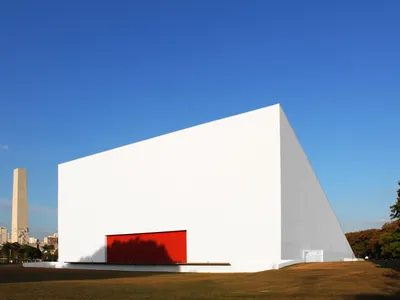
Oscar Niemeyer's Ibirapuera Park Pavilions Define São Paulo's Cultural Identity in Concrete and Curve
A constellation of modernist volumes set within São Paulo's most important urban park, conceived for the city's 400th anniversary in 1954.
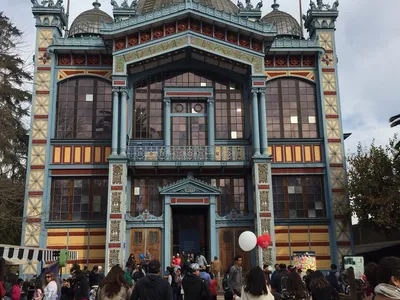
How Henri Picq's 1889 Paris Pavilion Traveled 11,000 Kilometers to Become Santiago's Artequín Museum
A prefabricated iron and glass pavilion built for the Paris Universal Exposition found a second life as a children's art museum in Chile.
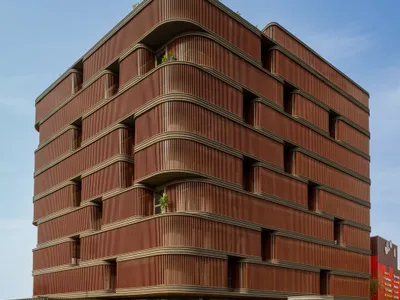
Sanjay Puri Architects Wraps a Jaipur Office Tower in Capsule-Shaped Green Buffers
A nine-level climate-responsive workplace near Jaipur Airport uses stacked planter terraces and aluminium screens to fight 40°C heat.


Explore Cultural Architecture Competitions
Discover active competitions in this discipline



Challenge to reimagine the Iron Throne


Photograph architecture without architects


Illustrate the lost glory of Angkor Wat - Render Challenge


Bring back Drive In's
Comments (0)
Please login or sign up to add comments
No comments yet. Be the first to comment!