

Shulin Architectural Design Converts a Village Power Station into a Riverside Restaurant in Ningbo
A former power station in Qixiakeng Village becomes a layered dining experience built from rammed earth, timber, and stone above a rocky stream.


At the entrance to the ancient Qixiakeng Road in Fenghua, a narrow valley once known as Peach Blossom Pit funnels a stream between forested mountains. Residential buildings line both banks, and at one bend a disused power station sat half-forgotten above the boulders. Shulin Architectural Design, led by Lin Chen and Dongying Liu, saw the ruin not as something to demolish but as a structural armature worth inhabiting again. The result is a 424-square-meter restaurant that reads less like an insertion and more like a geological event: rammed earth walls rise from a stone retaining wall, timber volumes cantilever over a cascading waterfall, and clay tile roofs slot between the neighboring pitched forms of the village.
What makes this project genuinely compelling is the refusal to choose between preservation and invention. The building stacks at least three stories across a steeply sloping site, using the grade change to create distinct dining experiences at every level. From the stream below it looks monumental; from the village path above it folds into the domestic grain. The material palette, rammed earth, rubble stone, washed-stone aggregate, micro-cement, terrazzo, solid pine, is drawn almost entirely from the Jiangnan vernacular, yet the spatial sequences inside are anything but traditional.
Sitting Over Water
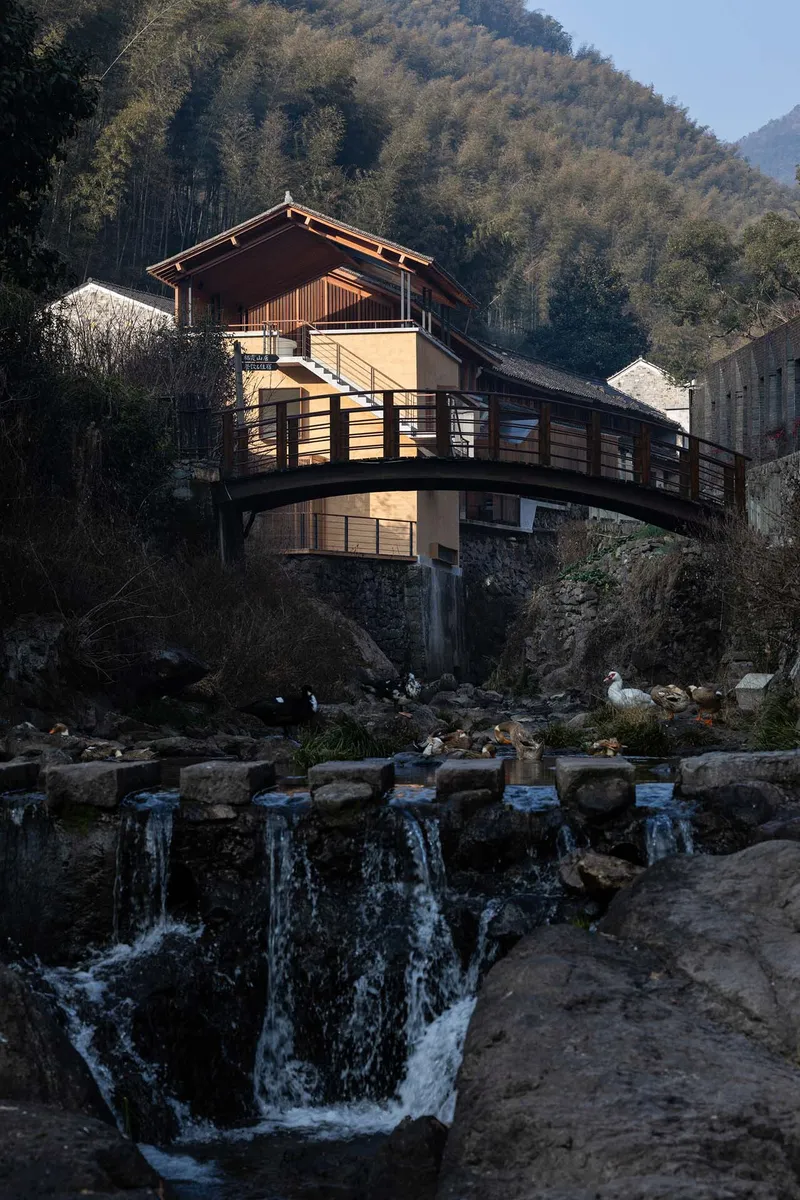
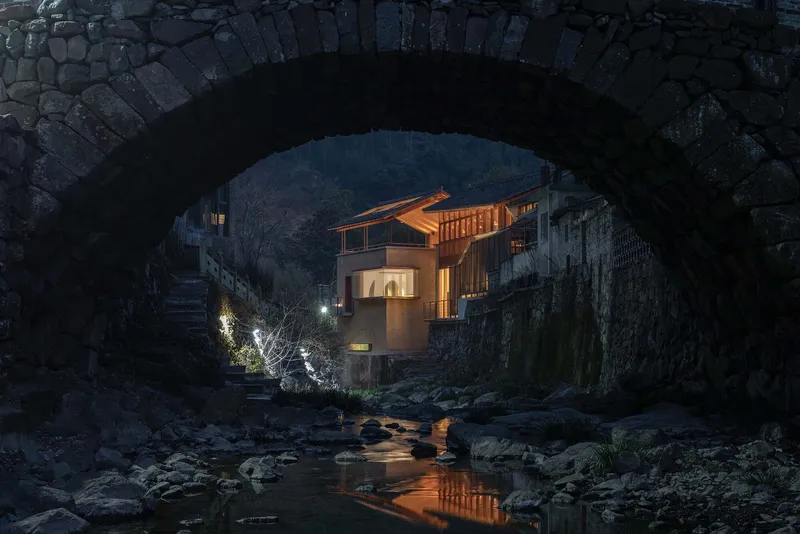
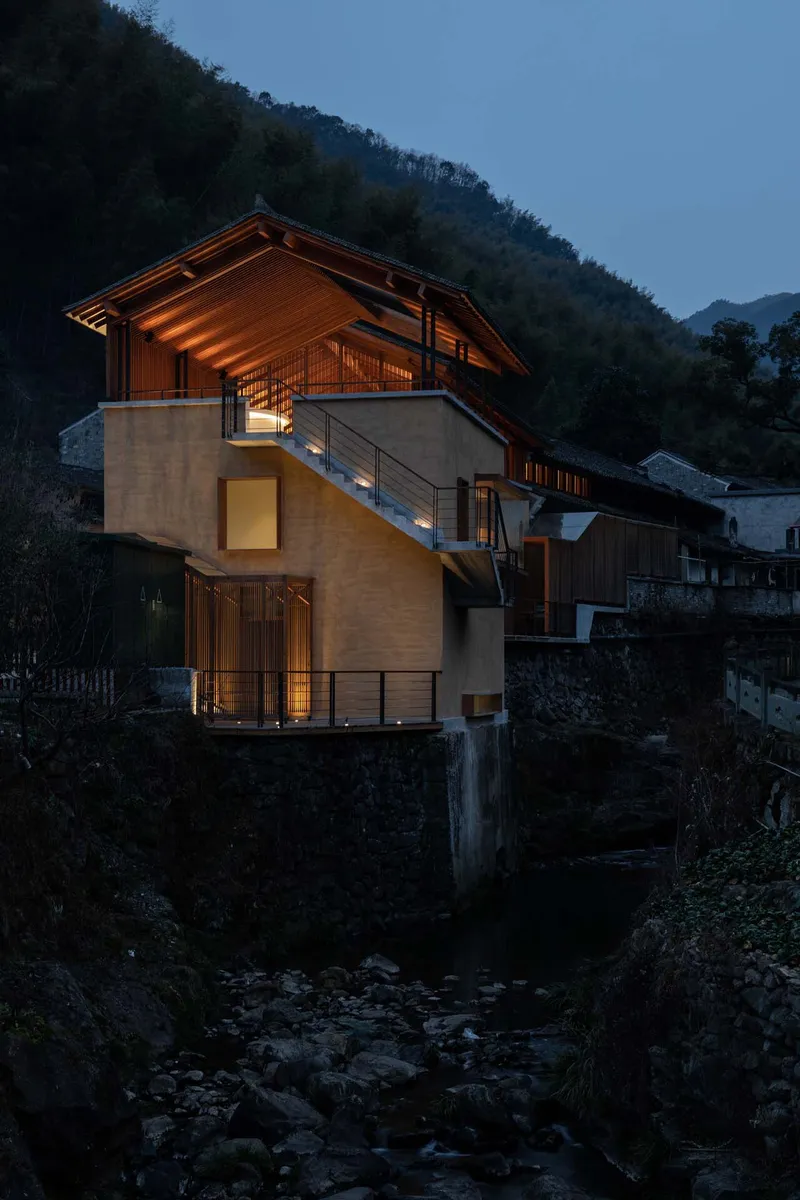
The building's most dramatic gesture is its relationship to the stream. A rammed earth tower and a timber-clad upper story span directly over the cascading waterfall and boulder-strewn streambed. Viewed from beneath the stone arch bridge, the illuminated facade at dusk registers as both massive and permeable. The heavy earthen walls absorb the sound and moisture of the water below while the timber cladding catches the last light filtering through the canyon. It is a position no new-build restaurant could occupy, one earned only by inheriting the power station's improbable siting.
That inherited position also defines the structural logic. The original stone retaining wall becomes the base from which the new volumes grow, stepping up the hillside in a series of gabled forms. Each step corresponds to a change in level inside, so diners move through a sequence of thresholds rather than sitting in a single open room.
Rammed Earth and Village Grain
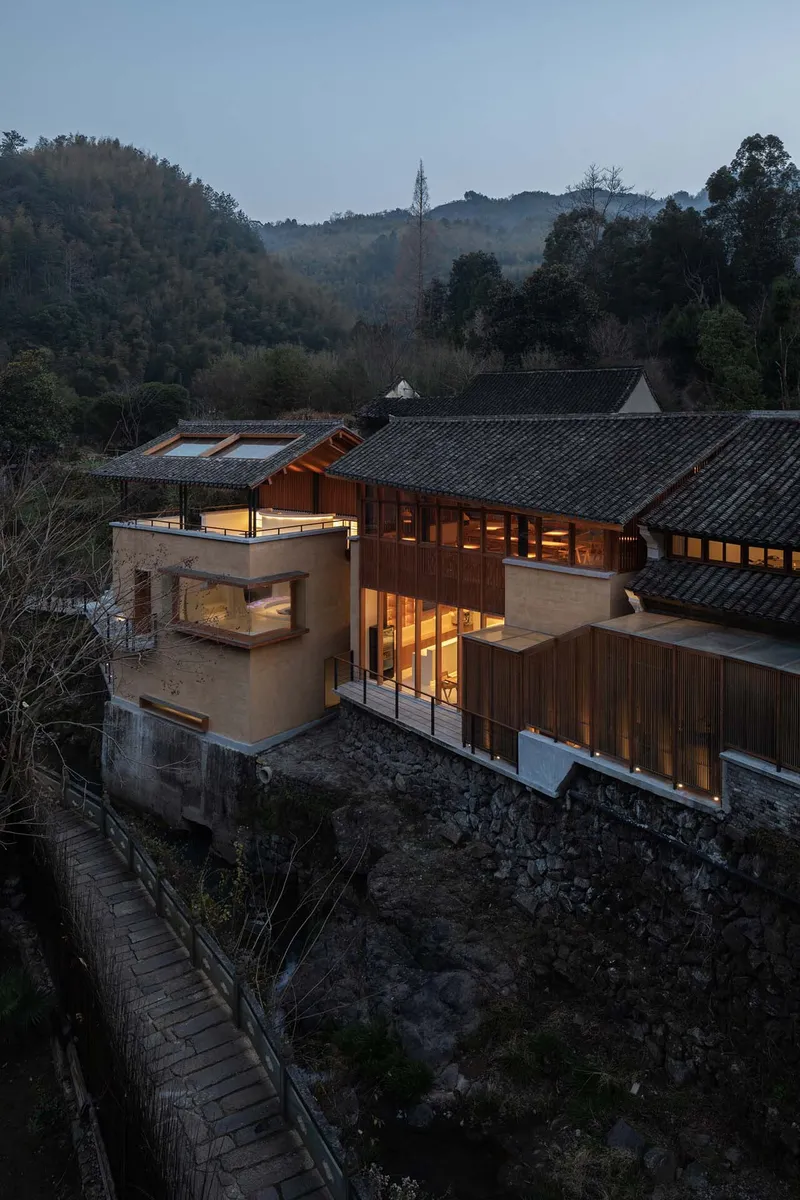
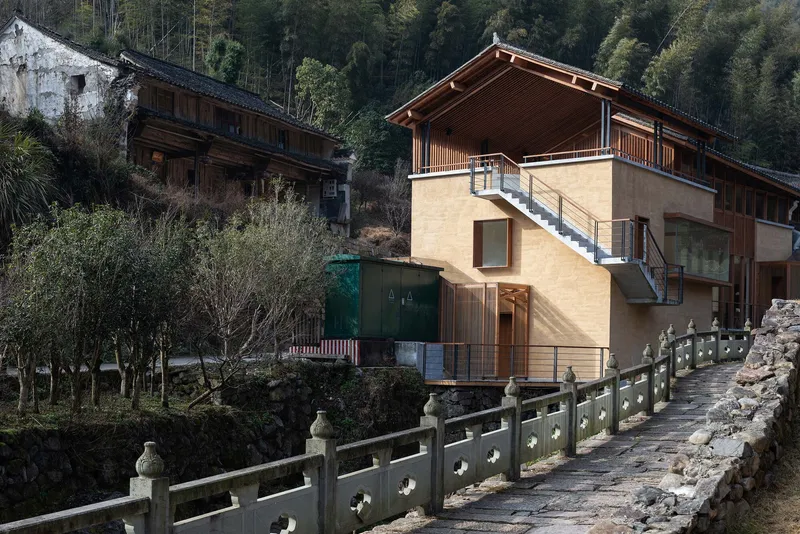
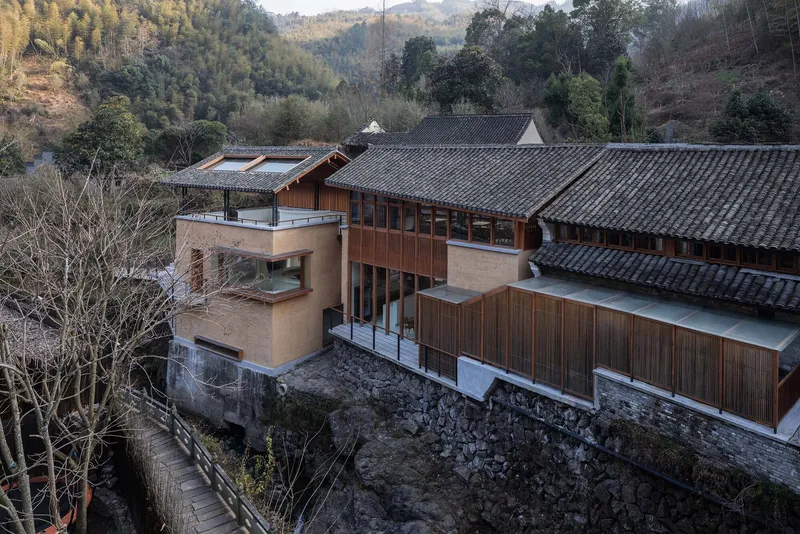
From above, the building dissolves into the village. Its clay tile roofs match the pitch and color of the surrounding houses, and the rammed earth walls, built with visible strata of local aggregate, sit comfortably next to the rendered masonry of neighboring structures. The external stair wrapping the tower face is a deliberate nod to the village's narrow lanes and ad-hoc vertical circulation. Shulin understood that in a settlement this dense, any new architecture must negotiate its edges carefully or risk reading as an interloper.
The tower itself is the project's hinge: it is both the most visible element from the stream below and the most embedded piece when seen from the village path. Its earthen surface weathers in a way that concrete or steel never could, absorbing rain and moss and slowly calibrating itself to the palette of the valley.
Timber Screens and Filtered Light
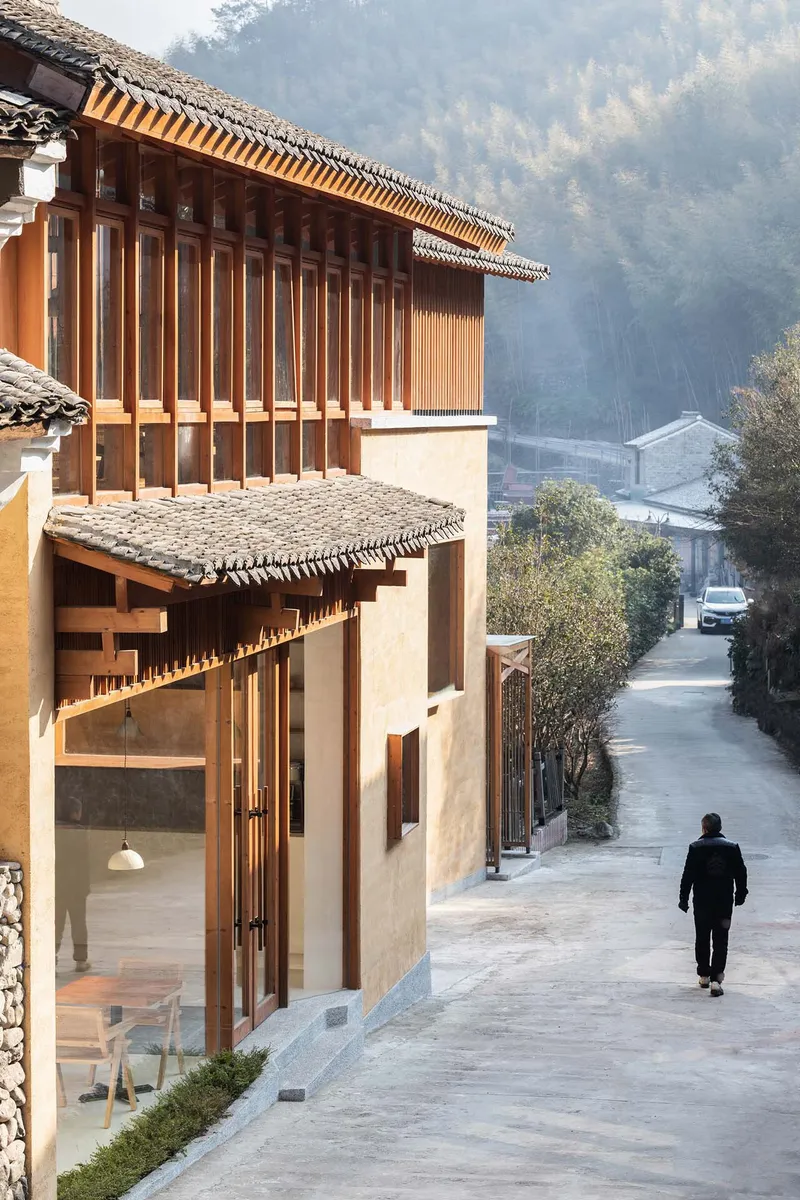
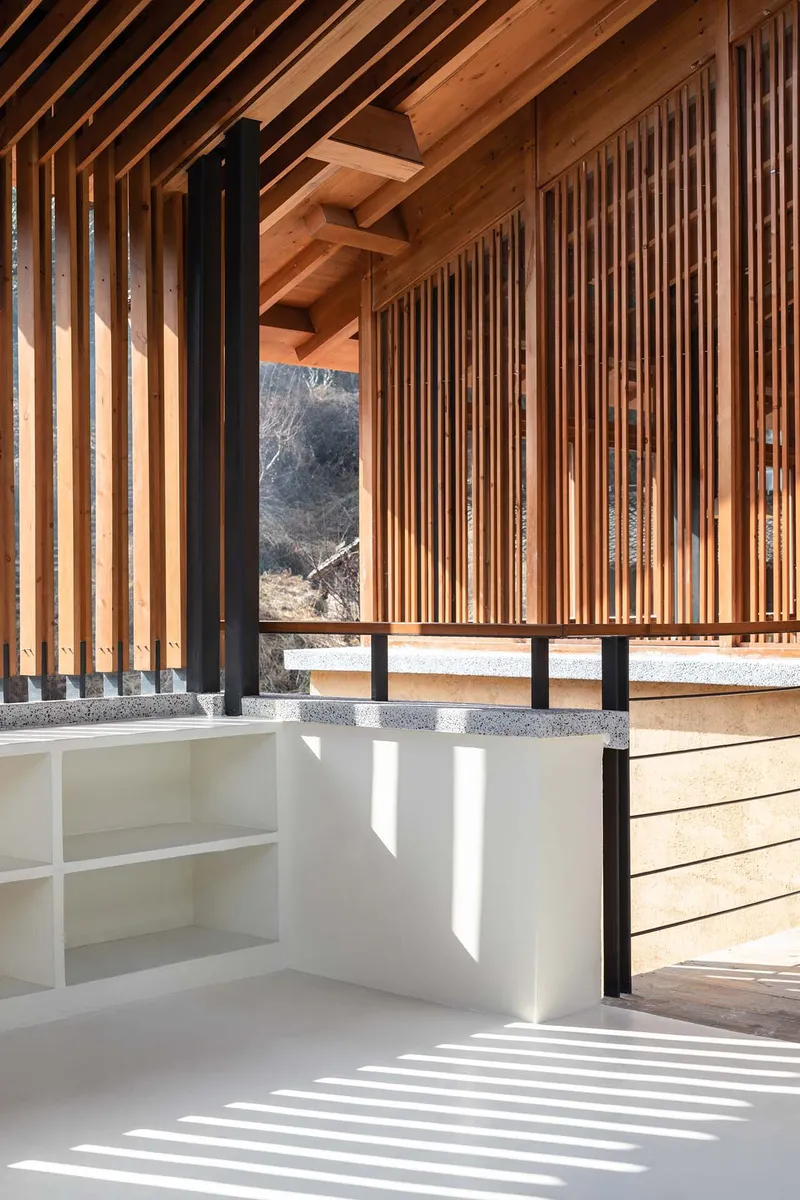
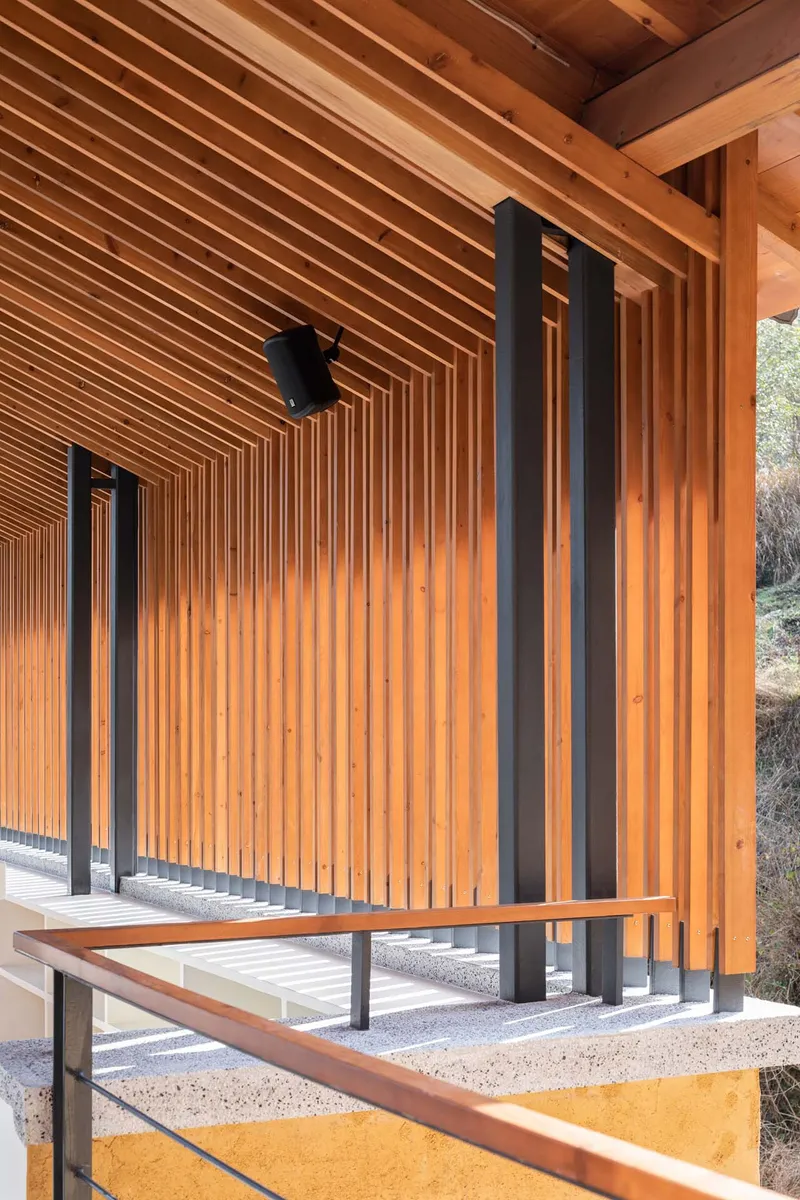
Vertical timber slats appear repeatedly across the facades and terraces, working as privacy screens, rain guards, and light filters simultaneously. On the street-facing elevation, a slatted canopy with a tiled overhang creates a threshold zone between the village path and the restaurant interior. The covered terrace deploys the same slat module overhead, casting diagonal shadow patterns across white flooring that shift through the day. Slender black steel columns support these lightweight timber elements, creating a deliberate contrast with the mass of the rammed earth below.
The effect is atmospheric without being theatrical. Pine slats diffuse harsh mountain sunlight into a warm ambient glow, and because the slat spacing varies by orientation, each terrace has its own quality of filtered view. You never lose sight of the forested hillside, but you experience it through the building rather than despite it.
Courtyards and Thresholds
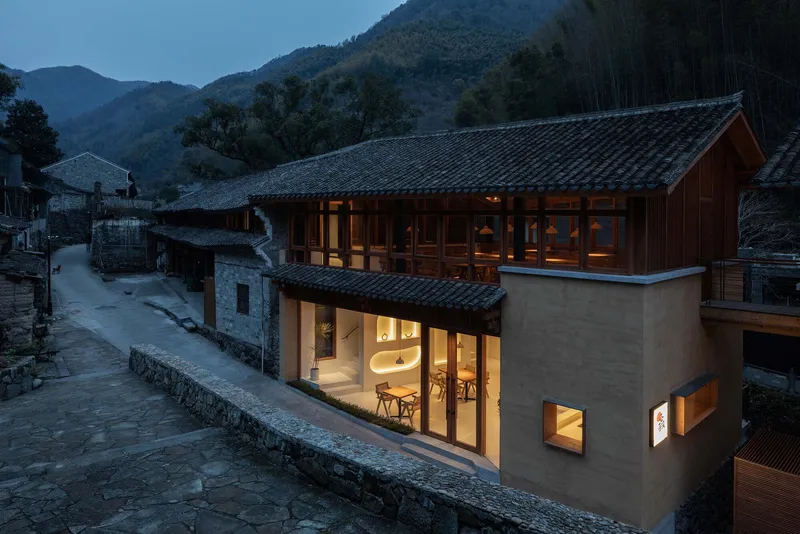
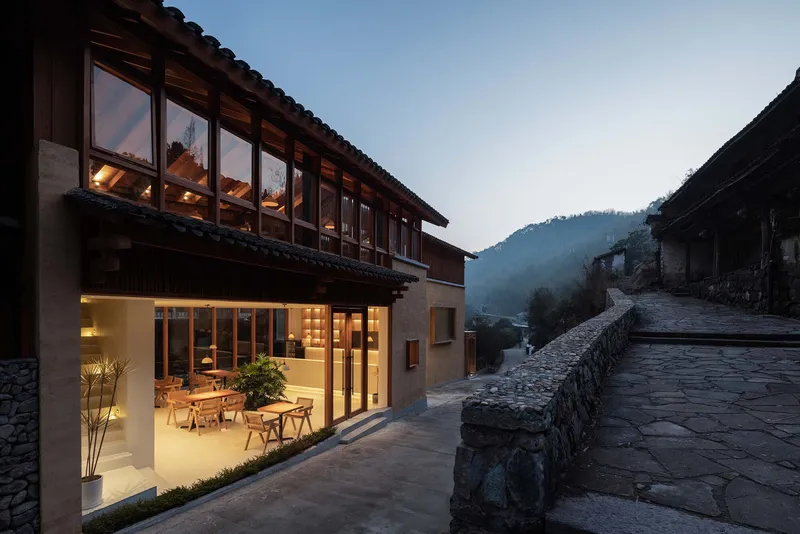
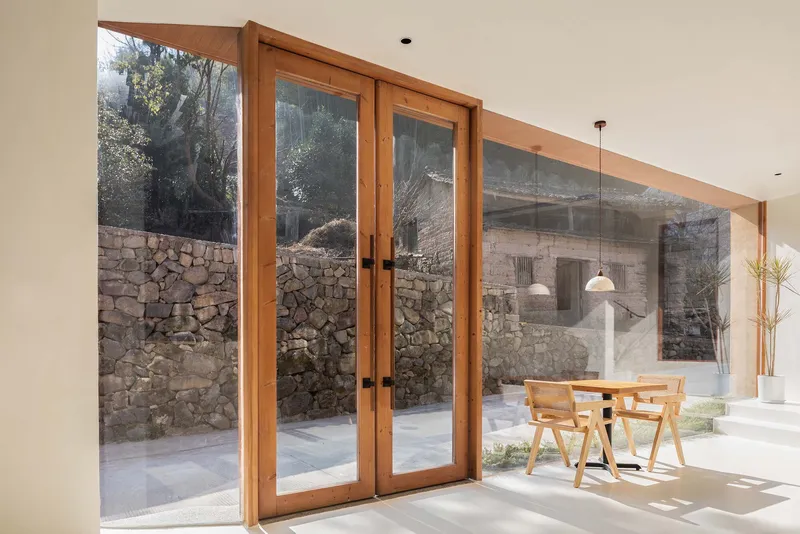
The building wraps around at least one interior courtyard, creating a protected outdoor room framed by stone walls and timber-framed glazed doors. A curved facade with large glazed openings follows the village path, its plastered surface picking up the warm tones of twilight. On the opposite side, a flagstone courtyard with a recessed terrace and full-height windows opens up the ground floor to morning mist. These in-between spaces are where the conversion from power station to restaurant is most legible: the old building's utility, its thickness and opacity, is punctured by new openings that bring landscape inside.
Dining Rooms with Depth
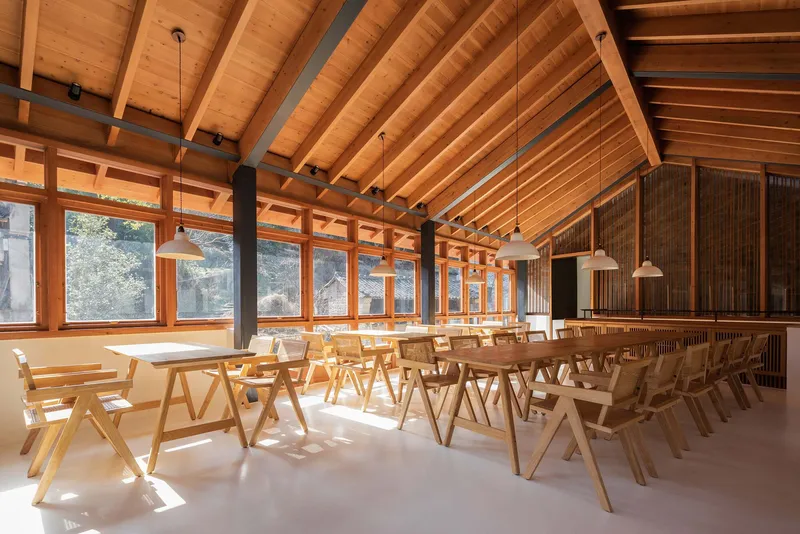
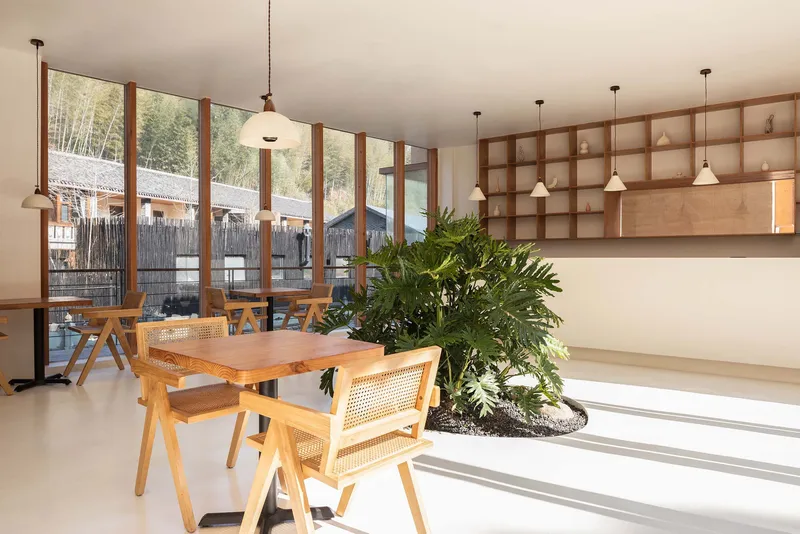
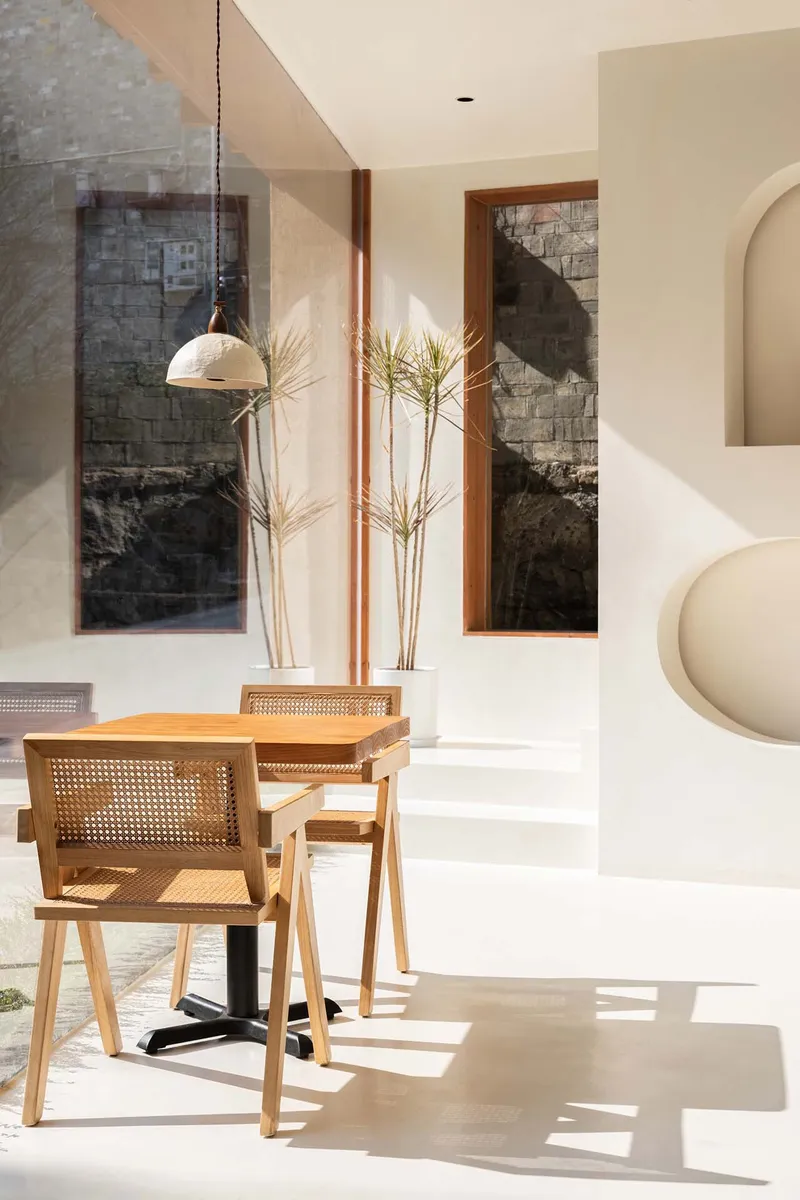
Inside, the dining spaces are layered rather than open-plan. One hall features exposed timber rafters with continuous glazing at its edges, so the roof structure becomes the primary visual event while the landscape remains peripheral. Another room sets a planted bed beneath windows alongside gridded timber shelving and pendant lights, collapsing the boundary between kitchen garden and dining table. Cane-back chairs catch morning sunlight beside tall windows that frame a dry-stacked stone courtyard wall, a detail that makes the material construction of the building itself part of the dining experience.
There is a deliberate informality to the furnishing: mismatched chair types, potted plants set directly on the floor, shelving that feels more domestic than commercial. The architecture does the heavy lifting; the interiors simply make it comfortable to linger.
Alcoves, Arches, and the Upper Levels
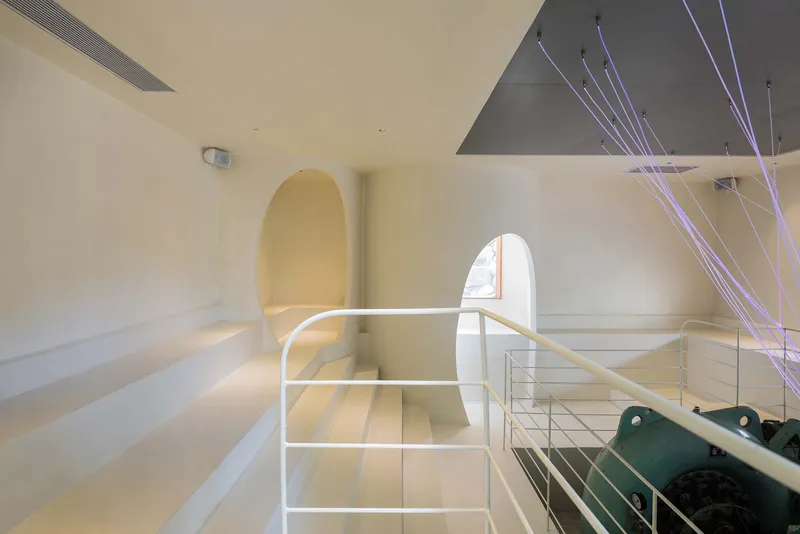
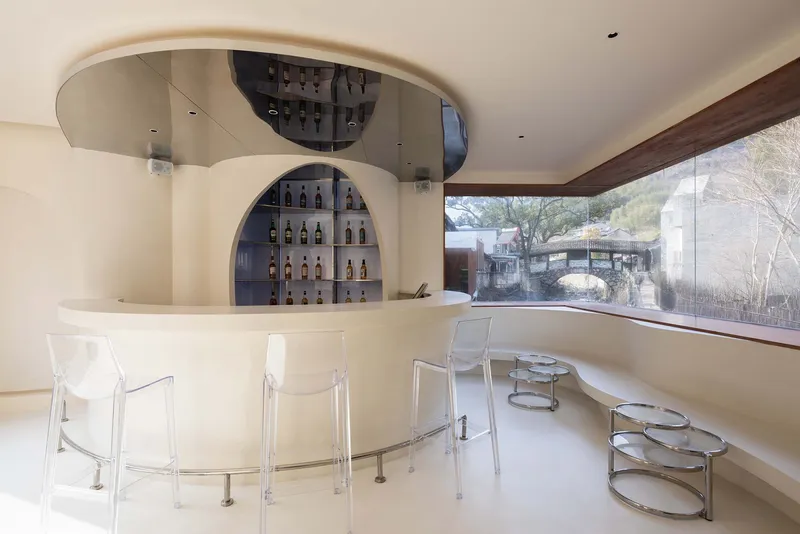
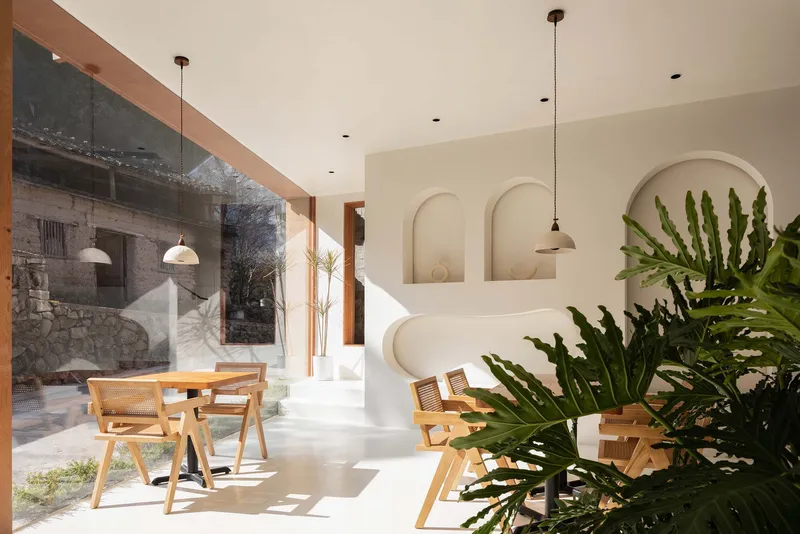
The upper levels introduce a different spatial register. White tiered seating platforms beneath arched doorways create amphitheater-like pockets where small groups can gather. A curved bar with an arched display niche overlooks the hillside through a generous glazed window, and transparent acrylic chairs keep the foreground weightless. White-plastered alcoves with arched niches sit adjacent to planted dining areas, as if the building were borrowing its formal language from village church architecture and redeploying it for conviviality.
The fiber-optic light installation visible through a glass railing from the upper level suggests that the architects were not afraid of spectacle when the moment called for it. But even here, the palette stays restrained: white surfaces, timber ceilings, suspended cable lighting. The drama comes from volume and section, not from applied ornament.
Terraces Above the Canopy
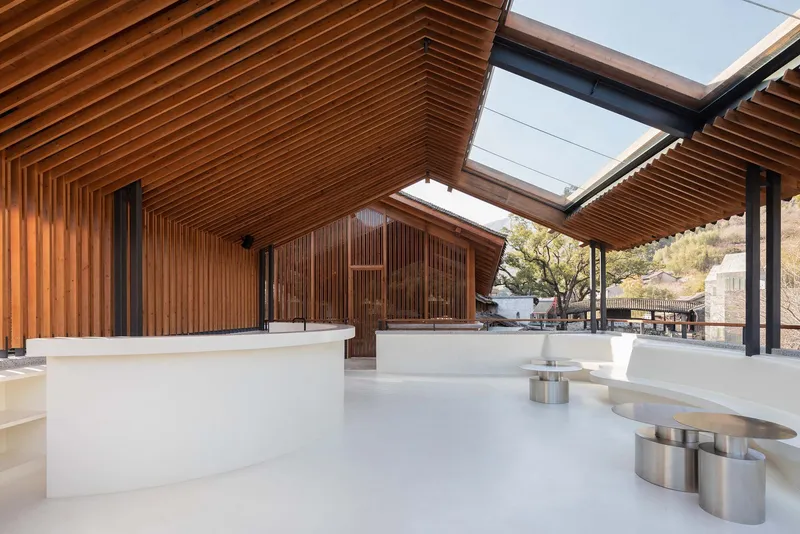
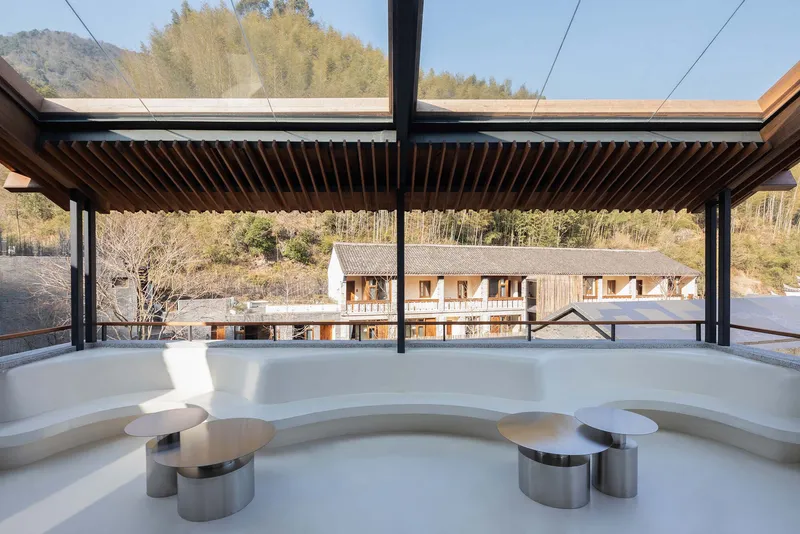
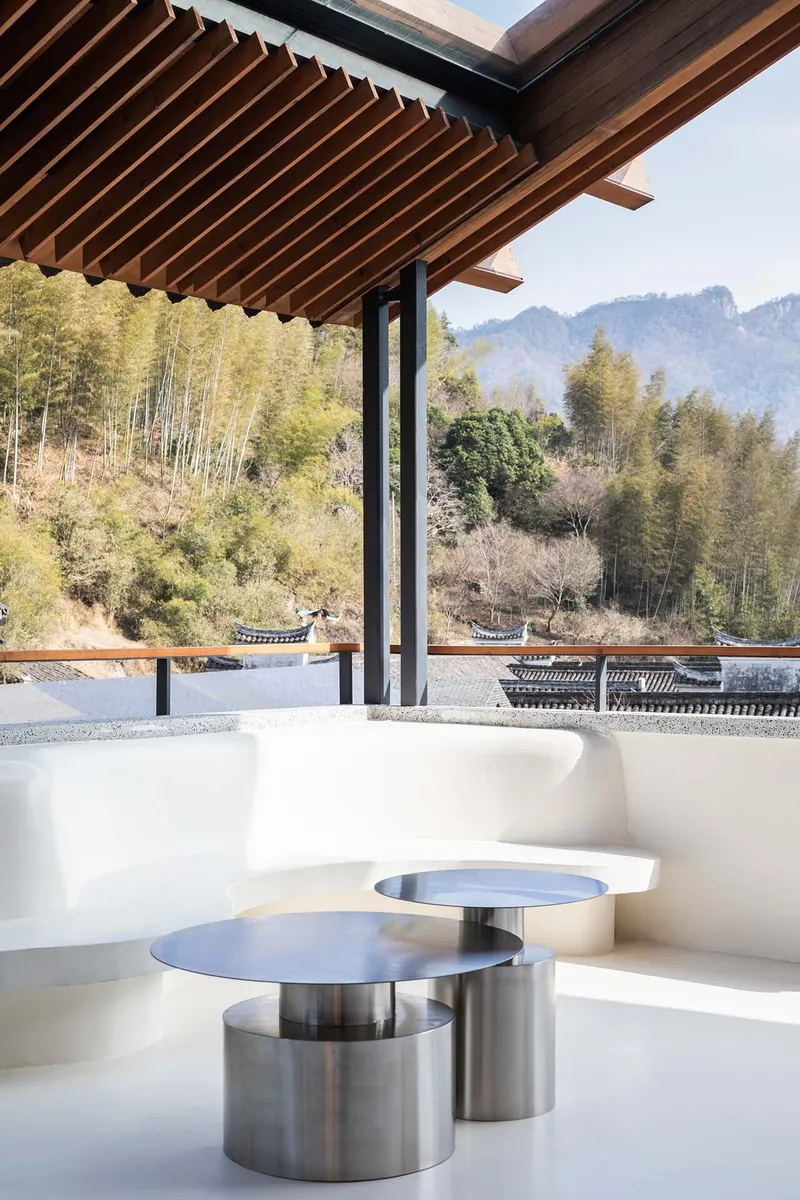
At the uppermost levels, open-air pavilions with timber louvered ceilings and skylights sit above the tree line, offering views across the forested hillside. White terrazzo seating platforms and brushed steel low tables give these spaces a clarity that contrasts with the textured earthiness below. A curved white seating alcove under a slatted timber canopy frames the village rooftops in the distance, turning the restaurant's own context into its best amenity.
These terraces are the payoff for the building's vertical ambition. Because the site drops so steeply, climbing through three stories of dining rooms eventually deposits you above the canopy with a panorama of the entire Qixiakeng valley. It is the kind of spatial reward that only a section-driven design can deliver.
Plans and Drawings
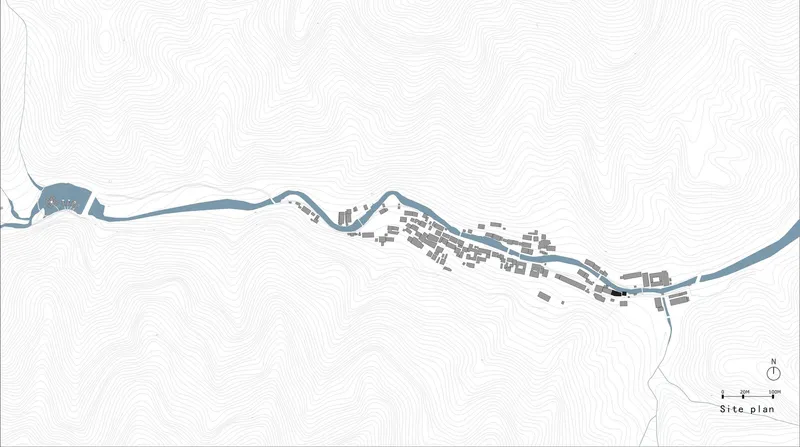
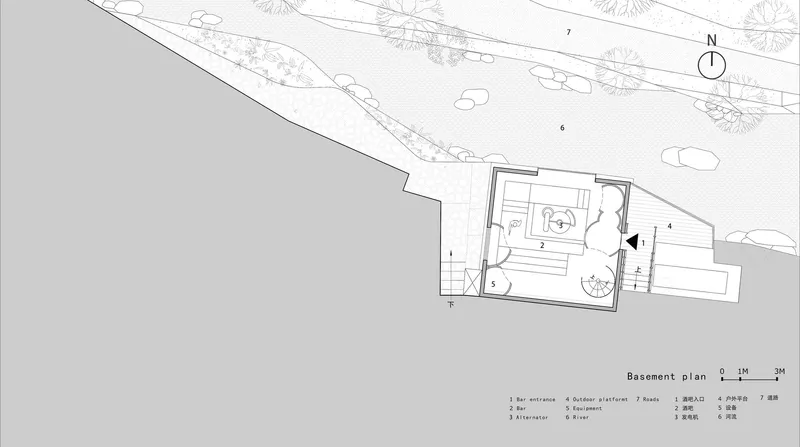
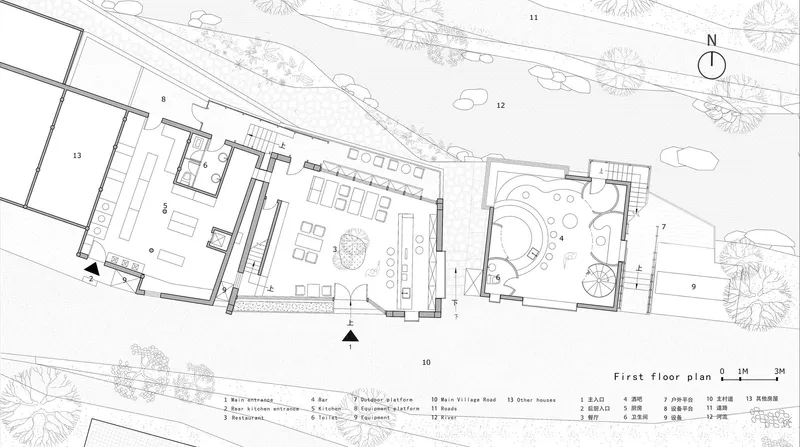
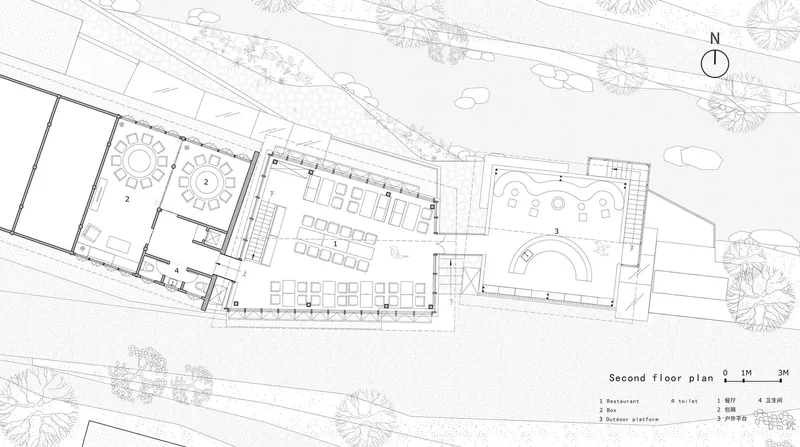
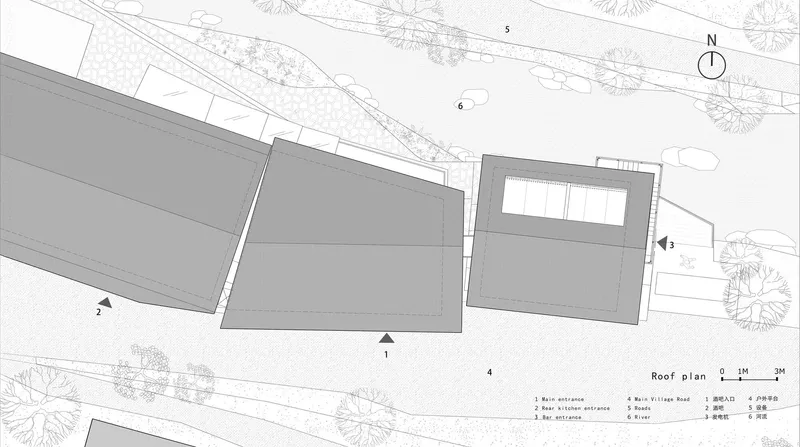
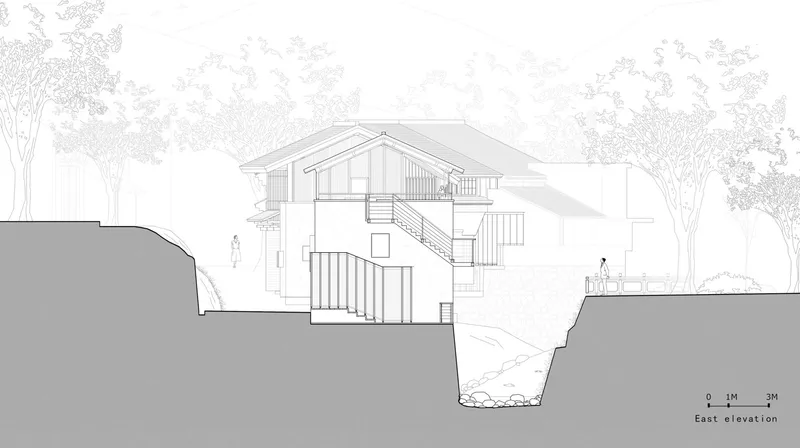
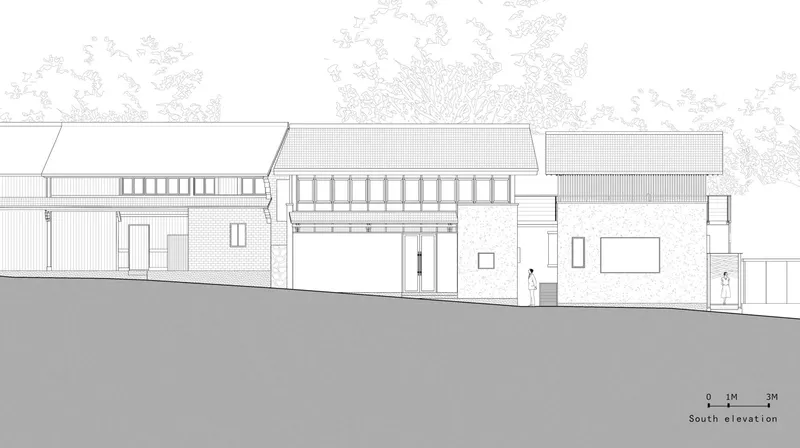
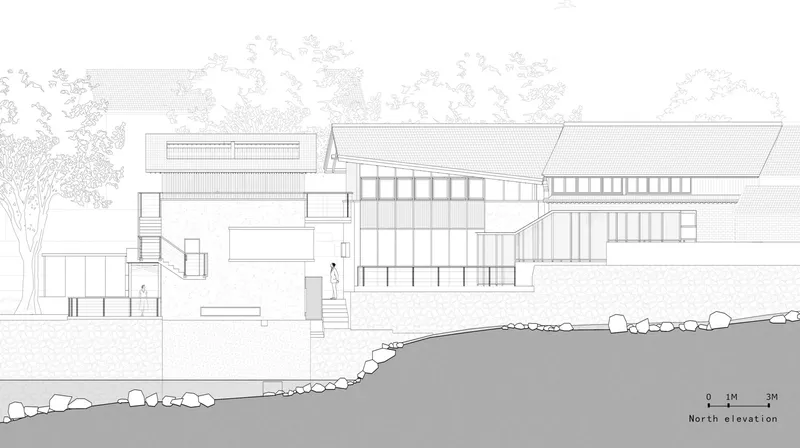
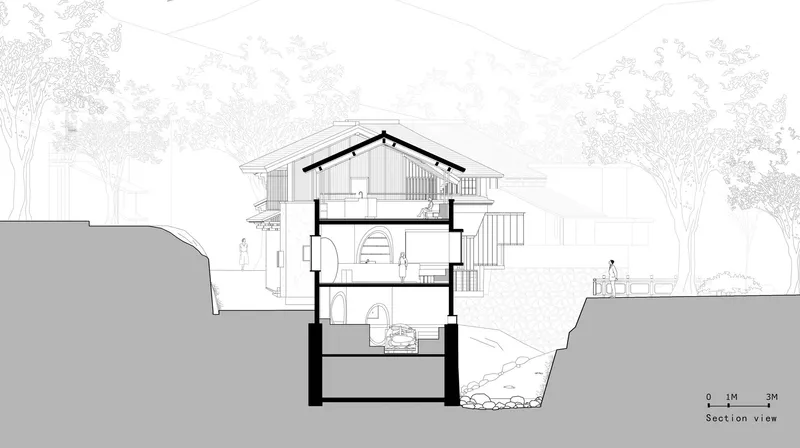
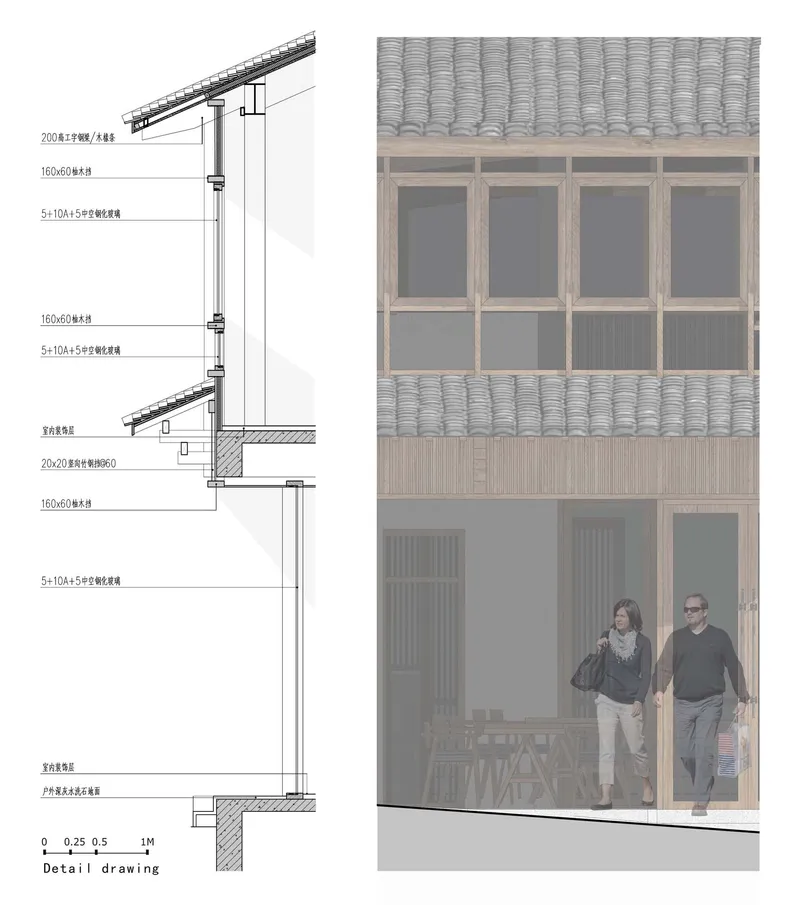
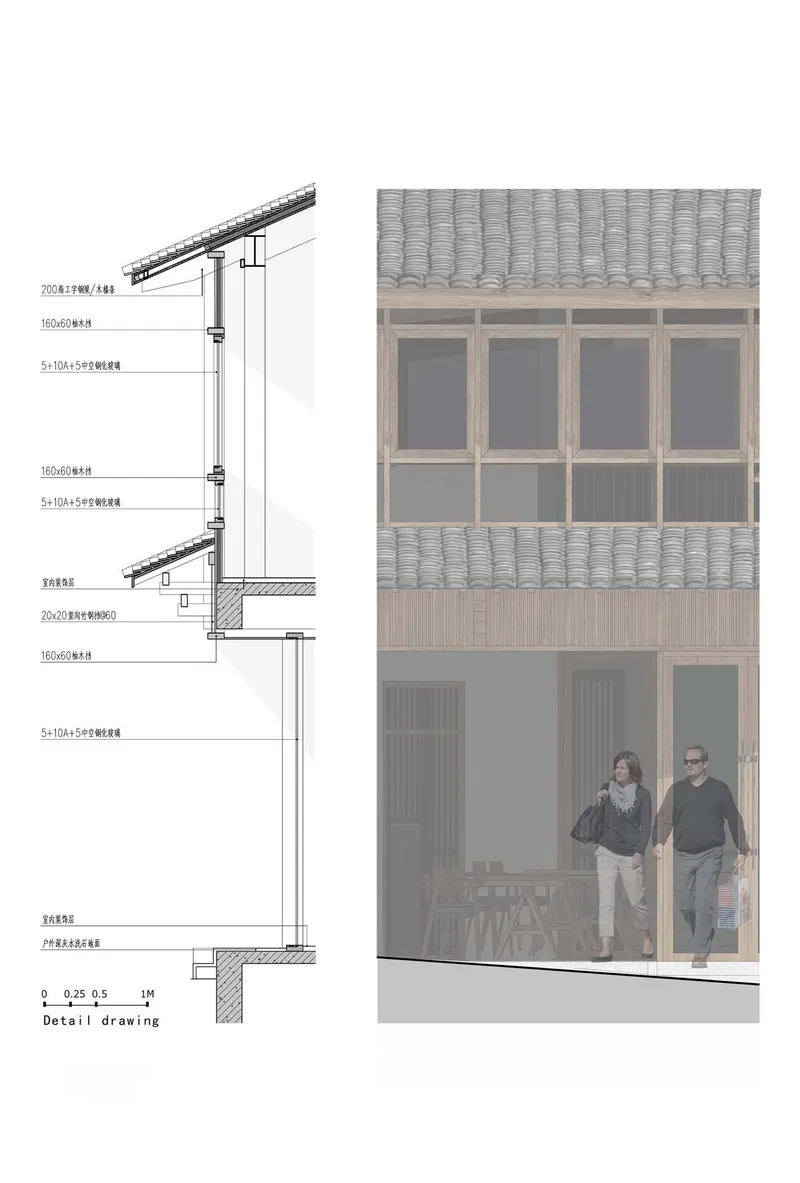
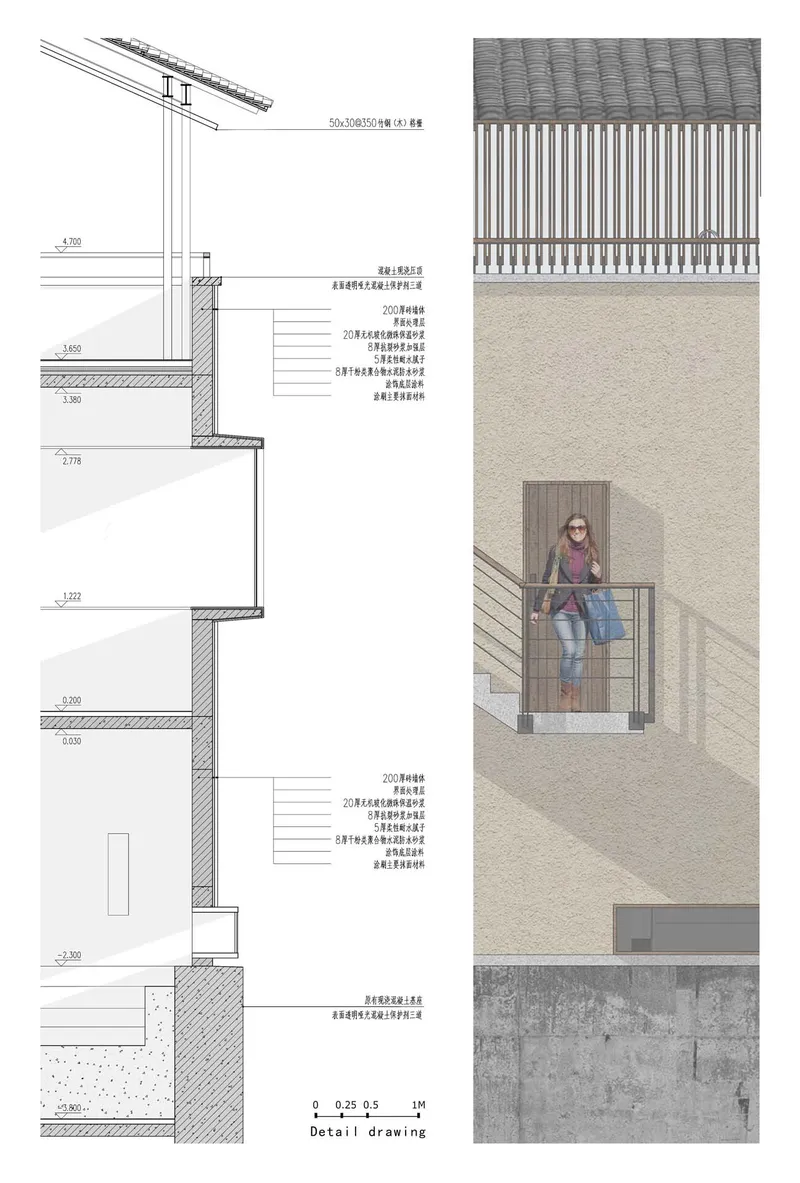
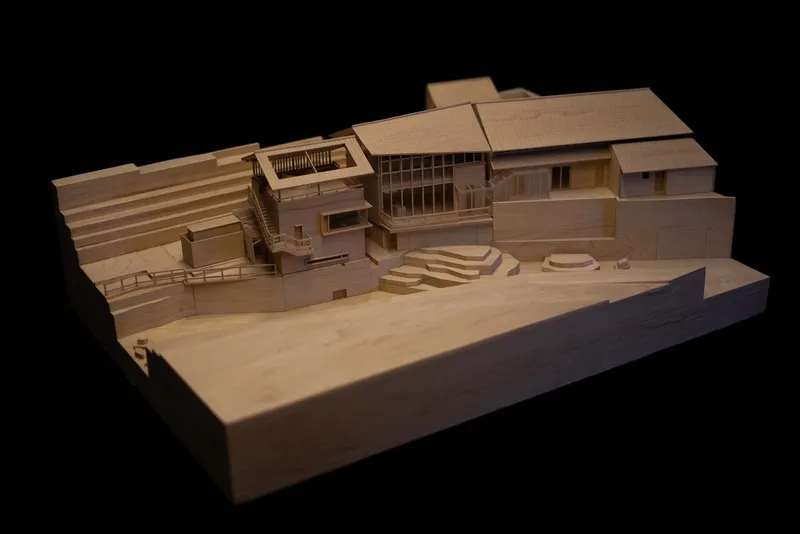
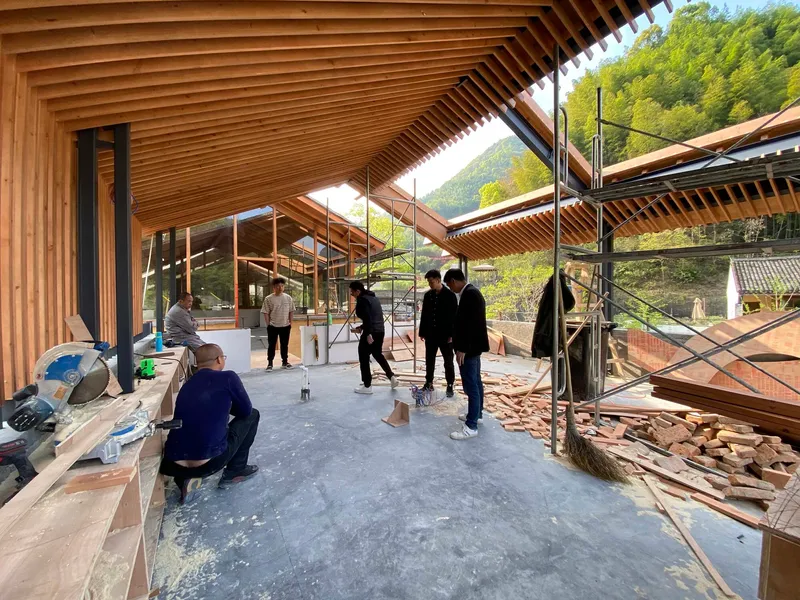
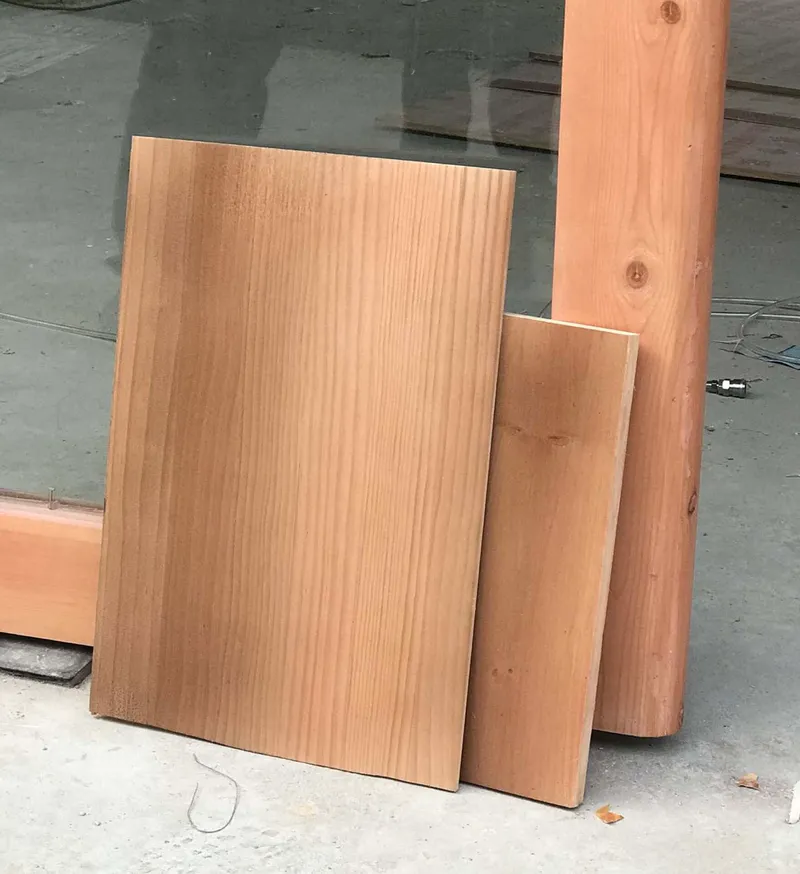
The site plan reveals how tightly the building is wedged between the curving road and the stream, with topographic contour lines making the grade change legible. Floor plans from basement through roof show a compact footprint that expands in section: the curved courtyard with trees on the first floor, the arched gathering hall on the second, and the triple-pitched roof with a skylight panel over the rightmost volume. Elevations confirm the stepping massing: three gabled forms descend toward the stream on the east, while the south elevation reads as a collage of textured masonry, vertical slat screens, and pitched roofs. Detail sections pair rendered facades with interior views, showing how the timber-framed glazing system sits within the thick earthen walls and how the tiled roof overhangs shelter the terraces below. The physical model captures the terraced landscape strategy that organizes the entire project.
Why This Project Matters
Rural China's building stock is being converted at a rapid pace, and the results are often either too preservationist to attract new uses or too flashy to belong. Shulin's Riverside Restaurant lands in a productive middle ground. By keeping the power station's stone base, using rammed earth and local rubble for the new walls, and limiting the contemporary gestures to timber screens and terrazzo platforms, the firm builds continuity with the village rather than contrast. The material honesty is not an aesthetic choice; it is a strategy for longevity in a climate where buildings must weather gracefully.
More importantly, the project demonstrates that a 424-square-meter renovation on a difficult site can generate the spatial complexity of a building many times its size. The section does all the work: three stories of distinct dining atmospheres, from the cave-like lower level beside the stream to the open-air terraces above the canopy, linked by stairs and courtyards that make the journey between them part of the meal. In an era when restaurant design often defaults to Instagram-ready surfaces, this building asks you to move through it, to climb and turn and discover. That is worth far more than a photogenic facade.
Riverside Restaurant, designed by Shulin Architectural Design (lead architects Lin Chen and Dongying Liu), Qixiakeng Village, Xikou Town, Fenghua, Ningbo, China. 424 m², completed 2021. Photography by Ang Wu.
About the Studio
Share Your Own Work on uni.xyz
If projects like this are the kind of work you want to make, uni.xyz is a place to publish your own, find collaborators, and enter design competitions.


Popular Articles
Popular articles from the community


The Amber Palace Opera: A Geological Fiction Surfaces on Tallinn's Baltic Waterfront
Pierre Brillard reimagines a Baltic legend as a public landscape, opera house, and waterfront promenade rooted in Tallinn's coastal identity.

Temporary Home for Dogs: A Reversed Zoo Rethinks Animal Shelter Architecture
In Bucharest, a sinuous corridor and freed landscape flip the logic of containment, designing a shelter that works to make itself unnecessary.

Manzana Morphosis: Stretching Barcelona's Grid into a Living Landscape for 2050
A radical reworking of the Eixample manzana turns density into a tool for generous public space, vertical ecology, and environmental performance.

Faces of the Soviet Avant-Garde: Turning Moscow's Street Names into an Open-Air Museum
A network of sculptural installations across a Moscow residential district transforms forgotten architect names into spatial encounters with cultural memor

Similar Reads
You might also enjoy these articles

Pixel Gardens: One Repeated Module Stacked Into a Terraced Social Housing Tower for Famagusta
Salem Bader's shortlisted housing tower builds a vertical neighbourhood from one repeated module, offsetting units to carve terraces, light and air.

Bao Huynh Watercolor Atelier: A Serene Art Retreat in Hội An
Bao Huynh Watercolor Atelier in Hội An blends multifunctional art spaces, sustainable design, local materials, and family-friendly living in a serene environment.

Atelier Macri Concept Store Interior Design by CASE-REAL
Atelier Macri store features a "ko" counter, walnut wood details, cork displays, blending retail, gallery, and seamless customer experiences.

Manuel Vargas Izquierdo Stadium and High-Performance Sports Center: Architectural Excellence in Jalpa de Méndez
The Manuel Vargas Izquierdo Stadium blends sustainable design, inclusive sports facilities, and cultural-inspired architecture, revitalizing Jalpa de Méndez’s public spaces.

Explore Riverfront Development Competitions
Discover active competitions in this discipline

Challenge to design luxury tourism on rails

VR headsets Storefront design competition

Designing a staircase for a client
Comments (0)
Please login or sign up to add comments
No comments yet. Be the first to comment!