
Silva Loop: Sustainable Landscape Architecture Rebuilding Ethiopia’s Forest Ecosystems
Sustainable landscape architecture in Ethiopia reimagines reforestation, sacred space, and biodiversity through ecological design.

As climate change, urban expansion, and deforestation continue to threaten ecosystems worldwide, architects are increasingly exploring how built environments can actively restore damaged landscapes. Silva Loop, a visionary proposal by Fionn Byrne and Shasha Wang, presents an innovative model of sustainable landscape architecture that merges ecology, spirituality, and community development into a single regenerative system in Addis Ababa, Ethiopia.
Recognized as a Runner-up entry in the Eco-Chapel competition, the project proposes a new architectural typology where landscape and architecture collaborate to rebuild biodiversity rather than simply occupy land. Silva Loop responds directly to Ethiopia’s ongoing environmental challenges by transforming architecture into a living ecological framework capable of supporting reforestation, wildlife habitats, and public engagement.
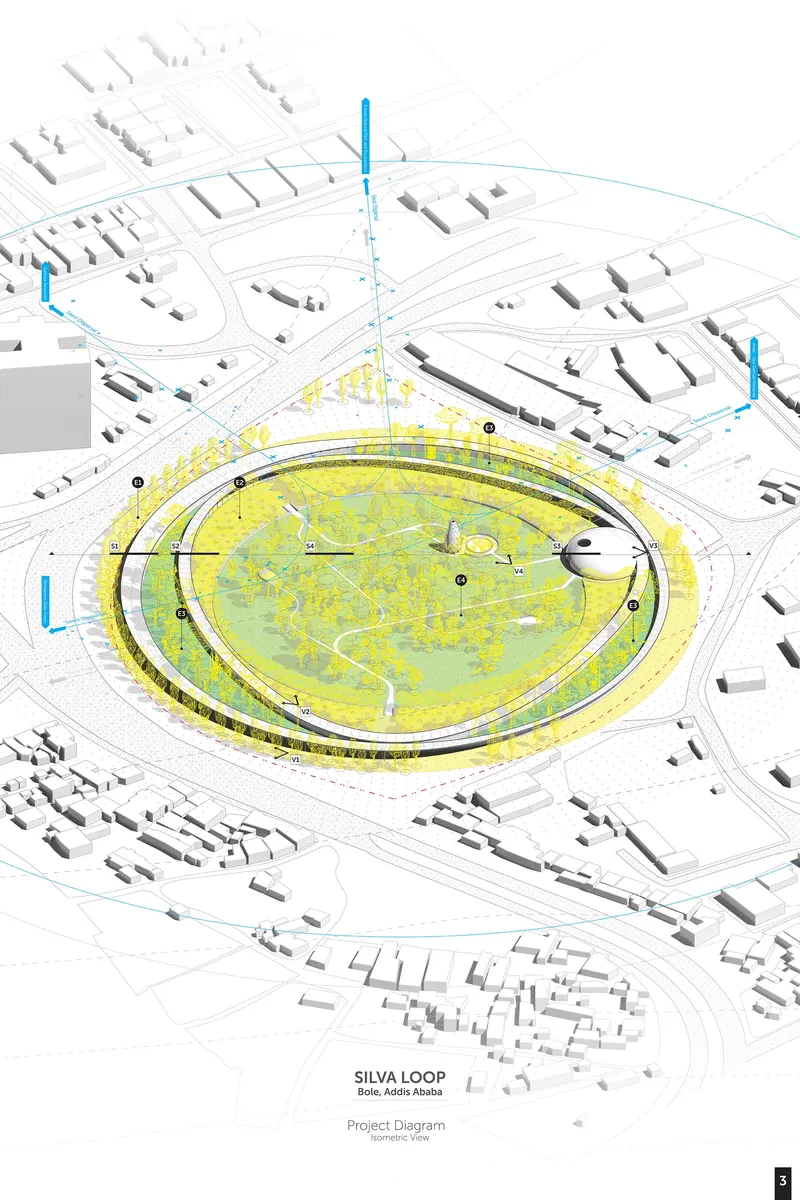
Rather than designing a conventional chapel isolated from nature, the project positions the built environment as part of a larger ecological cycle. The proposal introduces a circular landscape system composed of multiple environmental zones, each carefully calibrated to support local vegetation, bird migration, water collection, and social interaction.
Architecture as an Ecological Restoration System
At the core of Silva Loop lies the idea that architecture can become a tool for environmental repair. Ethiopia faces severe forest loss, and the project addresses this issue by creating a series of interconnected microclimates designed to encourage long-term ecological regeneration.
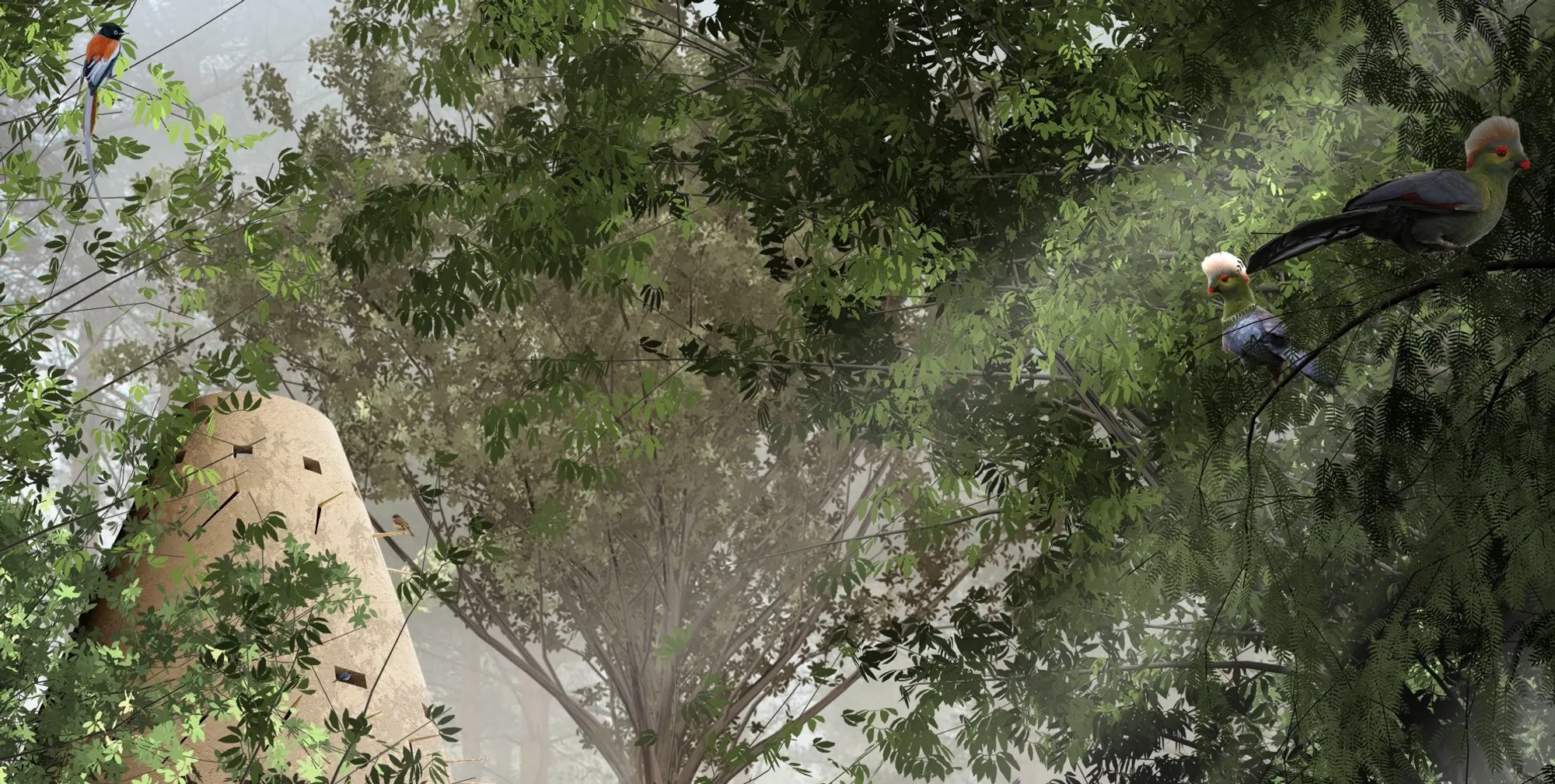
The circular spatial organization acts as a protected environmental gradient. Each concentric layer supports different habitat conditions, ranging from dry woodland ecosystems to dense evergreen forest environments. These varied ecological zones attract local and endemic bird species that naturally disperse seeds across the landscape.
Birds become active collaborators in the architectural process. As they move through regional and global flyways overlapping the site, they contribute to reforestation by carrying seeds between habitats. This transforms the project from a static structure into a continuously evolving ecological machine.
The proposal demonstrates how sustainable landscape architecture can extend beyond aesthetics and become a dynamic environmental infrastructure.
Landscape Architecture Inspired by Ethiopian Ecosystems
The design carefully references Ethiopia’s diverse ecological landscapes. Different zones within Silva Loop replicate native biome conditions found throughout the country, creating an educational and environmental framework rooted in local geography.
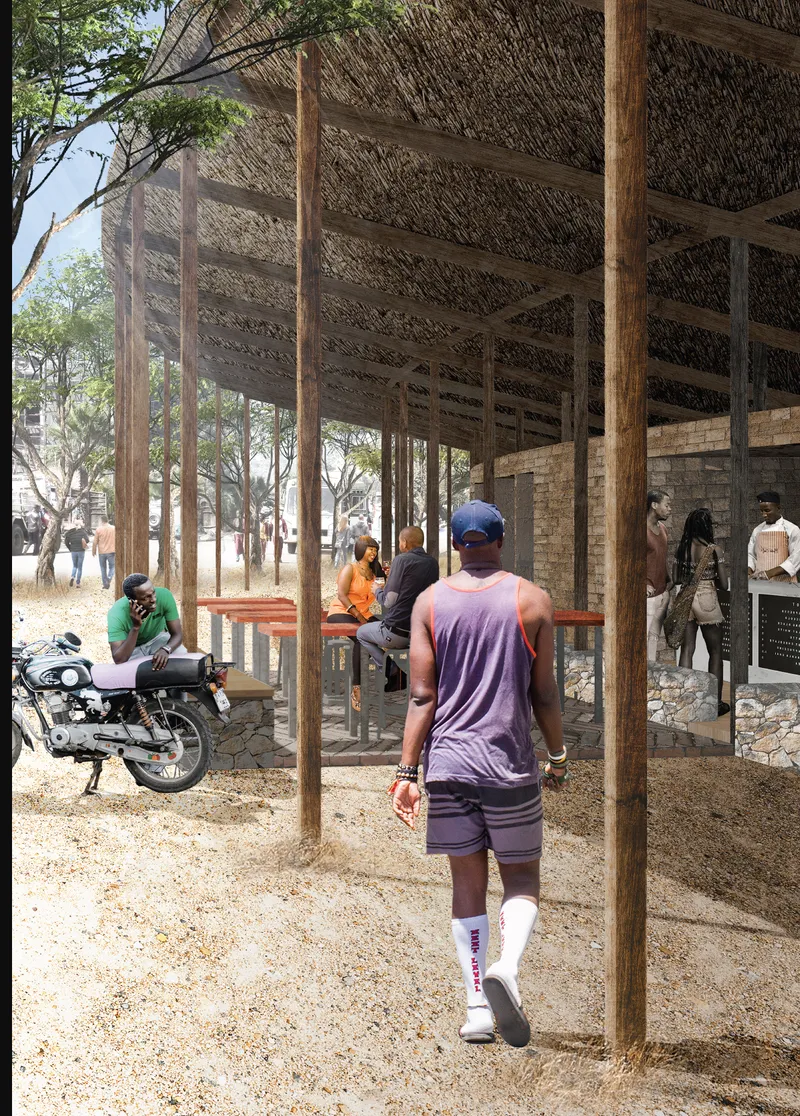
The outer Community Allée recreates the Combretum-Terminalia woodland ecosystem. This public-facing ring introduces gathering spaces, workshops, cafés, kitchens, and educational facilities designed to strengthen community interaction while maintaining ecological sensitivity.
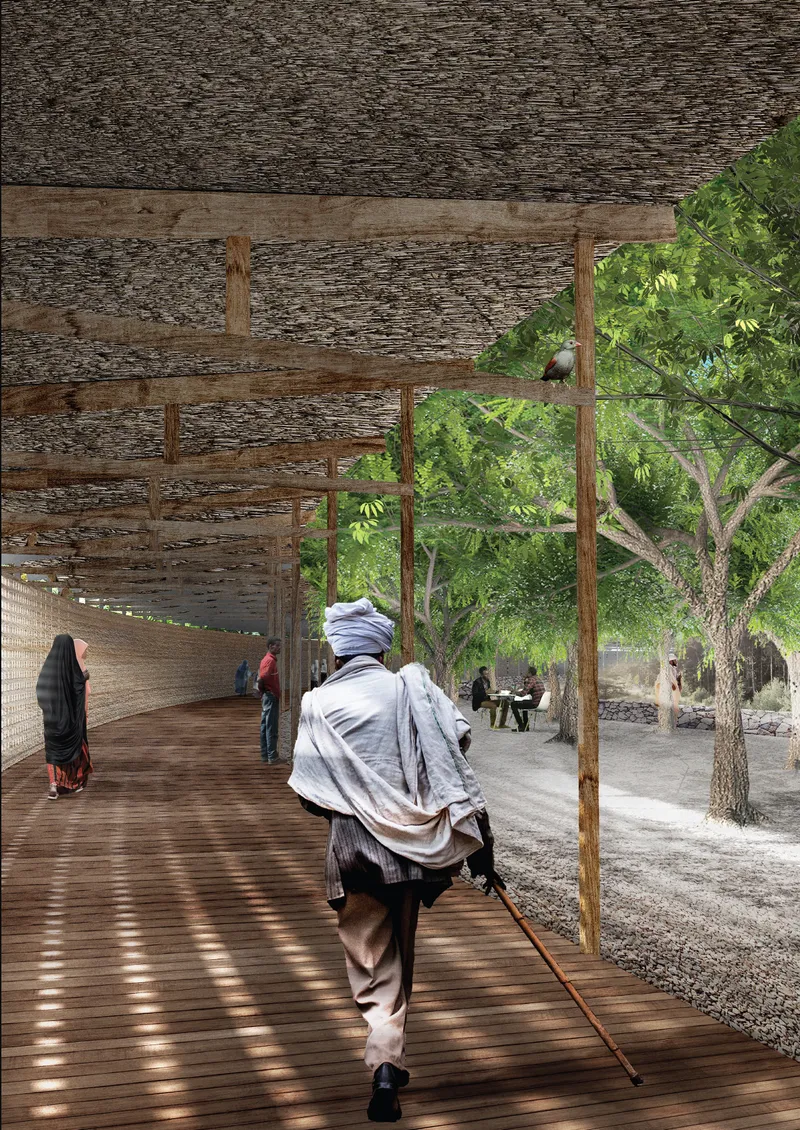
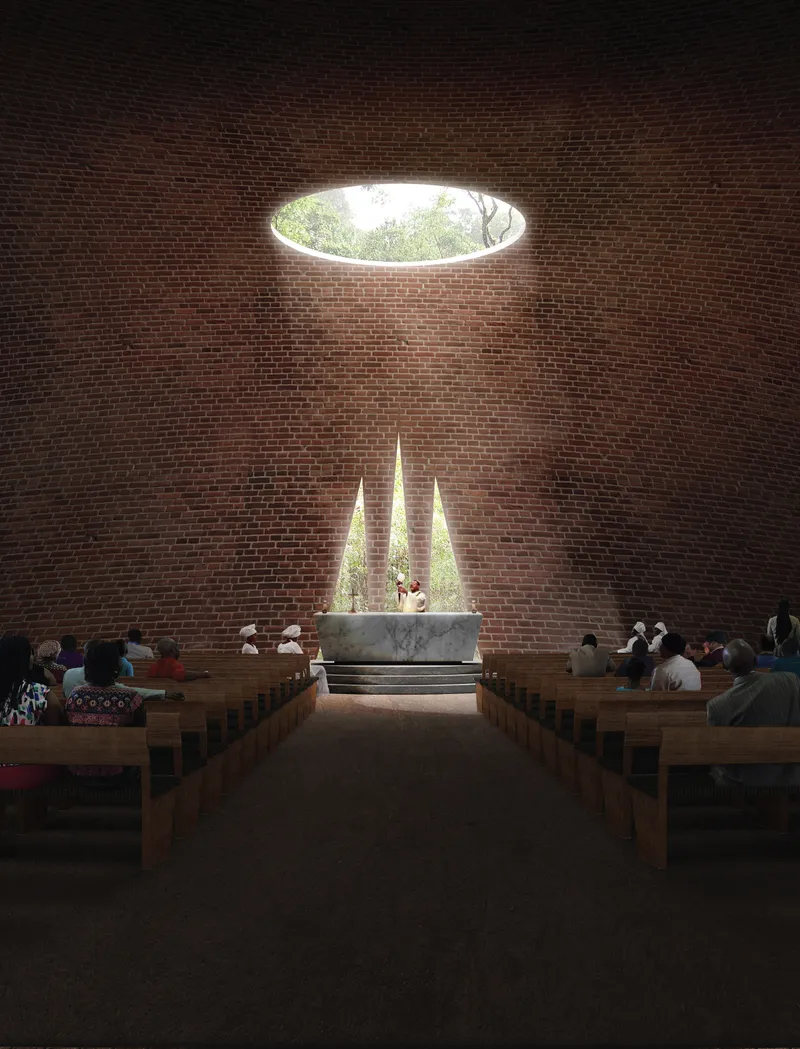
Further inward, the Meditation Bosque creates a cooler and quieter atmosphere inspired by Acacia-Commiphora woodland ecosystems. Perforated walls, filtered light, and shaded walkways establish spaces for contemplation and spiritual reflection.
The Wilderness Stand forms the project’s most sacred and environmentally protected zone. Dense vegetation and limited access recreate moist evergreen montane forest ecosystems, supporting biodiversity while reinforcing the project’s spiritual atmosphere.
At the center lies the contemplative grove and eco-chapel itself, enclosed within a monumental dome-like structure constructed from locally sourced materials.
Low-Tech Sustainable Construction Methods
Silva Loop strongly emphasizes low-impact construction and local material sourcing. Instead of relying on imported systems or energy-intensive technologies, the project proposes an architecture built through regional knowledge, renewable resources, and community participation.
Fast-growing tree species are cultivated to provide timber for overhead structures and perimeter frameworks. Agrostone bricks made from local agricultural waste create biodegradable and renewable building components. These materials reduce transportation emissions while supporting circular construction economies.
The proposal also embraces phased ecological growth. Trees planted during early stages gradually shape environmental conditions over time, influencing shade, temperature, humidity, and spatial experience as the project matures.
This long-term environmental evolution reflects a critical shift in sustainable architecture, where buildings are designed not as finished objects but as living systems capable of adaptation and ecological growth.
Sacred Space Reimagined Through Nature
Unlike traditional religious architecture that separates sacred interiors from natural surroundings, Silva Loop dissolves the boundary between spirituality and ecology.
The eco-chapel integrates Christian symbolism subtly while maintaining an inclusive and non-denominational atmosphere. The architecture focuses less on monumentality and more on creating emotional connections between humans, landscape, climate, and non-human species.
Filtered daylight enters through carefully positioned openings beneath the central oculus, creating a meditative spatial experience. Curved structural forms emerge organically from the surrounding terrain, reinforcing the relationship between architecture and landscape.
Nature is not treated as decoration within the project. Instead, forests, birds, water systems, and climatic processes become equal participants in shaping the sacred environment.
Community-Centered Environmental Design
One of the most compelling aspects of Silva Loop is its integration of public life with ecological restoration. The project proposes a socially active perimeter filled with small-scale economic and educational programs that encourage community stewardship.
Workshops, planting zones, cafés, gathering spaces, and educational facilities create opportunities for local participation in reforestation efforts. This transforms environmental restoration from an isolated conservation strategy into a collective civic experience.
By combining sustainable landscape architecture with community infrastructure, the project establishes a model where environmental recovery directly supports social and economic resilience.
A Vision for Regenerative Architecture
Silva Loop presents a powerful alternative to conventional architectural development. Instead of consuming land and resources, the proposal actively restores ecosystems, increases biodiversity, and strengthens local communities.
Its integration of ecological science, spiritual experience, and low-tech sustainable construction demonstrates how architecture can become regenerative rather than extractive. Through layered landscapes, climate-responsive design, and habitat creation, the project redefines what future architecture can achieve in environmentally vulnerable regions.
As cities worldwide search for new approaches to climate resilience and ecological restoration, Silva Loop offers a compelling vision of architecture operating as a living environmental system rather than a static object.
Designed by Fionn Byrne and Shasha Wang, this Runner-up Eco-Chapel competition entry stands as an ambitious exploration of sustainable landscape architecture and regenerative urban ecology.




Popular Articles
Popular articles from the community

A Reinforced Cocoon: Vernacular Architecture for Security, Healing and Community in Qandahar
A Reinforced Cocoon reimagines Afghan vernacular architecture as secure community space for widowed women, families, healing and resilience.

Pangolin Can Help Mining: Biomimicry Architecture for an Asteroid Mining Habitat
Pangolin Can Help Mining explores biomimicry architecture through a modular 3D-printed habitat designed for asteroid mining and future life.
EW PARK: Sustainable Architecture Reimagines the Future of Urban Parking
EW PARK reimagines city parking as a modular wooden tower combining automation, solar energy, electric mobility, and adaptable urban design.

Vaissnavi Shukl Wraps a Single-Storey Ahmedabad Home Around a Courtyard That Breathes
Malhaar Residence uses perforated brick, translucent canopies, and an L-shaped plan to turn a quiet suburban plot into an inward world.


Similar Reads
You might also enjoy these articles
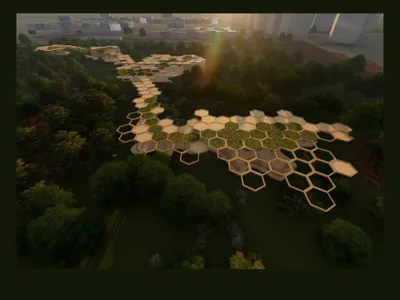
Eco Chapel: A Green Architecture Pavilion Designed in Symbiosis with the Forest
Eco Chapel uses green architecture to weave prayer, learning and reuse into a forest pavilion shaped by modular hexagonal canopies for life.
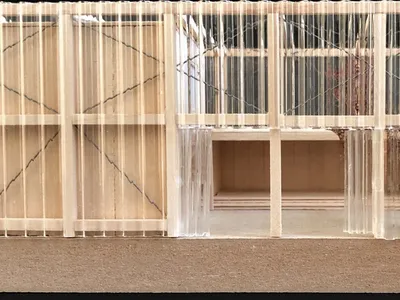
Kaffeebühnen: Coffee Shop Architecture Designed as a Civic Stage Between Vienna’s City and Park
Kaffeebühnen turns coffee shop architecture into a civic stage, linking Vienna’s park edge, urban life, warm timber yards, and coffee craft.
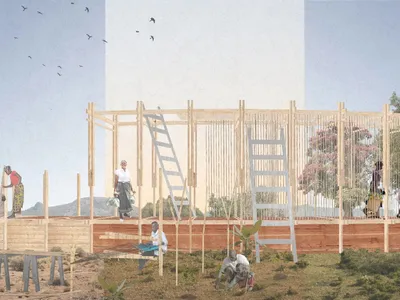
Healing Façade: Sustainable Architecture for Reforestation, Community, and Sacred Ecology in Ethiopia
Healing Façade reimagines sustainable architecture as a living wall that restores soil, catches water and renews Ethiopia's forest churches.


Urban Forest: A Vertical Ecosystem for 5,000 Workers in Singapore's Changi Business Park
Radially stacked pods and layered green decks turn a 7-acre plot into 47 acres of ecological workspace projected for 2040.






Comments (0)
Please login or sign up to add comments
No comments yet. Be the first to comment!