
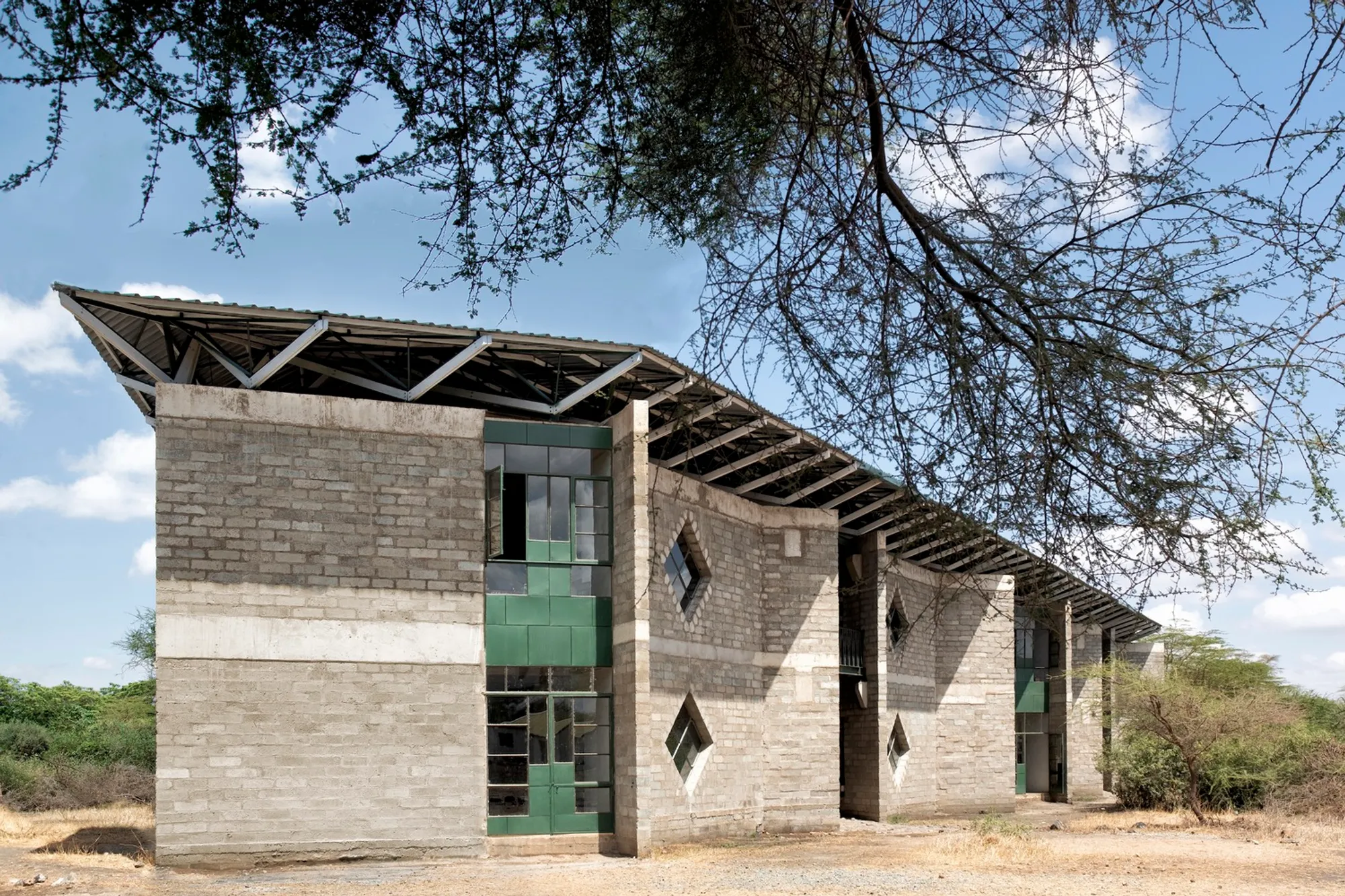
Simba Vision Montessori School in Tanzania: A Sustainable Educational Campus Rooted in Local Culture and Climate
Sustainable Montessori school in Tanzania using local materials, passive design, and community-built spaces fostering learning, culture, and environmental harmony.


Project Title: Simba Vision Montessori School Architects: Architectural Pioneering Consultants + Wolfgang Rossbauer Architekt GmbH Location: Ngabobo Village, Ngare Nanyuki, Tanzania Completed: 2022 Site Area: 1,070 m² Photographers: Nadia Christ, Benjamin Stähli Structural Engineers: GMP Consulting Engineers Ltd

A Montessori School Rooted in the Tanzanian Highlands
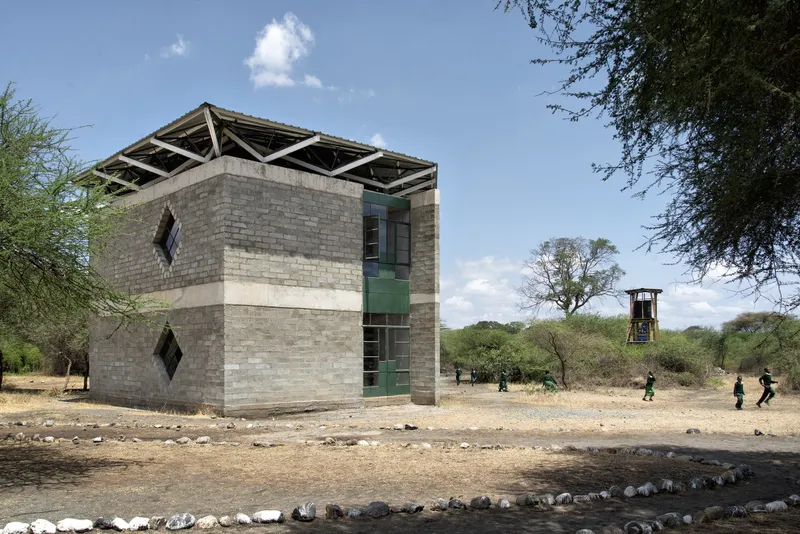
Nestled between Mount Meru and Mount Kilimanjaro in Tanzania’s remote northern savanna, the Simba Vision Montessori School redefines rural educational infrastructure. Developed collaboratively by Architectural Pioneering Consultants and Wolfgang Rossbauer Architekt, the project is situated at an elevation of approximately 1100 meters in Ngabobo Village. It serves the local Meru and Maasai communities, offering an environmentally attuned and culturally resonant approach to learning.


A Climate-Responsive Educational Design
Tanzania’s subtropical highland climate—temperatures ranging from 18°C to 23°C year-round—informed the school’s passive design strategy. The architecture embraces natural ventilation, thermal mass, and shading to maintain thermal comfort without mechanical systems. This eco-conscious approach not only minimizes energy use but also aligns with Montessori principles of harmony with nature.

Local Materials and Construction Techniques
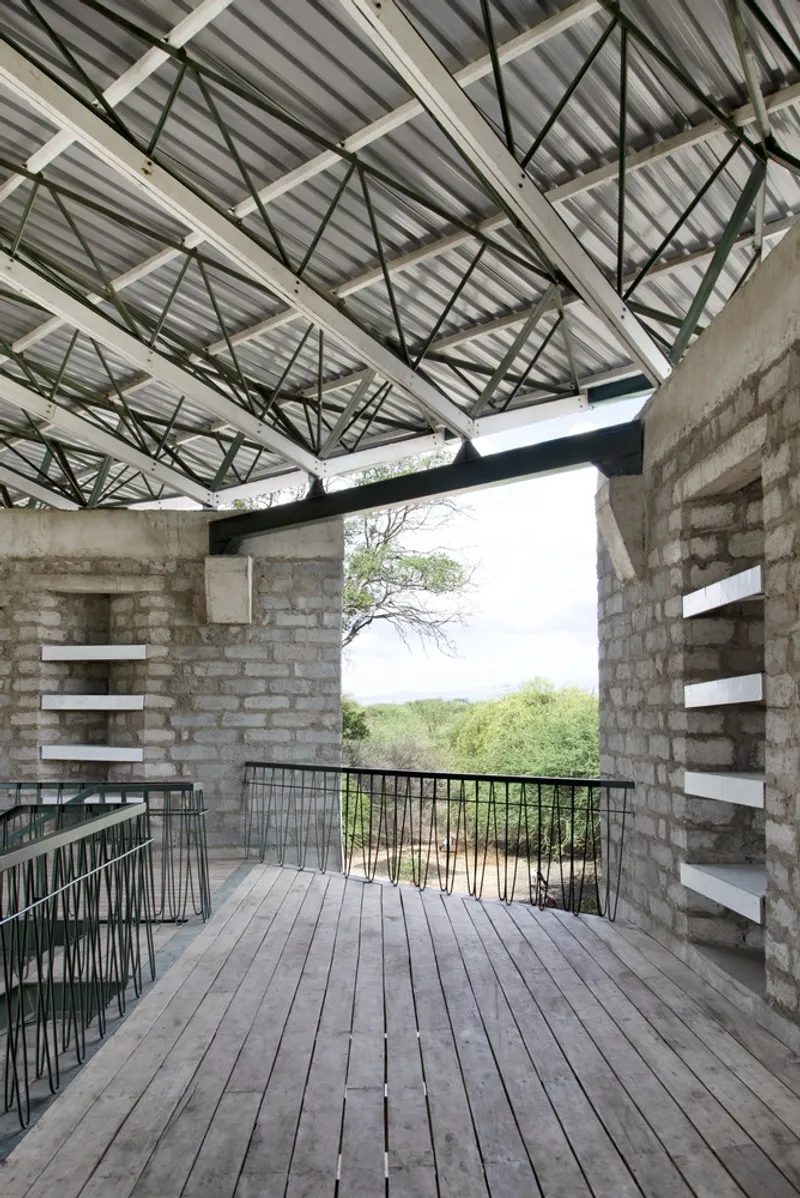
Driven by the goal of low environmental impact and resource-conscious construction, the architects employed volcanic rock and sand sourced on-site to form the primary building material. These compressed earth blocks require only 10% cement and are constructed without steel reinforcement. Straw and mud wall finishes, traditionally applied by Maasai women, enhance both the acoustics and thermal comfort of interior spaces.
The only significant use of steel appears in the roof structures, designed to serve multiple purposes—providing shade, collecting rainwater, and protecting from seasonal downpours.


A Prototype for Montessori Architecture in Africa
This school was developed as part of a design competition organized by Africa Amini Alama, a local NGO, in collaboration with the Arthur Waser Foundation of Lucerne, Switzerland. The initiative aimed to transform an existing school into a full-fledged Montessori campus, complete with a primary school, children's house, workshops, and accommodation for students and staff.
The school is a pilot project for a 28-pattern "Design Instrument" created to shape future Montessori architecture. It emphasizes flexible, purpose-driven learning environments that encourage independence, exploration, and social development.
Spatial Organization Without Corridors
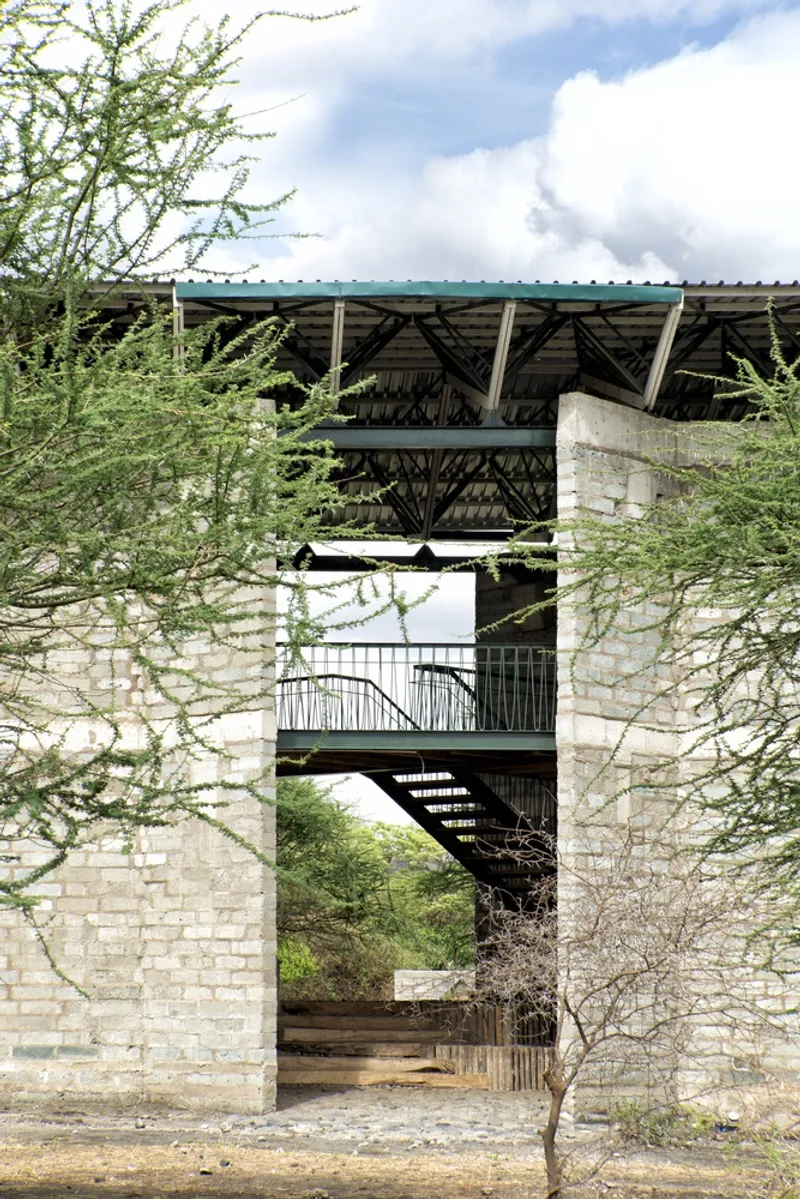
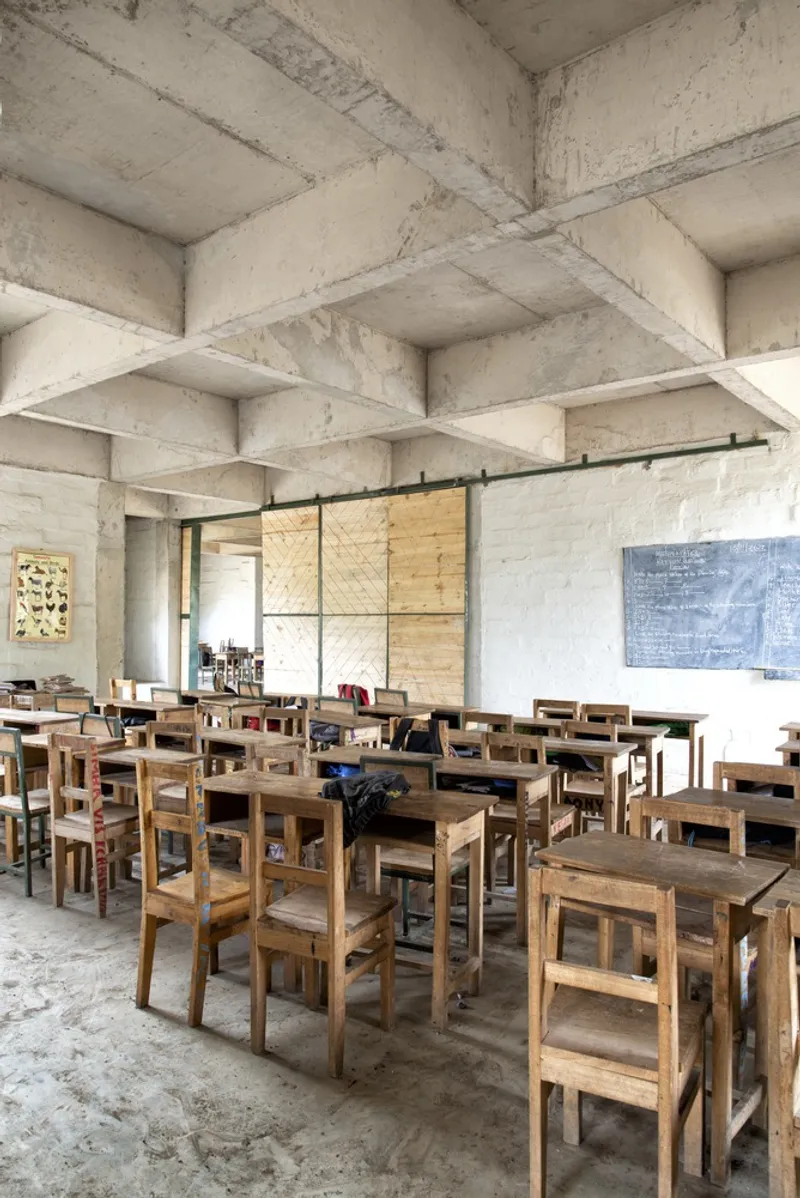
One of the most innovative features of the Simba Vision Montessori School is its non-linear spatial configuration. Rooms are aligned like beads on a string, eliminating the need for conventional corridors. This allows for direct programmatic connections between spaces, enabled by large sliding doors that control openness and privacy.
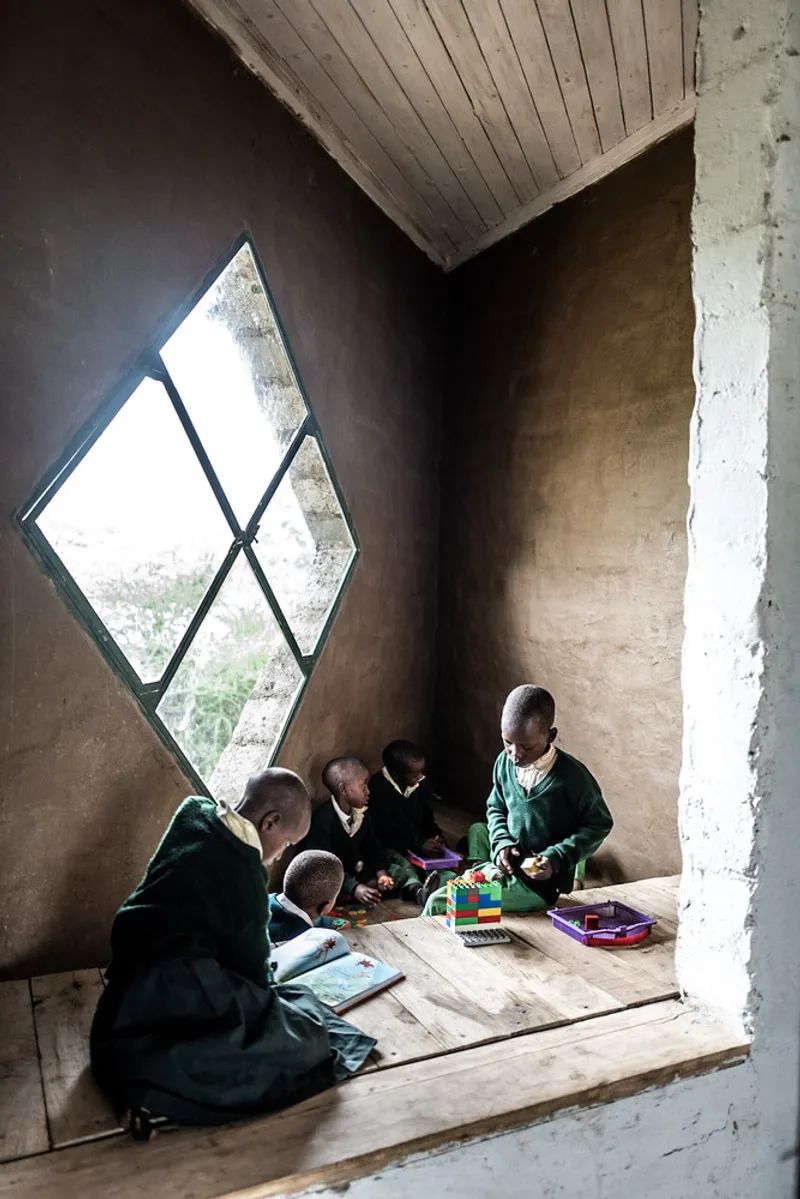
The internal geometry is characterized by walls rotated at 45 degrees, distinguishing each classroom from the next and creating a series of visually protected nooks. These spatial niches invite smaller group gatherings and individualized learning—core principles of the Montessori method.

Multilevel Social Spaces and Learning Platforms
Unique within the region, the school is organized across multiple levels, with elevated plinths, steps, and platforms integrated into the architectural form. These transitions are not just for circulation—they become interactive surfaces where students can sit, play, read, or engage in group activities. This design transforms hallways and stairwells into informal learning environments, maximizing spatial utility while fostering community.

Cultural Integration and Community Engagement
From the locally crafted materials to the involvement of Maasai women in finishing work, the school is a model of community-embedded architecture. Every element—be it material choice, spatial flow, or construction method—reflects a deep respect for local knowledge, culture, and climate.




Popular Articles
Popular articles from the community


The Musturak Paradise: Senior Living Architecture for a Connected Future in Temara, Morocco
The Musturak Paradise reimagines senior living architecture in Temara via private homes, social spaces, culture, community, and shared care.

Co-Life: Senior Housing Design That Reconnects Older Adults With the City
Co-Life reimagines senior housing design through healing gardens, shared streets, workshops, and a sustainable community across generations.
AL-JANNAH: Sustainable Architecture and Permaculture for Afghan Widows
AL-JANNAH uses sustainable architecture and permaculture to create resilient oasis of housing, learning, work and renewal for Afghan widows.

The Ocean Hive: Sustainable Architecture for a Self-Sufficient Civilization at Sea
The Ocean Hive imagines sustainable architecture at sea, where modular habitats, algae, wave power and ocean waste sustain a growing colony.


Similar Reads
You might also enjoy these articles


Hodi-Mandai Geram
Project Function: Preservation and revitalization of the Intangible heritage and socio-spatial identity of the Hodi by Housing, Cultural Memory Center, Sacred Grove, landscape, local tourism economy


Olio Towers: A Mid-Rise for Performers That Fuses Housing, Rehearsal, and Stage
Located blocks from Houston's Theater District, this modular tower stacks living units around a central performance atrium.

Oasis: Modular Green Housing Carved into Dhaka's Urban Fabric
A shortlisted Plugin Housing entry reclaims unauthorized settlements in Dhaka with stepped concrete volumes, green roofs, and ventilation-driven design.

Black Hole: A Floating Megastructure for the Post-Physical Era
Emiliano Mazzarotto envisions a spherical, self-scaling arena where e-sports, digital hotels, and holographic stadiums replace traditional public space.


Explore Educational Building Competitions
Discover active competitions in this discipline



Challenge to design public laboratory


Challenge to reimagine the Iron Throne


Photograph architecture without architects


Illustrate the lost glory of Angkor Wat - Render Challenge
Comments (0)
Please login or sign up to add comments
No comments yet. Be the first to comment!