

SINGAPORE GREEN NOMAD
"In the heart of urban pulse, our project stands, a symphony of innovation, where souls gather, dreams intertwine, and futures unfold."

As we delved deeper into the design phase, our research served as a guiding light, informing every decision and iteration along the way. From conceptual sketches to detailed floor plans
The first steps: understanding the dynamics of a modern workspace, particularly the evolving trends in office environments. We analyzed the shift towards nomadic working patterns and the rise of coliving spaces, recognizing the growing demand for flexible, community-centric environments. Drawing inspiration from the vibrant culture of Singapore, we explored its unique blend of tradition and innovation, as well as its penchant for cutting-edge construction technologies and sustainable practices.

Examining the local climate, characterized by high humidity and lush vegetation, the multicultural fabric of Singapore, embracing its diverse languages and social structures as sources of inspiration for fostering inclusivity and collaboration within our project.
Getting to understand the construction norms and regulations, we meticulously documented building codes and standards to ensure compliance and safety. Leveraging Excel as a tool for data organization, we meticulously cataloged our findings, laying the groundwork for the subsequent design and sketching process.

Our concept starts with the Hanging Gardens of Babylon, what we admired was the way it was filled with vegetation, how it was flooded with “green.” While making our research we were faced with the scenery that Singapore is the “City of Gardens” the “City of Innovation.” We took that statement, and we placed all our efforts in making our project resemble those nicknames. The Hanging Gardens of Babylon are not only a direct concept, but an inspiration, a gift to society, as King Nebuchadnezzar II gifted the hanging gardens to his wife.

Our team was driven by a shared vision: to create a dynamic and inclusive community hub that seamlessly integrates living, working, and socializing.
Speaking of challenges, the site was one of the riskiest one, our paramount objective was to preserve its intrinsic character and contours, keep its essence, and shapes. To tackle this, we prioritized creating spaces that seamlessly integrated with the natural surroundings. These spaces were carefully designed to guide individuals through the project while offering opportunities to appreciate the varied terrain and scenic views unique to the area. In envisioning this space as both a dwelling and a workplace, we saw the need for a central zone where tranquility could reign supreme amidst the daily hustle and bustle. Thus, "the lake" materialized—a body of water designed to cradle users in its soothing embrace, intended to envelop users in a sense of calm with its gentle sounds and beautiful sights.
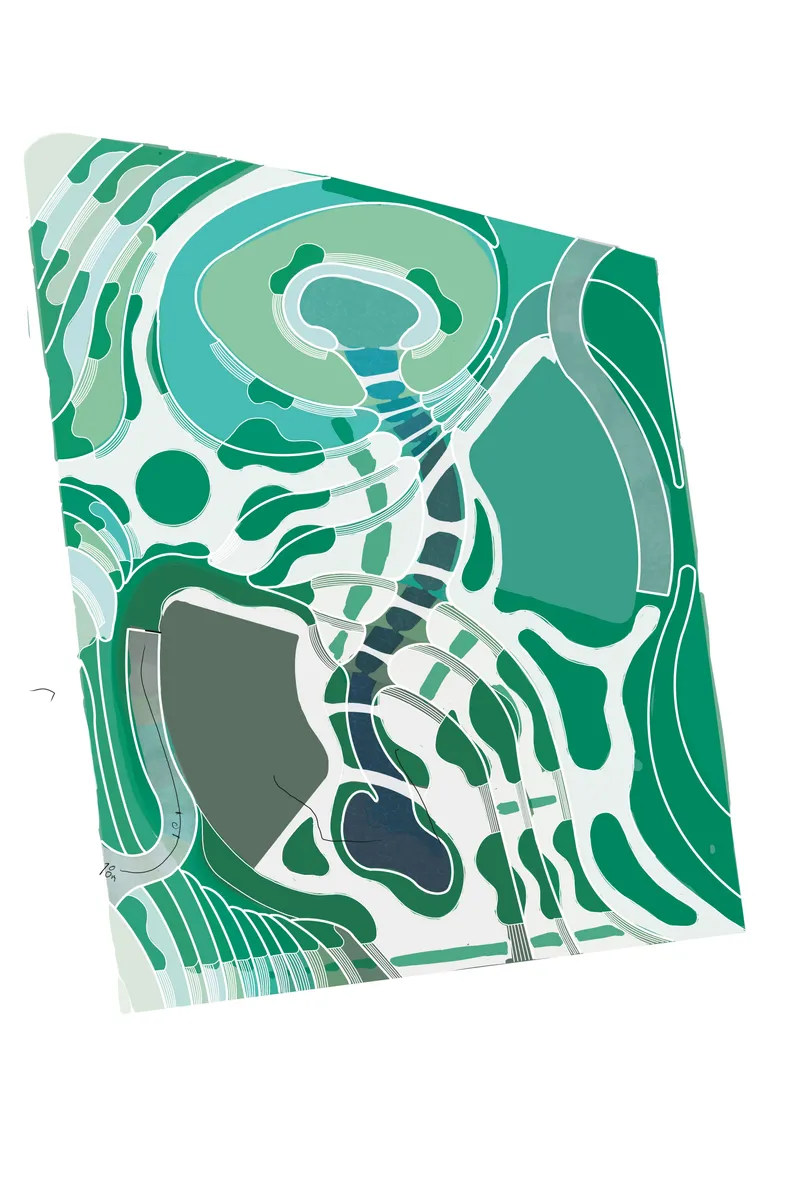
From the inception of our design concept, we embarked on a relentless pursuit of innovation and sustainability. Countless brainstorming sessions, sketch iterations, and model prototypes paved the way for the evolution of our vision.
The organic shape of the building emerged from a desire to seamlessly integrate with the surrounding environment. Each curve and contour were meticulously refined to evoke a sense of harmony and balance, inviting inhabitants to engage with their surroundings in a meaningful way.
The structural resolution was challenging too. Through rigorous analysis and experimentation, we arrived at a solution that not only supported the architectural vision but also enhanced the building's aesthetic appeal; since the shape of the building was based on a series of rotated prisms, creating the large terraces and the imposing cantilevers that defined the building's silhouette, the combination of the strength of steel with the lightness and sustainability of wood; central to our design approach is the use of timber framing as the primary structural element. Not only does timber offer strength, versatility, and aesthetic appeal, but it also aligns with our commitment to sustainability.
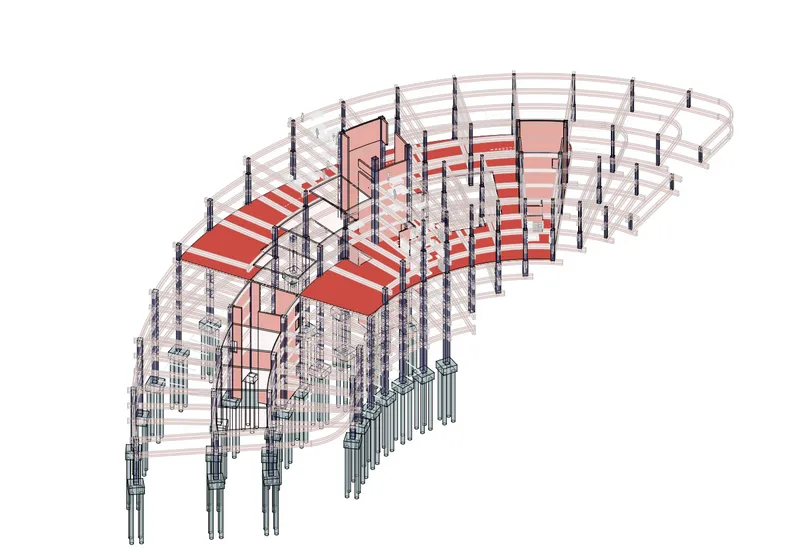
We explored various strategies to minimize environmental impact, from incorporating renewable materials to optimizing energy efficiency through passive design principles such as natural ventilation, shading devices, solar panels, and green roofs. By embracing the principles of biophilia and integrating green spaces throughout the building, we sought to create a harmonious symbiosis between inhabitants and nature. Our project maximizes energy efficiency, enhances thermal comfort, and reduces reliance on mechanical systems.


Popular Articles
Popular articles from the community


Hill & Cross Opera: Sculptural Opera House Architecture Shaped by Tallinn’s Landscape and Identity
Hill & Cross Opera reimagines opera house architecture in Tallinn through its sculptural hill, civic plaza, glass wave and a luminous cross.

The Earth Pod: 3D Printed Homes for Resilient Refugee Communities
The Earth Pod reimagines refugee housing through 3D printed homes made from clay, combining resilience, self-sufficiency, and rapid shelter.

Conexión: Biophilic Design Reimagines High-Rise Living in Hong Kong
Conexión reimagines high-rise living in Hong Kong through biophilic design, green facades, shared spaces, daylight, water and nature within.

Co-Life: Senior Housing Design That Reconnects Older Adults With the City
Co-Life reimagines senior housing design through healing gardens, shared streets, workshops, and a sustainable community across generations.

Similar Reads
You might also enjoy these articles
The Rhythm of Seasons
A Farmers' Market Connecting Nature and the City

More Than a Building-Designing a Living System
More Than a Building-Designing a Living System
Base Beyond
DESERT COMPOUND ARID: TOURISM OF ABSENCE AND ABUNDANCE


Explore Digital Nomad Housing Competitions
Discover active competitions in this discipline




Challenge to reimagine the Iron Throne


Photograph architecture without architects


Illustrate the lost glory of Angkor Wat - Render Challenge


Design challenge to reuse E-waste
Comments (0)
Please login or sign up to add comments
No comments yet. Be the first to comment!