

Ski Tower By A-Lab: A Sustainable Residential Landmark in Norway
A sculptural Norwegian residential tower featuring a CO₂-absorbing exoskeleton, wooden façades, and layered outdoor living spaces near a transit hub.


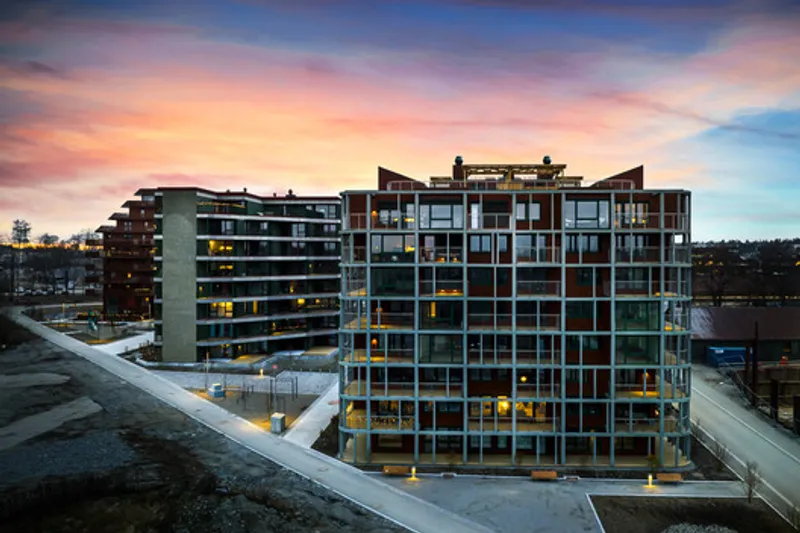
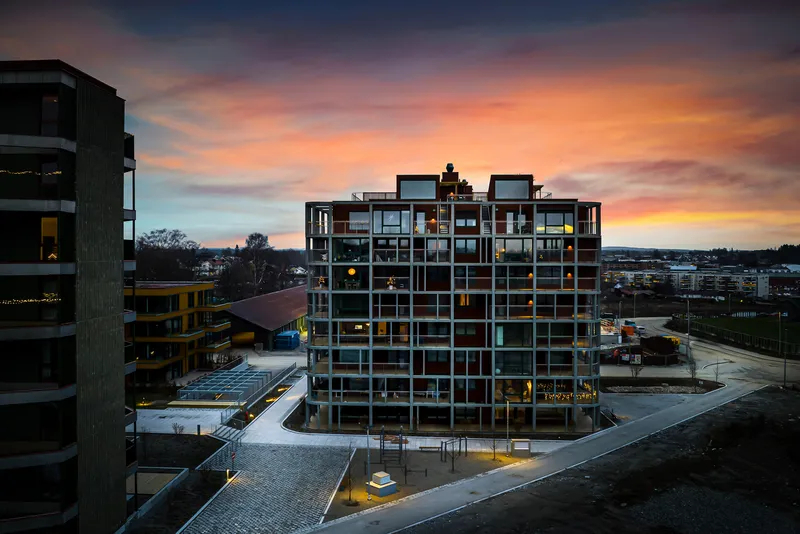
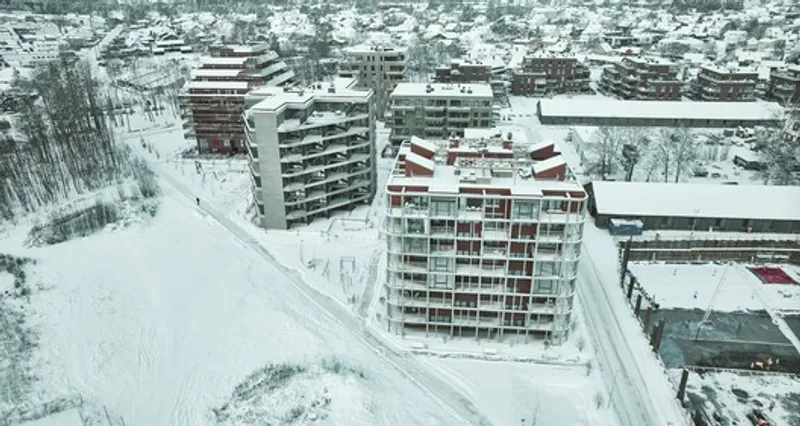
Located in Magasinparken, Ski, just outside Oslo, Ski Tower is one of four distinctive residential towers shaping a new urban district near the Ski Station transport hub on the Follo Line. Designed by A-Lab for developer Solon Eiendom AS, the project forms part of a larger masterplan regulated by Code Arkitekter and Civitas, transforming a former military area into a vibrant, transit-oriented neighborhood with over 400 apartments, landscaped public spaces, and preserved historic Magasin buildings.
Urban Context and Masterplanning
The four point towers are carefully positioned around the historic structures and new “urban villas,” creating generous outdoor spaces designed by Dronninga Landskap. Each tower is designed by a different architectural practice: A-Lab, Reiulf Ramstad Arkitekter, R21, and Code Arkitekter, resulting in architectural diversity within a cohesive urban framework. Ski Tower occupies a prominent southwestern position, engaging both the landscape and surrounding residential fabric.
Architectural Concept and Form
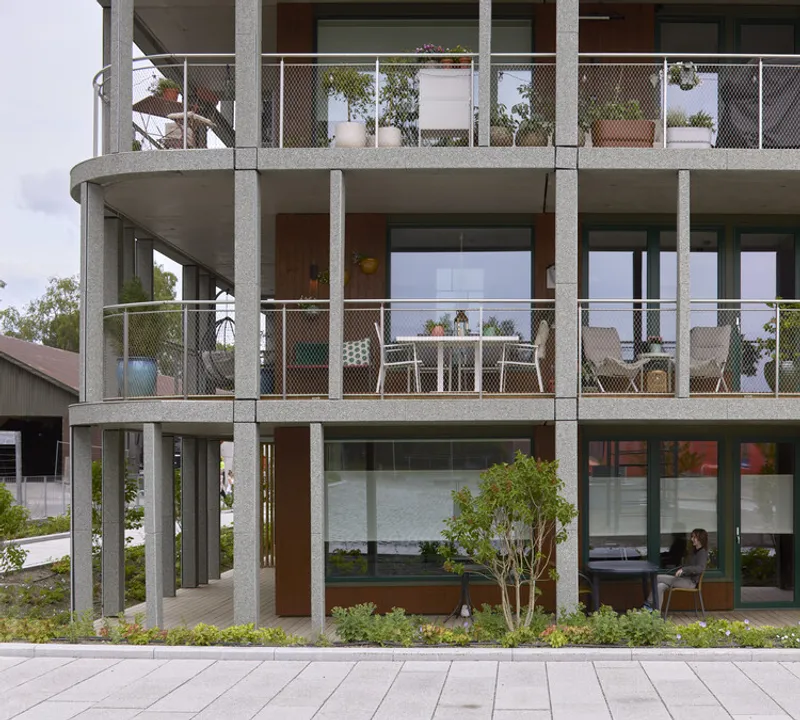
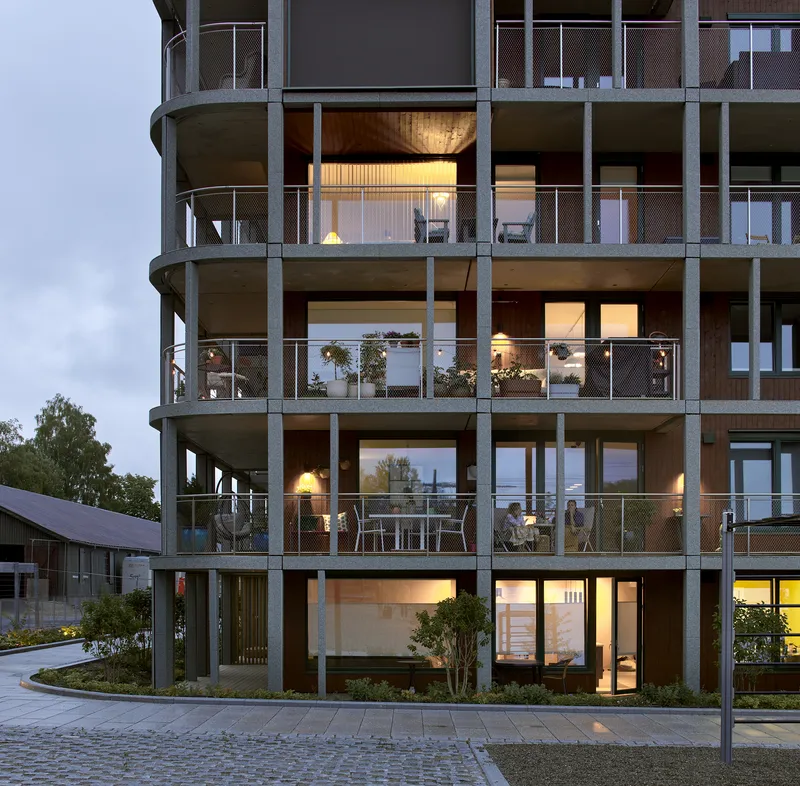
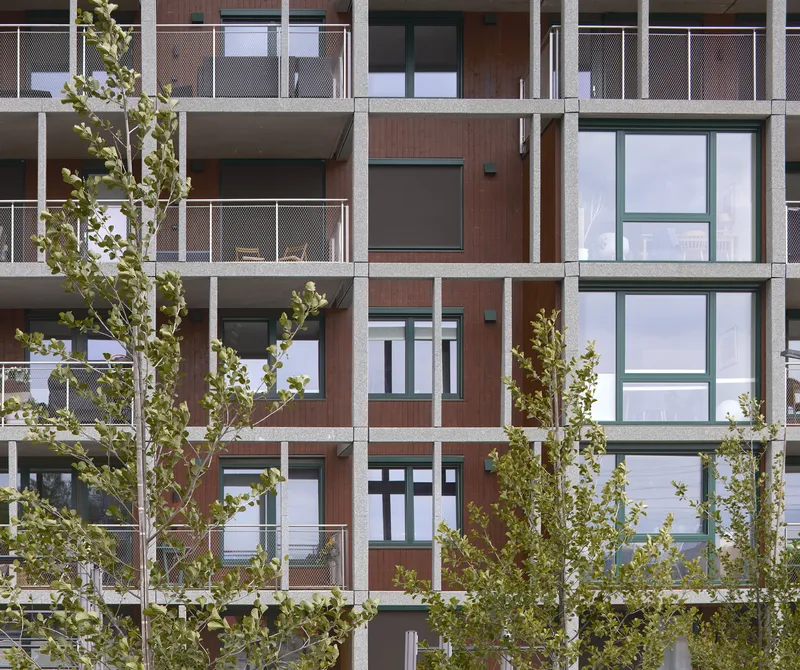
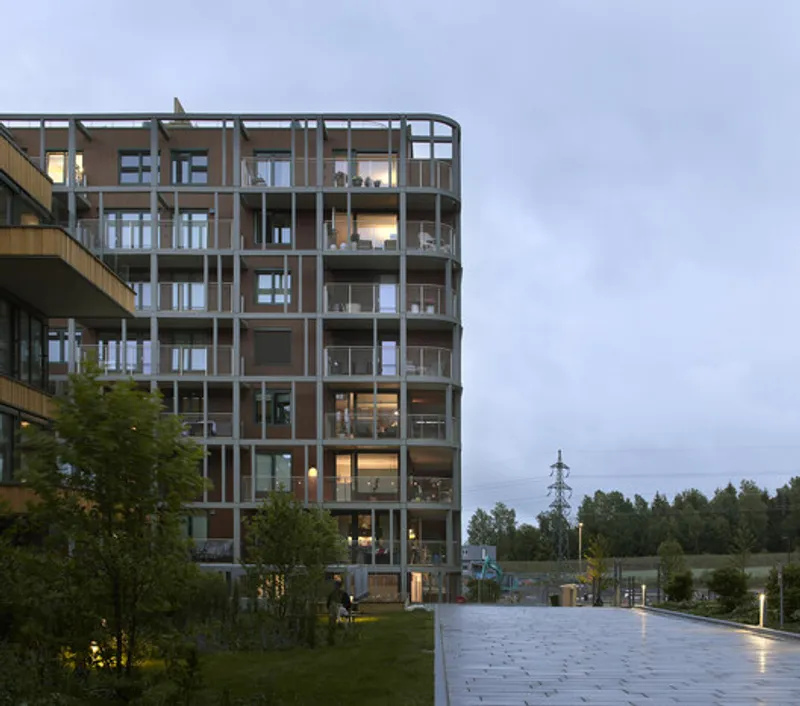
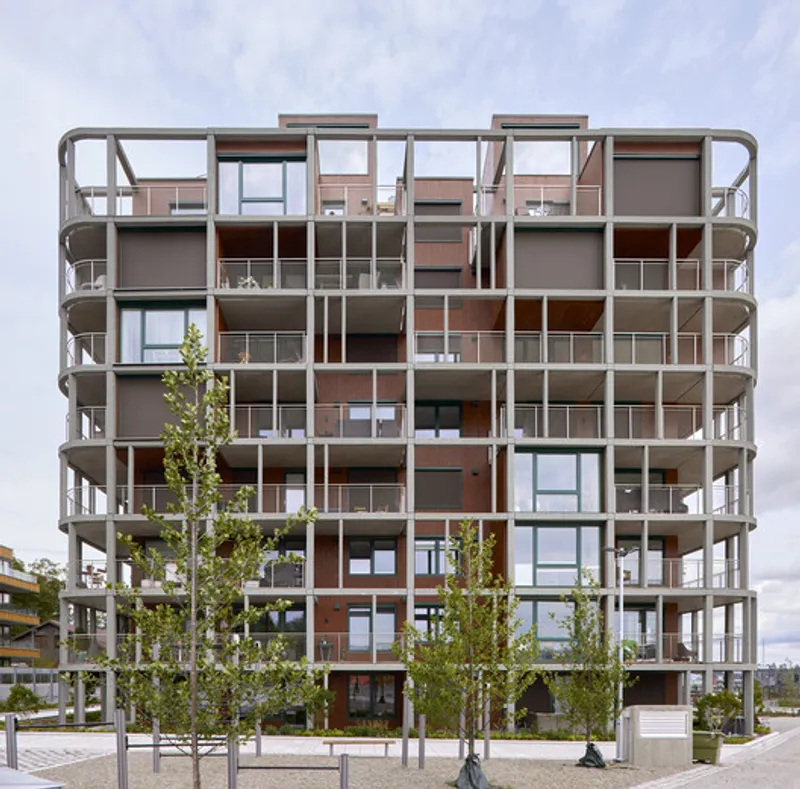
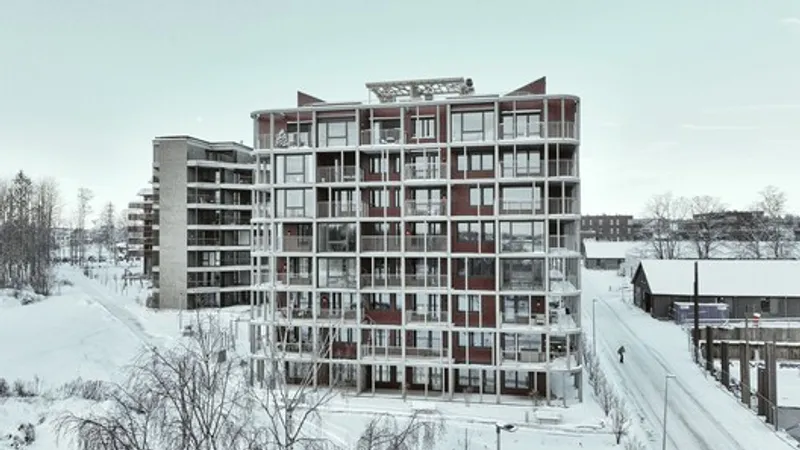
Ski Tower rises nine stories, housing 4 to 6 apartments per floor, with private roof terraces crowning the upper levels. What sets the building apart is its external exoskeleton, a continuous structural grid that wraps around the entire volume. This secondary layer gives the tower an organic, soft expression, deliberately avoiding a defined front or back and allowing the building to read as a sculptural object in the landscape.
The architecture is conceived as a two-layer system:
- An inner façade clad in warm wood, creating a domestic and tactile interior atmosphere.
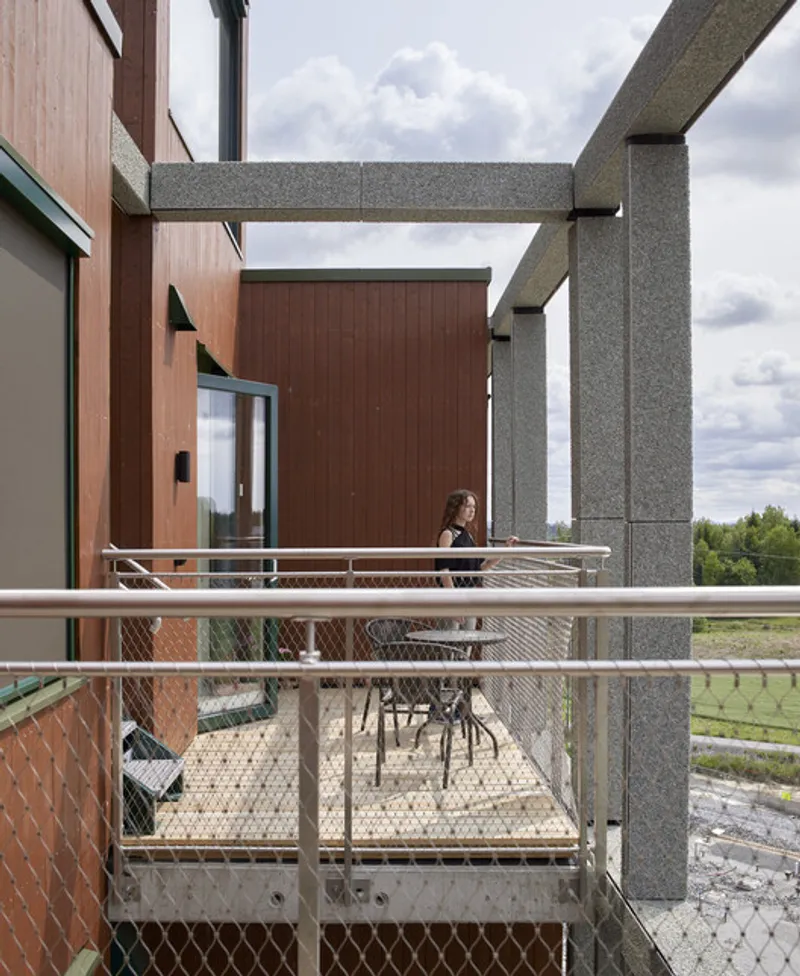
- An outer grid structure, forming balconies and semi-private outdoor rooms that extend living, dining, and kitchen spaces outward.
Sustainability and Material Innovation
A defining feature of Ski Tower is its commitment to environmental performance. The outer grid is clad with panels coated in crushed olivine stone, a material with the natural ability to bind CO₂ over time. This makes the façade not only an architectural gesture but also an active contributor to improved air quality, functioning as a kind of natural air purifier.
The grid’s seemingly irregular pattern creates dynamic window niches that project outward across all floors. These niches are carefully aligned with interior layouts, enhancing spatial variety inside apartments while also acting as visual and physical separators between adjacent terraces.
Light, Views, and Living Quality
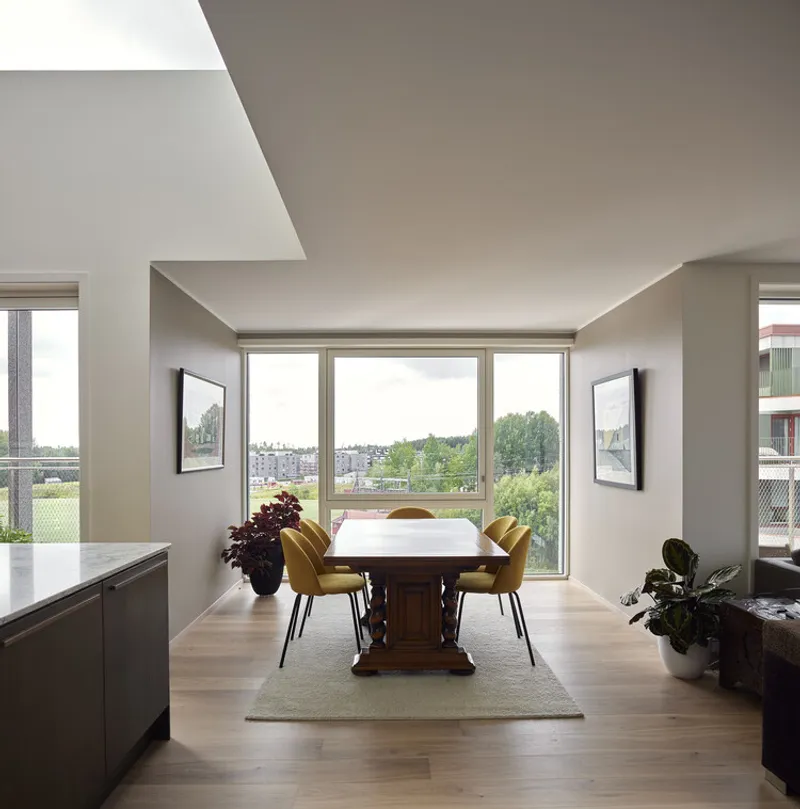
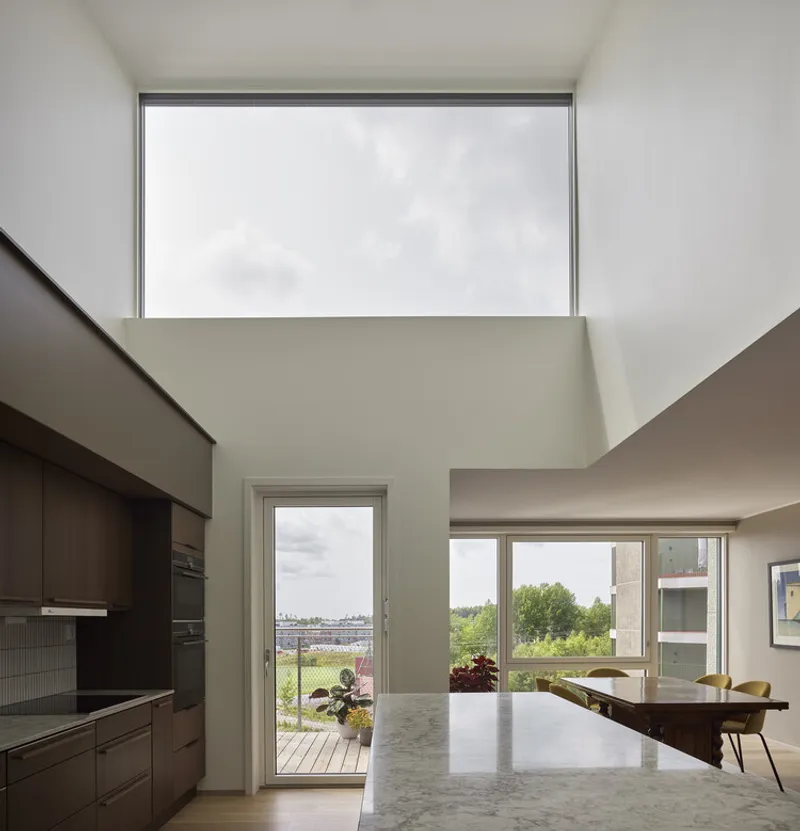
At roof level, four sculptural light shafts rise above the exoskeleton, marking the penthouse apartments and giving the tower a strong vertical identity. Oriented toward the south-east, these angled light shafts channel daylight deep into the interiors, illuminating dining areas during the day and framing views of the night sky after sunset. This interplay of light reinforces the tower’s character as both a functional residence and an expressive architectural form.
A New Model for Urban Living
Ski Tower demonstrates how high-density housing can balance architectural identity, sustainability, and livability. Through its layered façade, climate-conscious materials, and generous private outdoor spaces, the project redefines apartment living in suburban Norway: offering residents a strong connection to nature, light, and the surrounding community.
All the photographs are works of Ski+Aerial's, Jean Pierre Mesinele, Solon Property


Popular Articles
Popular articles from the community


longwave studio Reorganizes a 112 m² Tainan Apartment Around the Daily Routines of a Family and Two Cats
In Tainan, Taiwan, birch plywood, rust-red furniture and a freestanding plaster wall link arrival, storage, work and family life in one apartment.

U.GA Architects Wraps an Oval Rooftop Pool in Curved Board-Formed Concrete on Busan's Jeollidan-gil
In Busan's Jeonpo-dong, a 454 m² mixed-use block stacks a neighborhood facility, guest rooms and an oval rooftop pool inside spiraling concrete walls.

Jaramillo Van Sluys Arquitectura and Urbanismo Turn a Demolished Registry Lot in Quito into an Orchard Plaza
In Quito's Centro Histórico, a 2,800 m² plaza exposes the San Agustín convent wall and redraws its lost Augustinian orchard in volcanic stone.

David Ortega Stacks a Two-Story Mexico City Penthouse Around a Steel Stair and a Pergola-Shaded Roof Terrace
In Colonia Roma, a 300 m² penthouse uses oak joinery, a planted steel stair and a slatted roof pergola to make a new-build apartment feel like a house.

Similar Reads
You might also enjoy these articles


Hodi-Mandai Geram
Project Function: Preservation and revitalization of the Intangible heritage and socio-spatial identity of the Hodi by Housing, Cultural Memory Center, Sacred Grove, landscape, local tourism economy


Olio Towers: A Mid-Rise for Performers That Fuses Housing, Rehearsal, and Stage
Located blocks from Houston's Theater District, this modular tower stacks living units around a central performance atrium.

Oasis: Modular Green Housing Carved into Dhaka's Urban Fabric
A shortlisted Plugin Housing entry reclaims unauthorized settlements in Dhaka with stepped concrete volumes, green roofs, and ventilation-driven design.

Black Hole: A Floating Megastructure for the Post-Physical Era
Emiliano Mazzarotto envisions a spherical, self-scaling arena where e-sports, digital hotels, and holographic stadiums replace traditional public space.

Explore Nordic Sustainable Architecture Competitions
Discover active competitions in this discipline

Challenge to design mud housing for contemporary communities

Challenge to reimagine the Iron Throne

Photograph architecture without architects

Illustrate the lost glory of Angkor Wat - Render Challenge
Comments (0)
Please login or sign up to add comments
No comments yet. Be the first to comment!