
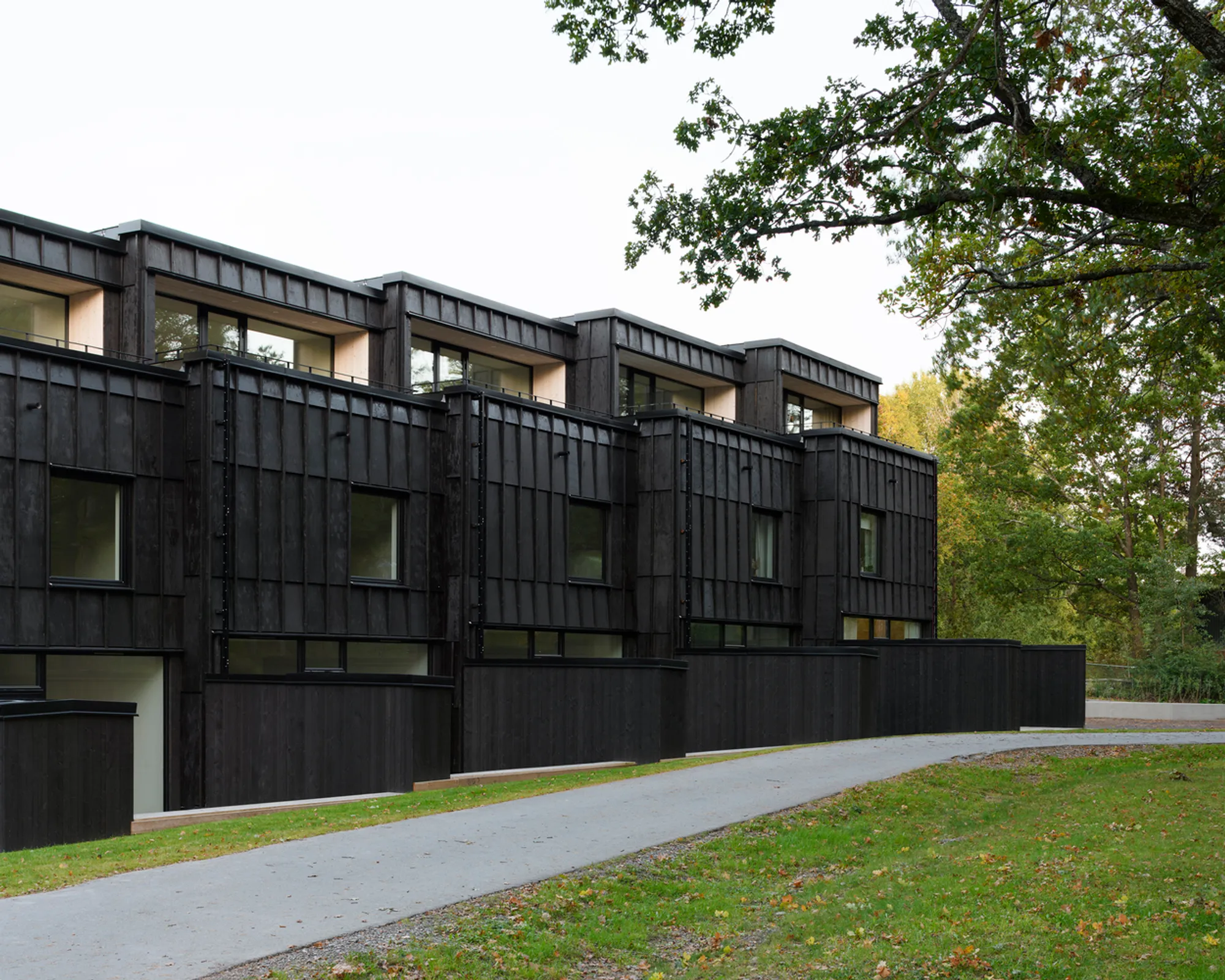
Sköndal Terrace Houses by Karlsson Lauri Arkitekter: A Nature-Integrated Residential Community in Farsta, Sweden
Sköndal Terrace Houses blend tarred wood façades, stepped forms, and nature-focused layouts to create modern, light-filled homes integrated into the forested landscape.


The Sköndal Terrace Houses by Karlsson Lauri Arkitekter present a refined example of contemporary Swedish residential architecture rooted in landscape sensitivity and local building traditions. Completed in 2023, this 2,500 m² development is situated in the serene district of Farsta, just outside Stockholm, where nature and suburban living merge seamlessly. Designed by lead architects Mats Karlsson and Tomas Lauri, the project consists of fifteen terrace houses arranged to follow the natural topography, creating an intimate, park-like neighborhood surrounded by oak trees, open fields, and coniferous forest.
A Site-Specific Layout Shaped by Terrain
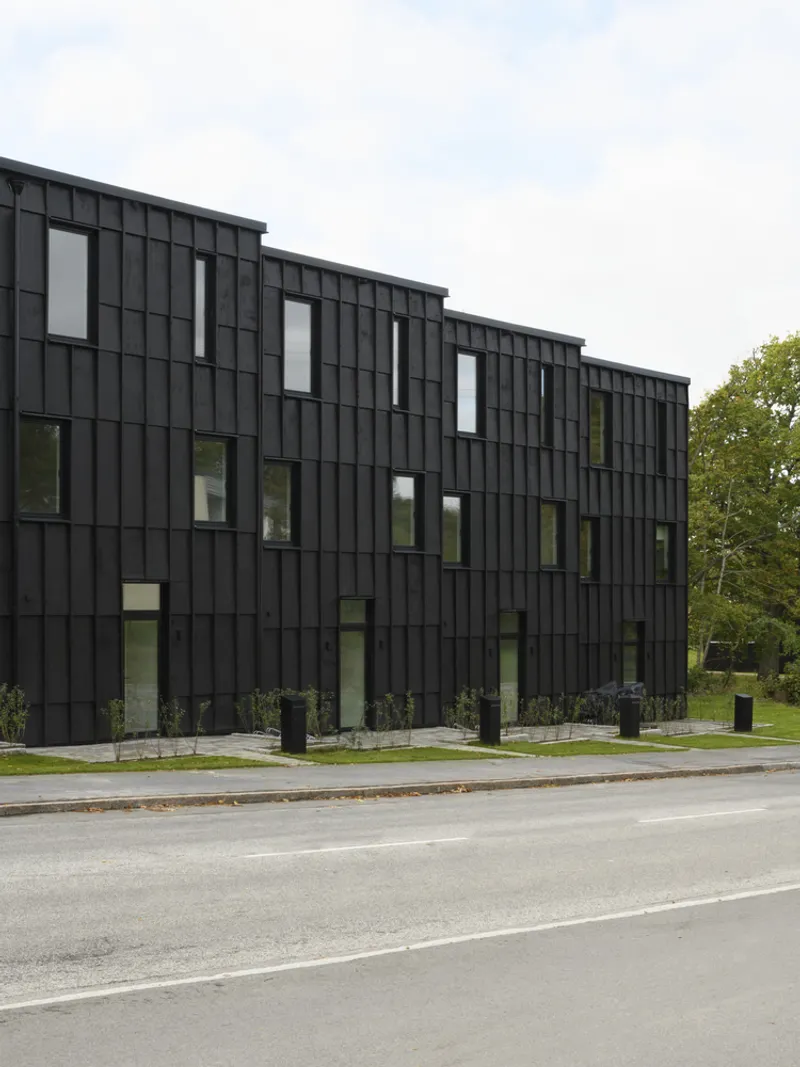
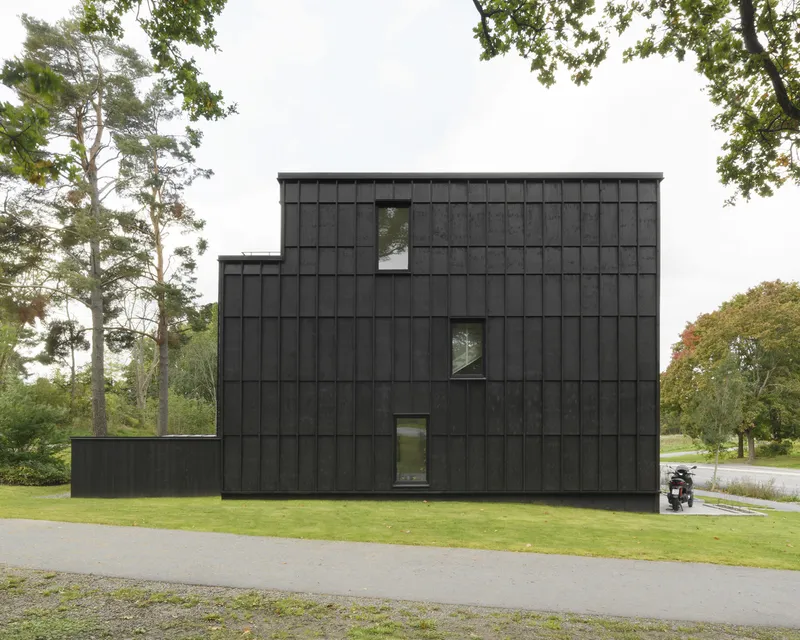
The architects positioned the fifteen residences in two staggered rows, allowing the buildings to gently adapt to the site’s subtle shifts in elevation. This approach preserves the character of the existing landscape and ensures that each unit benefits from a harmonious connection to the surrounding greenery. The result is a community that feels embedded within the natural environment rather than imposed upon it.
Calm Street Fronts and Open South-Facing Facades
Responding to orientation and context, the houses adopt a more introverted expression along the northern street-facing side. These façades remain relatively closed, prioritizing privacy and reducing exposure to traffic. In contrast, the southern sides open generously toward the natural surroundings, featuring large glazed sections and inviting patios that bring daylight deep into the interiors. This dual character enhances energy efficiency while strengthening visual links to the forested landscape.
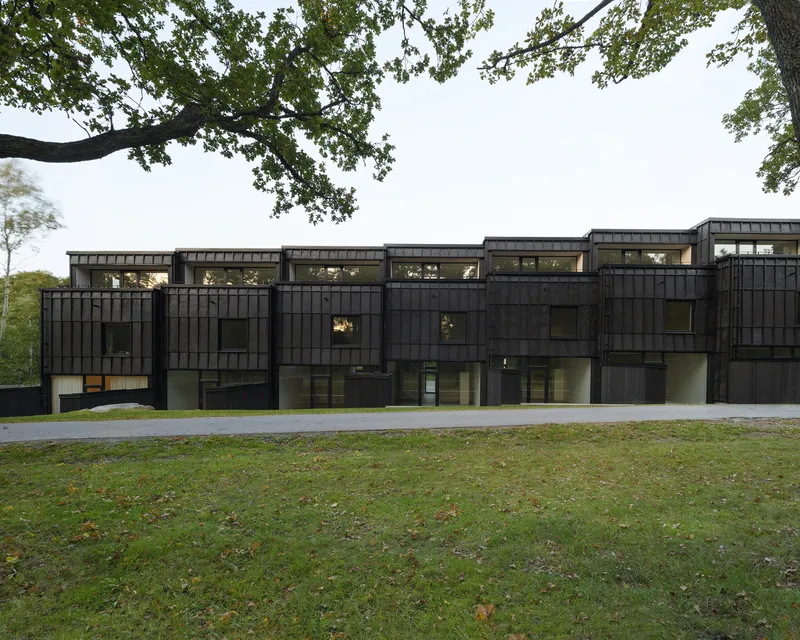
A Contemporary Interpretation of Nordic Wood Traditions
Materiality plays a central role in the architectural identity of the Sköndal Terrace Houses. The faceted exterior walls are crafted from plywood panels treated with blackish-brown tar, an ancient method of wood preservation in the Nordic region. Tarred wooden façades are historically tied to Swedish craft traditions and saw a resurgence during the national romantic era of the early 20th century. By adopting this technique, the architects merge durability, sustainability, and cultural continuity.
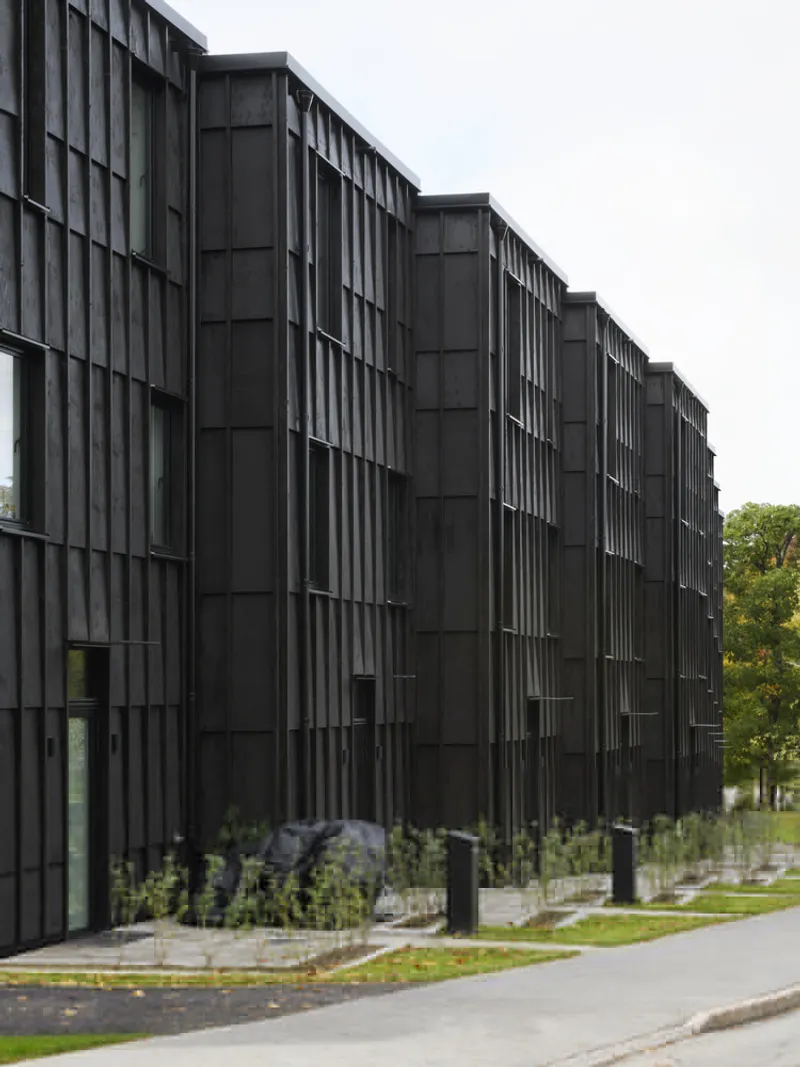
Bright, Generous Interiors Connected to Outdoor Life
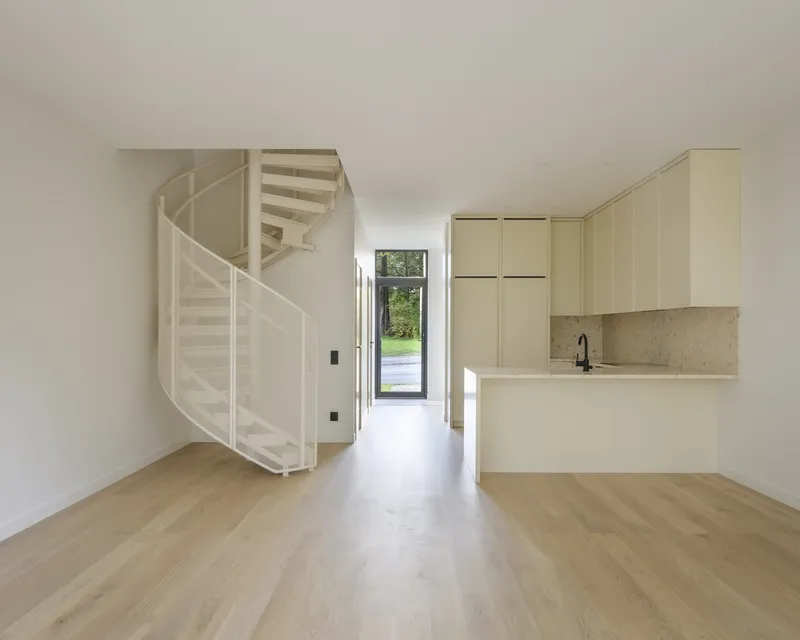
Inside, the homes prioritize vertical openness and natural light, featuring generous ceiling heights across all levels. The ground floor is designed as an extension of the outdoors, with living spaces flowing directly into private patios. The first floor houses the main bedrooms, offering quiet, elevated views of the landscape. The top floor creates an additional living area paired with a spacious terrace nestled among the treetops, enhancing the feeling of living close to nature and reinforcing the project’s biophilic design principles.
A Harmonious Blend of Modernity, Tradition, and Ecology
The Sköndal Terrace Houses exemplify how thoughtful architecture can bridge contemporary residential needs with environmental stewardship and cultural heritage. Through its careful site integration, traditional material treatments, and nature-focused interior planning, the development stands as a model for sustainable suburban living in Sweden.
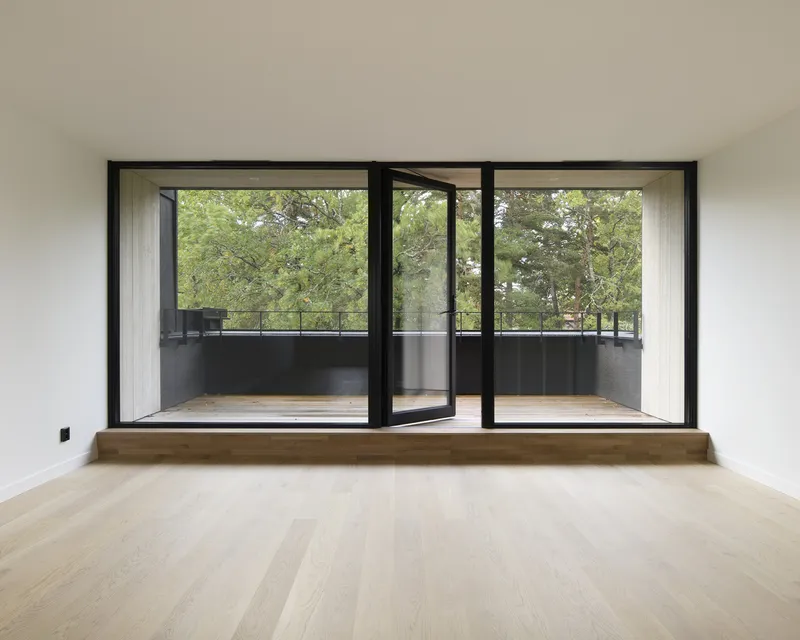
All photographs are works of Mikael Olsson



Popular Articles
Popular articles from the community


Play: Fragments of Their World
Familiar architecture becomes modular playground design, creating safe spaces where displaced children can learn, connect, imagine and play.

The Ocean Hive: Sustainable Architecture for a Self-Sufficient Civilization at Sea
The Ocean Hive imagines sustainable architecture at sea, where modular habitats, algae, wave power and ocean waste sustain a growing colony.

Hill & Cross Opera: Sculptural Opera House Architecture Shaped by Tallinn’s Landscape and Identity
Hill & Cross Opera reimagines opera house architecture in Tallinn through its sculptural hill, civic plaza, glass wave and a luminous cross.

Lunar Spiral: Space Architecture Shaped by the Mathematics of the Universe
Lunar Spiral reimagines space architecture through Fibonacci geometry, lunar regolith, levitating habitats, and self-sustaining Moon living.
Similar Reads
You might also enjoy these articles


Hodi-Mandai Geram
Project Function: Preservation and revitalization of the Intangible heritage and socio-spatial identity of the Hodi by Housing, Cultural Memory Center, Sacred Grove, landscape, local tourism economy


Olio Towers: A Mid-Rise for Performers That Fuses Housing, Rehearsal, and Stage
Located blocks from Houston's Theater District, this modular tower stacks living units around a central performance atrium.

Oasis: Modular Green Housing Carved into Dhaka's Urban Fabric
A shortlisted Plugin Housing entry reclaims unauthorized settlements in Dhaka with stepped concrete volumes, green roofs, and ventilation-driven design.

Black Hole: A Floating Megastructure for the Post-Physical Era
Emiliano Mazzarotto envisions a spherical, self-scaling arena where e-sports, digital hotels, and holographic stadiums replace traditional public space.
Explore Residential Building Competitions
Discover active competitions in this discipline


Challenge to design mud housing for contemporary communities


Challenge to reimagine the Iron Throne


Photograph architecture without architects


Illustrate the lost glory of Angkor Wat - Render Challenge
Comments (0)
Please login or sign up to add comments
No comments yet. Be the first to comment!