
Skubianka House by SZCZ Jakub Szczesny – A Reimagined Pyramid-Like Home Immersed in Forest Landscape
A restored stepped forest home blending panoramic glazing, handcrafted interiors, and eclectic details to transform a 1970s pyramid-like structure into a cozy retreat.


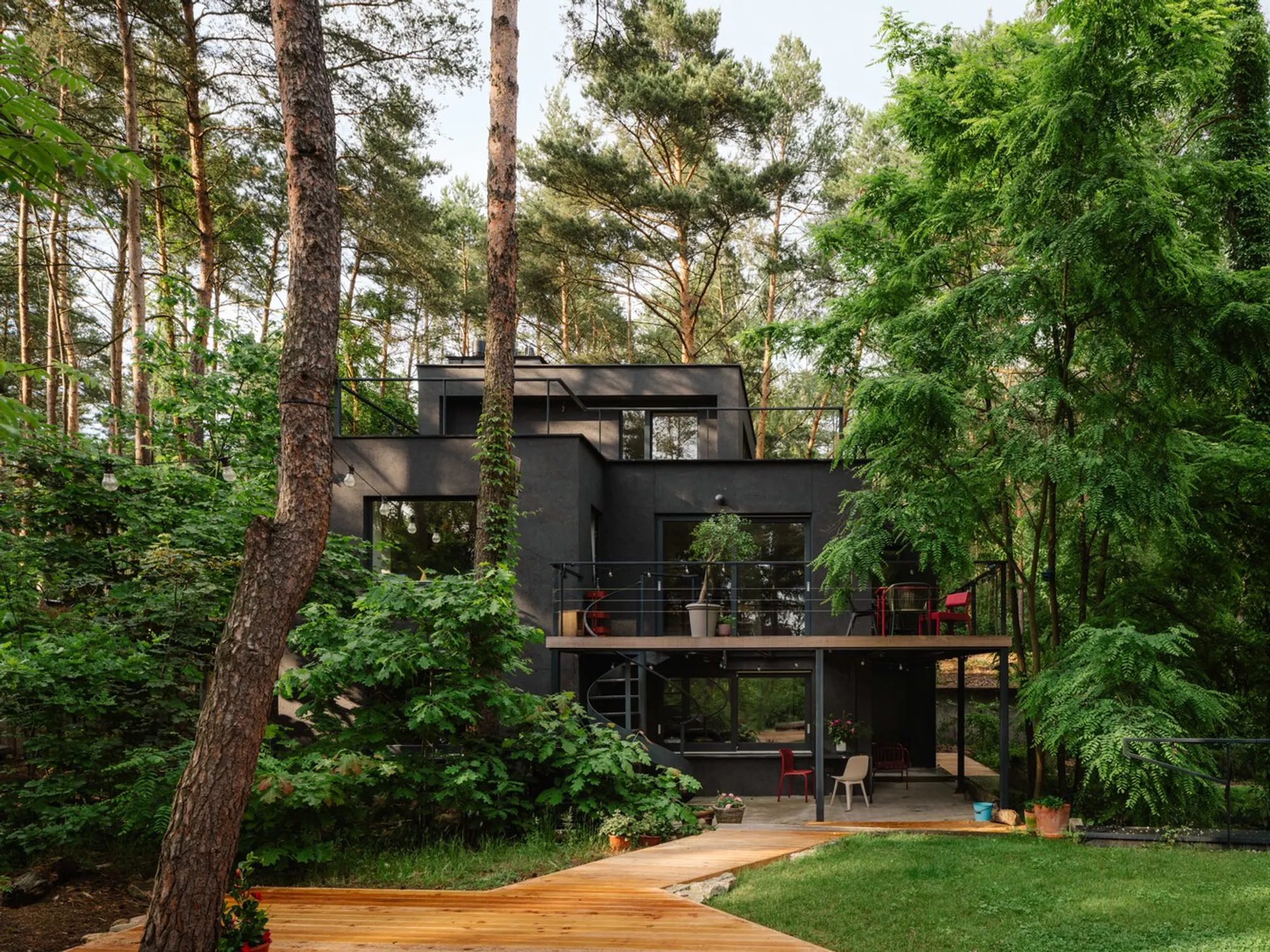
Skubianka House, designed by architect Jakub Szczęsny of SZCZ, is a remarkable transformation of a forgotten 1970s residence tucked within a mixed forest near Skubianka, Poland. The 162 m² home, originally built between 1976 and 1981 from salvaged and improvised materials, has been thoughtfully renovated into a warm, eclectic retreat overlooking a sloping plot and nearby river. Photographed by Nate Cook, the project highlights a contemporary yet deeply personal revival of an unconventional structure.
A Rediscovered Architectural Gem
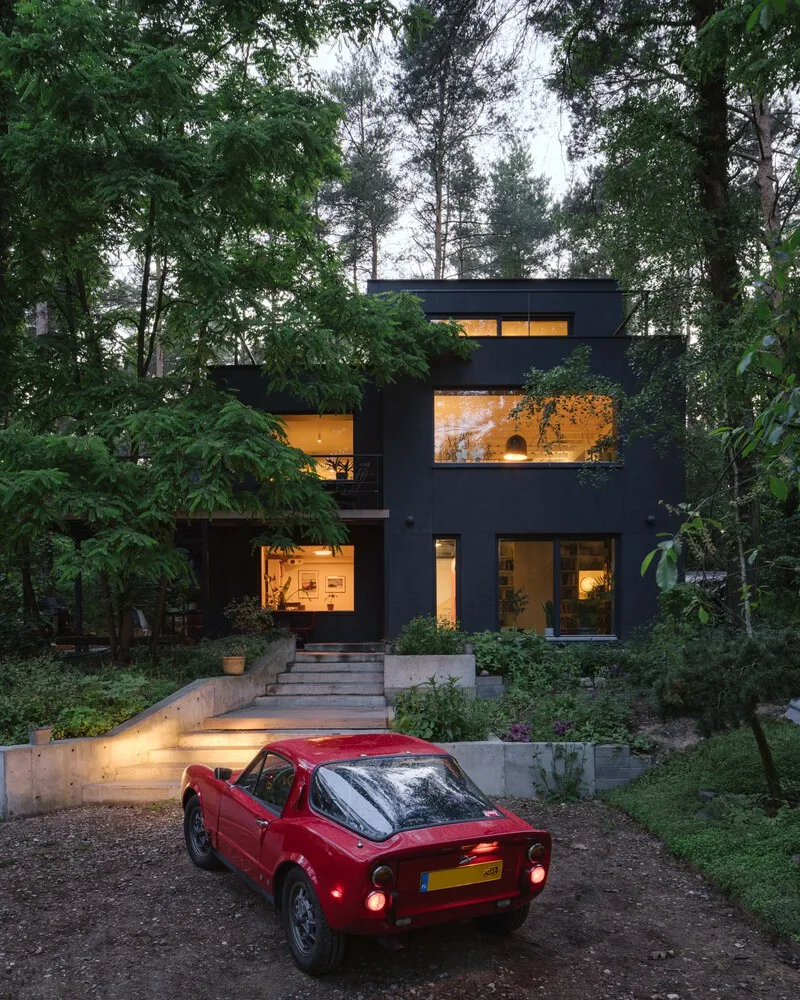
The story of the house begins with chance: the owners stumbled upon the pyramid-like building while walking their dog. What they found was an obscure, uninhabited structure, partially built with recycled elements—such as tram rails forming the sloped ceilings and terrace drainage. The original documentation consisted of just a few sketches, leaving much of the building’s quirks unexplained.
Despite the architect’s early warning that restoration would be more costly and labor-intensive than new construction, the owners were committed. They embraced its stepped geometry, low ceilings, and unique character, seeking to maintain the building’s original charm while opening it visually toward the surrounding greenery.
Opening the House to Light and Landscape
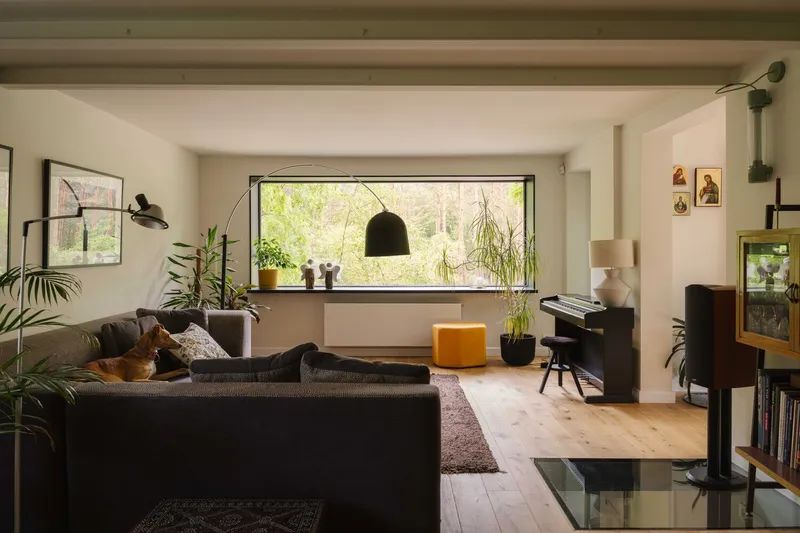
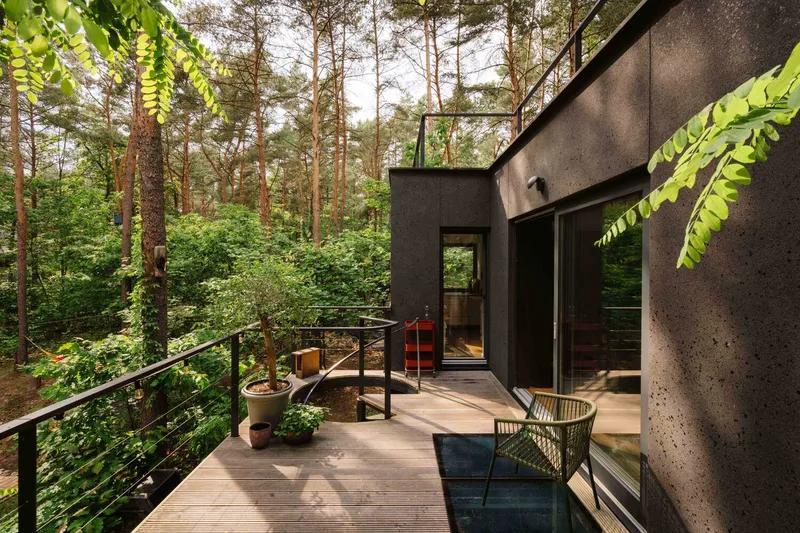
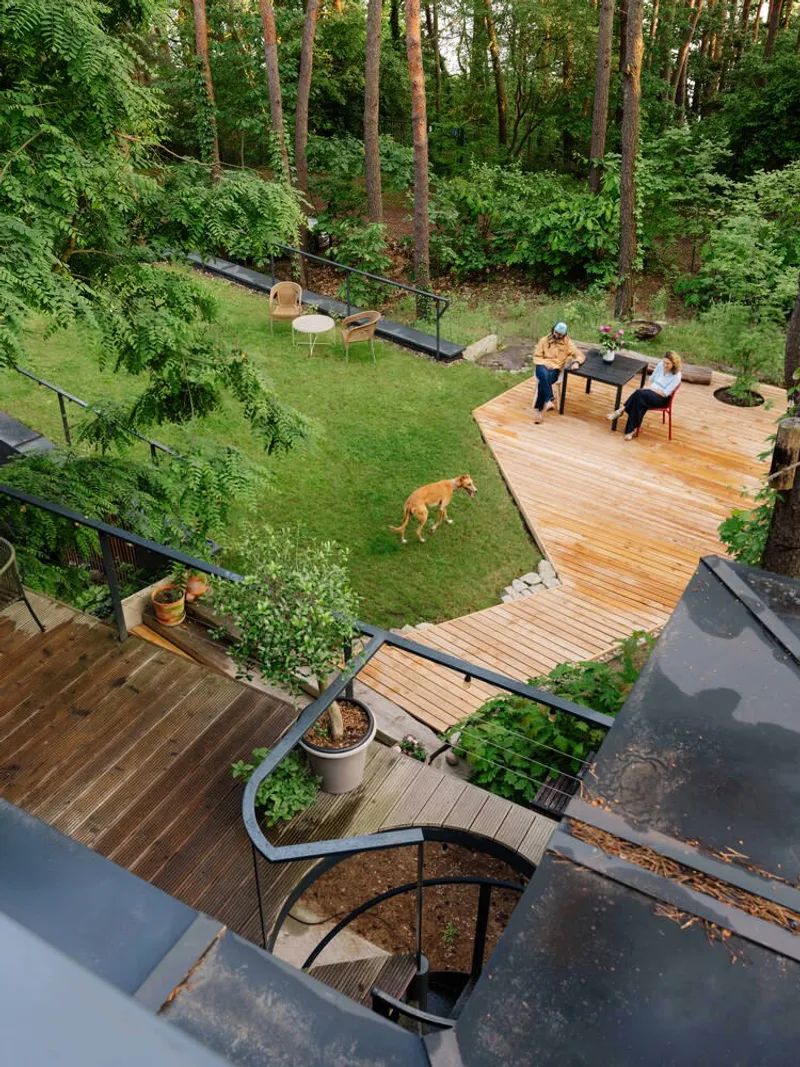
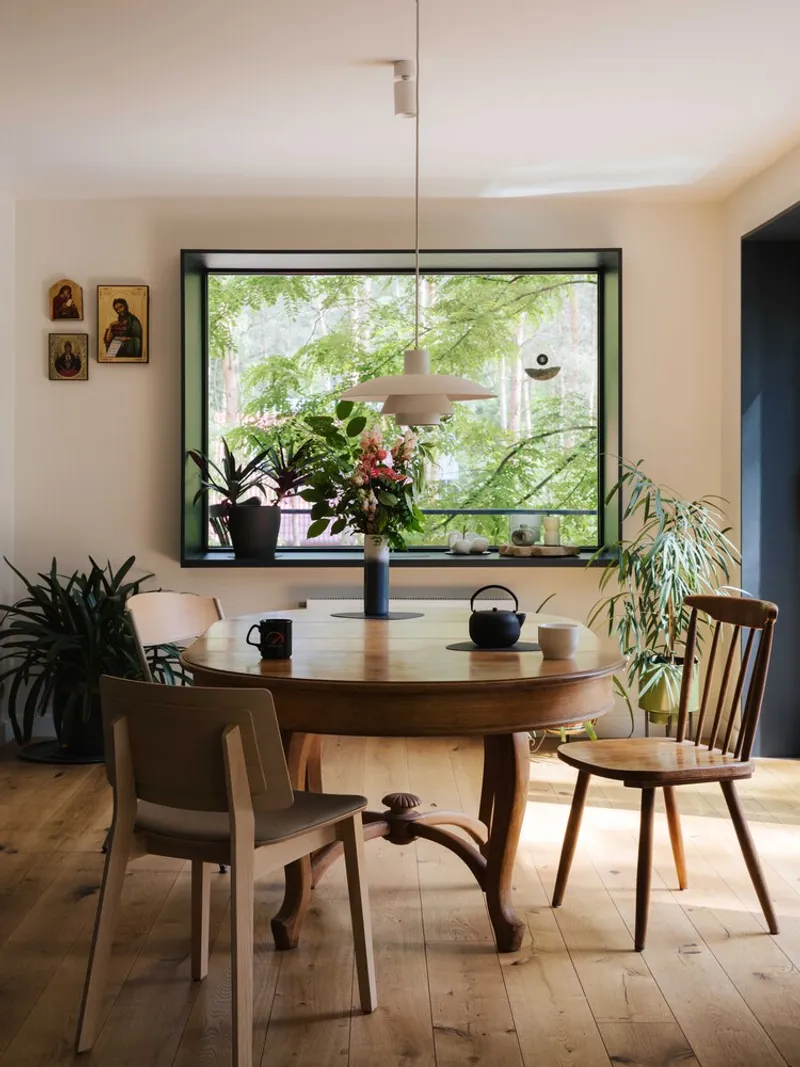
A major design intervention was the introduction of large panoramic windows and operable glazing to enhance ventilation and amplify views of the forest and river. Prioritizing uninterrupted sightlines, the owners even opted to forgo railings on the upper-level terraces, keeping only minimal balustrades due to the absence of small children.
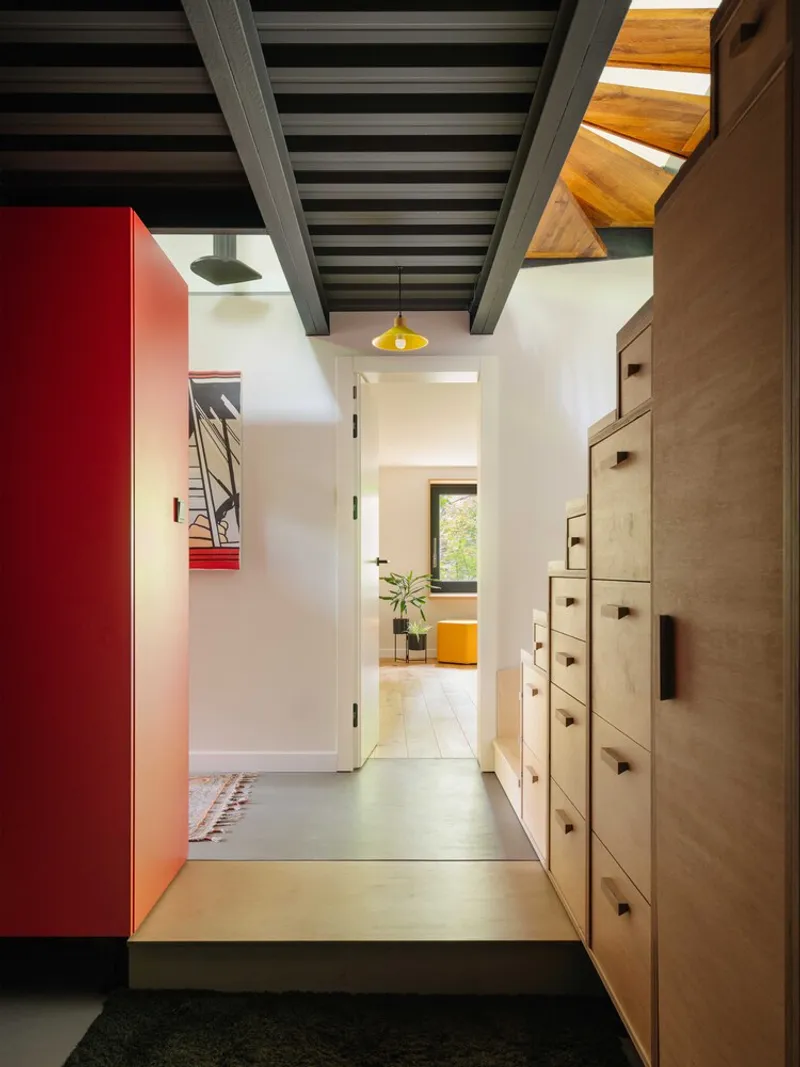
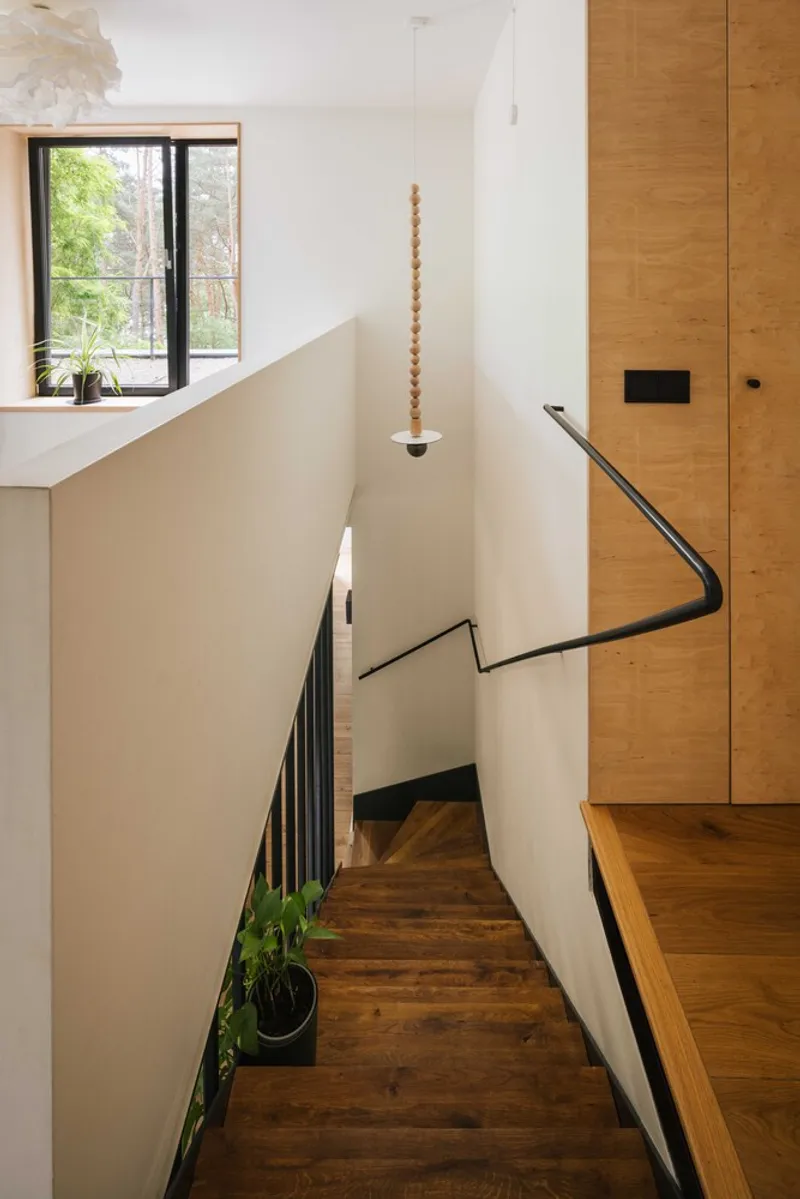
The renovation brought clever daylight strategies, including floor skylights that introduce vertical shafts of sunlight from the terrace to the guest bedroom below and to the ground-floor corridor. These features enrich visual continuity and bring a subtle sense of surprise to the interior experience.
A Labor of Love and Craftsmanship
What sets Skubianka House apart is the profound personal involvement of the owners. Much of the custom furniture, metalwork, and detailing was crafted by the homeowner himself, assisted by friends. His daughters—both art students—contributed to the design of several bathrooms. This hands-on approach filled the house with emotionally resonant elements and an authentic lived-in quality impossible to replicate with standard architectural commissions.
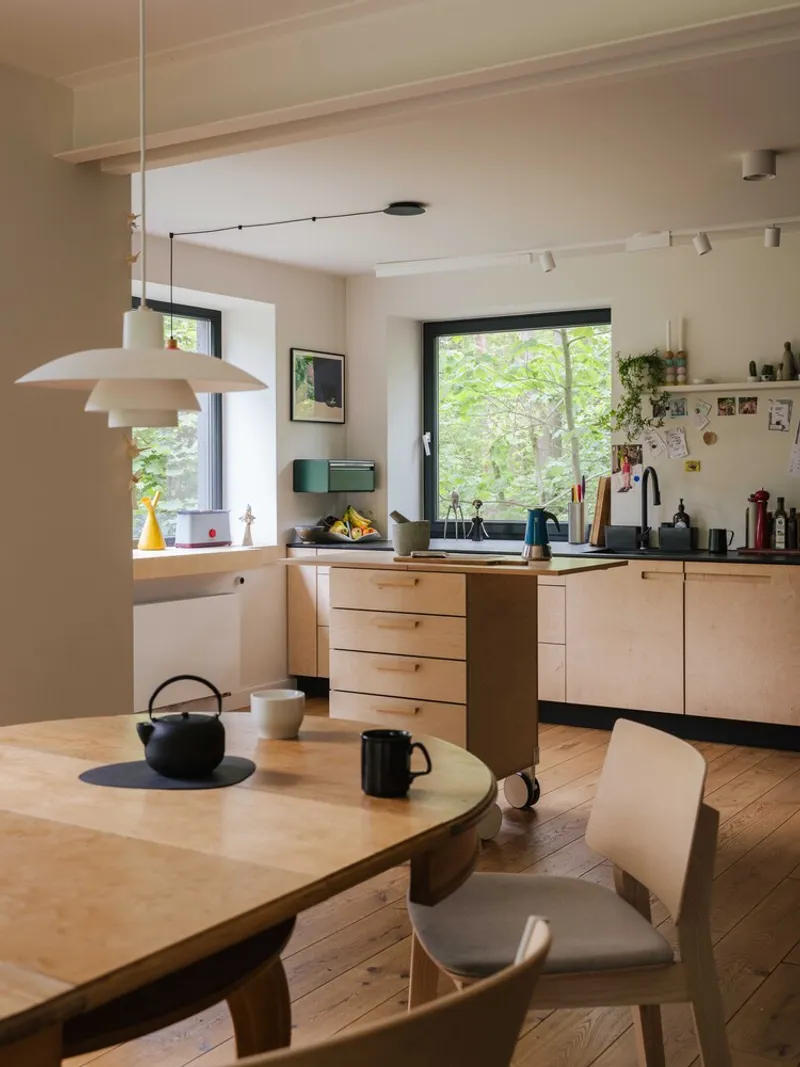
The eclectic interior merges warm wood, curated artifacts, salvaged objects, and handcrafted pieces. Items once stored and forgotten—in garages, workshops, or previous homes—were transformed into meaningful design components. Even the kitchen extractor fan was redesigned from an old industrial lamp, and a foldable island recalls classic pieces by Antonio Citterio.
A Simple Exterior, a Warm Interior
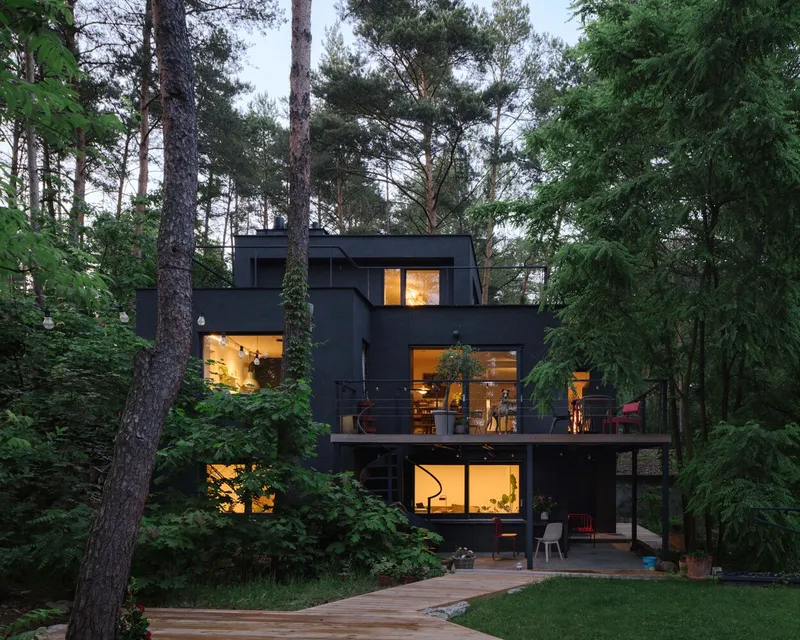
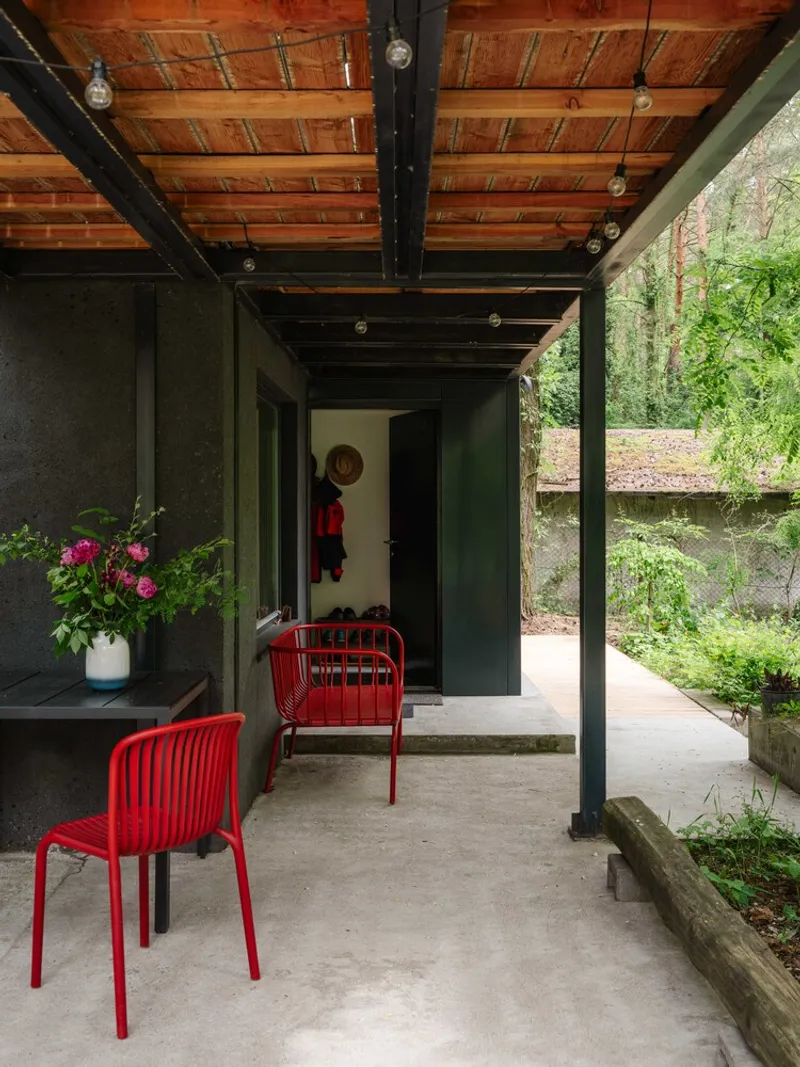
Exterior interventions were kept minimal to allow the structure to blend into the forest. While the architect suggested a camouflage-like mural, the clients opted for a subdued façade with distinctive steel-framed windows and red interior accents. Locals had once called the building a “block” due to its Tetris-like massing, but these geometric volumes became precisely the reason the new owners fell in love with it.
The layout divides the home into three levels:
- Ground Floor: Two guest bedrooms, a study, bathroom, boiler room, and workshop within the modified garage.
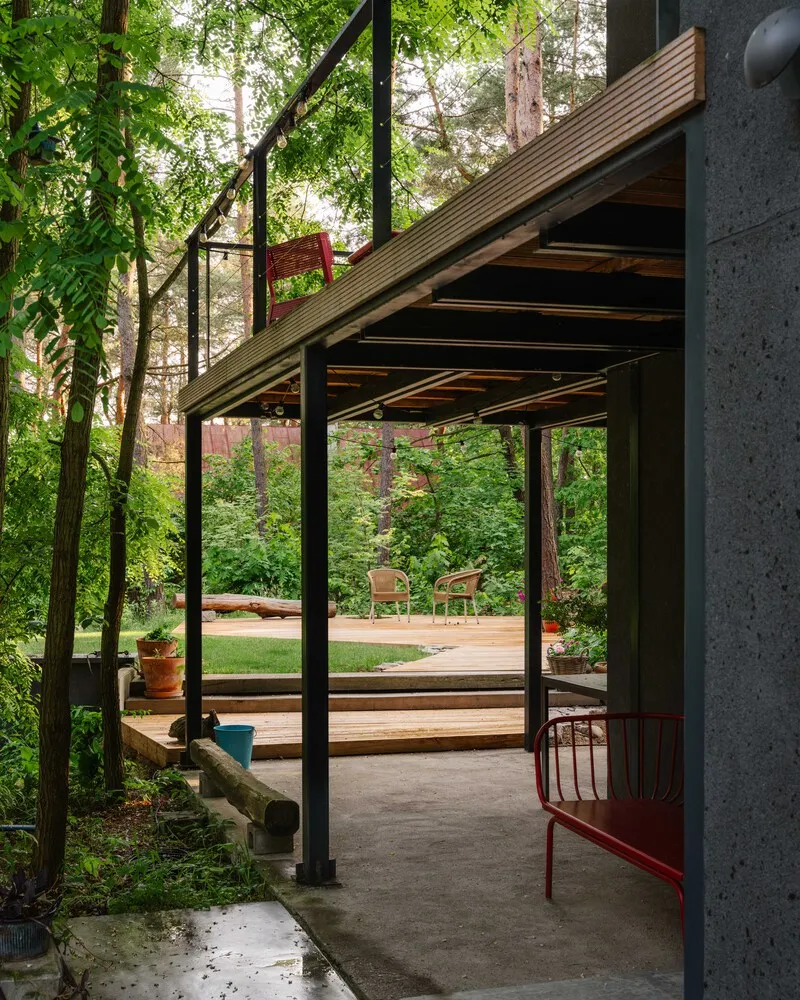
- First Floor: Kitchen, dining area, living room, guest toilet, and a newly built terrace.
- Top Floor (“the kiosk”): Master bedroom with forest and river views, a compact bathroom, and two terraces.
A green roof now covers the relocated garage, accessible from a higher part of the site.
Compact, Cozy, and Scandinavian in Spirit
The house retains its original low ceiling heights—212 cm on the ground floor and 250 cm on upper levels—reflecting building practices of the Polish People’s Republic. Yet the new openings and skylights create a Scandinavian sense of cozy minimalism rather than confinement. Over the course of five years, and through numerous design iterations, the house gradually evolved into a harmonious living environment that the family eventually preferred over their Warsaw apartment.
A Home Too Relaxing to Leave
Despite its challenges, the project has become a personal sanctuary for the owners. Today, they describe the atmosphere as so calming that it creates “the illusion of a permanent vacation.” With future plans for a sauna at the back of the house, the story of Skubianka House continues—rooted in craftsmanship, passion, and a deep connection to place.
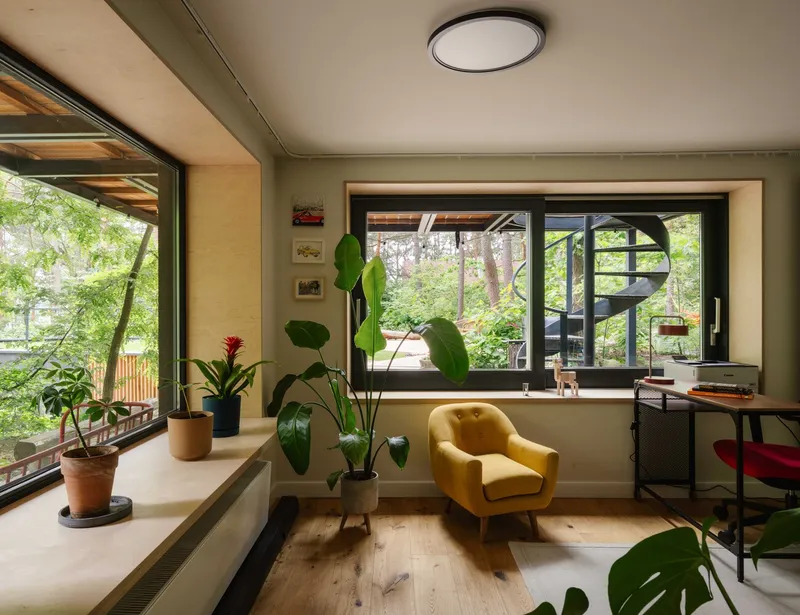
All photographs are works of Nate Cook



Popular Articles
Popular articles from the community


Lunar Spiral: Space Architecture Shaped by the Mathematics of the Universe
Lunar Spiral reimagines space architecture through Fibonacci geometry, lunar regolith, levitating habitats, and self-sustaining Moon living.

The Ocean Hive: Sustainable Architecture for a Self-Sufficient Civilization at Sea
The Ocean Hive imagines sustainable architecture at sea, where modular habitats, algae, wave power and ocean waste sustain a growing colony.

Co-Life: Senior Housing Design That Reconnects Older Adults With the City
Co-Life reimagines senior housing design through healing gardens, shared streets, workshops, and a sustainable community across generations.

Riyadh For All: Intergenerational Urban Design for Active Aging in Rabat
Riyadh For All reimagines urban design in Rabat with intergenerational co-living, adaptive courtyards, and Moroccan cultural exchange today.


Similar Reads
You might also enjoy these articles


Hodi-Mandai Geram
Project Function: Preservation and revitalization of the Intangible heritage and socio-spatial identity of the Hodi by Housing, Cultural Memory Center, Sacred Grove, landscape, local tourism economy


Olio Towers: A Mid-Rise for Performers That Fuses Housing, Rehearsal, and Stage
Located blocks from Houston's Theater District, this modular tower stacks living units around a central performance atrium.

Oasis: Modular Green Housing Carved into Dhaka's Urban Fabric
A shortlisted Plugin Housing entry reclaims unauthorized settlements in Dhaka with stepped concrete volumes, green roofs, and ventilation-driven design.

Black Hole: A Floating Megastructure for the Post-Physical Era
Emiliano Mazzarotto envisions a spherical, self-scaling arena where e-sports, digital hotels, and holographic stadiums replace traditional public space.


Explore Residential Building Competitions
Discover active competitions in this discipline


Challenge to design mud housing for contemporary communities


Challenge to reimagine the Iron Throne


Photograph architecture without architects


Illustrate the lost glory of Angkor Wat - Render Challenge
Comments (0)
Please login or sign up to add comments
No comments yet. Be the first to comment!