
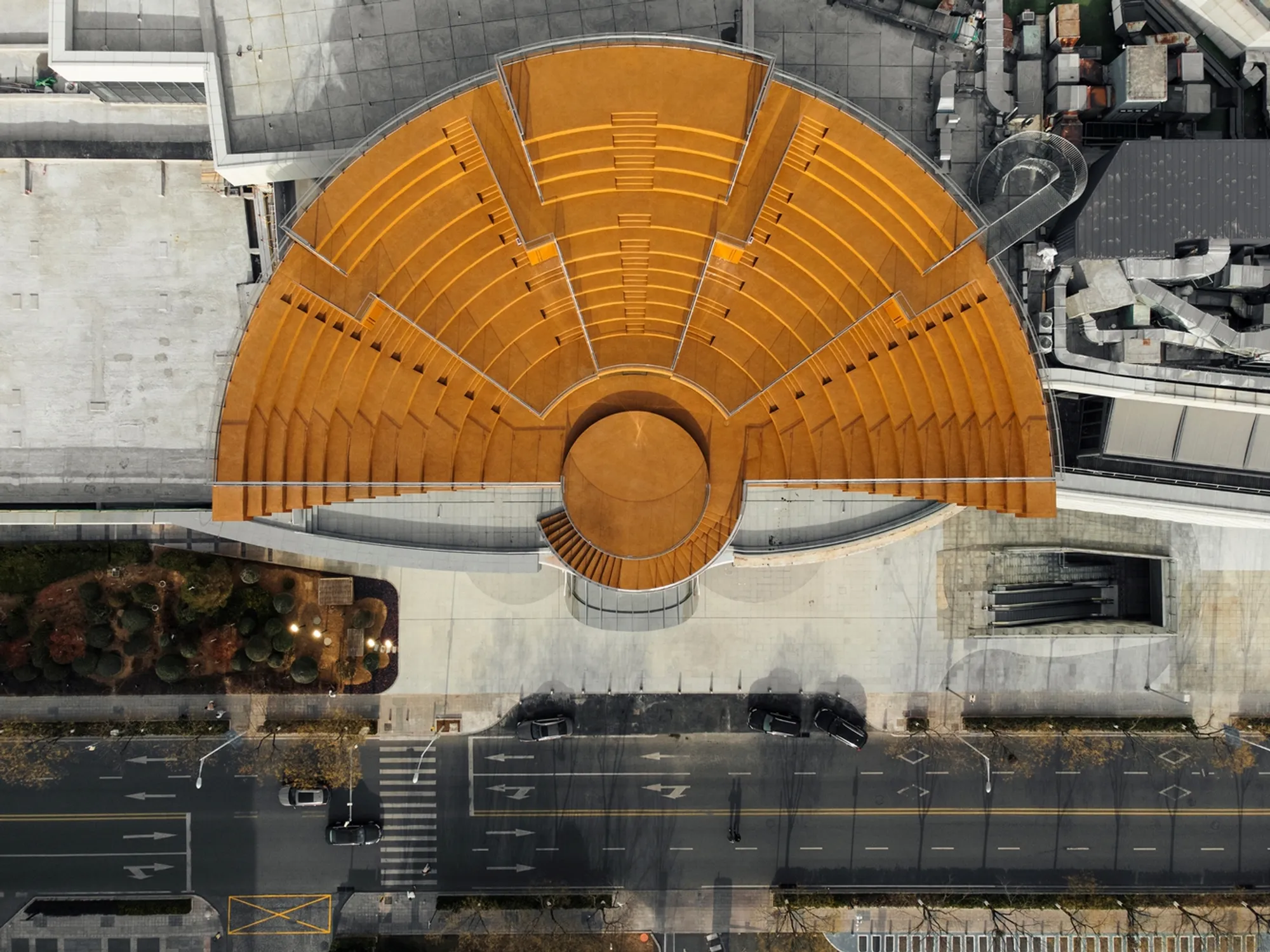
SKY BOWL: An Inclusive Rooftop Amphitheater Redefining Commercial Architecture in Qingdao
Inclusive rooftop amphitheater atop Hisense Mall transforms commercial space into a cultural platform, reconnecting city, waterfront, and public life.


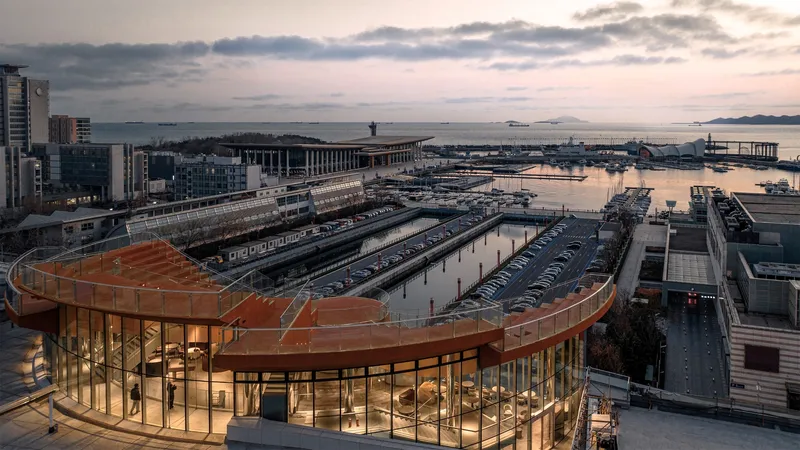
Perched above Hisense Mall in Qingdao, SKY BOWL by Society Particular (SOPA) redefines the role of commercial architecture by transforming a privatized rooftop into an inclusive civic destination. Completed in 2023, this 1,000-square-meter rooftop amphitheater challenges the conventional logic of luxury retail extensions, proposing culture, accessibility, and social engagement as the true drivers of architectural innovation.
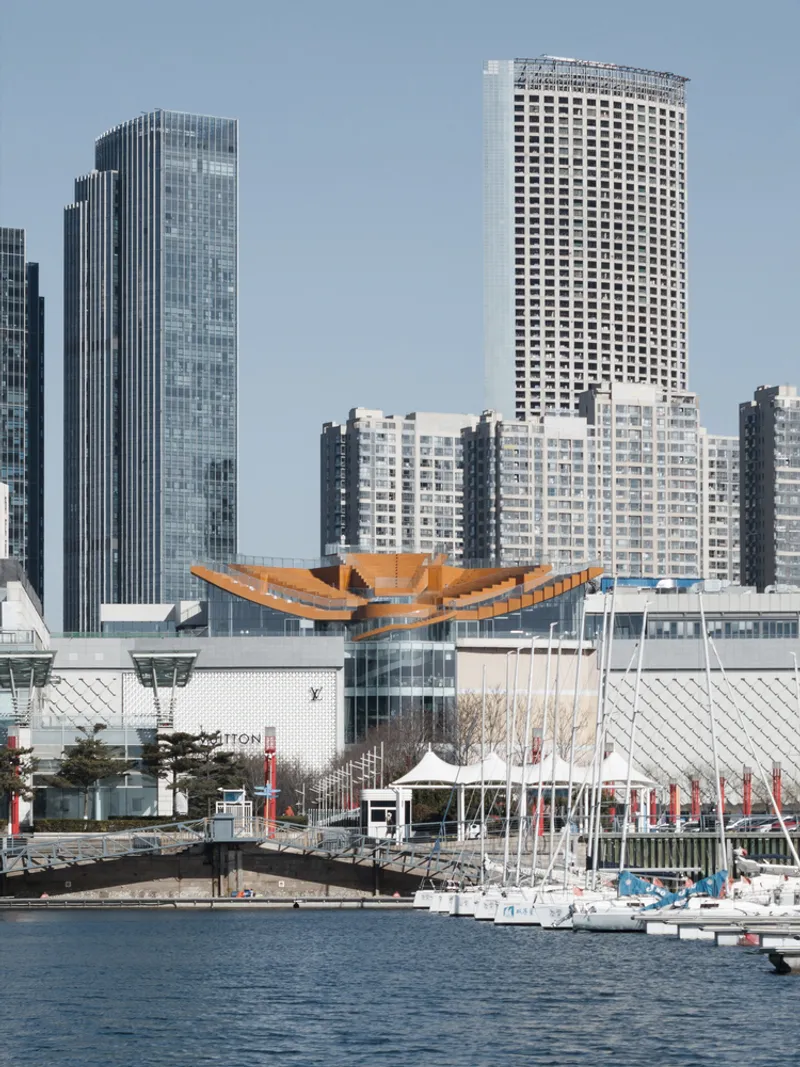
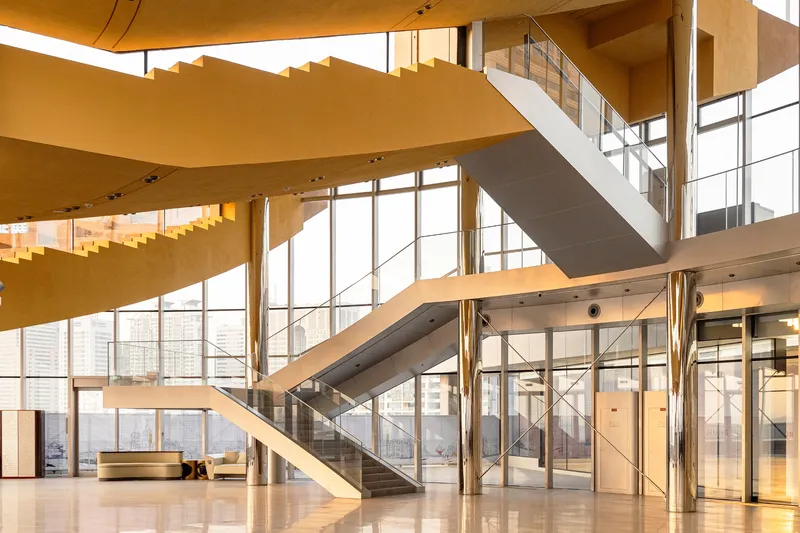
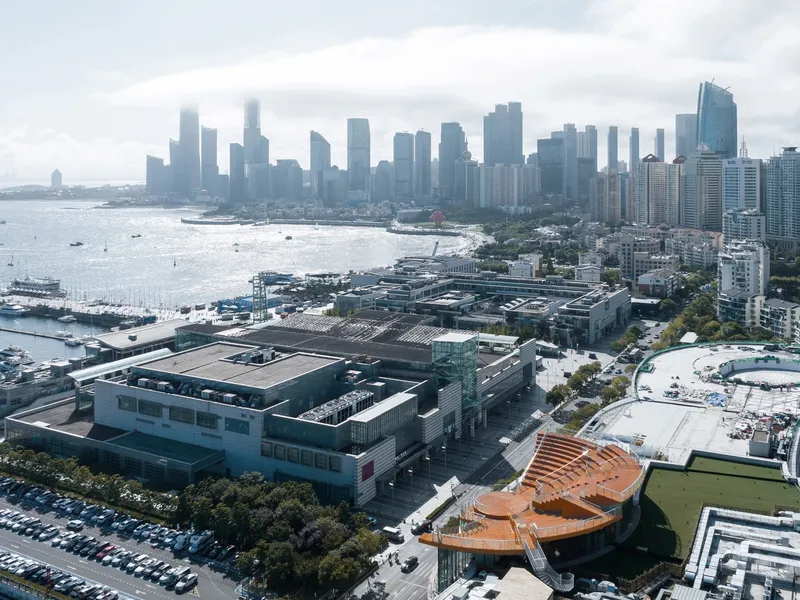
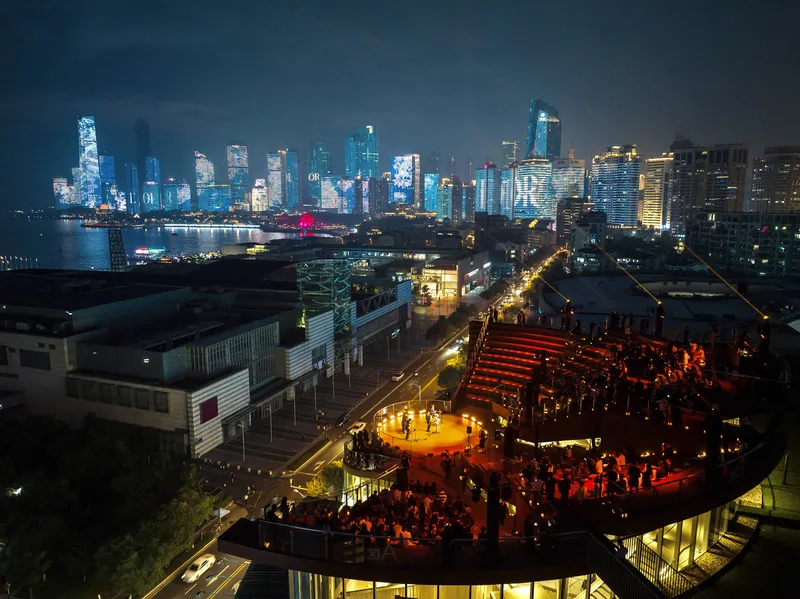
Despite its prime waterfront location, Hisense Mall was previously disconnected from its urban surroundings, enclosed by an impermeable architectural envelope that limited public interaction. SOPA’s intervention responds not through excessive formal expression, but through a strategic reorganization of space, program, and movement. Rather than fulfilling the original brief of a glazed VIP lounge, the architects proposed a radical yet pragmatic alternative: an “amphitheater on top of a hall,” opening panoramic city and sea views to all visitors regardless of social or economic background.
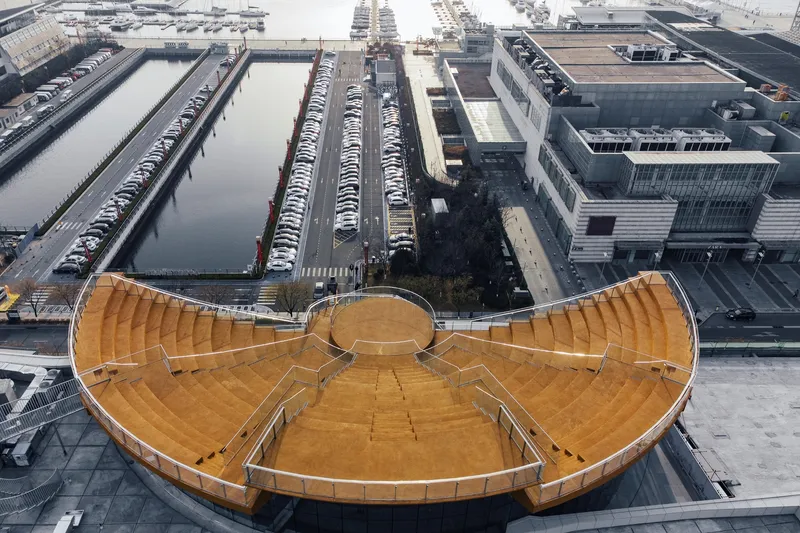
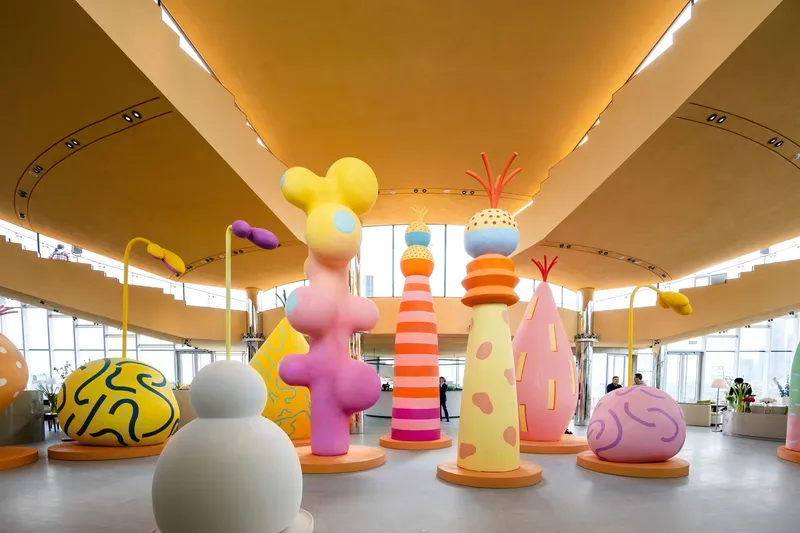
SKY BOWL operates simultaneously as an independent architectural structure and as a connective interface between the mall, the city, and the waterfront landscape. Its lightweight, transparent construction minimizes physical and visual impact on the existing building while enhancing permeability and openness. This restrained architectural language allows the project to integrate seamlessly into the urban skyline, positioning the rooftop not as an exclusive retreat, but as a shared cultural platform.
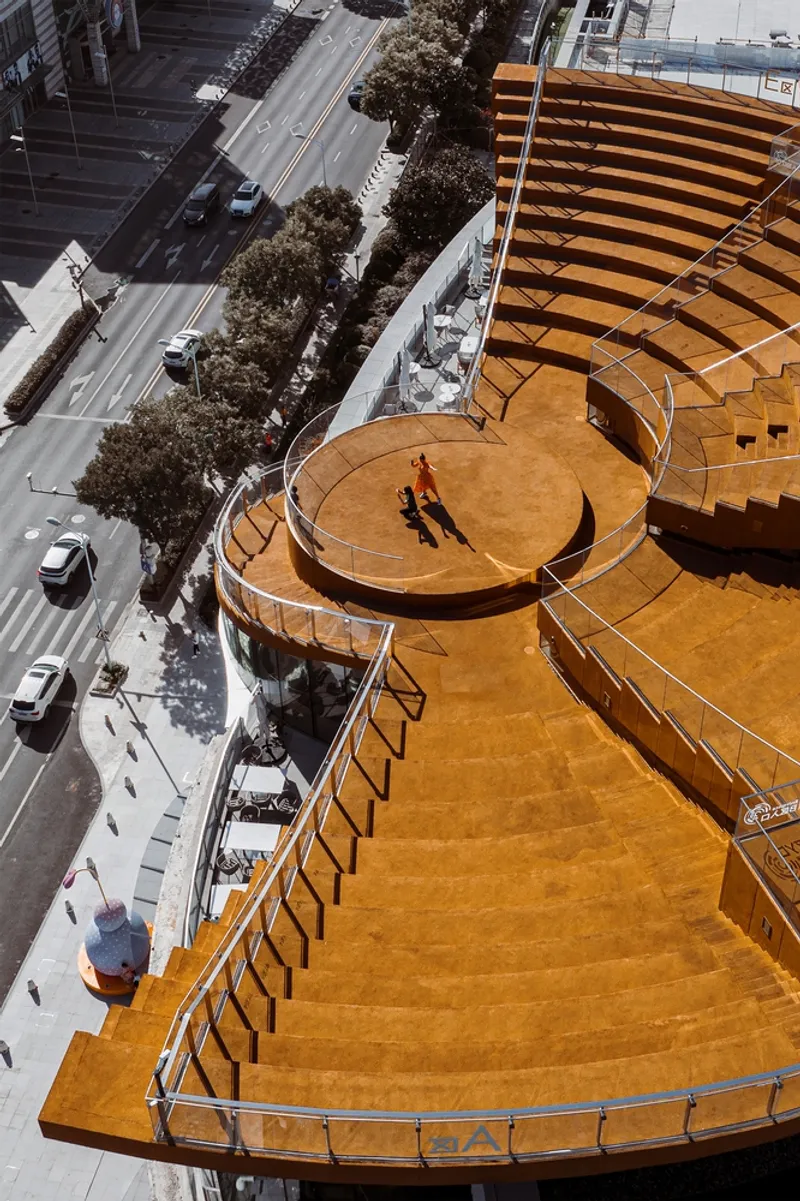
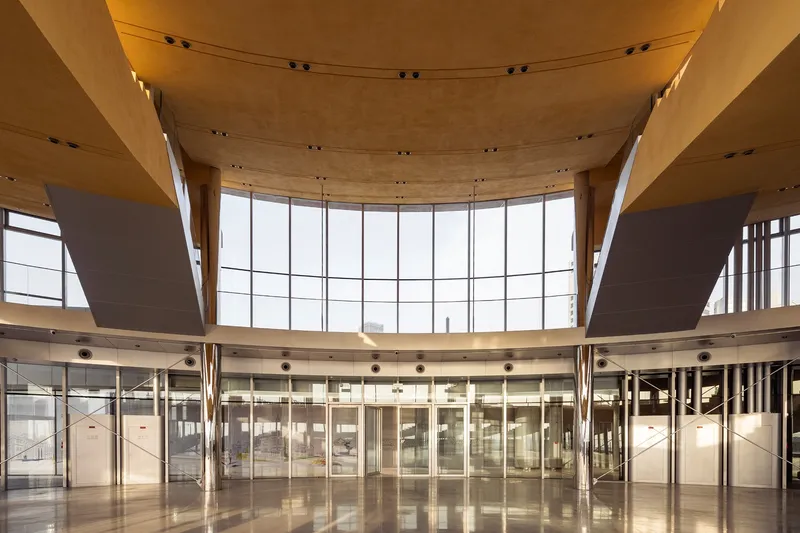
Central to the project’s design philosophy is the belief that true innovation lies in programming rather than pure form-making. By carefully exploiting differences in elevation, SOPA introduces natural daylight deep into the previously dark interior hall below, transforming it into a bright, welcoming, and socially active space. The amphitheater becomes both a destination and a device, improving environmental quality while encouraging spontaneous gatherings, performances, and public events.
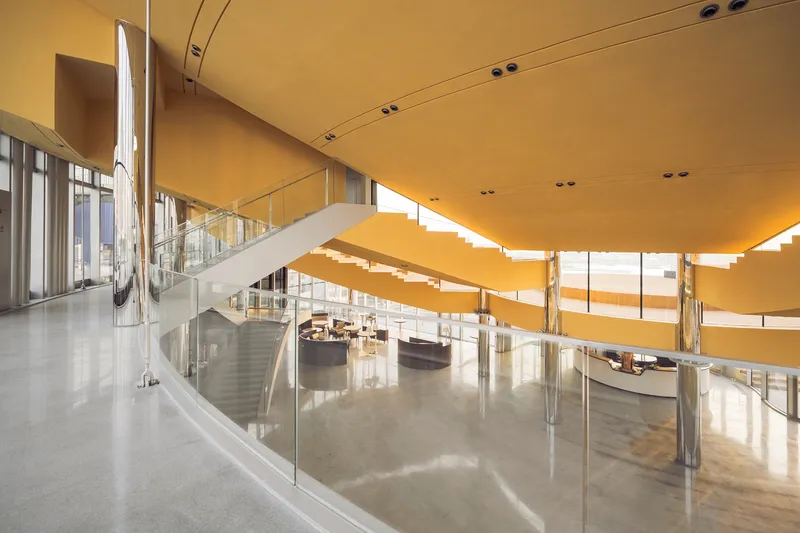
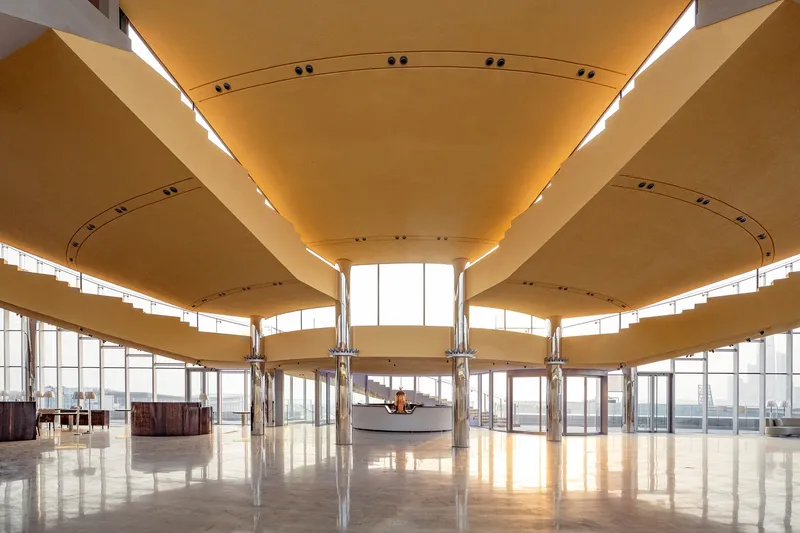
More than a spatial intervention, SKY BOWL proposes a new relationship between department stores and brand culture. In contrast to the often-fragmented identity of contemporary shopping centers, the project establishes a clear cultural framework that unifies diverse commercial elements under a shared spatial narrative. It acts as a temporal marker within the city, reflecting Qingdao’s ongoing urban transformation while offering a setting for collective memory, social interaction, and everyday cultural life.
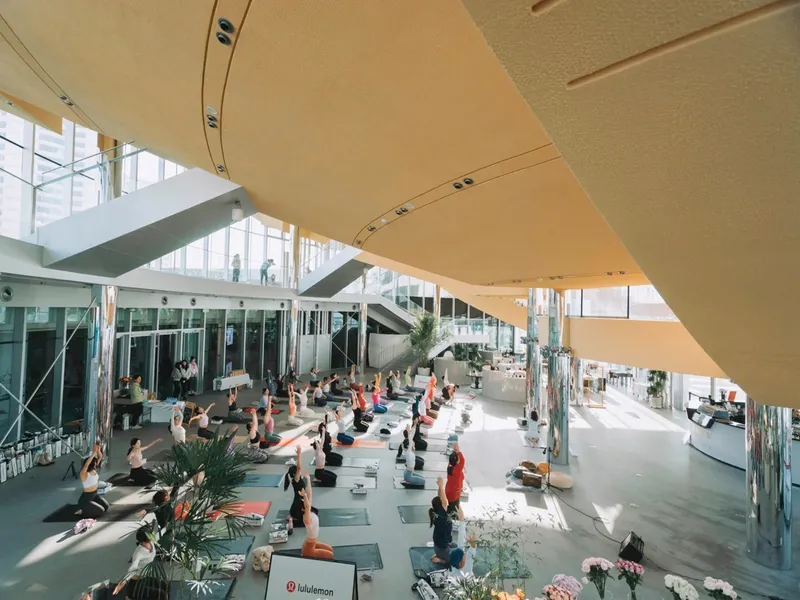
Recognized for addressing one of the most pressing challenges in contemporary architecture, the creation of inclusive public space within commercial developments, SKY BOWL demonstrates how cost-effective, efficient design strategies can reconnect retail environments with their broader urban context. By prioritizing accessibility, cultural awareness, and environmental quality, the project sets a compelling precedent for future retail-led urban renewal.
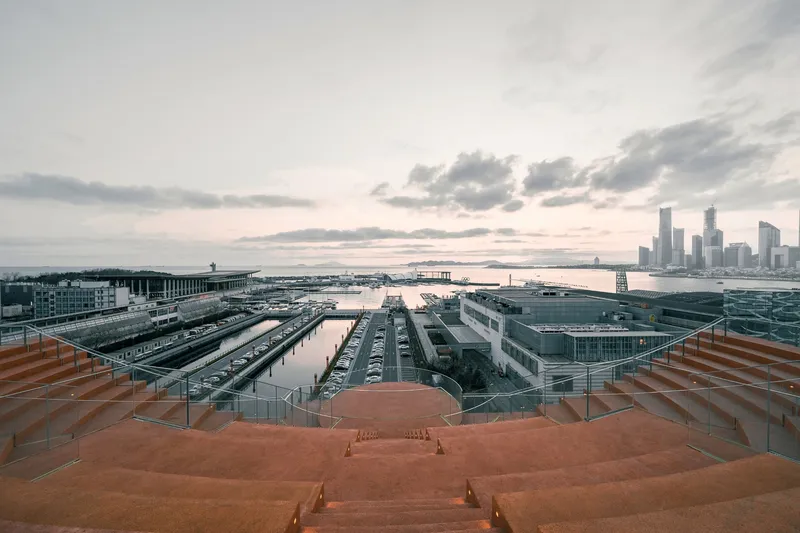
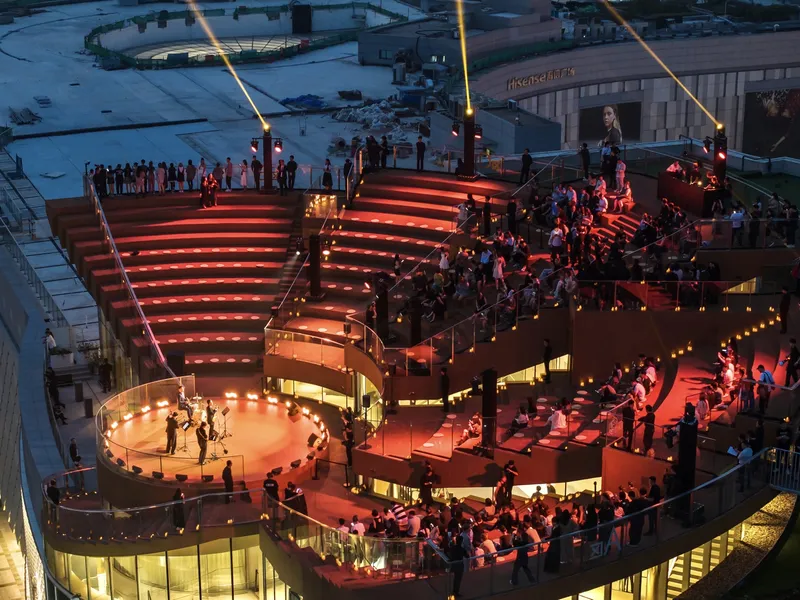
SKY BOWL stands apart from typical department store renovations through its emphasis on inclusivity, sustainability, and spatial reorganization. Rather than relying on spectacle, it offers a thoughtful architectural response that reshapes how commercial buildings can contribute meaningfully to the public realm, positioning architecture as a catalyst for equity, cultural vitality, and urban belonging.
All photographs are works of
Yong Gao, Ying Liu, Hisense Plaza



Popular Articles
Popular articles from the community


The Earth Pod: 3D Printed Homes for Resilient Refugee Communities
The Earth Pod reimagines refugee housing through 3D printed homes made from clay, combining resilience, self-sufficiency, and rapid shelter.

Co-Life: Senior Housing Design That Reconnects Older Adults With the City
Co-Life reimagines senior housing design through healing gardens, shared streets, workshops, and a sustainable community across generations.

Riyadh For All: Intergenerational Urban Design for Active Aging in Rabat
Riyadh For All reimagines urban design in Rabat with intergenerational co-living, adaptive courtyards, and Moroccan cultural exchange today.

Co-life: Sustainable Architecture for Age-Friendly Community Living
Co-life reimagines sustainable architecture for seniors through courtyards, rammed earth, shared gardens, and spaces designed for belonging.

Similar Reads
You might also enjoy these articles


FAMM Arquitectura Organizes Ten Villas Around Courtyards and Jungle in Nosara, Costa Rica
El Molino pairs two elongated volumes with deep overhangs and timber louvers to build a compact coastal community five minutes from the beach.

Oscar Niemeyer's Ibirapuera Park Pavilions Define São Paulo's Cultural Identity in Concrete and Curve
A constellation of modernist volumes set within São Paulo's most important urban park, conceived for the city's 400th anniversary in 1954.
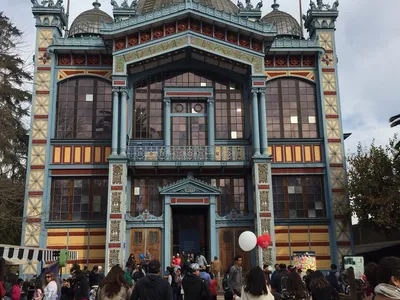
How Henri Picq's 1889 Paris Pavilion Traveled 11,000 Kilometers to Become Santiago's Artequín Museum
A prefabricated iron and glass pavilion built for the Paris Universal Exposition found a second life as a children's art museum in Chile.

Sanjay Puri Architects Wraps a Jaipur Office Tower in Capsule-Shaped Green Buffers
A nine-level climate-responsive workplace near Jaipur Airport uses stacked planter terraces and aluminium screens to fight 40°C heat.

Explore Cultural Architecture Competitions
Discover active competitions in this discipline



Challenge to reimagine the Iron Throne


Photograph architecture without architects


Illustrate the lost glory of Angkor Wat - Render Challenge

Bring back Drive In's
Comments (0)
Please login or sign up to add comments
No comments yet. Be the first to comment!