

Sky Mountain Haikou Bay No.6 High Standard Seaside Station by Sou Fujimoto Architects
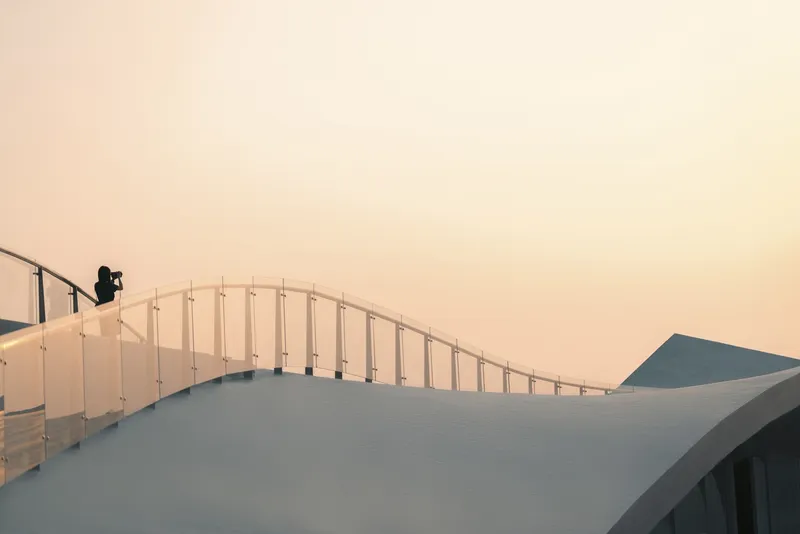
Sky Mountain Haikou Bay No.6, by Sou Fujimoto, features a valley-like rooftop, open-plan pavilion, blending urban life with seaside nature.


The Sky Mountain Haikou Bay No.6 High Standard Seaside Station, designed by Sou Fujimoto Architects, is a striking example of modern hospitality and public architecture that seamlessly bridges urban life with natural landscapes. Situated along Haikou’s picturesque coastline, the station functions as both a practical transit hub and a contemplative social space, encouraging travelers to meander between the city and the seaside.
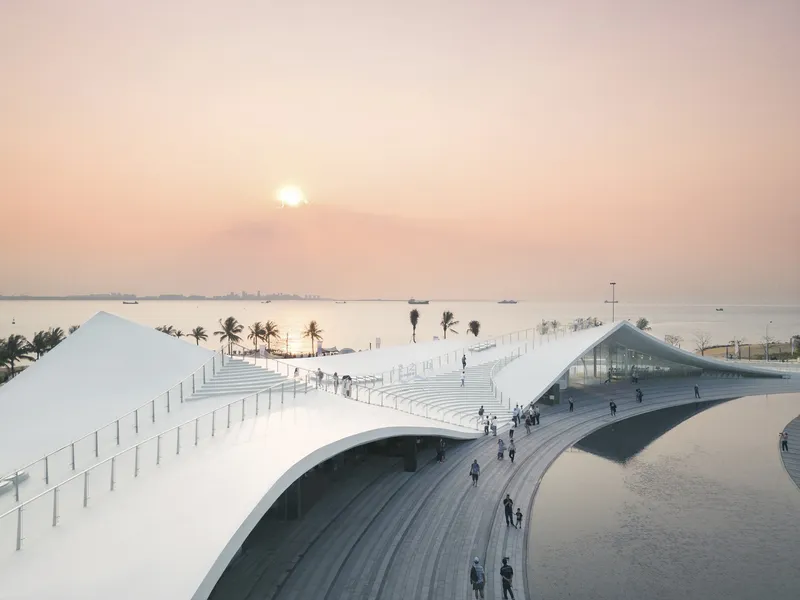
Design Concept
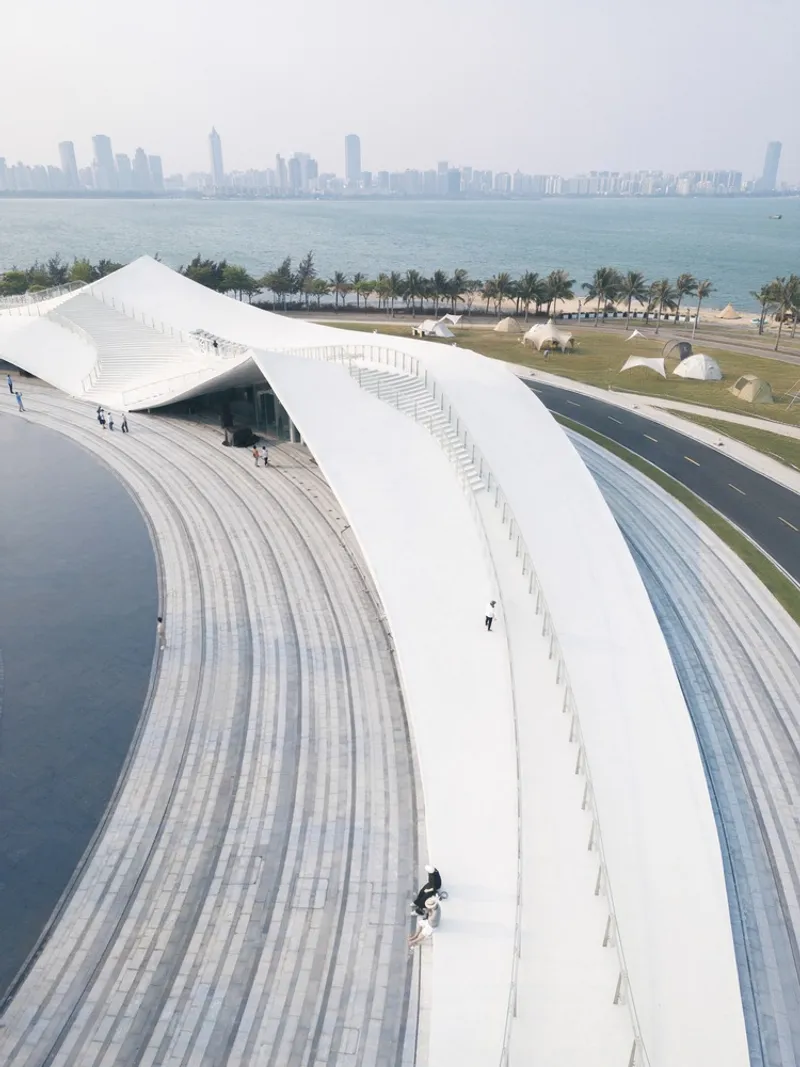
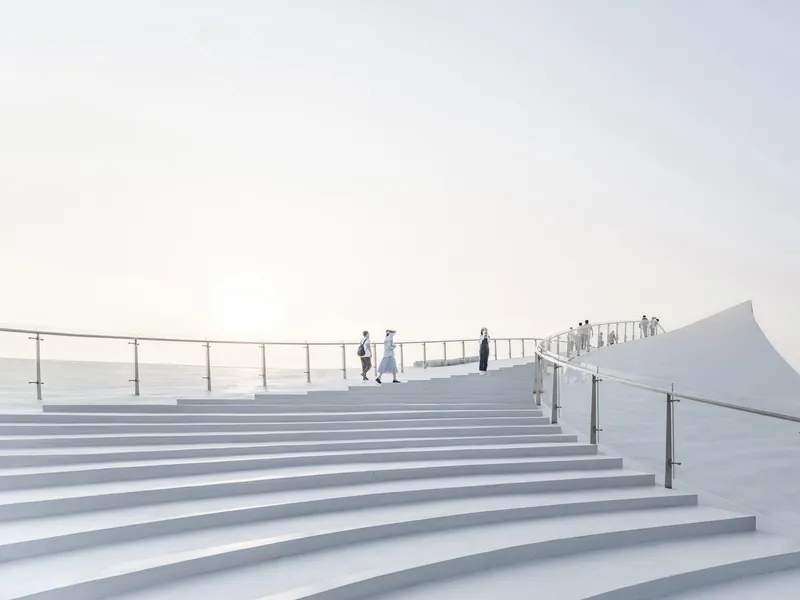
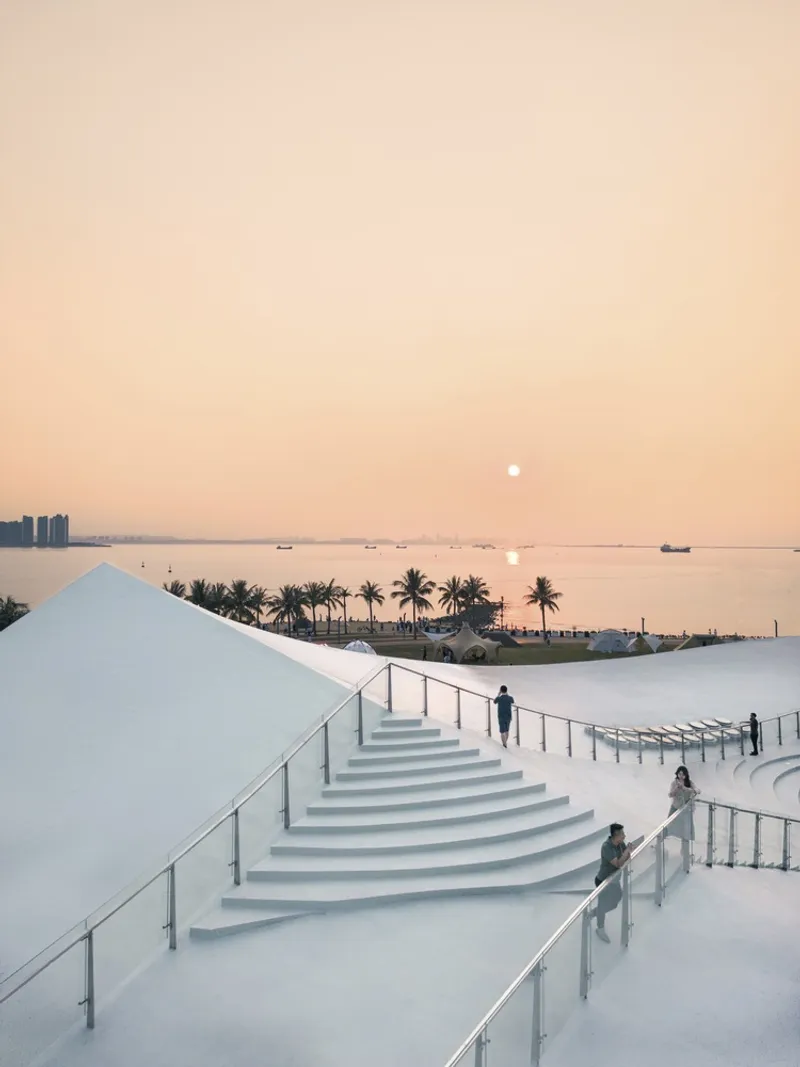
Inspired by the natural topography, the pavilion adopts a valley-like rooftop with a gently sloped profile, creating a unique “sky mountain” effect. This design connects the urban environment to the seaside, offering visitors an immersive experience of nature integrated architecture. The roof itself becomes a stage for movement and interaction, inviting both leisure and social engagement.
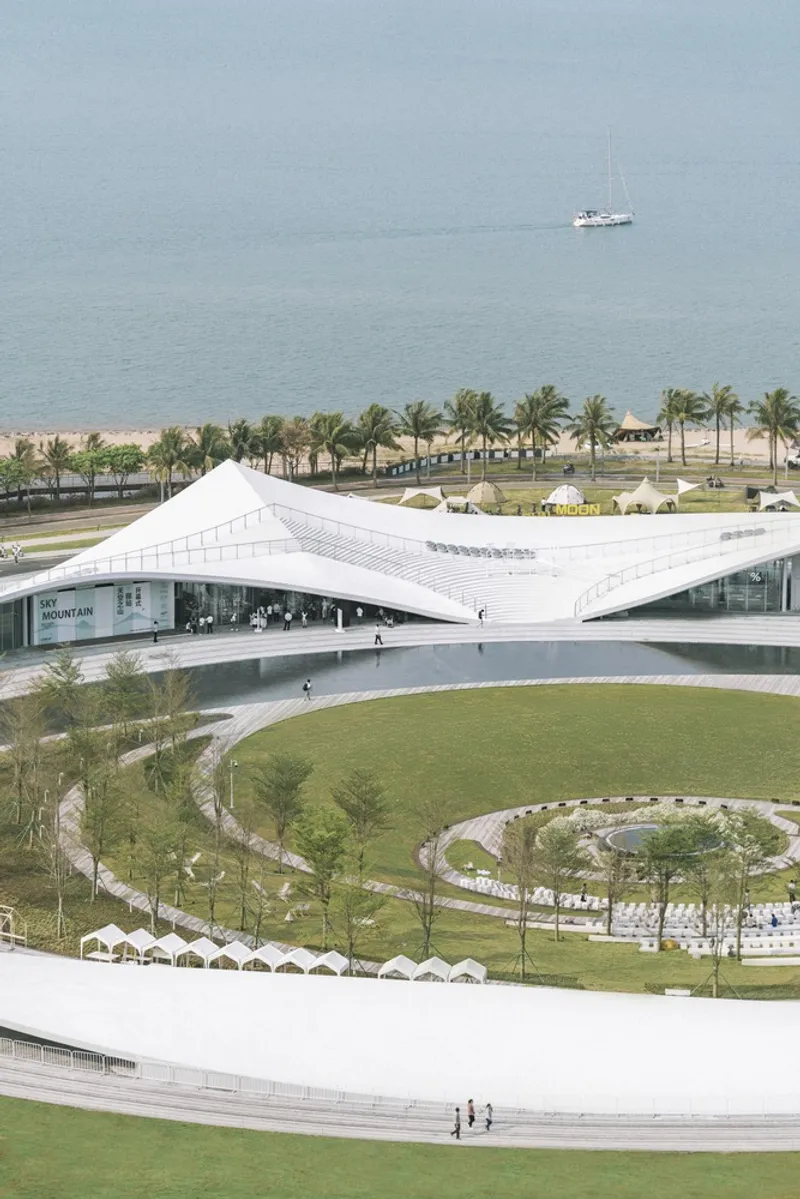
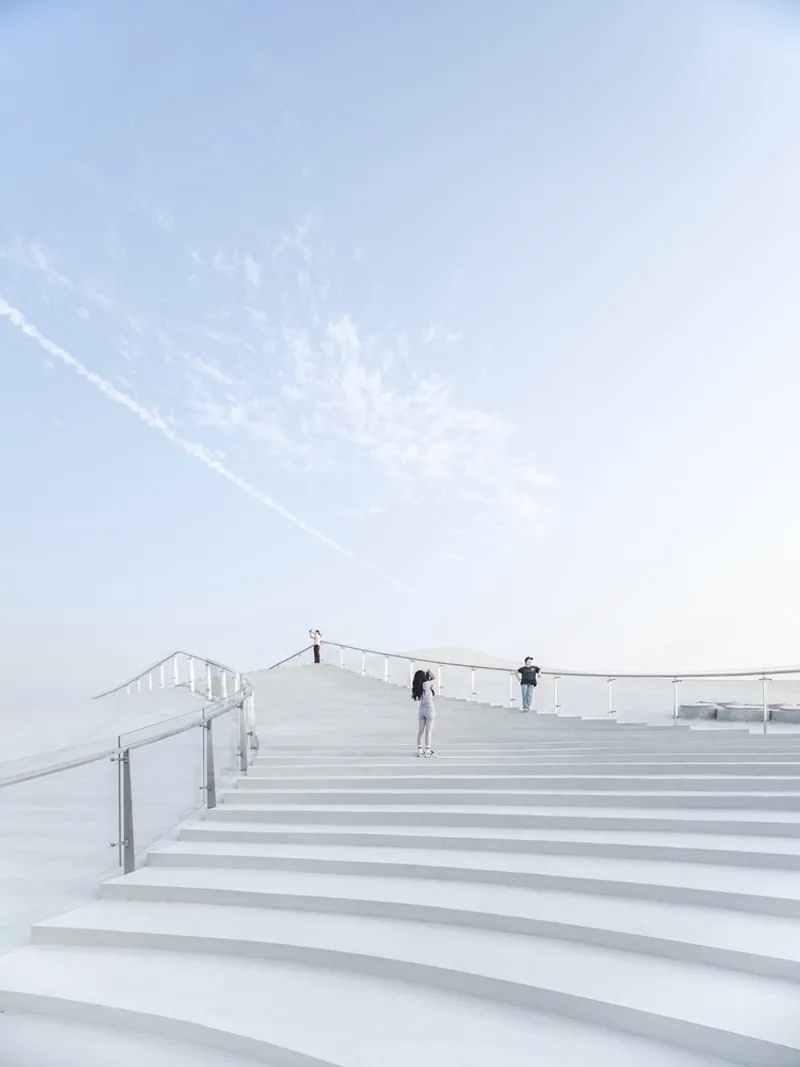
Spatial Experience
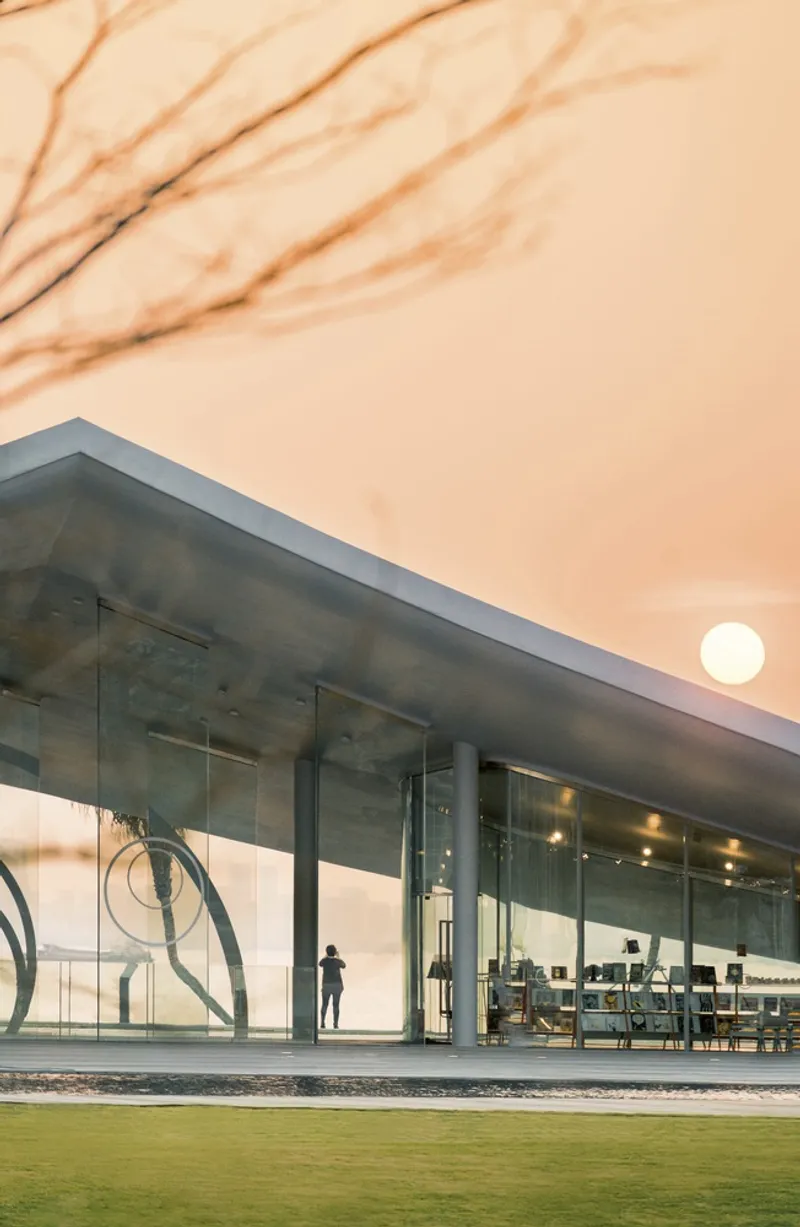
Inside, all visitor service programs—including travel amenities and TV support facilities—are housed under a single, open-plan structure. This spatial strategy encourages a fluid circulation while maintaining transparency and visual connection to the surrounding landscape. Large windows and open spaces create a seamless dialogue between interior and exterior environments, enhancing the sense of openness and freedom.
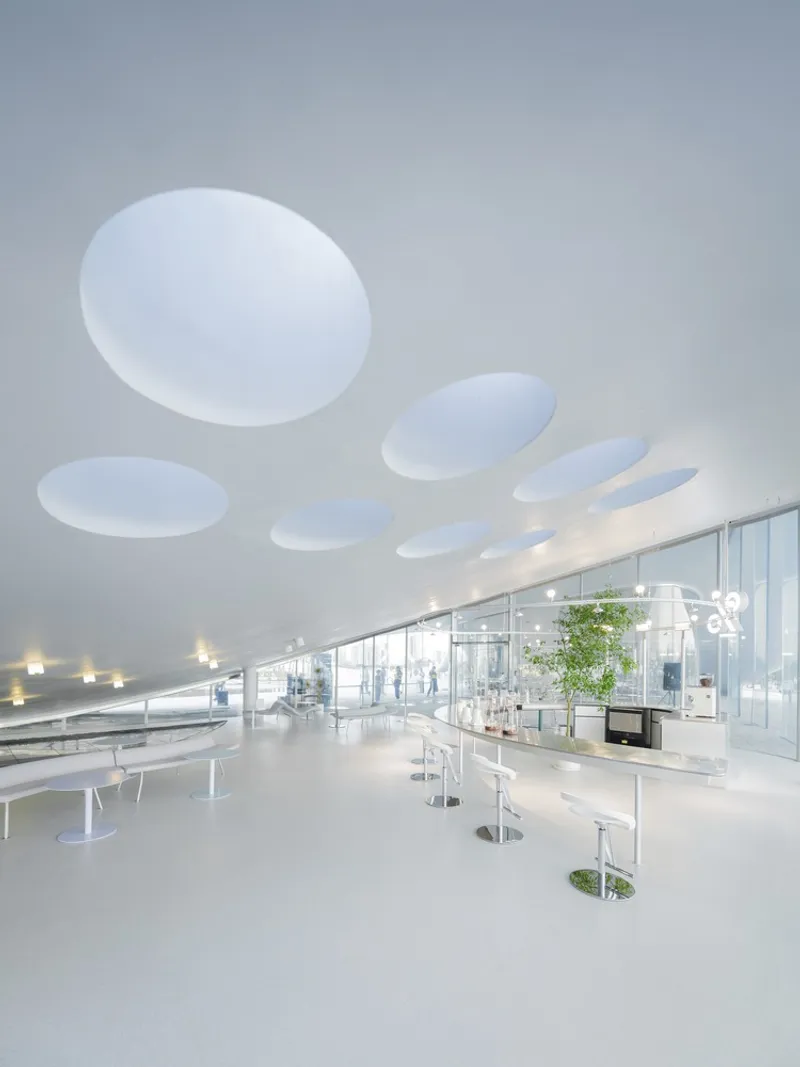
Materials & Aesthetic
The pavilion combines minimalist design principles with context-sensitive materiality, resulting in a clean, functional, and aesthetically compelling structure. Its natural forms, gentle slopes, and integration with the coastal environment make it an exemplary project in sustainable and responsive public architecture.
Impact & Experience
By merging functionality with experiential design, the Sky Mountain Seaside Station provides a multi-sensory experience for travelers, offering both rest and exploration. It acts as a cultural and architectural landmark for Haikou, demonstrating how innovative design can enhance public interaction and environmental awareness.
All Photographs are works of ACF,


Popular Articles
Popular articles from the community


Juan García Correa, John González and Claudia Rueda Sink a Circular Amphitheater into a Manizales Engineering Building
On the La Nubia campus in Manizales, Colombia, the S1 Building folds labs and offices into a hillside of ramped lawns that double as a campus route.

LT2A and OPEN Architectes Thread a Brick and Glass High School Through a Wooded Belgian Campus
In Braine-l'Alleud, a 3,000 m² wing for Collège Cardinal Mercier pairs pale brick with a glazed colonnade, deferring to a small chapel and a dense wood.

U.GA Architects Wraps an Oval Rooftop Pool in Curved Board-Formed Concrete on Busan's Jeollidan-gil
In Busan's Jeonpo-dong, a 454 m² mixed-use block stacks a neighborhood facility, guest rooms and an oval rooftop pool inside spiraling concrete walls.

Cube Design Draws an Ecological Corridor Between Two Shenzhen Hills with the Nankai Building
Beside Shenzhen's container docks, the Nankai Building pairs stacked balconies with a climbing green screen to connect two hillsides across its height.

Similar Reads
You might also enjoy these articles


Hodi-Mandai Geram
Project Function: Preservation and revitalization of the Intangible heritage and socio-spatial identity of the Hodi by Housing, Cultural Memory Center, Sacred Grove, landscape, local tourism economy


Olio Towers: A Mid-Rise for Performers That Fuses Housing, Rehearsal, and Stage
Located blocks from Houston's Theater District, this modular tower stacks living units around a central performance atrium.

Oasis: Modular Green Housing Carved into Dhaka's Urban Fabric
A shortlisted Plugin Housing entry reclaims unauthorized settlements in Dhaka with stepped concrete volumes, green roofs, and ventilation-driven design.

Black Hole: A Floating Megastructure for the Post-Physical Era
Emiliano Mazzarotto envisions a spherical, self-scaling arena where e-sports, digital hotels, and holographic stadiums replace traditional public space.

Explore Hospitality Building Competitions
Discover active competitions in this discipline

Challenge to reimagine the Iron Throne

Photograph architecture without architects

Illustrate the lost glory of Angkor Wat - Render Challenge

Design challenge to reuse E-waste
Comments (0)
Please login or sign up to add comments
No comments yet. Be the first to comment!