
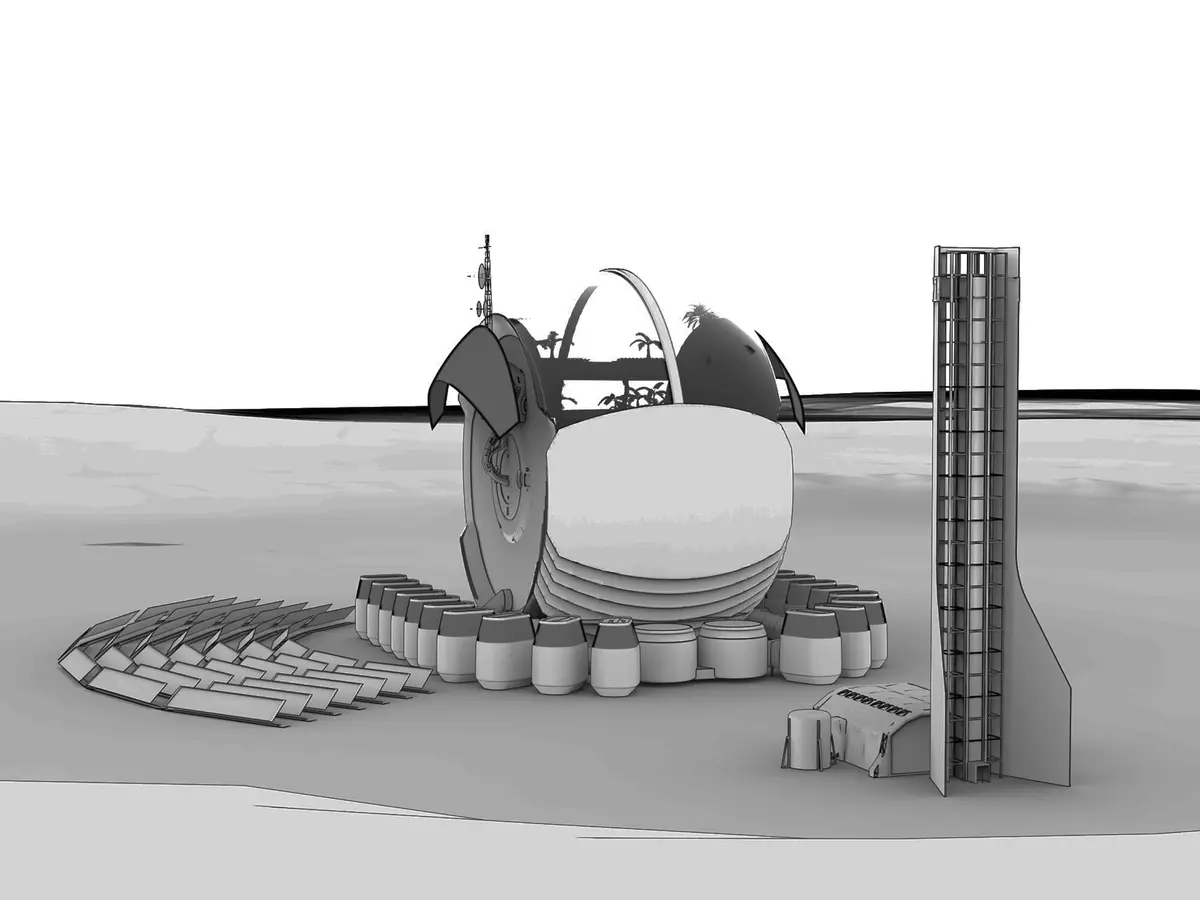
SKY-NOVA DESCRIPTION
SKY-NOVA solves all the core problems of living on Mars while creating an inspiring environment to thrive. The project is architecturally rich and uses local materials sourced on Mars.

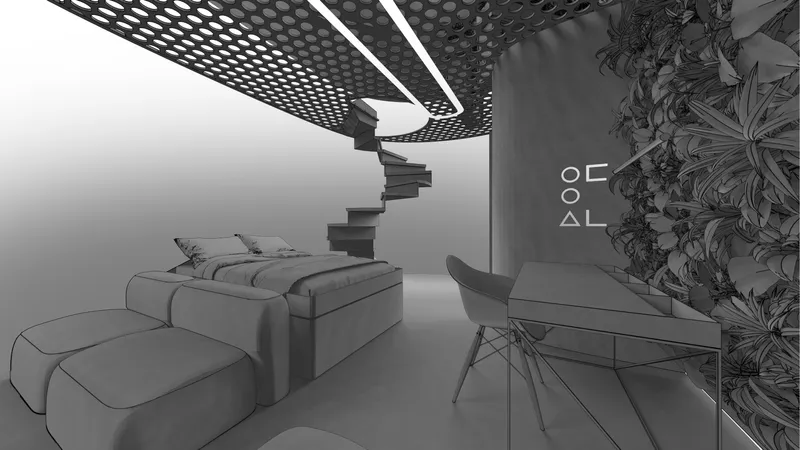
The concept behind the project is to have one central greenhouse surrounded by individual pods for 2 people each to create a basis for human exploration on Mars. 3D printers, automated systems, and cutting-edge building techniques are used to create and sustain the hub. The intent behind this organization of elements and functions is to keep water and energy circles short and in a contained environment. SKY-NOVA solves all the core problems of living on Mars while creating an inspiring environment to thrive. The project is architecturally rich and uses mainly local materials sourced on Mars. The permanent habitat established must be able to resist the unique conditions, with a community building and plant dome that can be fully enclosed by metal panels and self-sustaining pods for the residents. Most of the space is dedicated to plants, to produce food, oxygen, and materials. But there are also laboratories, research facilities, sanitary and kitchen areas, interplanetary connection areas as well as storage and building service areas located in the community building. The individual sleeping pods allow comfortable living while having their own closed food, energy, and water circles. The design incorporates biophilic looks, plants and fractal patterns that make spaces psychologically more relaxing. The exterior design is inspired by simple shapes. The community building has a circular base volume which makes it easy to open and close and maximises the interior compared to the outer surface. Powered by solar energy and growing its own food, the self-sustaining SKY-NOVA base will focus more on the quality of life at the red planet and the architecture that will be used to house the people.
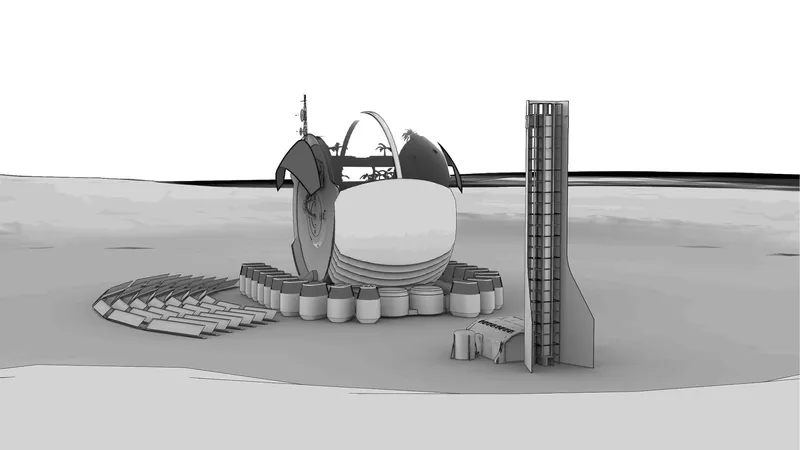
During the design process, different shapes and arrangements were evaluated in 3d software. The Circular base with external capsules was considered the best because it offers the possibility of modularity while having a central community area. For the space plan, the main purposes of comfortable, sustainable living and exploration were considered and functions divided into private and social. The design is constrained by climate conditions.
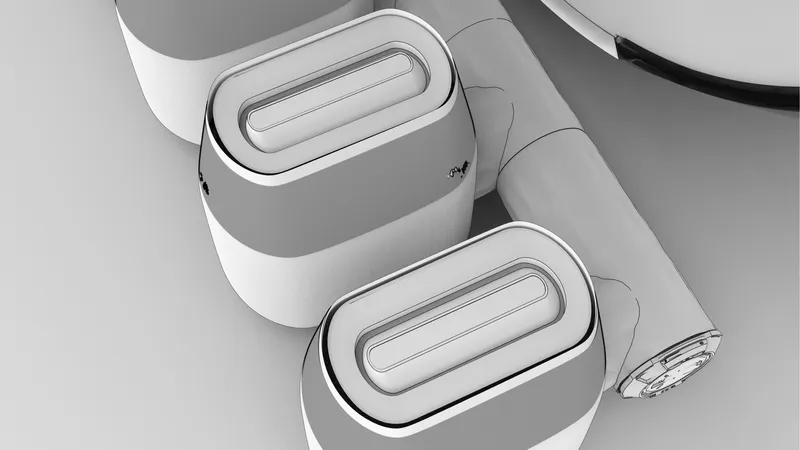
The materials were chosen because of their availability and practicality on Mars. The basis of each building is 3d printed out of Regolith concrete while the transparent areas are steel and polymer foil construction. All these resources can be found on Mars and construction could be finished by robots before arrival. Circular systems must be employed. Non-renewable energy sources and water-efficient designs are used.
The specific objectives have been met by fully understanding the material, food and energy cycles on mars. Mars is a planet that contains traces of liquid water, wind and is thought to have supported life forms billions of years ago. While local resources are used for the construction, especially solar energy is a great energy source. The environment on Mars is extreme. It has almost no gravity, no breathable air, and a very thin atmosphere with high radiation levels. Its surface is rocky with frequent dust storms. The temperature swings on the planet could be from 70 degrees Fahrenheit to minus 100 degrees Fahrenheit on the same day. So, it is important that the buildings have security systems like protective shields that automatically protect the transparent membranes of the greenhouses.
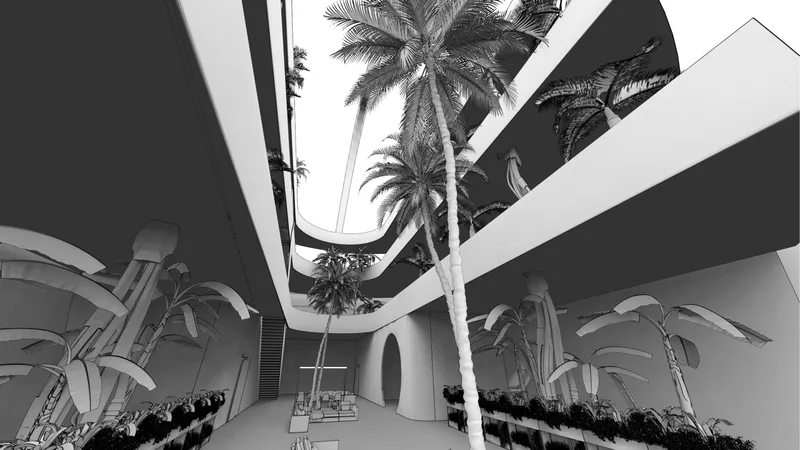
Future expansions can be made easy. The shown design offers capsules for 40 people, but more capsules can be added. The central community building offers space for more people and space around the base is not an issue. The modular construction method makes the whole system scalable.


Popular Articles
Popular articles from the community


David Ortega Stacks a Two-Story Mexico City Penthouse Around a Steel Stair and a Pergola-Shaded Roof Terrace
In Colonia Roma, a 300 m² penthouse uses oak joinery, a planted steel stair and a slatted roof pergola to make a new-build apartment feel like a house.

Juan García Correa, John González and Claudia Rueda Sink a Circular Amphitheater into a Manizales Engineering Building
On the La Nubia campus in Manizales, Colombia, the S1 Building folds labs and offices into a hillside of ramped lawns that double as a campus route.


Singing Woman: An Opera House That Performs Before the Curtain Rises
Ovidiu Cristian Pavel's conceptual opera house translates Estonia's choral identity into a sculpted waterfront landmark facing the Baltic Sea.

ETEH Reworks the Shared Spaces of São Domingos School in Brazil Around Timber, Color and Hanging Plants
At São Domingos School in Brazil, 436 m² of hall, refectory and library are recast with timber joinery, a yellow and blue code and trailing greenery.

Similar Reads
You might also enjoy these articles
The Rhythm of Seasons
A Farmers' Market Connecting Nature and the City

More Than a Building-Designing a Living System
More Than a Building-Designing a Living System
Base Beyond
DESERT COMPOUND ARID: TOURISM OF ABSENCE AND ABUNDANCE

Explore Conceptual Architecture Competitions
Discover active competitions in this discipline


Challenge to reimagine the Iron Throne

Photograph architecture without architects

Illustrate the lost glory of Angkor Wat - Render Challenge

Design challenge to reuse E-waste
Comments (0)
Please login or sign up to add comments
No comments yet. Be the first to comment!