

Smritivan Earthquake Memorial Museum – Vastushilpa Sangath
Smritivan Earthquake Memorial Museum in Bhuj by Vastushilpa Sangath blends heritage, landscape, and resilience, creating a civic, cultural, and reflective space.


A Living Memorial Rooted in Culture and Landscape
The Smritivan Earthquake Memorial Museum, designed by Vastushilpa Sangath, stands as a powerful tribute to the victims of the 2001 Bhuj earthquake while simultaneously celebrating the resilience, culture, and heritage of the Kutch region. Located on the historic Bhujiyo Hill in Gujarat, India, the museum is part of the larger Smritivan Earthquake Memorial Masterplan, envisioned as a space of remembrance, learning, and community gathering.
With a built area of 10,900 m², the museum anchors itself in the unique identity of Bhuj, highlighting its traditional crafts, cultural diversity, and ecological richness, including the many villages and wildlife sanctuaries of Kutch. Beyond its function as a museum, Smritivan has been designed as a civic space—a living environment where people can gather, celebrate festivals, reflect, and connect with the land.
Design Philosophy – Architecture that Belongs to the Land
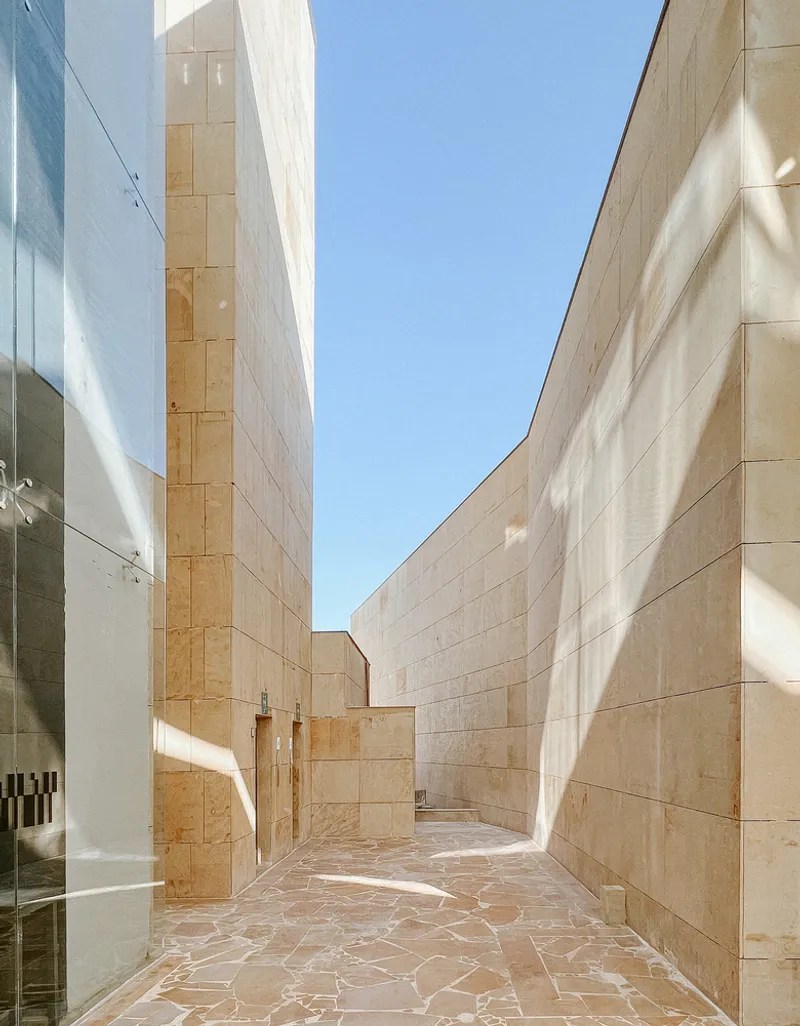
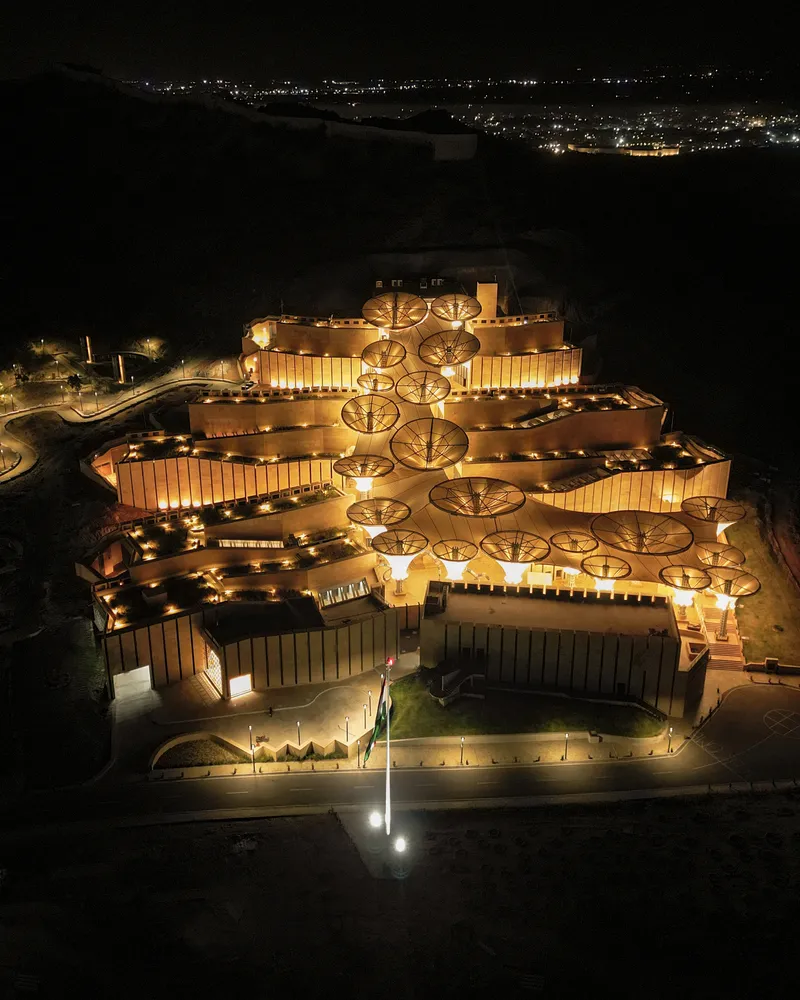
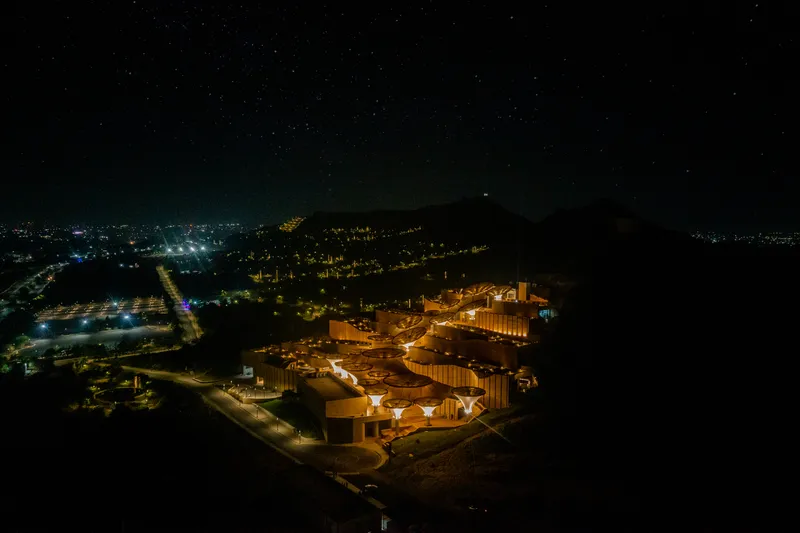
One of the greatest challenges of the site was the steep terrain of Bhujiyo Hill, a landscape deeply tied to the cultural memory of its people. Instead of imposing a monumental structure that would disrupt the natural contours, Vastushilpa Sangath drew inspiration from the existing fort walls that trace the hill. The result is a zig-zagging architectural spine, a form that follows the slope like the path of a pilgrim climbing towards a sacred site.
This approach transforms the museum into a peripatetic journey—a slow 50-meter climb punctuated by galleries, pauses, and reflective spaces. The central spine acts like a veranda, inviting visitors to walk, rest, and absorb both the landscape and the stories embedded in it. For the architects, walking is not just movement but a means of connecting with place and memory.
Materiality and Sustainability
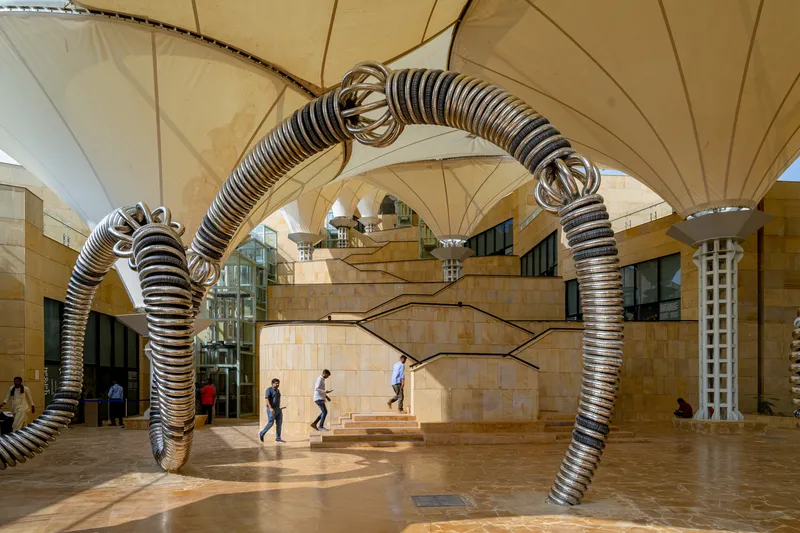
The monolithic buildings are clad in locally quarried stone, grounding the museum in its natural environment. Above, a tensile canopy structure creates a soft, diffused glow that contrasts beautifully with the stone facades, offering shade and comfort for visitors.
Each gallery rooftop is designed as a seasonal garden, planted with species of local flora that shift with time and climate. These living rooftops not only echo the surrounding hill but also provide venues for temporary exhibitions, performances, and community gatherings. The changing vegetation marks the passage of seasons, turning the museum into a dynamic, temporal experience rather than a static institution.
Furthermore, the museum is designed with incremental growth in mind. Its modular gallery system and central spine ensure that future expansions will remain harmonious with the site’s natural genius. Smritivan is envisioned as both timeless and evolving, as old as the land of Bhuj yet as new as each visitor’s memory.
A Civic Landmark for Bhuj
More than a repository of history, the Smritivan Earthquake Memorial Museum acts as a green lung for the city and a space for cultural continuity. By combining remembrance, ecology, and community life, the project demonstrates how architecture can serve as a civic catalyst, enriching both urban identity and collective memory.
The museum stands not just as a memorial to tragedy, but as a celebration of resilience, blending architecture, landscape, and culture into a singular living monument.
All Photographs are works of Vinay Panjwani, Sohaib Ilyas


Popular Articles
Popular articles from the community


LT2A and OPEN Architectes Thread a Brick and Glass High School Through a Wooded Belgian Campus
In Braine-l'Alleud, a 3,000 m² wing for Collège Cardinal Mercier pairs pale brick with a glazed colonnade, deferring to a small chapel and a dense wood.

Jaramillo Van Sluys Arquitectura and Urbanismo Turn a Demolished Registry Lot in Quito into an Orchard Plaza
In Quito's Centro Histórico, a 2,800 m² plaza exposes the San Agustín convent wall and redraws its lost Augustinian orchard in volcanic stone.

Cube Design Draws an Ecological Corridor Between Two Shenzhen Hills with the Nankai Building
Beside Shenzhen's container docks, the Nankai Building pairs stacked balconies with a climbing green screen to connect two hillsides across its height.

Juan García Correa, John González and Claudia Rueda Sink a Circular Amphitheater into a Manizales Engineering Building
On the La Nubia campus in Manizales, Colombia, the S1 Building folds labs and offices into a hillside of ramped lawns that double as a campus route.

Similar Reads
You might also enjoy these articles


Hodi-Mandai Geram
Project Function: Preservation and revitalization of the Intangible heritage and socio-spatial identity of the Hodi by Housing, Cultural Memory Center, Sacred Grove, landscape, local tourism economy


Olio Towers: A Mid-Rise for Performers That Fuses Housing, Rehearsal, and Stage
Located blocks from Houston's Theater District, this modular tower stacks living units around a central performance atrium.

Oasis: Modular Green Housing Carved into Dhaka's Urban Fabric
A shortlisted Plugin Housing entry reclaims unauthorized settlements in Dhaka with stepped concrete volumes, green roofs, and ventilation-driven design.

Black Hole: A Floating Megastructure for the Post-Physical Era
Emiliano Mazzarotto envisions a spherical, self-scaling arena where e-sports, digital hotels, and holographic stadiums replace traditional public space.

Explore Cultural Architecture Competitions
Discover active competitions in this discipline

Challenge to reimagine the Iron Throne

Photograph architecture without architects

Illustrate the lost glory of Angkor Wat - Render Challenge

Bring back Drive In's
Comments (0)
Please login or sign up to add comments
No comments yet. Be the first to comment!