
Social Housing 1737 by HARQUITECTES: Sustainable Living Integrated with Landscape in Catalonia
Social Housing 1737 by HARQUITECTES integrates landscape, modular apartments, and a central atrium, creating sustainable, community-focused living in Catalonia.


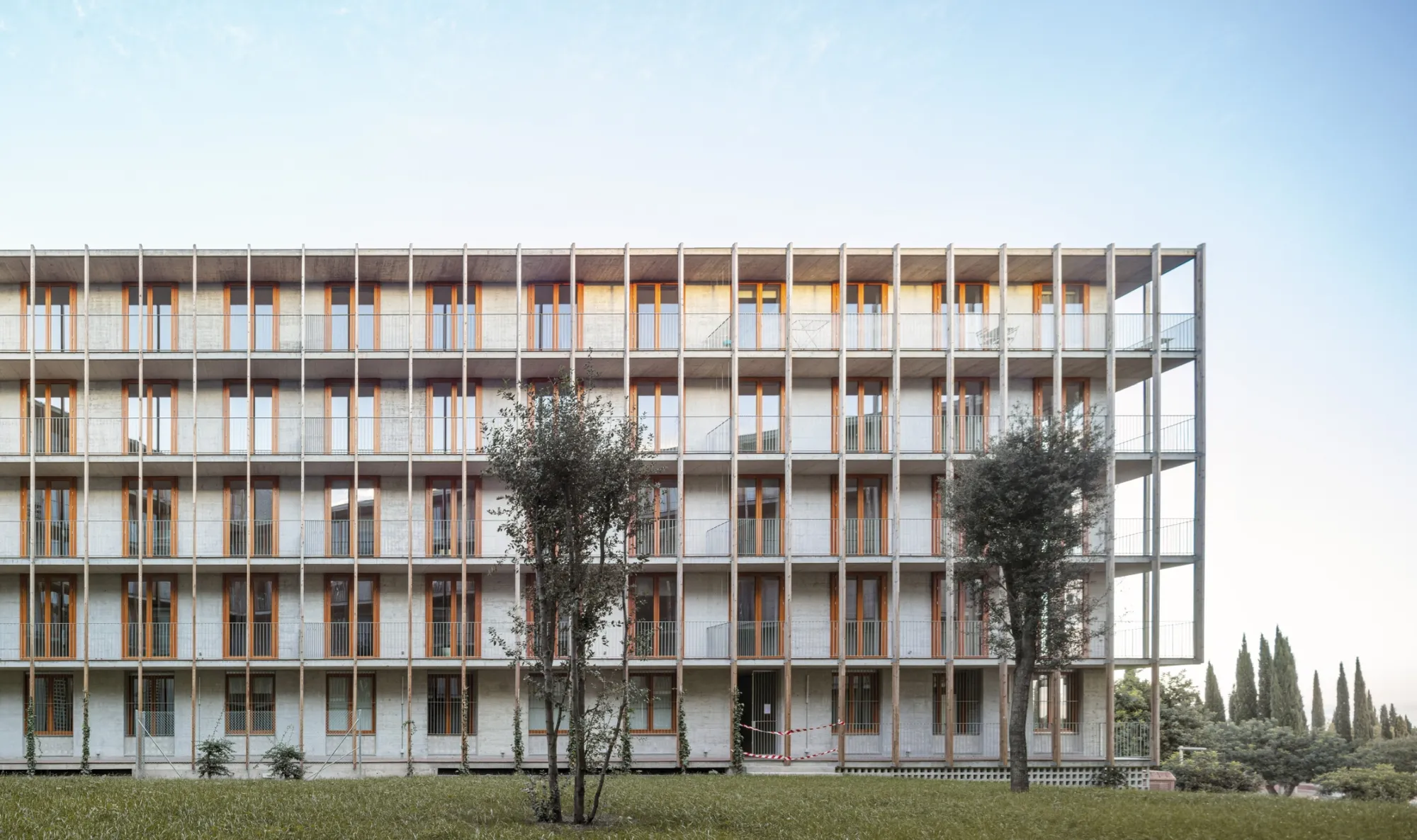
Social Housing 1737, designed by HARQUITECTES, redefines collective housing in Gavà, Catalonia (Spain) by fusing environmental sensitivity, innovative modular layouts, and community-oriented design. Completed in 2022, this 177,701 ft² housing complex is more than just residential architecture—it is a sustainable urban fabric that harmonizes with its natural surroundings while offering 136 adaptable homes.
Architecture Rooted in Landscape
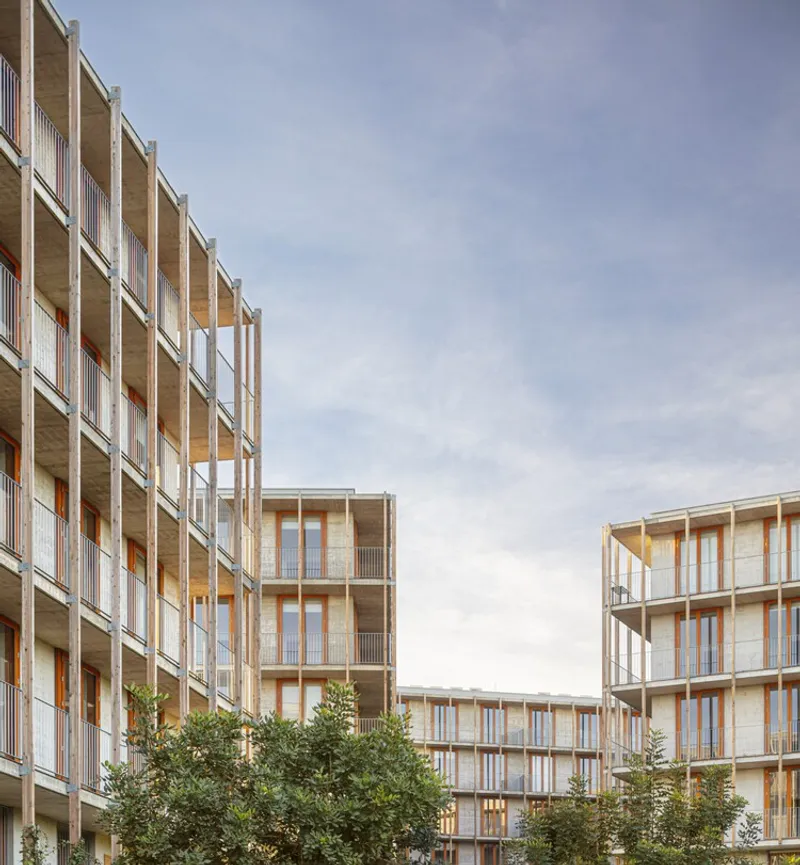
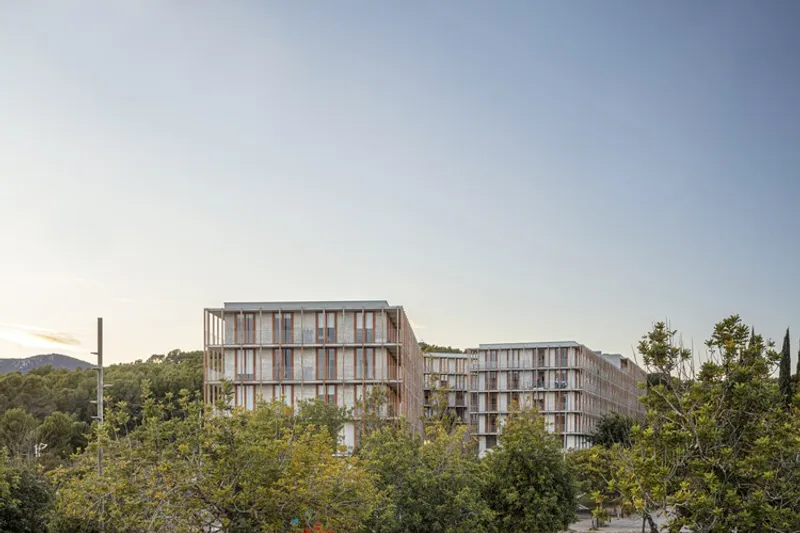
The project site is uniquely positioned between the Serra de les Ferreres Natural Area and the Llobregat Agricultural Park, two ecologically significant zones. HARQUITECTES used this context as the foundation for their design, creating a volumetric composition that promotes biological continuity and recreational accessibility.
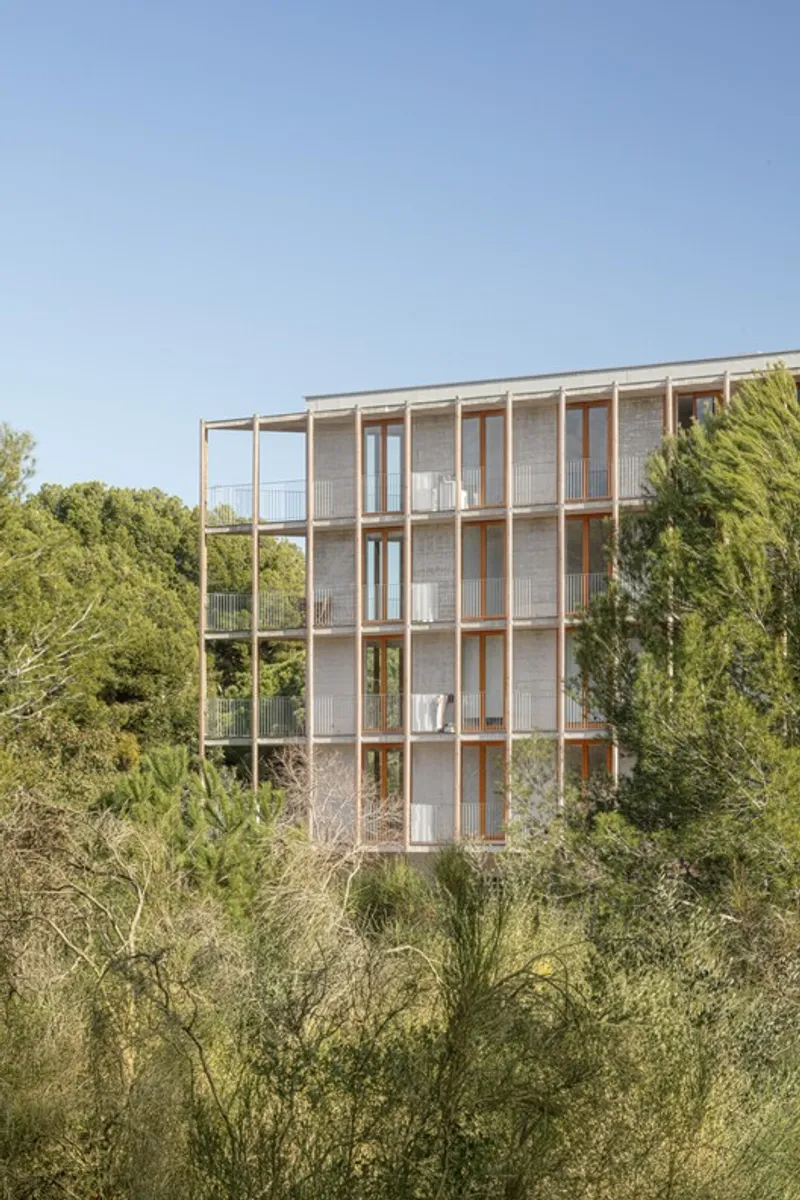
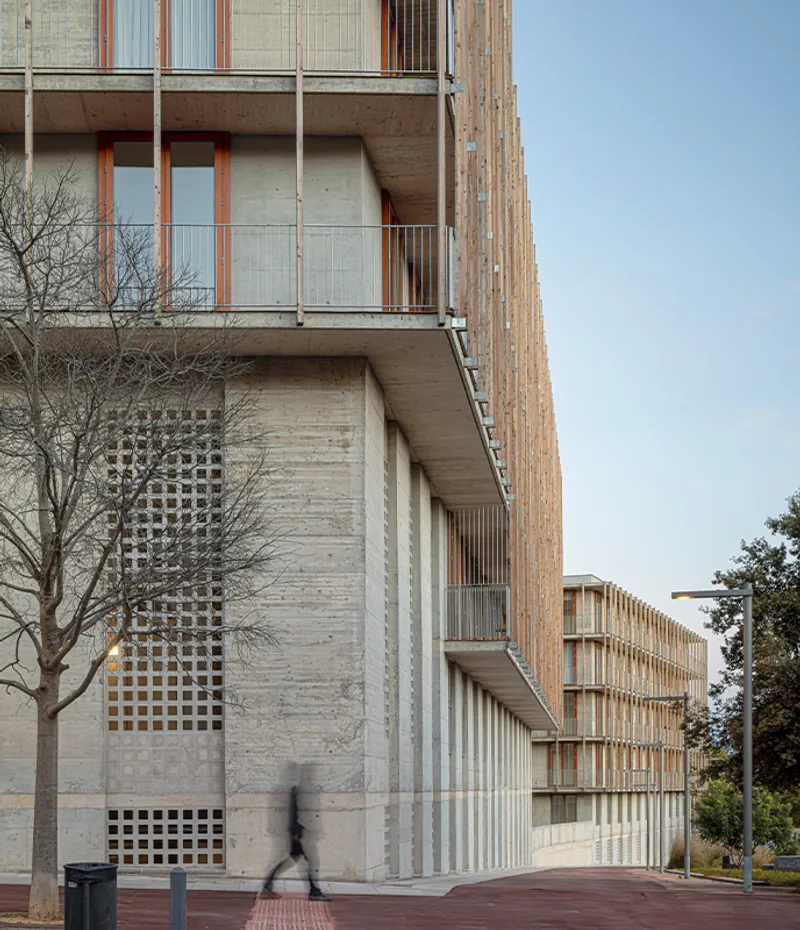
By introducing new transversal pathways across the block, the architects improved pedestrian circulation, ensuring seamless integration between urban life and the natural landscape. The open interior corners eliminate dark, insecure areas and invite daylight and visibility throughout the complex.
A Landscape-First Approach
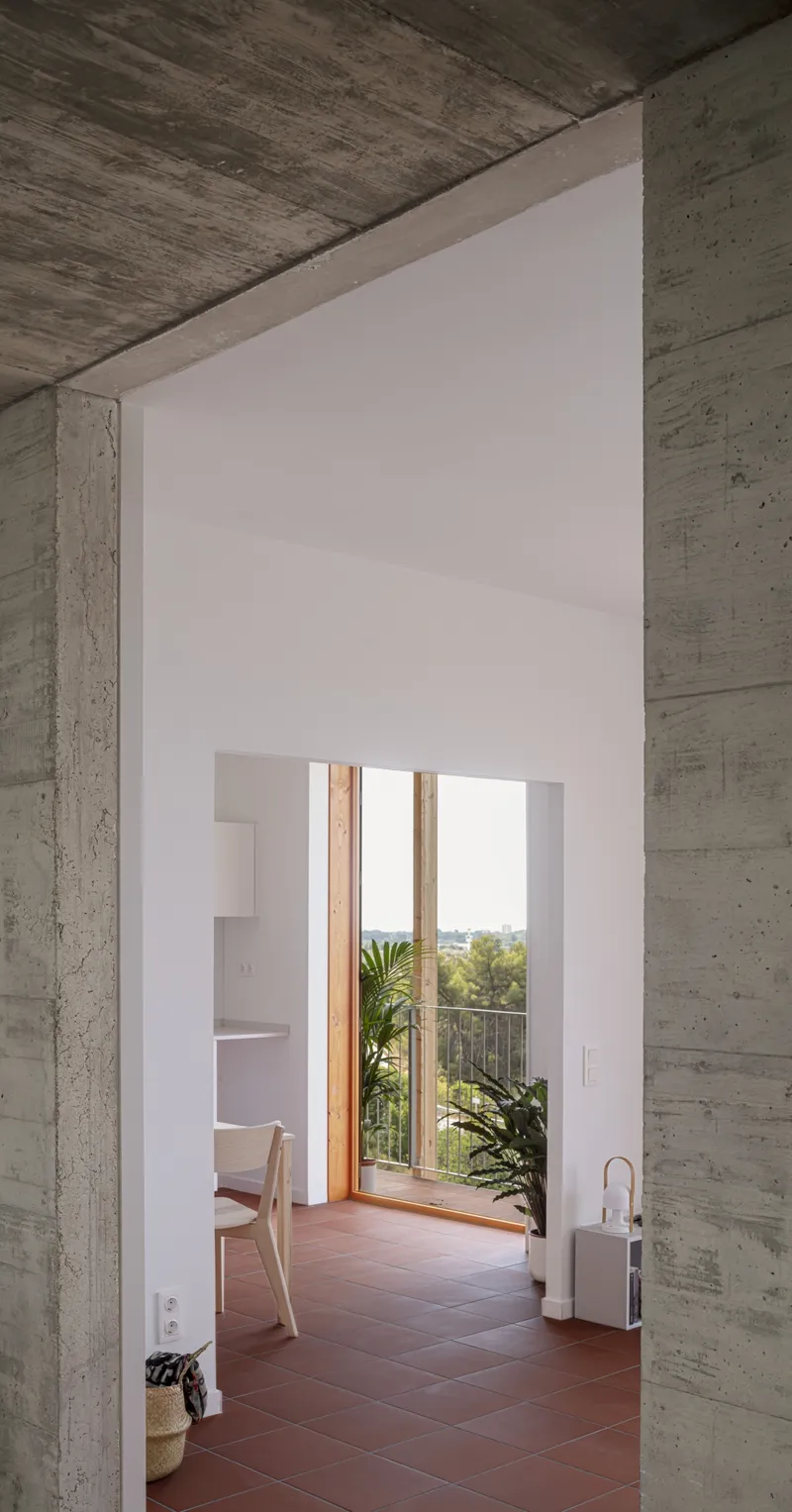
Unlike conventional housing blocks dominated by parking, HARQUITECTES strategically positioned the parking beneath the building footprint. This decision preserved the ground plane for landscaped gardens enriched with native vegetation such as almond, carob, and olive trees.
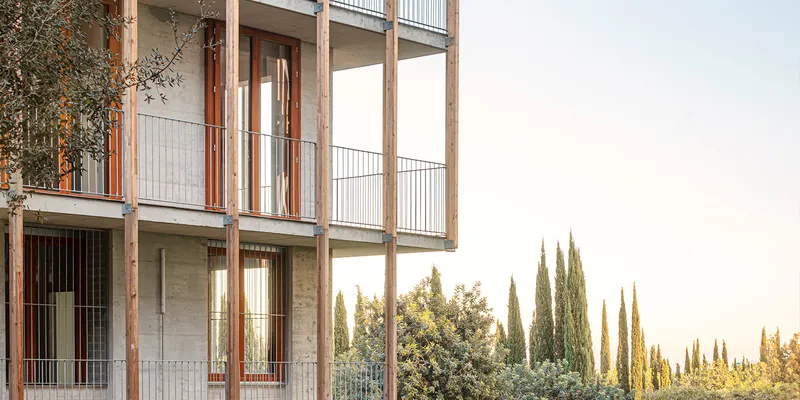
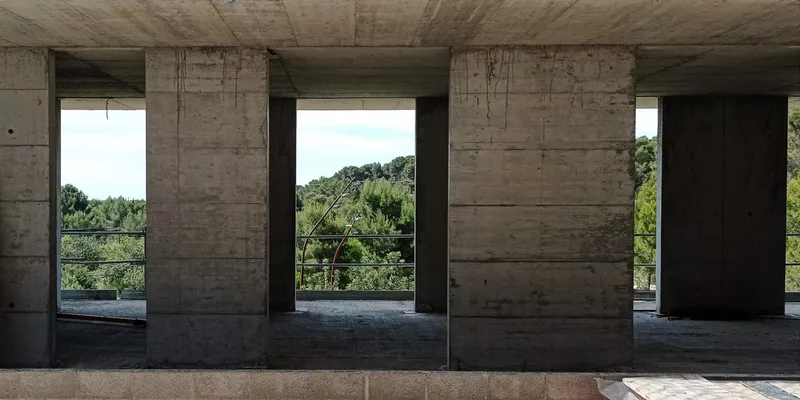
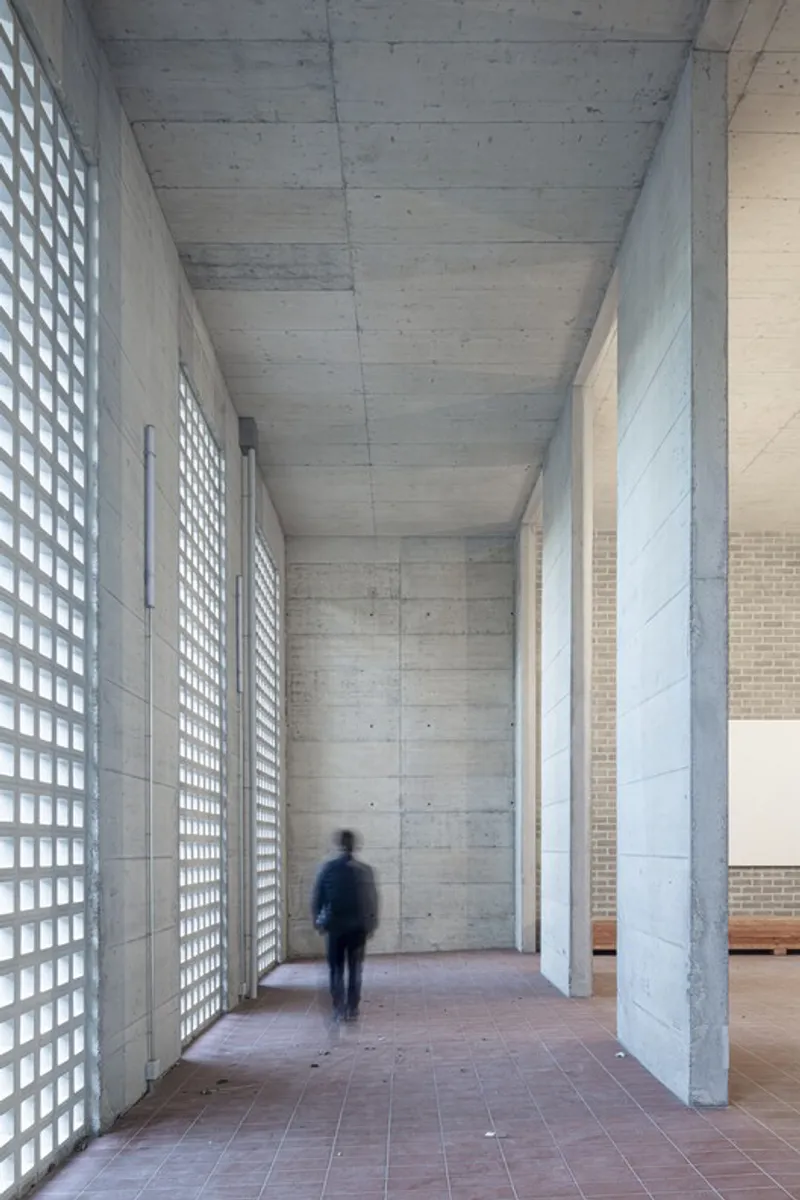
Minimal paving ensures a permeable, water-sensitive landscape, where rainwater infiltrates naturally, reinforcing ecological cycles. The greenery not only enhances biodiversity but also softens the raw concrete facades, blending materiality with nature.
Spatial Organization and Atrium Design
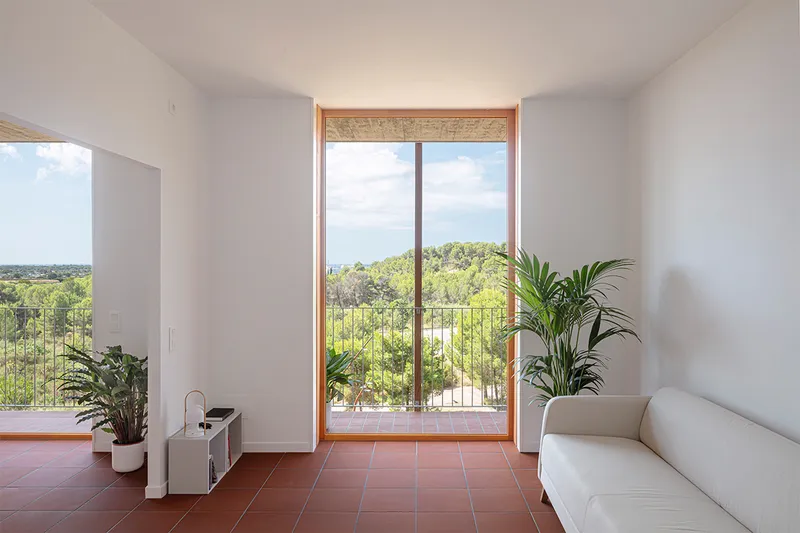
The housing is structured around an additive system of outward-facing rooms, ensuring every apartment enjoys views toward the surrounding landscape.
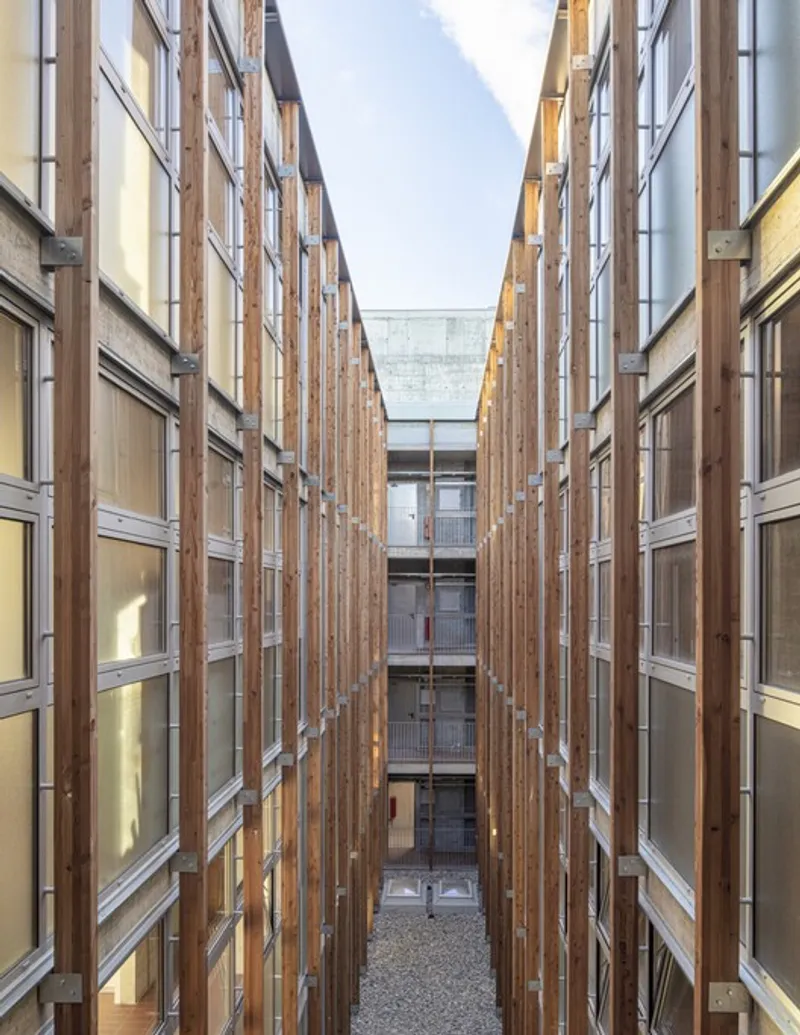
At its heart lies a cloister-like central atrium, a semi-tempered, sheltered space that organizes services and circulation. This atrium performs multiple functions:
- Enhances cross ventilation and daylight in every dwelling.
- Serves as a socially interactive communal space.
- Provides passive cooling and improved comfort.
The design establishes three concentric spatial rings:
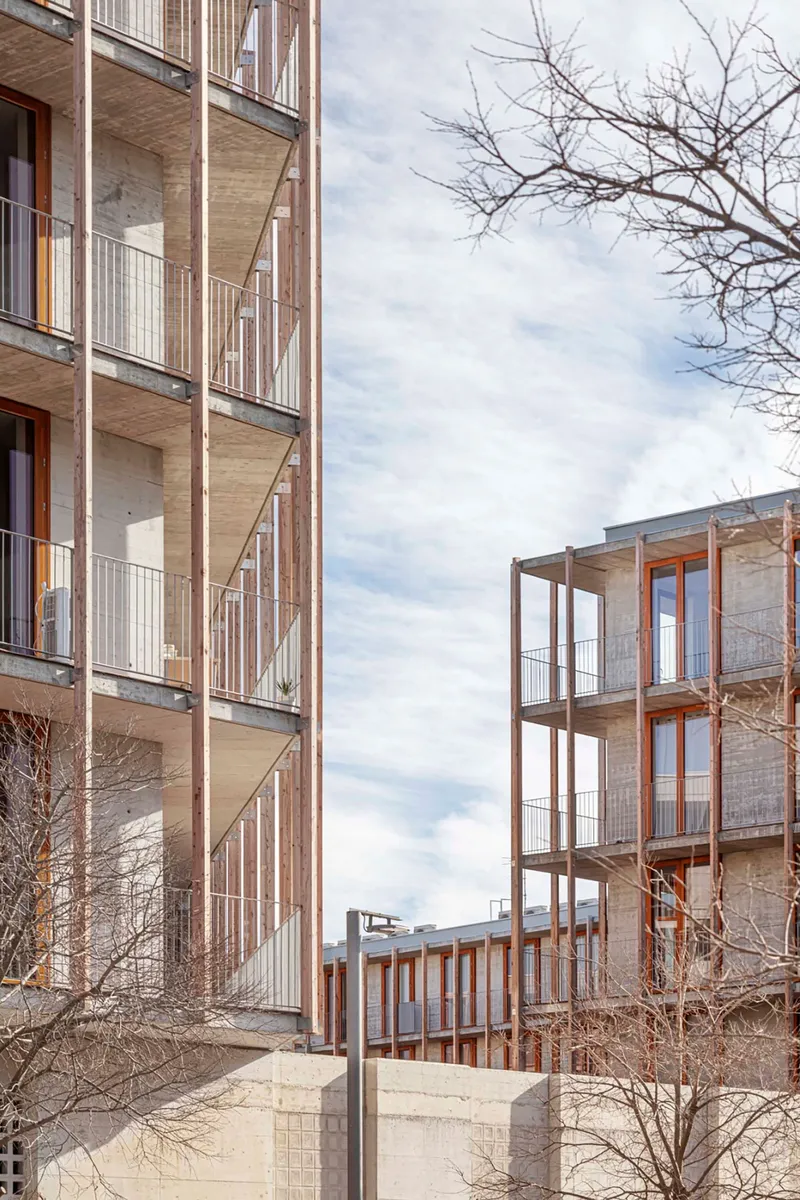
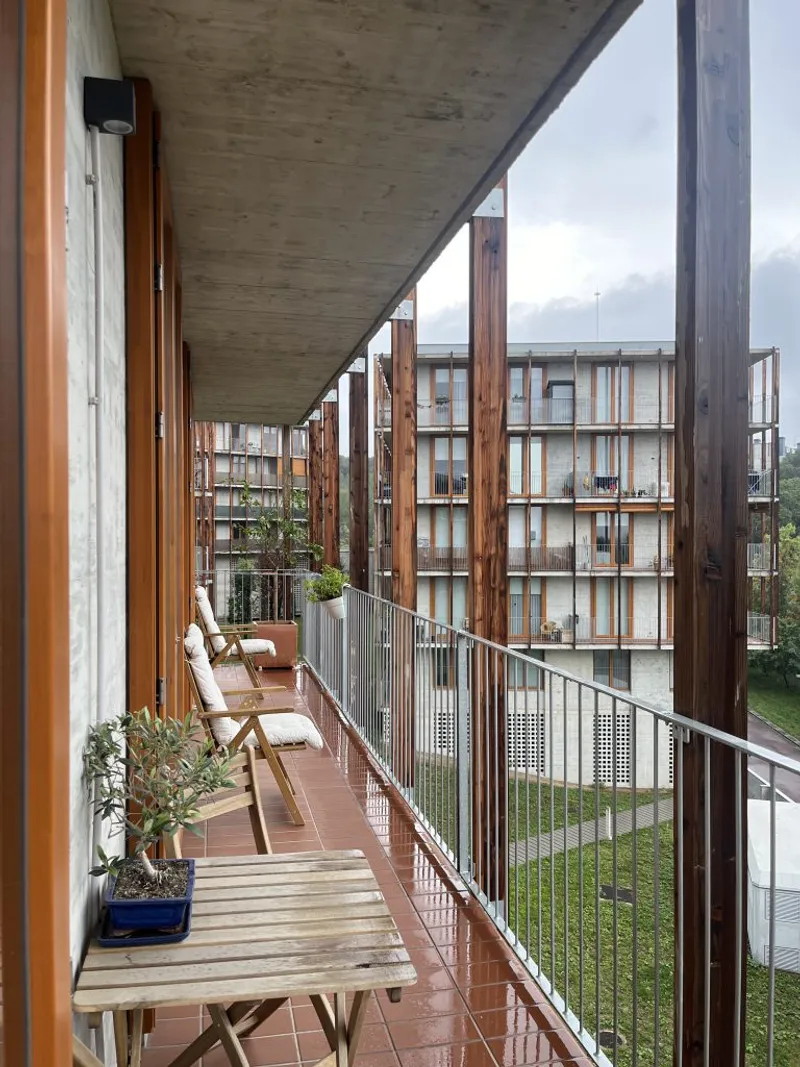
- Terrace Ring – continuous balconies 1.5 meters wide.
- Program Ring – modular dwelling units.
- Circulation Ring – corridors and atrium-linked walkways.
This ring-like system produces a rhythmic, breathable architecture where private and collective life coexist.
Modular Flexibility
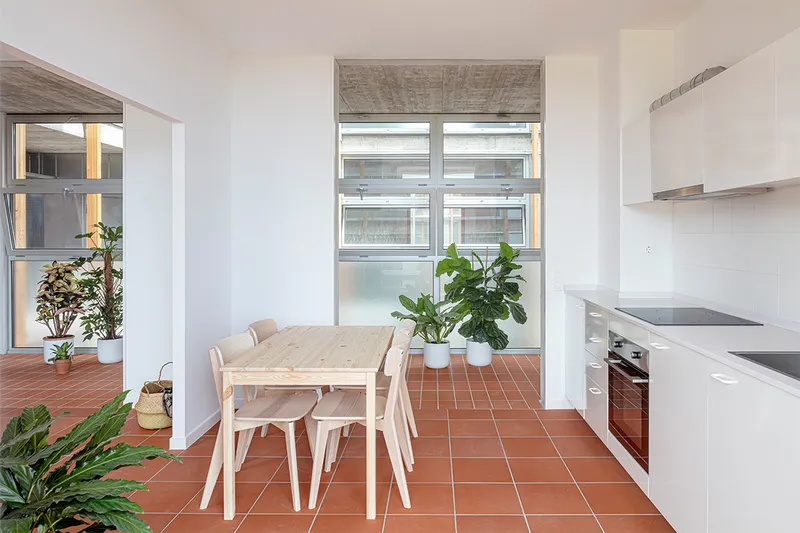
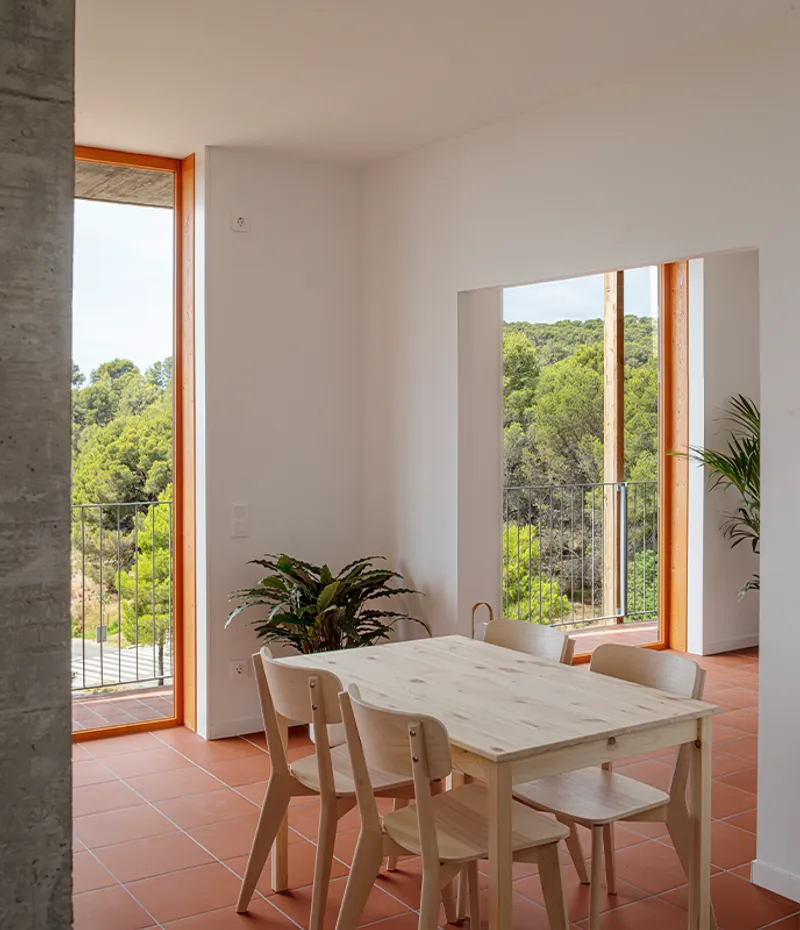
Each apartment is built from identical 10.6 m² modules, a flexible grid that can serve as a bedroom, kitchen, or living room. The non-hierarchical layout allows residents to adapt their homes to their lifestyle needs.
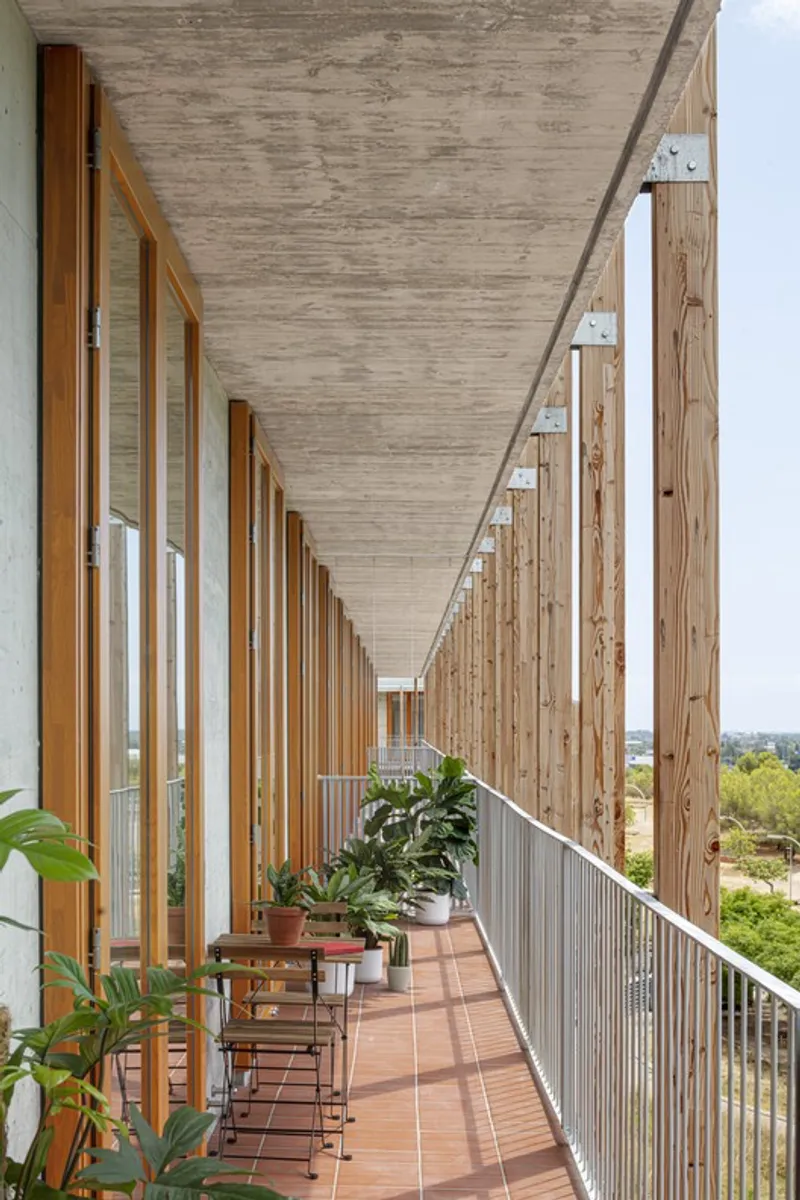
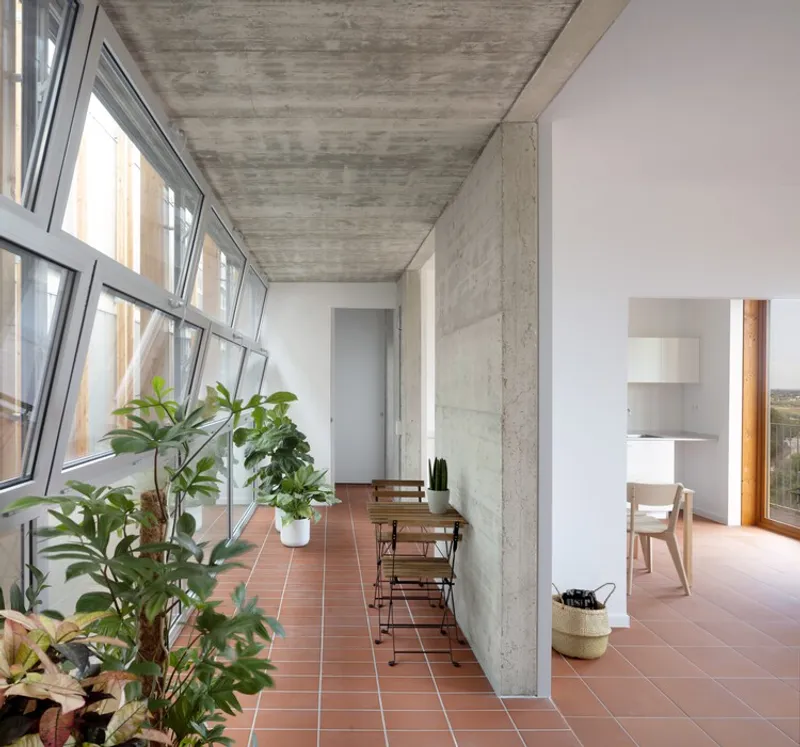
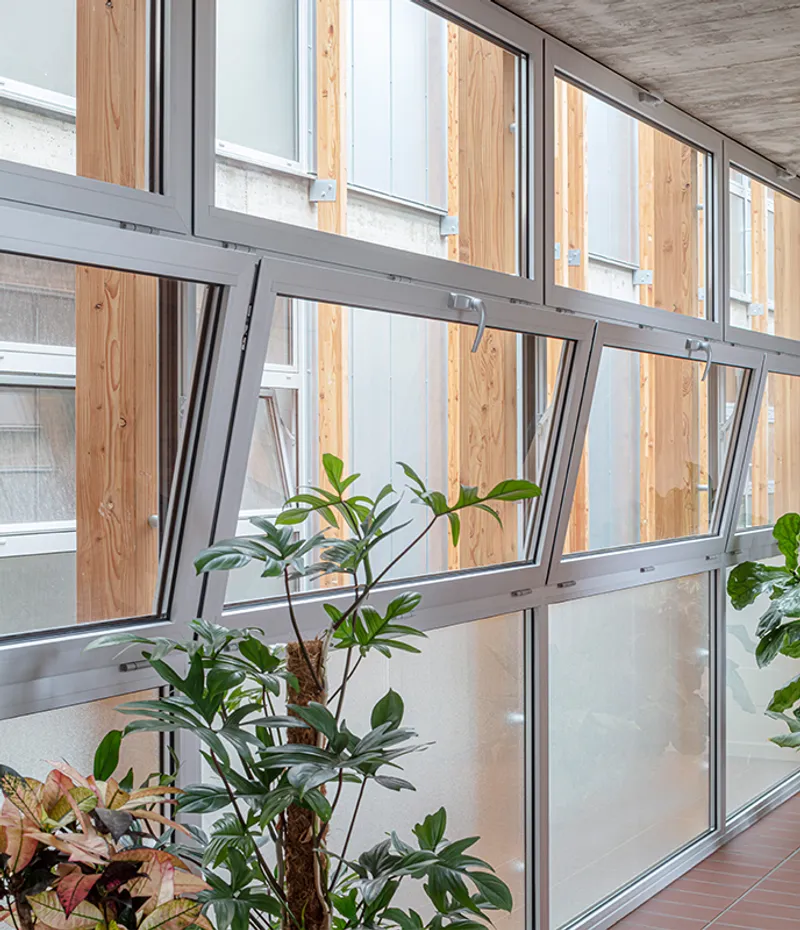
The continuous balconies function as thresholds between indoors and outdoors, while glazed porches along corridors act as climate buffers, storage zones, or relaxation areas.
On the ground floor, where a denser plinth anchors the structure, the typologies differ slightly to resolve entrances and common spaces, yet the same modular DNA guides the design.
Materiality and Structure
The project employs a hybrid structural system of concrete slabs, slim pillars, and partitioning screens, creating efficiency in spans while giving rhythm and identity to the interiors. The rawness of exposed concrete contrasts with the softness of wood and vegetation, striking a balance between durability, warmth, and environmental responsiveness.
A Model for Social Housing
With 136 dwellings, Social Housing 1737 is more than a housing block—it is a prototype for resilient, climate-conscious collective living. By prioritizing green infrastructure, passive design strategies, and modular adaptability, HARQUITECTES deliver a blueprint for the future of sustainable urban development in Spain and beyond.
All the photographs are works of Adrià Goula



Popular Articles
Popular articles from the community


Play: Fragments of Their World
Familiar architecture becomes modular playground design, creating safe spaces where displaced children can learn, connect, imagine and play.

Co-life: Sustainable Architecture for Age-Friendly Community Living
Co-life reimagines sustainable architecture for seniors through courtyards, rammed earth, shared gardens, and spaces designed for belonging.

Lunar Spiral: Space Architecture Shaped by the Mathematics of the Universe
Lunar Spiral reimagines space architecture through Fibonacci geometry, lunar regolith, levitating habitats, and self-sustaining Moon living.

Co-Life: Senior Housing Design That Reconnects Older Adults With the City
Co-Life reimagines senior housing design through healing gardens, shared streets, workshops, and a sustainable community across generations.

Similar Reads
You might also enjoy these articles


Hodi-Mandai Geram
Project Function: Preservation and revitalization of the Intangible heritage and socio-spatial identity of the Hodi by Housing, Cultural Memory Center, Sacred Grove, landscape, local tourism economy


Olio Towers: A Mid-Rise for Performers That Fuses Housing, Rehearsal, and Stage
Located blocks from Houston's Theater District, this modular tower stacks living units around a central performance atrium.

Oasis: Modular Green Housing Carved into Dhaka's Urban Fabric
A shortlisted Plugin Housing entry reclaims unauthorized settlements in Dhaka with stepped concrete volumes, green roofs, and ventilation-driven design.

Black Hole: A Floating Megastructure for the Post-Physical Era
Emiliano Mazzarotto envisions a spherical, self-scaling arena where e-sports, digital hotels, and holographic stadiums replace traditional public space.


Explore Social Housing Competitions
Discover active competitions in this discipline



Challenge to reimagine the Iron Throne


Photograph architecture without architects


Illustrate the lost glory of Angkor Wat - Render Challenge


Design challenge to reuse E-waste
Comments (0)
Please login or sign up to add comments
No comments yet. Be the first to comment!