
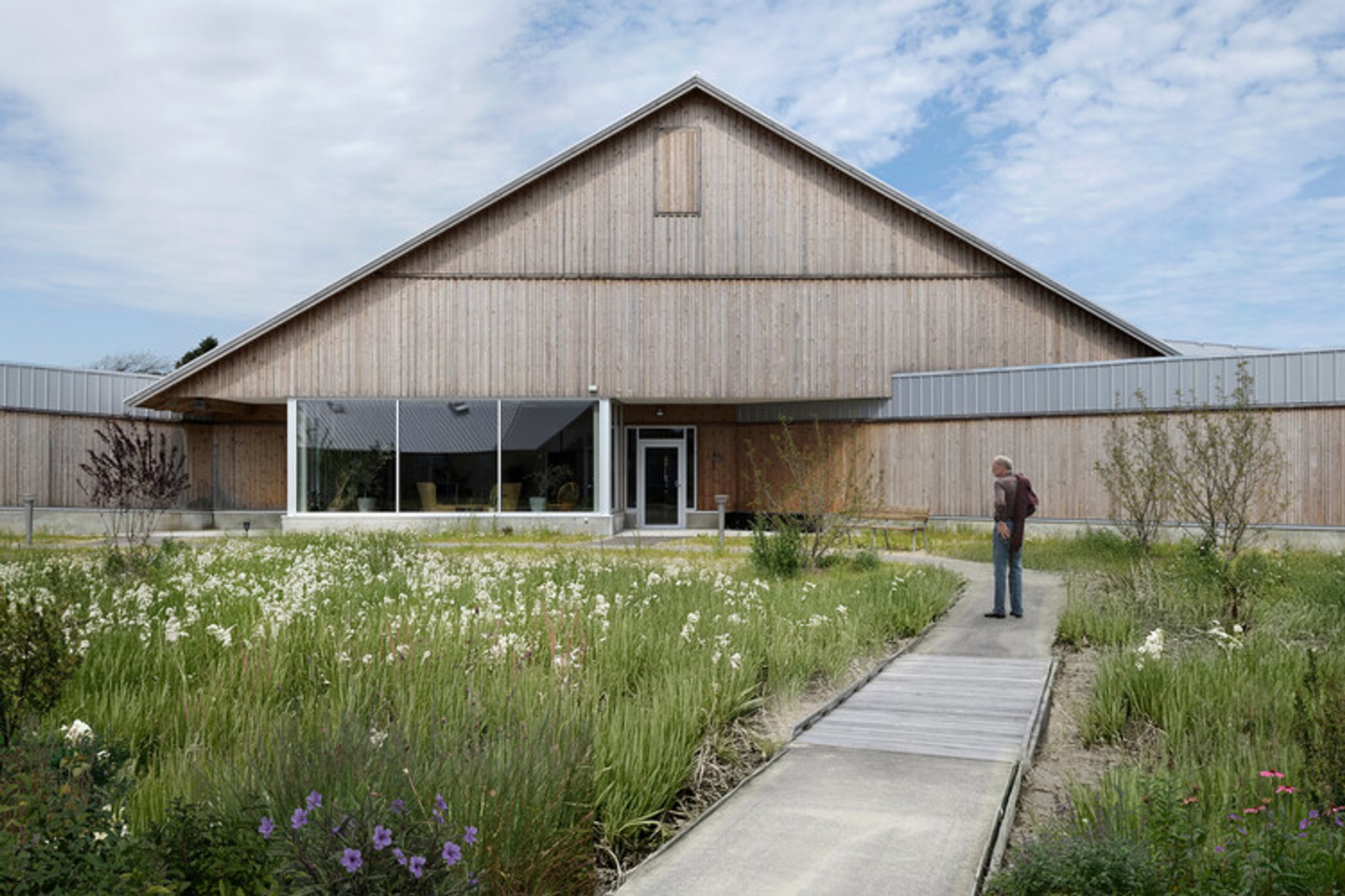
Soldalhus Nursing Home – Sunvalley House by Cubo Arkitekter
A dementia-friendly nursing home designed as a village of light, gardens, and small domestic clusters, preserving dignity, autonomy, and belonging.

A New Landscape of Care, Dignity, and Everyday Belonging in Northern Jutland
Set high on the soft undulating hills of Sindal in Northern Jutland, where the land folds into meadows, wetlands, and slow winds from the west, a new scale of care has been built. Not monumental, not institutional, but domestic, warm, and village-like. This is Soldalhus — “Sunvalley House” — a nursing home designed by Cubo Arkitekter for residents living with dementia, and for a community learning to age with dignity, connection, and color.
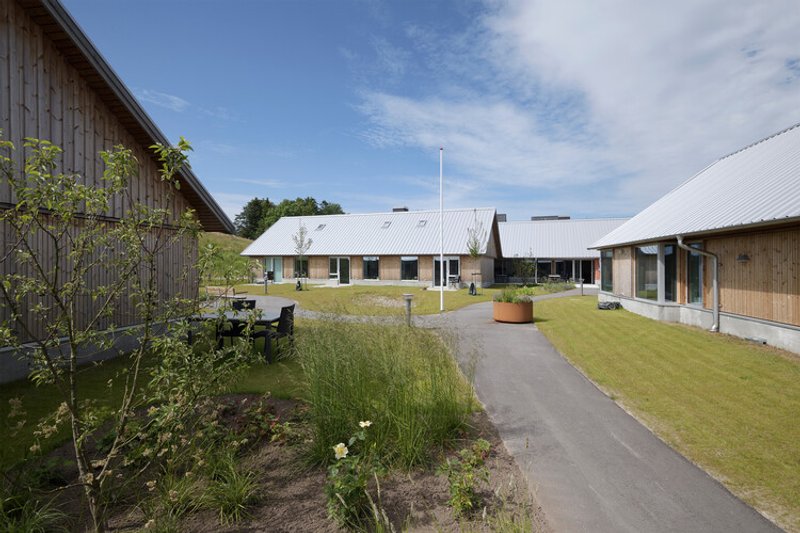
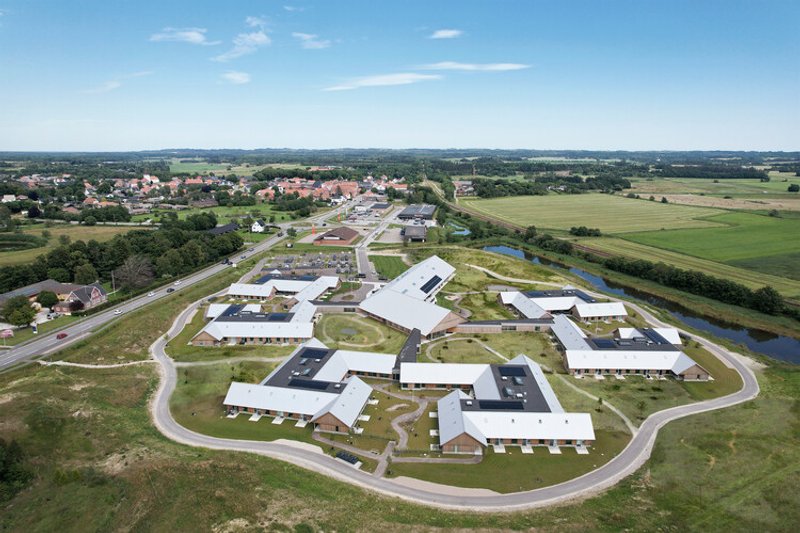
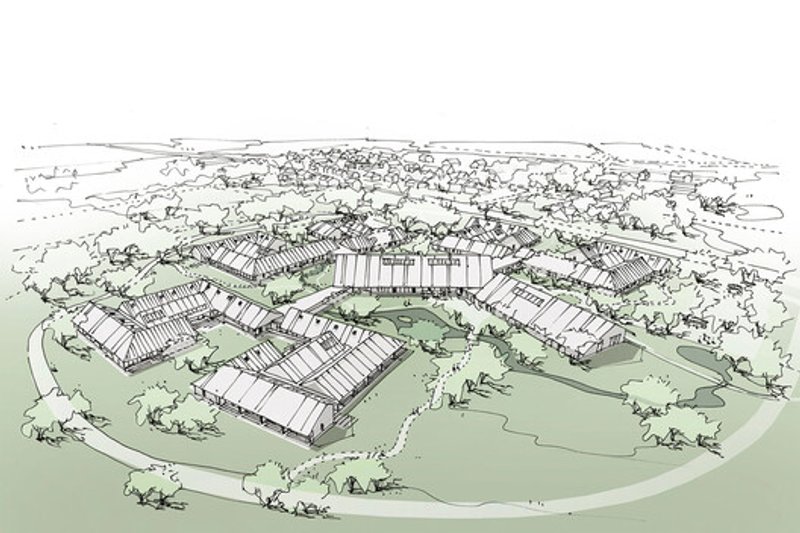
With 96 residences, a central community building, shared gardens, activity areas, and support facilities, Soldalhus is not conceived as a single structure. Instead, it is assembled as a small settlement — a neighborhood, a cluster of micro-homes, a protected landscape for wandering and orientation. It is a home, not a facility. A landscape, not an object. A place where architecture softens memory loss rather than exposing it.
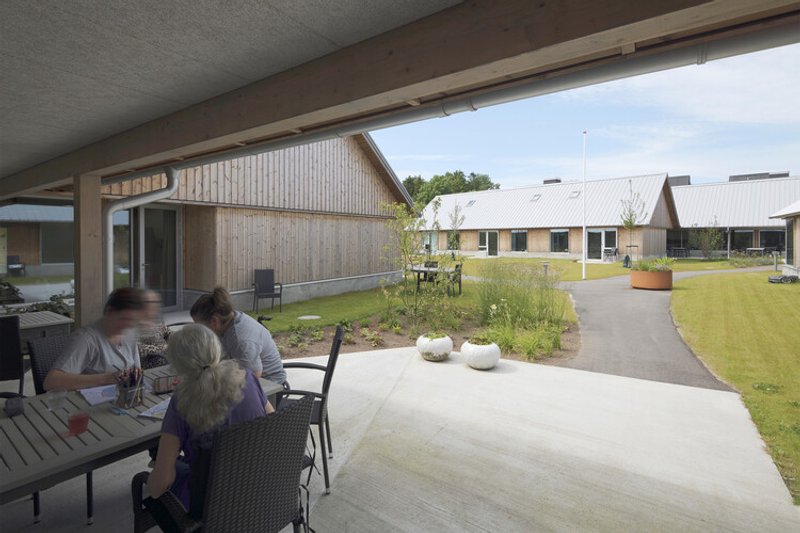
Soldalhus stands not at the center of the town but on its threshold — a hinge between the natural terrain and Sindal’s urban fabric. This position is strategic and symbolic. On one side lies the town, social life, markets, families. On the other, open green fields and the wide sky of North Jutland. The building bridges both worlds, ensuring residents can remain part of the city, yet sheltered in a peaceful environment where light, sound, and space work in rhythm with human fragility.
It is a nursing home that does not feel like one — because its architecture is rooted in respect.
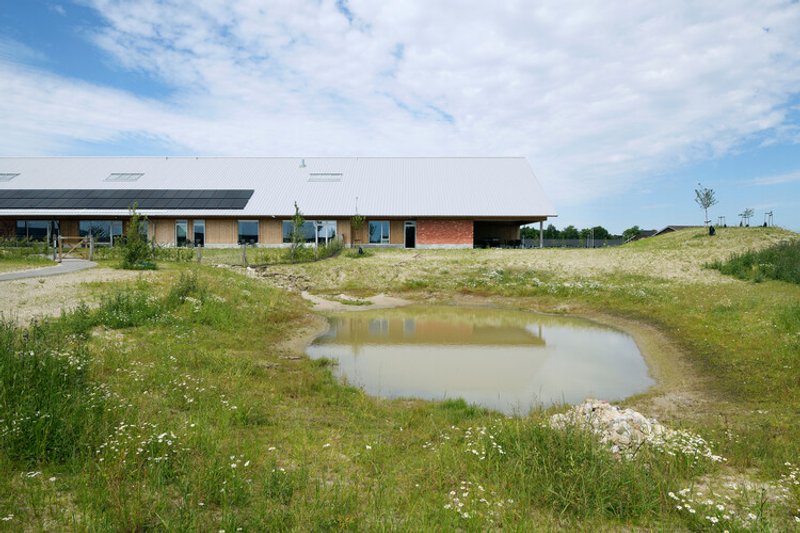
Architecture built around people, not plans
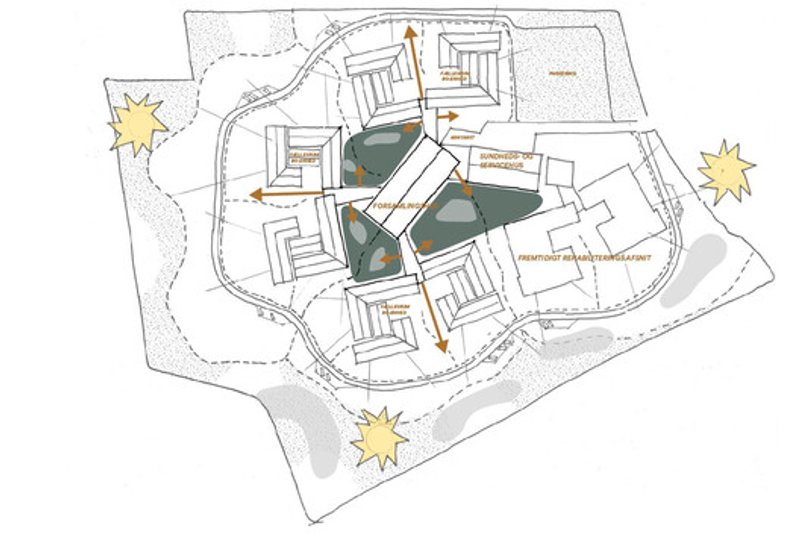
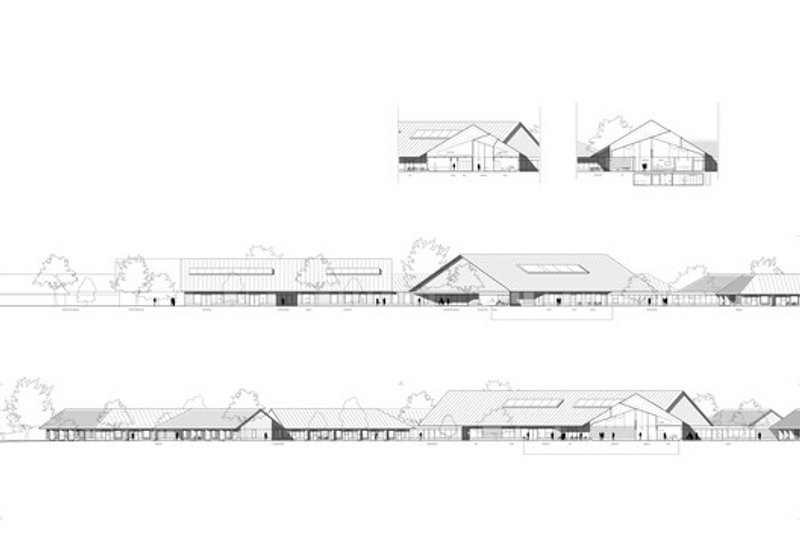
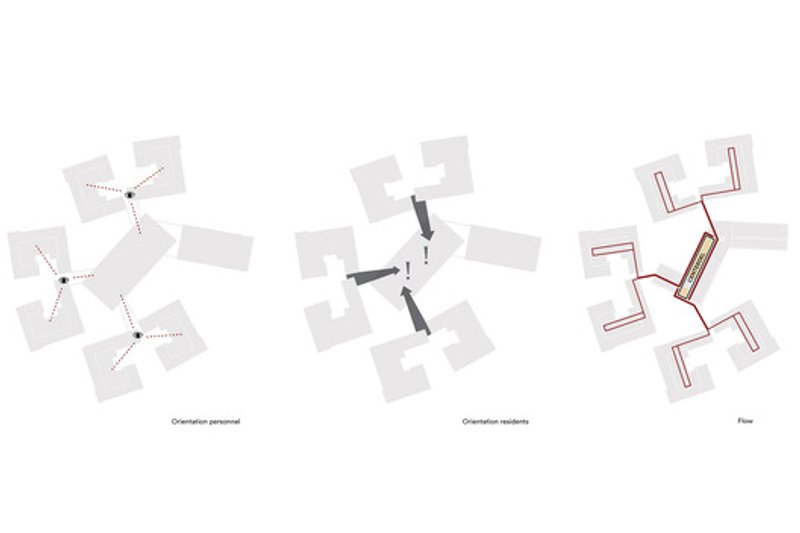
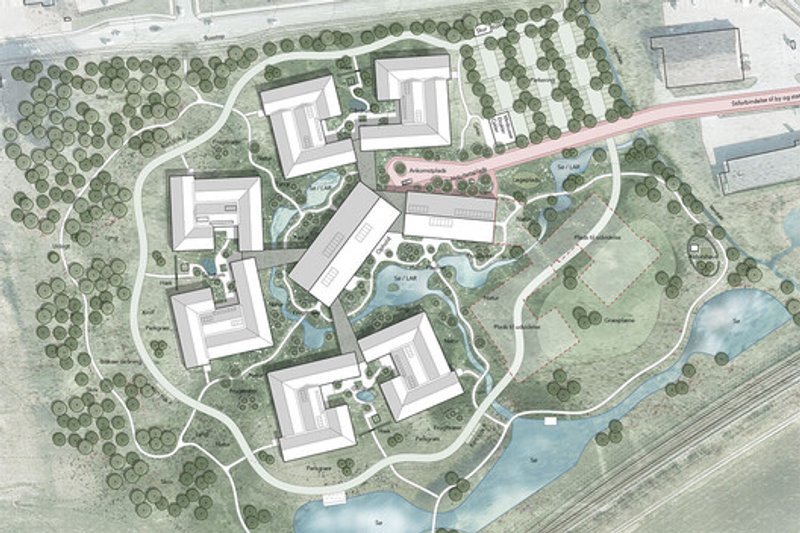
Cubo Arkitekter’s design avoids overwhelming scale. Instead of one enormous institutional block, Soldalhus is divided into twelve small household clusters, each containing eight private residences arranged like small domestic units surrounding a shared kitchen and living room. The result resembles a northern village more than a care institution. The human scale is immediate: no long hospital corridors, no closed-off wards, no dead ends. Instead, circulation loops gently, encouraging natural movement, curiosity, and safe wandering — a fundamental design principle for dementia-friendly environments.
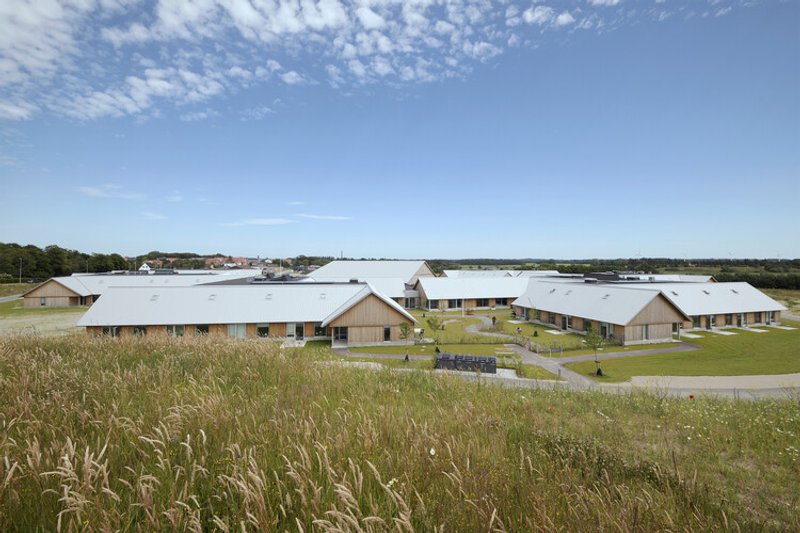
Each unit opens toward protected courtyards, meaning residents always engage with daylight, greenery, seasonal change, and the weather. Kitchens are shared, and meals become communal — reminding residents of ordinary domestic routines. Smells of cooking, the sounds of conversation, the creak of chairs against wood floors — these are environmental cues that support memory, orientation, and emotional grounding. Here, everyday life becomes therapy.
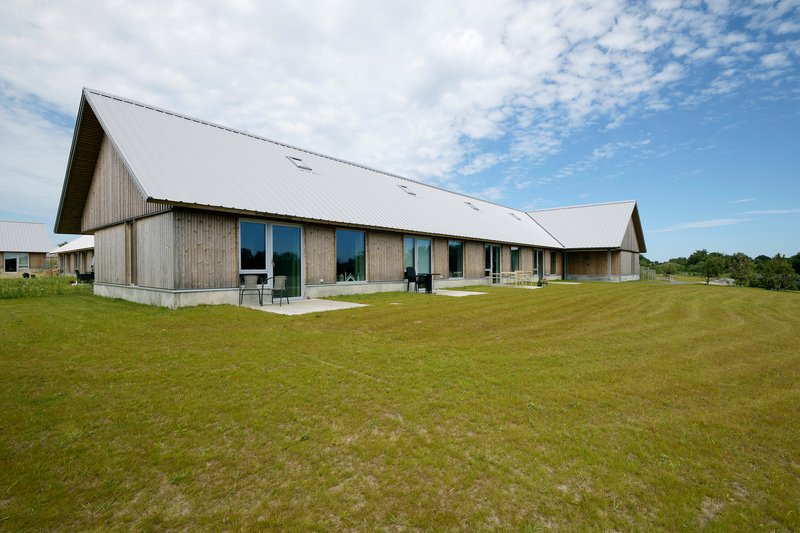
Cubo avoids institutional uniformity and instead introduces difference and familiarity: small changes in layout, textures, planting, and sun orientation give each dwelling cluster its own atmosphere. This allows residents to identify place through sensory association — a crucial cognitive support tool.
But the architecture does not patronize. It respects agency. It invites independence rather than enforcing supervision. A resident can walk in circles without getting lost, sit in sunlight without exposure, cook with others, garden, watch birds over wetland ponds, or simply rest in silence.
It is dignity made spatial.
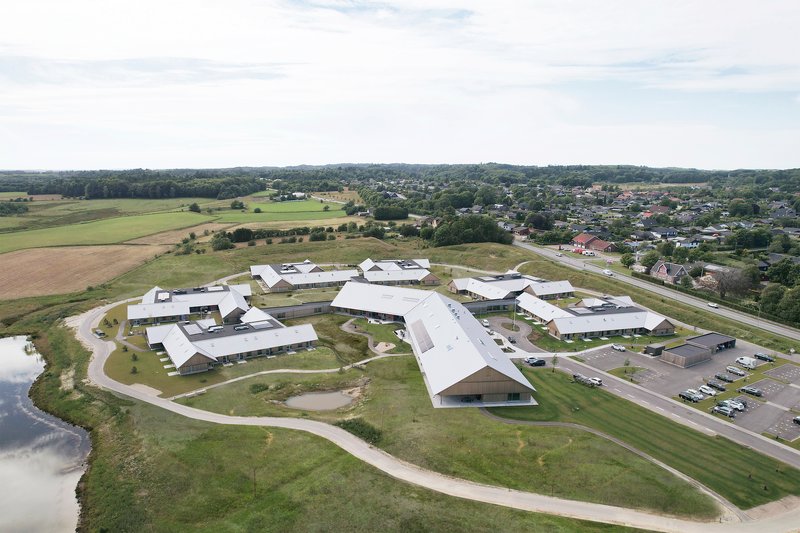
Daylight as medicine
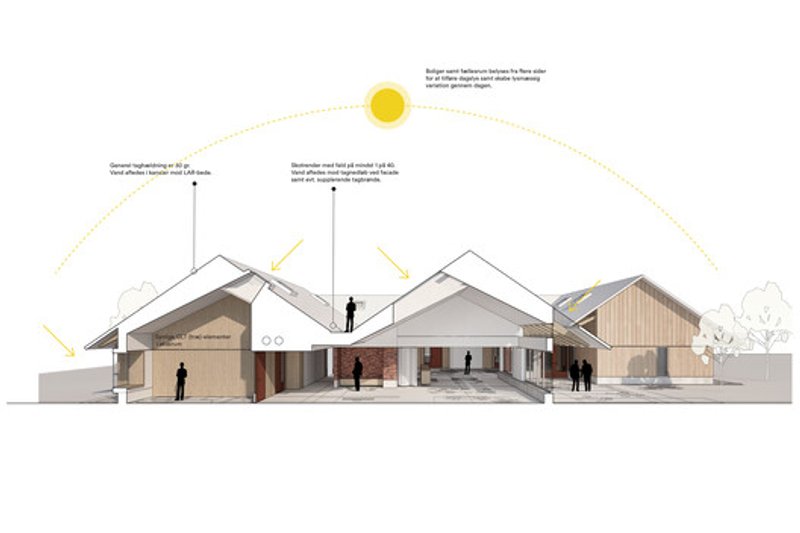
Light is the soul of Soldalhus — the reason for its name. Northern Denmark experiences dramatic seasonal variation, and for older adults, especially those living with dementia, loss of circadian rhythm can destabilize mood, sleep patterns, and social engagement. To respond, Cubo Arkitekter integrated daylight as an active architectural tool rather than a passive illumination source.
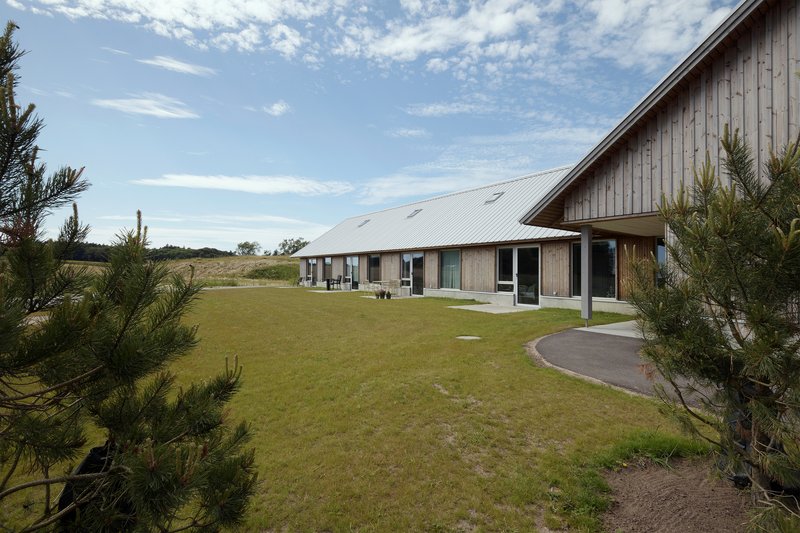
Residences face two orientations whenever possible, supported by skylights in north-facing rooms that ensure soft ambient brightness throughout the day. Artificial lighting synchronizes with circadian cycles — cool light in the morning, warm tone toward evening — supporting the body’s biological rhythm. As daylight moves through the building, shadows lengthen and contract, helping residents subconsciously track time.
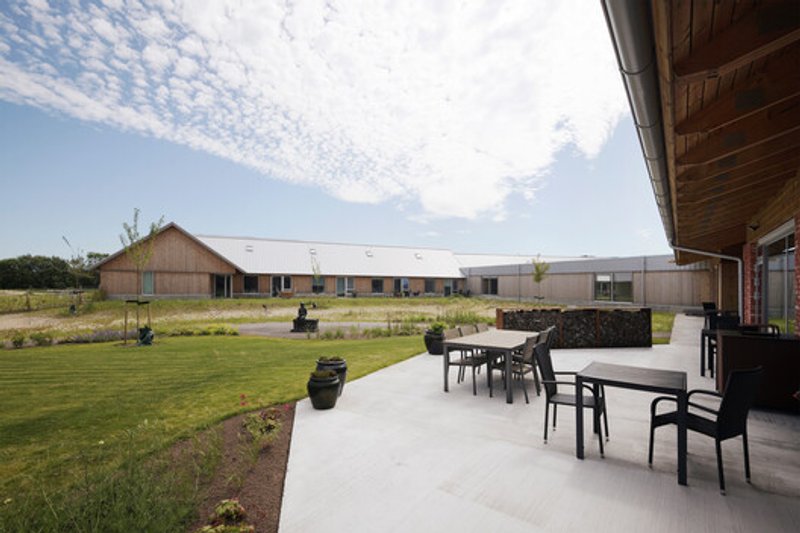
Roof overhangs soften glare and create transitional spaces between interior calm and outdoor openness. Residents are never forced abruptly into brightness or darkness; they move gradually between environments like one moves between moments in a day.
The building does not only shelter life — it regulates it with tenderness.
Landscape as memory, therapy, and freedom
Outdoor spaces in Soldalhus are not ornamental gardens but extensions of domestic life. They are places where memory becomes tactile — hands in soil, wind on skin, footsteps over grass. Three distinct garden typologies unfold across the site, each offering a different sensory world:
One garden is bright and open, shaped for long morning light.Another is sheltered and warm for afternoons.The third is shaded, intimate, quiet — a place for reflection.
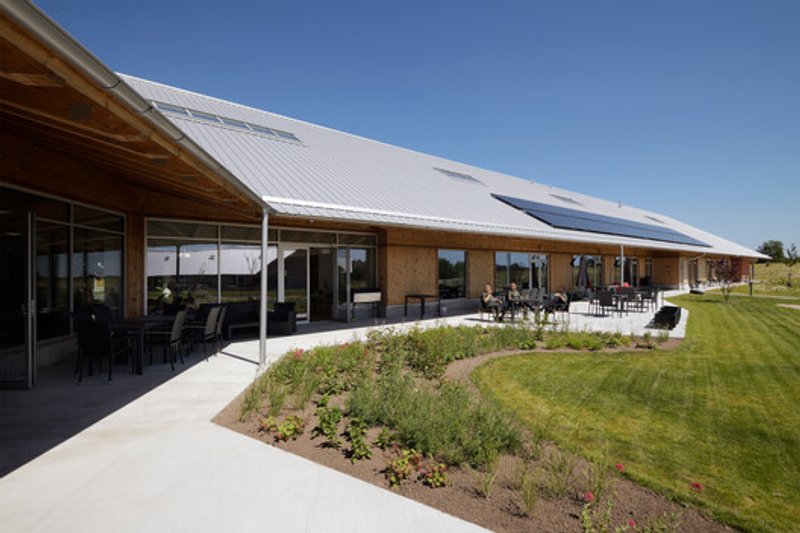
Linked walking loops weave gently across the site without dead ends, encouraging movement and exploration without risk of disorientation. Even residents with advanced dementia can walk independently in circular paths, experiencing autonomy within safety. This is freedom, spatially engineered.
Water is held in rain-fed ponds, reintroducing biodiversity and managing stormwater. Native planting attracts insects, birds, and seasonal color shifts. Residents can garden, care for animals, pick fruit from orchards, or simply sit with sunlight on their face. These activities stimulate muscle memory — another link between past life and present agency.
Here, landscape is not viewed from a window — it is lived.
Sustainability as a quiet foundation
Soldalhus is designed with long-term resilience, not only for its residents but for the climate. Targeting DGNB Gold certification, the project integrates sustainable strategies from material selection to operational technologies.
Cross-laminated timber structures reduce embodied carbon, while durable timber cladding ensures low maintenance. Deep overhangs protect surfaces from weathering and allow controlled daylight entry. Photovoltaics and efficient systems lower operating energy demands, while welfare technologies improve indoor comfort — acoustic control, adaptive lighting, stabilised temperatures, and intuitive navigation systems.
Importantly, sustainability here is not aesthetic or performative. It is everyday functional and invisible, operating quietly in the background so life—not technology—remains at the forefront.
A civic heart beats at the center
At the core of the nursing home stands the Assembly House — the social living room of the complex. Under a broad unifying roof, café, activity rooms, cultural event spaces, and communal gathering areas are arranged like a local public plaza. This is where neighbors from Sindal visit, where families meet, where concerts and seasonal celebrations unfold. In contrast to the intimate scale of living clusters, the Assembly House feels civic — but not monumental. It expands when needed, divides when small groups gather, and always remains warm and open.
Adjacent to it, the Health and Service House organizes clinical and administrative programs efficiently along the arrival plaza. Public and private realms are separated but not estranged. Staff circulation is clear, residents maintain privacy, and visitors navigate intuitively. The result is a campus where care, community, and everyday life overlap without friction.
Soldalhus is not only a nursing home — it is a shared neighborhood.
A new model for aging, belonging, and architectural care
Soldalhus demonstrates how architecture can humanize the final decades of life. It proves that dementia-oriented care environments do not need to feel restrictive, medical, or isolating. Instead, they can be homelike, green, sensory-rich, and deeply connected to community.
Cubo Arkitekter designed a place where aging does not equal withdrawal — where residents continue to cook, walk, garden, talk, see the sky, feel the seasons, and interact with neighbors. A home that enables independence rather than simply supervising decline.
It is a building in which architecture does not simply contain life — it honors it.
All the Photographs are works of Martin Schubert




Popular Articles
Popular articles from the community

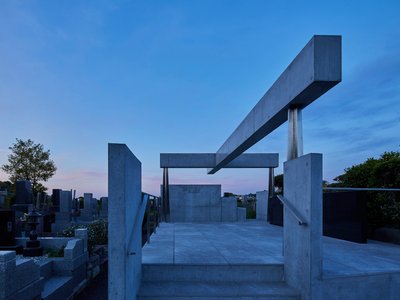
Takeshi Hosaka Architects Suspends a Concrete Cross Above a Yokohama Cemetery
A 28-square-meter burial renovation in Yokohama lifts the symbol of resurrection into the sky so mourners see it against heaven.

20 Most Popular Office Building Projects of 2025
From biophilic workspaces in India to net-positive energy offices in New Delhi, 20 office building projects that defined architecture in 2025.
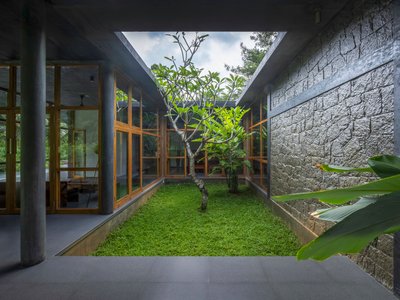
3dor Concepts Wraps a Kerala Home in Mirrored Concrete Arcs Around a Courtyard Tree
In the Western Ghats foothills of Thamarassery, a 270 m² single-story house uses two curved volumes to frame nature as its center.
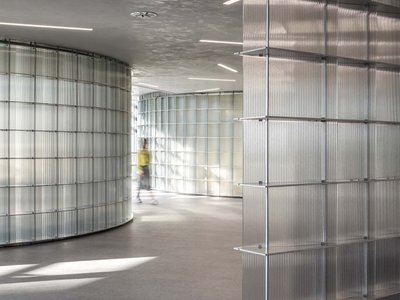
HCCH Studio Wraps a Shanghai High-Rise Office in Curved Walls of Translucent Glass
A 1,000 square meter fit-out in Lujiazui replaces the typical tech-office palette with layered glass, micro-cement, and quiet rigor.
Similar Reads
You might also enjoy these articles
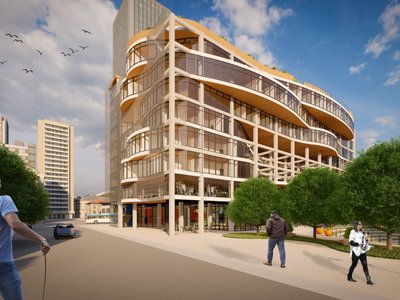
Olio Towers: A Mid-Rise for Performers That Fuses Housing, Rehearsal, and Stage
Located blocks from Houston's Theater District, this modular tower stacks living units around a central performance atrium.
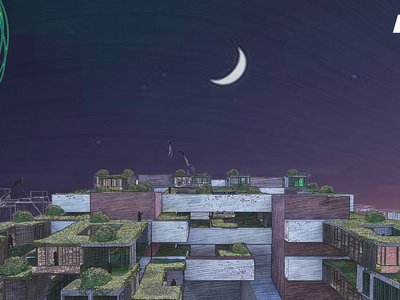
Oasis: Modular Green Housing Carved into Dhaka's Urban Fabric
A shortlisted Plugin Housing entry reclaims unauthorized settlements in Dhaka with stepped concrete volumes, green roofs, and ventilation-driven design.

Black Hole: A Floating Megastructure for the Post-Physical Era
Emiliano Mazzarotto envisions a spherical, self-scaling arena where e-sports, digital hotels, and holographic stadiums replace traditional public space.
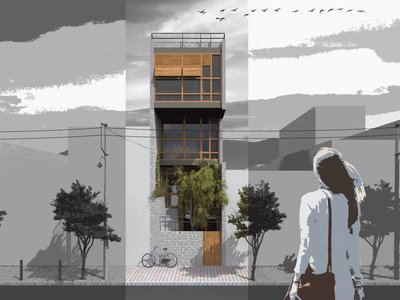
Compact & Sustainable Living in Piraeus: A Four-Level Family Home Built Around Light and Air
A narrow townhouse in one of Greece's densest port cities uses a central atrium and passive strategies to house three generations under one roof.


Explore Architecture Competitions
Discover active competitions in this discipline




The International Standard for Design Portfolios


The Global Benchmark for Architecture Dissertation Awards


The Global Benchmark for Graduation Excellence


Challenge to reimagine the Iron Throne
Comments (0)
Please login or sign up to add comments
No comments yet. Be the first to comment!