
Songpa Wirye Kindergarten by TAAL Architects: Designing a Safe, Imaginative World for Children in the Heart of Songpa-gu
A vibrant, playful kindergarten in Seoul by TAAL Architects, designed to inspire imagination, safety, and flexible early learning.


Located in Songpa-gu, South Korea, Songpa Wirye Kindergarten by TAAL Architects is a striking example of how thoughtful architecture can overcome urban planning constraints to create a nurturing, creative environment for children. Completed in 2022 and spanning 1,964 m², this public kindergarten was conceived as part of a broader urban development plan—yet it had to contend with a host of site limitations and logistical challenges. Despite these hurdles, the resulting design is a bold and playful response that redefines early childhood educational spaces.
Confronting Site Challenges with Creativity
The location of Songpa Wirye Kindergarten presented multiple challenges from the outset. Tucked between a large high school and towering apartment complexes, the narrow site lacked strong visual or physical connections to the surrounding green space networks. A 27-meter-wide road runs along its edge, raising major safety concerns for young children, especially given the nearby underground parking entrance for a high-density residential complex.
In addition, the small plot and significant elevation change from south to north made it difficult to meet legal building requirements while still allowing for functional outdoor spaces like playgrounds. The dense configuration of surrounding high-rises blocked natural light and views, creating a claustrophobic urban setting. Rather than allow these factors to define the kindergarten’s limitations, TAAL Architects used them as catalysts for innovation.
An Urban "Treasure Chest" of Discovery
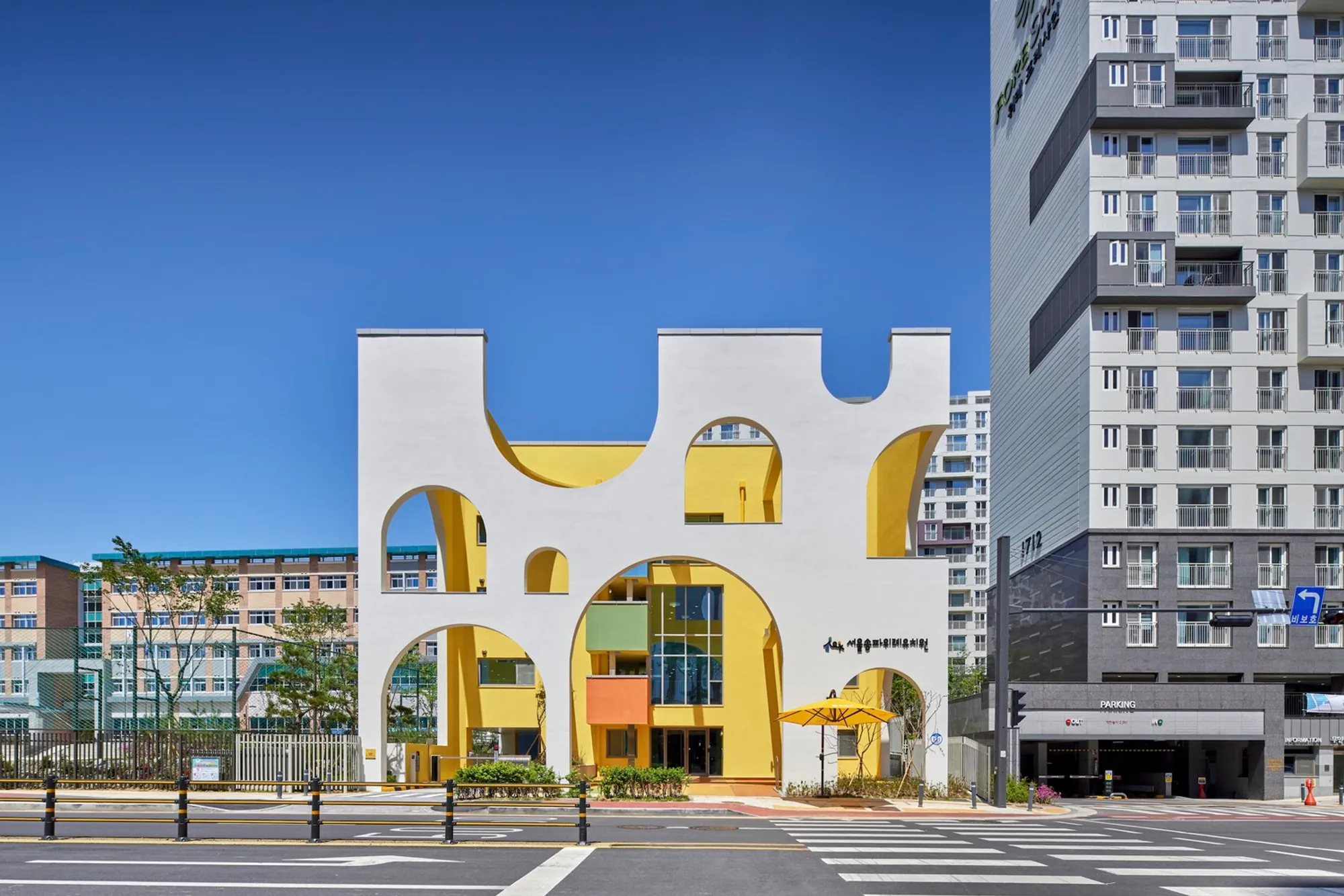
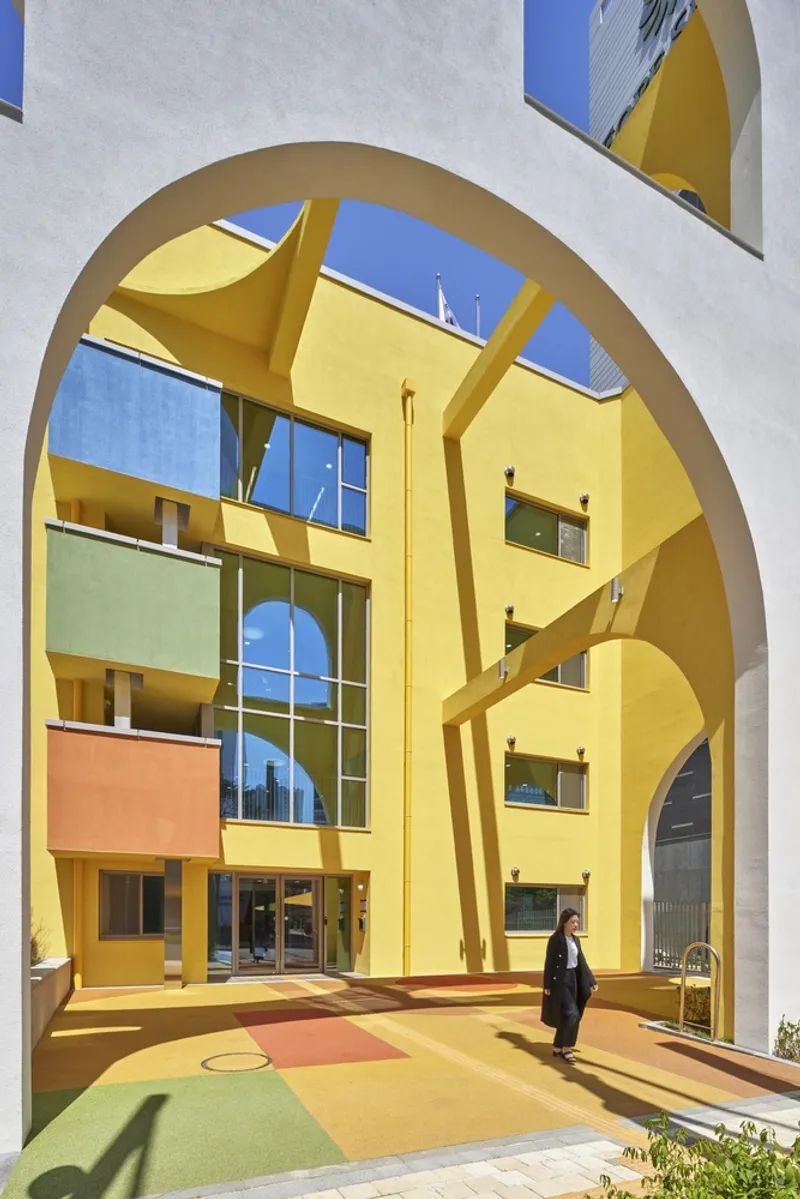
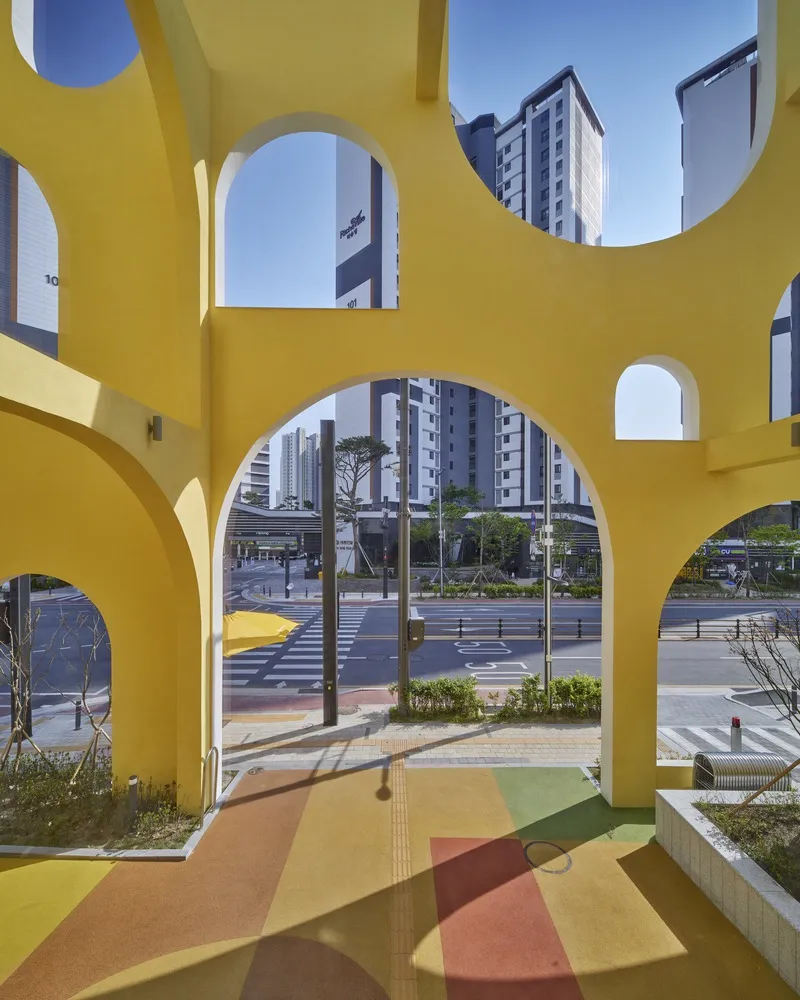
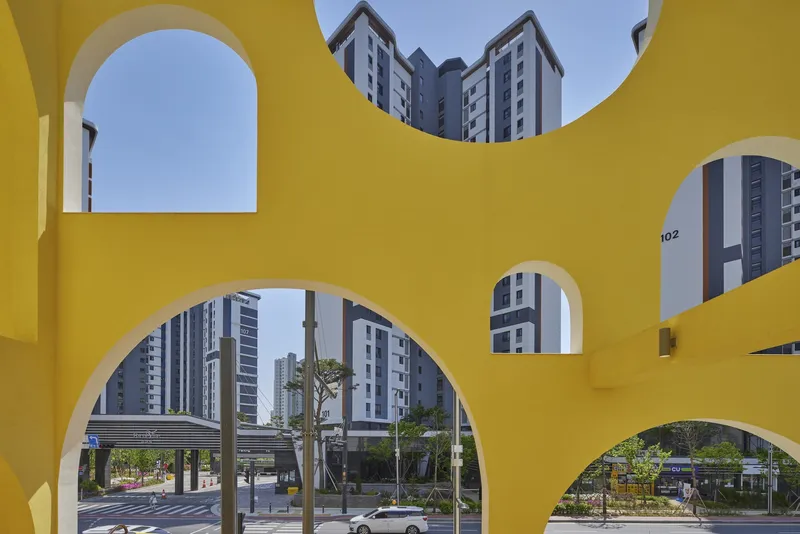
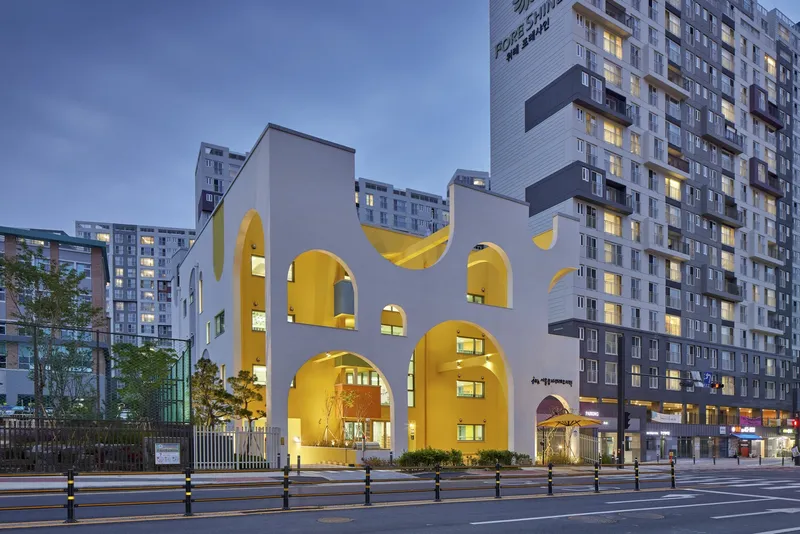
The architectural response was both functional and imaginative. To ensure safety and provide spatial buffer from the busy road, the architects positioned the building as far north as possible, creating an 8-meter forecourt enclosed by a non-load-bearing wall. This space, perforated with a playful series of irregular openings, acts as both a safety barrier and an intriguing visual screen.
The porous, sculptural façade creates depth and frames playful glimpses into the building's interior—much like looking into a “treasure chest” of colors, shadows, and shapes. Children and parents alike have affectionately nicknamed the building “Jerry’s Cheese,” likening its bubbly façade to the iconic cheese from the cartoon Tom and Jerry. This nickname, while whimsical, signifies the building’s strong identity and integration into the local community.
A Space That Stimulates Curiosity and Creativity
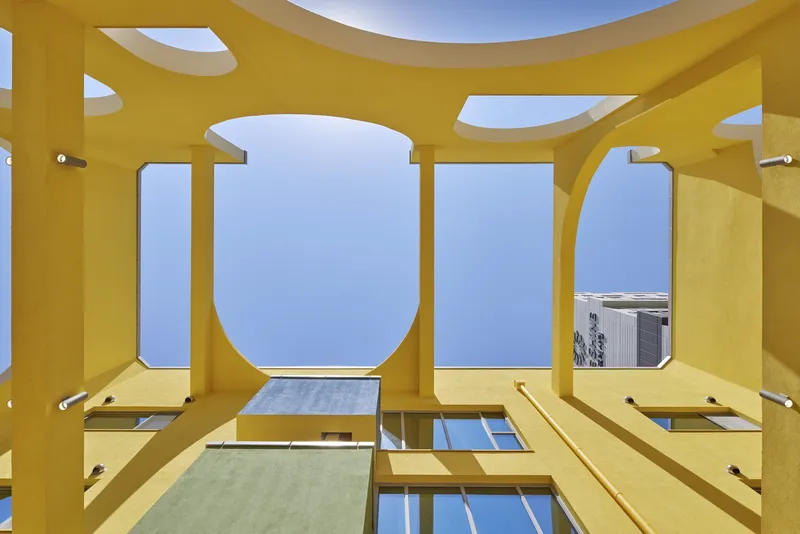
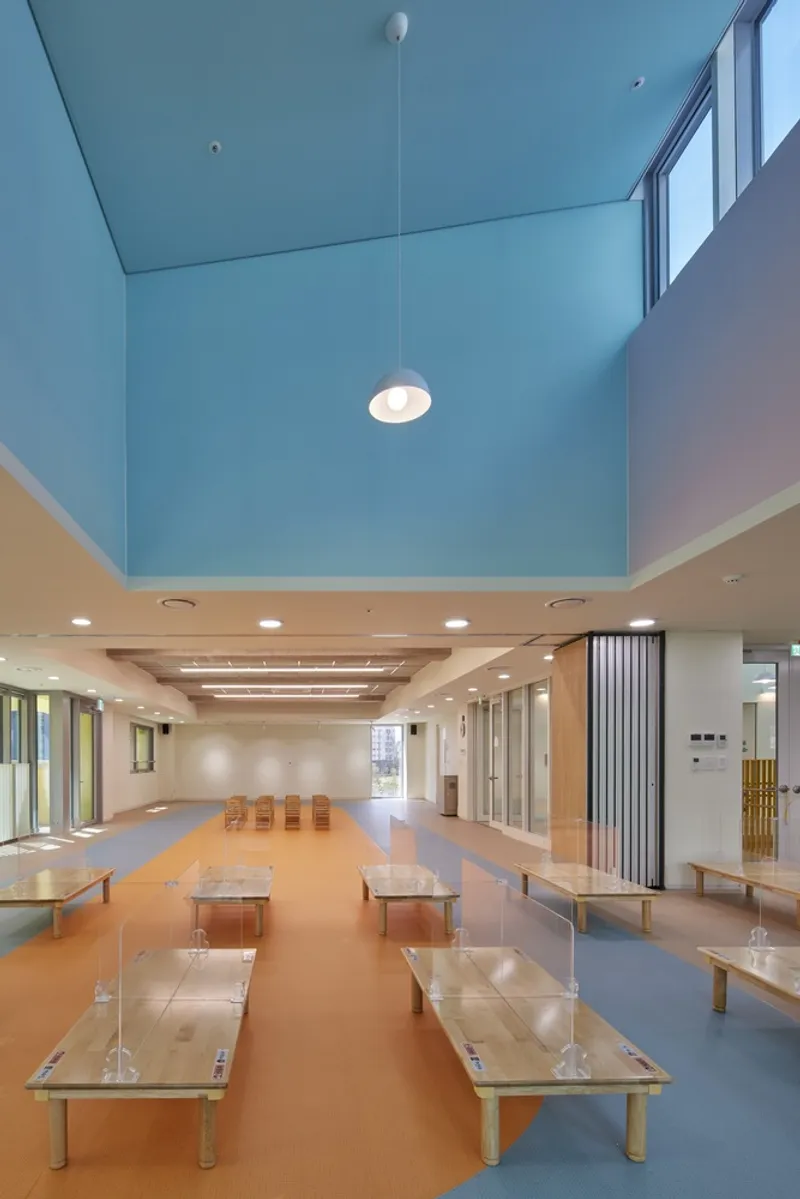
Philosopher Martin Heidegger once said, “Reason begins with the encounter with the unfamiliar.” This concept lies at the heart of the kindergarten’s spatial design. Rather than provide rigid layouts, the architects incorporated ambiguous, overlapping arches and frames throughout the structure, allowing each child to interpret and imagine freely. These architectural gestures encourage children to observe, explore, and invent stories around the constantly shifting shadows and filtered sunlight that animate the interiors.
Inside, spaces are designed to be experienced from multiple heights and perspectives. Beams, frames, and false walls act like living picture windows that cut through the new city’s repetitive landscape, revealing dynamic views of seasons and surroundings. These elements foster an intuitive connection between the indoor learning environment and the outside world, helping children form deeper relationships with nature and their city.
Integrated Circulation: Connecting Spaces and People
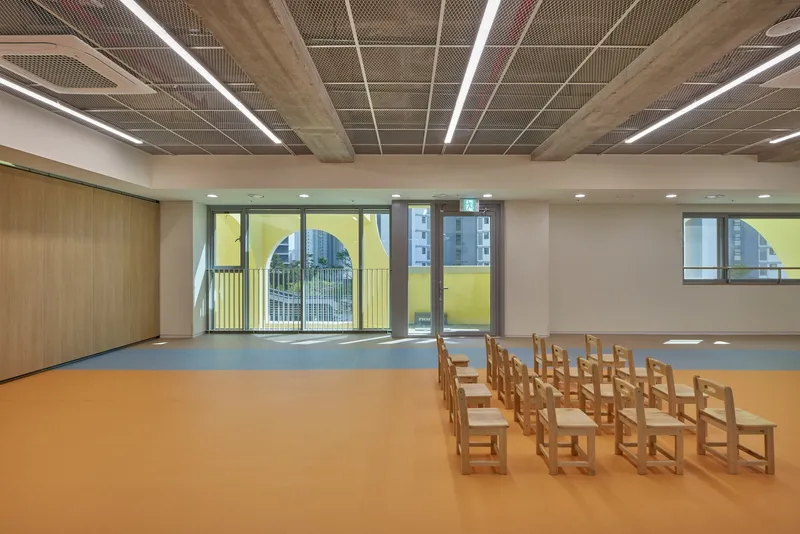
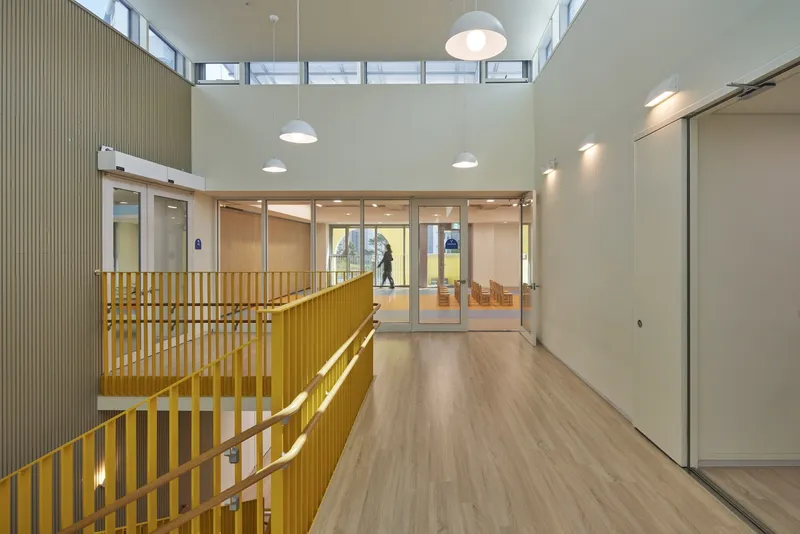
Kindergarten is often a child’s first experience of society beyond home. Understanding this, TAAL Architects designed Songpa Wirye Kindergarten not just as a school, but as a social landscape that fosters interaction and connection. Rejecting the traditional separation between corridors and classrooms, the design integrates wide, light-filled halls with adjacent classrooms using large sliding doors.
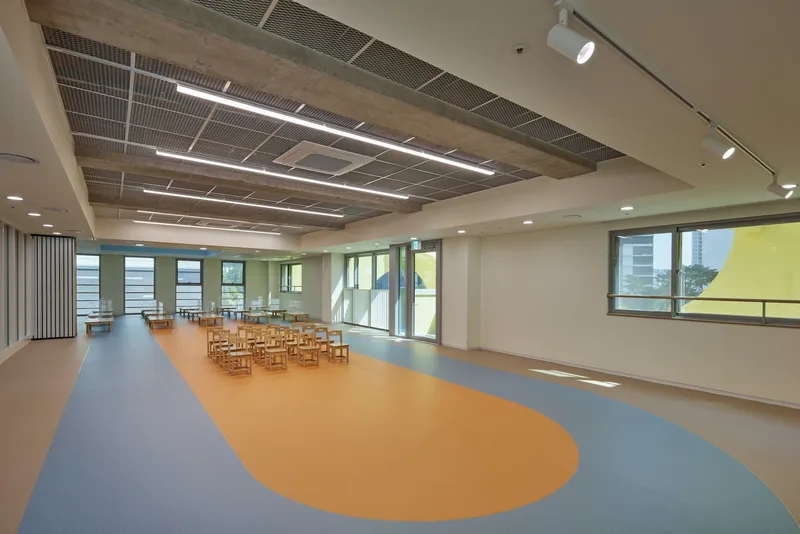
Each floor includes a multi-purpose central hall, encouraging flexibility in use—from group activities and storytelling sessions to spontaneous play. The classrooms themselves are interconnected, promoting fluid circulation and eliminating dead ends. Each room is color-themed and connected by multiple access routes to encourage interaction between different age groups and easy emergency exits.
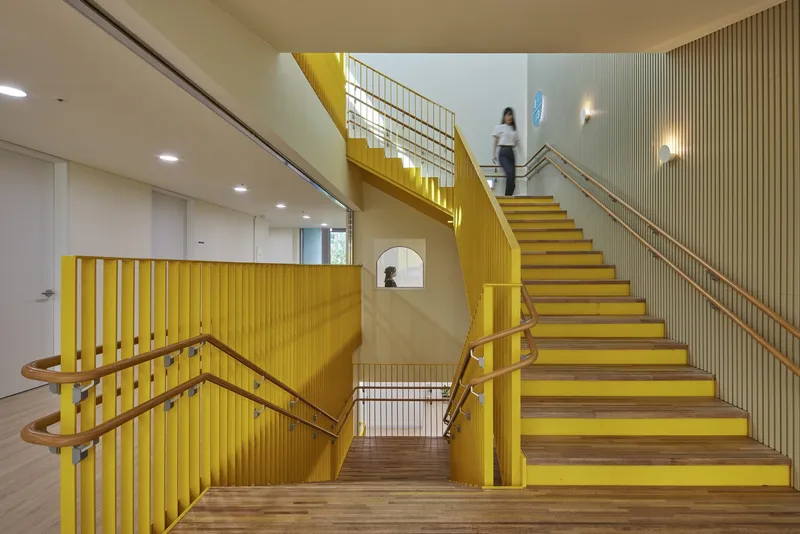
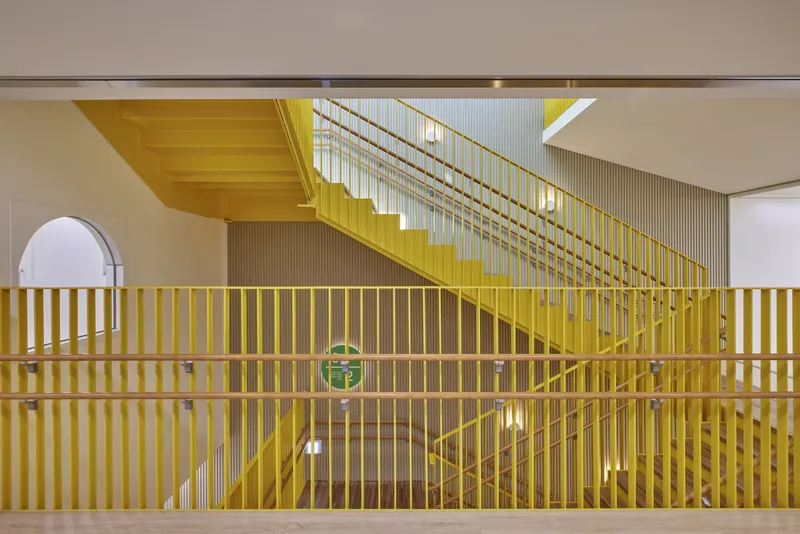
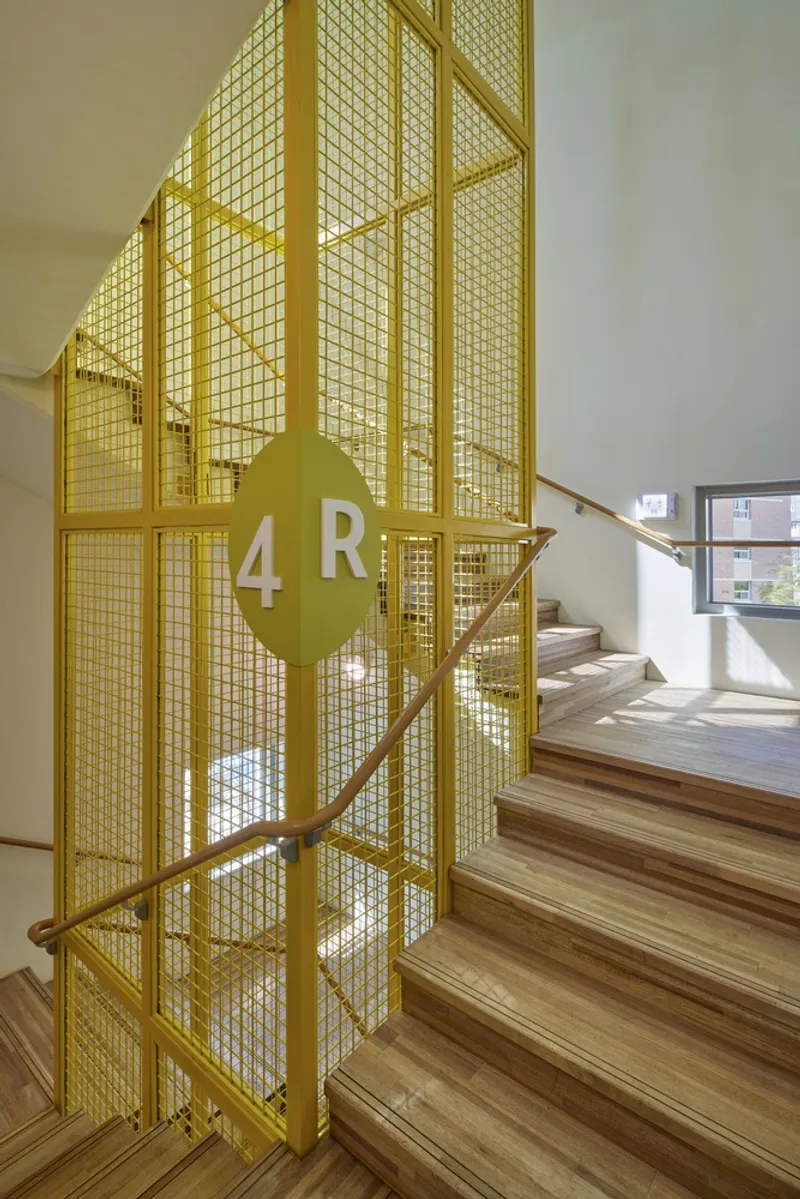
A central open stairwell acts as the building’s vertical spine, linking all four levels and crowned by a skylight. This generous stairwell is not merely a means of circulation—it visually and acoustically connects the interior, creates opportunities for visual discovery, and even offers views of the rooftop garden. Initially, a slide and plant display were planned for the base of this staircase, but safety concerns led to their omission—a decision the architects note with some regret, as it would have further enriched the spatial experience.
A Kindergarten Built for the Present—and the Future
From a planning perspective, the project had to comply with tight regulations, including limited floor area and lot coverage ratios, as well as the mandate to restrict building placement 3 meters from the road. Despite these constraints, TAAL Architects managed to create a multi-layered architectural experience that promotes not only safety but joy, wonder, and exploration.
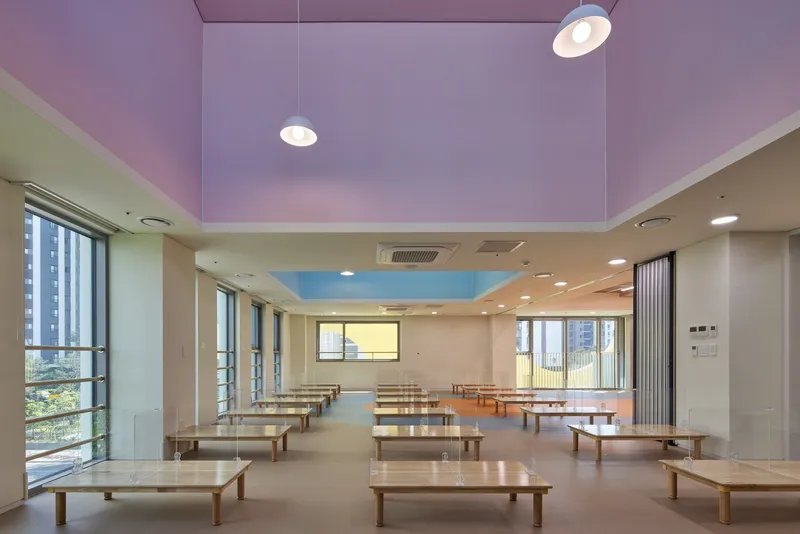
Each level of the kindergarten serves a unique function but remains part of a connected whole. The fourth floor houses key communal facilities such as the cafeteria and auditorium, both oriented toward the rooftop garden. This integration of interior and exterior programs fosters a sense of completeness and continuity.
Ultimately, Songpa Wirye Kindergarten is a model for how public educational architecture can serve as both a protective haven and a source of inspiration. It’s a place where children are safe, where creativity is cultivated, and where the unfamiliar becomes an invitation to dream.
All Photographs are works of RohSpace




Popular Articles
Popular articles from the community


Co-life: Sustainable Architecture for Age-Friendly Community Living
Co-life reimagines sustainable architecture for seniors through courtyards, rammed earth, shared gardens, and spaces designed for belonging.

Co-Life: Senior Housing Design That Reconnects Older Adults With the City
Co-Life reimagines senior housing design through healing gardens, shared streets, workshops, and a sustainable community across generations.

Play: Fragments of Their World
Familiar architecture becomes modular playground design, creating safe spaces where displaced children can learn, connect, imagine and play.

Conexión: Biophilic Design Reimagines High-Rise Living in Hong Kong
Conexión reimagines high-rise living in Hong Kong through biophilic design, green facades, shared spaces, daylight, water and nature within.

Similar Reads
You might also enjoy these articles


Hodi-Mandai Geram
Project Function: Preservation and revitalization of the Intangible heritage and socio-spatial identity of the Hodi by Housing, Cultural Memory Center, Sacred Grove, landscape, local tourism economy


Olio Towers: A Mid-Rise for Performers That Fuses Housing, Rehearsal, and Stage
Located blocks from Houston's Theater District, this modular tower stacks living units around a central performance atrium.

Oasis: Modular Green Housing Carved into Dhaka's Urban Fabric
A shortlisted Plugin Housing entry reclaims unauthorized settlements in Dhaka with stepped concrete volumes, green roofs, and ventilation-driven design.

Black Hole: A Floating Megastructure for the Post-Physical Era
Emiliano Mazzarotto envisions a spherical, self-scaling arena where e-sports, digital hotels, and holographic stadiums replace traditional public space.
Explore Educational Building Competitions
Discover active competitions in this discipline



Challenge to design public laboratory


Challenge to reimagine the Iron Throne


Photograph architecture without architects


Illustrate the lost glory of Angkor Wat - Render Challenge
Comments (0)
Please login or sign up to add comments
No comments yet. Be the first to comment!