
SOURCE Architecture Studio Turns a Polish Planning Rule into a Walkable Roof Hill
In rural Włocławek, a single-family house folds its roof down to the ground, turning regulation into a landscape gesture.

Most architects treat zoning regulations as constraints to work around. SOURCE Architecture Studio, led by Artur Baranowski alongside Ivan Boltulenis of SA-BI, treated a local roof pitch requirement in rural Włocławek, Poland, as the seed of the entire design. The result is Slope House, a 269 m² residence whose roof does not simply cover interior rooms but extends, folds, and eventually touches down to become a walkable hill. It is a move that converts bureaucratic compliance into the building's most memorable architectural event.
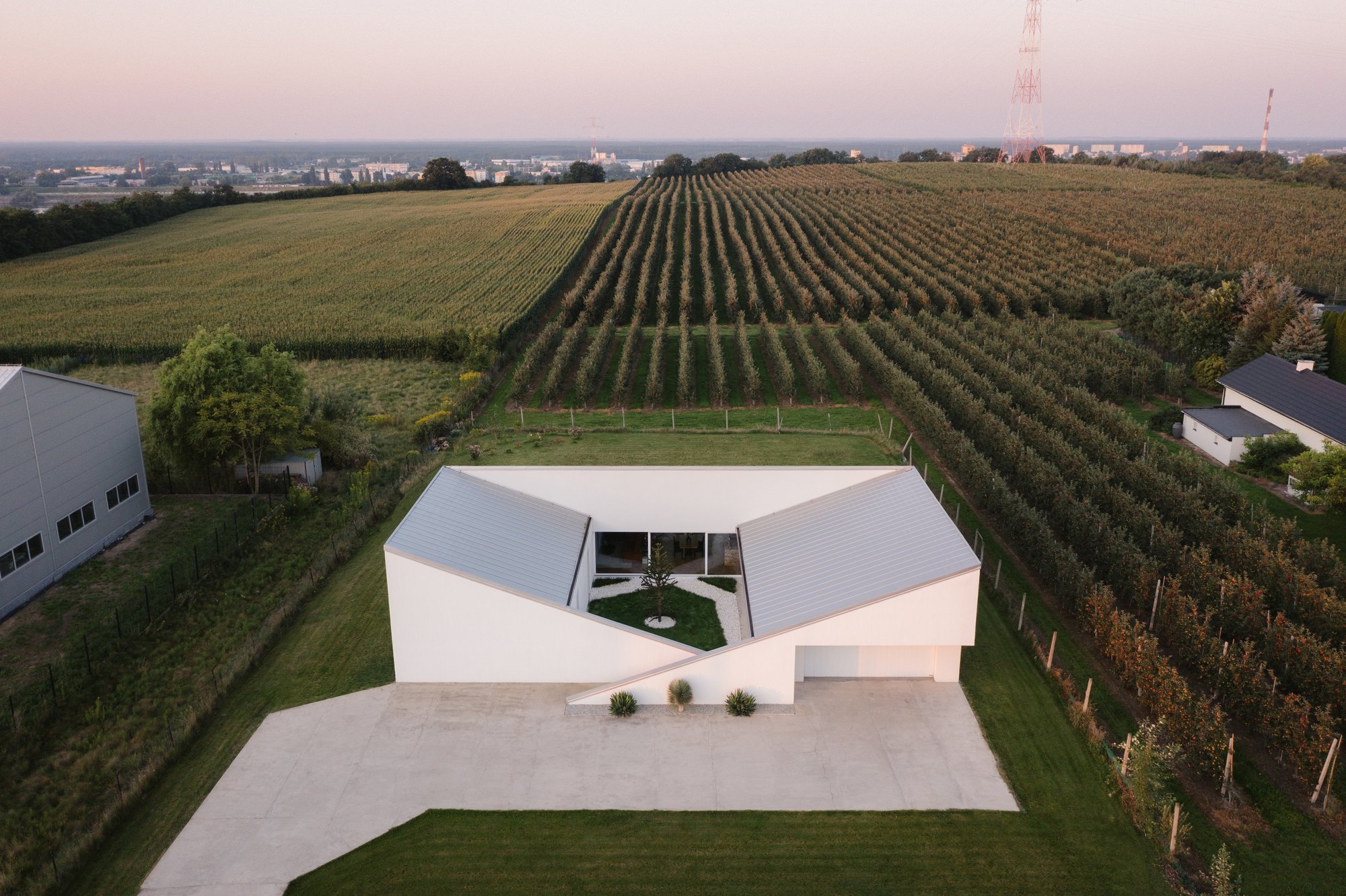
What makes Slope House genuinely interesting is the refusal to separate house from landscape. The building sits among open agricultural fields, and its angled white volumes organize themselves around a private central courtyard, creating a protected interior world while the roof surfaces dissolve into the terrain outside. The house does not sit on its site so much as grow out of it, and the consequence is a domestic environment that reads simultaneously as architecture and topography.
A Roof That Becomes the Ground
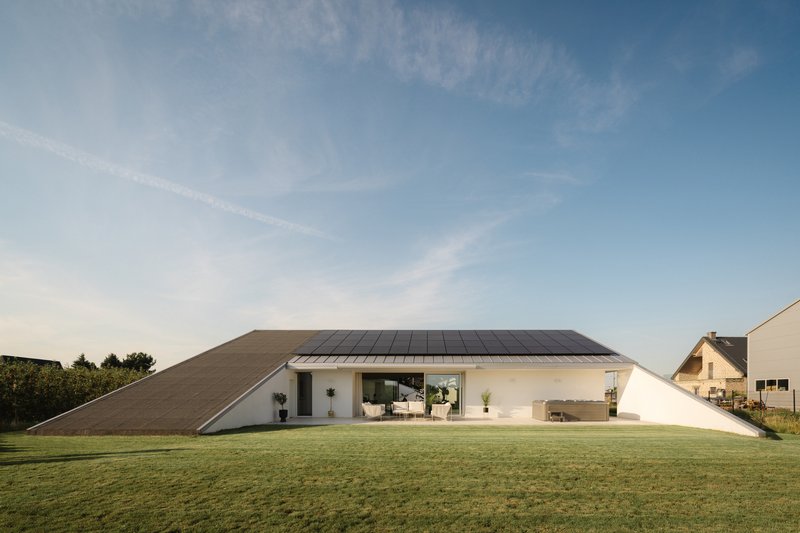
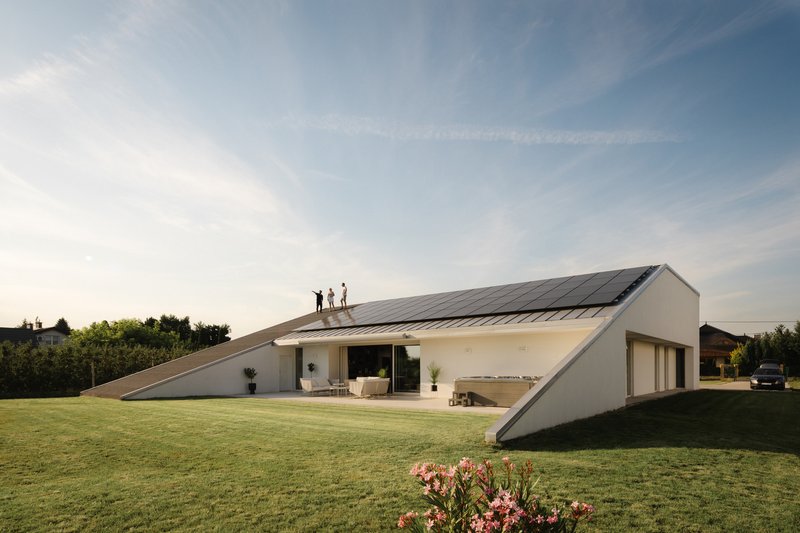
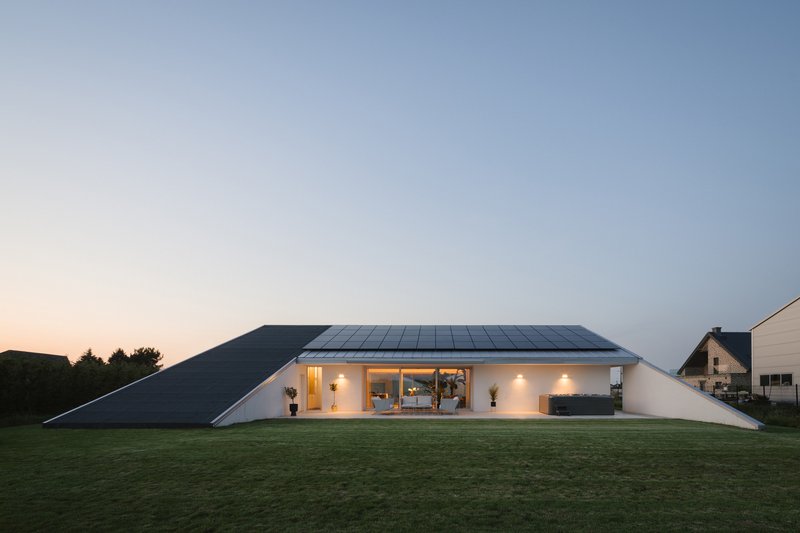
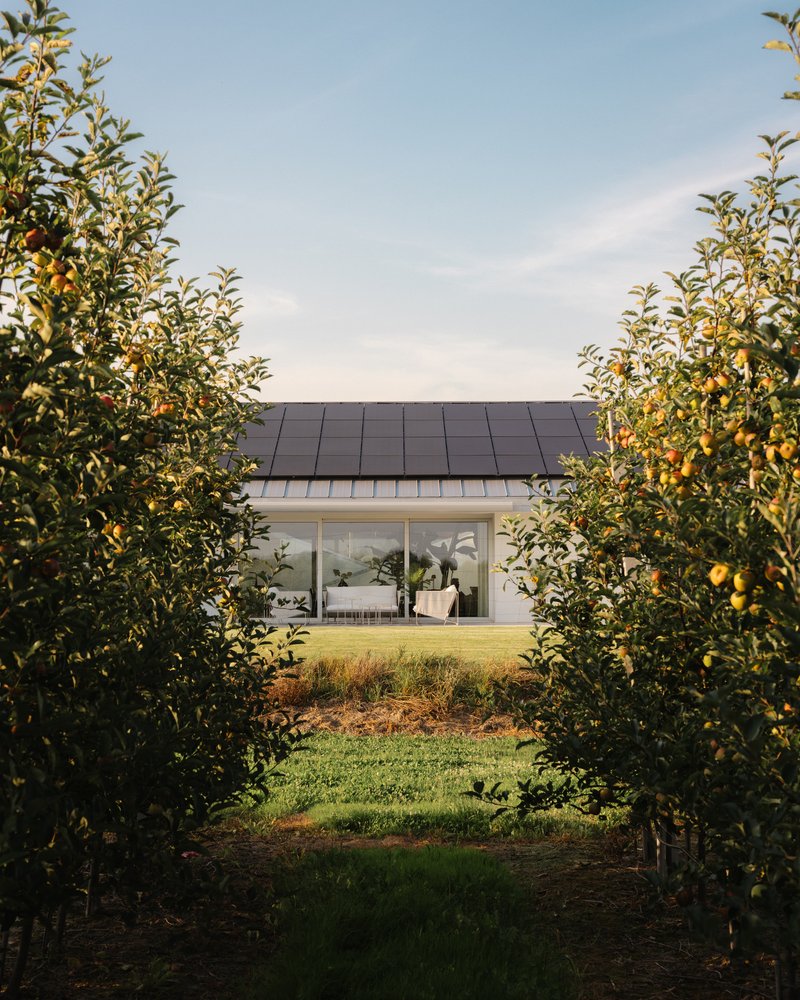
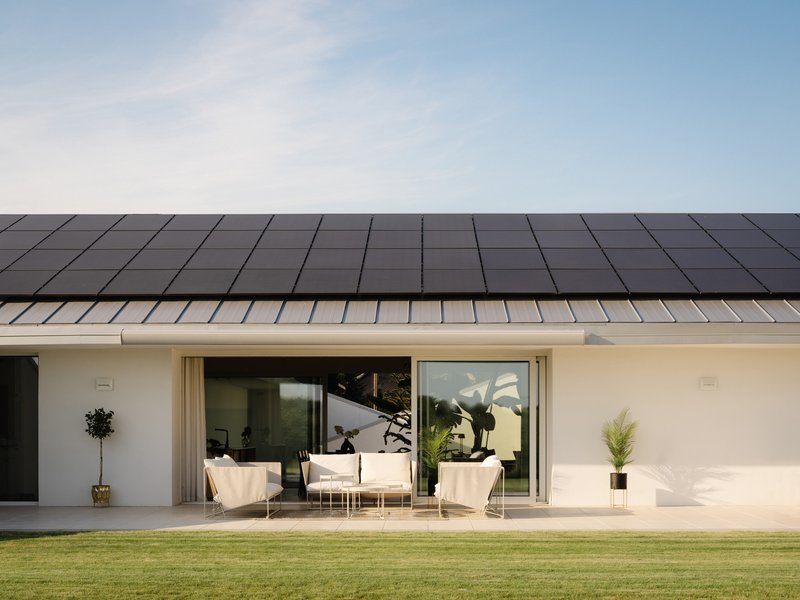
The defining gesture of the project is its roofline. Clad in dark standing-seam metal and fitted with solar panels, the roof begins at a conventional domestic pitch, then keeps going, dropping past the eave line and running all the way to grade. From the lawn side the house reads as a gentle slope you could walk up, and people do: the architects designed the surface to be occupied, not just observed. It is a radical literalization of the idea that a house should give back the ground it takes.
What prevents this from becoming a gimmick is the functional clarity underneath. The slope shelters a covered terrace that opens directly to the garden, creating a generous outdoor room protected from rain and sun. Sliding glass doors along this edge erase the threshold between interior living spaces and the lawn, so the roof simultaneously acts as enclosure, canopy, and landscape.
White Volumes in Open Country
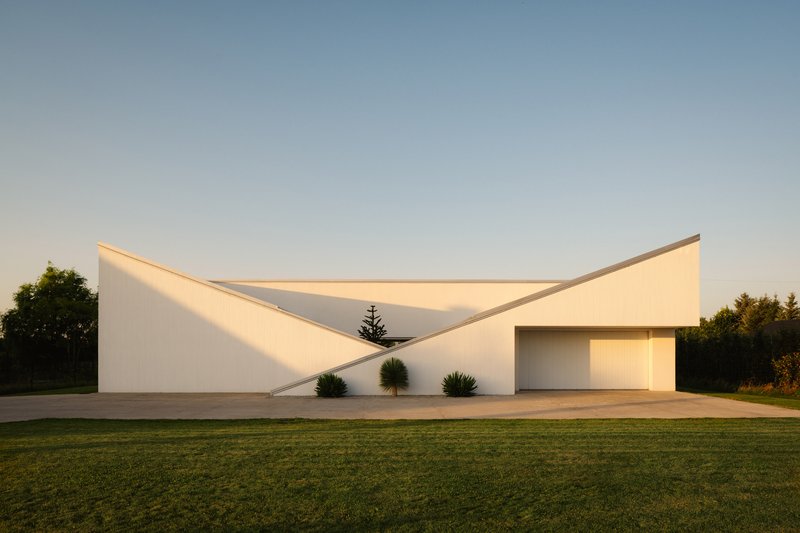
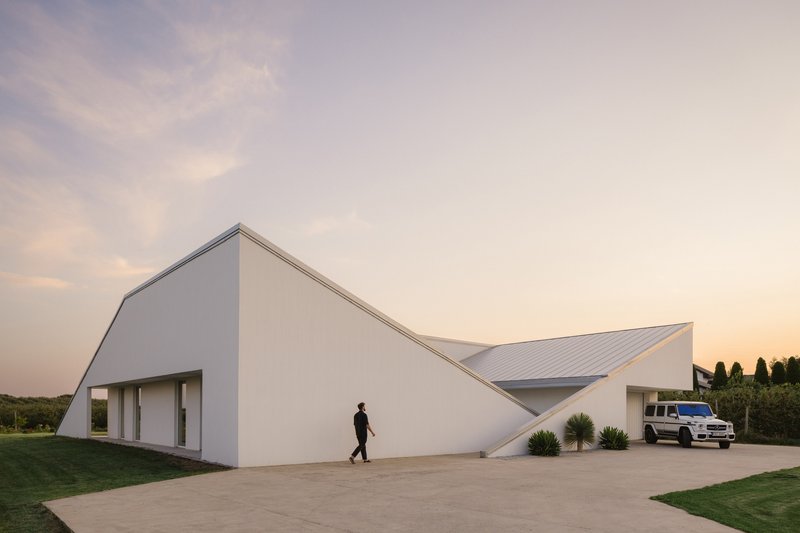
Seen from the surrounding fields, Slope House presents itself as a composition of angular white stucco volumes beneath dark metal planes. The material palette is deliberately restrained: white rendered walls, standing-seam metal roofing, corrugated metal accents, and timber flooring at interior thresholds. Nothing competes for attention, which lets the geometry speak. Twin angled roof volumes frame the entry facade, creating a symmetry that hints at the courtyard hidden behind.
The approach from the road is carefully staged. A paved forecourt and recessed carport slot vehicles beneath a folded white plane, keeping the arrival sequence clean and uncluttered. The house does not announce itself with grand gestures toward the public side; instead, it saves its drama for the interior courtyard and the garden-facing slope.
The Courtyard as Private Center
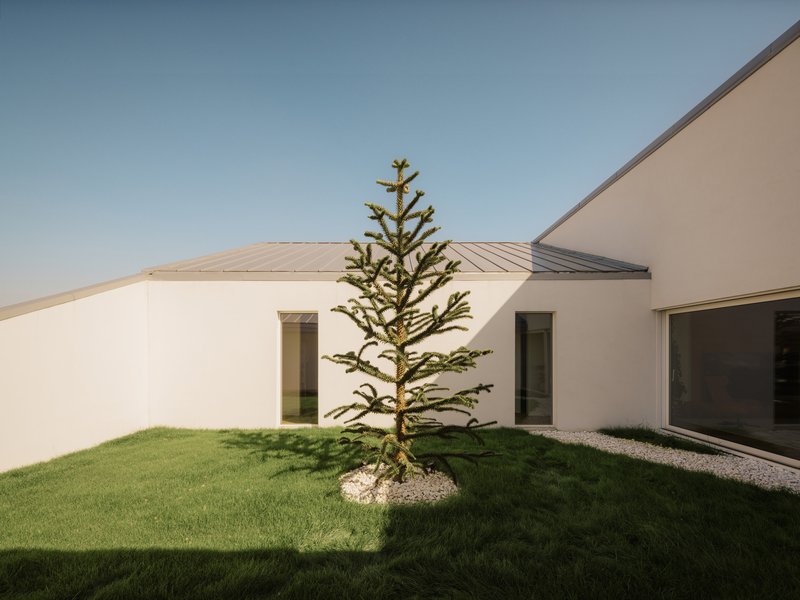
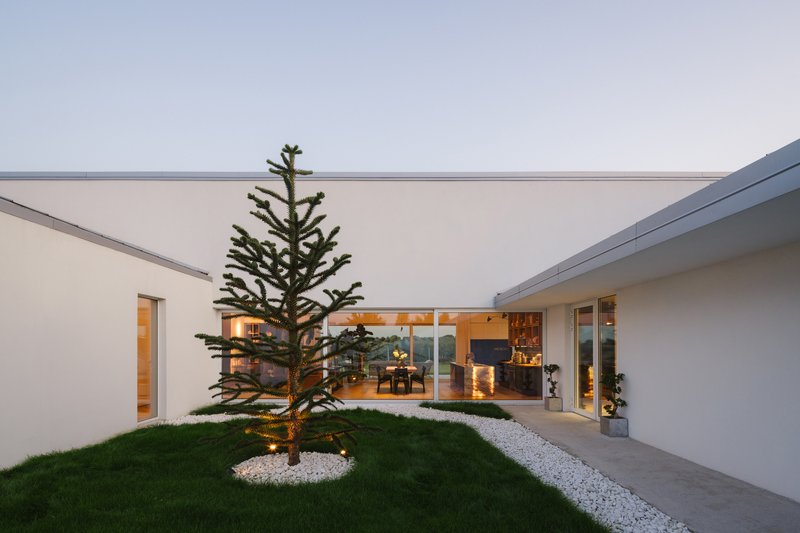
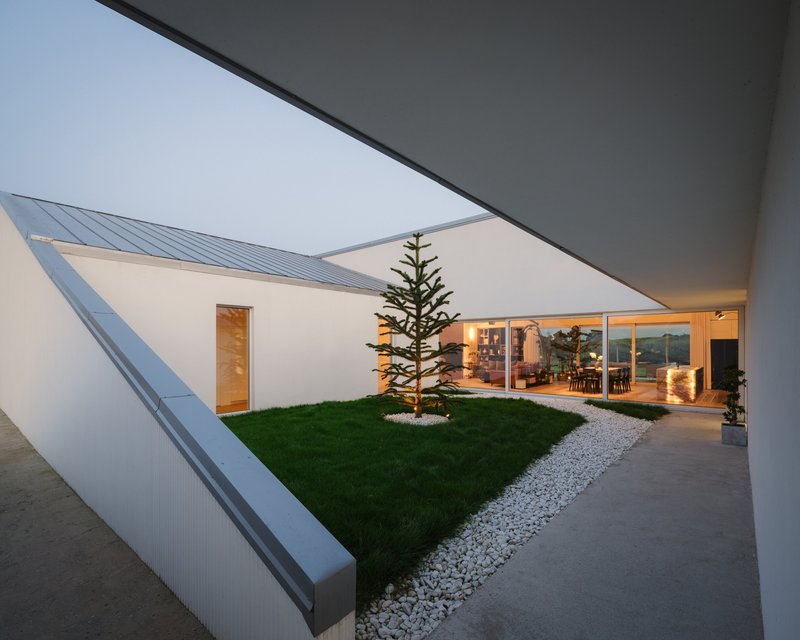
At the heart of the plan sits a compact courtyard anchored by a single conifer tree planted in a gravel ring. Two wings of the house wrap around this void, and every major room borrows light and orientation from it. The courtyard is not large, maybe six or seven meters across, but it punches well above its weight. It gives the interior a focal point, provides cross-ventilation paths, and offers a protected patch of sky that belongs entirely to the inhabitants.
Photographed at twilight, the courtyard becomes an illuminated box, with warm light spilling through glazed walls onto the grass and gravel. The triangular opening that frames views into it from the exterior passage is one of the project's most compelling moments: a sliver of domestic life glimpsed through folded geometry.
Thresholds and Covered Passages
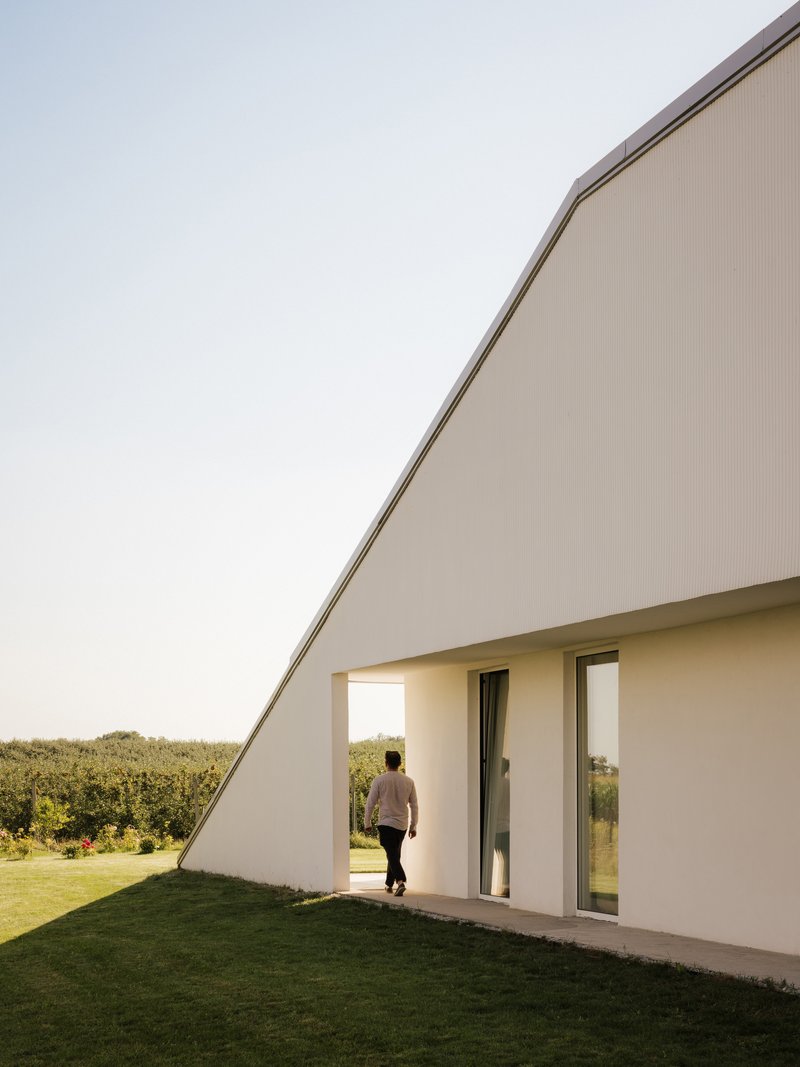
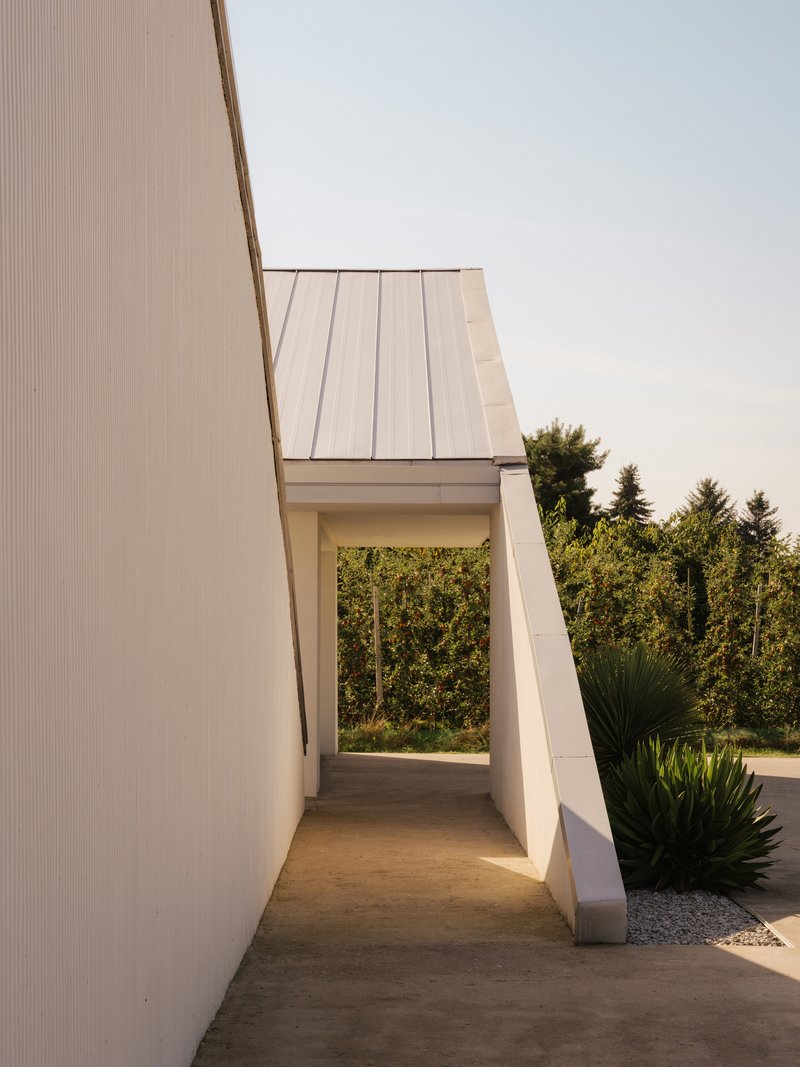
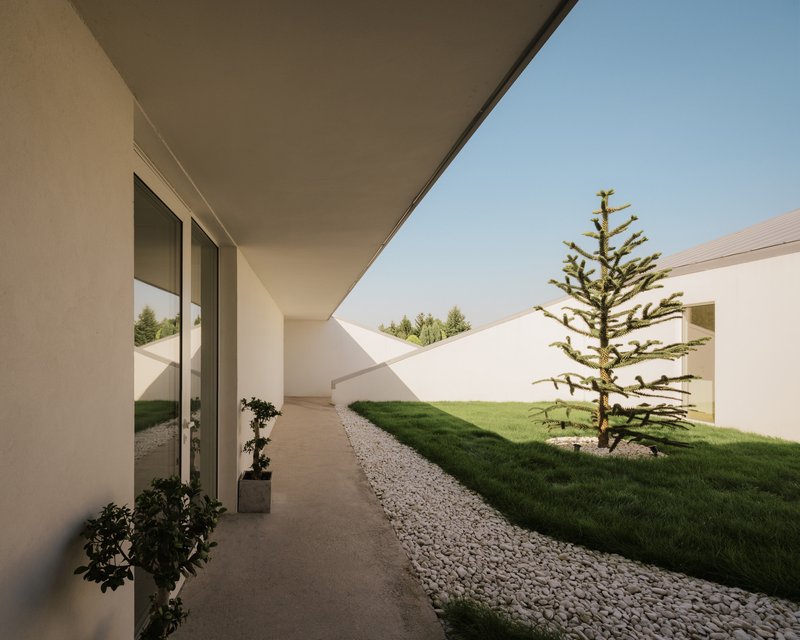
SOURCE and SA-BI paid serious attention to the spaces between inside and outside. Covered walkways run along the courtyard edges, their ceilings angled to match the roof slopes overhead. These passages serve as circulation but also as transitional rooms in their own right, places where you are neither fully enclosed nor fully exposed. Planted gravel beds and grass strips line the edges, softening what could be stark corridors into garden-like sequences.
The angled walls that define these passages do double duty. They channel views toward the courtyard tree or out to the landscape beyond, and they modulate light throughout the day as shadows from conifers and shrubs track across the white surfaces. It is a reminder that good residential architecture is not just about rooms but about the quality of movement between them.
Material Restraint and Tactile Detail
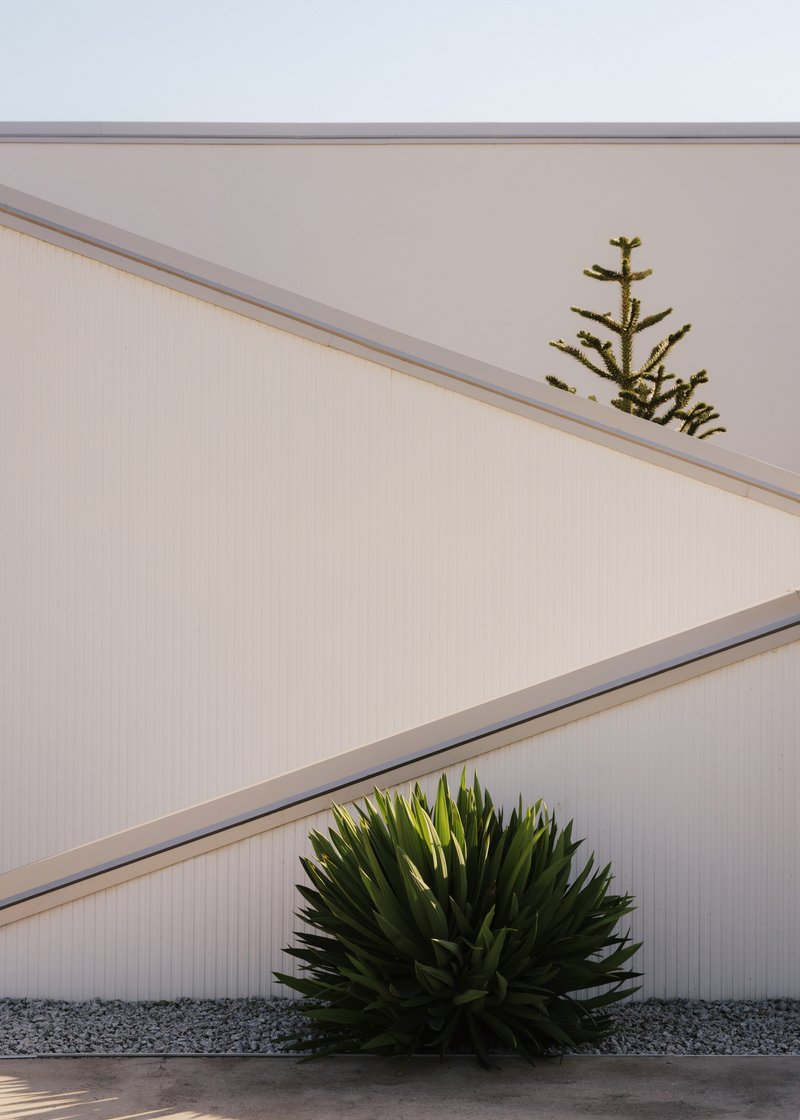
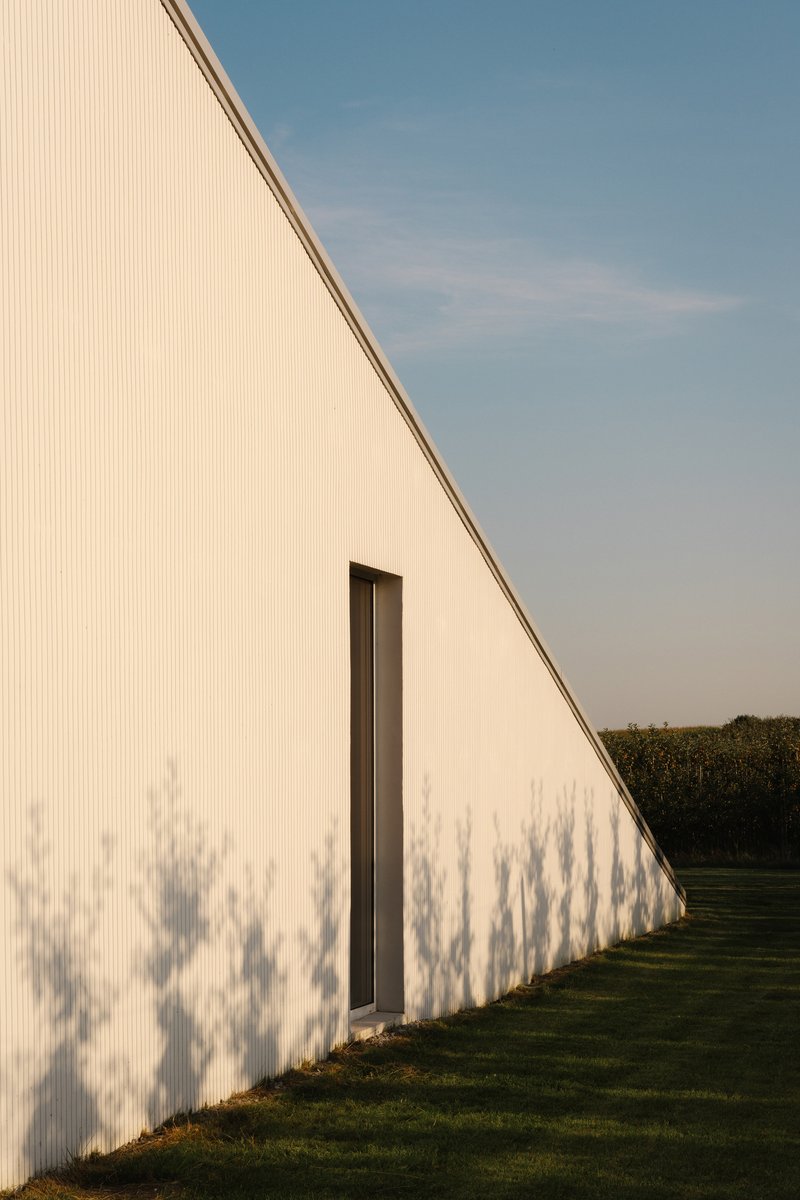
The palette is narrow but not monotonous. White stucco dominates the walls, while vertical-ribbed metal panels appear at soffits and secondary facades, adding a fine-grained texture that catches raking light. Corrugated metal shows up on service walls, and the standing-seam roof cladding wraps continuously from ridge to ground. Each material has a clear role, and the transitions between them are handled with precision: no messy junctions, no afterthought trims.
The planted gravel beds at the base of several walls are a smart detail. They keep splash-back off the stucco, provide drainage, and introduce greenery at a scale that relates to the pedestrian rather than the landscape. At dusk, uplighting from these beds washes the ribbed panels and parapets, turning functional surfaces into something closer to sculpture.
Interior Light and Garden Connection
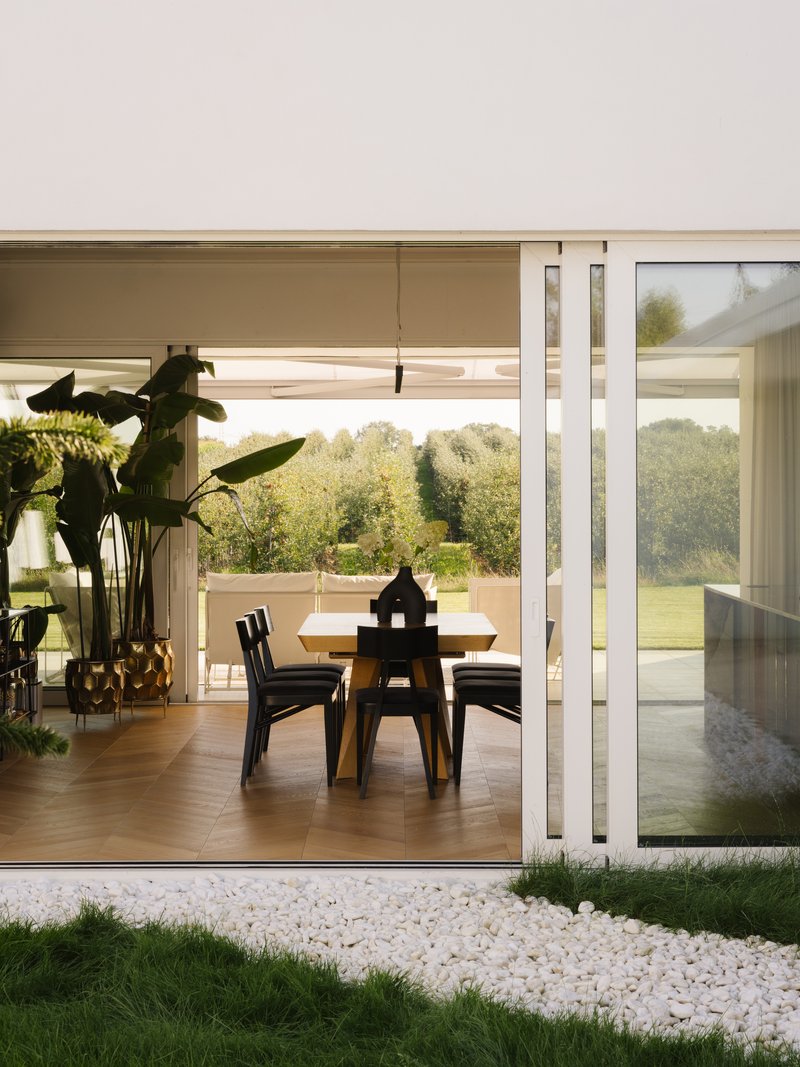
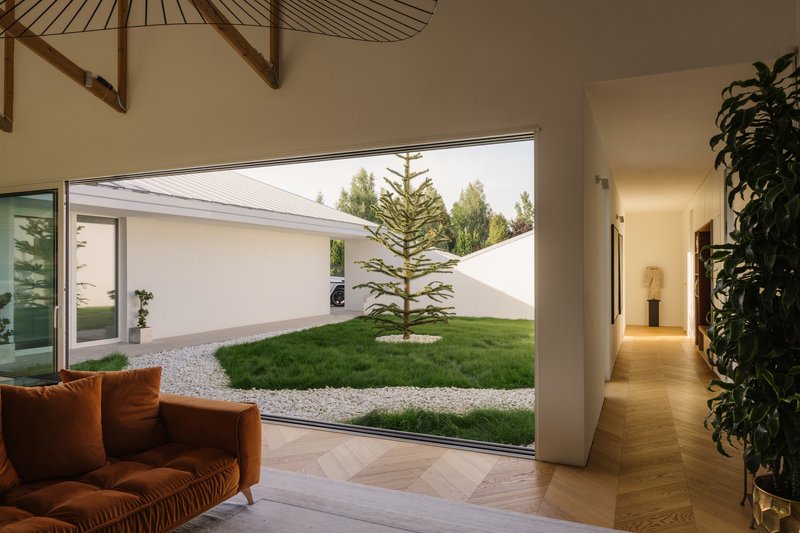
Inside, the house is organized so that nearly every room has a direct relationship with either the courtyard or the garden. The dining area occupies a glazed corner that opens onto a white pebble bed and the lawn beyond, framing a layered view through planted rows. Timber flooring warms the interior and provides a material counterpoint to the cool whites and metals outside. The glass walls are generous but carefully placed: they frame specific views rather than offering undifferentiated transparency.
The courtyard-facing glazing is especially effective. From inside, you look through the tree to the opposite wing, gaining a sense of depth and enclosure that a single-volume house could never provide. The courtyard becomes an interior room that happens to have no ceiling, extending the livable space of the house far beyond its 269 square meters.
Arrival and the Folded Entry
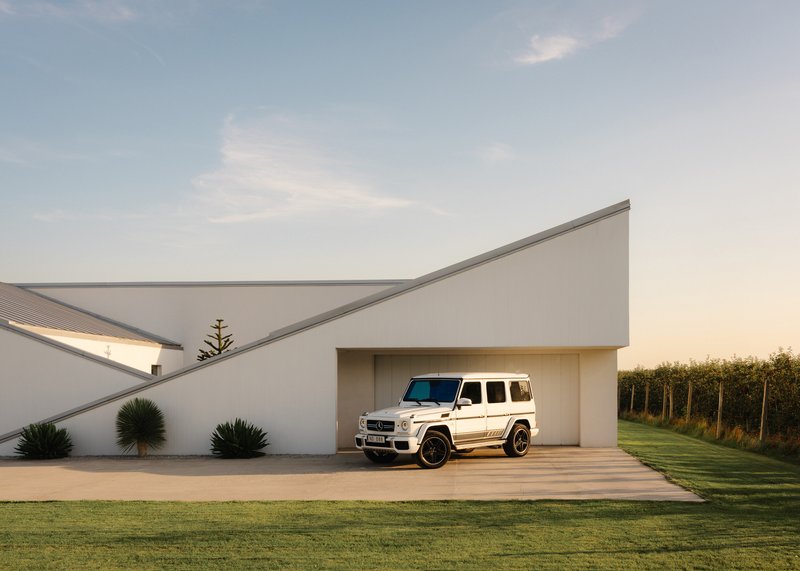
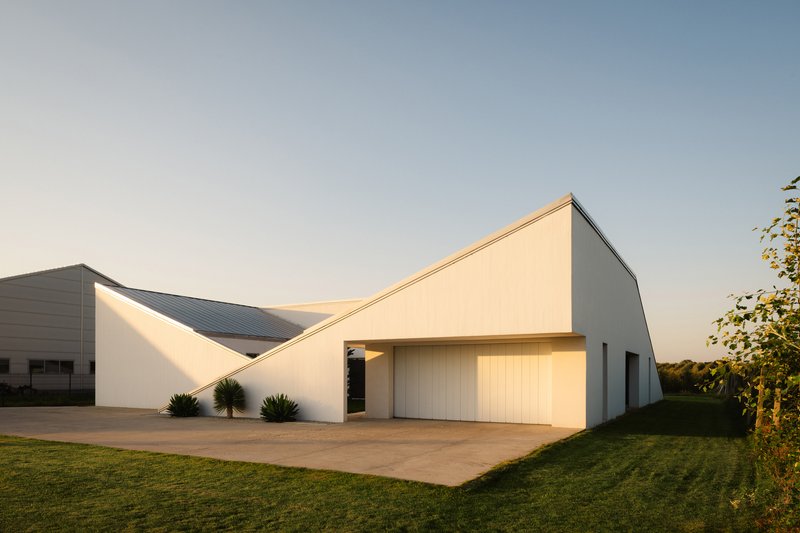
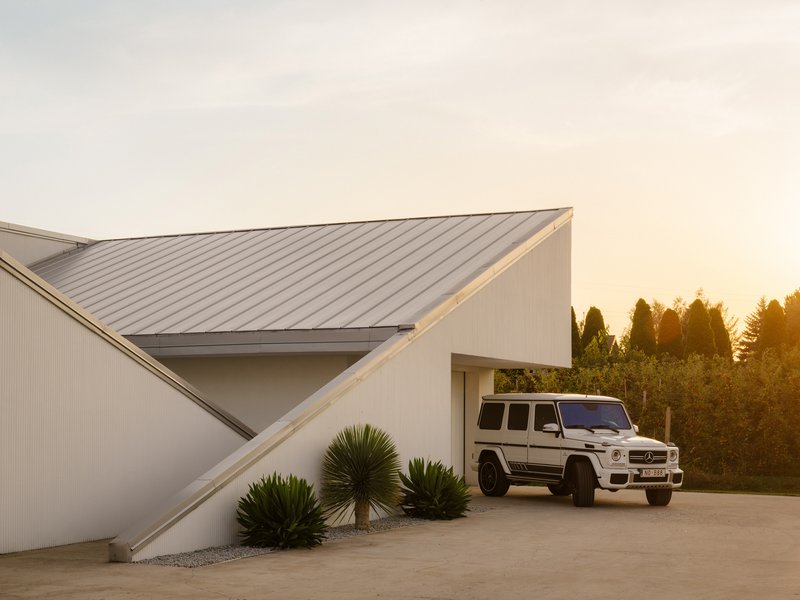
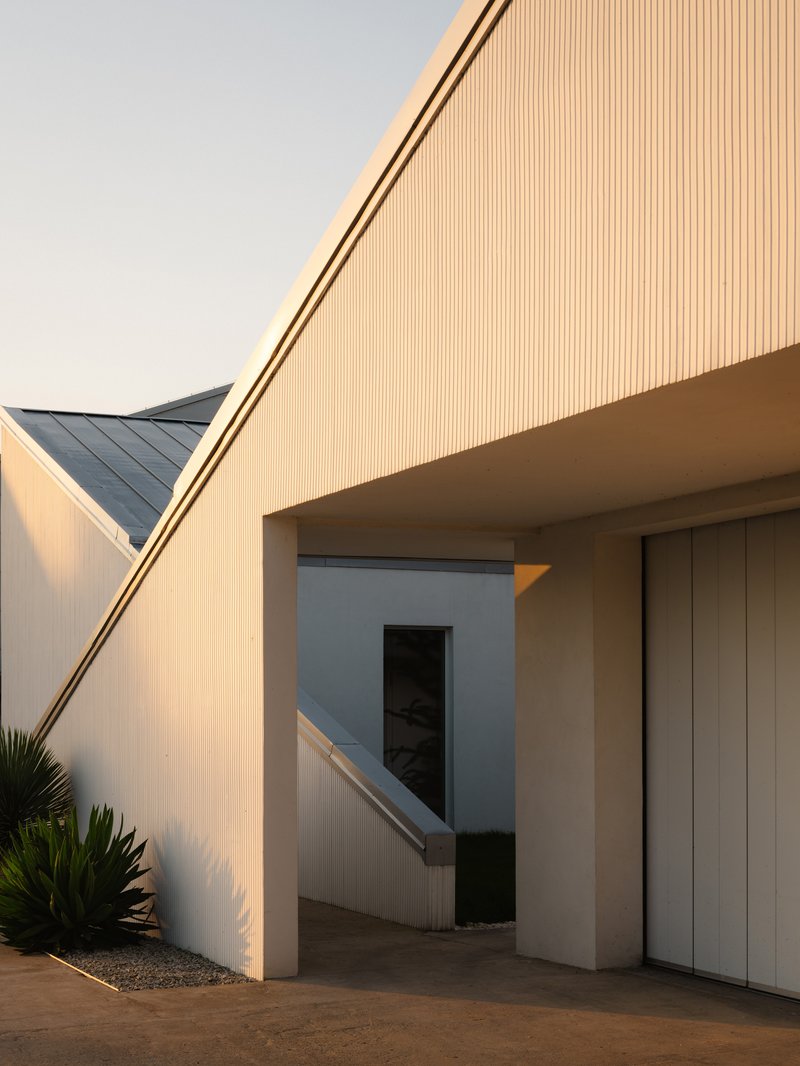
The entry sequence from the road side is purposefully understated. A recessed carport tucks beneath folded stucco planes, sheltering a vehicle without resorting to a conventional garage box. The illuminated garage door sits beneath the folded roofline like a lantern, its warm glow at golden hour signaling habitation without revealing the interior. The standing-seam metal roof planes overhead tie the carport to the main volumes, making the utilitarian function part of the architectural composition rather than an afterthought.
From the forecourt, the twin angled volumes frame a compressed view of sky and roof, building anticipation for the courtyard reveal inside. The architects understood that arrival at a house is a narrative, and they paced it carefully: public restraint first, private richness after.
Plans and Drawings
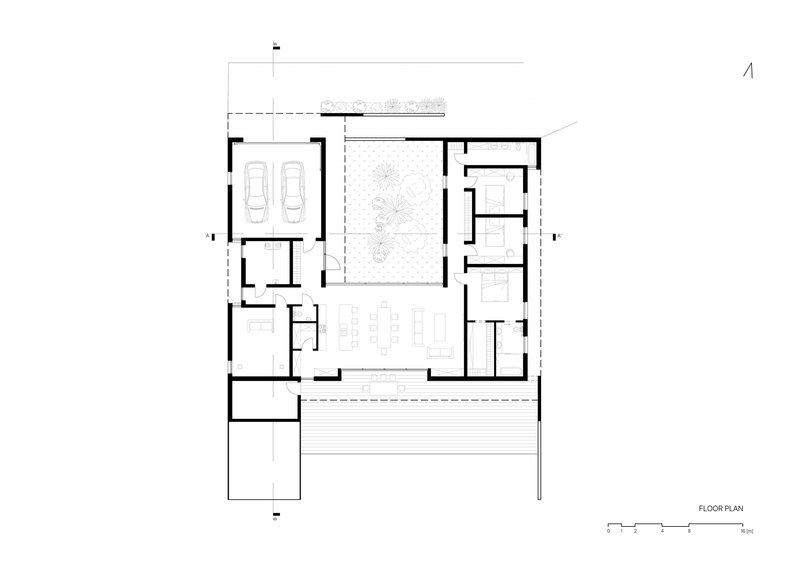
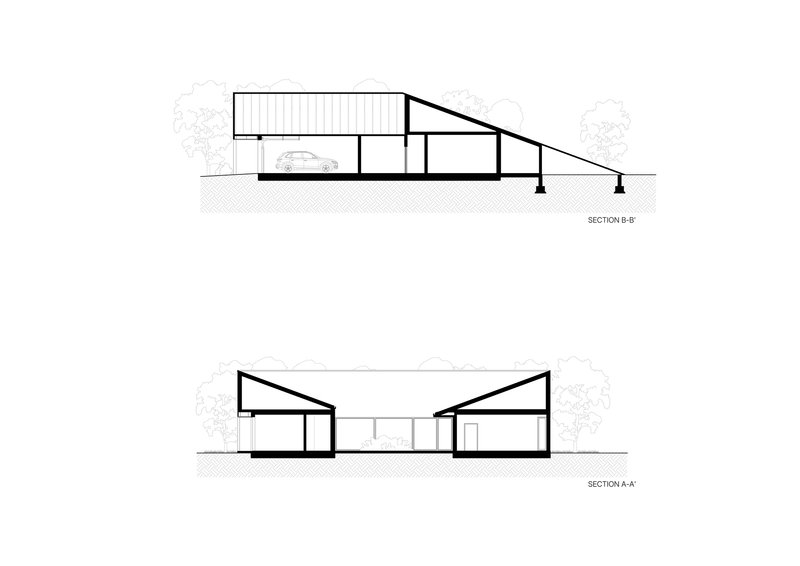
The floor plan confirms what the photographs suggest: the house is organized as two wings wrapping an open courtyard, with the tree as the geometric and experiential center. Rooms are distributed linearly along each wing, with service spaces buffering the road-facing edge and living spaces opening toward the garden. The section drawings reveal the full ambition of the roof: it rises steeply from one side and descends to meet grade on the other, creating a continuous surface that shelters rooms, terraces, and landscape in a single stroke. The profiles show how the interior ceiling heights vary in response to the slope, giving each room a distinct spatial character despite the unified exterior form.
Why This Project Matters
Slope House demonstrates what happens when architects take a regulatory constraint seriously enough to let it generate the entire design. Rather than treating the required roof pitch as a box to check, SOURCE Architecture Studio and SA-BI turned it into a landscape strategy, a spatial sequence, and a domestic identity. The result is a house that does not look like it is fighting its context or its code. It looks inevitable.
Beyond the headline gesture, the project succeeds because of its discipline. The material palette is tight, the courtyard is precisely scaled, and the transitions between inside and outside are handled with care that rewards repeated looking. In a residential market flooded with houses that mistake complexity for quality, Slope House makes a strong case that one clear idea, executed with rigor, is more than enough.
Slope House, designed by SOURCE Architecture Studio (Artur Baranowski) and SA-BI (Ivan Boltulenis), Włocławek, Poland. 269 m², completed 2025. Photography by Nate Cook Photography.
About the Studio
Share Your Own Work on uni.xyz
If projects like this are the kind of work you want to make, uni.xyz is a place to publish your own, find collaborators, and enter design competitions.




Popular Articles
Popular articles from the community

Stanton Architects Sculpts a Curving Family Home into Sydney's Inner West Fabric
Five Dock House uses cantilevers, curved concrete, and layered courtyards to carve out privacy on a tight suburban lot in Sydney.
PLATAFORMArq Folds a Concrete Roof Over the Portuguese Mountains in House #474
A 220-square-meter residence in Teixoso, Portugal, wraps board-formed concrete into an angular canopy that frames the Serra da Estrela foothills.
Healing Façade: Sustainable Architecture for Reforestation, Community, and Sacred Ecology in Ethiopia
Healing Façade reimagines sustainable architecture as a living wall that restores soil, catches water and renews Ethiopia's forest churches.
Pinto Builds a Faceless Pavilion Beneath Casuarina Trees on Thailand's Rayong Coast
SON Restaurant refuses a front door or a back wall, treating all four facades equally in a 260-square-meter brick and stucco grid.


Similar Reads
You might also enjoy these articles

Freebird Residence by Alexis Dornier: A Tropical Modernist Sanctuary in Bali
Floating living pavilion above pool anchors H-shaped tropical villa, blending Japanese minimalism, sustainable strategies, lush landscape, and sculptural interiors.
127af Flips a Tiny Bagnolet Rowhouse Upside Down with a Handcrafted Roof Extension
A 55-square-meter terraced house on the edge of Paris gains a luminous upper living floor through lightweight timber and steel.
1.61 Design Workshop Wraps a 600-Square-Meter Café in Vietnam in Sculptural Burgundy Drama
Reden Café & Bistro pairs a helical staircase, mosaic floors, and deep red interiors to rethink Vietnamese hospitality space.

The Unbound Brain: A School Shaped by Cognitive Architecture
Cylindrical learning pods radiate like neurons from a central cortex, turning the floor plan into a spatial model of human thought.

Explore Residential Building Competitions
Discover active competitions in this discipline




The Global Benchmark for Architecture Dissertation Awards


Challenge to design mud housing for contemporary communities
Comments (0)
Please login or sign up to add comments
No comments yet. Be the first to comment!