

South Melbourne House by Pandolfini Architects: A Contemporary Insertion Behind a Victorian Façade
South Melbourne House by Pandolfini Architects blends Victorian heritage with modern design, featuring dramatic double-height spaces and raw material contrasts.


Heritage Meets Modernity in a Bold Melbourne Terrace Renovation
In the heart of South Melbourne, Pandolfini Architects have masterfully transformed a heritage-listed Victorian terrace into a refined, contemporary family home. The South Melbourne House reimagines spatial boundaries and material contrast, offering a profound dialogue between historic preservation and modern architectural innovation.
The project is defined by its ability to work within tight planning and heritage constraints while creating a dramatic spatial experience within a compact urban footprint. Conceived as a residential extension, the design preserves the integrity of the original Victorian-era façade, while introducing a bold and sculptural modern addition at the rear.


Sculptural Form and Spatial Drama
The design strategy centers on a juxtaposition of textures and volumes, using raw, emotive materials such as polished plaster and exposed concrete, balanced by the finesse of fine steel details. A dramatic double-height void and strategic skylighting introduce verticality and light into the narrow site, countering the limited access to natural illumination often found in dense urban neighborhoods.
The new volume is partially sunken into the ground, a design move that allows the addition to remain discreet within the context of the street while still expressing a distinct architectural identity. The dark concrete slab, hand-seeded with white pebbles, adds a layer of artistic experimentation. The idea of casting constellations into the floor—a dream of the client—was realized through a collaborative and tactile design process.
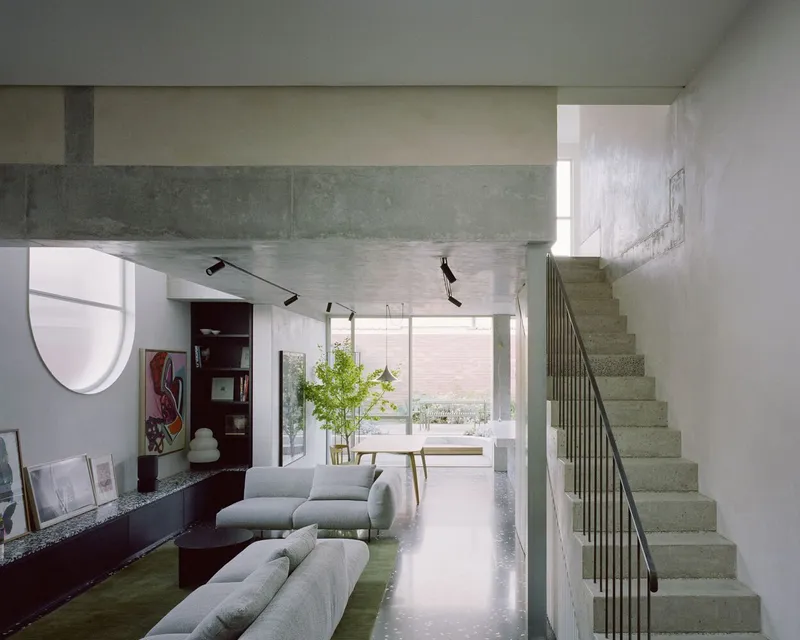

Seamless Transition from Heritage to Contemporary
Internally, the transition from old to new is deliberately choreographed. Moving through the restored Victorian rooms into the new extension, the house embraces a journey-like spatial narrative—one that draws the occupant into a secluded garden retreat. Rather than hiding imperfections, the architecture celebrates them, offering a lived-in authenticity that reflects both the home’s history and its rebirth.
While the front section of the house has been meticulously restored, the new addition asserts itself confidently, using modern Italian residential influences to frame space and light. Despite the clear contrast in style, the new structure maintains a respectful scale and relationship with the existing streetscape of Cecil Place, lined with modest single and double-story terraces.

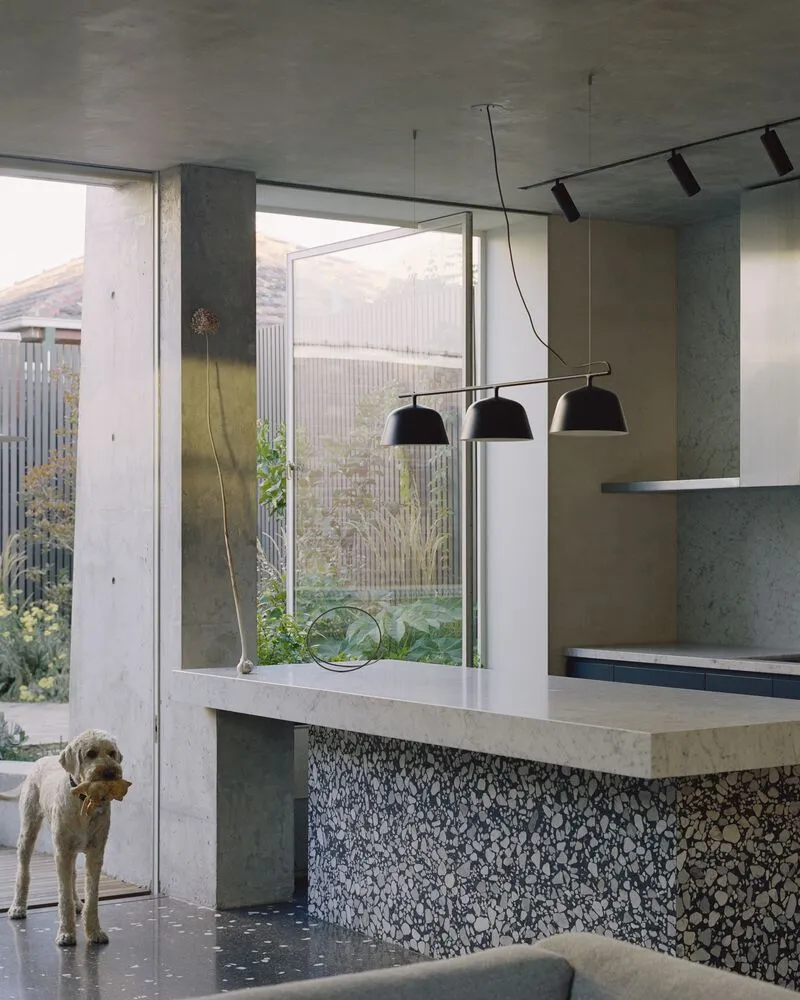
A Sensitive Response to Urban Living
The South Melbourne House exemplifies how small-scale urban residential architecture can be both respectful of history and expressive of the contemporary. This residential renovation is a model of how to integrate modern design into heritage contexts without compromising character or innovation.
From its restored brick façade to the concrete and steel interior interventions, the home reveals itself in layers—celebrating material honesty, spatial ingenuity, and the rich complexity of adaptive reuse.

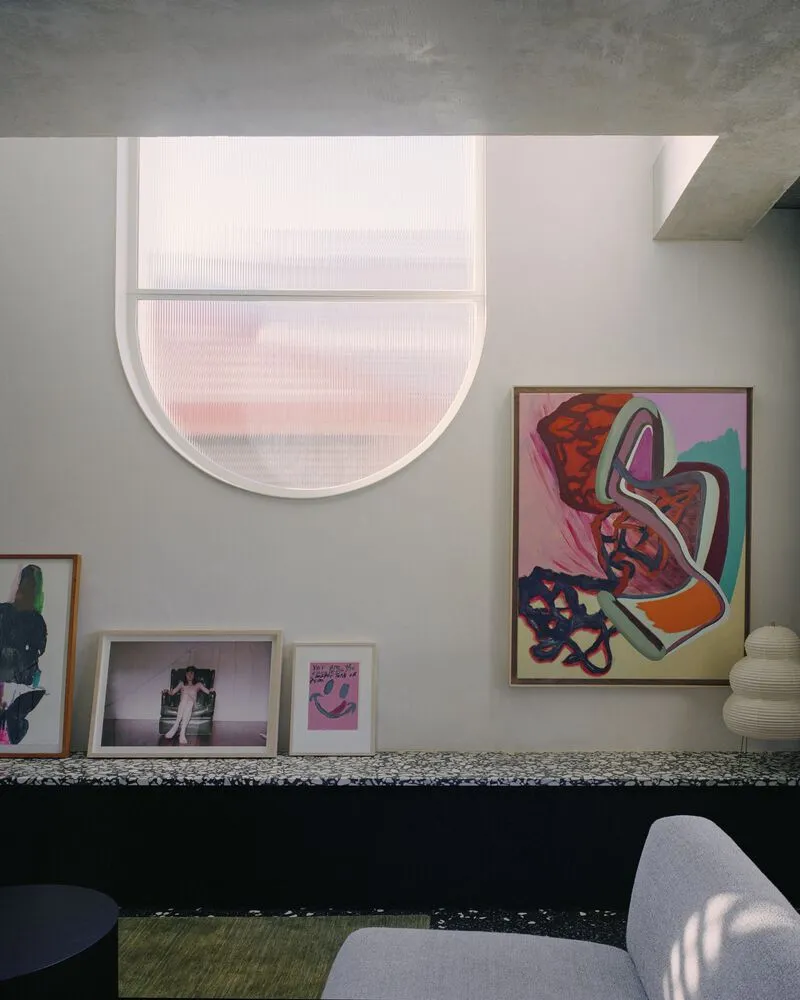
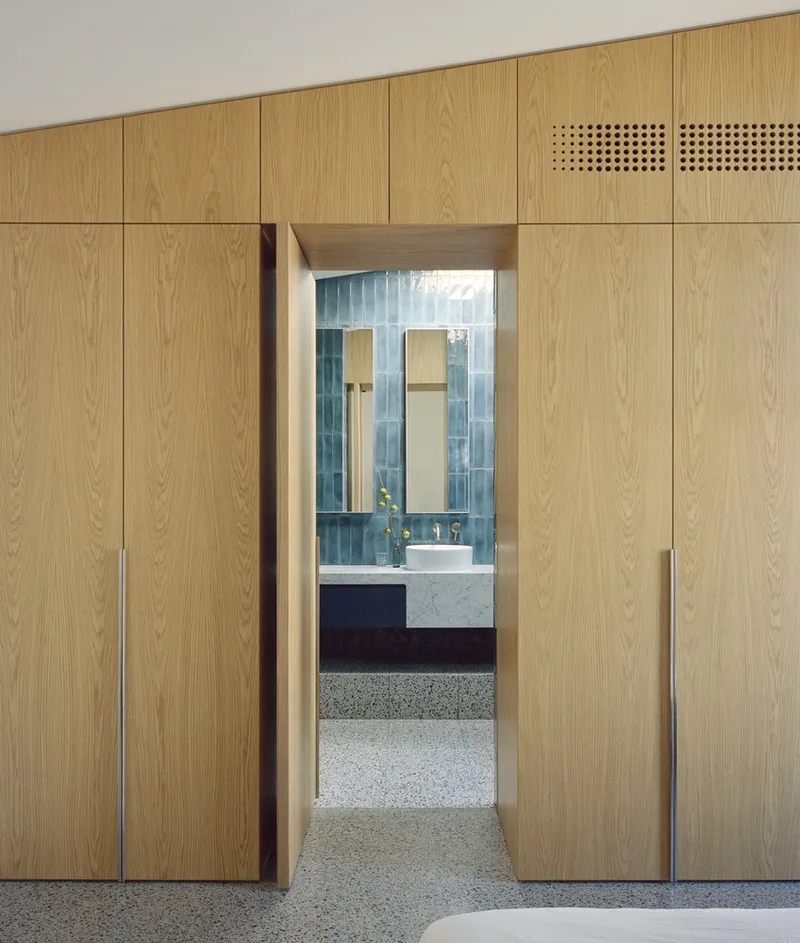
All Photographs are works of Rory Gardiner


Popular Articles
Popular articles from the community


Faces of the Soviet Avant-Garde: Turning Moscow's Street Names into an Open-Air Museum
A network of sculptural installations across a Moscow residential district transforms forgotten architect names into spatial encounters with cultural memor

Manzana Morphosis: Stretching Barcelona's Grid into a Living Landscape for 2050
A radical reworking of the Eixample manzana turns density into a tool for generous public space, vertical ecology, and environmental performance.

Singing Woman: An Opera House That Performs Before the Curtain Rises
Ovidiu Cristian Pavel's conceptual opera house translates Estonia's choral identity into a sculpted waterfront landmark facing the Baltic Sea.

Cloaked Colonization: A Mobile Underwater Habitat That Moves Like a Fish
Micah Abaya's shortlisted EHC Pacific entry reimagines ocean settlement as a dispersed network of self-sustaining architectural organisms.

Similar Reads
You might also enjoy these articles


Hodi-Mandai Geram
Project Function: Preservation and revitalization of the Intangible heritage and socio-spatial identity of the Hodi by Housing, Cultural Memory Center, Sacred Grove, landscape, local tourism economy


Olio Towers: A Mid-Rise for Performers That Fuses Housing, Rehearsal, and Stage
Located blocks from Houston's Theater District, this modular tower stacks living units around a central performance atrium.

Oasis: Modular Green Housing Carved into Dhaka's Urban Fabric
A shortlisted Plugin Housing entry reclaims unauthorized settlements in Dhaka with stepped concrete volumes, green roofs, and ventilation-driven design.

Black Hole: A Floating Megastructure for the Post-Physical Era
Emiliano Mazzarotto envisions a spherical, self-scaling arena where e-sports, digital hotels, and holographic stadiums replace traditional public space.

Explore Melbourne Competitions
Discover active competitions in this discipline

Challenge to reimagine the Iron Throne

Photograph architecture without architects

Illustrate the lost glory of Angkor Wat - Render Challenge

Design challenge to reuse E-waste
Comments (0)
Please login or sign up to add comments
No comments yet. Be the first to comment!