
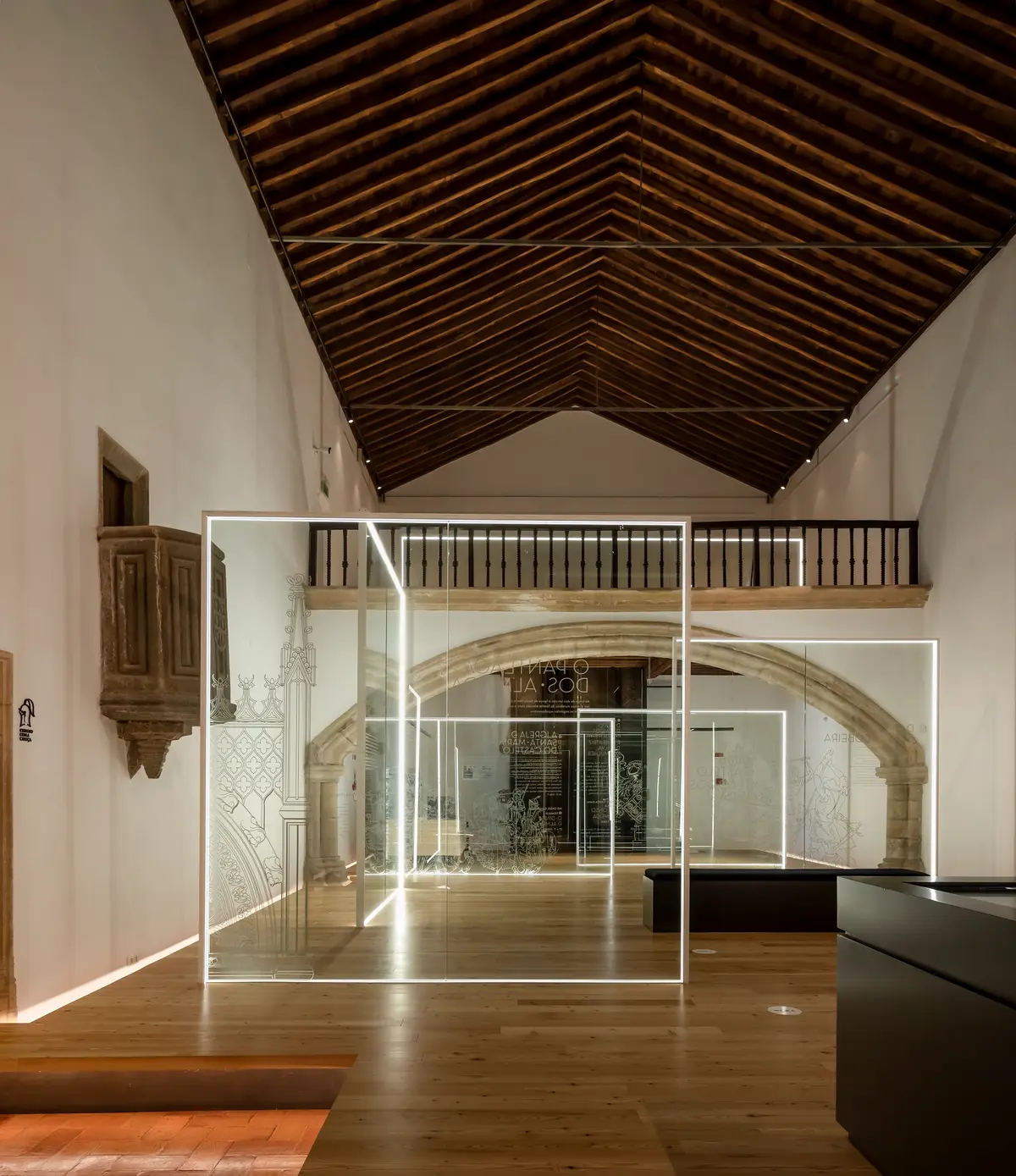
Spaceworkers Installs an Analog Augmented Reality Inside an 800-Year-Old Portuguese Church
Glass panels, pine flooring, and lines of light transform the Panteão dos Almeida in Abrantes into a fully reversible museum.


The Church of Santa Maria do Castelo in Abrantes, Portugal, was first built in 1215 under King Afonso II, then rebuilt in 1433 by D. Diogo Fernandes de Almeida. It holds flaming Gothic tombs, 15th-century retable structures, Hispano-Moorish tiles, and 16th-century frescoes. It also carries the maximum level of patrimonial protection, meaning nothing can be altered beyond painting and maintenance. So when spaceworkers was asked to turn this layered relic into a functioning museum, the design problem was not what to add but how to occupy a space without ever touching it.
The answer is what the studio calls "analog augmented reality": a system of glass panels, a raised pine floor, and embedded lines of light that float free of the existing walls and clay floor. Every element is structurally independent from the church, and every element is fully reversible. The intervention does not compete with the architecture it inhabits. Instead it layers information over the building the way a digital overlay might layer annotations onto a camera feed, except here the medium is physical glass, etched line drawings, and the visitor's own body moving through the nave.
The Church as Found
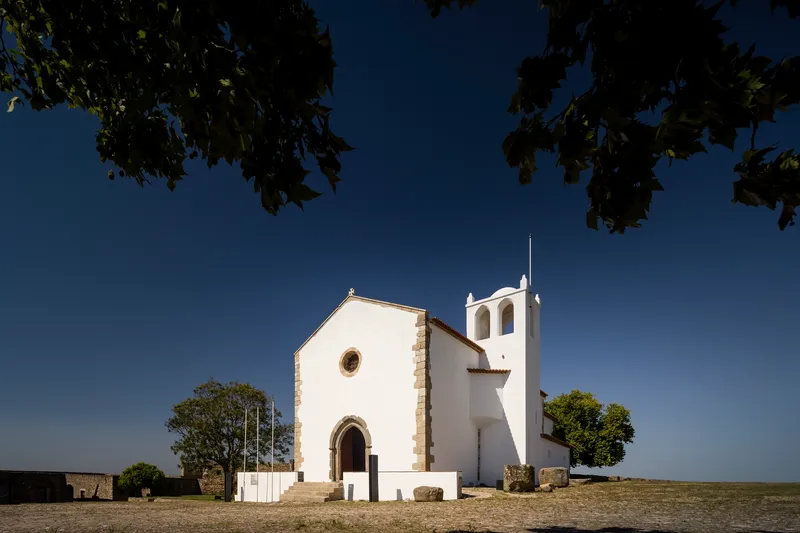
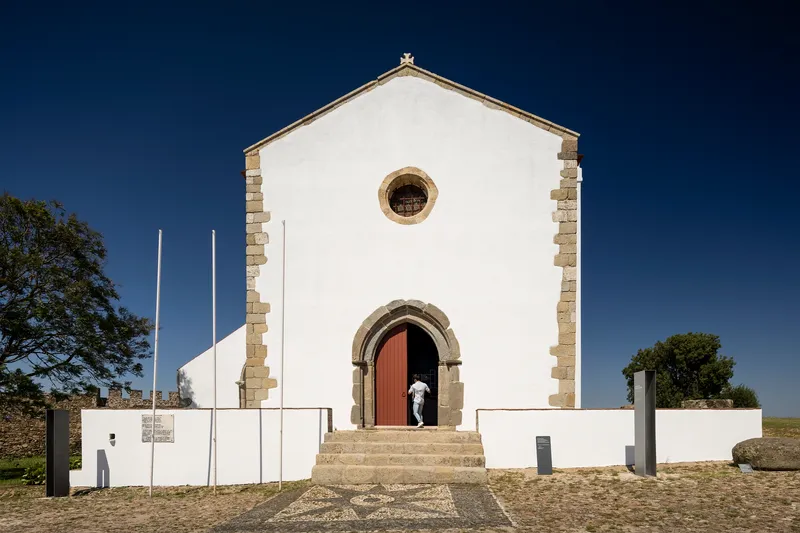
Santa Maria do Castelo sits on a hilltop in Abrantes, its white plastered facade and bell tower visible from the town below. The exterior is plain: stone quoins, arched doorways, a restrained vocabulary of Portuguese ecclesiastical architecture that has survived centuries of political and seismic upheaval. The carved stone portal at the entrance is the first signal that the building's interior holds far more ornament than its exterior would suggest.
This restraint on the outside matters because it sets expectations. A visitor entering through the weathered stone arch is not prepared for the density of carved tombs, tile work, and frescoes inside. The gap between exterior simplicity and interior richness is something spaceworkers clearly understood and chose to amplify rather than smooth over.
A Floor That Floats
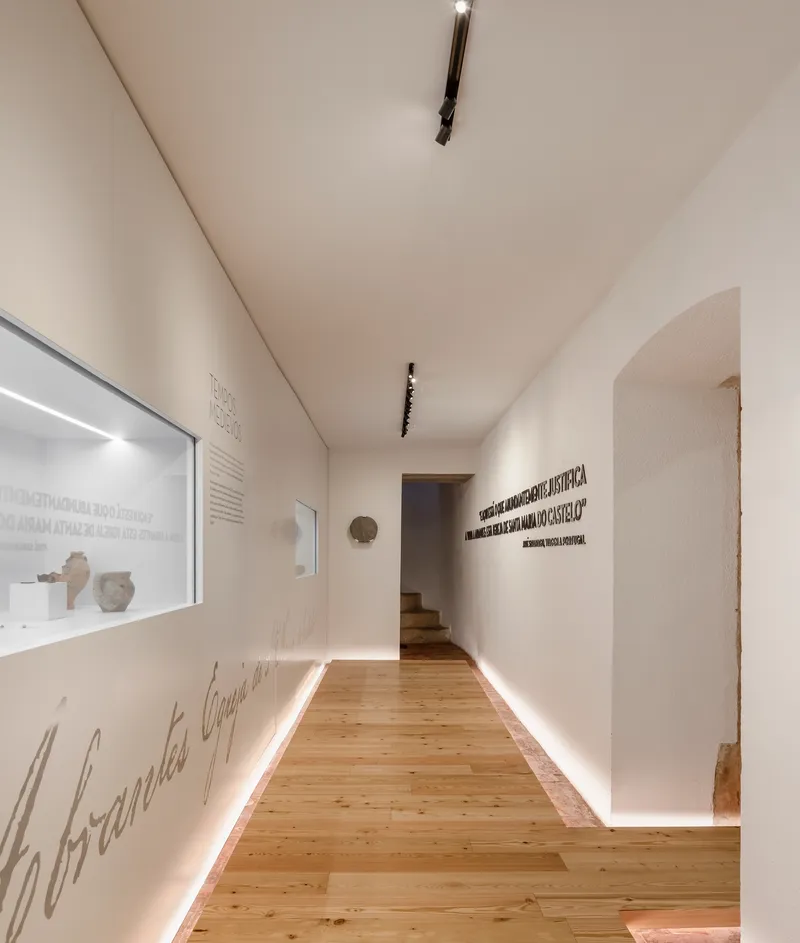
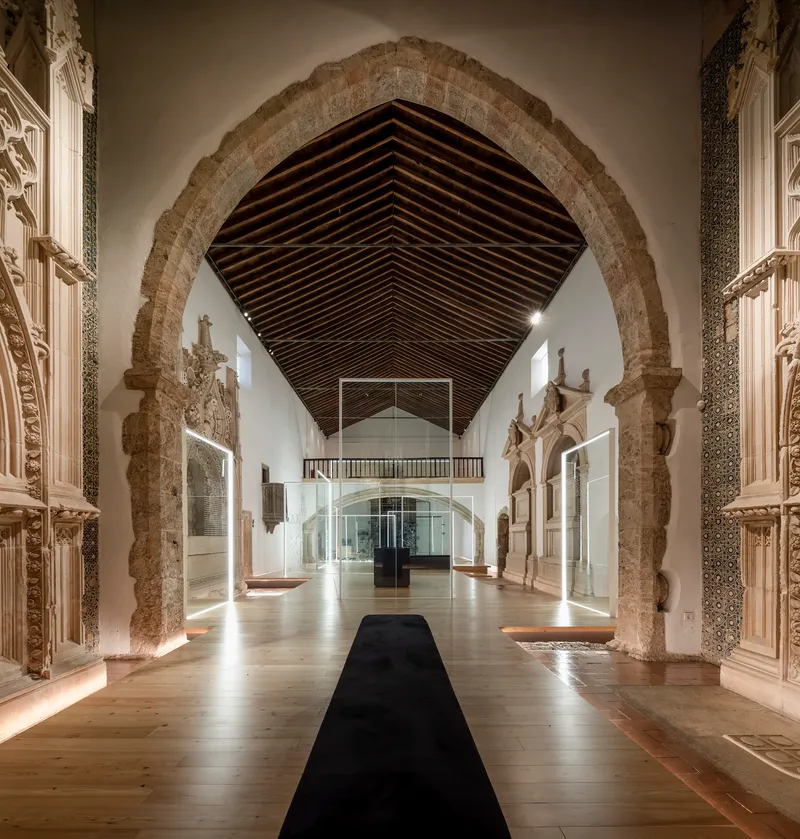
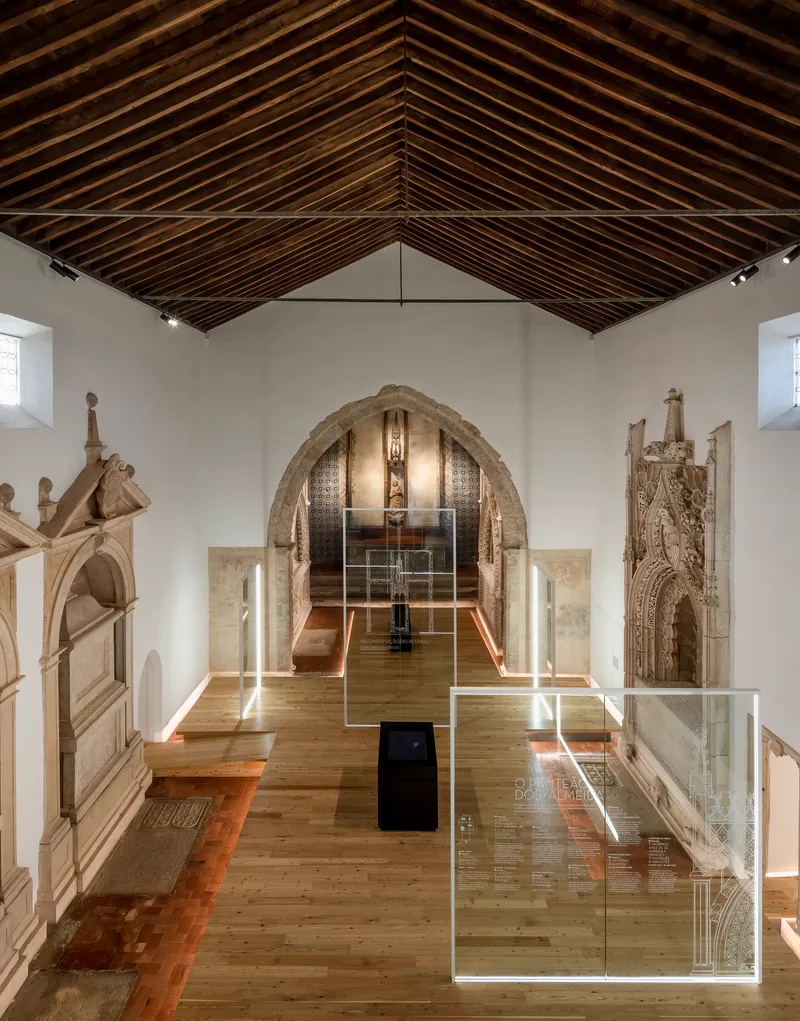
The raised pine platform is the first and most consequential move. It sits on top of the original clay floor and is deliberately peeled away from the walls, leaving a visible gap along the perimeter. Lines of LED light run through this gap and along the floor joints, so the entire walking surface appears to hover. The effect is theatrical but not gratuitous: it signals immediately that everything you are about to walk on is a later addition, not part of the church itself.
By lifting the visitor's body a few centimeters off the historic floor, the platform also changes the proportional relationship between the person and the building. The timber ceiling feels slightly closer, the tombs embedded in the floor are no longer underfoot but visible at a new angle. It is a small dimensional shift with outsized perceptual consequences.
Glass as Information Layer
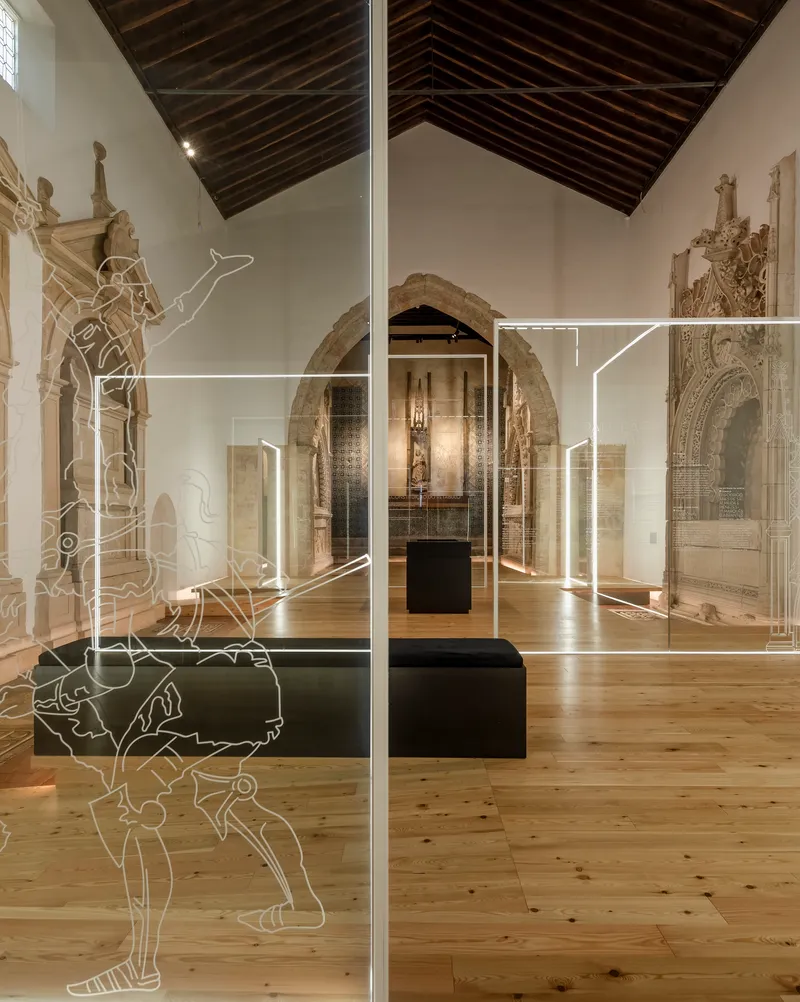
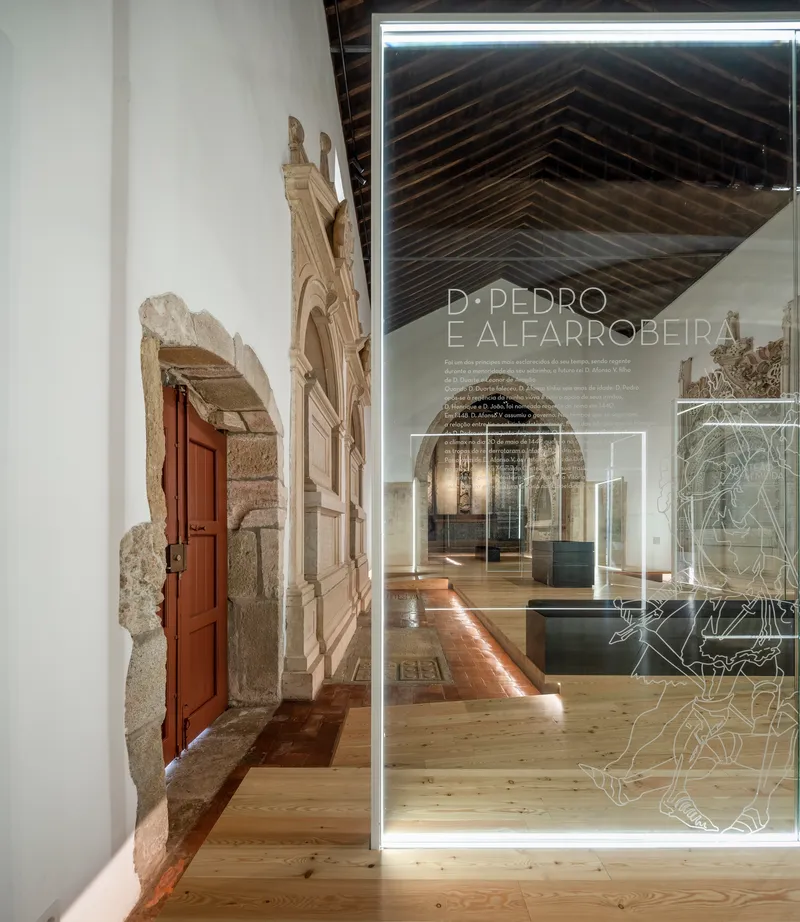
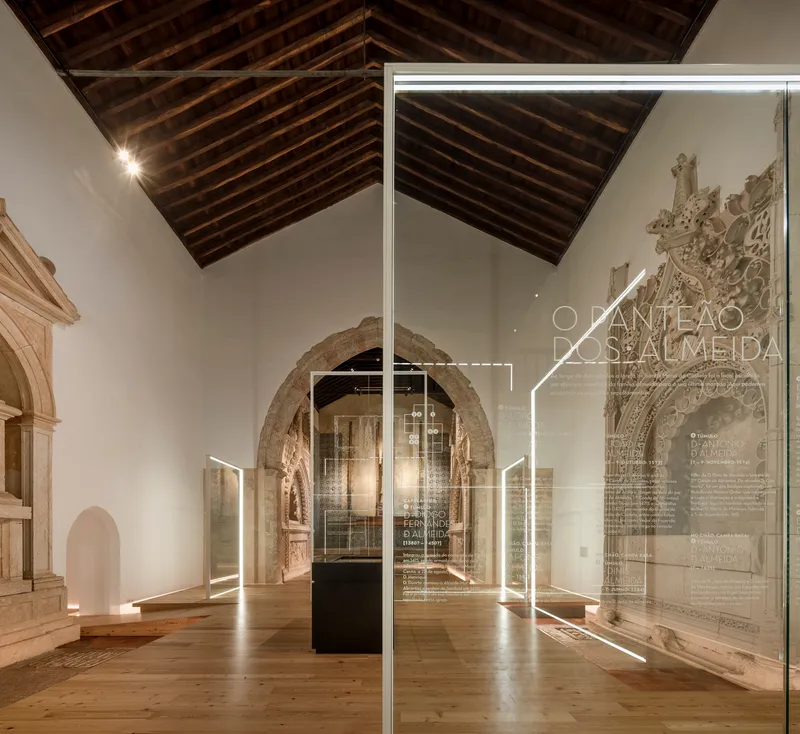
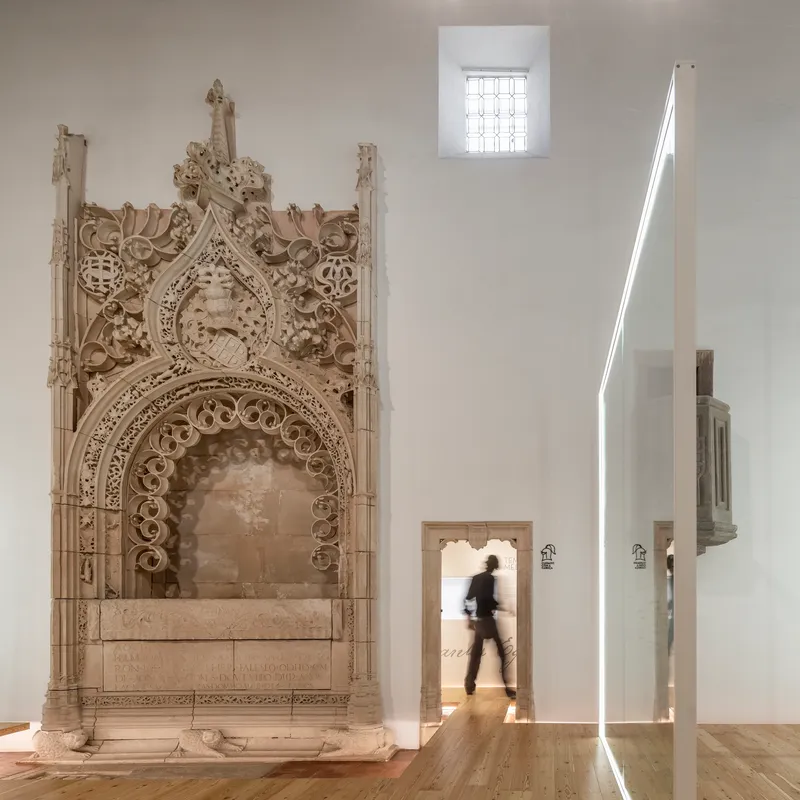
The glass panels come in three heights: five meters, three meters, and two meters. They are supported by metal frames that stand freely on the pine platform, and they carry etched line drawings, text, and graphic information about the church's history. The panels function simultaneously as exhibition surfaces and as spatial dividers, carving the open nave into a sequence of rooms without blocking sightlines or light.
The transparency is the point. Standing behind a glass panel etched with a medieval inscription, you see through the text to the carved stone tomb it describes. The glass does not replace the artifact or shield it from view. It annotates it in real space, at full scale. This is the "analog augmented reality" the studio describes, and it works precisely because glass is both present and invisible, both surface and void.
Dialogue with the Tombs
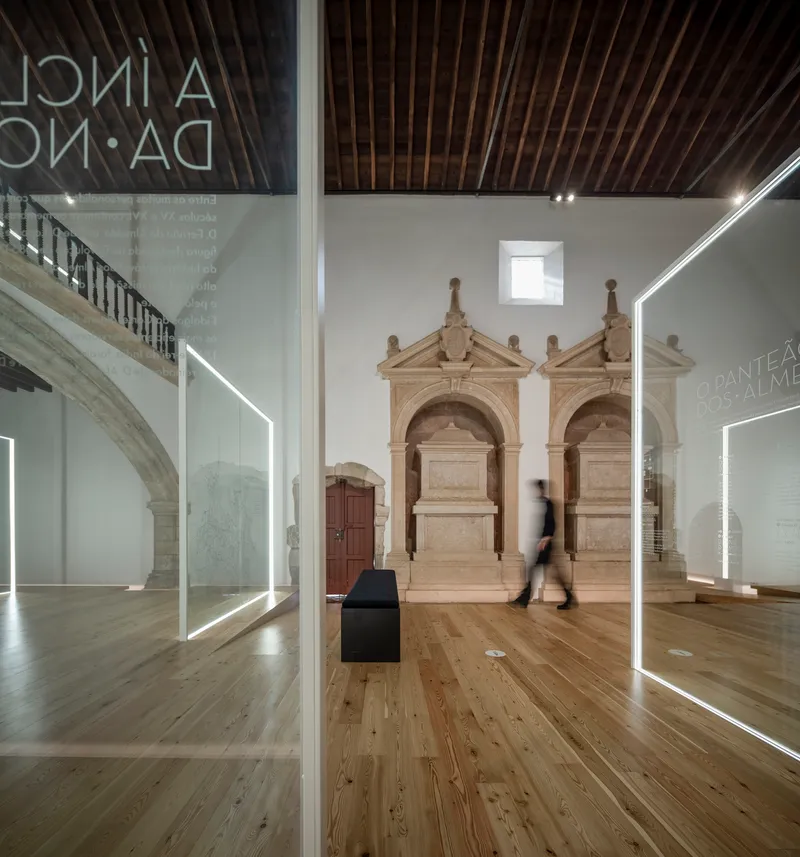
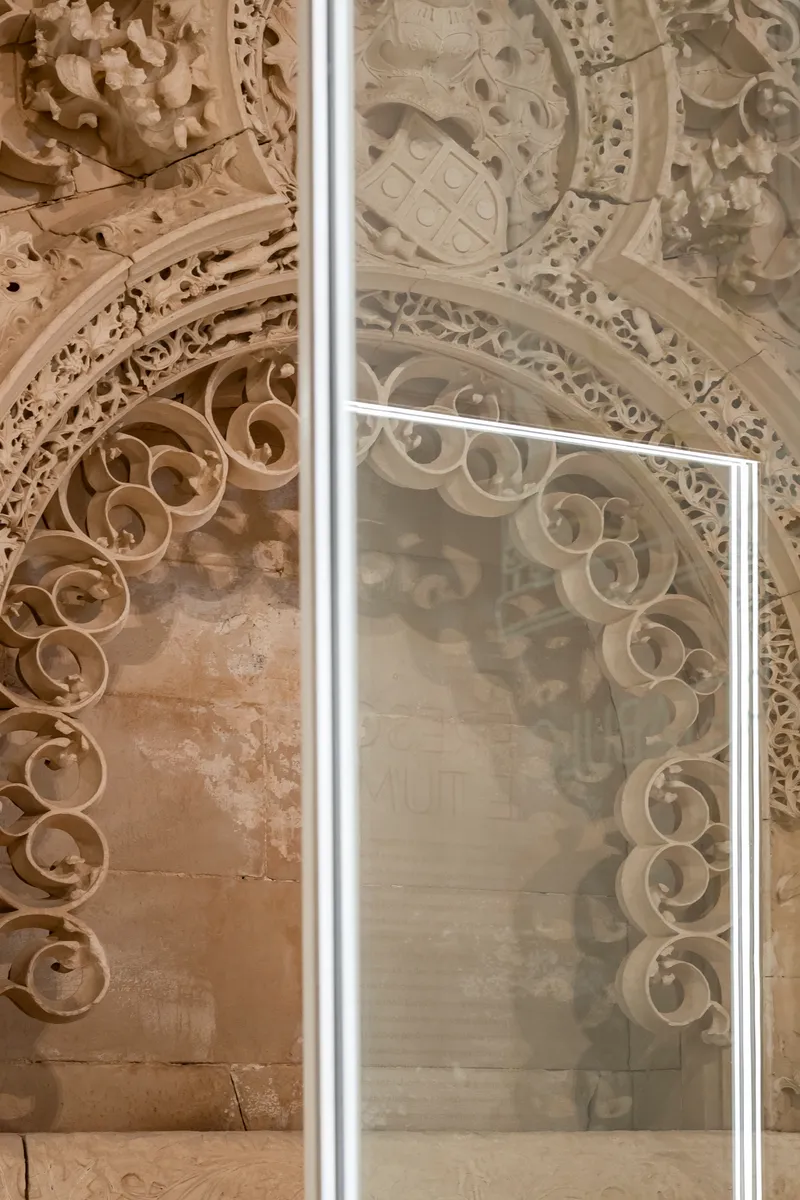
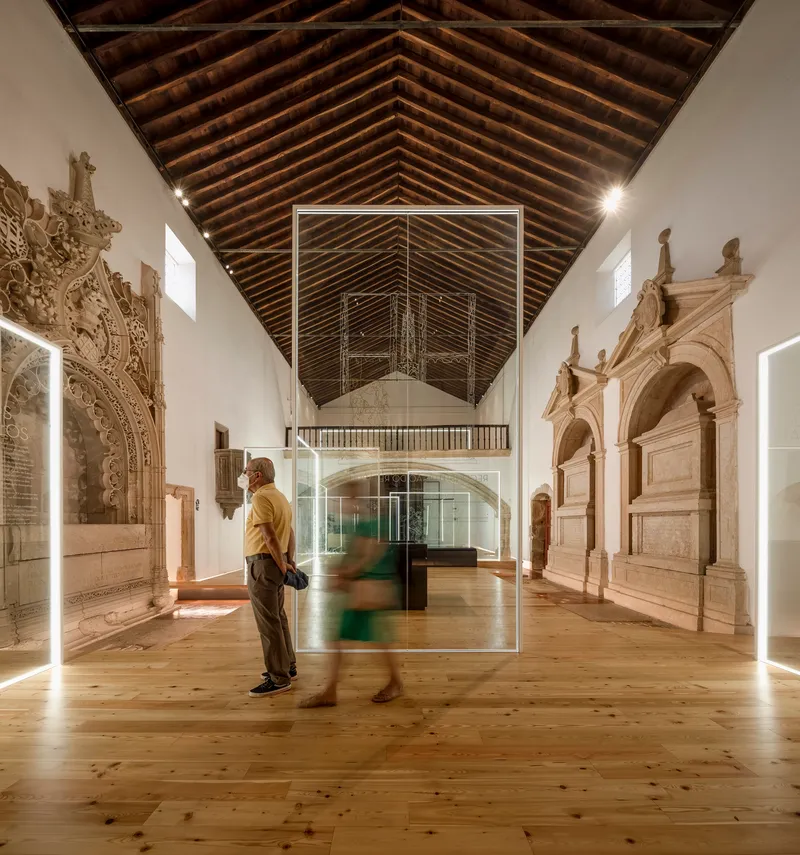
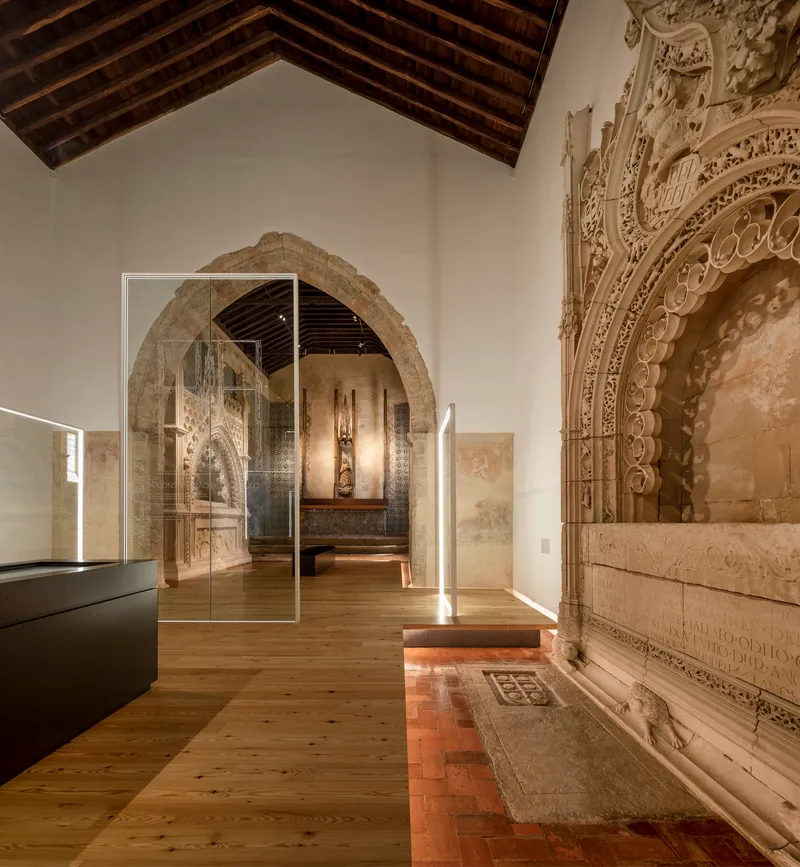
The flaming Gothic tombs are the reason the building was reappropriated as a pantheon in the 15th century, and they remain the most powerful objects in the space. Spaceworkers frames them with glass panels whose LED-lit edges draw the eye without touching the stone. In one view, a visitor passes between a tomb and its corresponding glass annotation, their body briefly occupying the gap between history and interpretation.
The detail shots reveal how precisely the glass edges align with the carved stonework. Heraldic symbols, decorative scrolls, and ornamental reliefs are bisected by the clean line of a panel edge, creating compositions that would not exist without the intervention but that never damage or obscure the original carving. This is curatorial restraint executed at the scale of millimeters.
Light, Timber, and Verticality
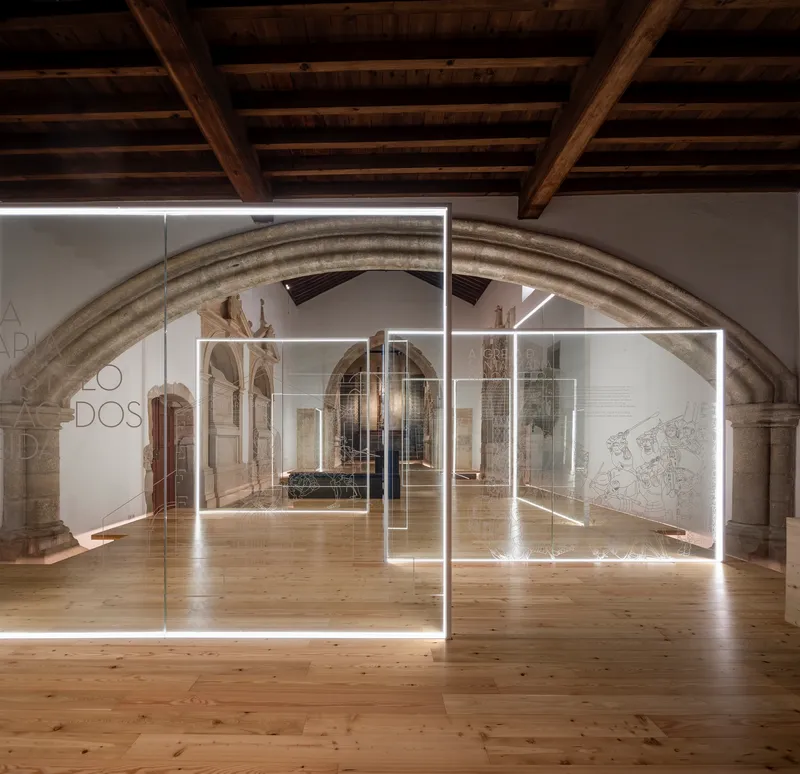
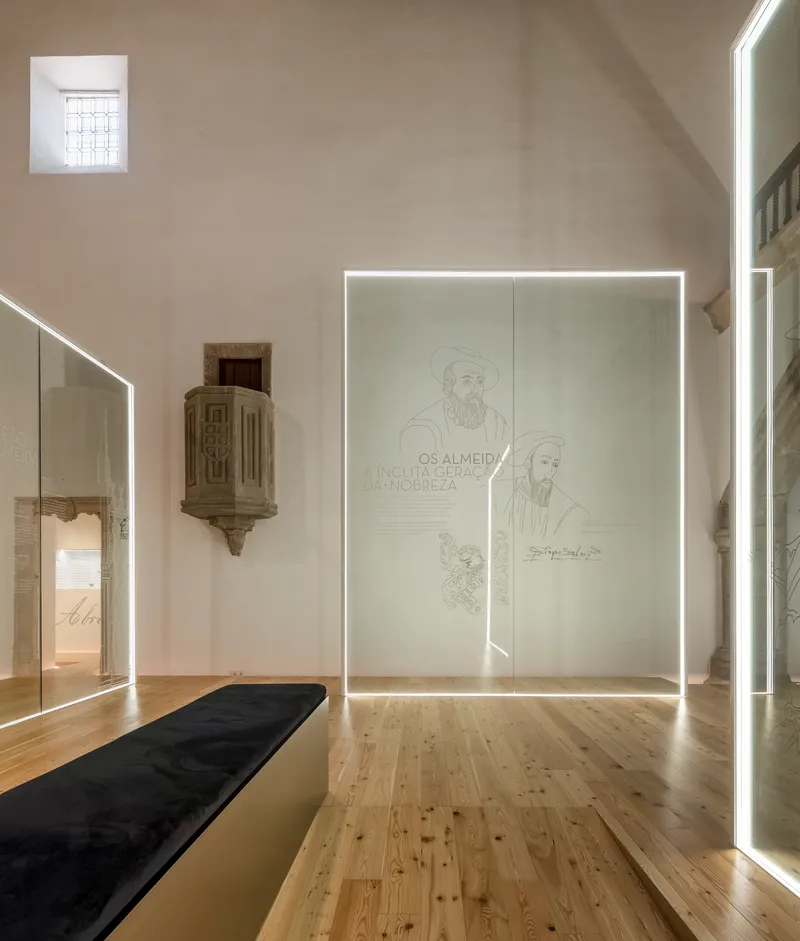
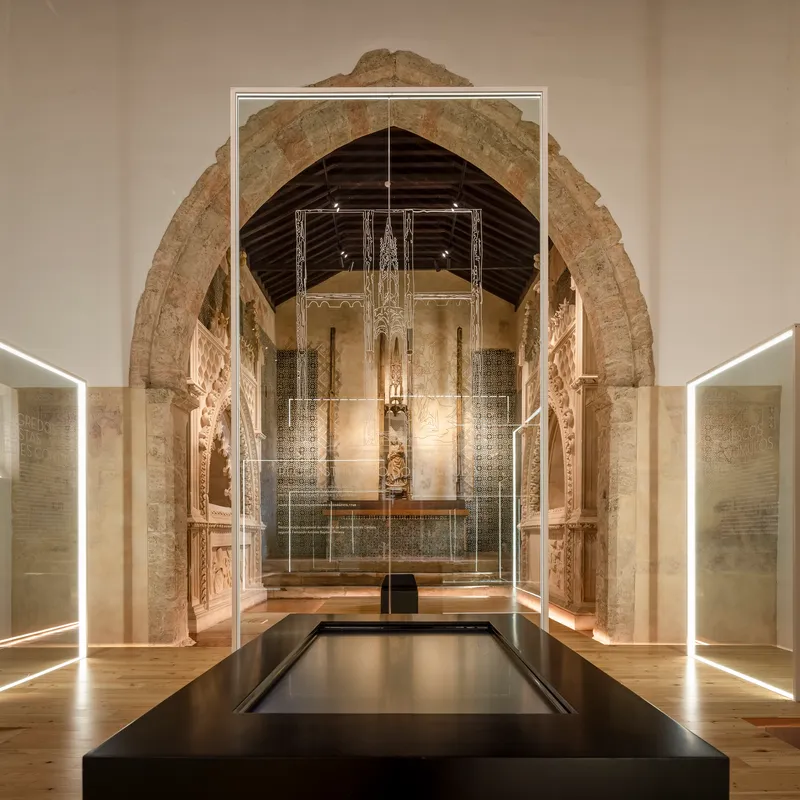
At night, the museum transforms. The glass panels glow from their internal illumination, and the lines of light in the floor intensify. The exposed timber ceiling, which reads as warm and tactile during the day, becomes a dark canopy overhead, its rafters receding into shadow. The verticality of the five-meter panels comes into its own here: they reach toward the ceiling with an ambition that matches the stone arches flanking them.
The illuminated glass panels carrying etched line drawings beneath the vaulted gallery create a scene that is closer to a chapel of light than a conventional museum display. Fernando Guerra's photographs capture this duality well: the building is simultaneously a church, a pantheon, and a gallery, and the lighting scheme lets each identity surface at different moments of the day.
Frescoes, Tiles, and the Existing Palette
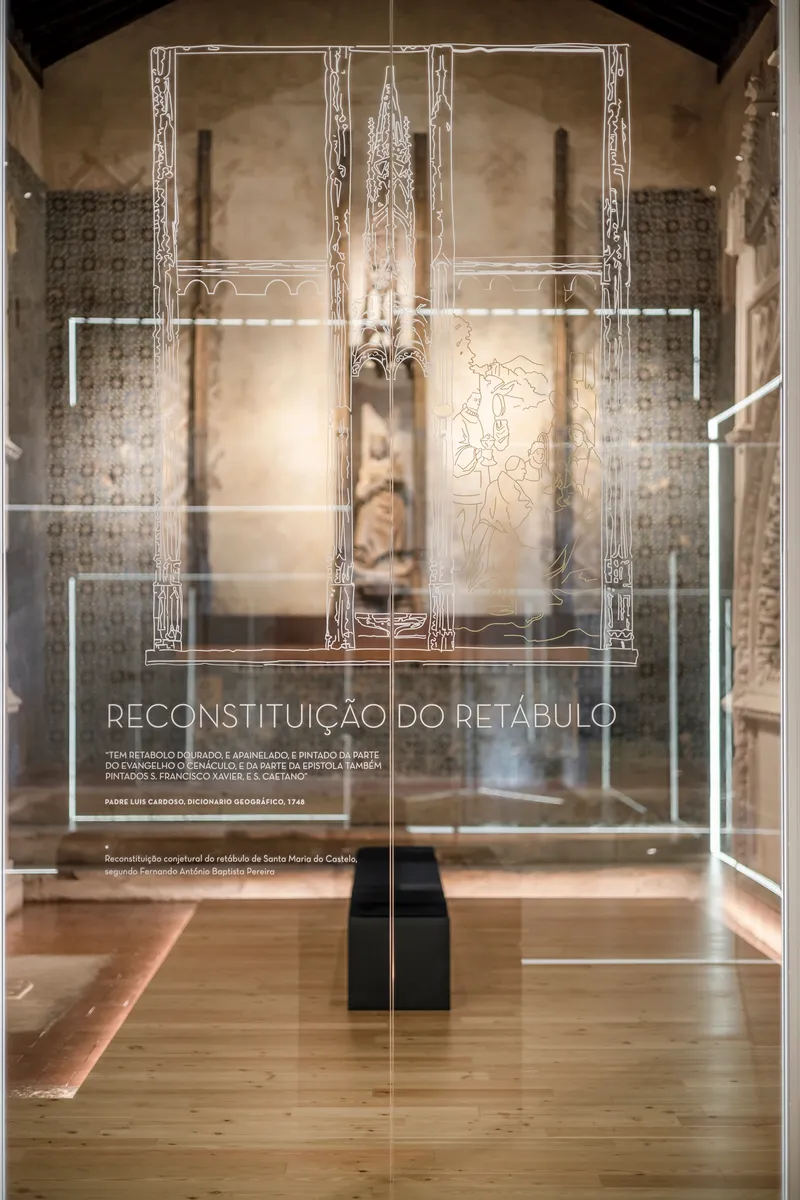
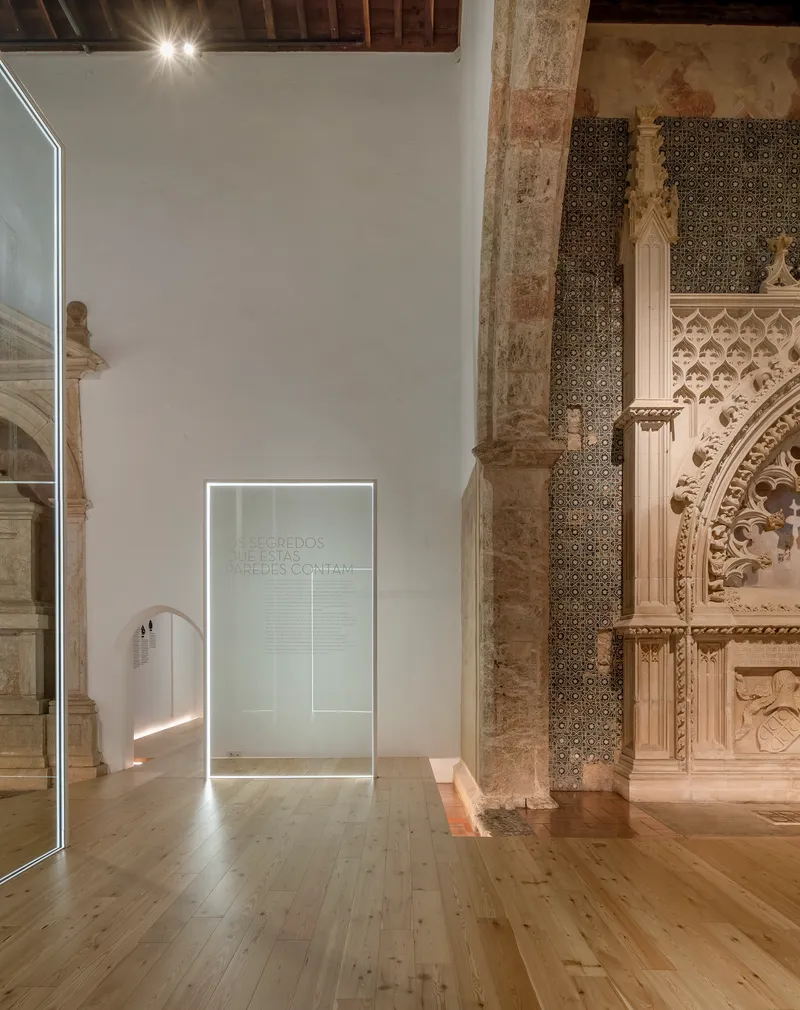
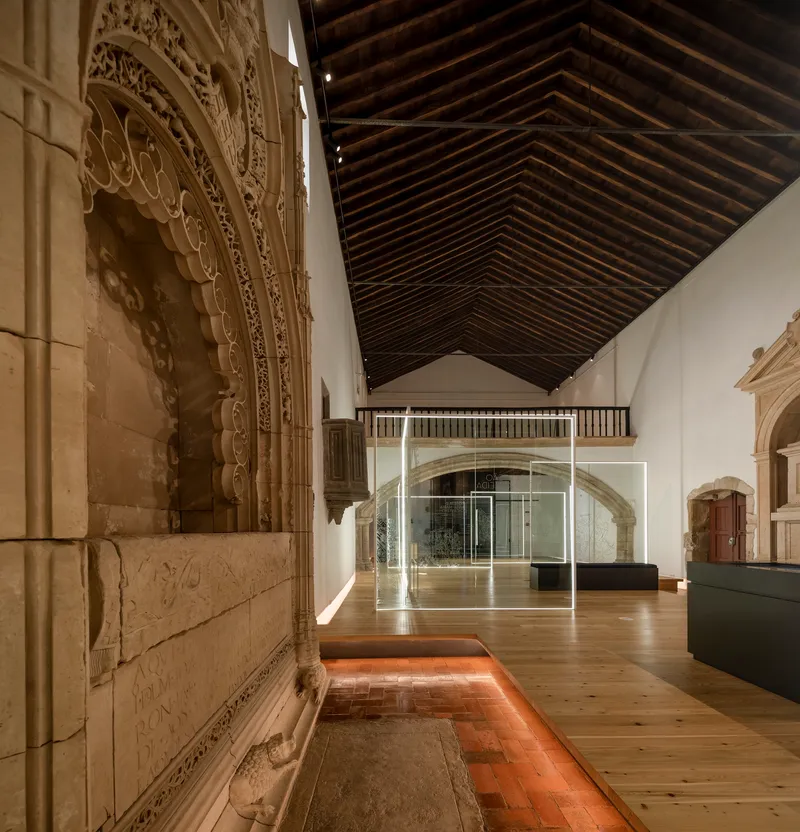
The Hispano-Moorish tiles and 16th-century frescoes present a particular challenge. They are fragile, patterned, and chromatically rich, and any modern insertion risks clashing with or overshadowing them. The glass and pine palette solves this by being almost colorless. The pine ages toward amber but starts neutral; the glass is clear; the metal supports are dark and thin. Against this restrained backdrop, the tiles and frescoes hold their own, their blues and ochres registering more strongly because the new elements refuse to compete.
One particularly effective moment occurs where a freestanding illuminated display case stands directly in front of a tile wall. The decorative line drawings on the glass echo the geometry of the tiles behind, creating a layered graphic field that collapses eight centuries of ornament into a single glance.
Moving Through the Nave
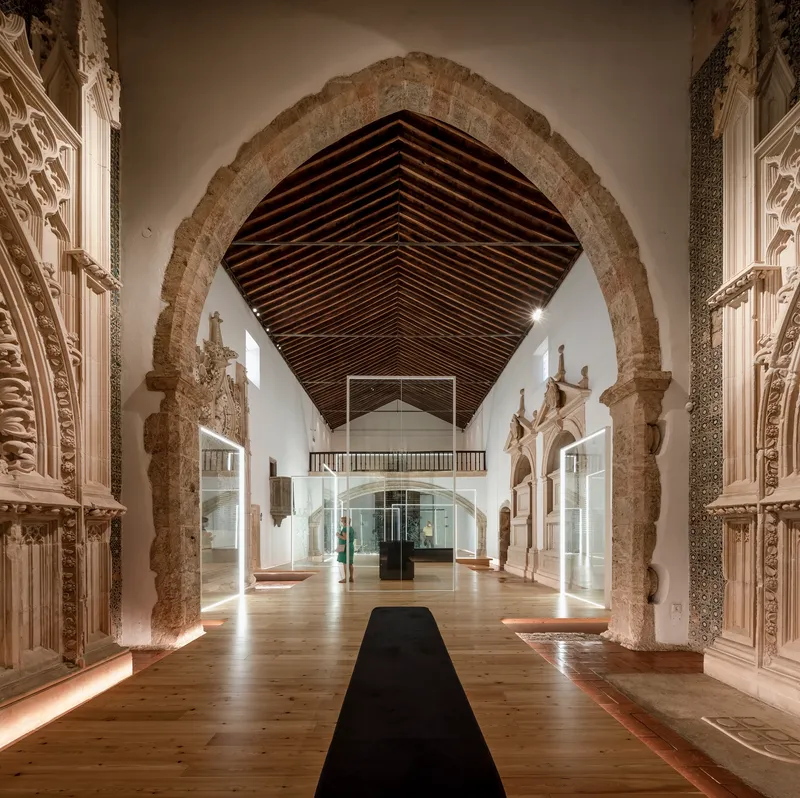
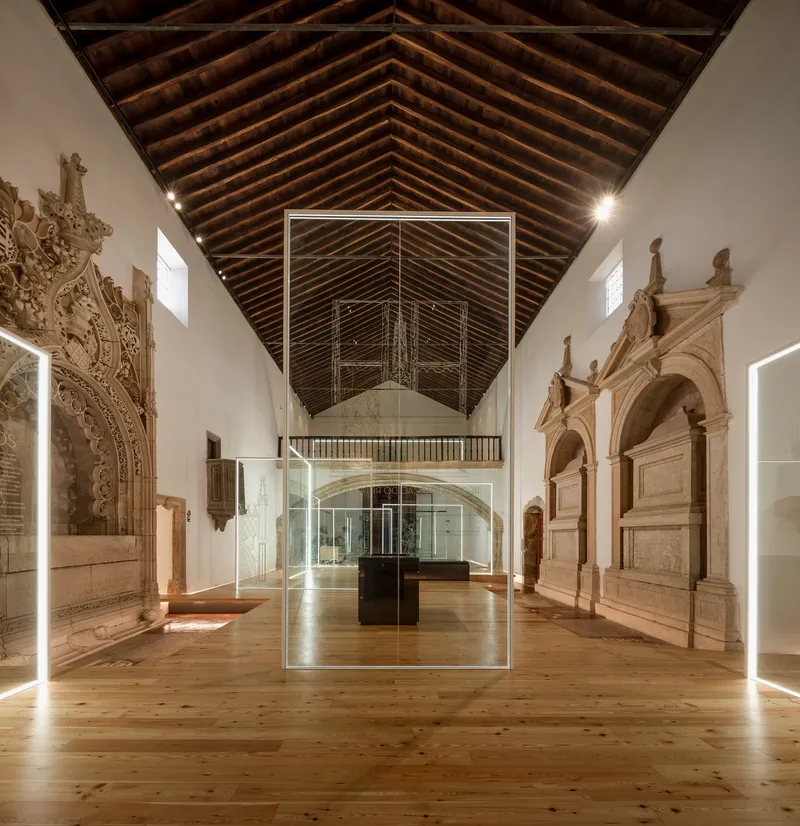
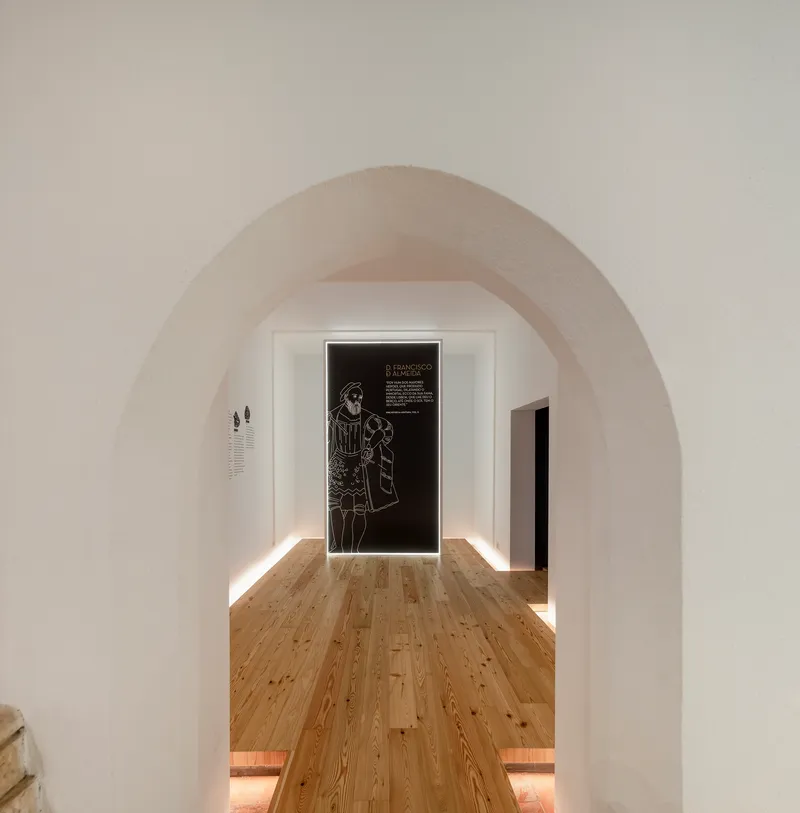
The sequential experience of the museum is structured by the stone arches of the original church, which punctuate the nave at regular intervals. Spaceworkers uses these existing thresholds as framing devices: each archway opens onto a new arrangement of glass panels, a new set of artifacts, a new relationship between visitor and building. The long views through multiple arches give the space a telescoping depth that rewards slow movement.
The mezzanine level, visible through the carved stone archway at one end, adds a vertical dimension to the circulation. The timber vault and dark ceiling boards overhead compress the upper level, making the double-height nave feel even more expansive by contrast. It is a procession designed for contemplation, not efficiency.
Plans and Drawings
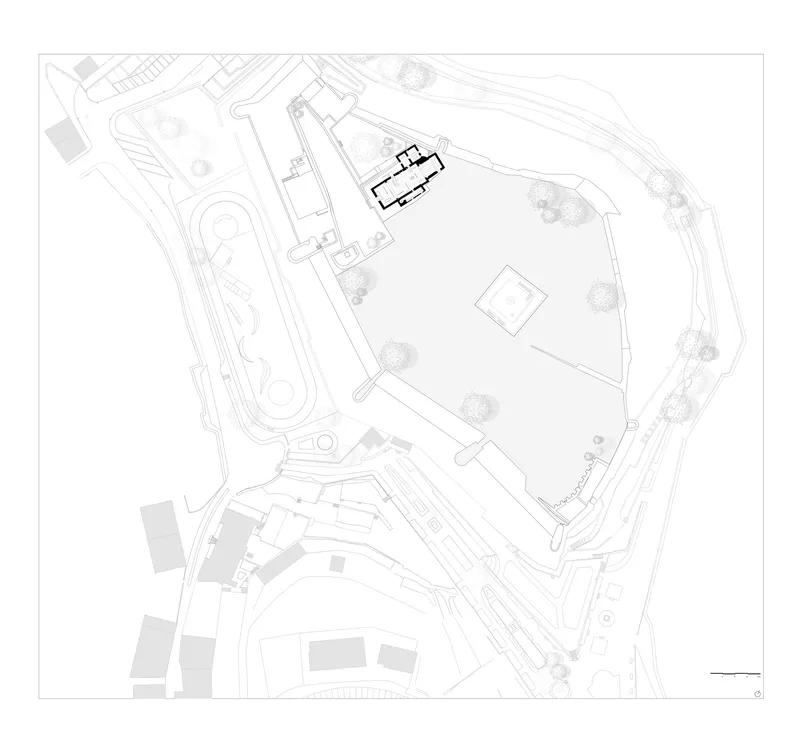
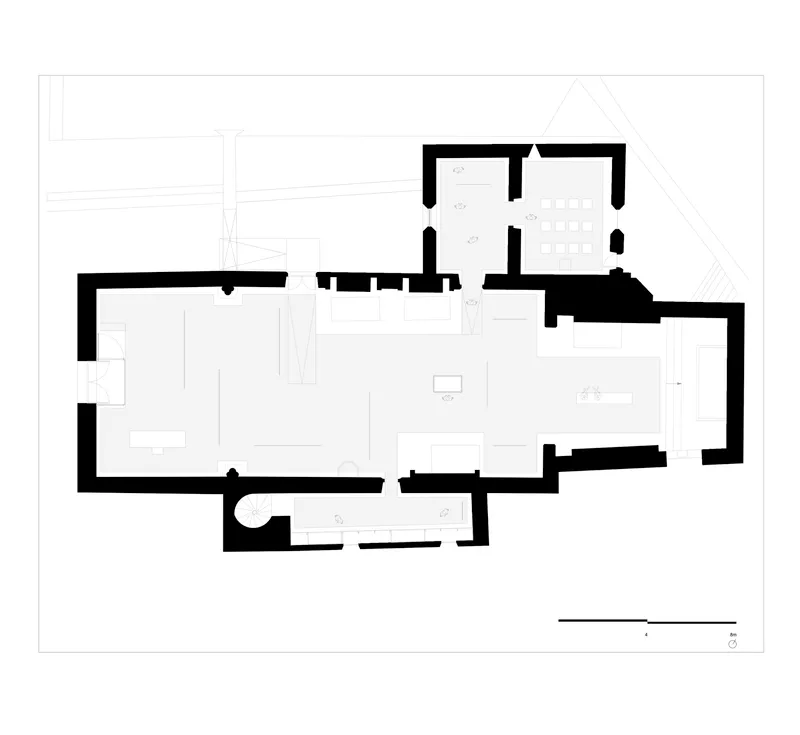
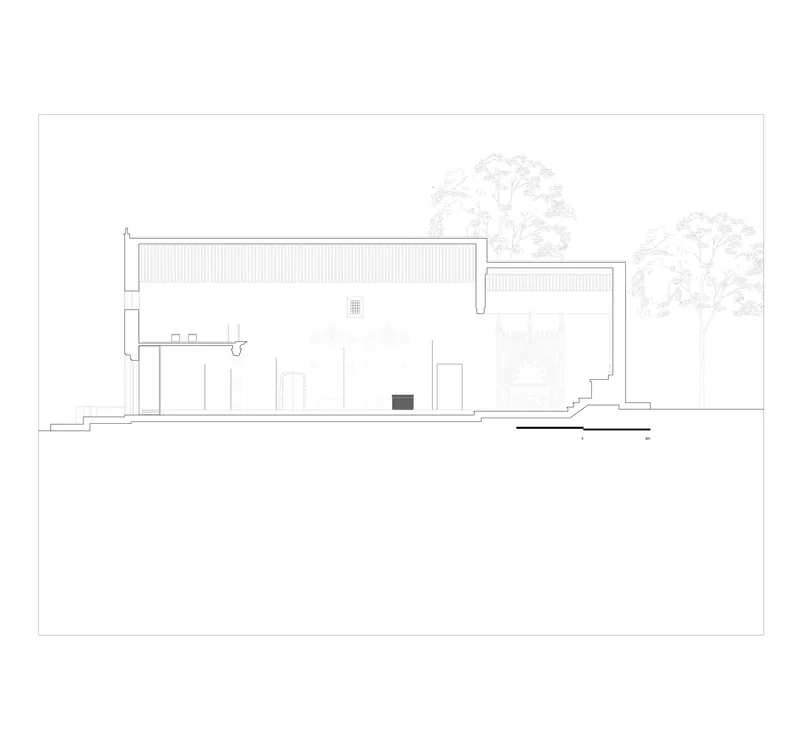
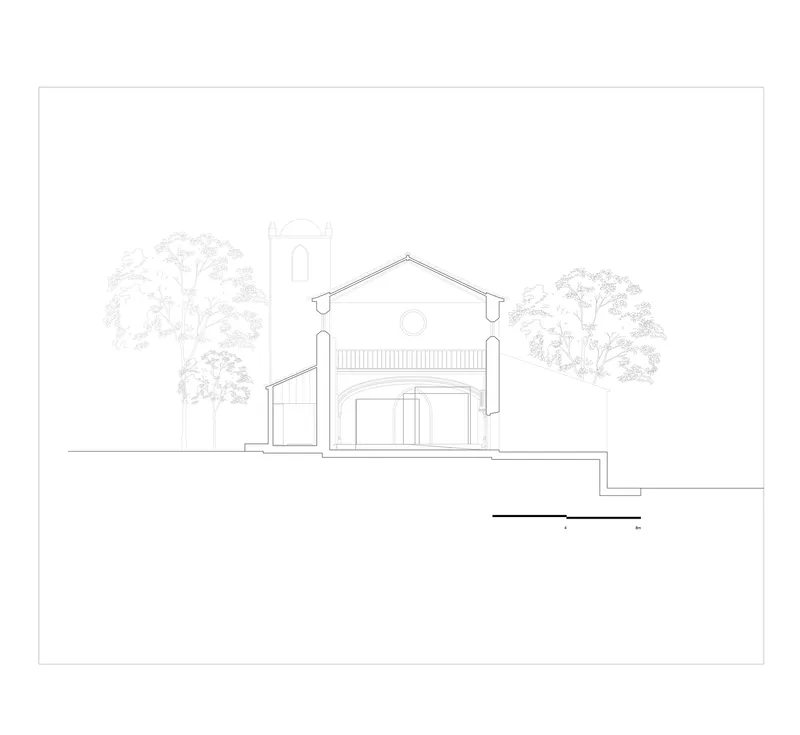
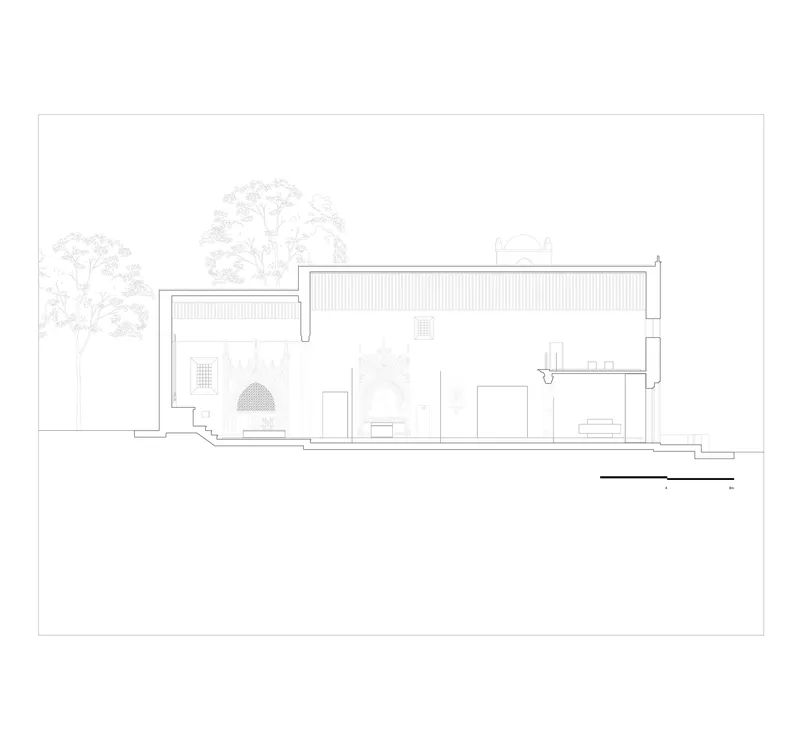
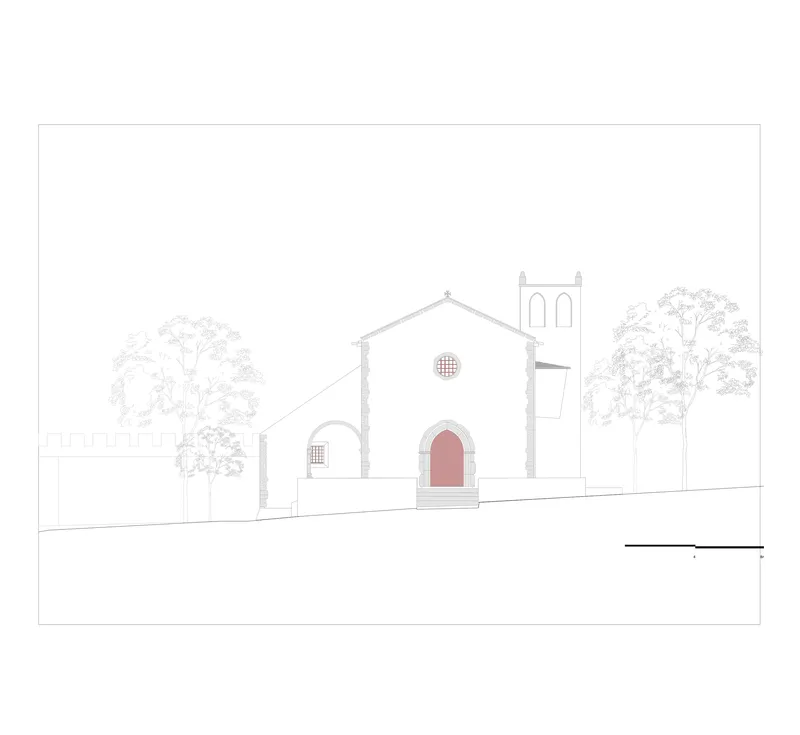
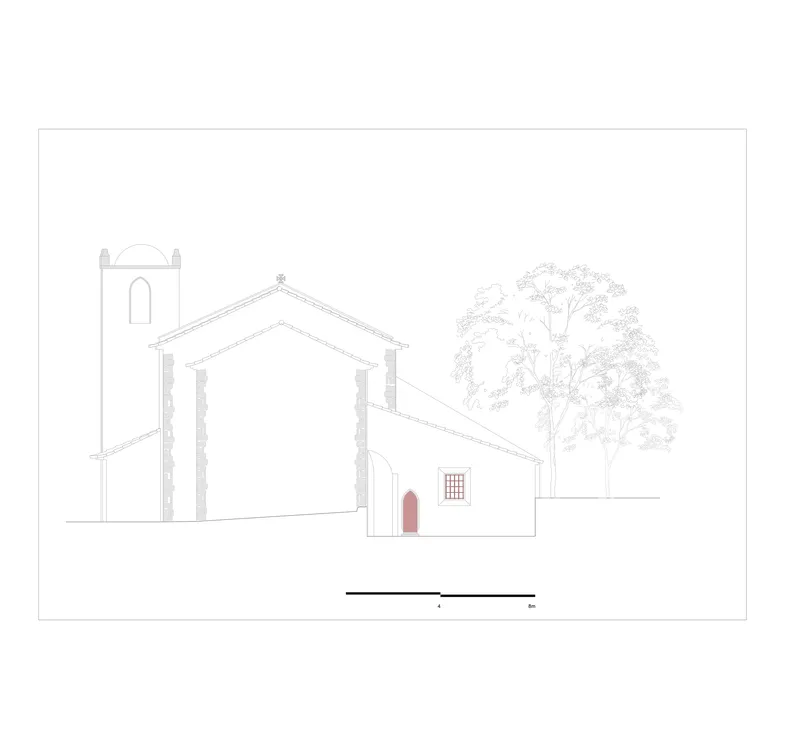
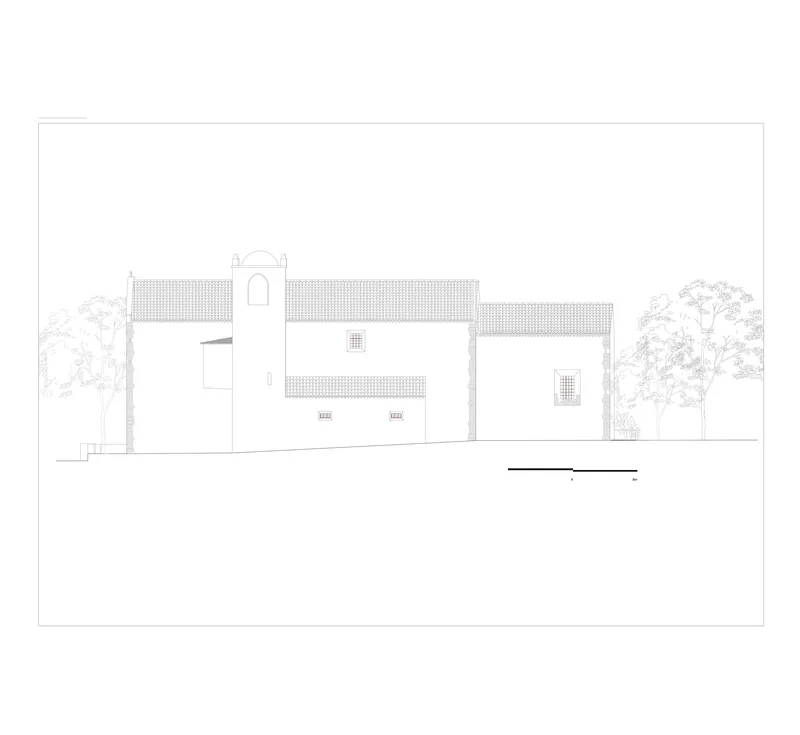
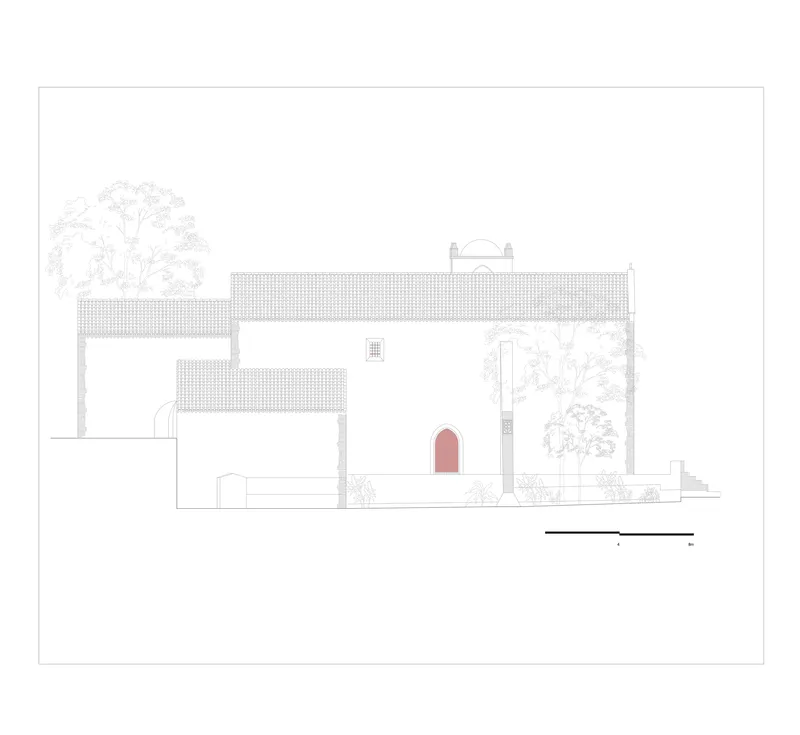
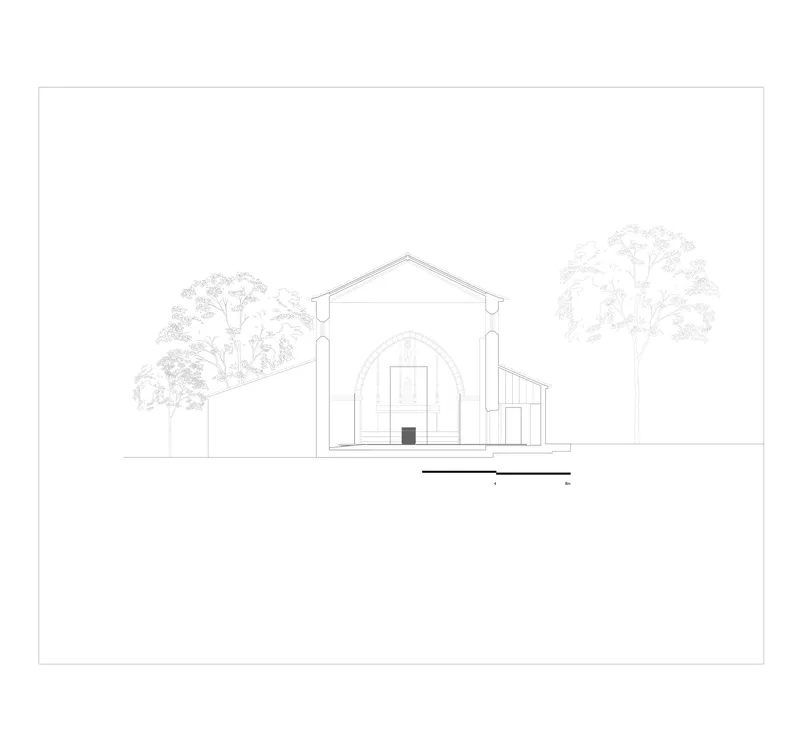
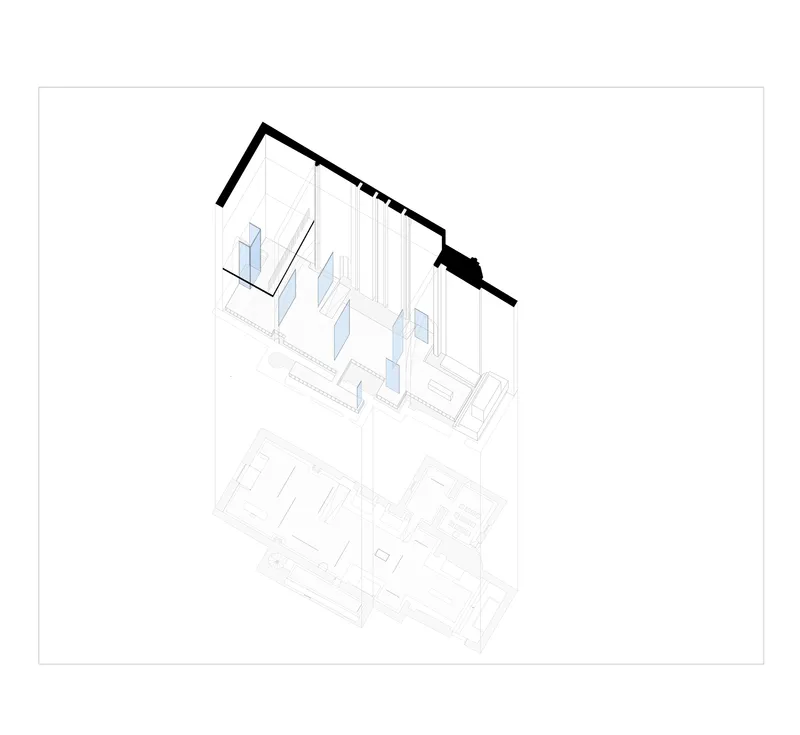
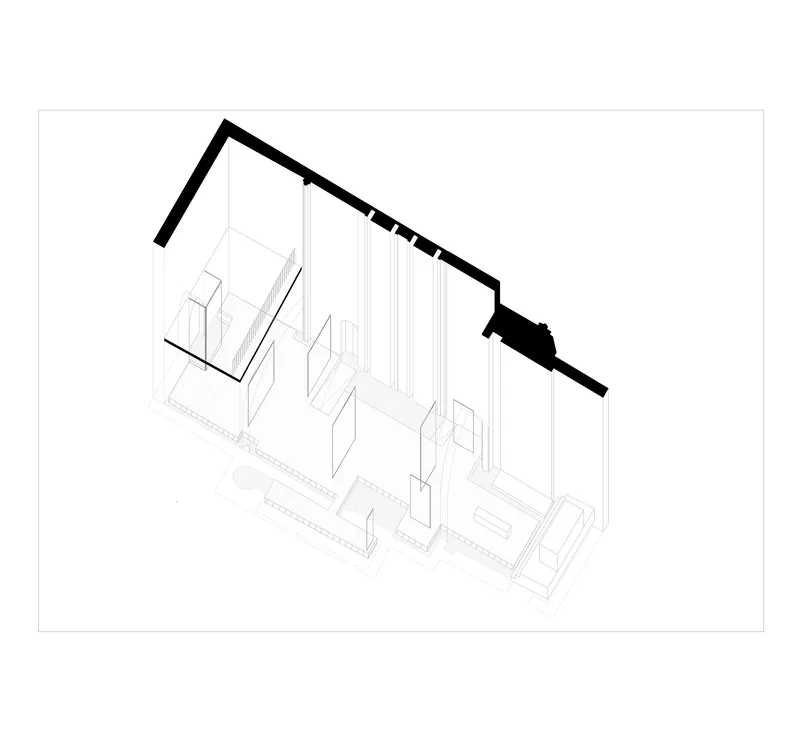
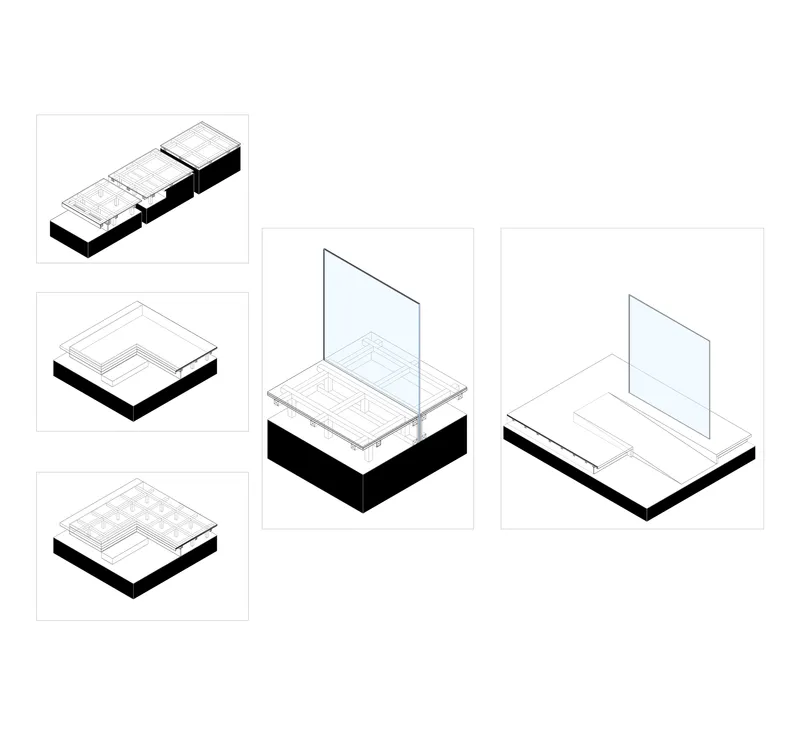
The site plan reveals the church's position within a larger precinct of buildings, courtyards, and curving pathways on the Abrantes hilltop. The floor plan shows the thick masonry walls and the irregular room sequence that any medieval church accumulates over centuries of addition and alteration. The elevations, rendered with surrounding vegetation and colored accents marking the red arched entrances, communicate the modesty of the exterior volumes.
The axonometric and isometric drawings are the most revealing. They show the glass partitions as blue-tinted planes floating inside the sloped-roof volume, completely independent of the walls and floor. The exploded assembly diagram makes the modularity of the system legible: vertical glass screens slot into paved platforms in a kit-of-parts logic that could, in theory, be dismantled and removed in a matter of days. This is reversibility not as aspiration but as engineering.
Why This Project Matters
Heritage buildings present architects with a paradox: the structures need contemporary use to survive, but contemporary use requires alterations that heritage law often prohibits. Spaceworkers resolves this by designing an intervention that never makes contact with the protected fabric. The pine floor, the glass panels, the metal frames, and the LED lighting all exist within the church but are not of it. They could be removed tomorrow and the building would be exactly as it was before 2022. That is not a limitation the studio worked around; it is the generative constraint that produced the entire design.
The concept of analog augmented reality is more than a clever label. It describes a genuine spatial condition in which transparent layers of information are superimposed on physical reality at one-to-one scale. In an era when most augmented reality requires a screen, spaceworkers achieves the same effect with glass, light, and careful placement. The result is a museum where the building is simultaneously the exhibit and the exhibition hall, where eight centuries of accumulated meaning are made legible without a single nail driven into the wall.
Museography and Exhibition of Panteão dos Almeida, by spaceworkers. Abrantes, Portugal. Completed 2022. Photography by Fernando Guerra | FG+SG.
About the Studio
spaceworkers
Official website of spaceworkers, one of the studios behind this project.
spaceworkers.ptShare Your Own Work on uni.xyz
If projects like this are the kind of work you want to make, uni.xyz is a place to publish your own, find collaborators, and enter design competitions.


Popular Articles
Popular articles from the community


The Ocean Hive: Sustainable Architecture for a Self-Sufficient Civilization at Sea
The Ocean Hive imagines sustainable architecture at sea, where modular habitats, algae, wave power and ocean waste sustain a growing colony.

Co-Life: Senior Housing Design That Reconnects Older Adults With the City
Co-Life reimagines senior housing design through healing gardens, shared streets, workshops, and a sustainable community across generations.

Hill & Cross Opera: Sculptural Opera House Architecture Shaped by Tallinn’s Landscape and Identity
Hill & Cross Opera reimagines opera house architecture in Tallinn through its sculptural hill, civic plaza, glass wave and a luminous cross.

The Musturak Paradise: Senior Living Architecture for a Connected Future in Temara, Morocco
The Musturak Paradise reimagines senior living architecture in Temara via private homes, social spaces, culture, community, and shared care.

Similar Reads
You might also enjoy these articles

Bao Huynh Watercolor Atelier: A Serene Art Retreat in Hội An
Bao Huynh Watercolor Atelier in Hội An blends multifunctional art spaces, sustainable design, local materials, and family-friendly living in a serene environment.

Atelier Macri Concept Store Interior Design by CASE-REAL
Atelier Macri store features a "ko" counter, walnut wood details, cork displays, blending retail, gallery, and seamless customer experiences.

Manuel Vargas Izquierdo Stadium and High-Performance Sports Center: Architectural Excellence in Jalpa de Méndez
The Manuel Vargas Izquierdo Stadium blends sustainable design, inclusive sports facilities, and cultural-inspired architecture, revitalizing Jalpa de Méndez’s public spaces.

KAKR Buluh Awar Hall: Revitalizing Community and Ecology Through Bamboo Architecture
Community built bamboo hall revitalizes Buluh Awar village, empowering youth, restoring ecology, celebrating vernacular craftsmanship through sustainable architecture and culture.

Explore Cultural Architecture Competitions
Discover active competitions in this discipline

Design Challenge - Contemporary interpretation of a religious complex

Bring back Drive In's
Comments (0)
Please login or sign up to add comments
No comments yet. Be the first to comment!