
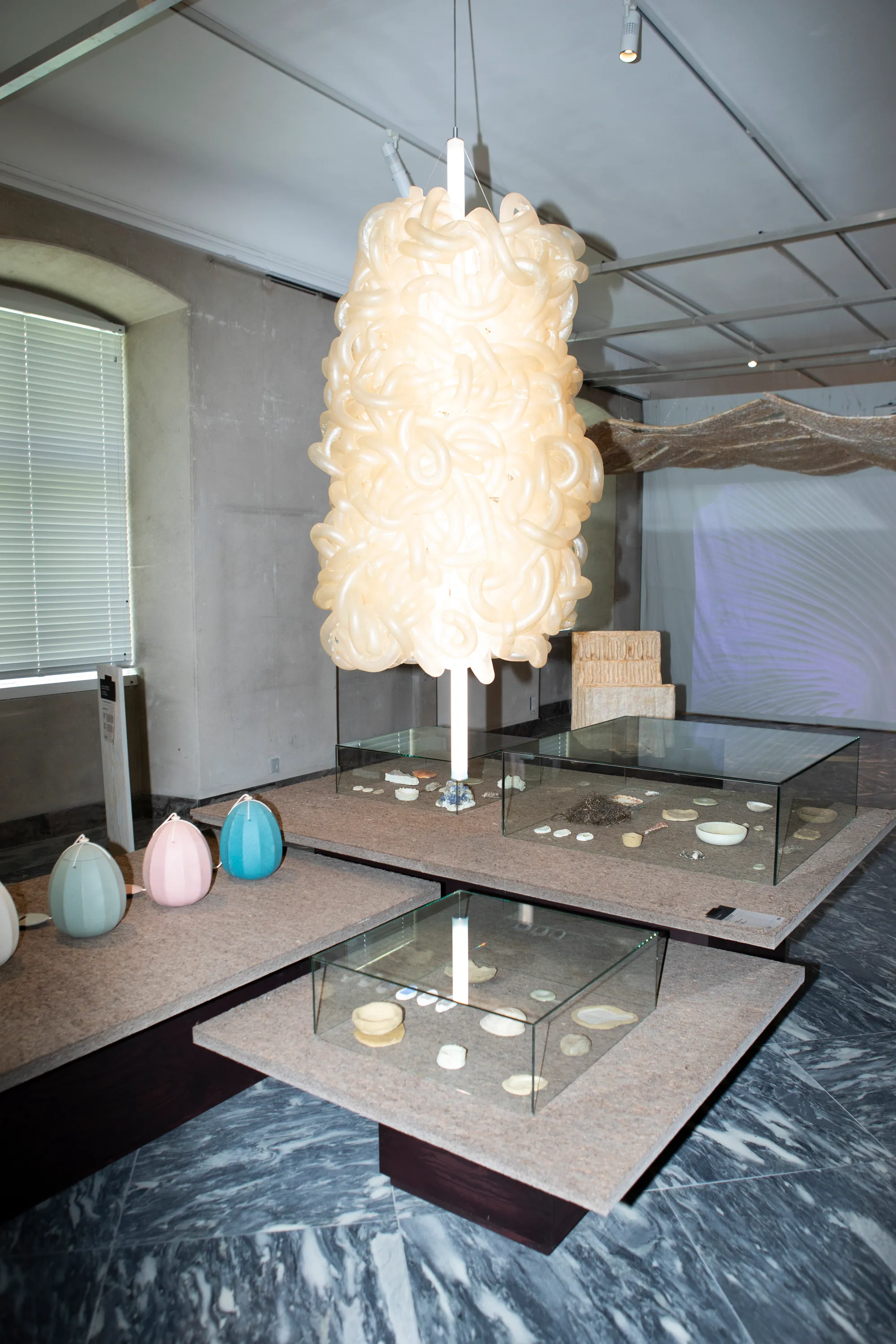
Spacon & X Fills a Rococo Hospital with Seaweed, Mycelium, and Aerated Concrete for Design Museum Denmark
An exhibition design project in Copenhagen's 18th-century Royal Frederik's Hospital uses industrial materials to stage a dialogue between heritage and disr


Design Museum Denmark reopened in 2022 after a major renovation of its home in the former Royal Frederik's Hospital, an 18th-century rococo complex in Copenhagen's Frederiksstaden district designed by architects Nicolai Eigtved and Lauritz de Thurah. The building, which served as Denmark's first public hospital offering free care to the city's poorest residents from the 1750s onward, is one of Europe's most significant rococo ensembles. So when Spacon & X was commissioned in 2021 to design two of the museum's four new exhibition areas, the brief was not simply to display objects. It was to negotiate a live tension between magnificent marble floors and the rough, experimental materials that define contemporary Danish design culture.
What makes the 700 m² project worth studying is its refusal to treat the historic shell as sacred ground that can only be whispered into. Spacon & X imported materials from entirely different industries: aerated concrete blocks normally used for insulation, recycled HDPE plastic, Danish seaweed harvested by the producer Søuld, and even a mycelium mattress developed with Natural Material Studio. The result reads less like a conventional museum fit-out and more like a provocation staged inside a palace, guided by four stated keywords: presence, emotional awakening, honesty, and playfulness.
Curtains as Architecture
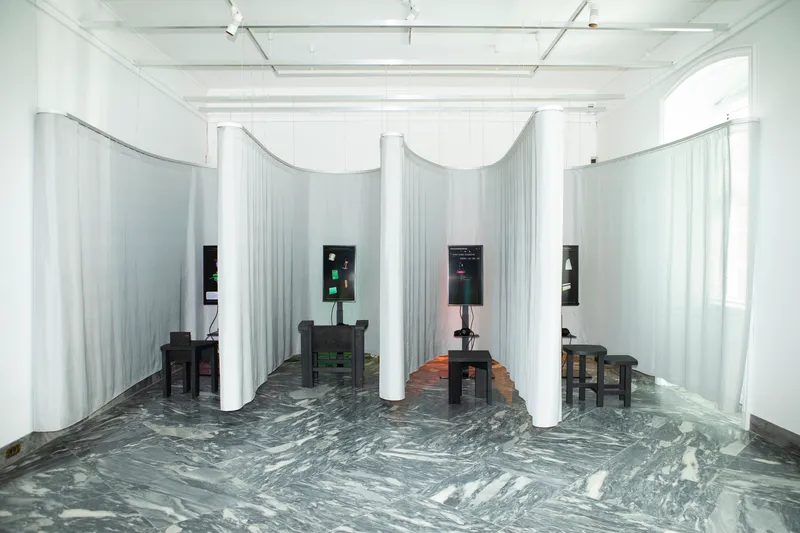
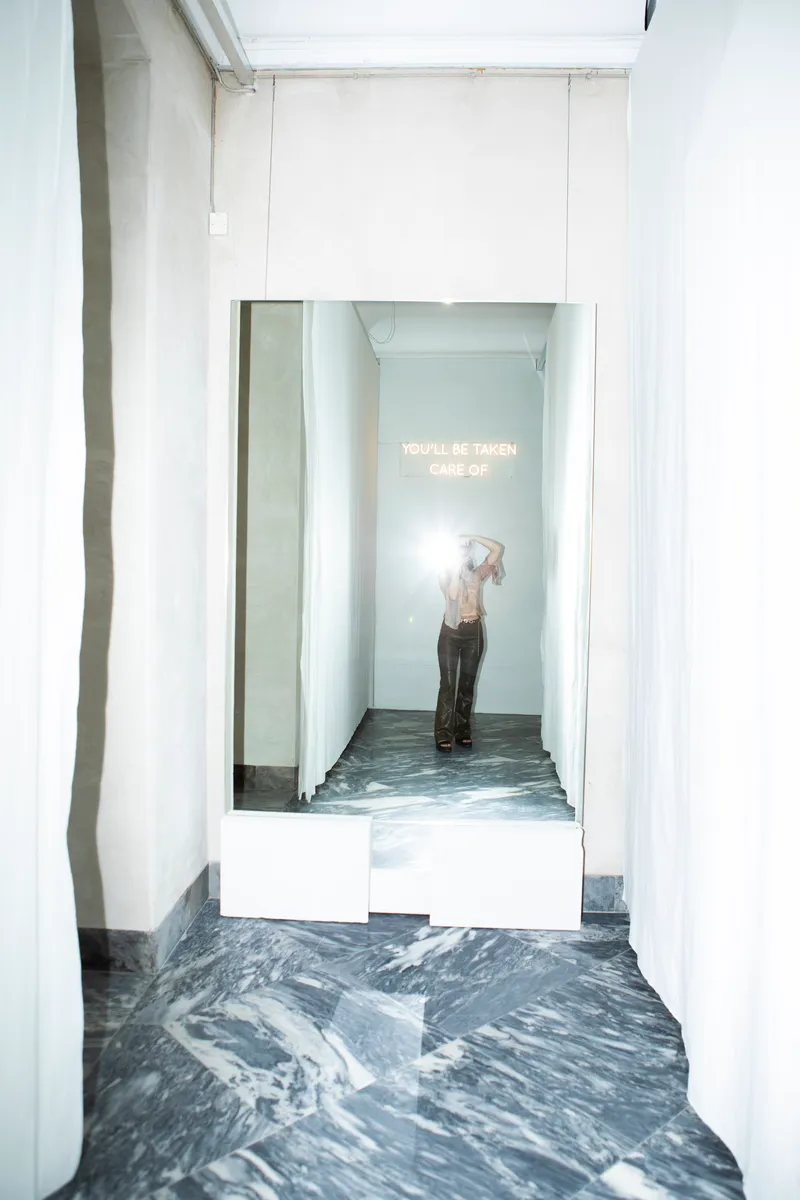
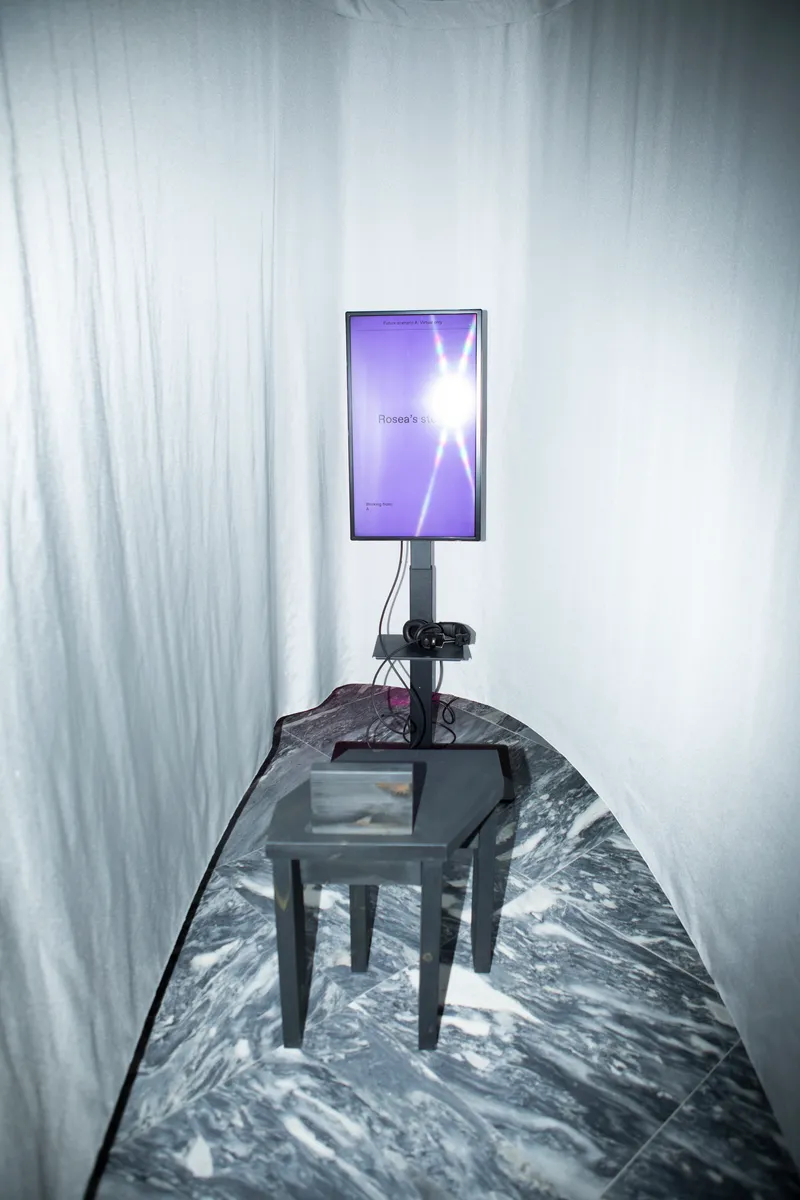
The most immediately legible spatial move is the extensive use of translucent curtain partitions. Rather than building permanent walls within the historic rooms, Spacon & X hung curved screens of sheer white fabric that carve the galleries into intimate zones without blocking sightlines. The curtains soften the track lighting and give the swirling grey marble floors a diffused glow, creating a layered atmosphere that shifts as you walk through.
The effect is deliberately provisional. Curtains can be drawn, re-draped, and repositioned, making the exhibition areas genuinely multifunctional rather than locked into a single configuration. In a building with as much character as the Royal Frederik's Hospital, that lightness of touch prevents the new layer from competing with the old one. It simply occupies the same room.
Industrial Concrete, Decorative Intent
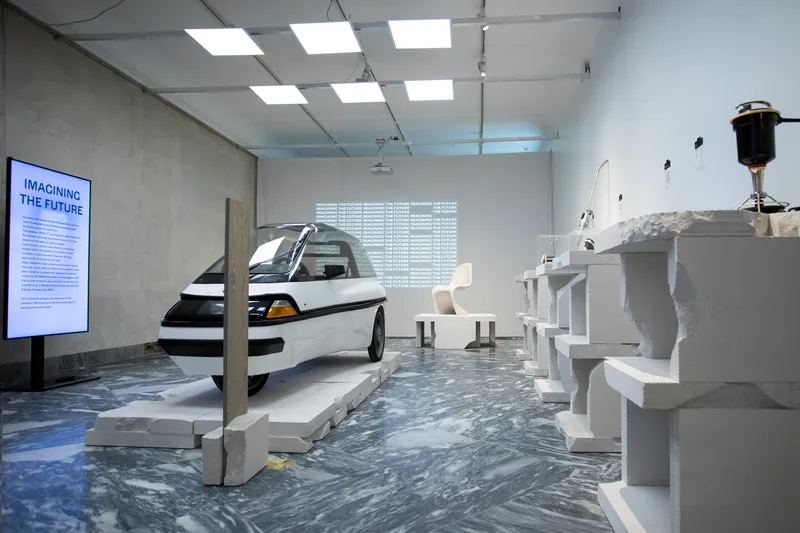
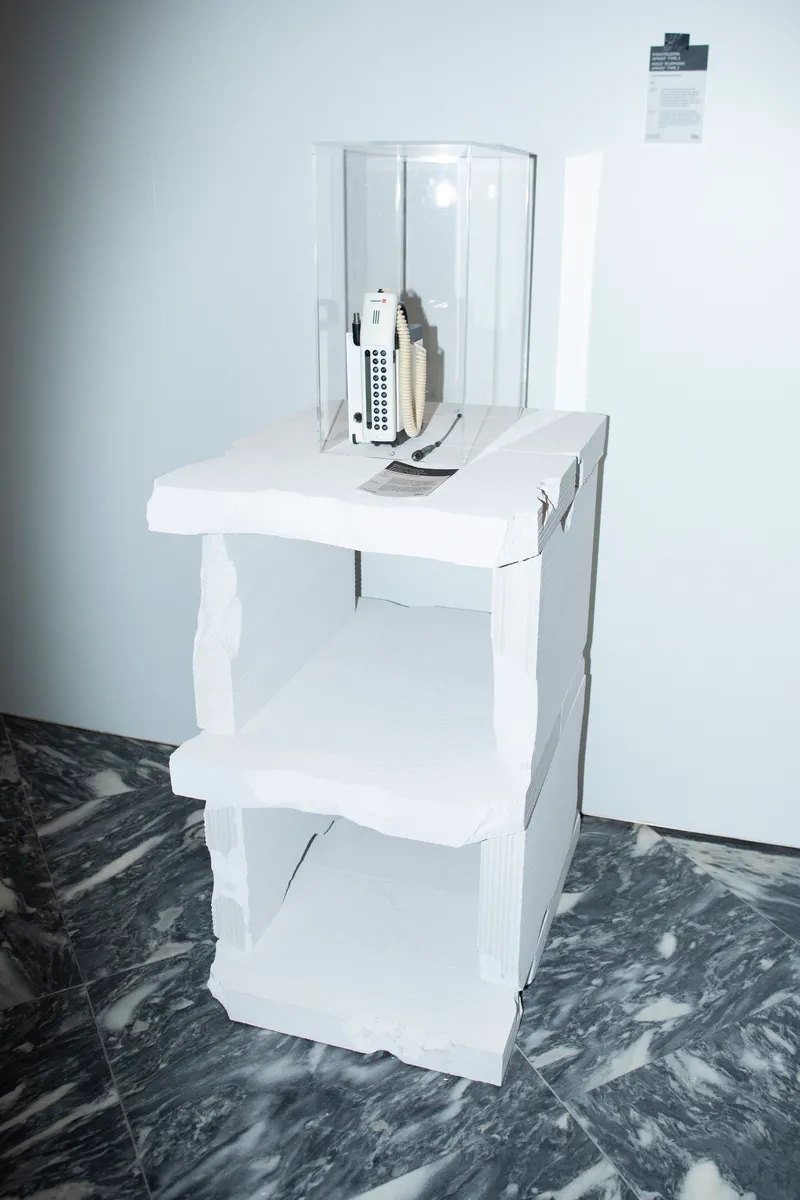
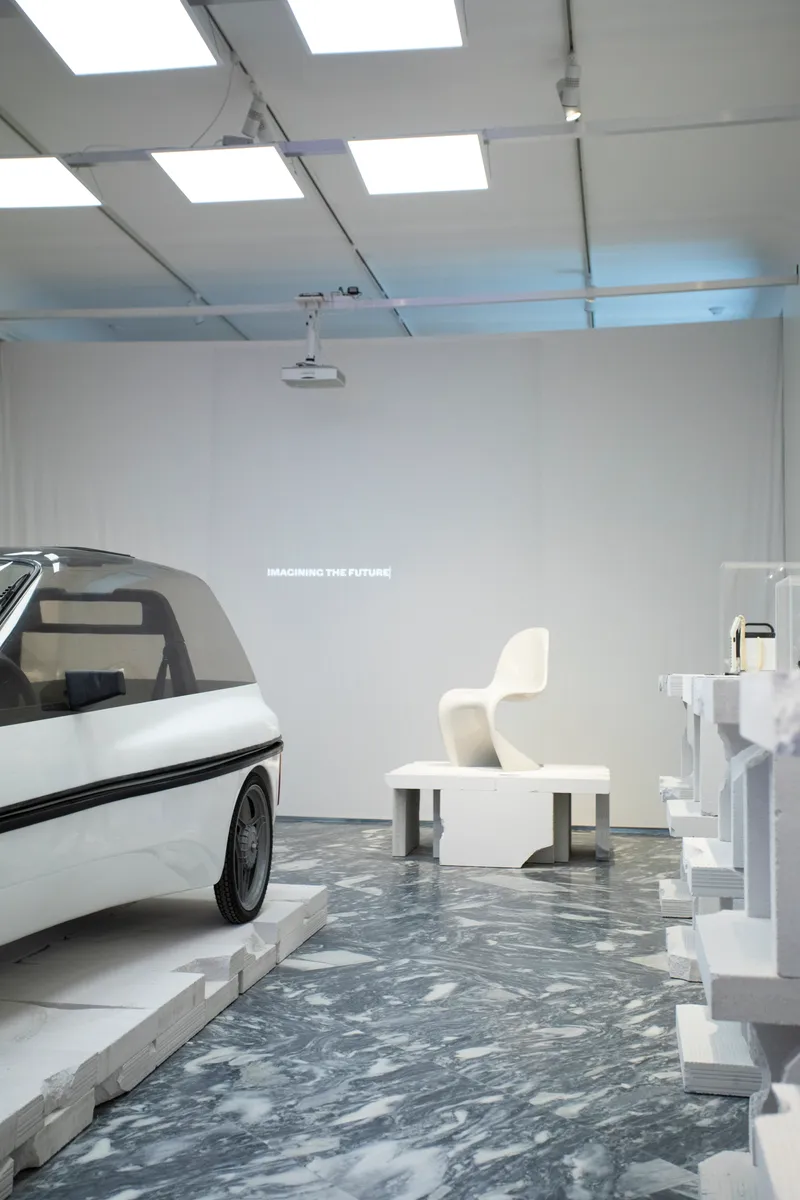
Aerated concrete from the Danish manufacturer H+H, a material you would ordinarily find behind drywall or beneath cladding, is pulled into the foreground as podiums, tables, and display holders. The blocks are crafted with deliberately broken corners, shaped contours, and engraved quotes, turning an insulation product into something that reads as sculptural. Against the museum's polished marble, the rough, porous surfaces of the concrete create a material friction that is the project's most forceful argument.
The white plinths and tiered display stands visible throughout the galleries borrow the same logic: familiar industrial forms given unfamiliar roles. When a concrete block holds a delicate sample or a piece of furniture, the hierarchy between container and content becomes ambiguous. That ambiguity is the point.
Organic Surfaces and Experimental Collaborations
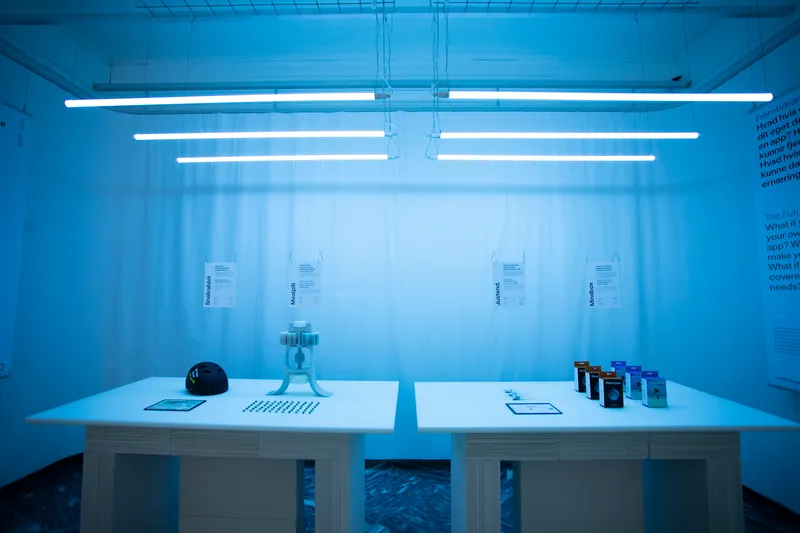
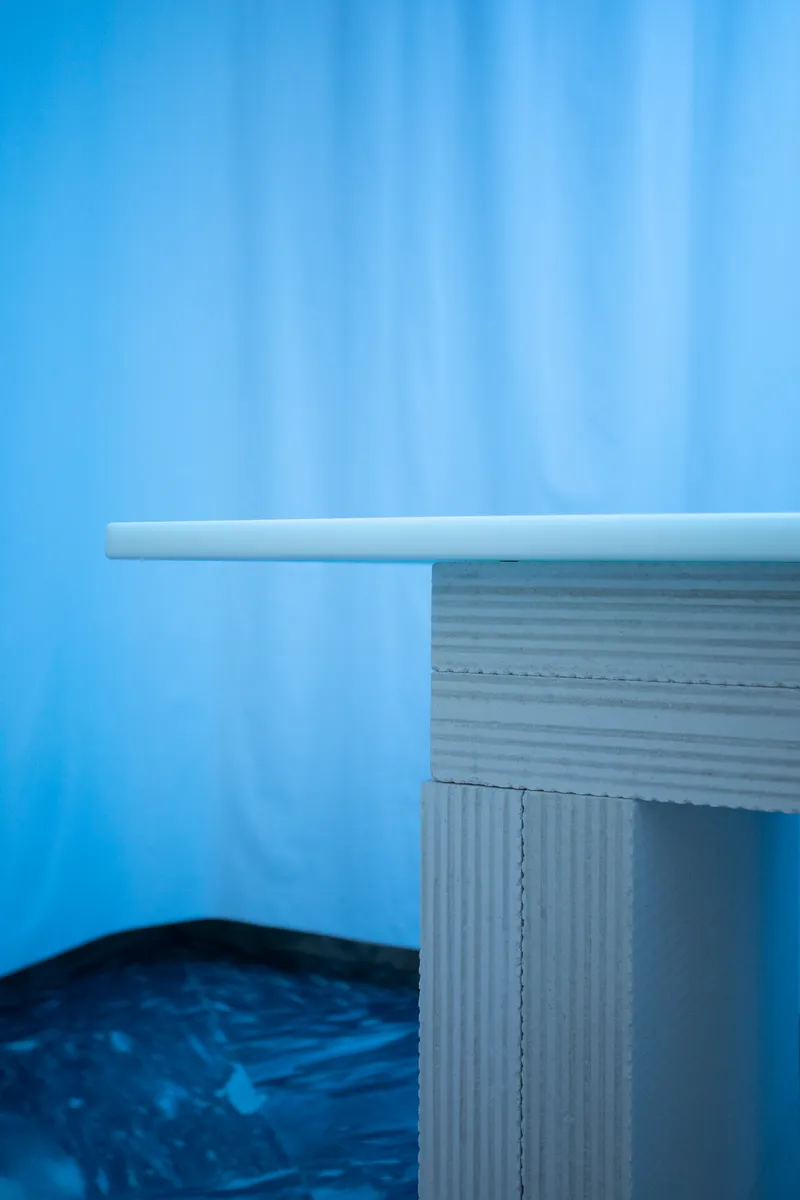
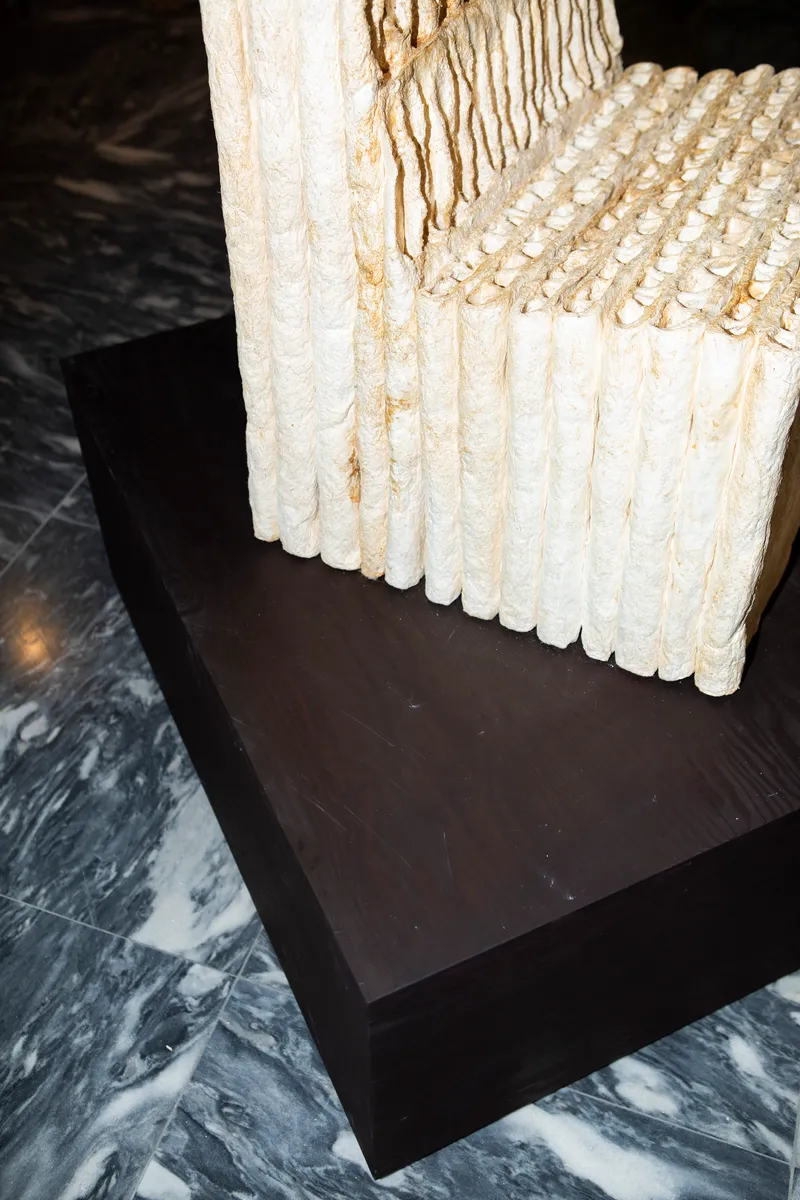
Alongside the hard industrial elements, Spacon & X introduced a parallel material language rooted in organic craft. Pine plywood modules were hand-stained with warm-colored linseed oil sourced from a small enterprise in southern Denmark that still uses traditional recipes. Danish seaweed from the Søuld producer was applied to table and podium surfaces. And a collaboration with Natural Material Studio yielded a mycelium mattress for an oversized daybed that functions as both exhibit and furniture.
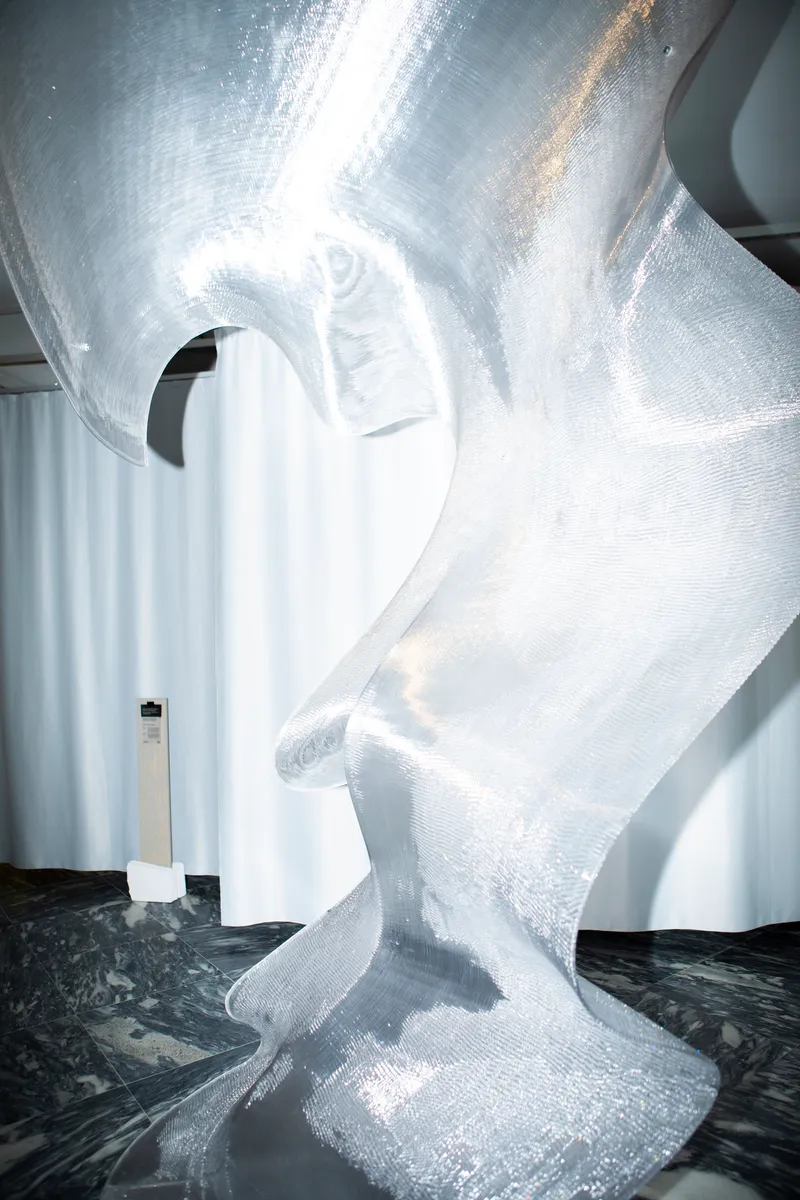
The corrugated cardboard table edges, the textured cylindrical samples resting on dark plinths, the translucent sculptural columns with spiral ridges: each element was sourced through a network of innovative material suppliers rather than from a single catalogue. The sourcing strategy itself becomes a curatorial statement, arguing that design practice is inseparable from supply chains and material economies.
Color, Light, and the AKUT Space
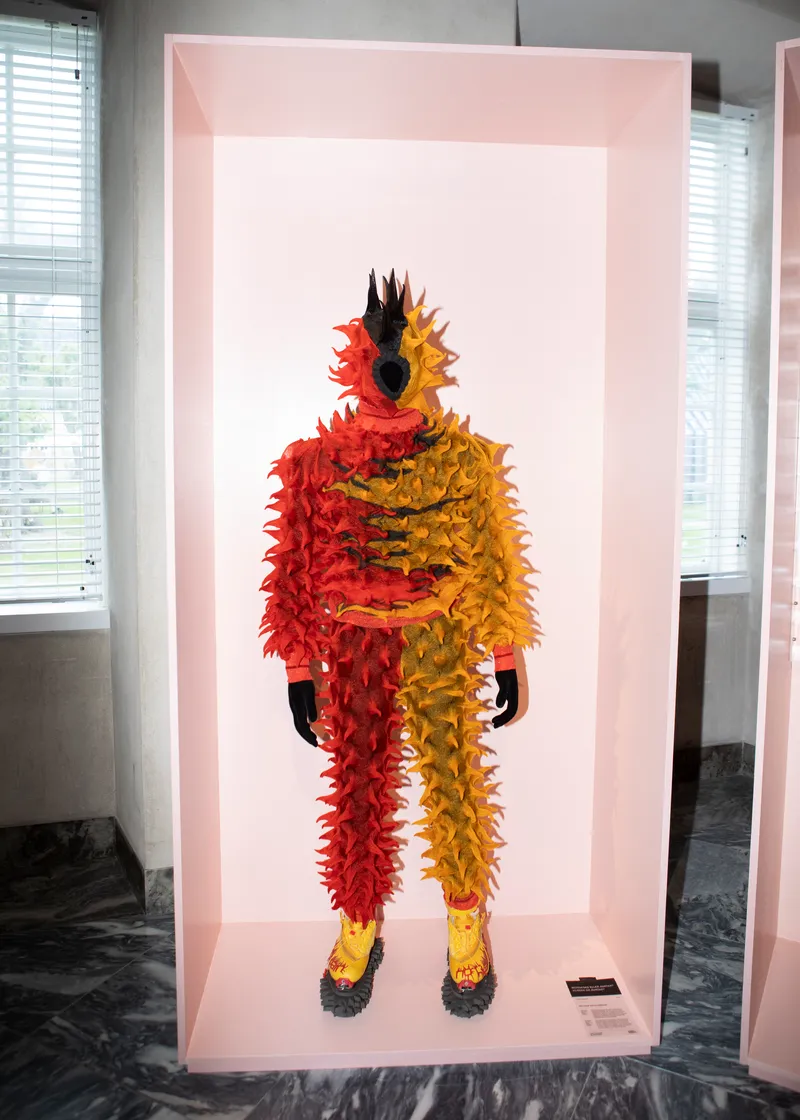
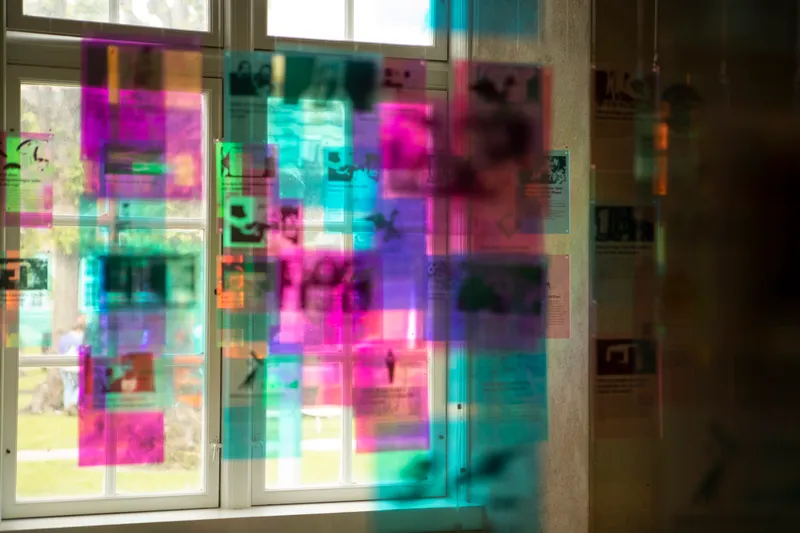
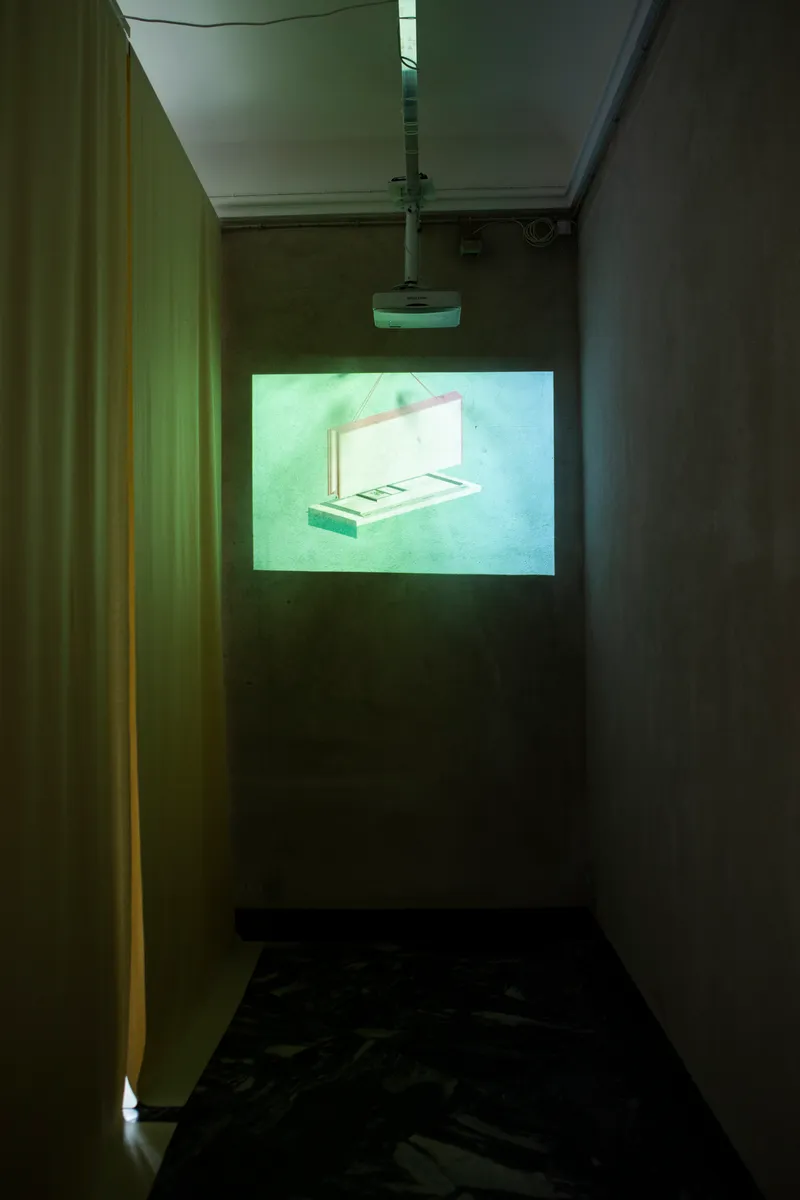
Not every zone plays it cool. The AKUT exhibition area, designed around three multifunctional modules that can be placed, rotated, and recombined for diverse purposes, allows more theatrical staging. A feathered costume in red and yellow sits inside a pink-lit alcove. Layered translucent colored panels mounted on windows create overlapping magenta and cyan reflections. A projected image of an open sample case bathes a narrow corridor in green light.
These moments of chromatic intensity are deliberate counterpoints to the otherwise restrained palette. They prove that the design team understood something often lost in museum renovations: a single atmosphere becomes monotonous. By concentrating bold color in specific alcoves, Spacon & X give the exhibition a rhythm of compression and release that keeps visitors alert.
Furniture as Exhibit, Exhibit as Furniture
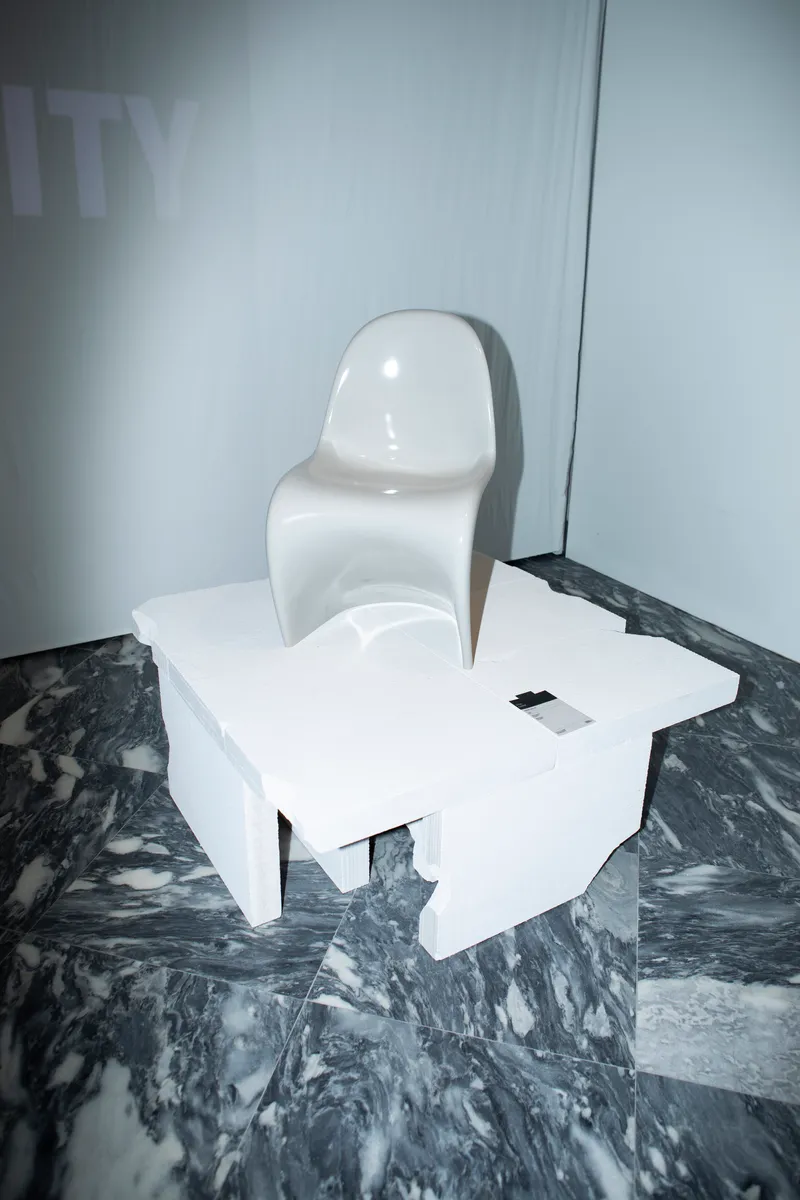
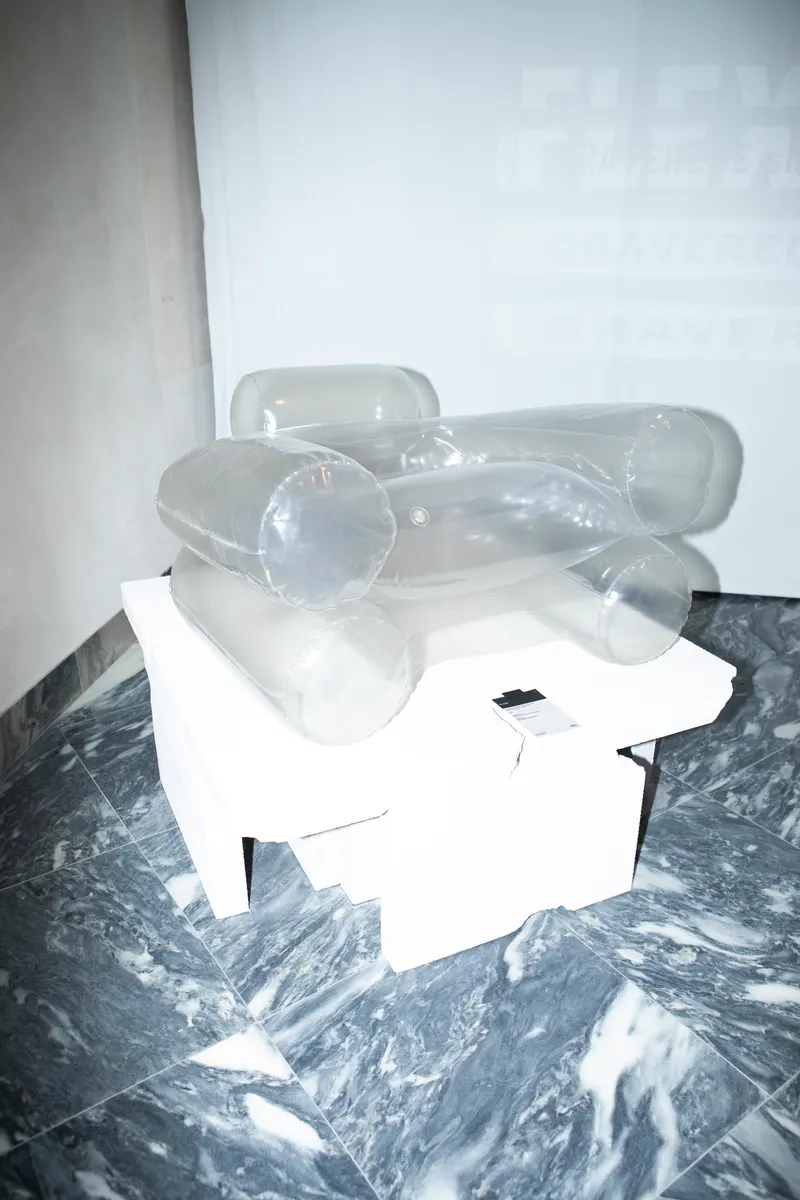
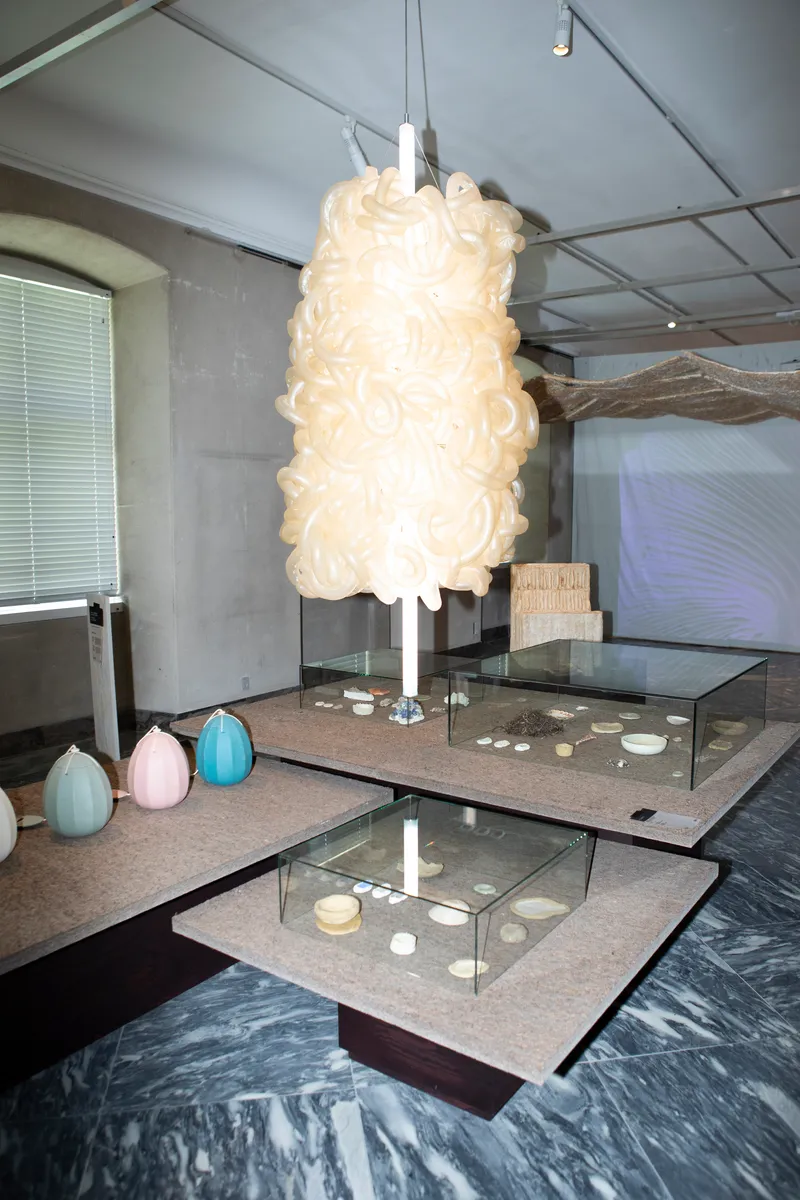
One of the more quietly subversive moves is the way display furniture and displayed objects trade places. A white molded chair and geometric table sit on the marble floor near a pale curtain, but whether they are part of the exhibition infrastructure or the exhibition itself is left genuinely unclear. Inflatable sculptures rest on cubic pedestals. Terrazzo display tables beneath a suspended cream pendant light could belong to either a showroom or a living room.
For a design museum, this blurring makes conceptual sense. The institution's subject matter is, after all, the designed object. When the boundary between the vitrine and the artifact dissolves, the visitor is forced to look at everything with the same critical attention. It is a small trick, but an effective one.
Information as Spatial Element
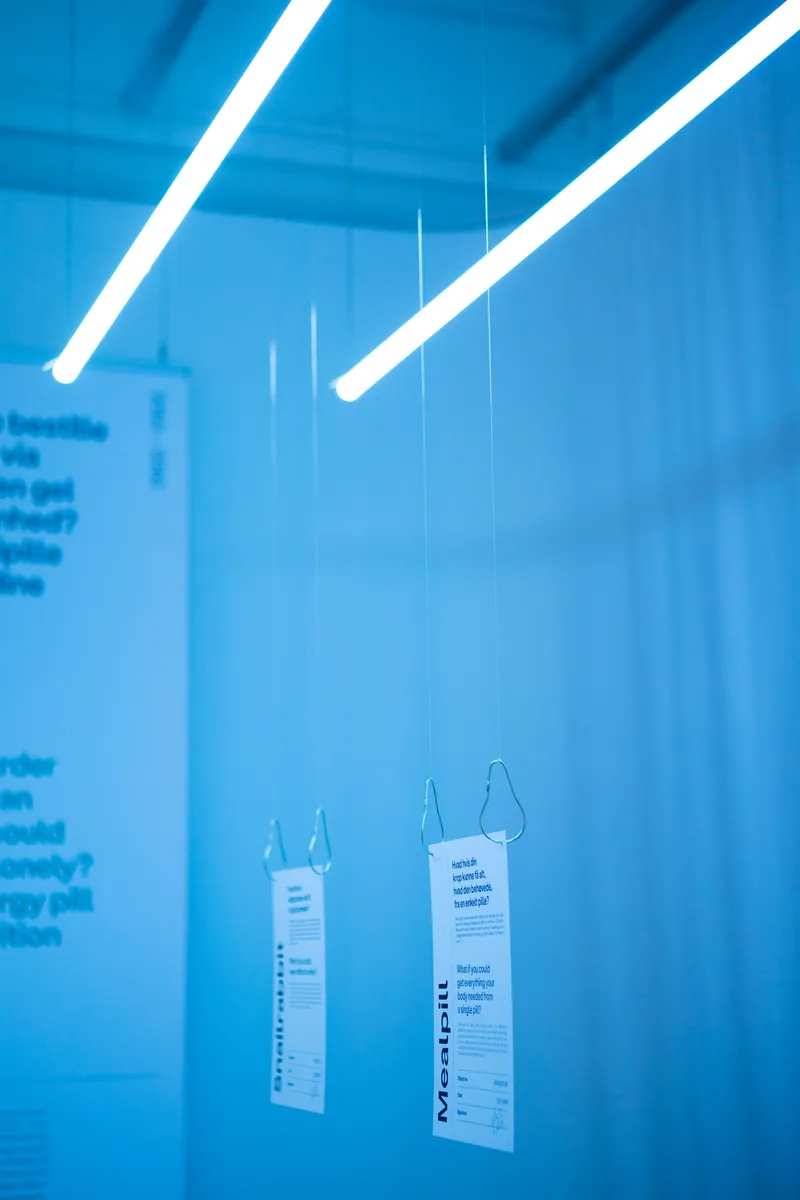
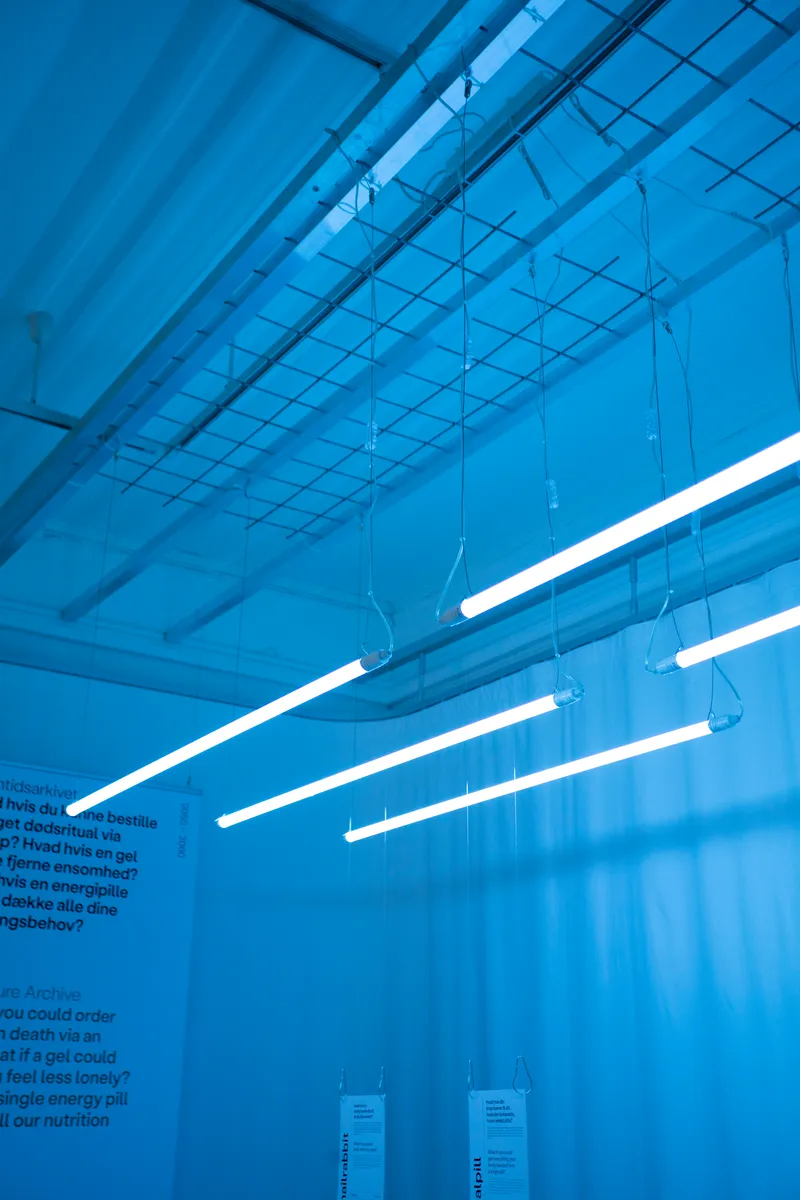
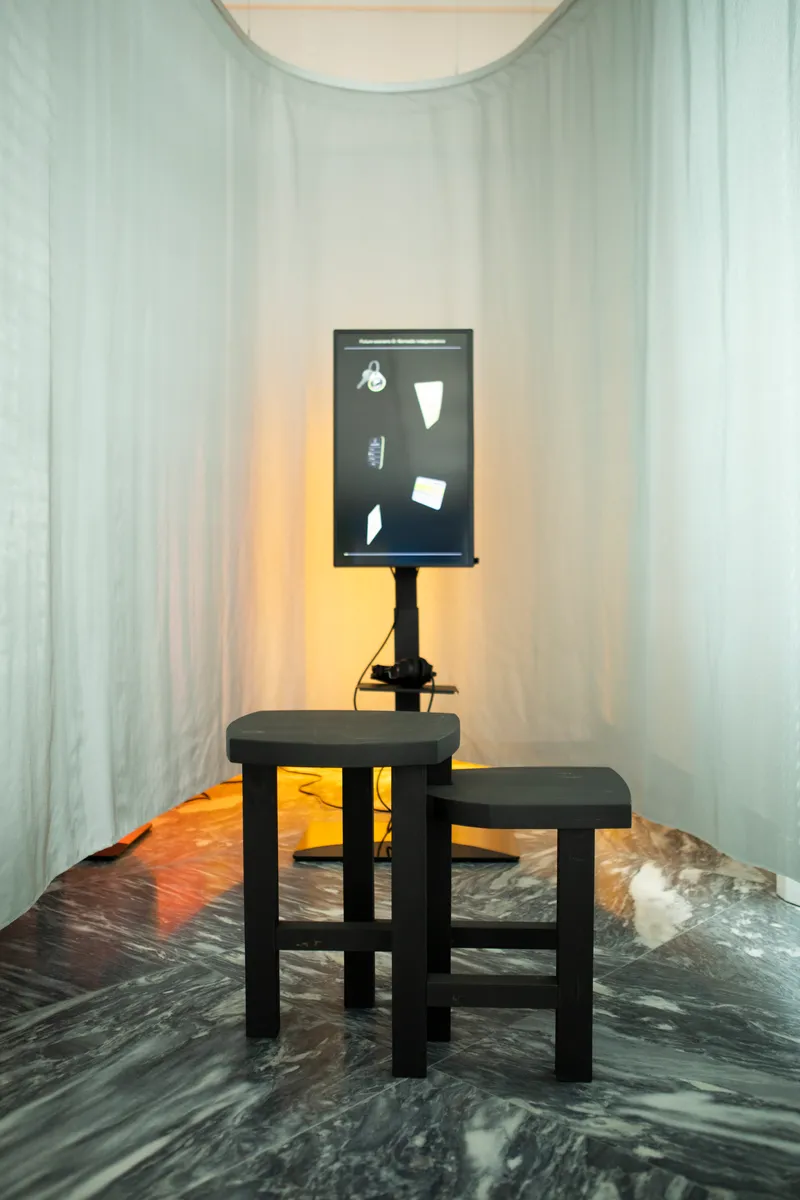
Signage and information graphics are not afterthoughts here. Suspended information tags hang below diagonal pendant light tubes, and text is printed directly onto the sheer curtains. The exposed gridded ceiling becomes a graphic field in its own right, with linear fluorescent fixtures doubling as wayfinding devices. Even the black display panels and stools in curtained alcoves, backlit in warm tones, treat didactic content as something worth staging.
This integration of graphic and spatial design reflects the fact that Spacon & X approaches projects as total environments rather than as architecture with graphics bolted on afterward. The information layer does not sit on top of the space; it participates in making it.
Sculptural Encounters
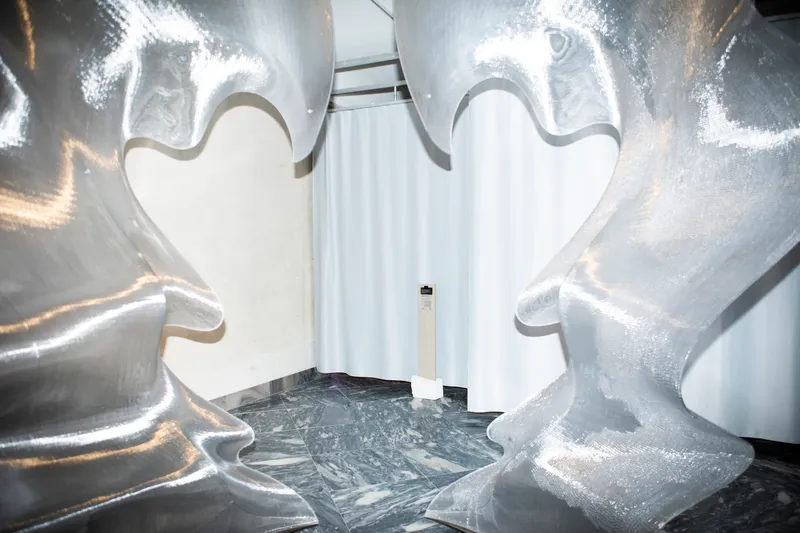
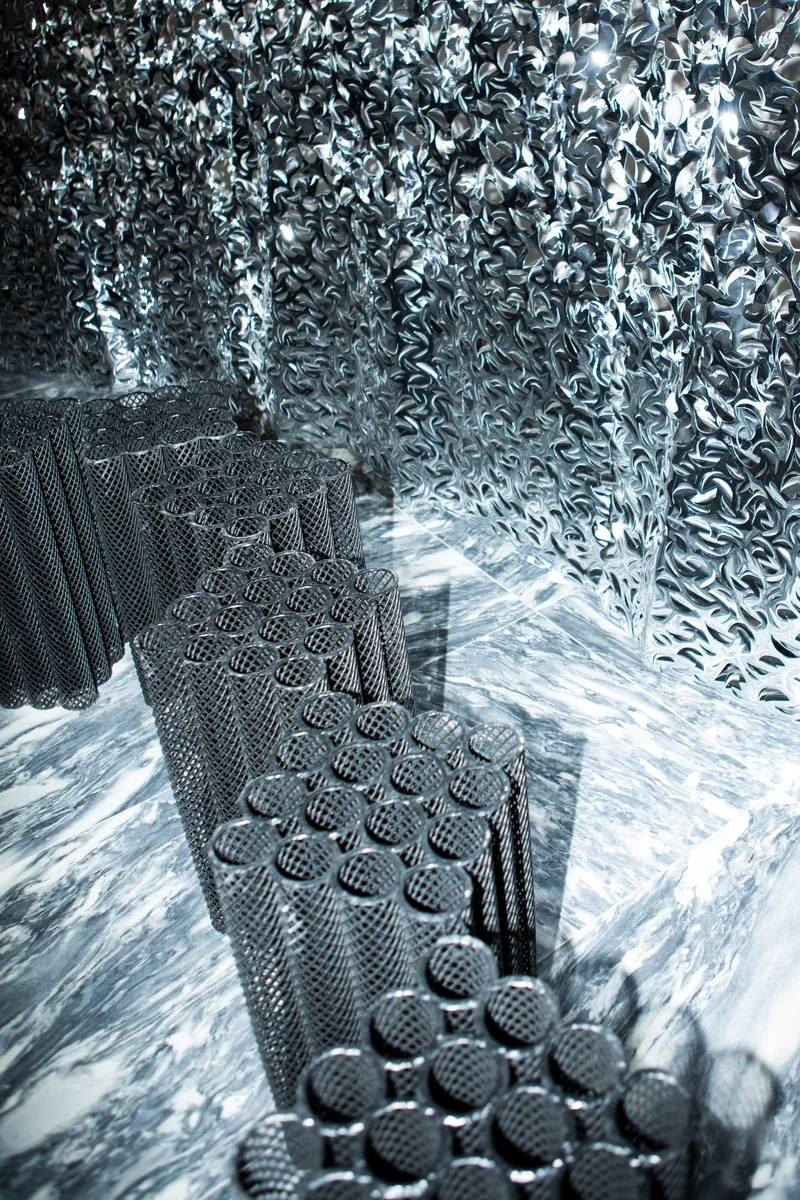
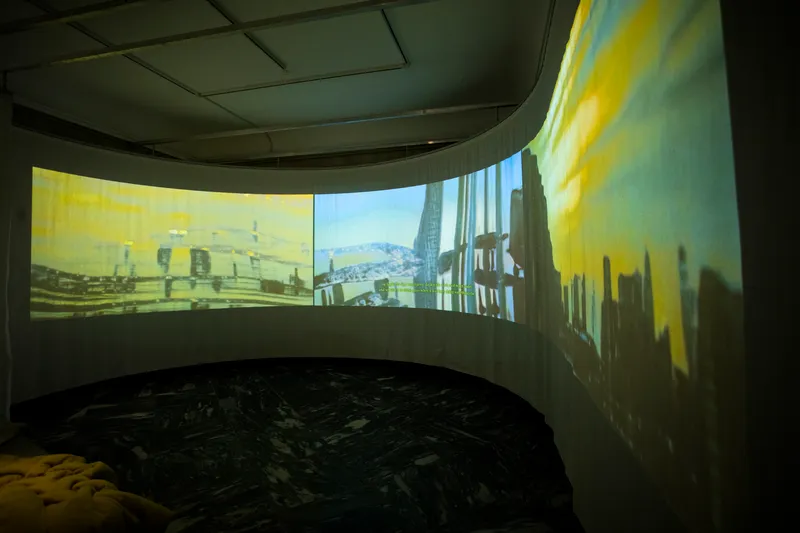
Several moments in the exhibition achieve a near-installation quality. Inflated metallic sculptural forms cluster in a corner against a white curtain backdrop, reading more like contemporary art than product display. A textured black mesh staircase ascends through a reflective metallic chain-link wall, turning a functional element into a visual event. A curved projection screen displays urban imagery in a darkened room, the marble floor catching its light.
These set pieces prevent the galleries from settling into a predictable rhythm of table, object, label. They inject a sense of encounter, which is precisely the emotional register the design team was after. Presence and awakening are difficult to engineer, but surprise helps.
Plans and Drawings
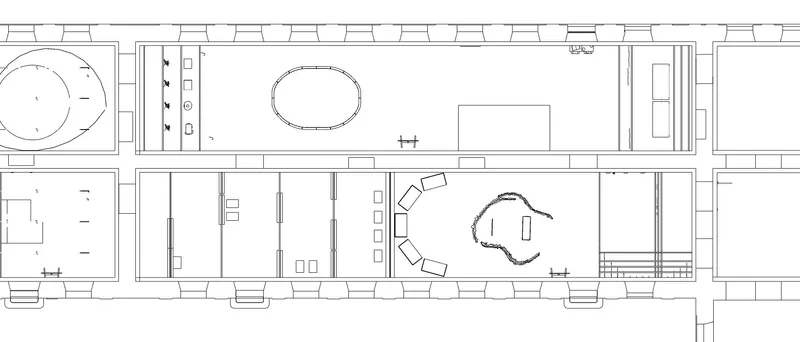
The floor plan reveals the linear gallery organization that Spacon & X inherited from the historic hospital layout, with rooms arranged in sequence along a central axis. A curved seating area and a circular element punctuate the otherwise rectangular geometry, introducing softer forms that echo the curtain partitions visible in the photographs. The plan also confirms the project's modular logic: individual zones are defined by furniture clusters and fabric screens rather than by fixed walls, allowing the museum to reconfigure exhibitions without structural intervention.
Why This Project Matters
Exhibition design is often treated as a secondary discipline, something that happens after the real architecture is finished. Spacon & X's work at Design Museum Denmark pushes back against that hierarchy. By importing materials from construction, agriculture, and biotechnology into one of Europe's most important rococo interiors, the studio demonstrates that the encounter between old and new need not be timid or reverential. Aerated concrete and seaweed are not respectful choices in the conventional sense, but they are honest ones, and their strangeness in this context makes the historic rooms more visible, not less.
The project also models an approach to sustainability that goes beyond material substitution. Rather than swapping conventional display furniture for greener equivalents, Spacon & X rethought the entire supply chain, collaborating with small Danish producers and experimental material studios. The result is a 700 m² argument that design museums should not just display sustainable practice. They should embody it in their own infrastructure.
Design Museum Denmark, exhibition design by Spacon & X, Copenhagen, Denmark. 700 m², completed 2022. Photography by Hedda Rysstad.
About the Studio
Share Your Own Work on uni.xyz
If projects like this are the kind of work you want to make, uni.xyz is a place to publish your own, find collaborators, and enter design competitions.




Popular Articles
Popular articles from the community


Conexión: Biophilic Design Reimagines High-Rise Living in Hong Kong
Conexión reimagines high-rise living in Hong Kong through biophilic design, green facades, shared spaces, daylight, water and nature within.

The Earth Pod: 3D Printed Homes for Resilient Refugee Communities
The Earth Pod reimagines refugee housing through 3D printed homes made from clay, combining resilience, self-sufficiency, and rapid shelter.

The Musturak Paradise: Senior Living Architecture for a Connected Future in Temara, Morocco
The Musturak Paradise reimagines senior living architecture in Temara via private homes, social spaces, culture, community, and shared care.

Co-life: Sustainable Architecture for Age-Friendly Community Living
Co-life reimagines sustainable architecture for seniors through courtyards, rammed earth, shared gardens, and spaces designed for belonging.


Similar Reads
You might also enjoy these articles

Bao Huynh Watercolor Atelier: A Serene Art Retreat in Hội An
Bao Huynh Watercolor Atelier in Hội An blends multifunctional art spaces, sustainable design, local materials, and family-friendly living in a serene environment.

Atelier Macri Concept Store Interior Design by CASE-REAL
Atelier Macri store features a "ko" counter, walnut wood details, cork displays, blending retail, gallery, and seamless customer experiences.

Manuel Vargas Izquierdo Stadium and High-Performance Sports Center: Architectural Excellence in Jalpa de Méndez
The Manuel Vargas Izquierdo Stadium blends sustainable design, inclusive sports facilities, and cultural-inspired architecture, revitalizing Jalpa de Méndez’s public spaces.

KAKR Buluh Awar Hall: Revitalizing Community and Ecology Through Bamboo Architecture
Community built bamboo hall revitalizes Buluh Awar village, empowering youth, restoring ecology, celebrating vernacular craftsmanship through sustainable architecture and culture.


Explore Cultural Architecture Competitions
Discover active competitions in this discipline


Challenge to design luxury tourism on rails


VR headsets Storefront design competition


Bring back Drive In's

Designing a staircase for a client
Comments (0)
Please login or sign up to add comments
No comments yet. Be the first to comment!