

Sportbad am Rabet: Modular Innovation and Social Infrastructure in Leipzig
GMP Architects delivers Leipzig's Passive House swimming facility through prefabricated concrete modules, combining transparency, sustainability, and efficient construction for community engagement.


Introduction: Public Architecture as Social Catalyst
In Leipzig's evolving Neustadt district, the Sportbad am Rabet represents a fundamental rethinking of how public swimming facilities can be designed, constructed, and integrated into urban fabric. Completed in 2025 by renowned German firm gmp Architects (von Gerkan, Marg and Partners), this 4,853-square-meter indoor swimming complex demonstrates that essential civic infrastructure can simultaneously achieve functional excellence, construction efficiency, environmental sustainability, and social connectivity—goals often considered mutually exclusive.
The facility addresses a pressing need in Leipzig's densely populated urban neighborhoods: accessible indoor swimming infrastructure serving schools, sports clubs, and recreational users year-round. Yet rather than treating this as merely a technical program to be efficiently housed, gmp Architects recognized the opportunity to create a social meeting place—a civic anchor that brings together people of all ages and backgrounds while contributing positively to neighborhood identity and urban quality.
GMP Architects delivers Leipzig's Passive House swimming facility through prefabricated concrete modules, combining transparency, sustainability, and efficient construction for community engagement.
Reimagining Public Swimming Infrastructure Through Modular Construction
Location: Neustadt District, Leipzig, Saxony, GermanyArchitects: gmp Architects (von Gerkan, Marg and Partners)Year Completed: 2025Total Area: 4,853 m²Photography: Marcus BredtSite Supervision: dellori deda ArchitectsStructural Engineering: HBI Hartwich Bernhardt EngineersHVAC Engineering: Bauconzept PlanungsgesellschaftBuilding Physics: vRP von Rekowski and PartnerLandscape Design: Einenkel Landscape ArchitectureProject Type: Indoor public swimming facilityPerformance Standard: Passive House
Urban Context: Leipzig's Neustadt District
Post-Reunification Urban Development
Leipzig, Saxony's largest city, has experienced remarkable transformation since German reunification in 1990. Once a declining industrial center in the former East Germany, the city has emerged as one of Germany's fastest-growing urban areas, attracting young professionals, families, and creative industries through relatively affordable housing, cultural vitality, and improving infrastructure.

The Neustadt (literally "new city") district exemplifies these changes. Located north of Leipzig's historic center, Neustadt features late nineteenth and early twentieth-century residential blocks interspersed with commercial corridors, parks, and civic institutions. The area has seen significant reinvestment, gentrification, and demographic change—processes bringing both opportunities and challenges as long-established communities integrate with newcomers.
The Site: Otto-Runki-Platz
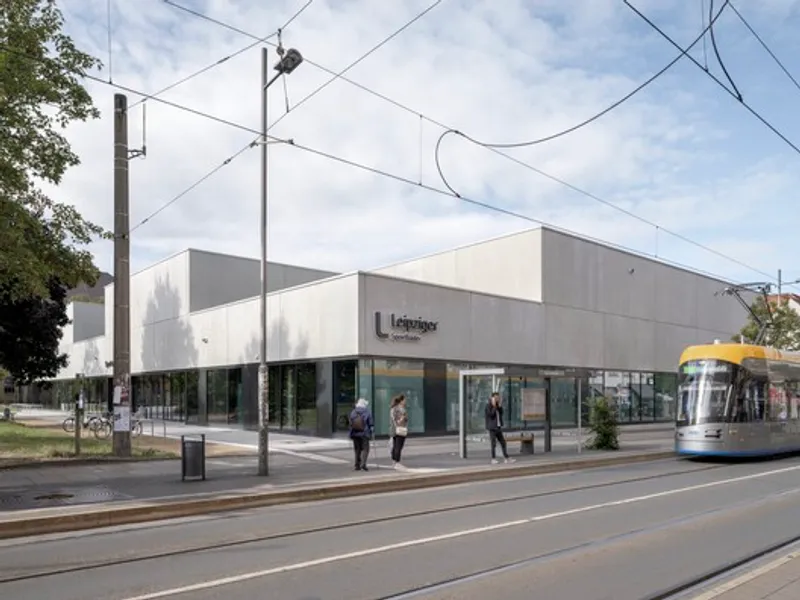
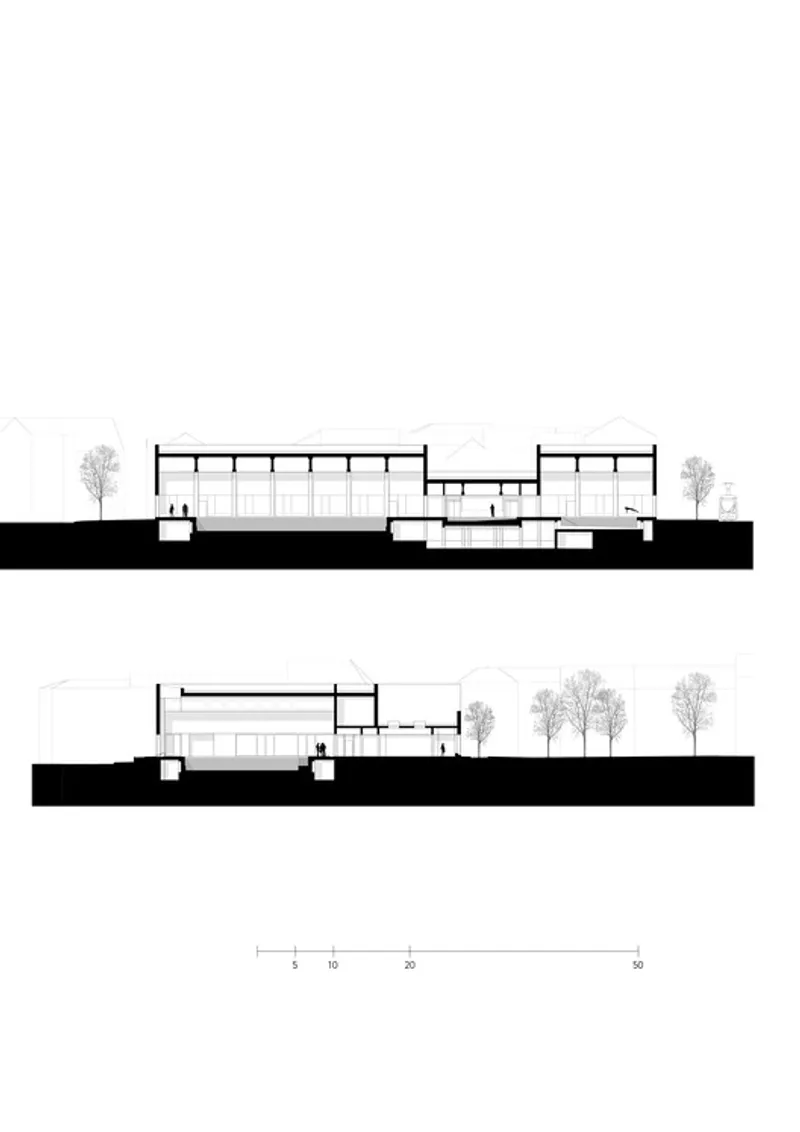
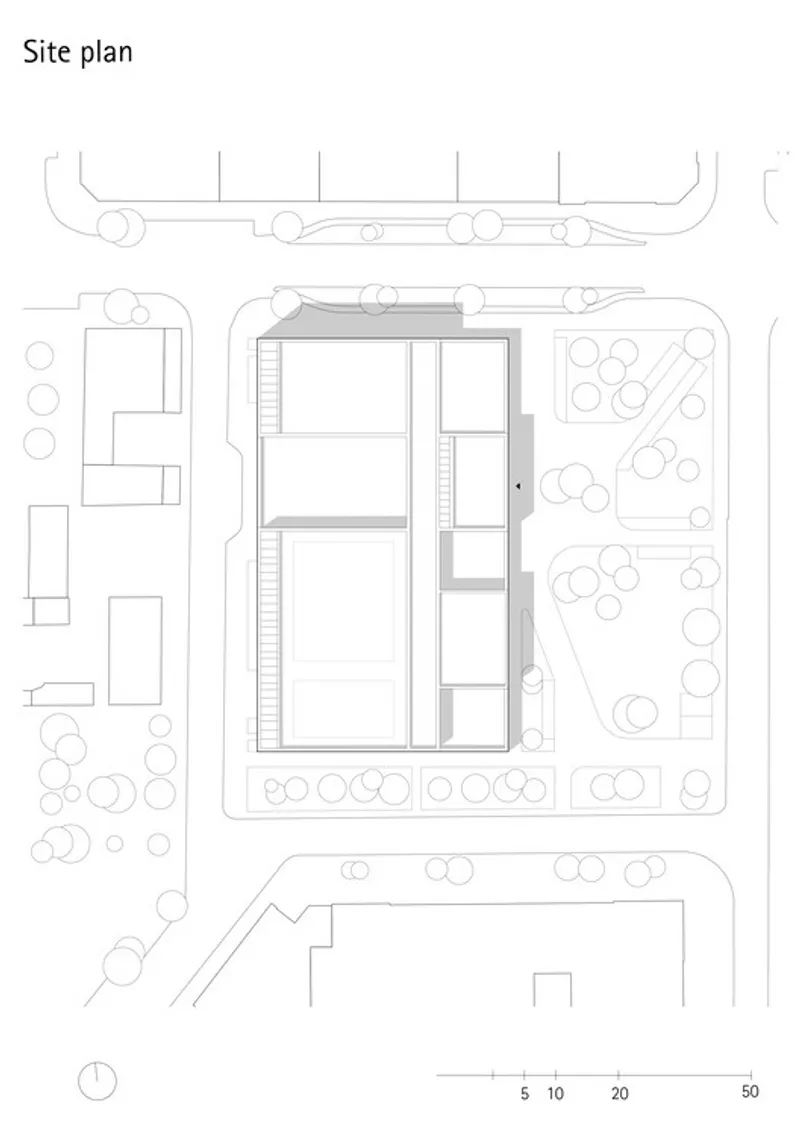
The Sportbad am Rabet occupies Otto-Runki-Platz in the heart of Neustadt, positioned strategically between two contrasting urban conditions. To one side lies Eisenbahnstraße—a major urban traffic corridor carrying significant vehicular movement, noise, and commercial activity. To the other extends Rabet Park—a green space providing neighborhood residents with recreational amenities, natural respite, and social gathering opportunities.
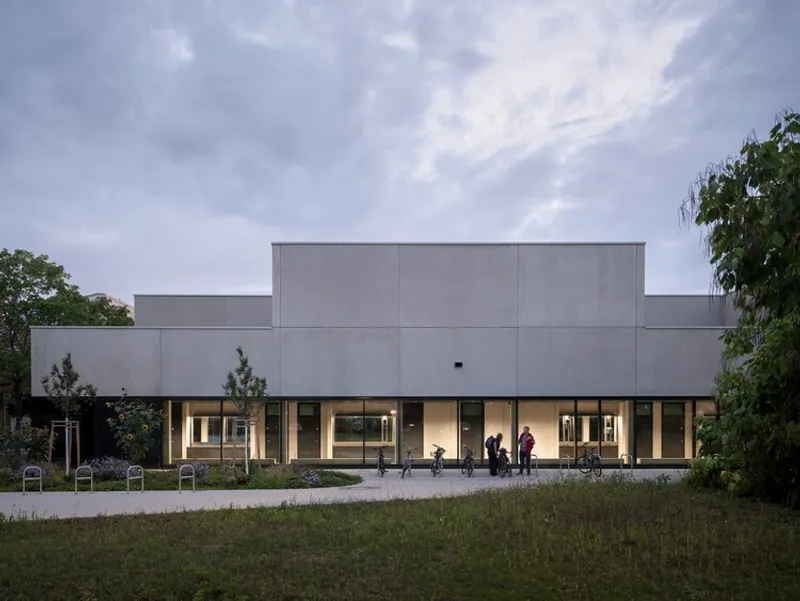
This intermediate position between infrastructure corridor and park presents both challenge and opportunity. The site experiences traffic noise and urban intensity yet enjoys proximity to green space and established tree cover. The architectural response needed to mediate these conditions, creating a building that engages productively with both urban energy and natural calm.
Design Philosophy: Modular Construction as Social Architecture
The Modular System
The defining innovation of the Sportbad am Rabet involves its modular construction system—an approach with profound implications extending beyond mere construction efficiency to fundamentally shape the building's architectural character and urban presence.
As Stephan Schütz, Executive Partner at gmp, emphasizes: "In a number of ways, the Sportbad am Rabet sets an example for how to build simply in our time." This simplicity represents sophisticated achievement rather than crude reduction—the result of systematizing design and construction to optimize efficiency while maintaining quality and architectural expression.
Prefabricated Concrete Elements
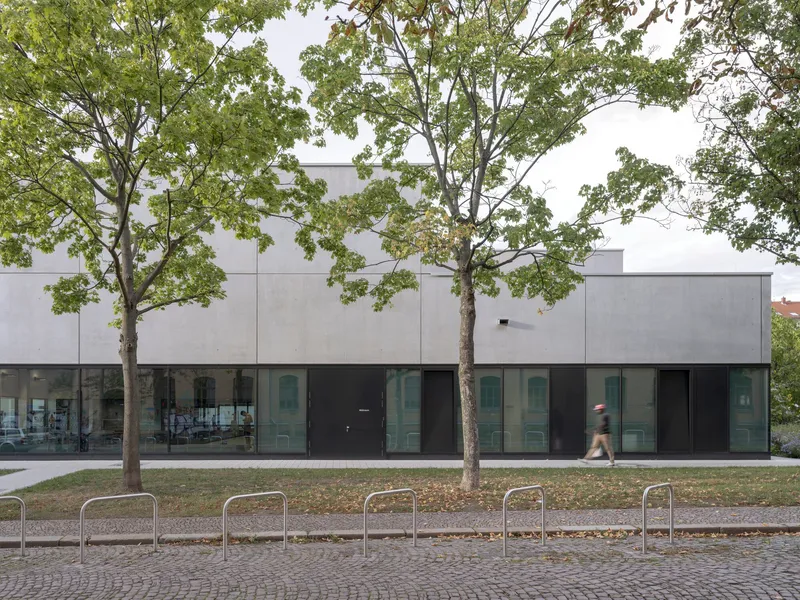
The system employs fair-faced exterior and interior exposed concrete elements with integrated insulation—components precisely prefabricated in factory conditions and assembled on-site with exact fits. This approach offers multiple advantages:
Quality Control: Factory fabrication ensures consistent quality, precise dimensions, and optimal curing conditions impossible to achieve with traditional cast-in-place concrete.
Construction Speed: Prefabricated elements dramatically reduce on-site construction time, minimizing project duration and accelerating facility availability.
Weather Independence: Factory production proceeds regardless of site weather conditions, eliminating weather-related delays common in conventional construction.
Reduced Site Impact: Shorter construction duration and elimination of on-site concrete mixing and curing significantly reduce construction noise, dust, and disruption—particularly important in dense urban neighborhoods.
Waste Reduction: Precise factory fabrication minimizes material waste compared to site construction, where cutting, fitting, and errors generate substantial waste streams.
Skilled Labor Optimization: Factory production leverages specialized equipment and concentrated expertise more efficiently than dispersed site work.
Fair-Faced Concrete Aesthetic
The decision to leave concrete surfaces exposed—"fair-faced" in architectural terminology—serves aesthetic, functional, and economic purposes simultaneously:
Architectural Expression: Exposed concrete honestly expresses the building's structural and material reality rather than concealing it behind applied finishes.
Durability: Concrete surfaces withstand the humid, chlorinated atmosphere of swimming facilities better than many finish materials, reducing maintenance requirements.
Thermal Mass: Exposed concrete provides beneficial thermal mass that moderates temperature swings and reduces mechanical conditioning loads.
Acoustic Performance: Concrete surfaces can be textured for favorable acoustic properties, important in reverberant pool environments.
Economic Efficiency: Eliminating applied finishes reduces material costs, construction complexity, and future maintenance.
Material Reduction: The consistent reduction of materials and components to essentials serves as guiding principle throughout the project, effectively minimizing resource use while achieving architectural quality.
Interior Spaces: Function and Atmosphere
Material Continuity
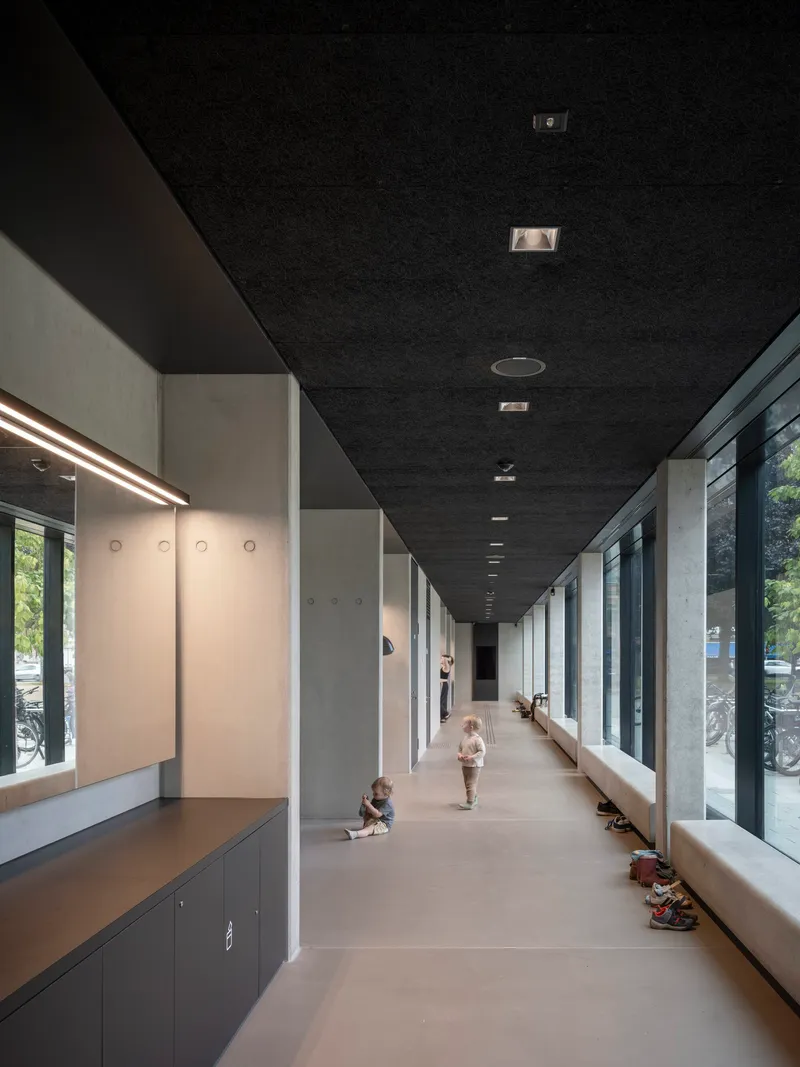
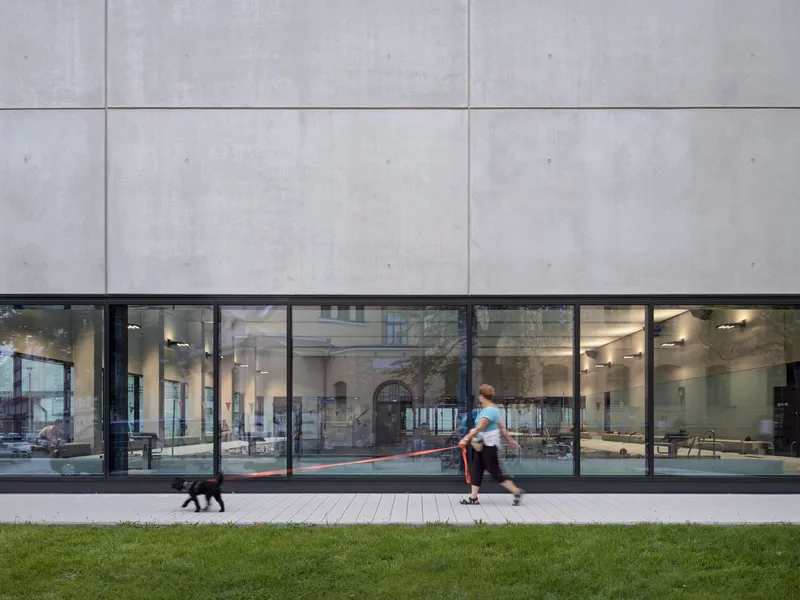
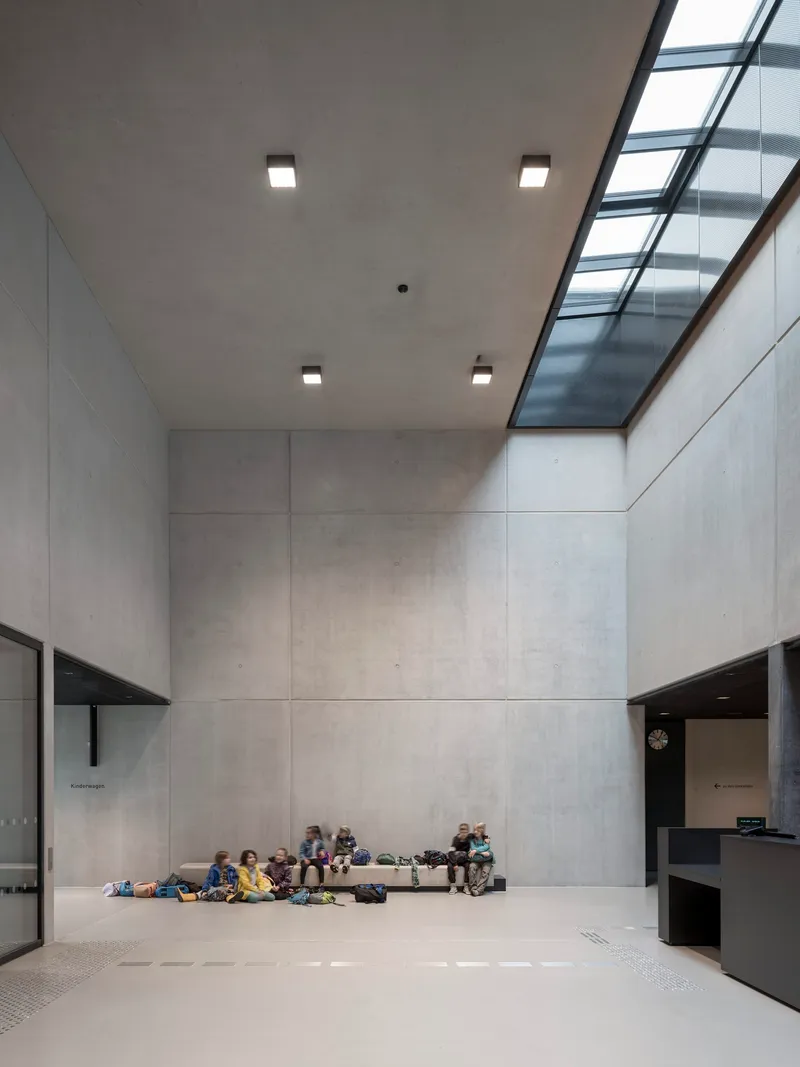
Interior spaces continue the exterior vocabulary of glass and fair-faced concrete, creating coherent material experience from outside through inside. This consistency reinforces the building's honest expression of its construction system and materials.
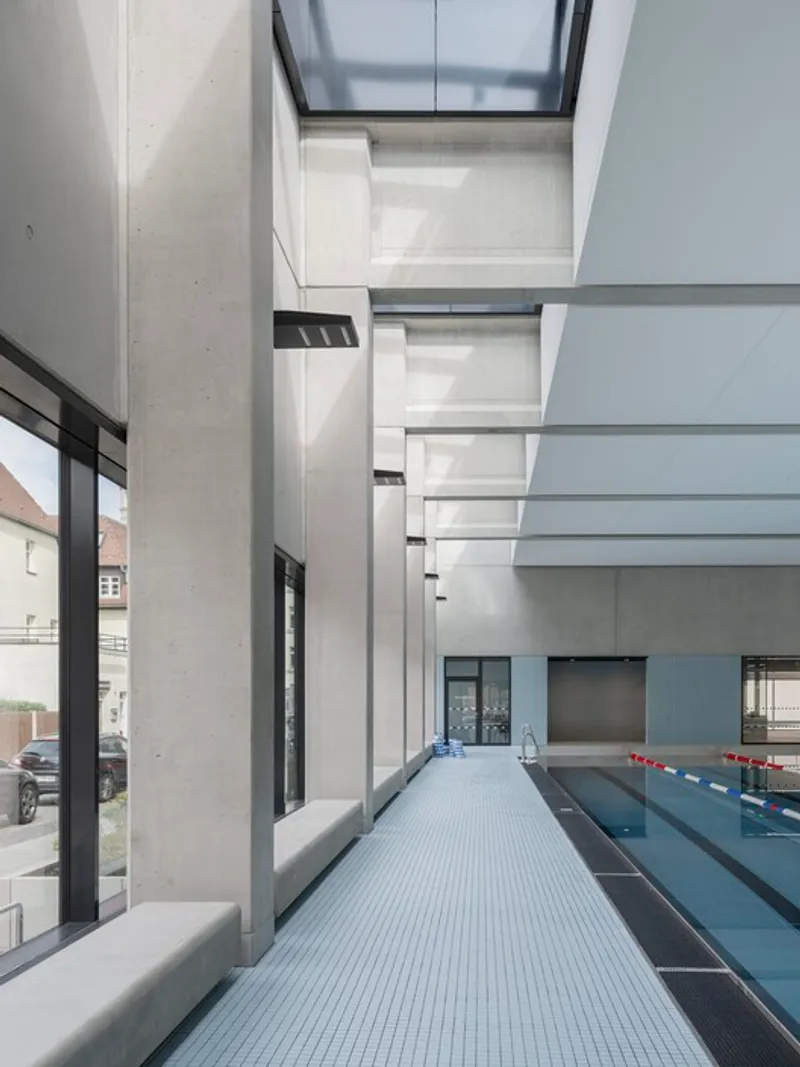
Turquoise wall tiles introduce color while picking up and continuing the horizontal line of fenestration—a design detail that creates visual rhythm, provides durable finish appropriate to pool environment, and references traditional swimming pool aesthetics where tile has long served both functional and decorative purposes.
Varied Pool Zones
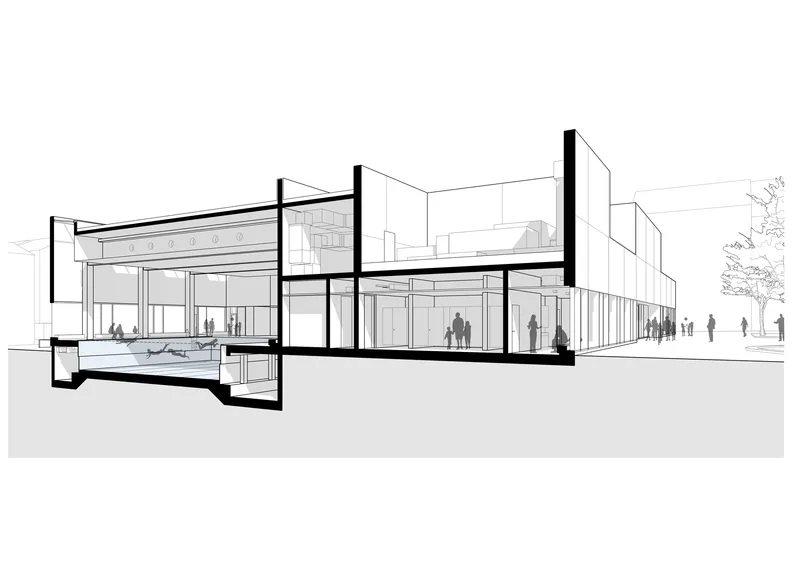
High ceilings distinguish different swimming areas, creating spatial hierarchy that helps users orient themselves while accommodating the varied clearances required by different activities:
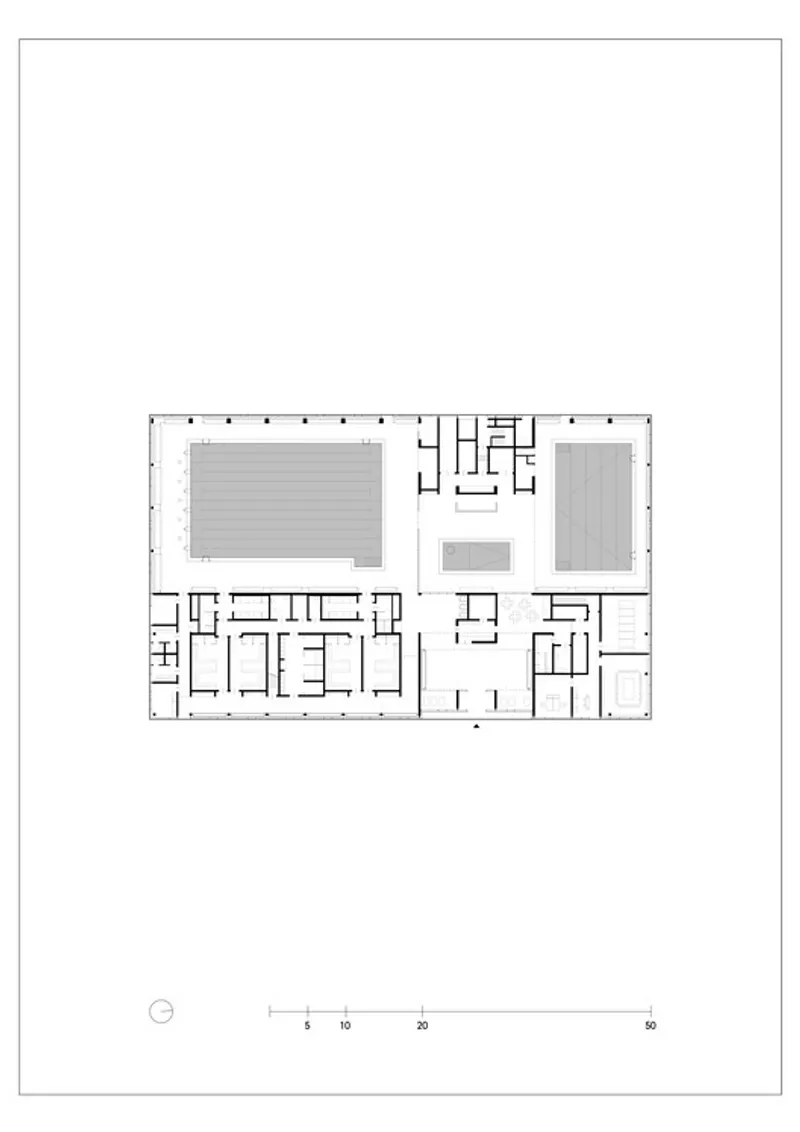
Six-Lane Competition Pool: The primary vessel serving serious training, school instruction, and lap swimming. Standard 25-meter length with multiple lanes allows simultaneous use by different groups.
Teaching Pool: Shallower water and smaller dimensions appropriate for swimming instruction, particularly for children and beginners who require safe, appropriately scaled learning environments.
Children's Pool: Dedicated space for youngest users with water depths, features, and supervision arrangements suited to their needs.
This programmatic variety acknowledges that successful public facilities must serve diverse constituencies simultaneously, providing appropriate spaces for different ages, abilities, and uses rather than single undifferentiated pool attempting to serve all purposes inadequately.
Daylighting Strategy
Large skylights bring additional daylight to brighten water surfaces—a critical design strategy in swimming facilities where natural light significantly improves user experience and environmental quality. The combination of continuous base glazing and overhead skylights ensures all swimming zones receive abundant natural illumination throughout the day.
Daylighting serves multiple purposes:
User Experience: Natural light creates pleasant atmosphere, reduces claustrophobic feeling common in enclosed pools, and maintains connection to weather and time of day.
Energy Efficiency: Reducing artificial lighting loads decreases electrical consumption and cooling requirements (light fixtures generate heat).
Health Benefits: Exposure to natural light supports circadian rhythm regulation and vitamin D synthesis, contributing to user wellbeing.
Water Quality Perception: Natural light accurately reveals water clarity and cleanliness, providing reassurance about hygiene standards.
Restrained Design Language
The clear, restrained design focuses entirely on the facility's function as sports pool. No extraneous decoration, complex geometries, or applied ornament distracts from essential purposes: providing excellent swimming facilities in pleasant, efficient environments. This restraint reflects both design philosophy and economic reality—public facilities serving functional purposes benefit from straightforward design that optimizes performance while minimizing construction and maintenance costs.
Renewable Energy Systems
Solar Thermal Energy
Solar thermal collectors harness sun energy for water heating—a logical match for swimming facilities' substantial hot water requirements. Solar thermal systems directly heat water circulating through collectors, providing preheating that reduces conventional water heating loads.
In northern European locations like Leipzig, solar thermal contributes most significantly during summer months when solar radiation is strongest, though modern systems provide useful gains even in winter with lower sun angles and shorter days.
Photovoltaics
Photovoltaic panels generate electricity from solar radiation, offsetting facility electrical consumption. Swimming pools require substantial electrical power for lighting, ventilation fans, pumps, filtration systems, and control equipment—loads that photovoltaic systems can partially offset.
The combination of solar thermal and photovoltaic installations represents comprehensive solar energy utilization, capturing sun energy for both thermal and electrical applications.
Water Treatment and Reuse
Systems for treating and reusing pool water further contribute to resource efficiency. Modern pool water treatment combines:
Filtration: Removing particulates through sand or cartridge filters.
Disinfection: Chlorine or alternative disinfection systems controlling bacterial and viral contamination.
Chemical Balance: Maintaining appropriate pH, alkalinity, and mineral content.
Regeneration: Advanced systems can regenerate portions of filter backwash water for reuse rather than discharging to sewer.
Water conservation proves particularly important in public facilities with large pool volumes (competition pools hold several hundred cubic meters), where even small percentage reductions translate to substantial resource savings.
Landscape Integration: Einenkel Landscape Architecture
Forecourt Design
The landscaped forecourt—designed by Einenkel Landscape Architecture—creates crucial transition zone between urban plaza, building, and park. This intermediate space serves multiple functions:
Arrival: Provides clear approach and orientation for visitors arriving from different directions.
Social Space: Offers outdoor gathering opportunities distinct from but connected to the pool facility.
Tree Integration: Incorporates preserved mature trees as structural landscape elements providing shade, beauty, and ecological value.
Permeable Surface: Using permeable paving materials manages stormwater while maintaining usable hardscape.
Connectivity: Links Otto-Runki-Platz to Rabet Park, creating continuous pedestrian-friendly environment rather than isolated building site.
Enhanced Spatial Quality
The building and surrounding landscape have enhanced the site's spatial quality, redefining it as social meeting place. This transformation extends beyond the building itself to reshape how the entire block functions within neighborhood fabric—upgrading underutilized plaza into activated public space supporting community life.
All the Photographs are works of Marcus Bredt




Popular Articles
Popular articles from the community


The Ocean Hive: Sustainable Architecture for a Self-Sufficient Civilization at Sea
The Ocean Hive imagines sustainable architecture at sea, where modular habitats, algae, wave power and ocean waste sustain a growing colony.

Co-Life: Senior Housing Design That Reconnects Older Adults With the City
Co-Life reimagines senior housing design through healing gardens, shared streets, workshops, and a sustainable community across generations.

The Musturak Paradise: Senior Living Architecture for a Connected Future in Temara, Morocco
The Musturak Paradise reimagines senior living architecture in Temara via private homes, social spaces, culture, community, and shared care.

Riyadh For All: Intergenerational Urban Design for Active Aging in Rabat
Riyadh For All reimagines urban design in Rabat with intergenerational co-living, adaptive courtyards, and Moroccan cultural exchange today.

Similar Reads
You might also enjoy these articles


Hodi-Mandai Geram
Project Function: Preservation and revitalization of the Intangible heritage and socio-spatial identity of the Hodi by Housing, Cultural Memory Center, Sacred Grove, landscape, local tourism economy


Olio Towers: A Mid-Rise for Performers That Fuses Housing, Rehearsal, and Stage
Located blocks from Houston's Theater District, this modular tower stacks living units around a central performance atrium.

Oasis: Modular Green Housing Carved into Dhaka's Urban Fabric
A shortlisted Plugin Housing entry reclaims unauthorized settlements in Dhaka with stepped concrete volumes, green roofs, and ventilation-driven design.

Black Hole: A Floating Megastructure for the Post-Physical Era
Emiliano Mazzarotto envisions a spherical, self-scaling arena where e-sports, digital hotels, and holographic stadiums replace traditional public space.

Explore Sports Architecture Competitions
Discover active competitions in this discipline


Challenge to design a barrier free sports center

Challenge to design an outdoor ice-rink and park


Challenge to reimagine the Iron Throne


Photograph architecture without architects
Comments (0)
Please login or sign up to add comments
No comments yet. Be the first to comment!