

Sports Center by Blue Temple in Yangon, Myanmar
The Sports Center by Blue Temple in Yangon features a bamboo neo-brutalist canopy, geometric design, shaded bleachers, and event-ready multifunctional spaces.


The Sports Center designed by Blue Temple in Yangon, Myanmar, is a contemporary architectural intervention that reimagines traditional sports infrastructure using sustainable bamboo construction. Completed in 2024, the project spans 293 m² and integrates functional shading, circulation, and event-ready spaces, while emphasizing materiality, geometry, and natural aesthetics.

Concept and Design Strategy
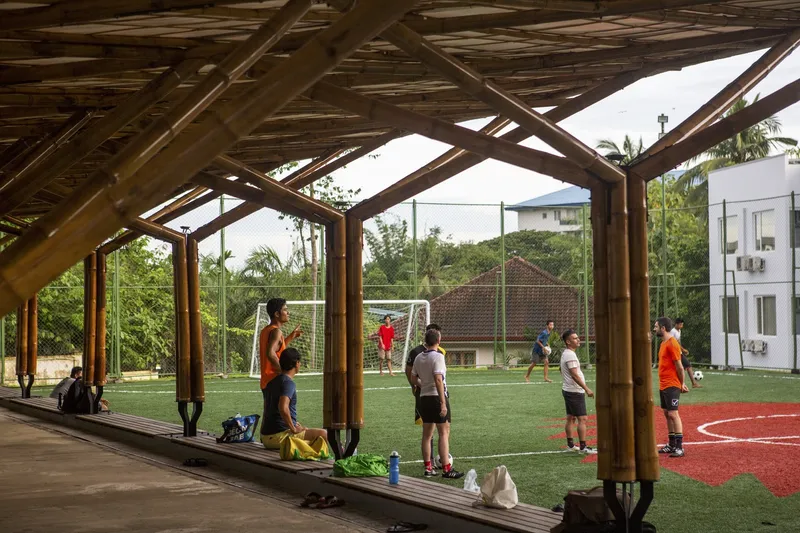
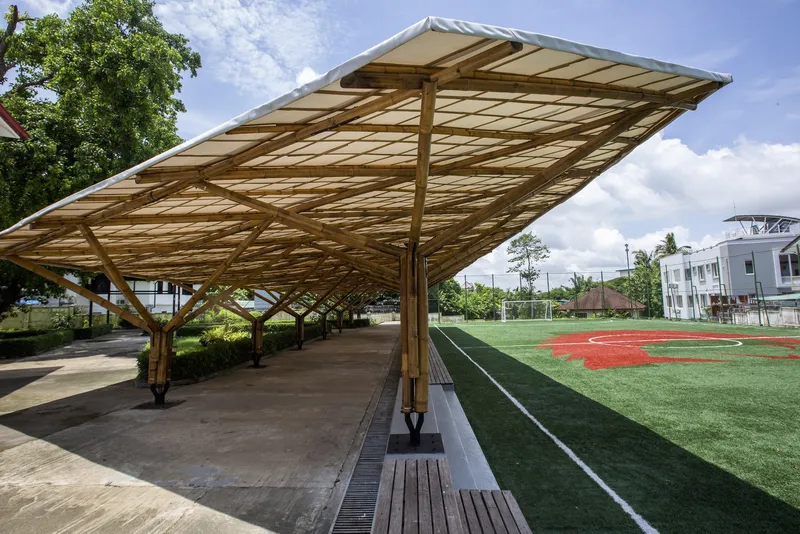
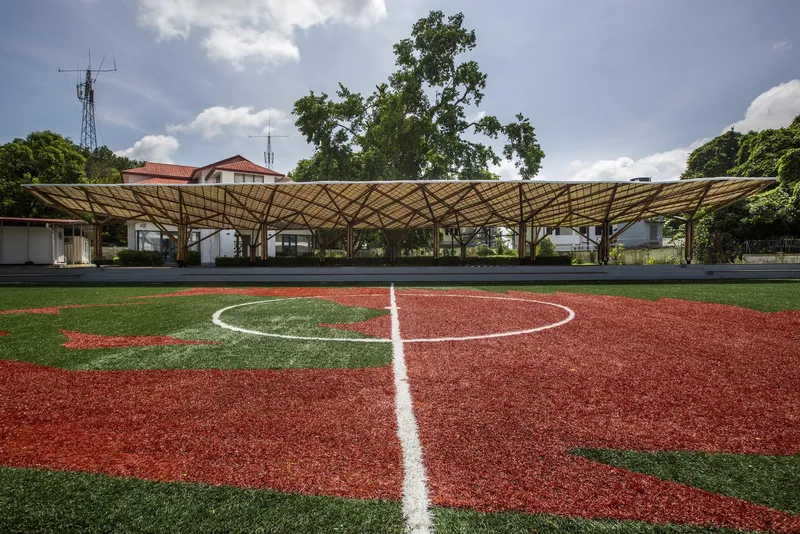
The central brief from the school was to create a bamboo canopy that provides effective shading for bleachers along the sports field, while also accommodating evening events with proper lighting. The design responds directly to its linear site, leveraging parallax effects and geometric patterns to create visual intrigue.
By shifting the two rows of columns into a diamond-shaped grid, the structure produces a subtle optical rhythm. From oblique angles, the canopy appears dynamically disordered, but from frontal or side perspectives, the architectural elements align in a cohesive pattern. This interplay accentuates the geometry of the sports field and enhances the experience of movement and perspective for spectators.
Site Integration and Functionality
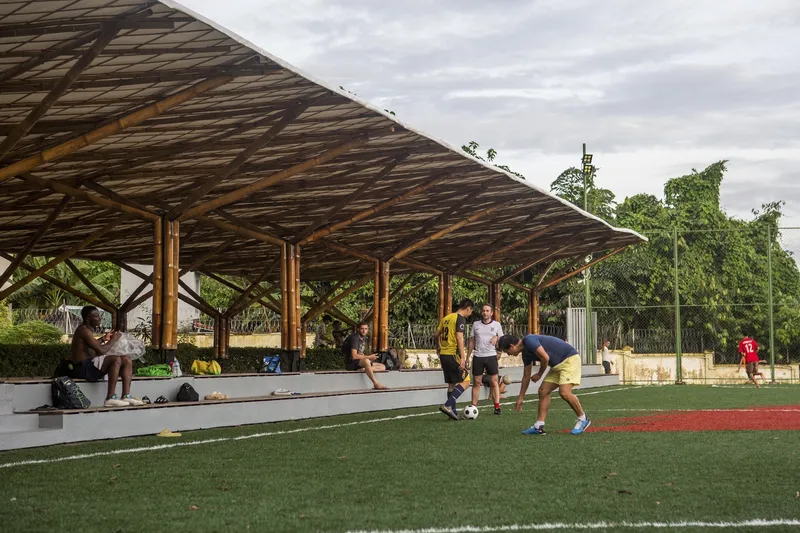
The canopy is carefully dimensioned to maximize coverage over the bleachers year-round, considering sunlight angles, circulation paths, and alignment with existing garden walkways. Its placement respects green spaces and accessibility requirements, ensuring that the structure harmonizes with its surroundings while enhancing functionality.
The linear configuration of the site was leveraged as an opportunity to explore rhythm and repetition, translating structural pragmatics into an expressive architectural form. This approach creates a dynamic spectator experience, where the building transforms visually as one moves around it.

Materiality and Construction
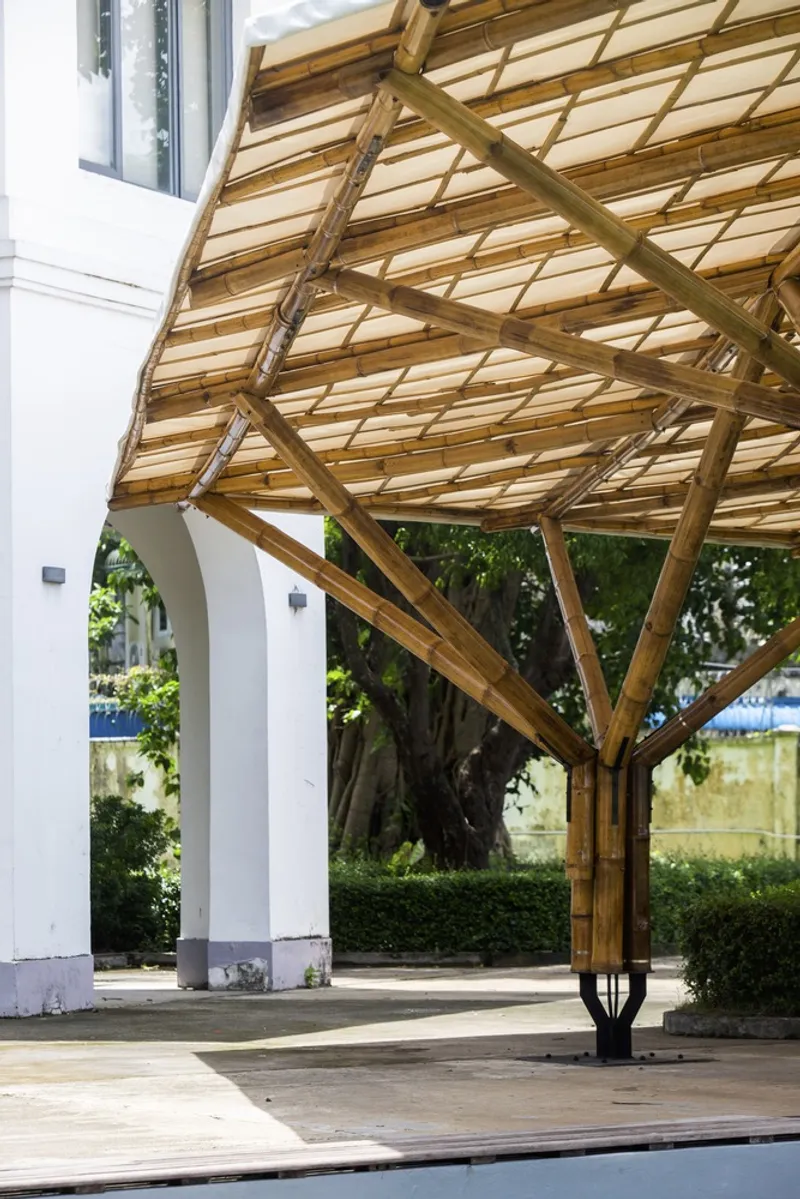
The project exemplifies bamboo neo-brutalism, combining raw materiality with a contemporary aesthetic. Key materials include:
- Bamboo columns and beams forming the structural skeleton
- Steel prefabricated footings for stability and a sense of lightness
- White tarpaulin roofing sheets for durability and contrast
- Brown protective covers and black metal elements to emphasize geometry
The color palette highlights the natural yellowish tones of bamboo, while the structural design of branching columns supports the roof and enhances the architectural rhythm.
The craftsmanship was executed in collaboration with Monkey Joint, Bamboo Players, ensuring precision in both fabrication and assembly. Prefabricated steel elements enhance structural stability while keeping the overall design lightweight and elegant.

Spatial Experience
Beyond its functional performance, the Sports Center creates a sensory experience for users. The canopy not only shades the seating but also frames views of the field and garden. The interplay of light, shadow, and structural geometry provides a visually stimulating environment for both players and spectators.
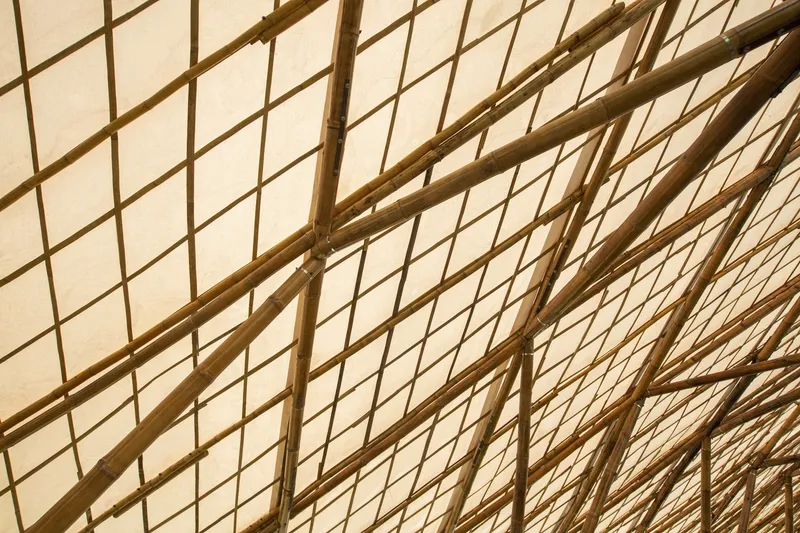
Incorporating evening event capabilities, the project integrates thoughtful lighting strategies, transforming the sports center into a vibrant community hub after dark. The design balances practicality with architectural expression, demonstrating how sustainable bamboo construction can serve both functional and aesthetic purposes.


Blue Temple’s Sports Center in Yangon successfully merges sustainability, geometry, and user experience. Its bamboo neo-brutalist approach emphasizes the material’s natural beauty while fulfilling practical requirements for sports and community events. The project exemplifies how innovative bamboo architecture can enhance public infrastructure, creating spaces that are functional, elegant, and visually engaging.
Project Details:
- Location: Yangon, Myanmar
- Architects: Blue Temple
- Lead Architect: Raphaël Ascoli
- Contractors: Monkey Joint – Bamboo Players
- Year Completed: 2024
- Area: 293 m²
- Photography: Nyan Zay Htet
All photographs are works of
Nyan Zay Htet


Popular Articles
Popular articles from the community


FCC Arquitectura Expands a Portuguese Granite House with a Board-Marked Concrete Wing
In Portugal, JV House pairs a cleaned-up whitewashed and granite dwelling with a timber-shuttered concrete extension, courtyards and a garden pool.

ETEH Reworks the Shared Spaces of São Domingos School in Brazil Around Timber, Color and Hanging Plants
At São Domingos School in Brazil, 436 m² of hall, refectory and library are recast with timber joinery, a yellow and blue code and trailing greenery.

graciastudio Turns a Viewless Tijuana Lot Inward Around a Courtyard of Concrete, Timber and Trees
In Tijuana, Jorge Gracia's GA2 House stacks a timber-clad private floor over exposed concrete and replaces a missing view with a planted interior patio.


Aquadapt: An Underwater Habitat That Rewrites Its Rooms by the Hour
Curved modules ring the seabed while one shell shifts from breakfast room to cinema, farm and football pitch as residents' needs change.

Similar Reads
You might also enjoy these articles

Cube Design Draws an Ecological Corridor Between Two Shenzhen Hills with the Nankai Building
Beside Shenzhen's container docks, the Nankai Building pairs stacked balconies with a climbing green screen to connect two hillsides across its height.

Praksis A and Studio Sted Bend a Red Timber Cabin Across the Granite of Norway's Southern Coast
On the southern Norwegian coast, a 105 m² cabin follows the rock on slender posts, pairing red cladding outside with pine, brick and plywood within.

David Ortega Stacks a Two-Story Mexico City Penthouse Around a Steel Stair and a Pergola-Shaded Roof Terrace
In Colonia Roma, a 300 m² penthouse uses oak joinery, a planted steel stair and a slatted roof pergola to make a new-build apartment feel like a house.

PARALELA and LB2 Thread a Public Walkway Through the Base of a Las Condes Residential Tower
In Las Condes, Santiago, the Hamlet Building gives its fenceless ground floor to a 70-metre wooded passage linking two streets and the metro.

Explore Bamboo Construction Competitions
Discover active competitions in this discipline

Challenge to reimagine the Iron Throne

Photograph architecture without architects

Illustrate the lost glory of Angkor Wat - Render Challenge

Design challenge to reuse E-waste
Comments (0)
Please login or sign up to add comments
No comments yet. Be the first to comment!