

SQUANGLE
Villa made of squares

SQUANGLE is the project of willa, which is based on the creation of a living space by squares. One of the main assumptions is to create a comfortable space for a family, which fully uses the existing resources of the landscape and nature. Future inhabitants of SQUANGLE is a family of five persons which consist father, mother and 3 children. The family appreciates peace and quiet atmosphere close to nature. They like to spend their free time together, enjoying life. The head of the family is a father working as a computer programmer who needs office equipped with a computer. Mom is currently has not got a job, she looks after the house and younger girls. She used to work as a chef, now she likes to cook as a hobby, so she needs large kitchen, which is fully equipped.
The project objectives were established on the basis of the family profile. One of them was the creation of a comfortable living space, which adapted the building to the mode and way of life the family. The most important element was to divide the space into private and public. Private space include bedrooms of family members and the office. This space will be characterized by silence and privacy. Public space will be available for residents and guests. Characteristic elements will be the representativeness and cosiness of the rooms. Another important element is the designation of a space intended for relaxation among nature, where the greenery will create a private space.
Before start create building, the necessary stage is programing. The first phase was to identify the users of the building. The next phase was to do list the activities that will be performed by people using the building. Then, thanks to this, the rooms in which these activities can be performed have been adapted to each activity. Estimated sizes of their areas have been determined for the rooms. The programming done in this way helped us gather the necessary information to start creating the concept.
The next step was to choose a convenient place for the location of the building and to distribute the functions of the rooms on the plot. The best location for the building is the central part of the plot due to its good lighting. The rooms have been arranged on the plot in relation to the parts of the world, so that they can be well lit in relation to the needs and functions of the rooms. Thanks to this, the entrance area is situated in the northern part of the plot, as it does not need much sunlight. This created a long access road to the main entrance of the building and a long driveway to the garage, which allows you to see the building in full splendor before entering it.
The night zone with bedrooms is located in the eastern part of the plot, by the access road to the building. To create a private space in the sleeping area, was designed a wall three meters from the windows of the building. Openings have been created in the wall, which illuminate the rooms, and at the same time did not reveal the privacy of the rooms behind the wall. The day zone is marked from the southern side and it was a combination of the interior of the building and nature. This connection is made through a large slide in the living room which opens into a terrace with a swimming pool and a colonnade with a roof. You can also go up the stairs from the lounge and have an observation deck on the roof that offers amazing views of the city and the mountains.
The building will be made of wooden construction. One of the reasons using this construction was a large amount of wood in the United States. Another reason was that this method of constructing buildings is very popular in this country. The next reason is that we can build such building very quickly and cheaply. The exterior of the villa will be made of plaster from clay,which giving a desert character. The light is introduced into the building through square windows which, when combined with each other, create high glazing and glass panels that create a pleasant atmosphere inside and outside the building. The initial assumptions were fully taken into creating the concept of the project. All the needs of the villa's users have been included in the project and thus a comfortable living space has been created. The name of the SQUANGLE concept is a combination of the two most important design elements. The first of this element is that the whole building is based on squares by dividing the rooms down to the smallest details. The second is that the building is surrounded by lots of greenery which creates a jungle atmosphere. SQUARE + JUNGLE = SQUANGLE Villa SQUANGLE was designed mainly with specific users in mind, however, during the design, many universal elements were used that could also be good for a wider group of users of this building. The design could be transformed by the adapting different rooms to other functions, for example a guest room or a study room could be intended for the next child or for the next generations.

Popular Articles
Popular articles from the community


Architekt Andreas Gruber Scatters 23 Dark Timber Chalets Across a South Tyrolean Forest Edge
In Molini di Tures, Amonti Chalets breaks a resort into a hamlet of gabled timber houses, with parking, storage and services pushed into the slope.

David Ortega Stacks a Two-Story Mexico City Penthouse Around a Steel Stair and a Pergola-Shaded Roof Terrace
In Colonia Roma, a 300 m² penthouse uses oak joinery, a planted steel stair and a slatted roof pergola to make a new-build apartment feel like a house.

Jaramillo Van Sluys Arquitectura and Urbanismo Turn a Demolished Registry Lot in Quito into an Orchard Plaza
In Quito's Centro Histórico, a 2,800 m² plaza exposes the San Agustín convent wall and redraws its lost Augustinian orchard in volcanic stone.

longwave studio Reorganizes a 112 m² Tainan Apartment Around the Daily Routines of a Family and Two Cats
In Tainan, Taiwan, birch plywood, rust-red furniture and a freestanding plaster wall link arrival, storage, work and family life in one apartment.

Similar Reads
You might also enjoy these articles
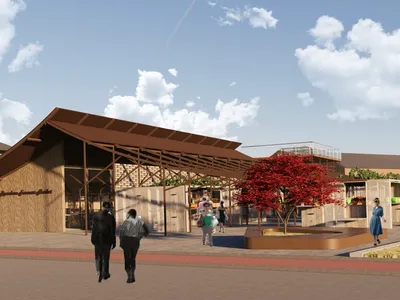
The Rhythm of Seasons
A Farmers' Market Connecting Nature and the City
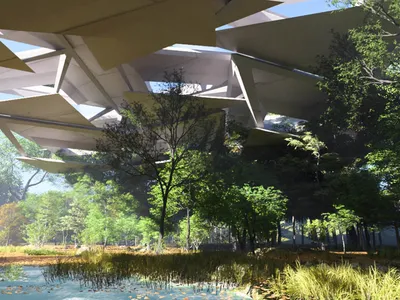

More Than a Building-Designing a Living System
More Than a Building-Designing a Living System
Base Beyond
DESERT COMPOUND ARID: TOURISM OF ABSENCE AND ABUNDANCE

Comments (0)
Please login or sign up to add comments
No comments yet. Be the first to comment!