

Staal-Kade Office Building Transformation: Reimagining a Modernist Landmark by Office Winhov
A modernist Amsterdam office by Arthur Staal transformed into a sustainable, future-proof workplace through sensitive renovation by Office Winhov.


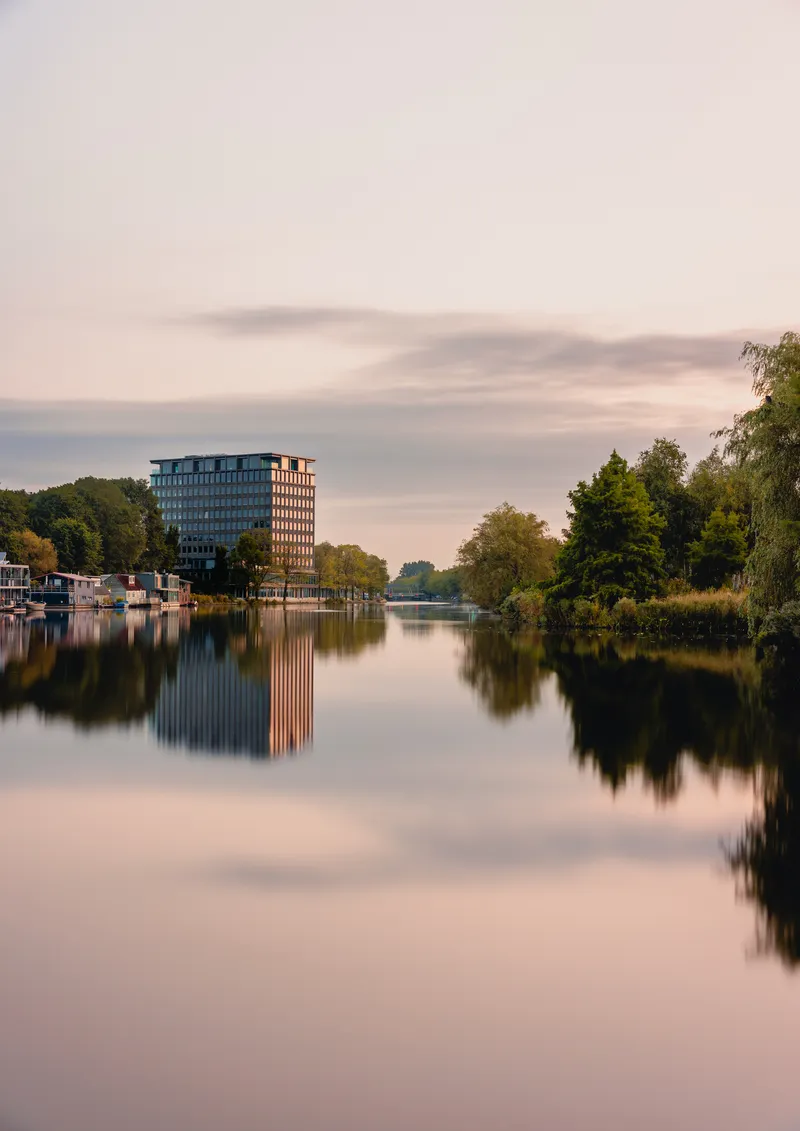
On the southern bank of the river Schinkel in Amsterdam, a modernist office building has been given a new life that bridges past, present, and future. Known today as Staal-Kade, the renovated and extended office building stands as a thoughtful transformation of a 1962 design by Dutch architect Arthur Staal. Completed in 2024, the project was led by Office Winhov and commissioned by Flow Development, setting a new benchmark for sustainable renovation, heritage preservation, and contemporary workplace design in the Netherlands.

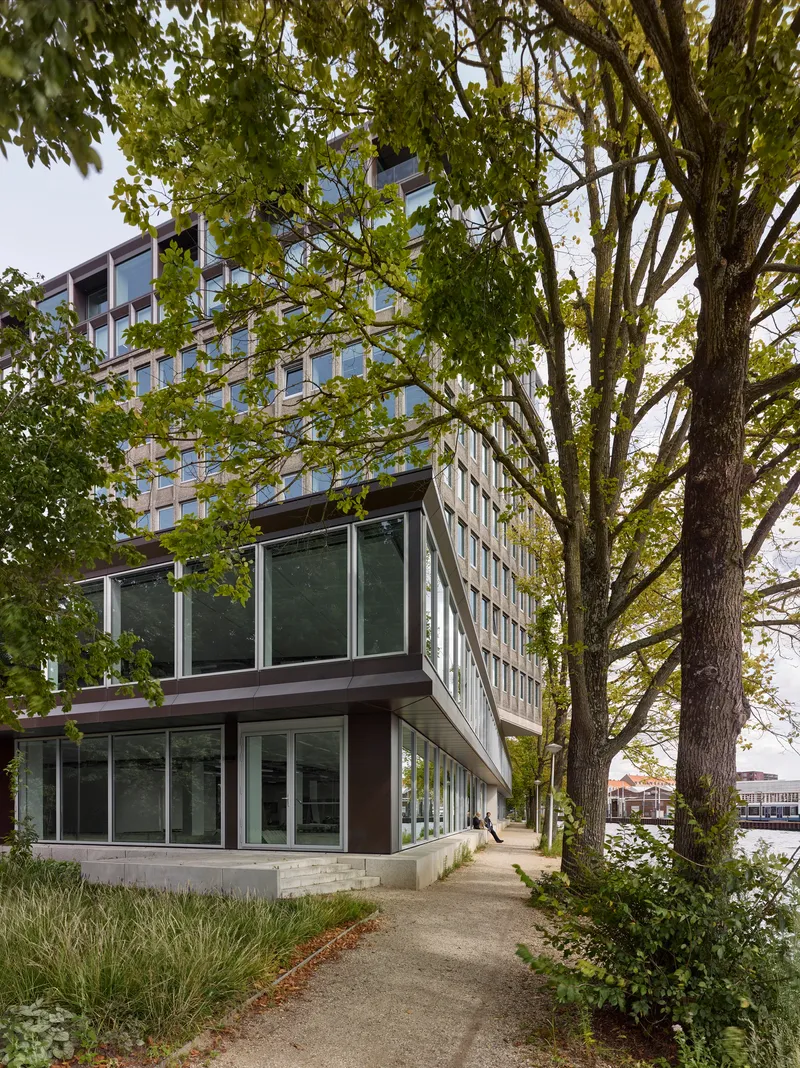
Rather than erasing history, the Staal-Kade project demonstrates how adaptive reuse can strengthen architectural identity while meeting today’s environmental and social demands. Through careful restoration, strategic expansion, and ambitious sustainability goals, the building has evolved into a resilient, future-proof workplace that honours its modernist origins.

A Modernist Legacy Revisited
Arthur Staal was one of the most influential Dutch architects of the post-war period. His work is characterised by clarity, structural honesty, and strong compositional principles. Among his most iconic projects is the Shell Tower, now widely known as the A’DAM Tower, which shares a key architectural strategy with Staal-Kade: a vertical tower positioned atop a horizontal podium.
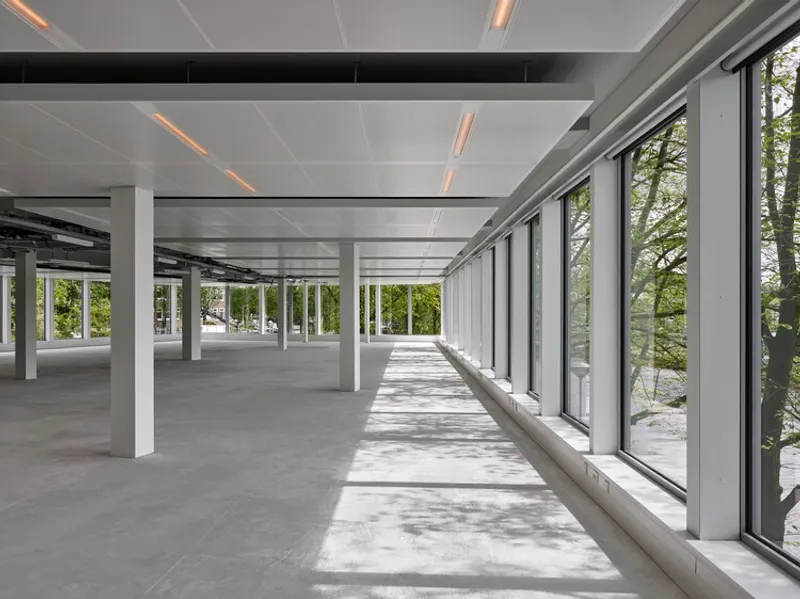

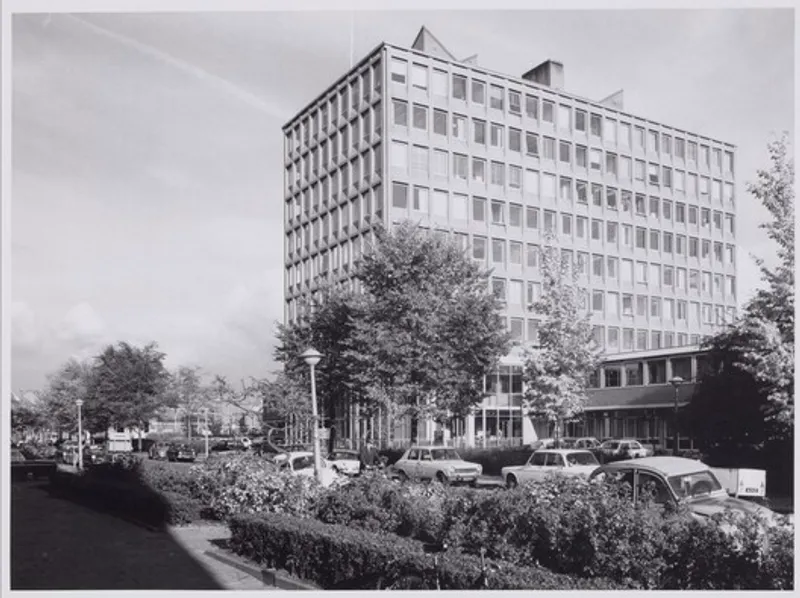
Originally completed in 1962, the Staal-Kade building embodied this modernist logic. Over decades of intensive use, however, the structure gradually lost its functional and environmental relevance. Technical systems became outdated, energy performance declined, and the surrounding public space along the Schinkel river was underutilised.

Office Winhov, known for its sensitive approach to renovation and reuse, was uniquely positioned to take on this project. The firm has a long-standing affinity with Arthur Staal’s work, previously transforming Frederiksplein 1, another of his buildings. Their engagement with Staal’s legacy goes beyond practice: Office Winhov also published a Local Heroes issue dedicated to the architect, reinforcing their deep understanding of his design philosophy.

Respectful Transformation and Architectural Continuity
At the core of the Staal-Kade transformation is a commitment to architectural continuity. Rather than imposing a radically new image, Office Winhov chose to reinforce Staal’s original concept while adapting it to contemporary needs.
The existing concrete structure was carefully preserved and restored. Original concrete elements were cleaned and repaired, maintaining their robust material presence and characteristic texture. This decision not only safeguarded the building’s architectural identity but also significantly reduced material waste, aligning the project with circular construction principles.
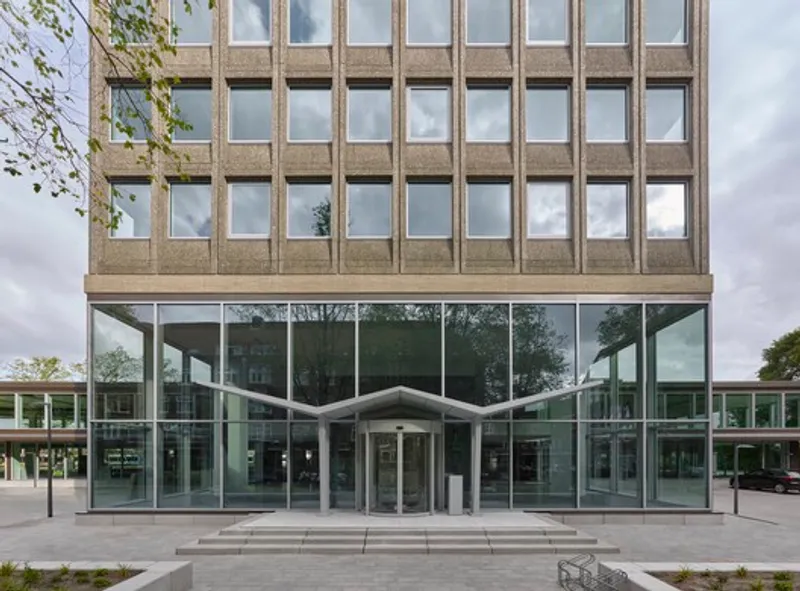
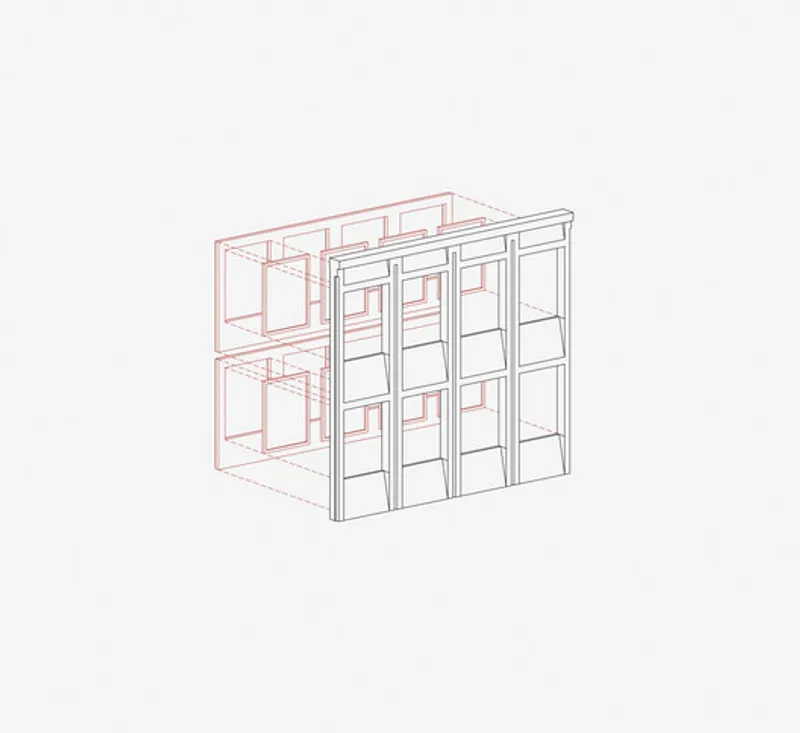
Two new storeys were added to the building, increasing its usable area while respecting the existing façade rhythm. These additions subtly distinguish themselves through contemporary proportions and materials, ensuring that the intervention remains legible without overpowering the original design.
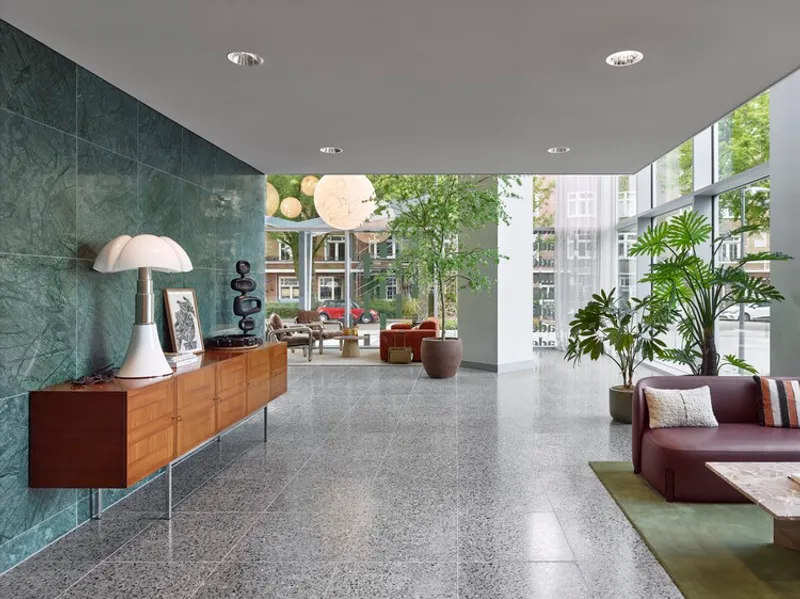
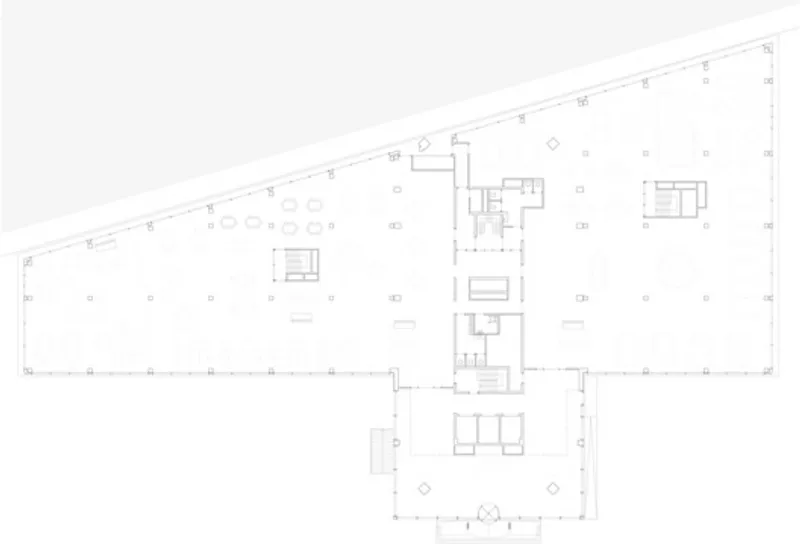
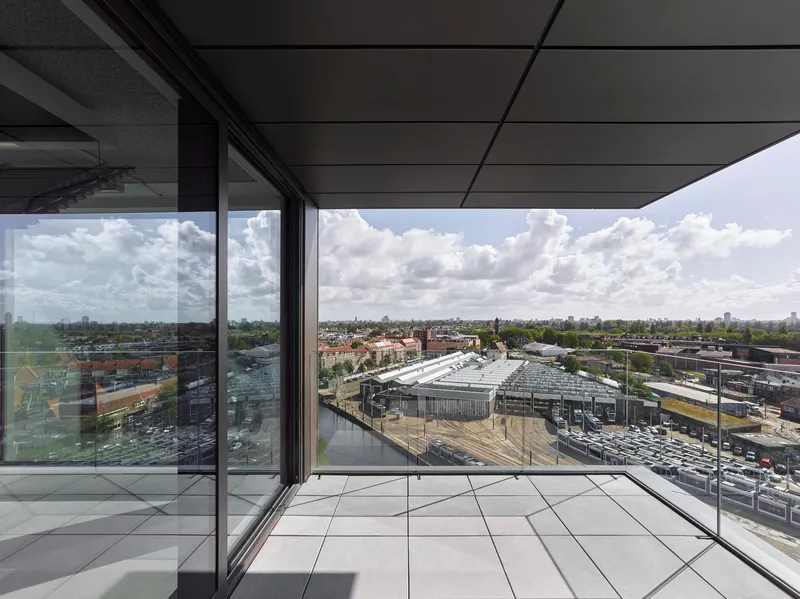
The transparent entrance hall, a defining element in Staal’s initial vision, was completely renewed. For the first time, the distinctive canopy originally envisioned by Staal was realised, reinforcing the building’s horizontal emphasis and creating a welcoming public interface. The redesigned podium façade enhances visual connections to the surrounding greenery and the river, strengthening the building’s relationship with its landscape.

Interior Renewal: Flexible, Contemporary Workspaces
While the exterior pays homage to modernist heritage, the interior of Staal-Kade has been entirely reimagined. Only the structural concrete shell was retained; everything else was redesigned to meet modern expectations for comfort, flexibility, and efficiency.
One of the primary challenges was integrating new building services within the limited floor-to-ceiling heights of the original structure. Through precise detailing and innovative technical solutions, Office Winhov successfully incorporated advanced climate systems, lighting, and acoustics without compromising spatial quality.

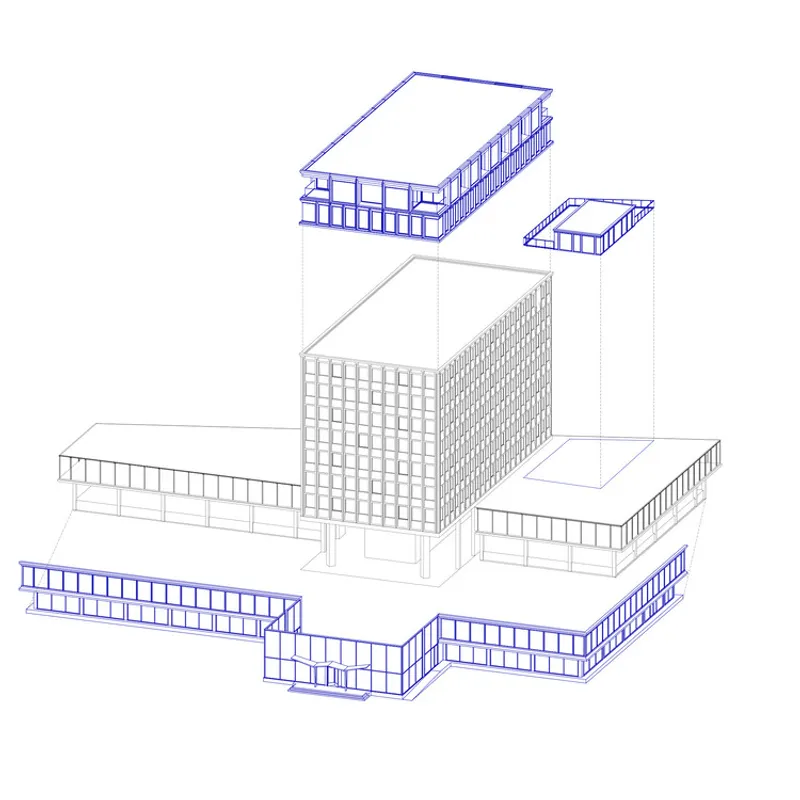
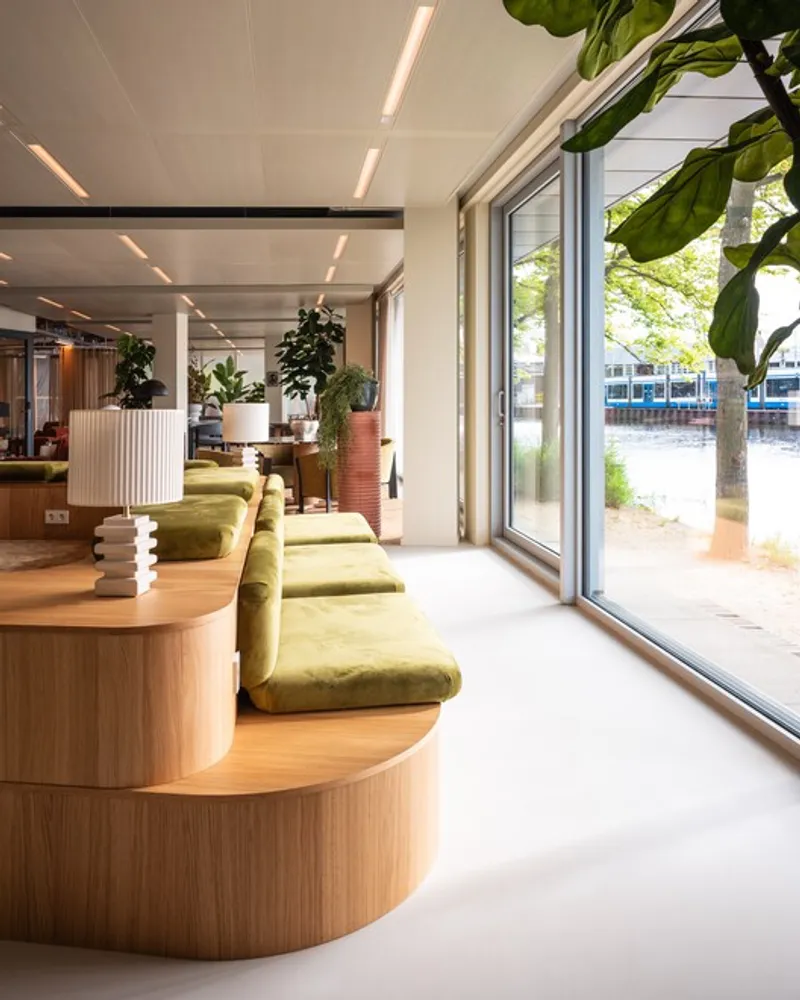
The resulting office environment supports a wide range of working styles. Open-plan workspaces encourage collaboration and transparency, while enclosed offices and meeting rooms provide privacy and focus. Shared areas, informal meeting zones, and circulation spaces are designed to foster interaction, adaptability, and well-being.
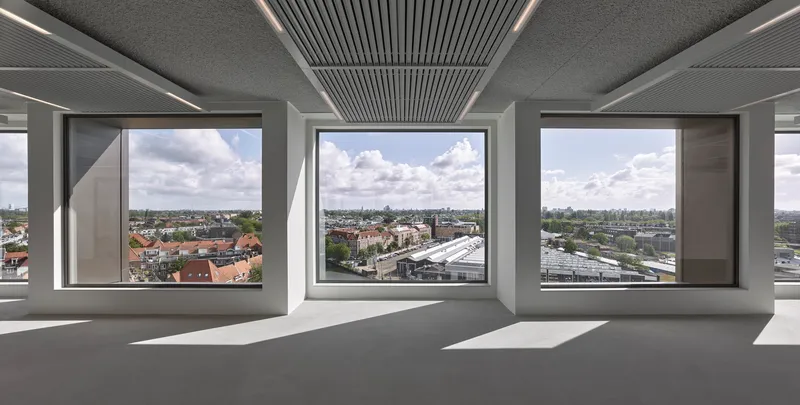
Natural light plays a central role throughout the interior, enhanced by upgraded façades and clear sightlines. Materials such as glass, concrete, and carefully selected finishes reflect the building’s modernist roots while creating a warm, contemporary atmosphere.
Sustainability as a Design Driver
Sustainability was not treated as an add-on at Staal-Kade, but as a fundamental design principle. The decision to retain and reuse the existing structure already placed the project on strong environmental footing by minimising embodied carbon and material consumption.
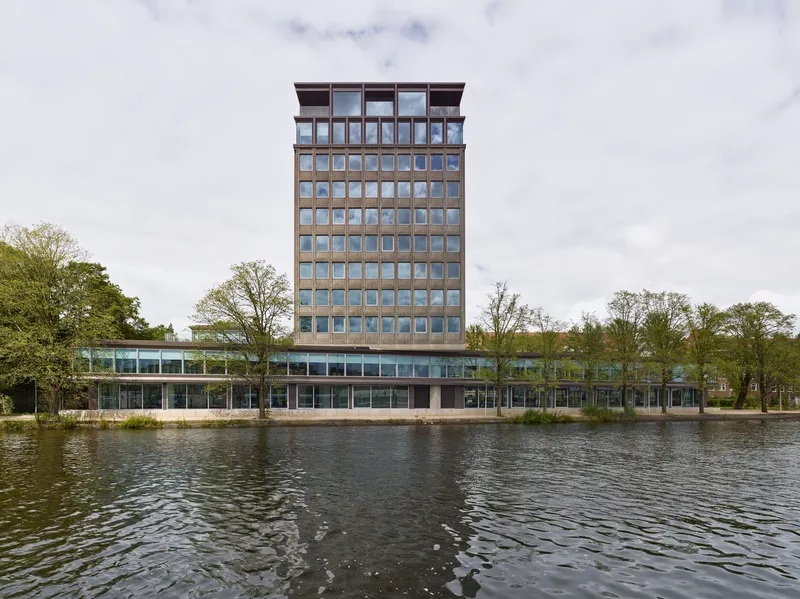

The building envelope was comprehensively upgraded with improved insulation and high-performance glazing. Outdated installations were replaced with energy-efficient systems, significantly reducing operational energy demand. On the roof, green roofs contribute to biodiversity, water retention, and thermal performance, while photovoltaic panels generate renewable energy on site.
Thanks to this integrated approach, Staal-Kade achieved exceptional results:
- BREEAM Outstanding certification, the highest level in the internationally recognised sustainability assessment system
- An A++++ energy rating, the maximum achievable score in the Netherlands
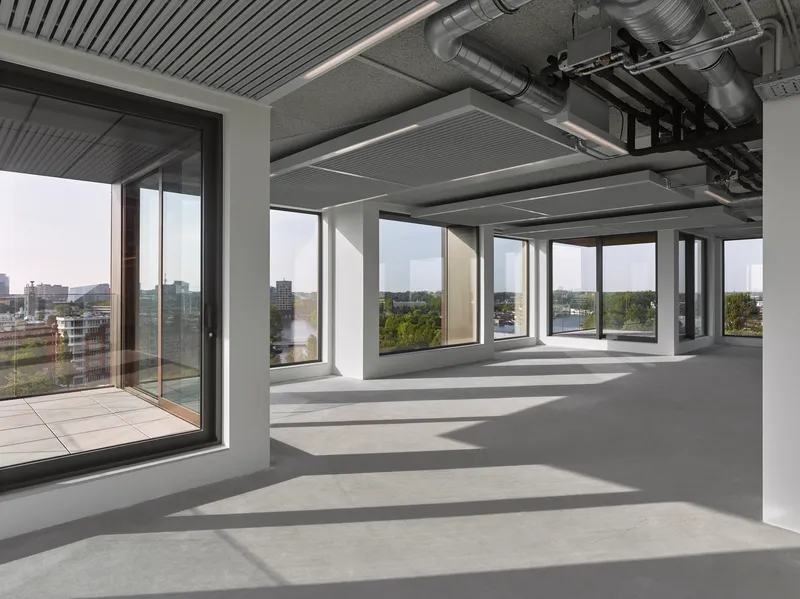
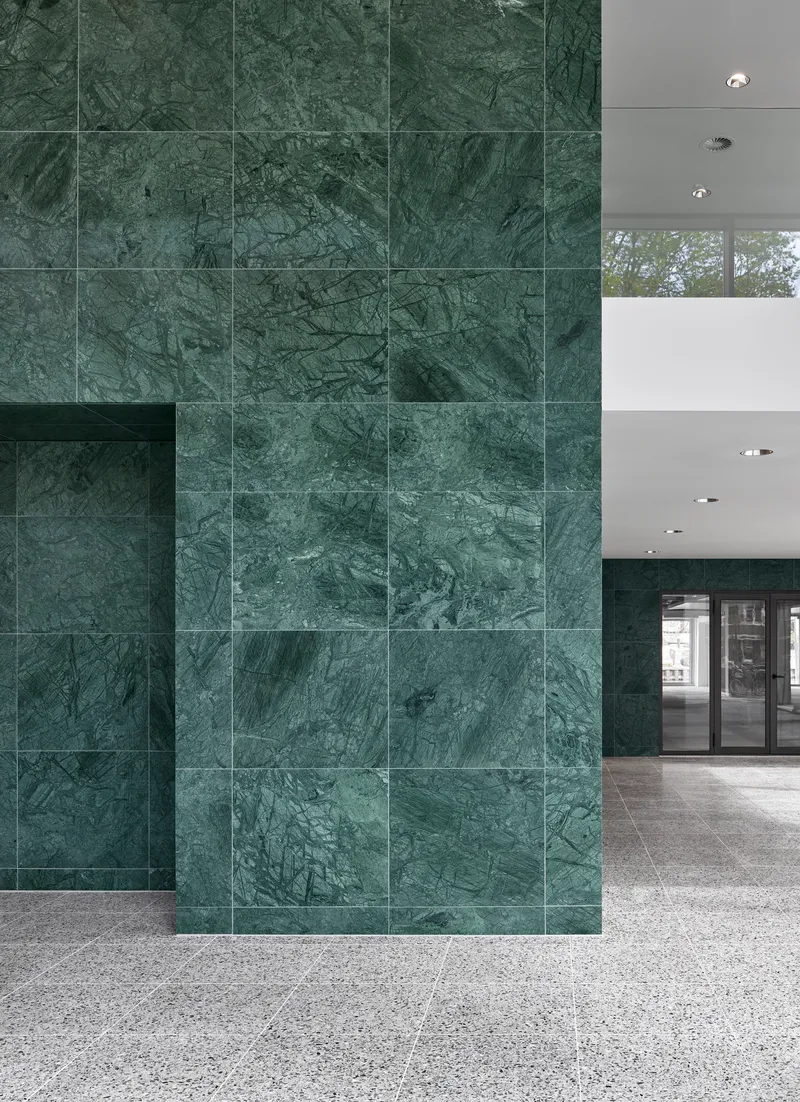
These achievements position Staal-Kade among the most sustainable office buildings in the country and demonstrate the potential of renovating post-war buildings to meet — and exceed — contemporary environmental standards.
Reconnecting Building and Landscape
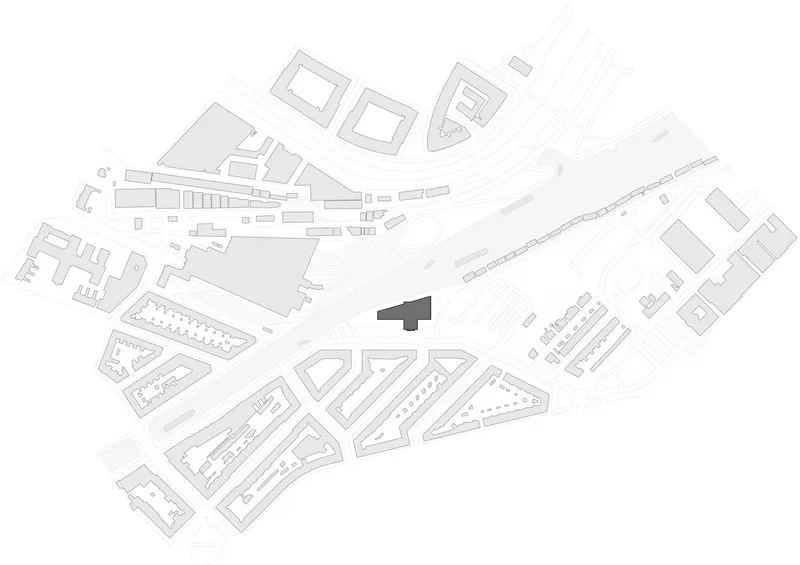
Staal-Kade’s transformation extends beyond the building itself to include a significant enhancement of the surrounding public realm. Located at the edge of Amsterdam-Zuid, where urban density transitions into expansive green space, the site offered an opportunity to reconnect architecture, landscape, and community.
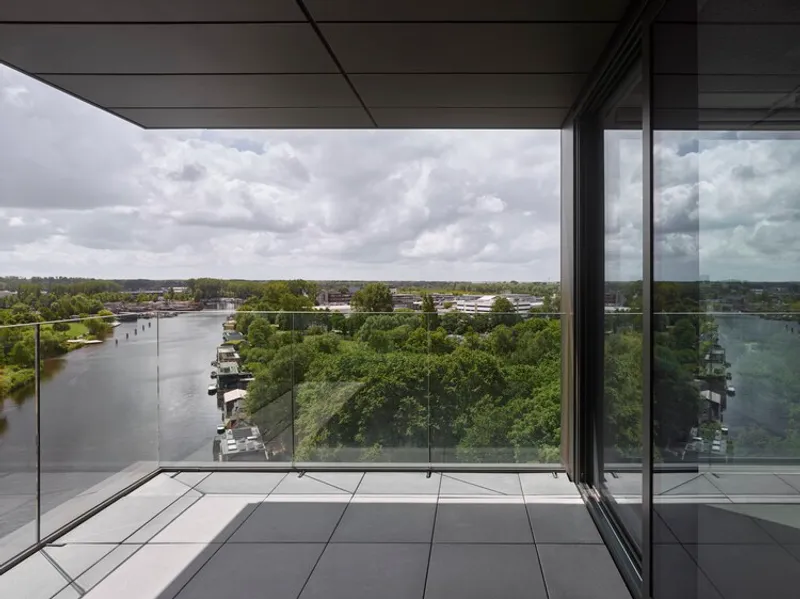
Landscape architects Deltavormgroep reimagined the previously neglected riverbank into a vibrant and accessible public space. The Jaagpad, once overlooked, has been transformed into a key pedestrian route linking the area to the Nieuwe Meer and the Amsterdamse Bos. This intervention not only improves walkability but also strengthens ecological and recreational connections across the city.
A ground-floor café anchors the building within this new landscape, acting as a social hub and a starting point for riverside walks. Both the building and the waterfront now share the name Staal-Kade, serving as a tribute to Arthur Staal and reinforcing the project’s cultural significance.
Heritage and Innovation in Balance
What sets Staal-Kade apart is its careful balance between heritage preservation and contemporary innovation. The project neither freezes the building in time nor erases its past. Instead, it layers new architectural elements over existing ones, allowing different eras to coexist in a clear and legible way.
The restored concrete, the renewed entrance hall, the added storeys, and the upgraded interior systems all contribute to a coherent whole. This layered approach ensures that the building tells its story — from post-war modernism to twenty-first-century sustainability — through its architecture.
For Office Winhov, Staal-Kade represents a continuation of their long-term engagement with meaningful reuse. The project exemplifies their belief that existing buildings should be seen not as constraints, but as opportunities for architectural richness, sustainability, and cultural continuity.

A Model for Sustainable Urban Renewal
As cities across Europe grapple with climate targets, housing shortages, and the environmental cost of demolition, Staal-Kade offers a compelling model for the future. It shows how post-war office buildings, often overlooked or undervalued, can be transformed into high-performing, desirable places to work and gather.
By preserving structural heritage, upgrading performance, and enhancing public space, the project strengthens both the building and its urban context. Today, Staal-Kade stands as an inspiring workplace by the water — one that honours Arthur Staal’s legacy while embracing innovation, sustainability, and social value.

All the Photographs are works of Stefan Müller, Tom de Kort, Beeldenbank Amsterdam


Popular Articles
Popular articles from the community


Singing Woman: An Opera House That Performs Before the Curtain Rises
Ovidiu Cristian Pavel's conceptual opera house translates Estonia's choral identity into a sculpted waterfront landmark facing the Baltic Sea.

Cloaked Colonization: A Mobile Underwater Habitat That Moves Like a Fish
Micah Abaya's shortlisted EHC Pacific entry reimagines ocean settlement as a dispersed network of self-sustaining architectural organisms.

Tsunami Convergenics: Turning Catastrophic Ocean Forces into Underwater Housing Infrastructure
A speculative underwater settlement off the coast of Onagawa, Japan, treats tsunamis and typhoons as energy sources rather than threats.

The Amber Palace Opera: A Geological Fiction Surfaces on Tallinn's Baltic Waterfront
Pierre Brillard reimagines a Baltic legend as a public landscape, opera house, and waterfront promenade rooted in Tallinn's coastal identity.

Similar Reads
You might also enjoy these articles


Hodi-Mandai Geram
Project Function: Preservation and revitalization of the Intangible heritage and socio-spatial identity of the Hodi by Housing, Cultural Memory Center, Sacred Grove, landscape, local tourism economy


Olio Towers: A Mid-Rise for Performers That Fuses Housing, Rehearsal, and Stage
Located blocks from Houston's Theater District, this modular tower stacks living units around a central performance atrium.

Oasis: Modular Green Housing Carved into Dhaka's Urban Fabric
A shortlisted Plugin Housing entry reclaims unauthorized settlements in Dhaka with stepped concrete volumes, green roofs, and ventilation-driven design.

Black Hole: A Floating Megastructure for the Post-Physical Era
Emiliano Mazzarotto envisions a spherical, self-scaling arena where e-sports, digital hotels, and holographic stadiums replace traditional public space.

Explore Staarch Architects Competitions
Discover active competitions in this discipline

Challenge to reimagine the Iron Throne

Photograph architecture without architects

Illustrate the lost glory of Angkor Wat - Render Challenge

Design challenge to reuse E-waste
Comments (0)
Please login or sign up to add comments
No comments yet. Be the first to comment!