
Step into a world of artistic wonder at Goffart Polomé Architectes' stunning Fine Arts Museum of Charleroi!
What inspired the design of the Fine Arts Museum of Charleroi by Goffart Polomé Architectes?

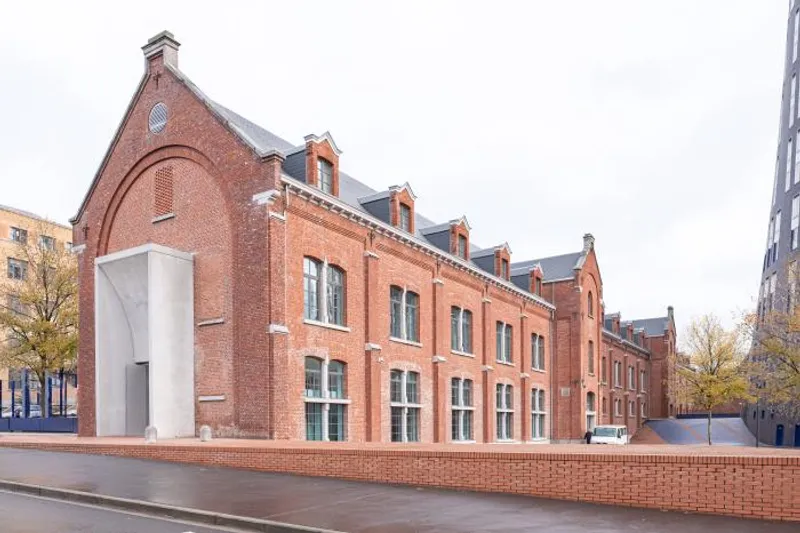
The approach to the transformation of the Defeld Stables was to define a clean and distinctive entrance to the museum, directly accessible from the public space. The Defeld Stables are part of a larger complex known as the ‘Defeld Barracks’ built in 1887. The complex housed the troops and horses of the police until 2001. Composed of two symmetrical wings arranged around a triangular courtyard, the barracks are protected from the public space by a porch (photo below) in the neo-medieval style like many prisons built at the time. In 2012, the porch was demolished to open the esplanade to the public space and accommodate the new police tower designed by French architect Jean Nouvel. The Defeld Stables, one of the last witnesses of the barracks, is destined to participate in the civic redevelopment of the Ville Haute district of Charleroi.
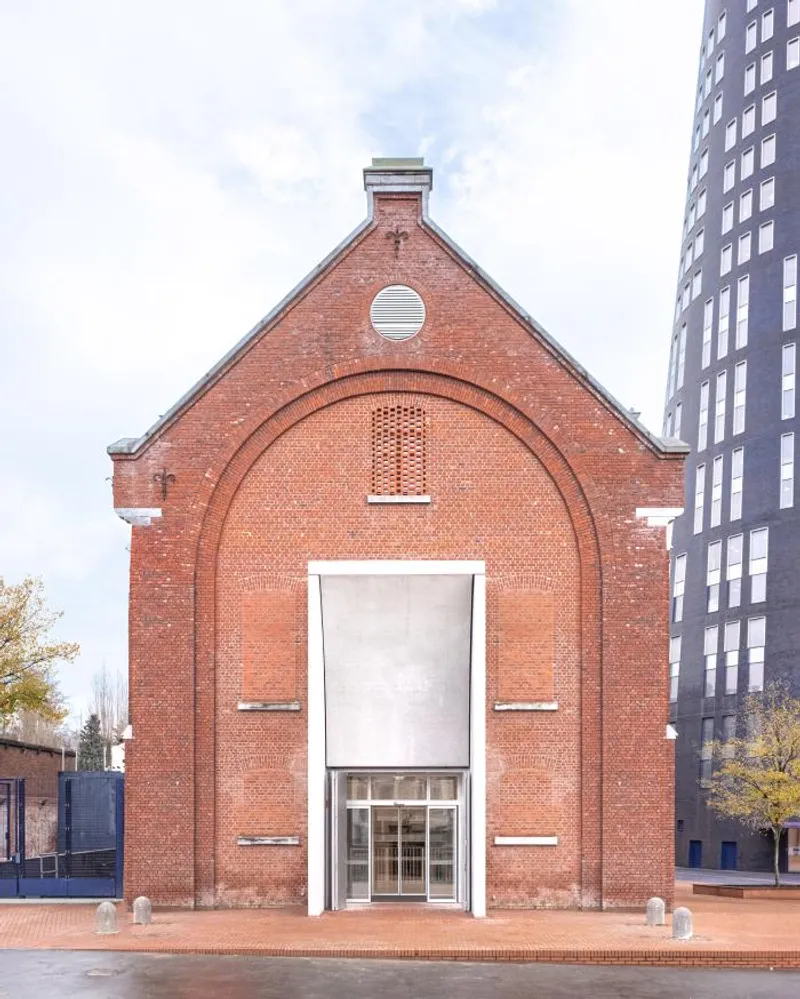
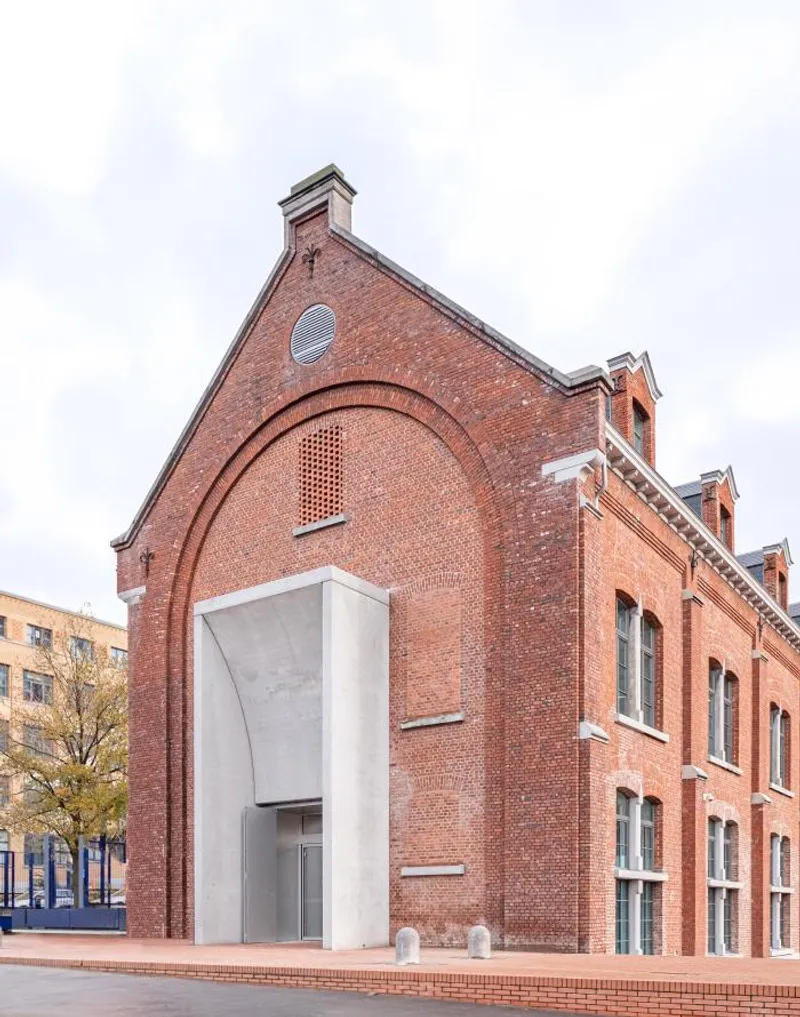
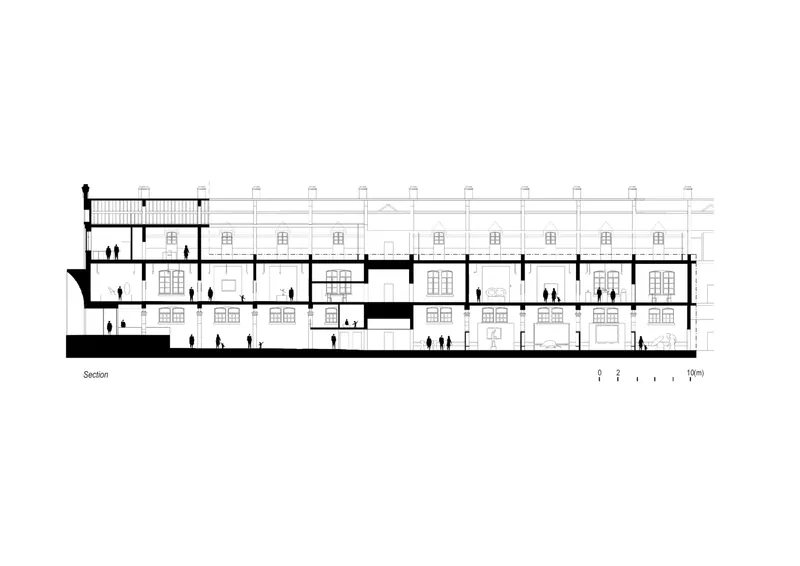
Listed as a Walloon heritage site, the intervention consisted essentially in defining the process of entering the building while marking its presence in an urban environment marked by the omnipresence of the police tower nearby. This porch forms a new threshold and represents a gesture of welcome to the city and to visitors. It is an anchor for the new function and identity of the building. The new entrance required a transformation of the initially closed front façade. The windows were walled off and replaced with a modern, sculptural porch in exposed concrete that draws the eye. Inside, the new entrance defines the project. The original esplanade entrance, and therefore the ground level on the first floor, is considerably lower than the street level. In other words, if visitors enter through the new entrance, they are halfway between the first floor and the second floor.
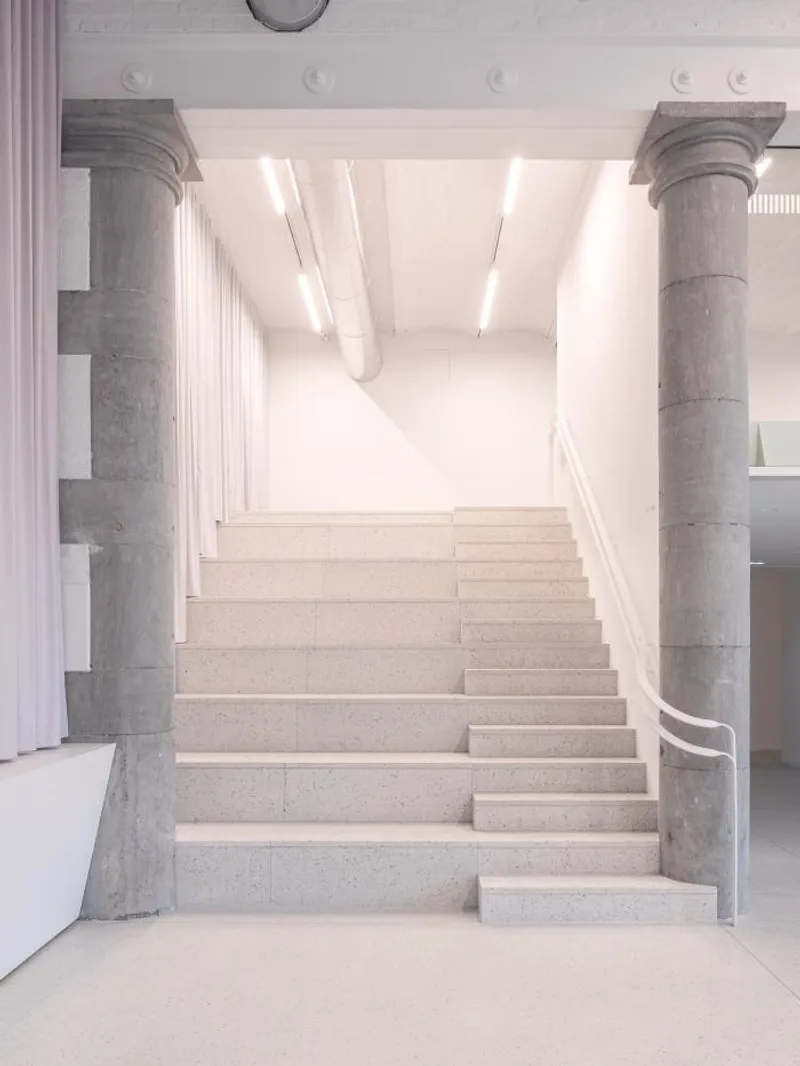
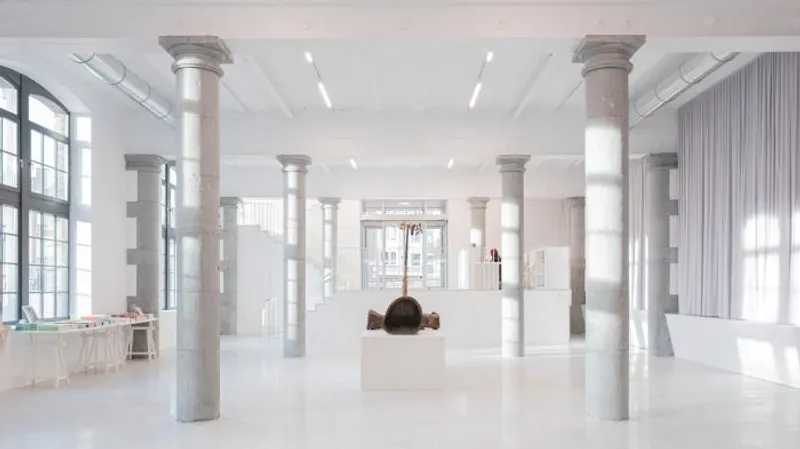
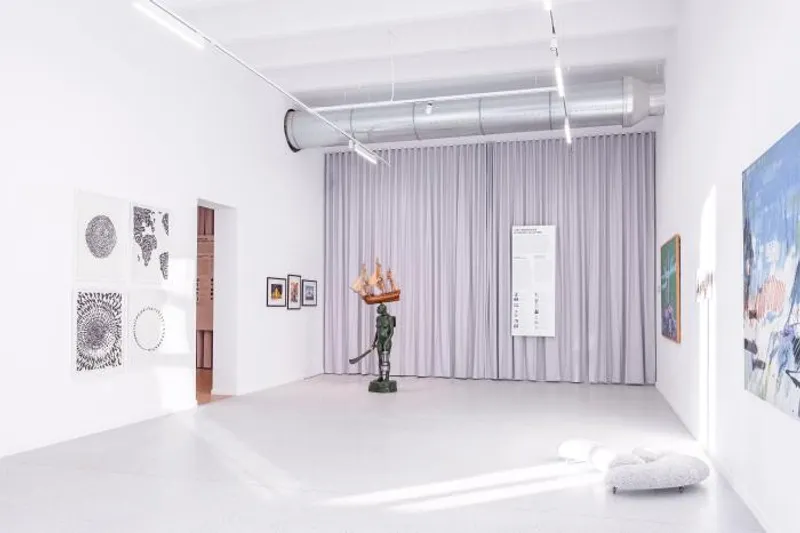
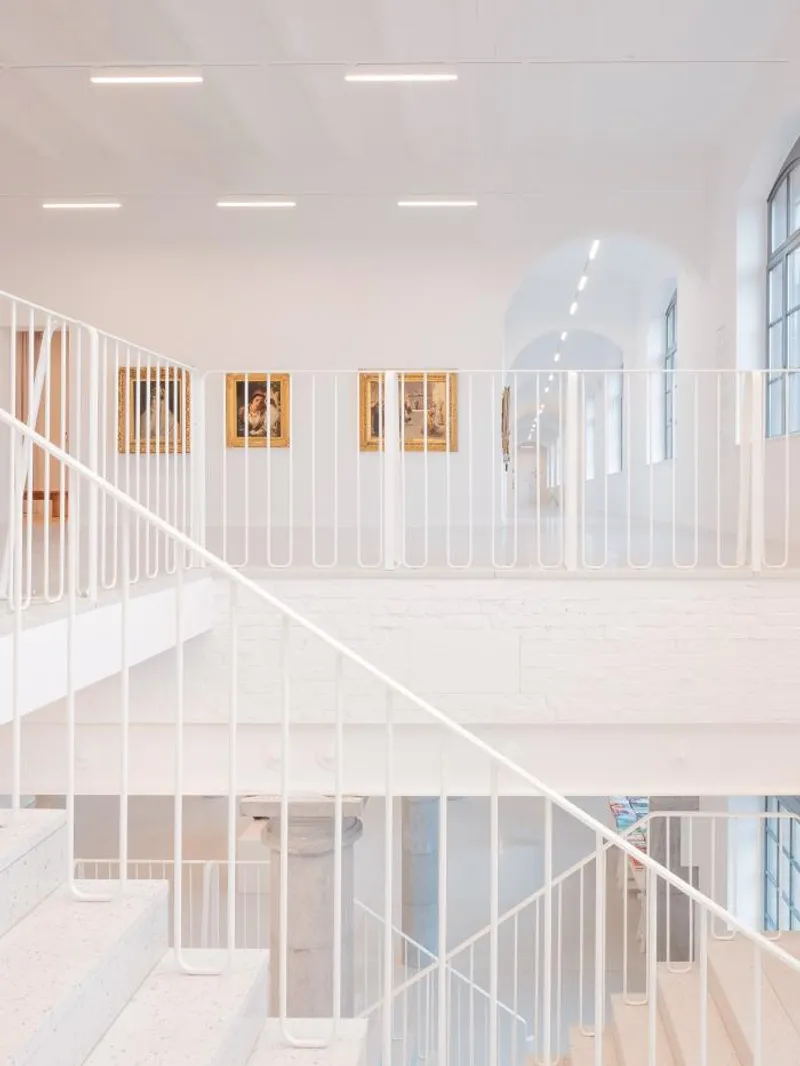
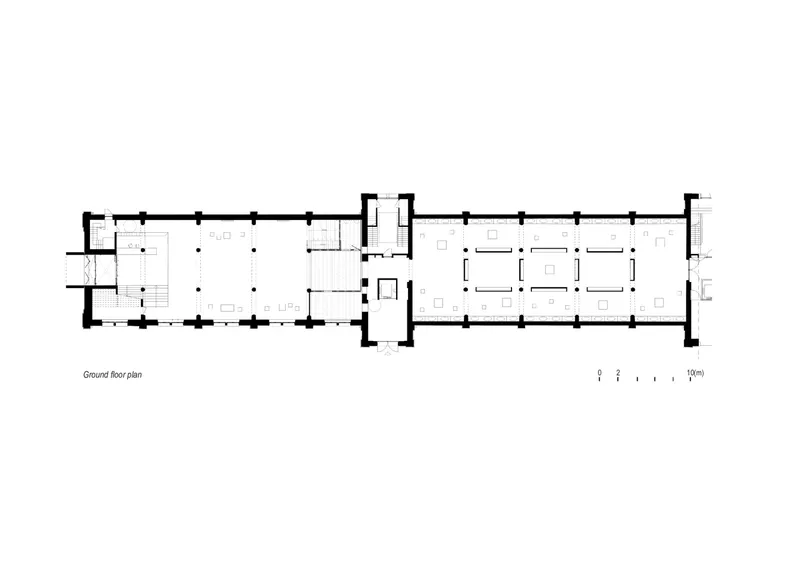
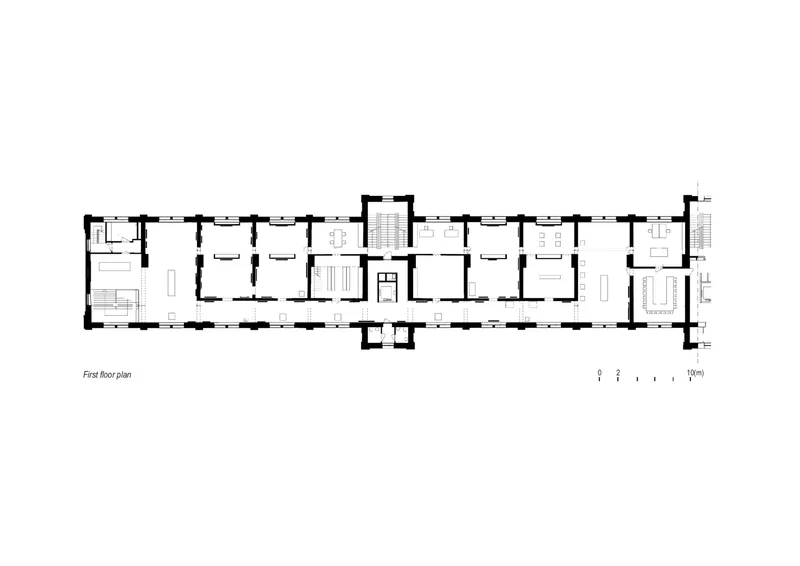
The spacious landing is punctuated by the reception desk and connects to the monumental staircase that serves both the first floor and the upstairs rooms. It also defines the entrance to the interior, connects the two exhibition floors and constitutes the starting point of a logical museum path. Articulated between three floors, the museum consists of two exhibition floors and an administrative floor under the roof. The first floor consists of two monumental rooms with double-height ceilings, brick vaults and blue stone columns structuring the space.
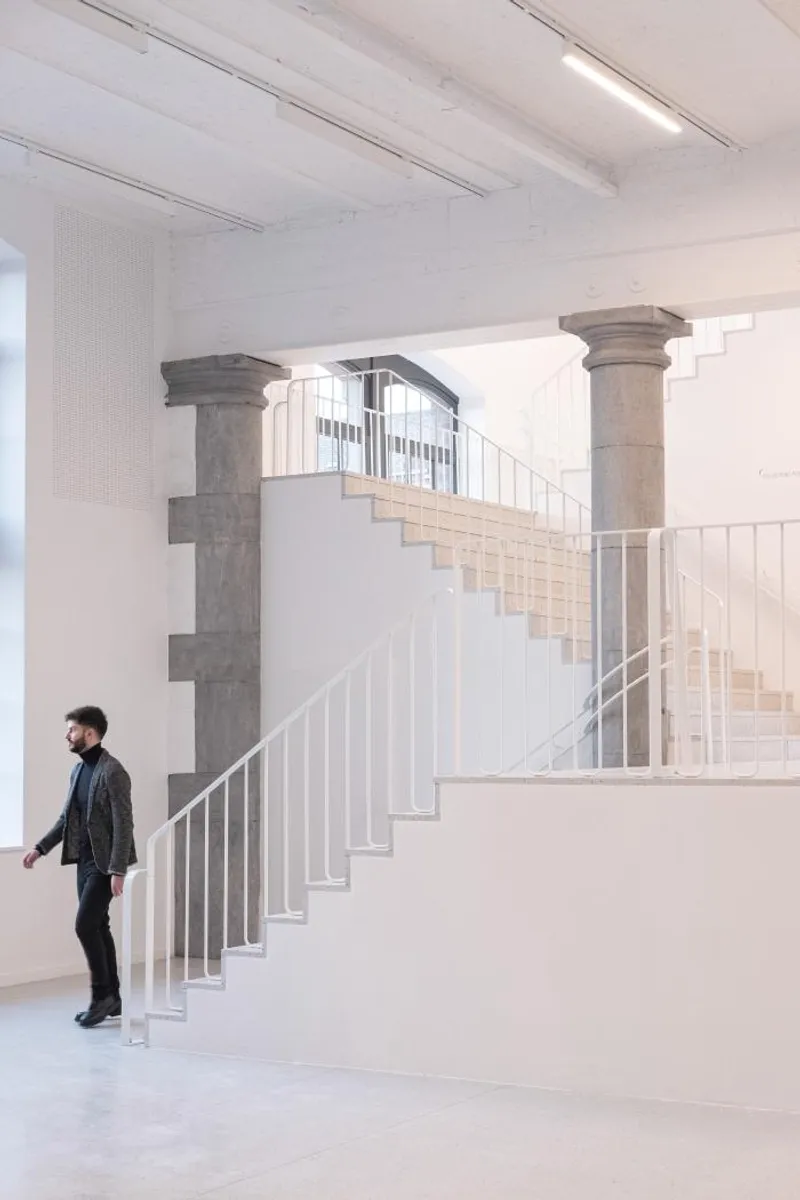
The first one serves as an agora, a reception area for visitors, allowing events to be held. A second monumental space is located in the continuity of the agora, although the transition between the two spaces is marked by a spatial pinch like an airlock preserving the privacy of the different occupations. This second room is dedicated to temporary exhibitions. For this purpose, the furniture, and support of the works, are mobile and based on the distance between the stone columns allowing to the creation of various scenographies. The first room, in the visual continuity of the entrance, is conceived as an agora that can accommodate openings and other conferences. Punctuated by blue stone colonnades, the space is designed to be versatile.
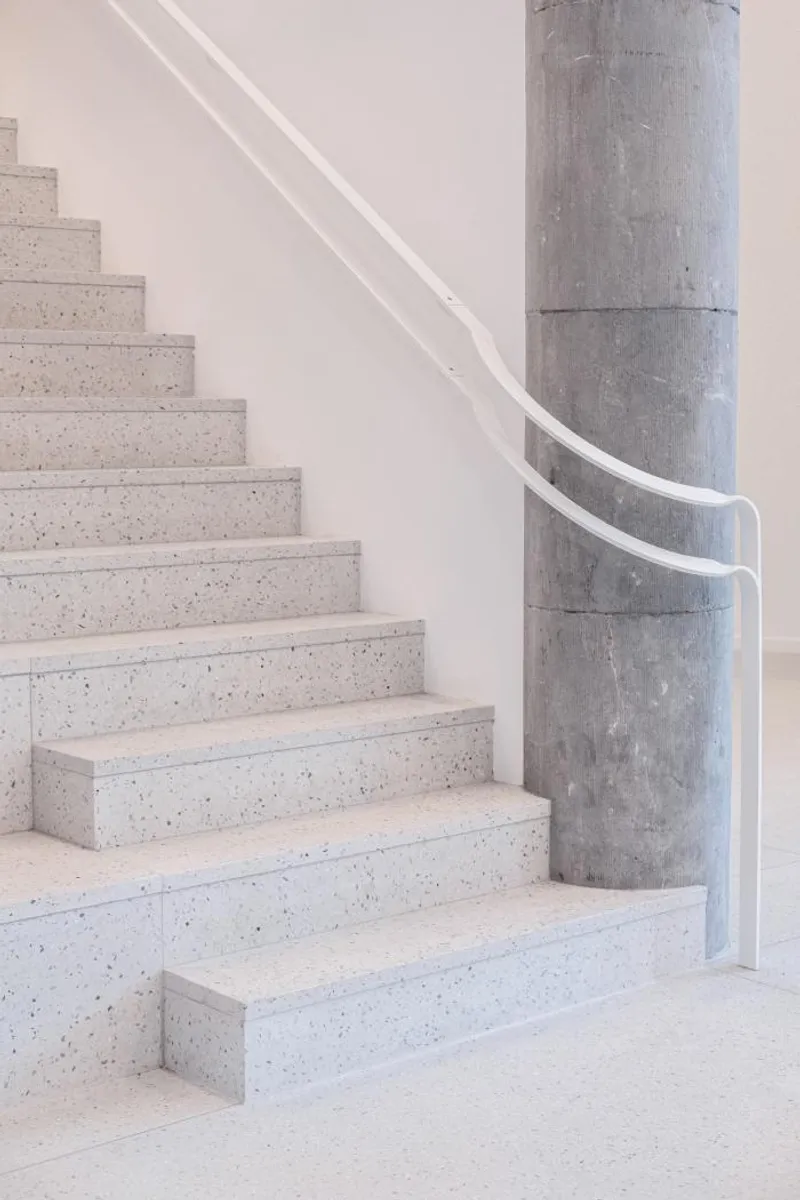
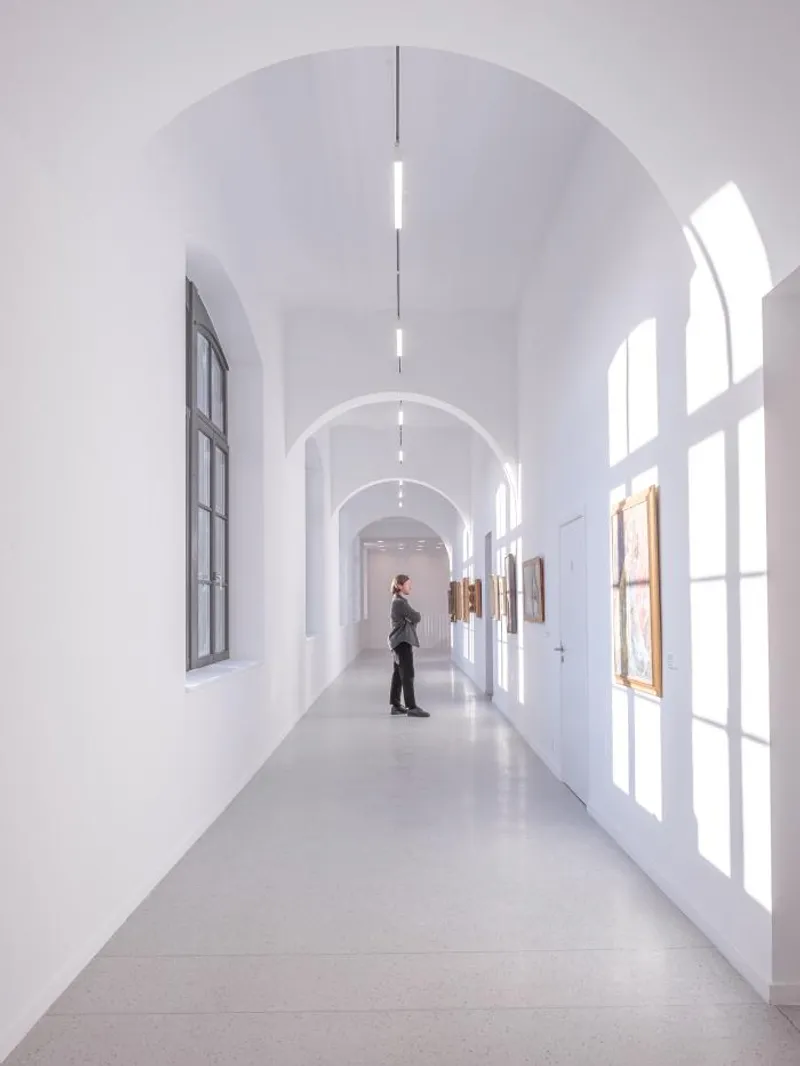
A staircase serving as a tribune leads to a mezzanine used for workshops or as a refectory for groups of visitors while maintaining an important visual relationship with the agora. On the sides, carpentry elements reinterpret the horse troughs, recalling the original function of the building. One of the major challenges of the project was the path of visitors within a building where the floors did not communicate. The creation of a monumental staircase separating the entrance from the museum spaces made it possible to materialize the visual and physical connection between the floors. Two previously isolated levels now communicate. Punctuated by a gallery running along the listed façade, the intervention within the building had to be thought out in order to protect the works from the harmful rays of the sun.
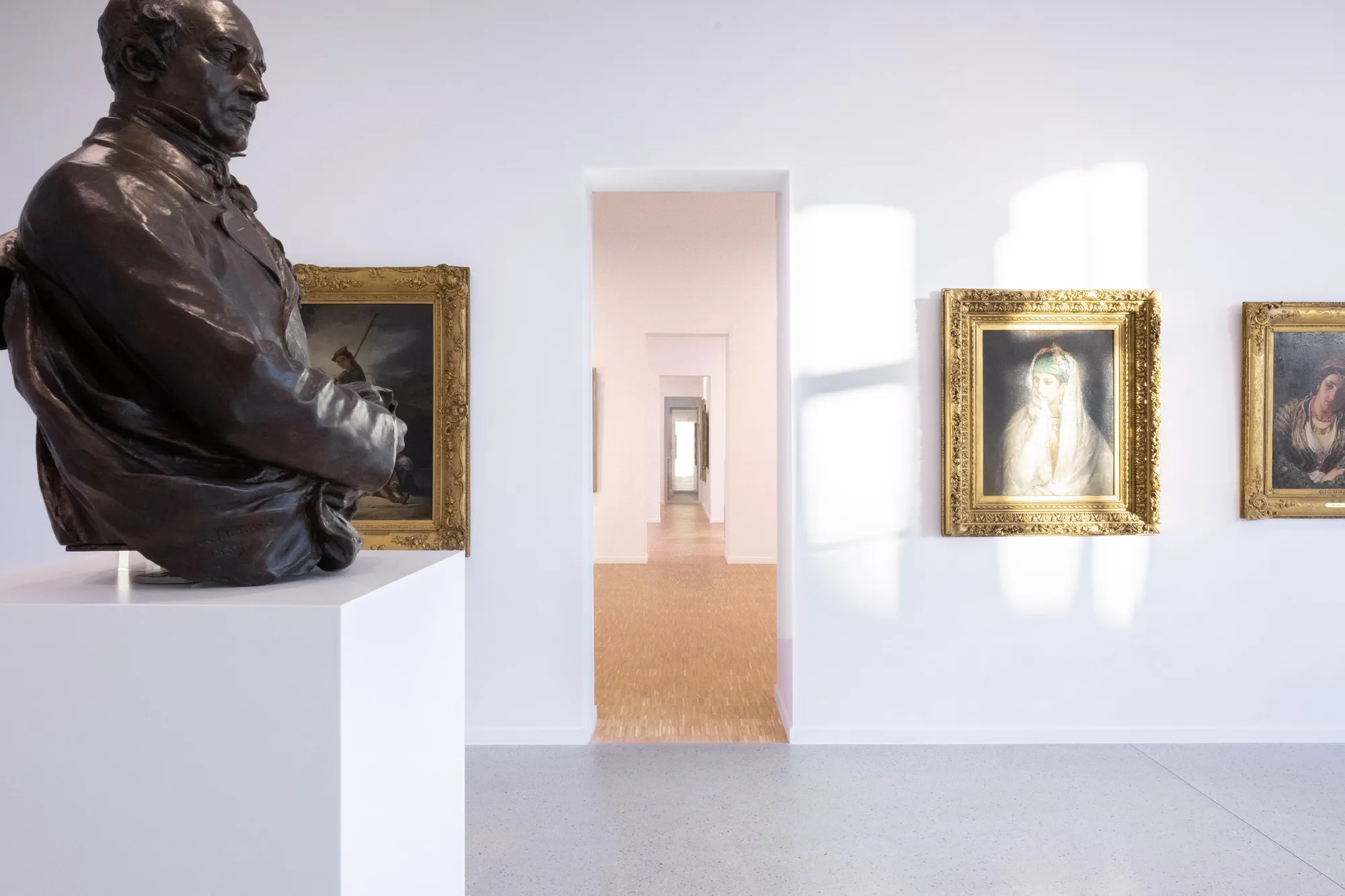
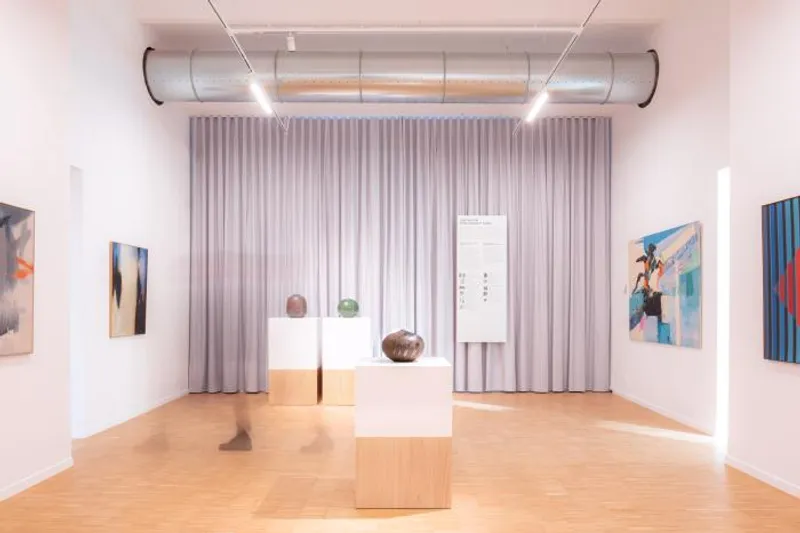
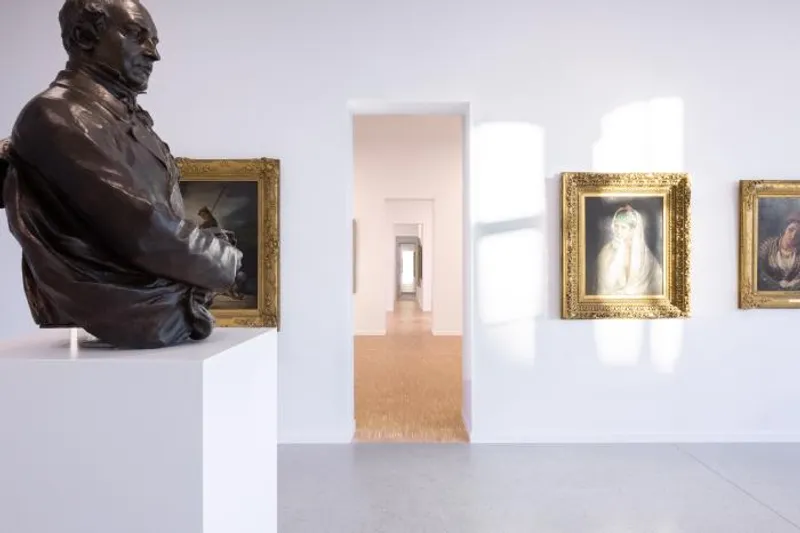
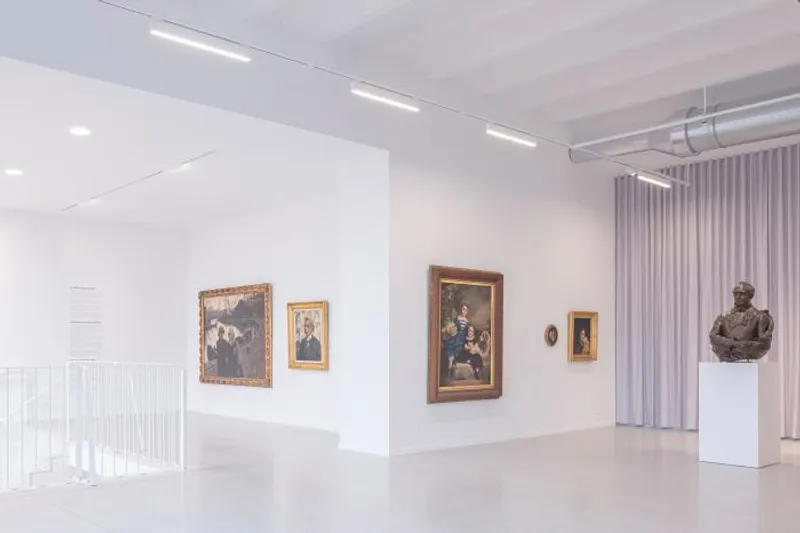
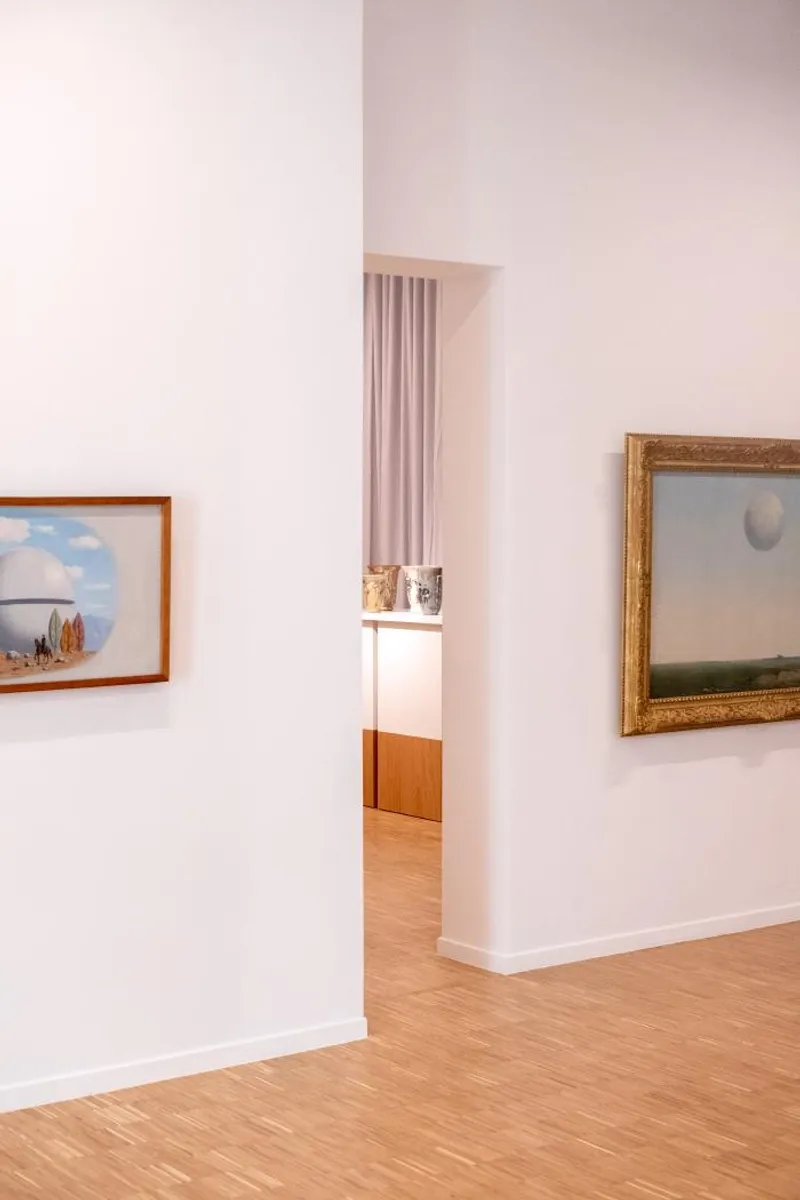
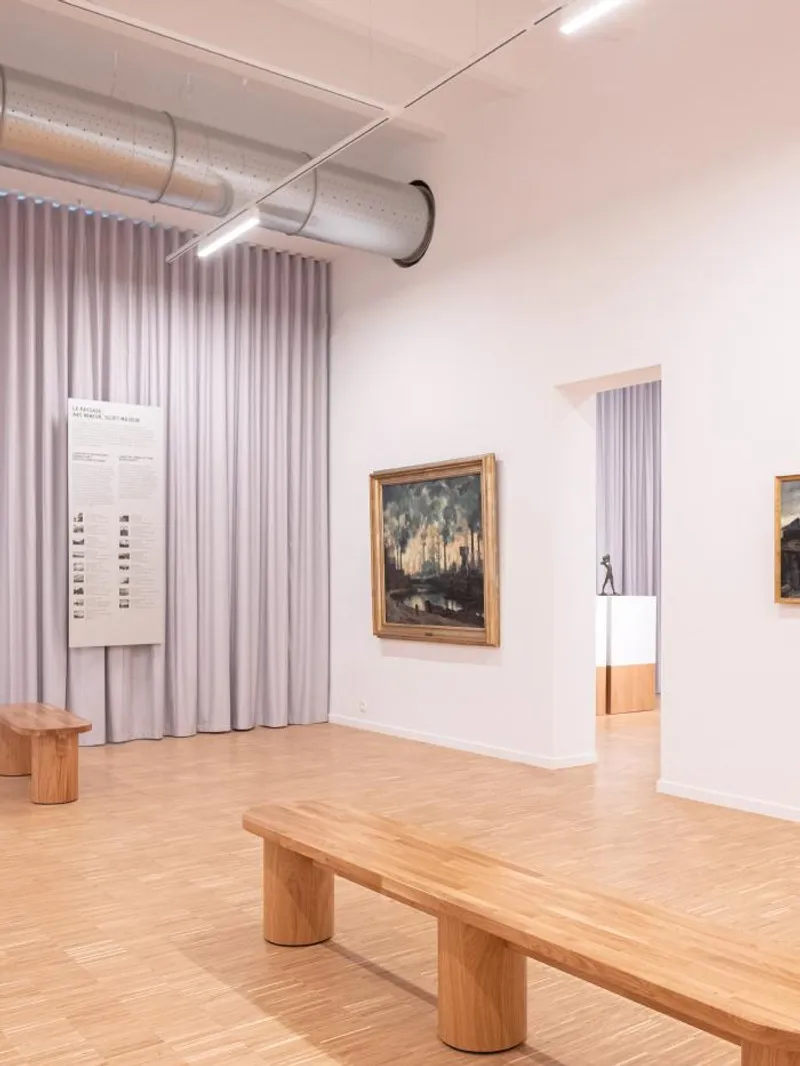
The exhibition spaces are now in second daylight while the windows illuminating the gallery are treated with an anti-UV filter to protect the paintings. On the second floor, where the permanent collection is exhibited, the mineral and open atmosphere of the first floor gives way to more intimate and warm exhibition spaces. The different rooms, following the principle of antechambers, are connected by openings positioned and designed to emphasize the succession and transition between the spaces by means of high and narrow bays.
The passage between rooms also materializes the transition from one epoch or movement to another one. On the other hand, the journey is accentuated by a generous and open space both at the beginning and at the end. An uninterrupted portrait gallery finally brings the visitor back to his starting point, the museum entrance.



Popular Articles
Popular articles from the community


Co-life: Sustainable Architecture for Age-Friendly Community Living
Co-life reimagines sustainable architecture for seniors through courtyards, rammed earth, shared gardens, and spaces designed for belonging.

The Earth Pod: 3D Printed Homes for Resilient Refugee Communities
The Earth Pod reimagines refugee housing through 3D printed homes made from clay, combining resilience, self-sufficiency, and rapid shelter.

Play: Fragments of Their World
Familiar architecture becomes modular playground design, creating safe spaces where displaced children can learn, connect, imagine and play.

The Musturak Paradise: Senior Living Architecture for a Connected Future in Temara, Morocco
The Musturak Paradise reimagines senior living architecture in Temara via private homes, social spaces, culture, community, and shared care.

Similar Reads
You might also enjoy these articles
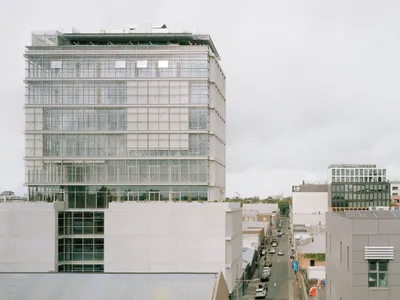
116 Rokeby Building, Collingwood
Sustainable Collingwood office building featuring double-skin façade, natural ventilation, rooftop amenities, and carbon-neutral design focused on wellbeing and longevity.
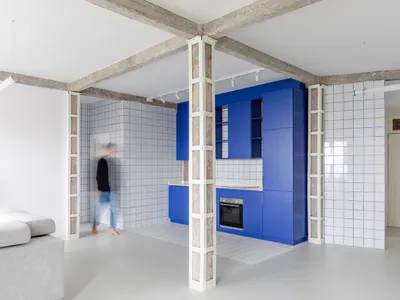
Contemporary Apartment Renovation in Spain: RV House by BIAN Opens Up to the Sea
A minimalist 1930s apartment in Santander is transformed into a flexible, sea-facing home through contemporary Spanish renovation.
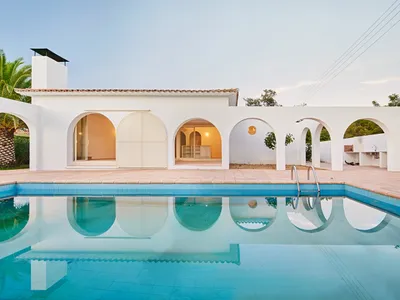
3 Marías House: A Contemporary Mediterranean Courtyard Retreat by Bajet Giramé + Burckhardt
Mediterranean courtyard home blending traditional architecture with modern design, terracotta flooring, flexible interiors, sustainable climate strategies, and garden integration.
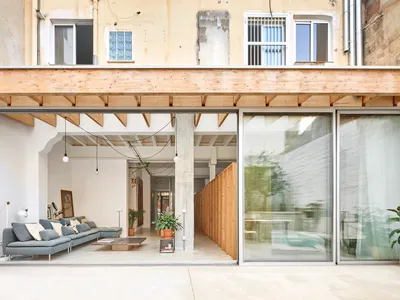
NZ10 Apartment by auba studio: Adaptive Reuse in Palma de Mallorca
Adaptive reuse apartment transforms bakery into light-filled home with patios, privacy layers, and wood interiors enhancing urban living experience.

Explore Museum Typology Competitions
Discover active competitions in this discipline




Challenge to reimagine the Iron Throne


Photograph architecture without architects


Illustrate the lost glory of Angkor Wat - Render Challenge


Bring back Drive In's
Comments (0)
Please login or sign up to add comments
No comments yet. Be the first to comment!