

Student Housing Consept
Container Setup

I first started trying out various models from Jenga blocks that remind me of containers. I chose 3-4 designs that are useful, logical and have a low footprint, and modeled them in 3d with simple container-sized boxes. Later, I started focusing on 2 models, but one of the models was very similar to the examples made, considering the possibility of making similar models in other participants, I chose the other model in my mind, the model I participated in the competition. In this model, it was a big advantage for me that there were only 3 containers touching the ground, the footprint of the structure was small, and the remaining areas were suitable for use for other activities. I designed this student housing concept project, which consists of containers, to be placed on the empty land rented for a certain period. I tried to increase the space efficiency by using the containers at an angle and to enable the students on the upper floor to use a certain part of the containers on the lower floor as a terrace. Therefore, the angle of the containers was very important, I came to the conclusion by experimenting many times. For terraces; I thought of using wooden frames on the upper parts of the containers below and the sections with gaps on the bottom with steel frames and using a wood-like composite deck / wood deck on it.
In this 4-storey design, consisting of 15 containers each measuring 40 'x 8' x 8'6 ", I had 3 containers on the first floor and 4 each on the other floors. I wanted to give them so I reserved the 2 containers on the first floor and designed the containers to be single-person, suitable for both disabled and regular students.Another container on the first floor is a common area for students to spend time with their friends in a different place than their room. On the remaining 3 floors of the model, I created designs consisting of 12 containers and a capacity of 24 people with 2 people per container, as a result, my design consists of 24 + 2 disabled students and a common area.
I solved the circulation in the model with 4 different stairs; Two of them only go up to the third floor, while the other two go up both the second and fourth floors. At the same time, only two containers on a floor can be accessed from a staircase, and the areas where the stairs are connected to the building can be used as the terrace of these two containers. In addition to these, I used all the container roofs that can be used as extra terraces. From the 12 containers on the second, third and fourth floors, I added an extra door to those with an exit to the extra terraces, and glass to the part where I added doors to containers with no exit. In these containers, I designed the kitchen and toilet to be used as common space for two people. In the field specific to the individual; I placed a bed, desk, cupboard, armchair, TV and furniture that could be used as a separator, a coffee table and a shelf. Since I designed all the containers in this project with the student housing concept as a minimal space and in order not to make the rooms feel even more minimal, I took care to use generally light colors and not to create narrow spaces in the placement of the furniture.

Popular Articles
Popular articles from the community


Extended Shell: Retrofitting Kolkata's Balconies as Living Urban Thresholds
A modular retrofit system recovers the social and environmental intelligence of Kolkata's historic verandas for contemporary Park Street residents.

Singing Woman: An Opera House That Performs Before the Curtain Rises
Ovidiu Cristian Pavel's conceptual opera house translates Estonia's choral identity into a sculpted waterfront landmark facing the Baltic Sea.

The Amber Palace Opera: A Geological Fiction Surfaces on Tallinn's Baltic Waterfront
Pierre Brillard reimagines a Baltic legend as a public landscape, opera house, and waterfront promenade rooted in Tallinn's coastal identity.

Opera on the Sea: Driftwood Logic Shapes a Timber Opera House on Estonia's Coast
Trevor Orgill's opera house translates the entangled drift of floating timber into a civic building where wood, water, and music converge.

Similar Reads
You might also enjoy these articles

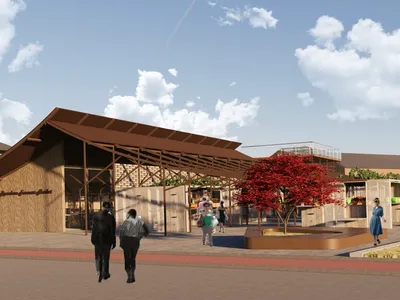
The Rhythm of Seasons
A Farmers' Market Connecting Nature and the City
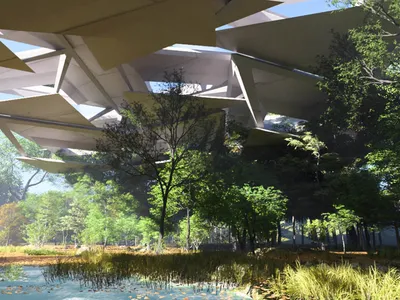

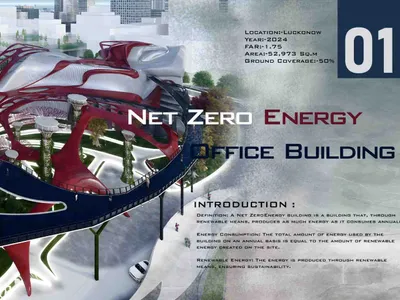
More Than a Building-Designing a Living System
More Than a Building-Designing a Living System
Base Beyond
DESERT COMPOUND ARID: TOURISM OF ABSENCE AND ABUNDANCE

Explore Container House Competitions
Discover active competitions in this discipline


Challenge to reimagine the Iron Throne

Photograph architecture without architects

Illustrate the lost glory of Angkor Wat - Render Challenge

Design challenge to reuse E-waste
Comments (0)
Please login or sign up to add comments
No comments yet. Be the first to comment!