
Studioninedots Stacks Five Luminous Boxes into a Vertical Family Home on Amsterdam's Newest Island
On Centrumeiland's self-build waterfront, a 257-square-metre tower of glass brick and steel redefines domestic life as a climb toward light.

Amsterdam's Centrumeiland is an artificial island built on sustainability ambitions and a self-build ethos: every homeowner commissions their own residence. That policy turns the neighborhood into an open laboratory for domestic architecture, and Studioninedots treats it as exactly that. Light House, completed in 2025 for a couple with two children, is a 257-square-metre tower that rises five storeys on a footprint narrow enough to read as a single room extruded skyward. Each floor is conceived as a distinct box dedicated to a single domestic activity: cooking and eating, retreating, sleeping, or gathering. The result is less a conventional house than a vertical village for four people.
What makes the project genuinely interesting is its refusal to treat verticality as a disadvantage. Most tall, skinny houses feel like compromises forced by tight urban lots. Light House inverts that logic. Stacking functions in discrete boxes lets each room claim its own character of light, enclosure, and view, while glass brick voids and open passages keep the whole composition visually connected. The family can be apart and together at once, a domestic strategy that only works because the section, not the plan, does the heavy lifting.
A Tower of Glass Brick and Metal
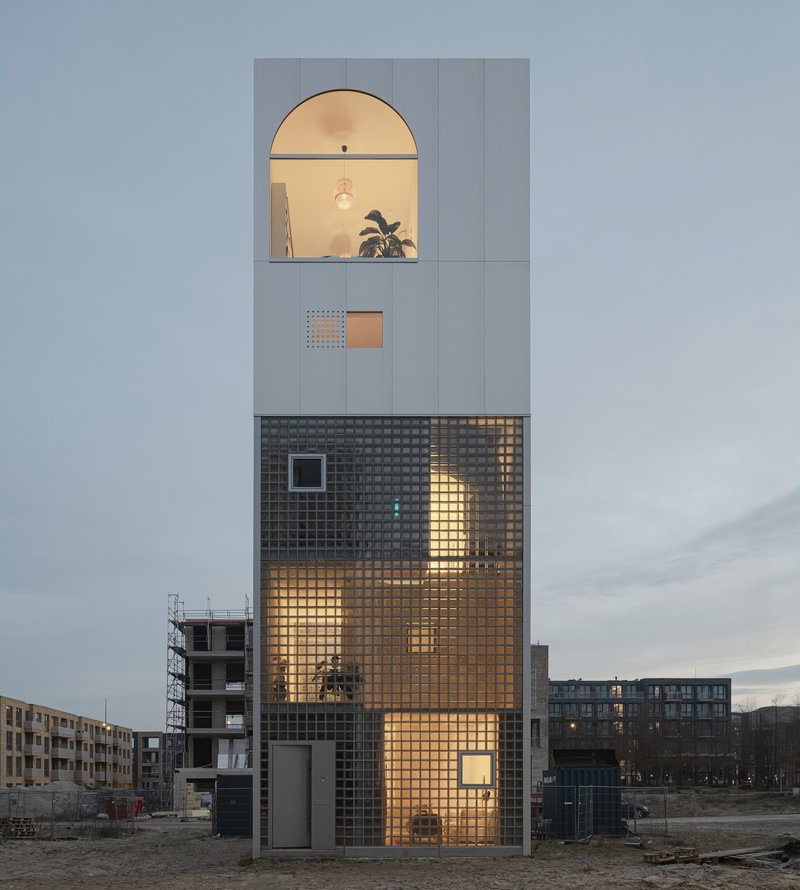
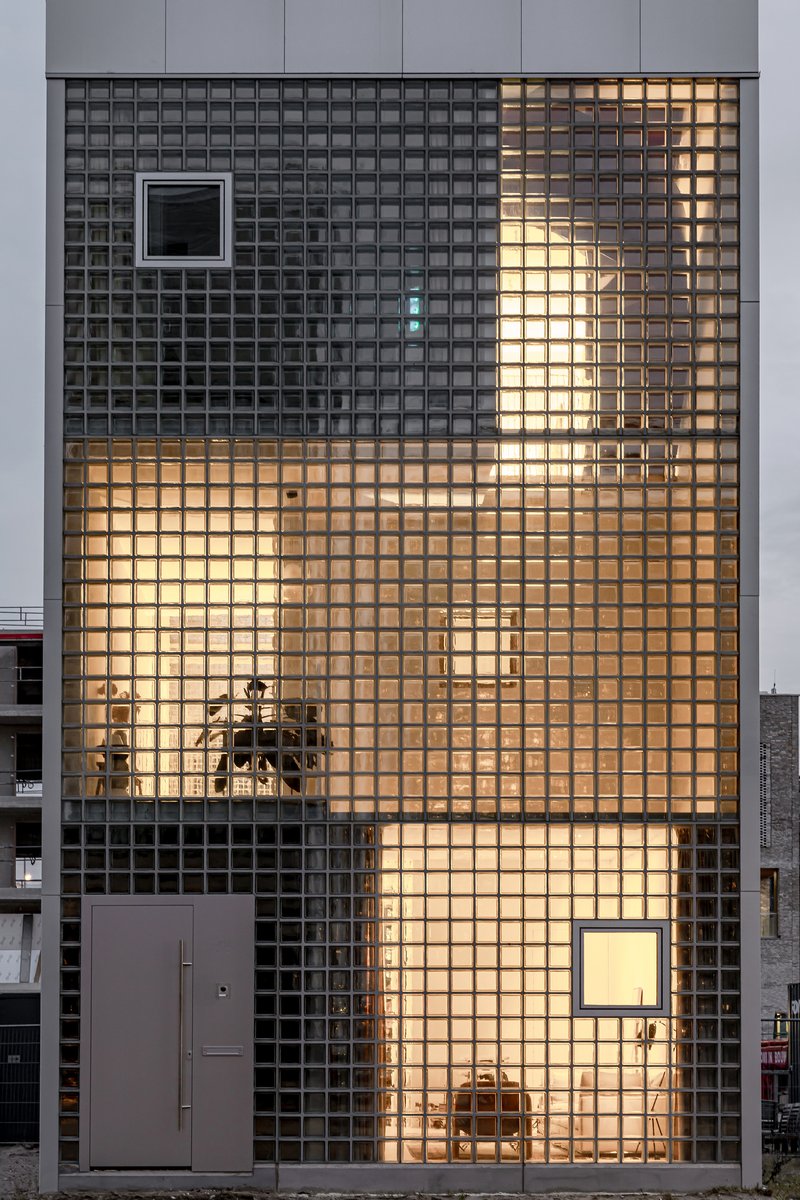
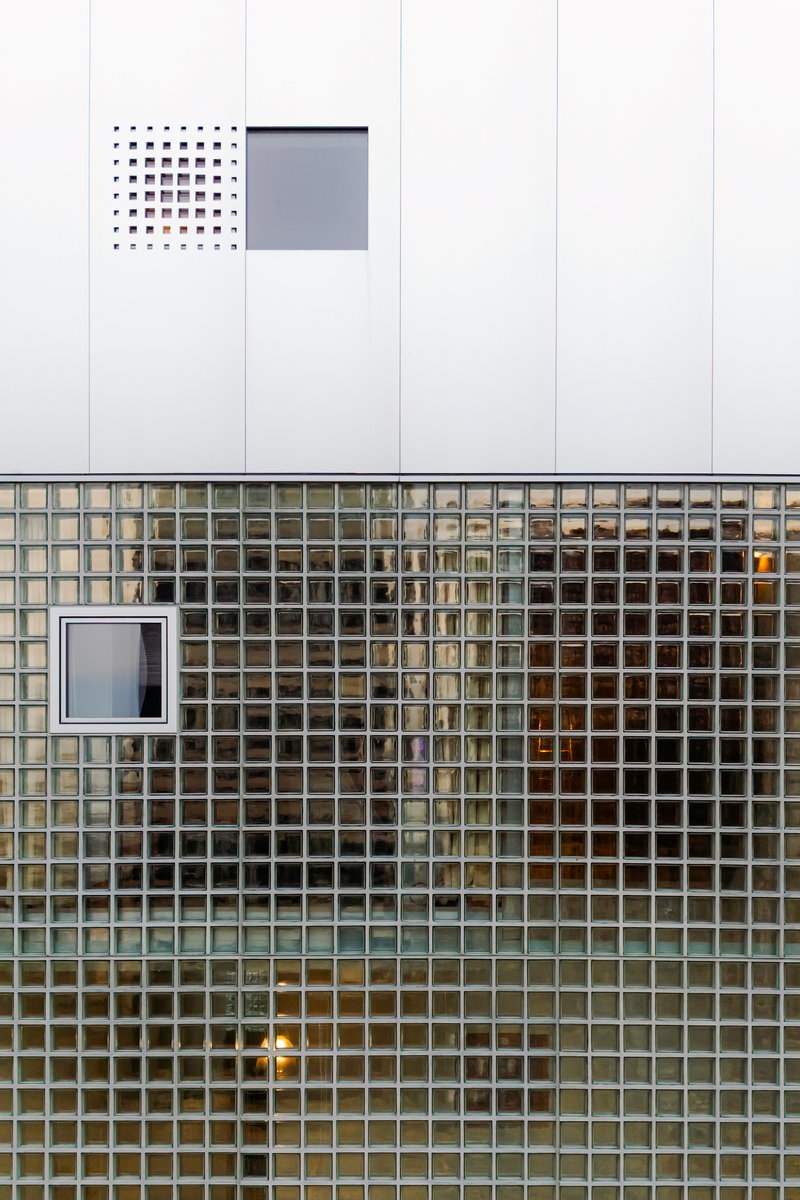
From the street, Light House announces itself through a base of dark glass bricks that gives way to pale, metal-clad volumes above, culminating in a tall arched window at the top. The glass blocks are not decorative afterthought; they are the primary device for managing the relationship between inside and outside. They admit generous daylight while distorting views just enough to provide privacy on a dense residential island. At dusk the effect reverses: the blocks glow from within, turning the facade into a lantern that registers every internal activity as soft, diffused warmth.
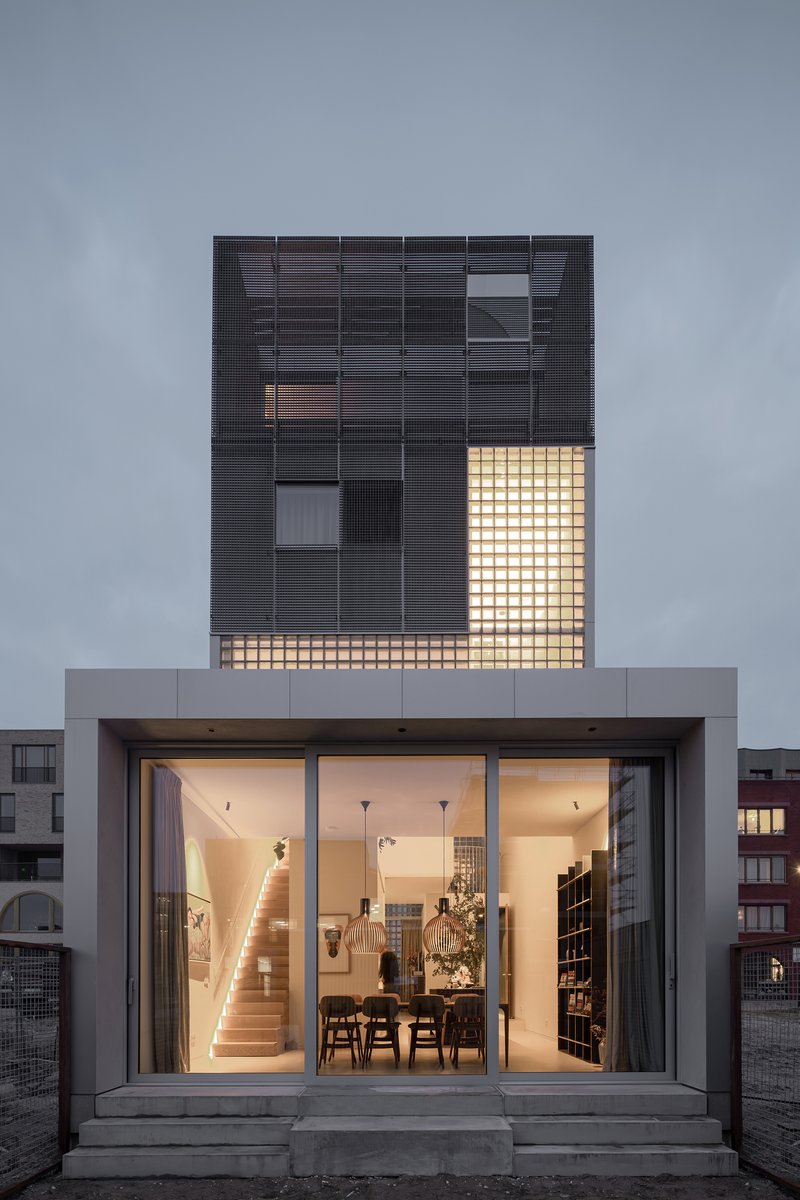
The rear facade mirrors this material logic with a concrete base and blackened glass brick upper level. Together the two elevations give the house an industrial character that suits Centrumeiland's experimental context without defaulting to the cladding-panel vernacular common on Dutch self-build plots.
Living Around a Tree
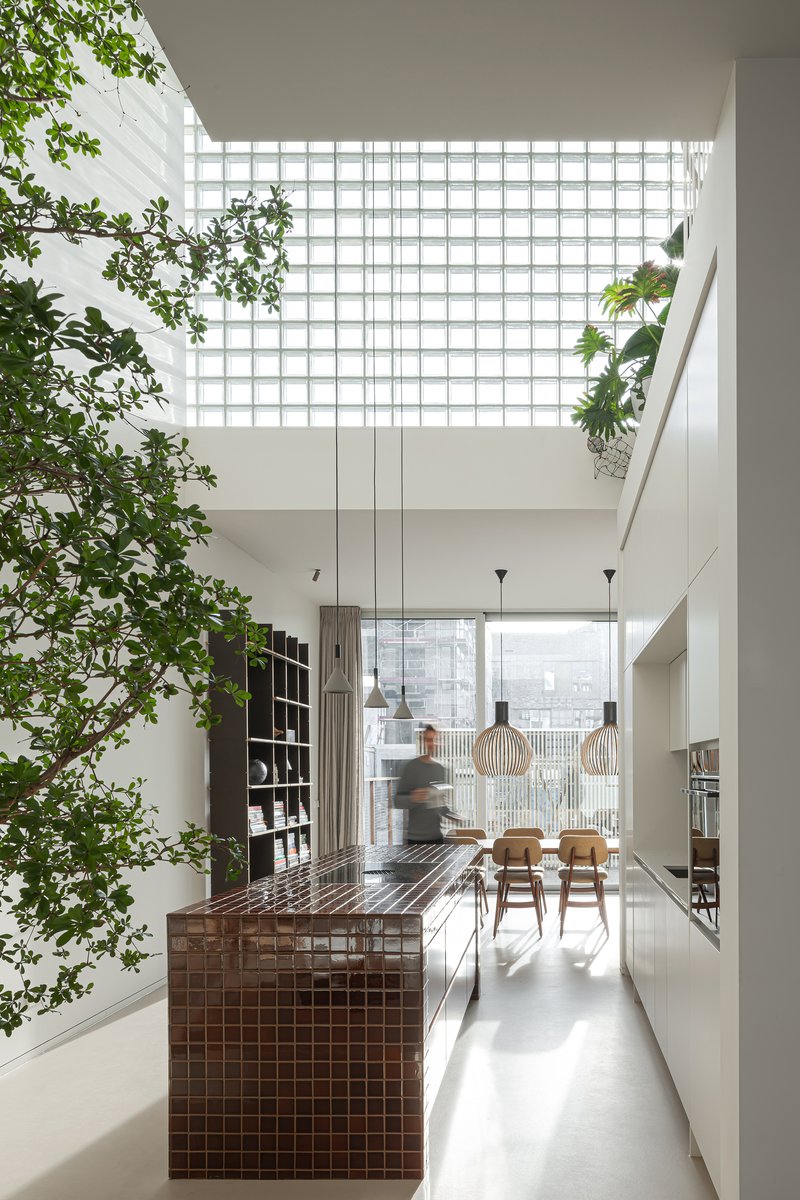
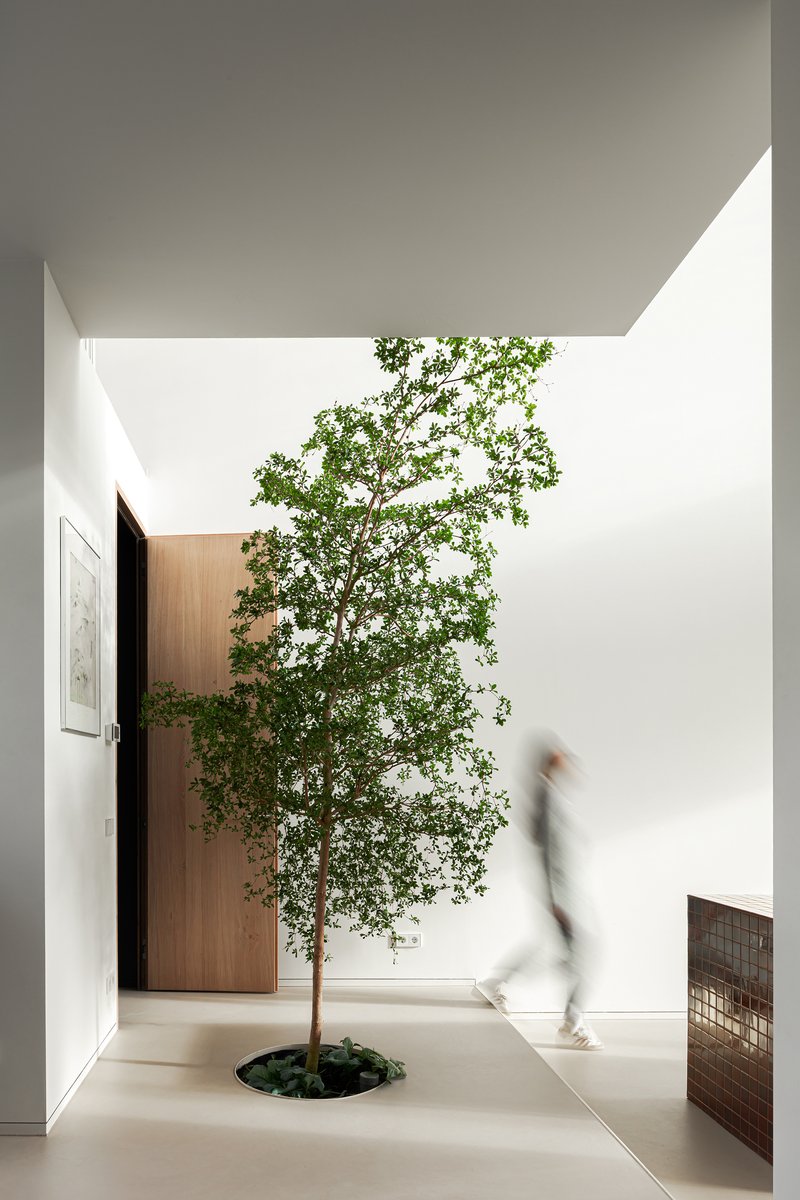
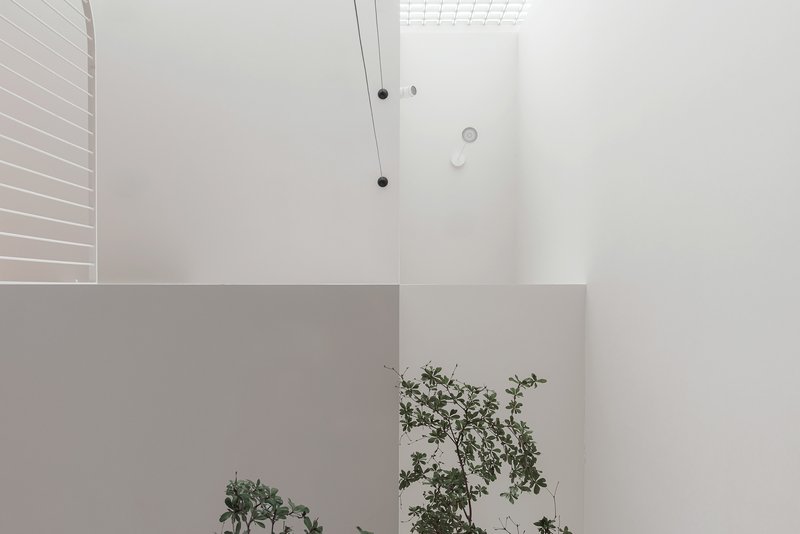
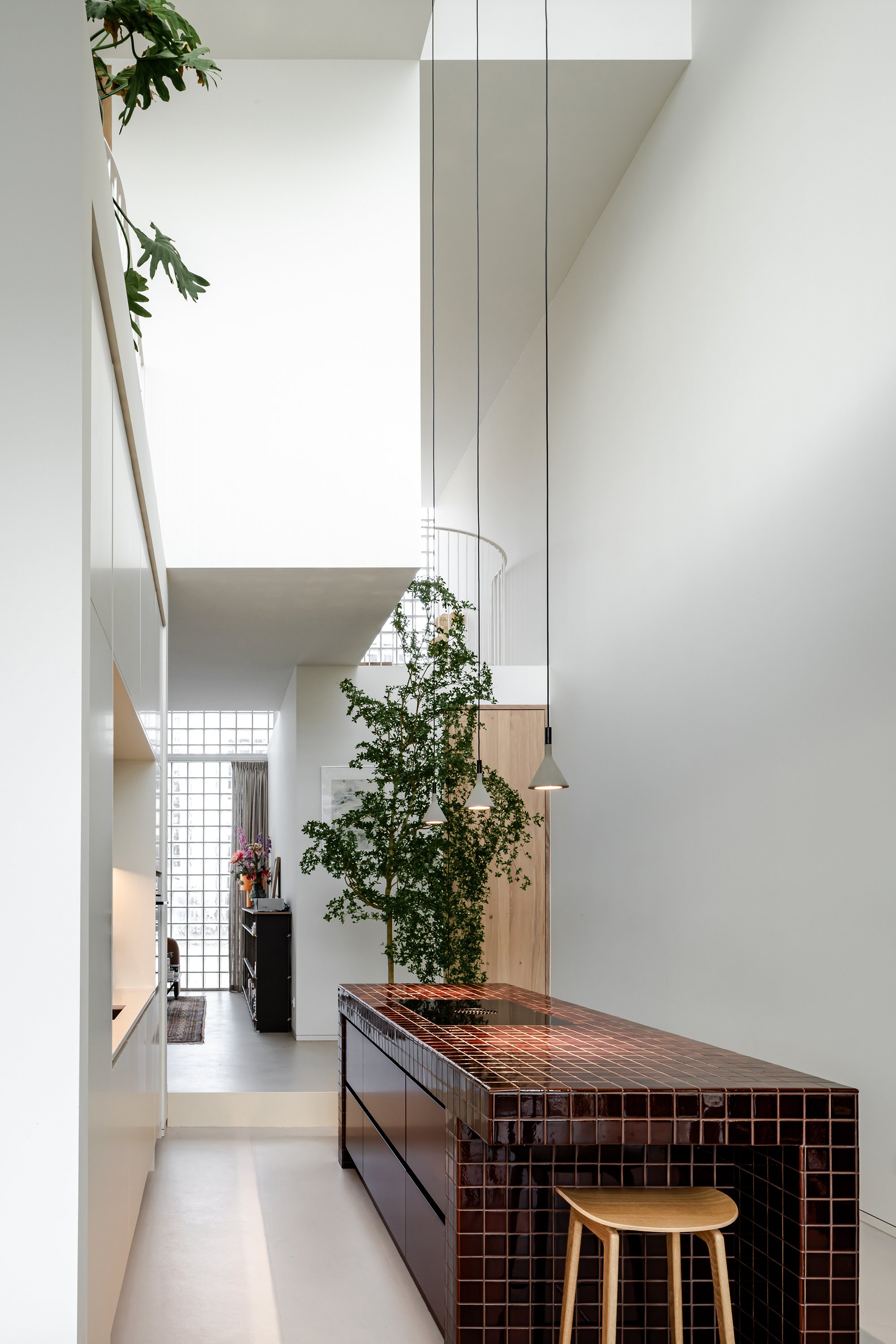
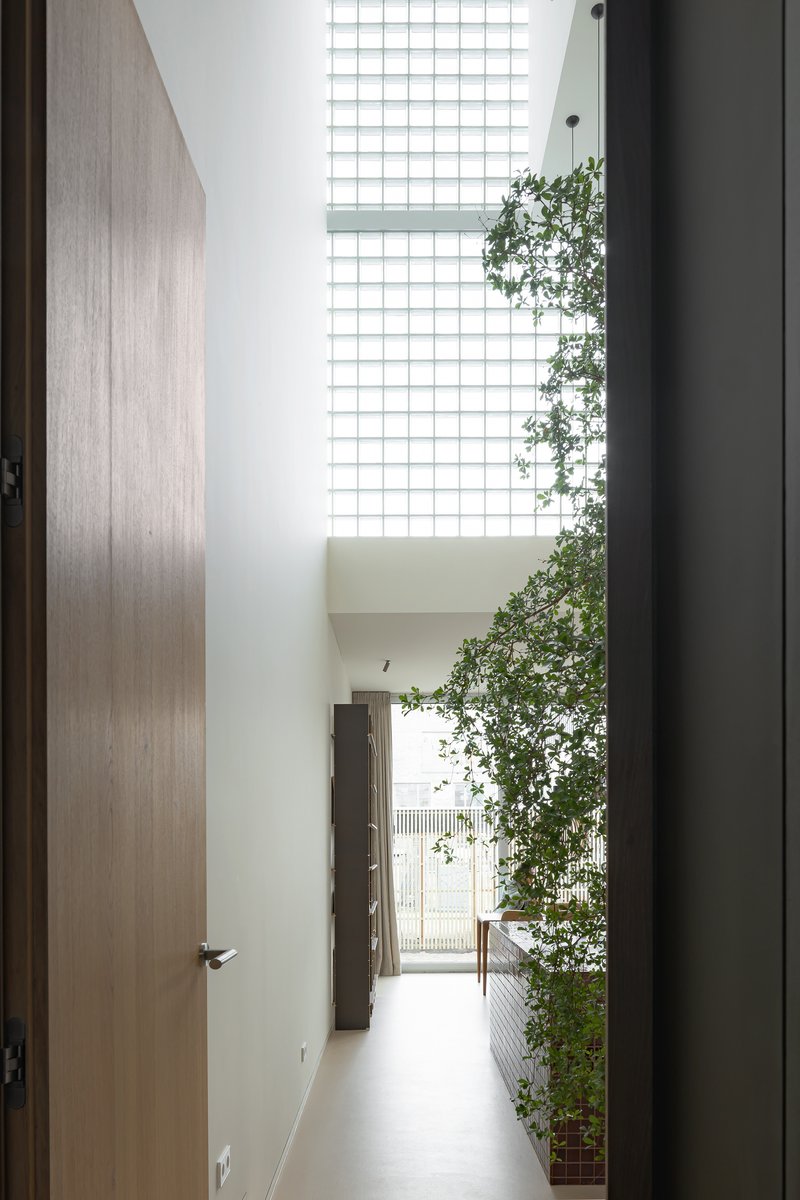
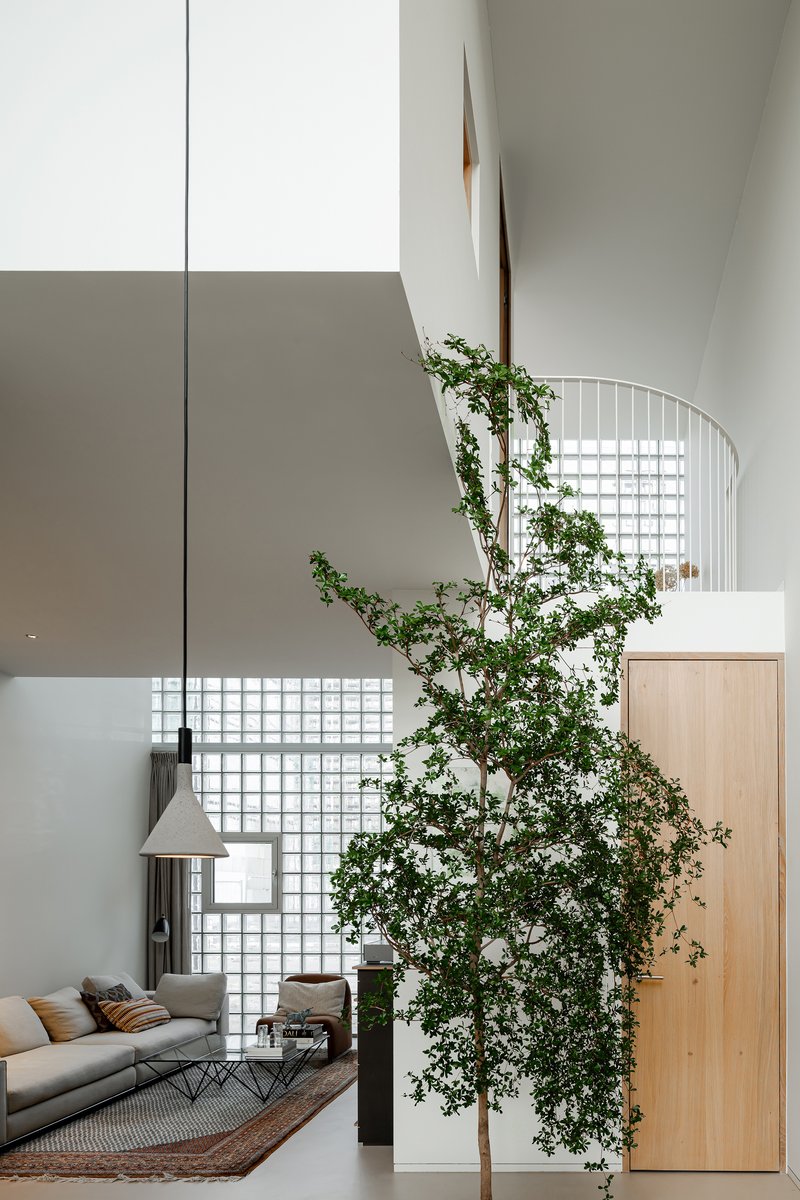
The ground level is a double-height volume organized, quite literally, around a tree. A circular floor opening lets the trunk rise through the interior, blurring the line between courtyard and living space. The kitchen island, clad in deep-red glossy tiles, anchors one side of this room while a glass block skylight washes the tree canopy from above. It is a domestic space that behaves more like a small atrium than a conventional open plan.
The courtyard logic recurs at higher levels through planted ledges and small outdoor pockets, so greenery is never more than a flight of stairs away. In a house this vertical, these moments of vegetation do real work: they give each level a horizon line that is not just rooftops or sky.
The Double-Height Core
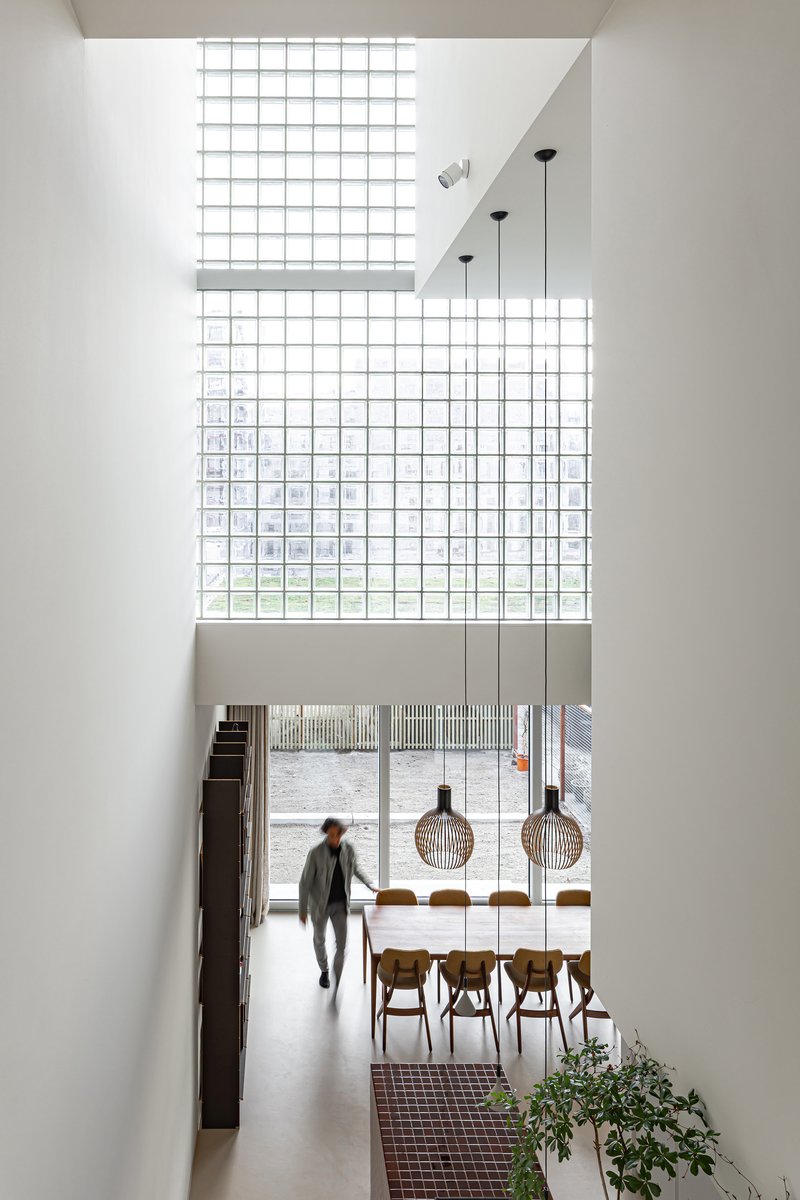
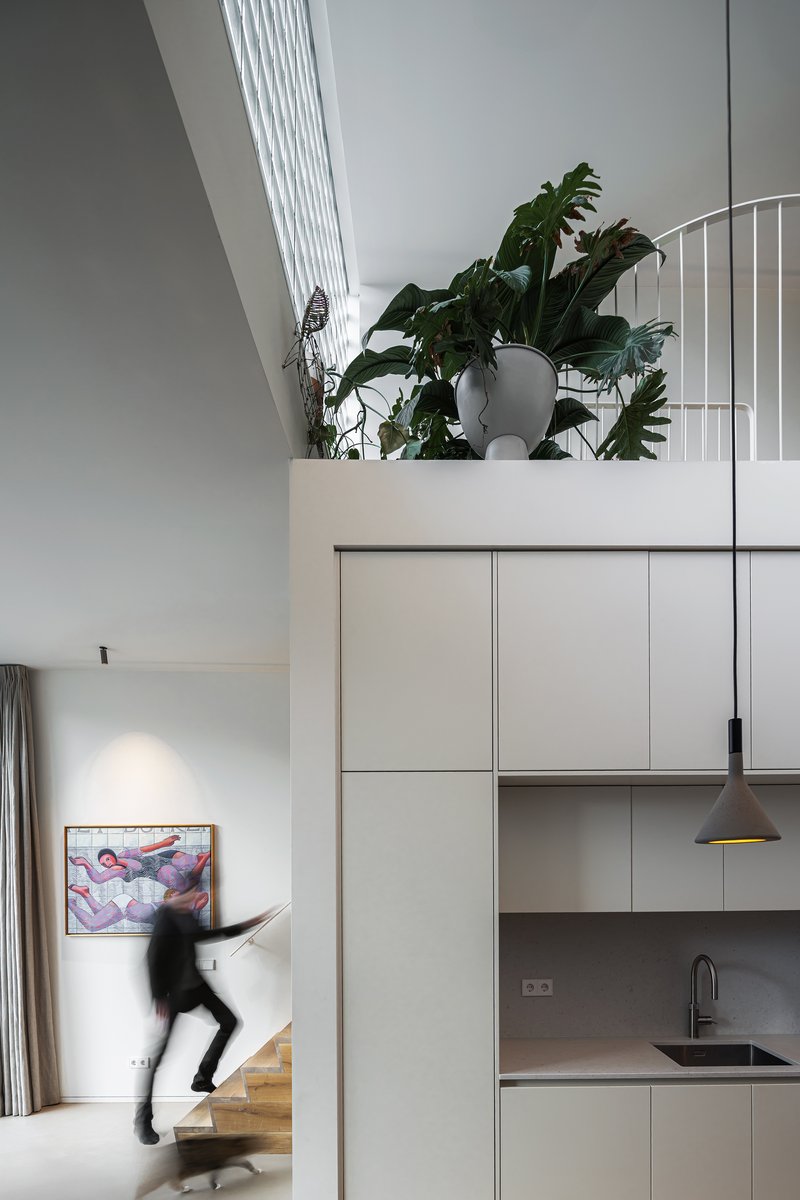
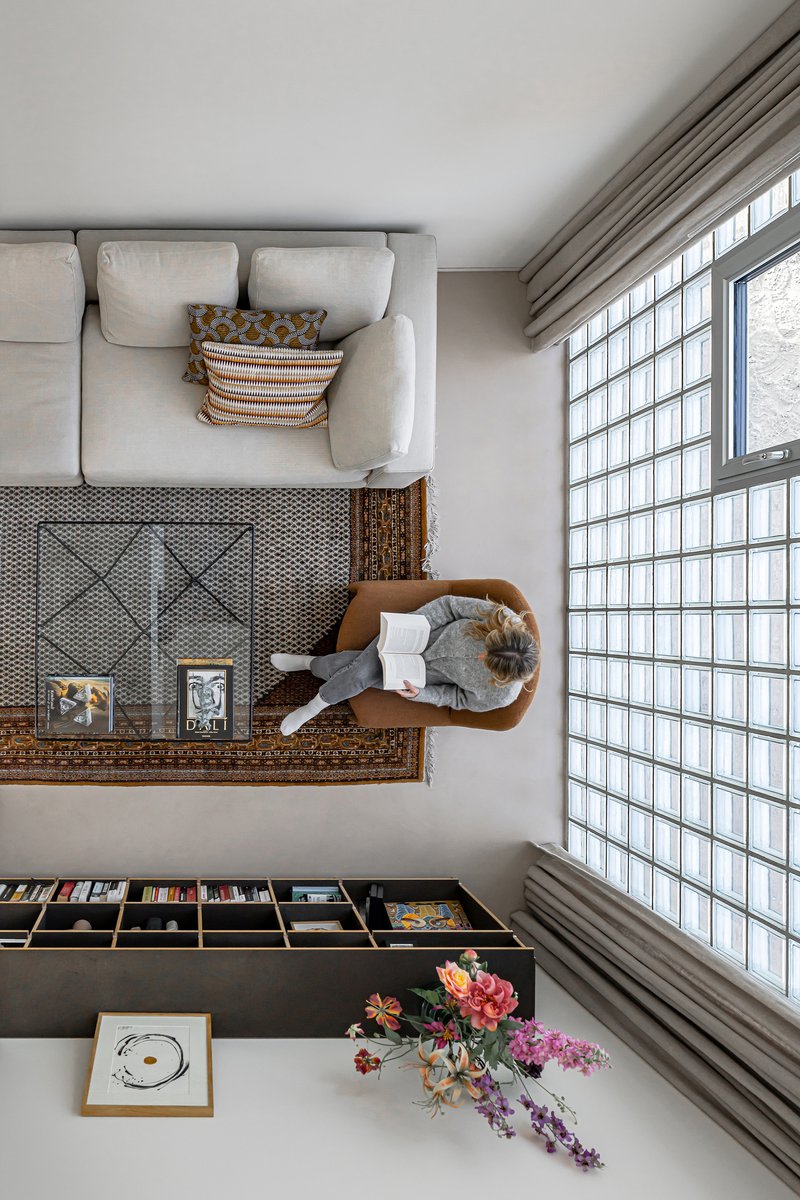
The spatial generosity of the ground floor comes from its double height, which lets the dining area breathe beneath a glass block clerestory. Pendant lights hang at domestic scale while the volume above them soars. A long timber stair connects the first three levels, threading along one wall and offering oblique views down into the kitchen and living space as you climb. Someone descending the stair can see someone seated on the sofa two storeys below, a kind of passive surveillance that keeps the family loosely connected without forcing togetherness.
Wire pendant planters dangle into the void, reinforcing the sense that the interior is a landscape to be inhabited at multiple altitudes rather than a stack of flat floors.
The Red Spiral and the Vertical Journey
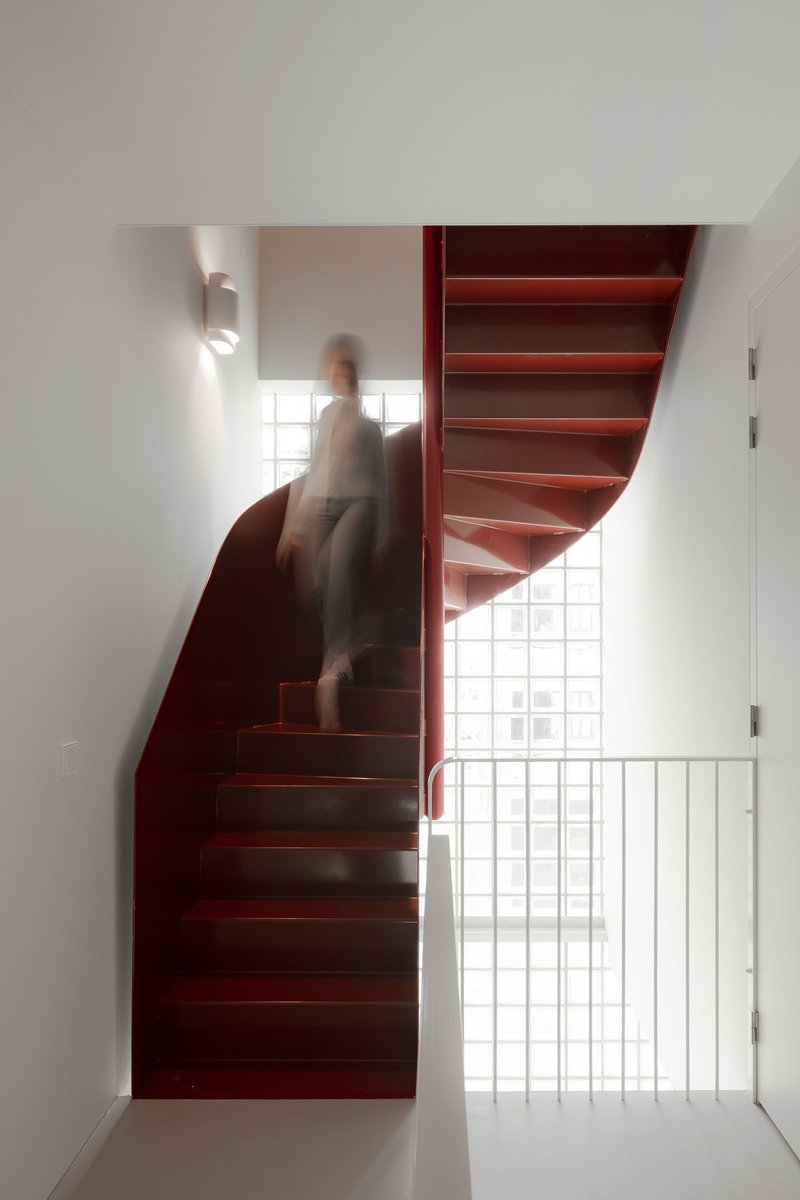
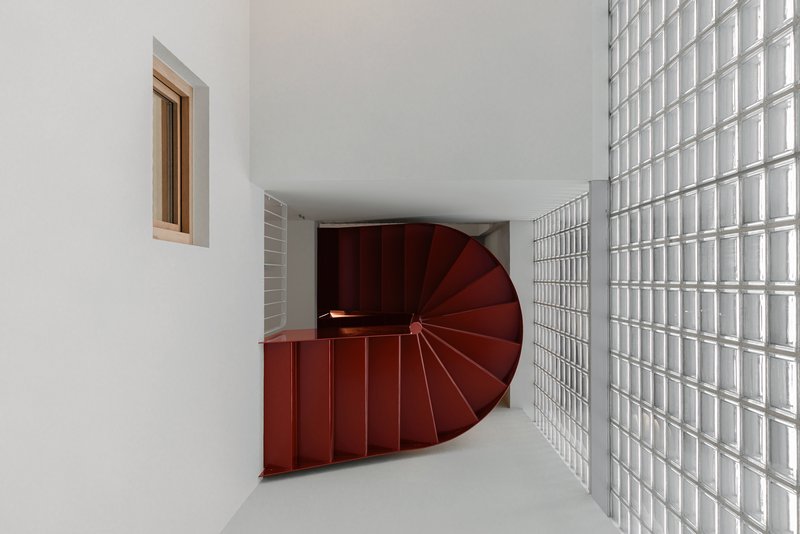
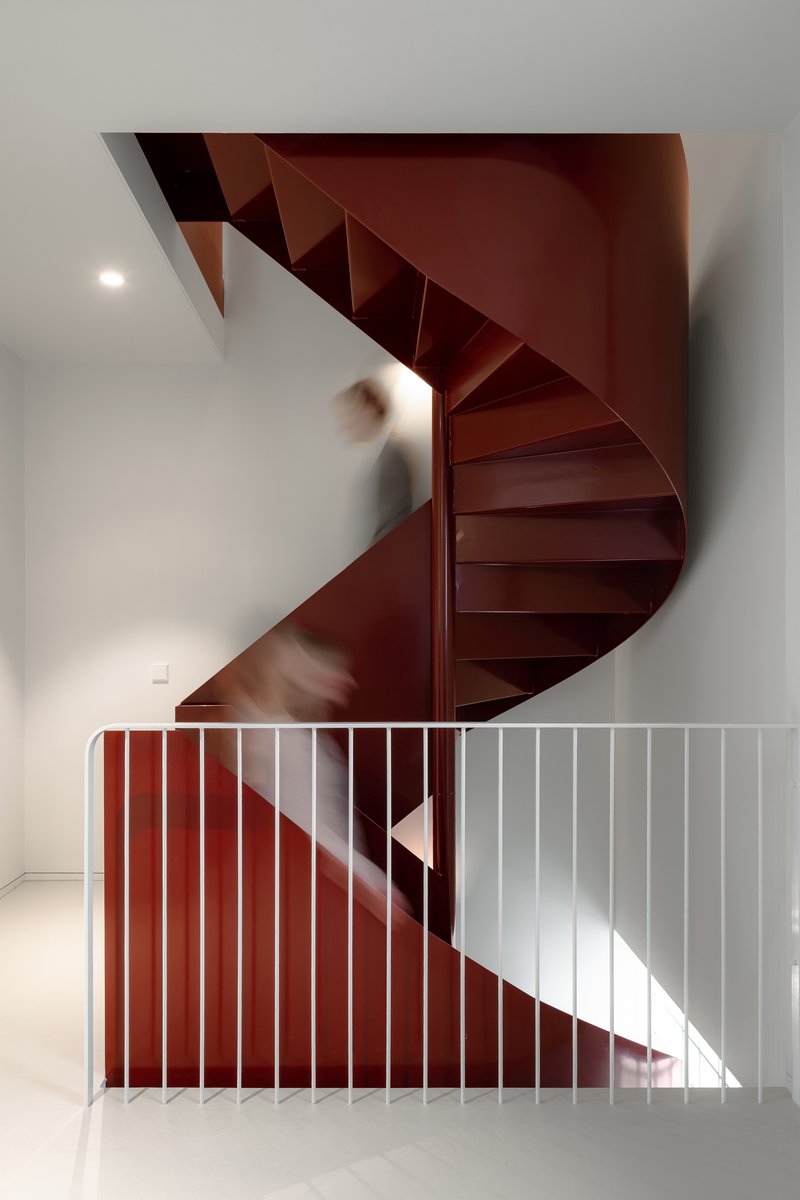
Where the timber stair handles the lower levels with a calm, linear ascent, a deep-red steel spiral staircase takes over at the second floor and corkscrews up to the top two storeys. The color choice is deliberate: against the predominantly white interiors, the maroon spiral reads as both a functional element and a sculptural event. Its vertical slat balustrade catches light in shifting patterns as you climb, and the glass block walls beside it throw soft, gridded shadows across the treads.
Studioninedots treats circulation not as leftover space but as the connective tissue that gives the house its identity. Moving between boxes is never neutral. Each transition compresses you through a narrow passage, then releases you into a room with a different ceiling height, light quality, or orientation. The journey matters as much as the destination.
Light as Material
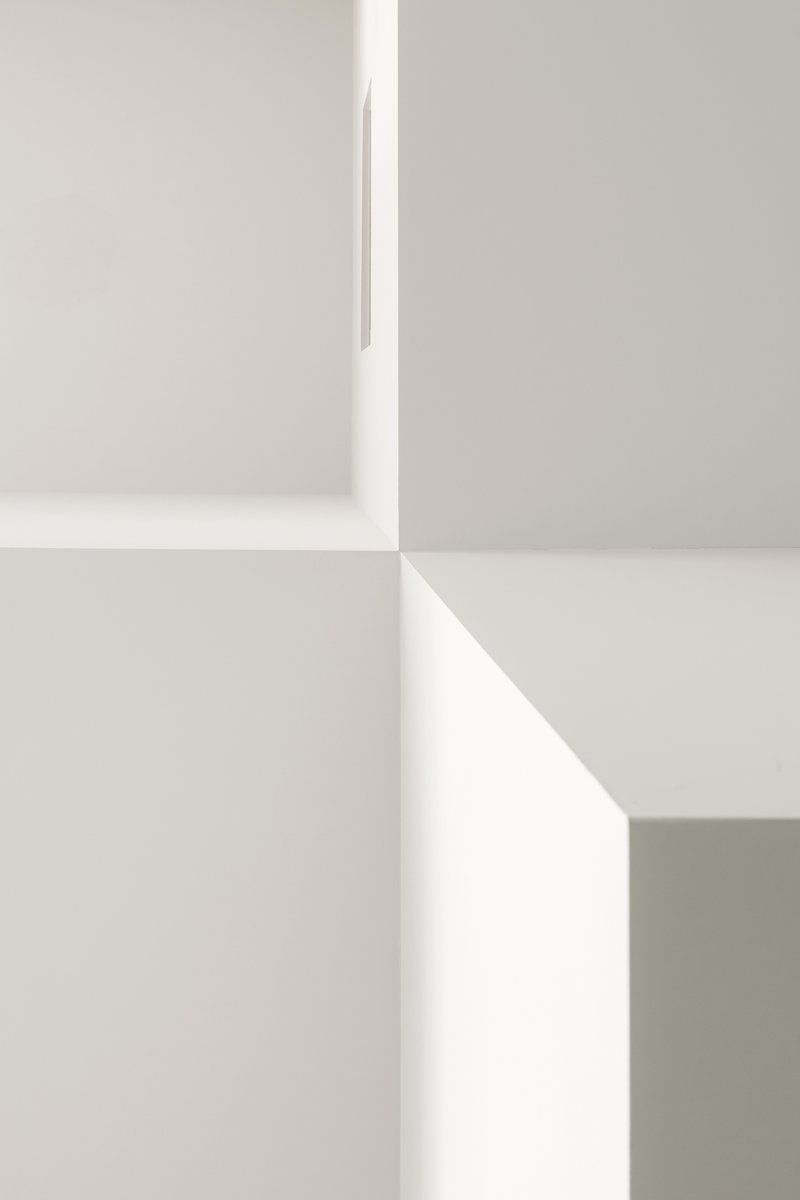
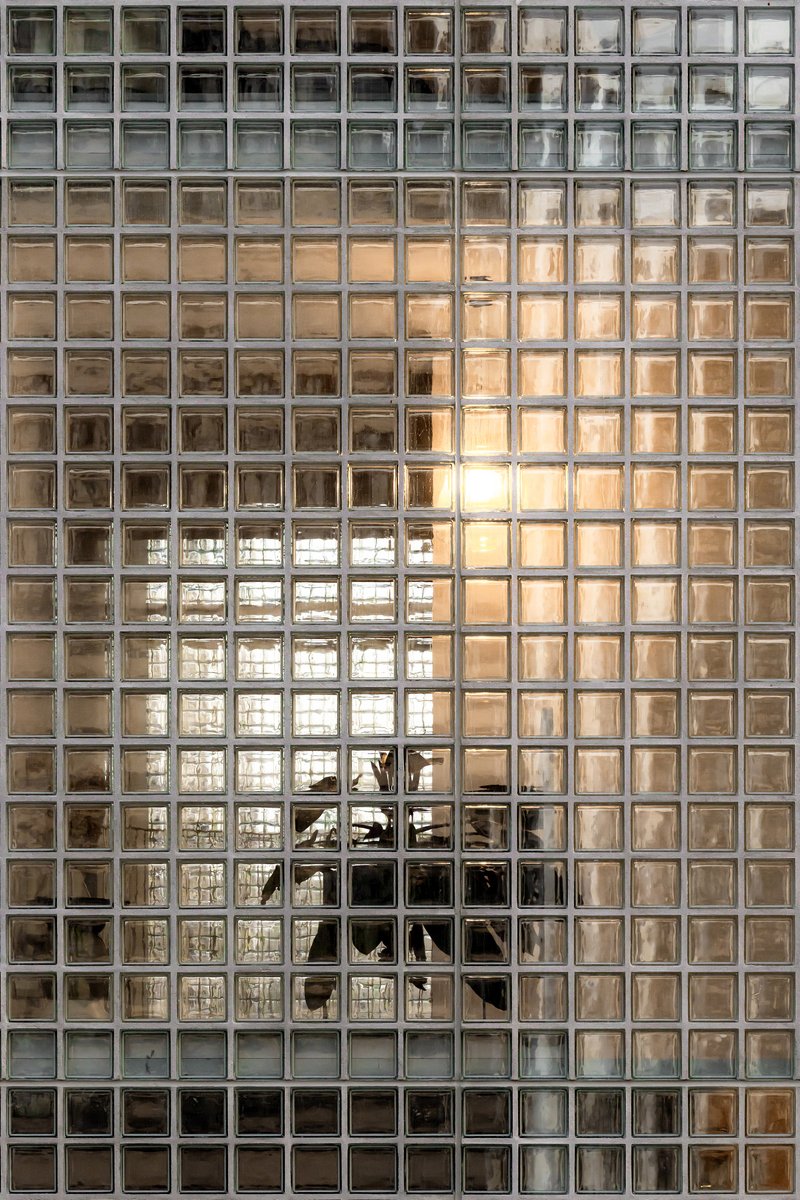
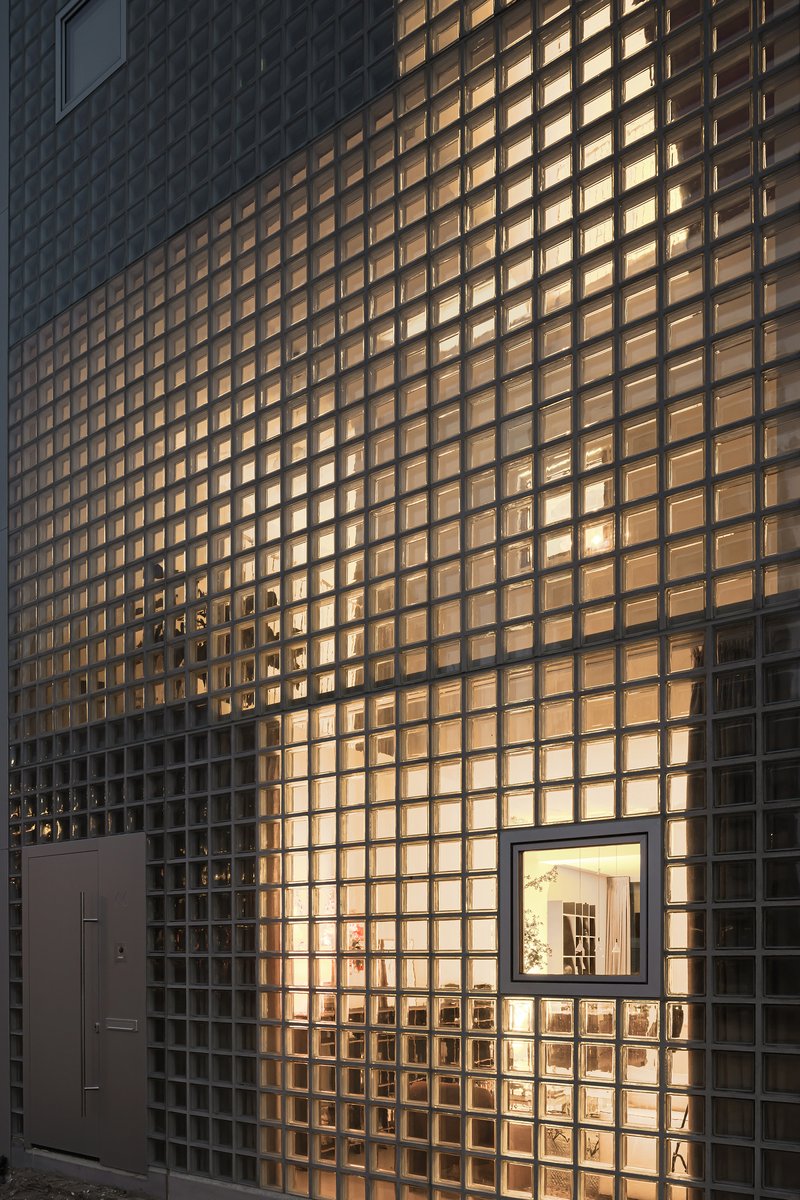
The project's name is earned. Glass bricks, perforated metal screens, and carefully positioned voids conspire to pull daylight deep into every level. Up close, the glass block walls reveal a gridded pattern that refracts and scatters incoming light, so the quality of illumination changes with the time of day and the weather. Where walls meet at sharp angles, light pools and ricochets off white plaster surfaces, producing gradients that give even the simplest corners a quiet intensity.
Materials throughout the house are chosen for their ability to play with translucency and reflection. The minimalist white finishes are not about austerity; they are about turning every surface into a receptor for light. The deep-red tile and steel provide just enough chromatic punctuation to keep the palette from feeling clinical.
The Arched Room at the Top
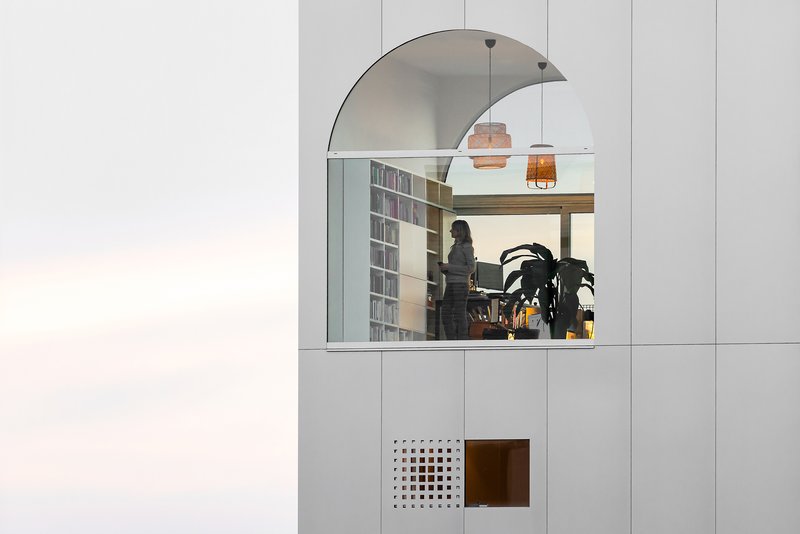
Fourteen metres above the ground, the top floor opens into a family gathering space framed by a ceiling-high arched window. The arch is the building's most distinctive formal gesture, visible from the street as a kind of crowning lantern. Inside, it frames panoramic views across the IJmeer lake and turns a compact room into something that feels almost ecclesiastical in its proportions. A library workspace tucks into one side, lit by pendant lamps and by the soft wash of light through the arched glazing.
An outdoor terrace at this level gives the family a private piece of sky. On an island where density is inevitable, the rooftop retreat is not a luxury; it is how the house delivers the sense of openness that its tight footprint cannot provide at grade.
Modular Construction and Long-Term Thinking
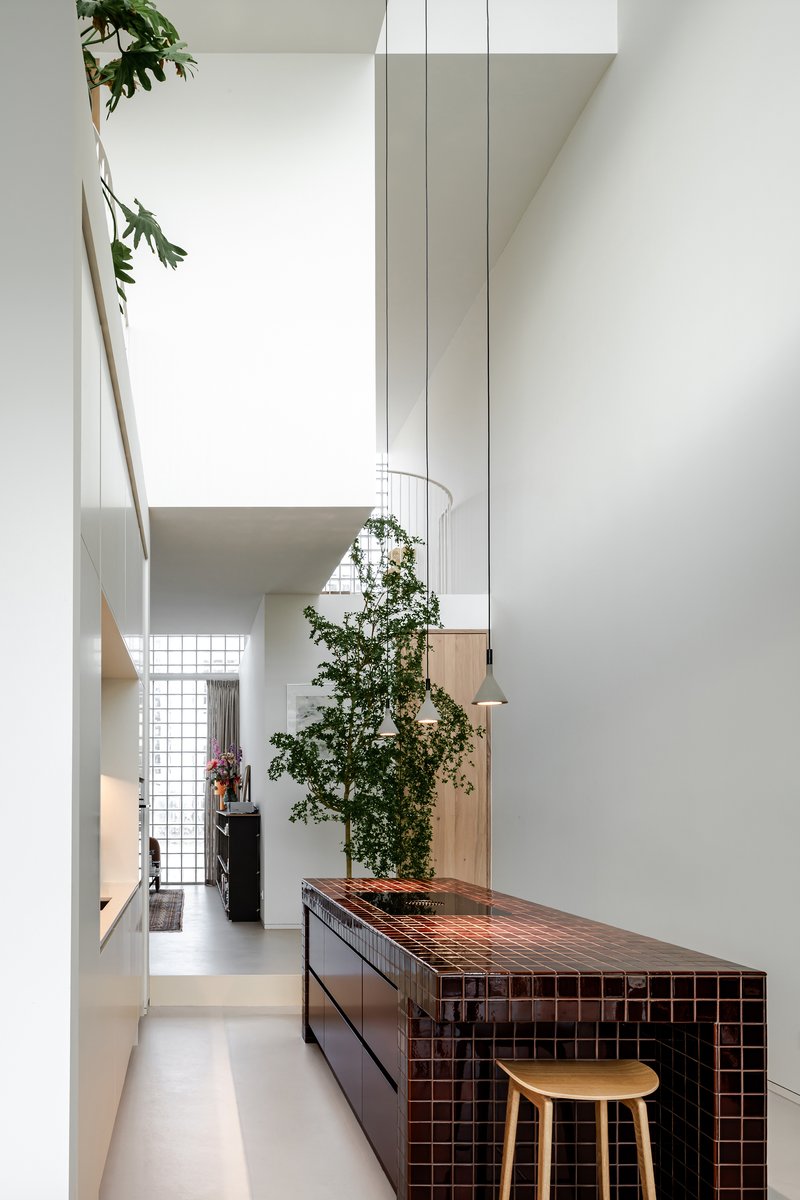
Light House is built on a lightweight steel frame with prefabricated timber components, a system chosen not just for speed but for future flexibility. The modular construction allows individual rooms to be reconfigured or the building to be disassembled as the family's needs evolve. In a self-build district that prides itself on sustainability, this is a meaningful commitment: the house is designed to outlast its first program.
The circular construction logic also means that materials can eventually be recovered and reused. It is a quiet ambition, more evident in the construction drawings than in the finished interiors, but it grounds the project's aesthetic choices in a practical ethics. The white walls and simple geometries are not minimalist styling; they are the natural expression of a prefab timber system designed for longevity and adaptability.
Plans and Drawings
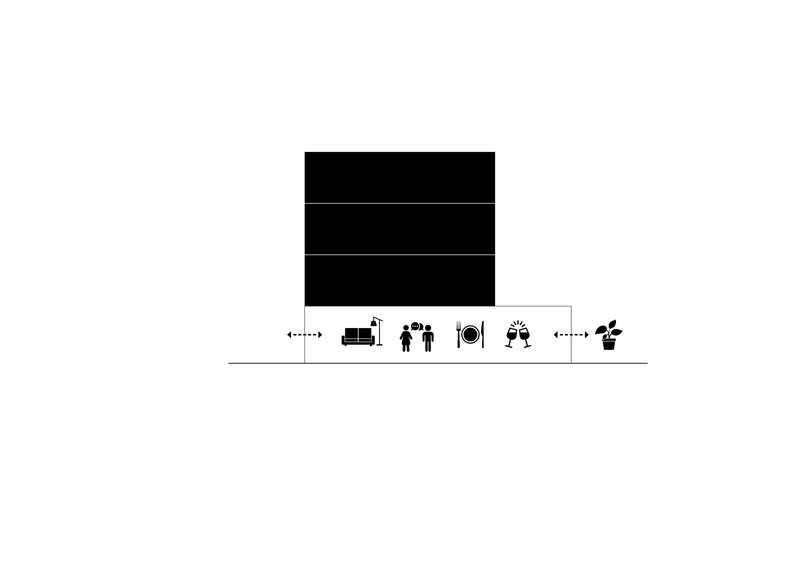
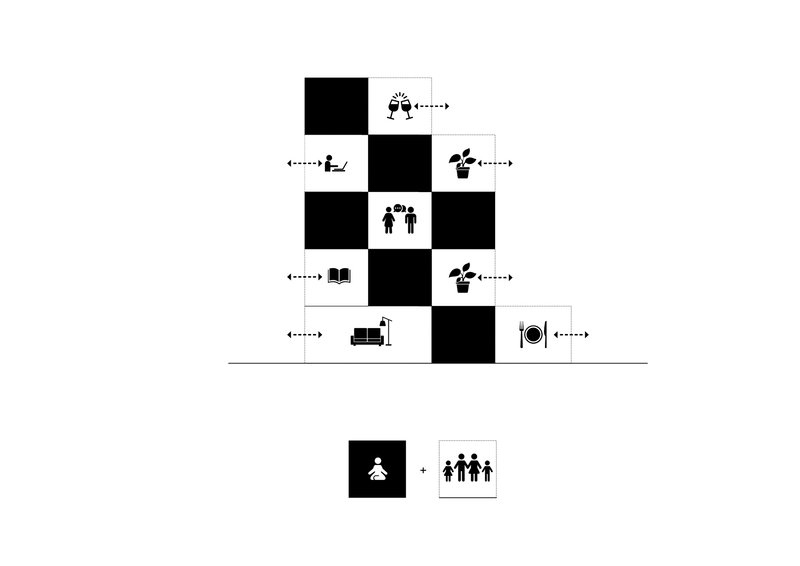
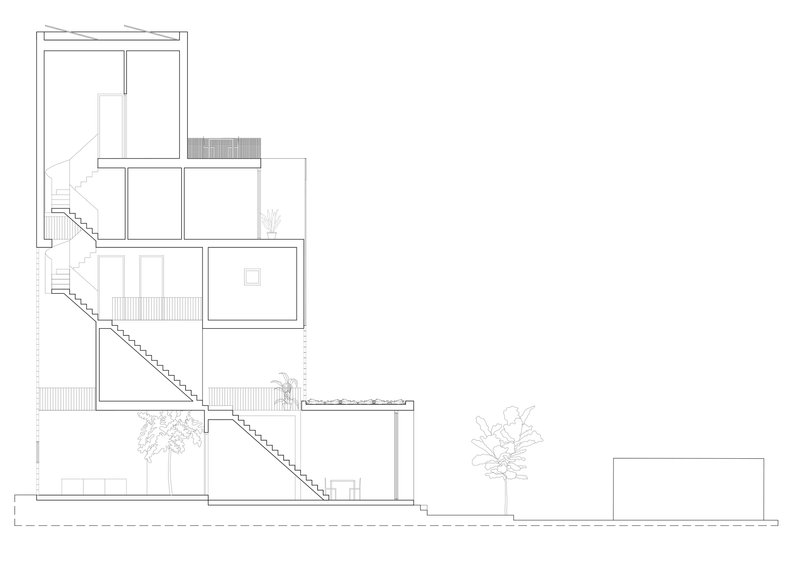
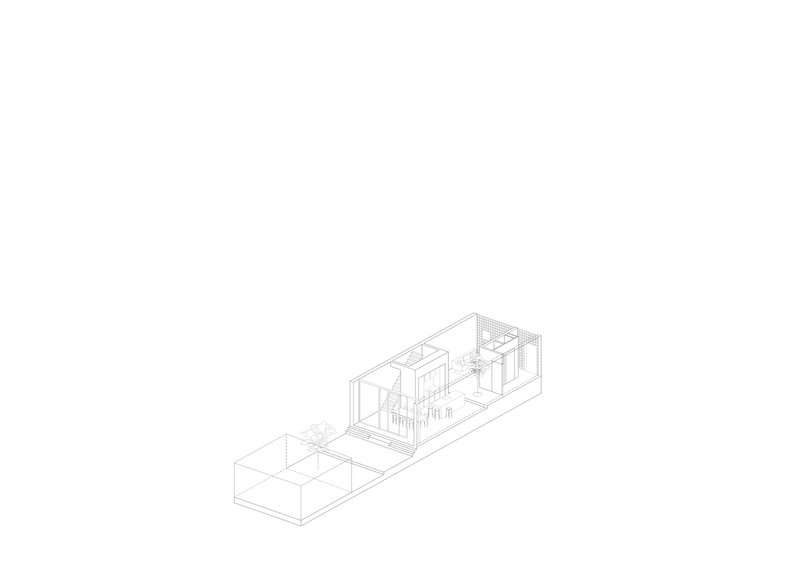
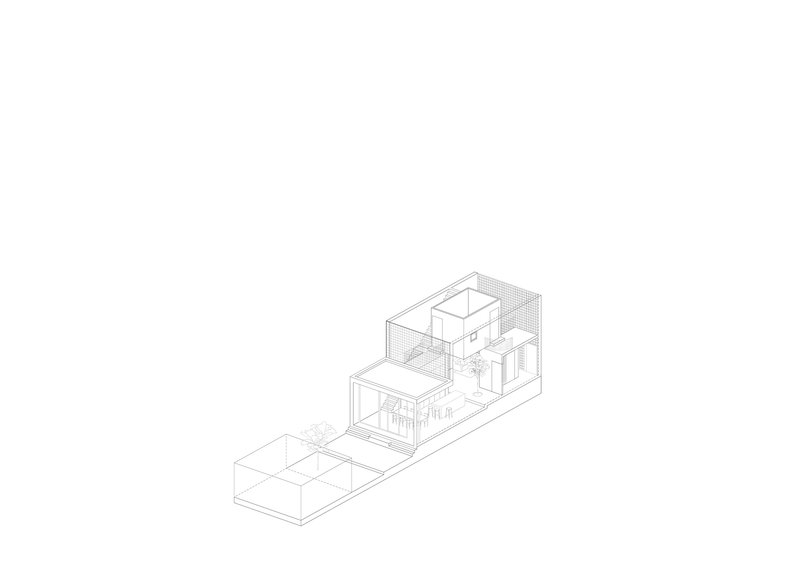
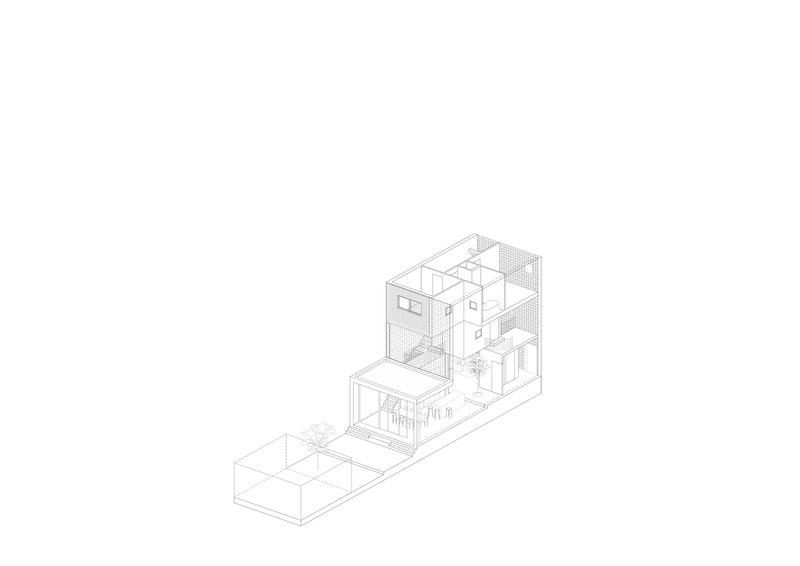
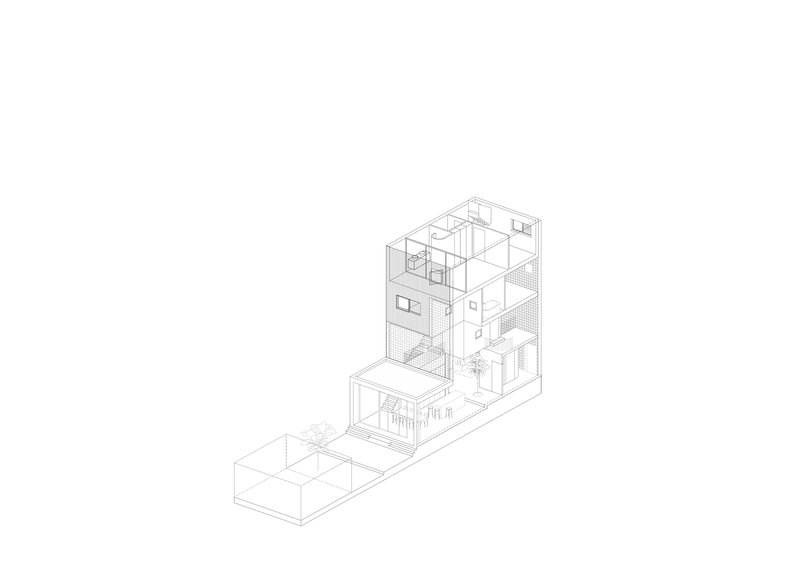
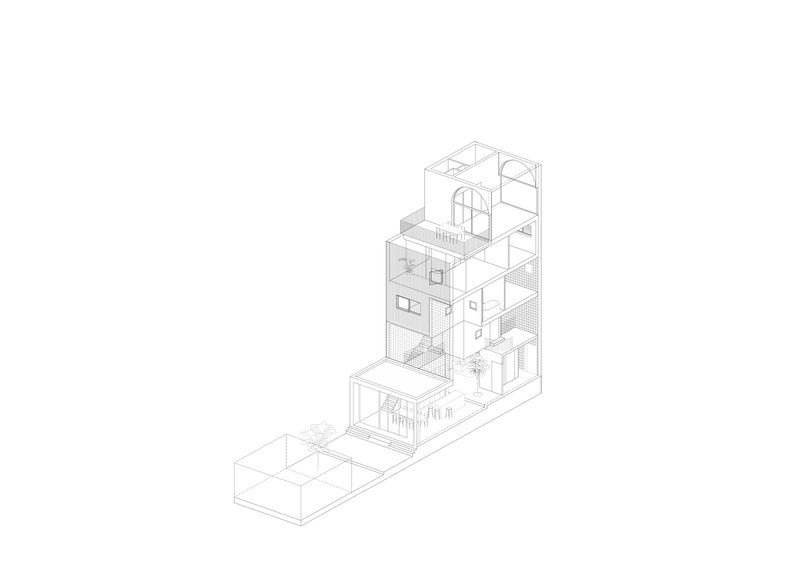
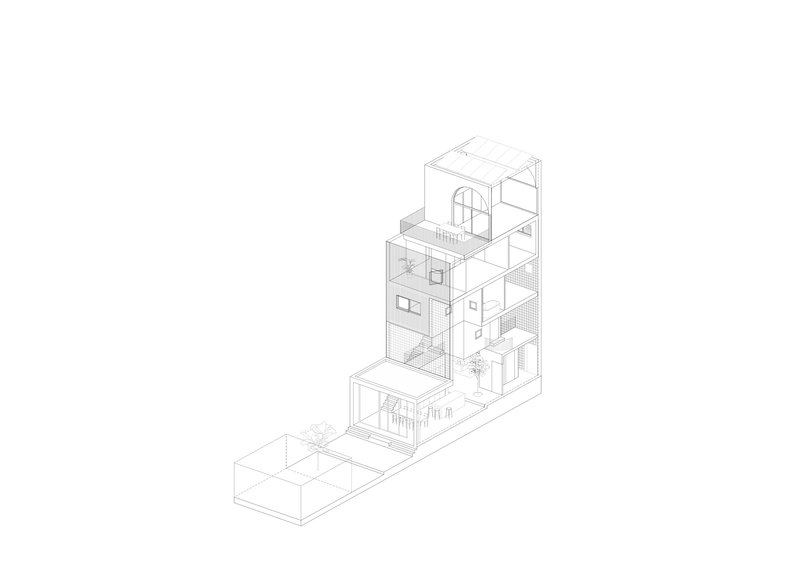
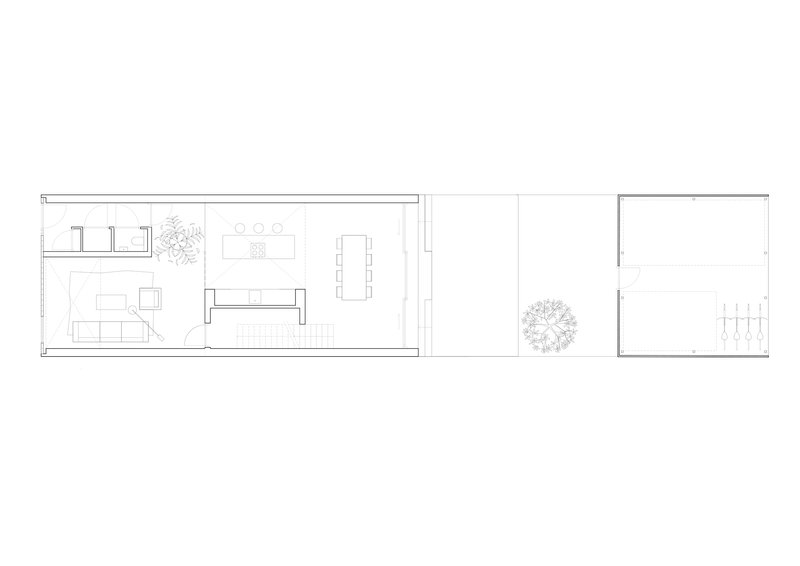
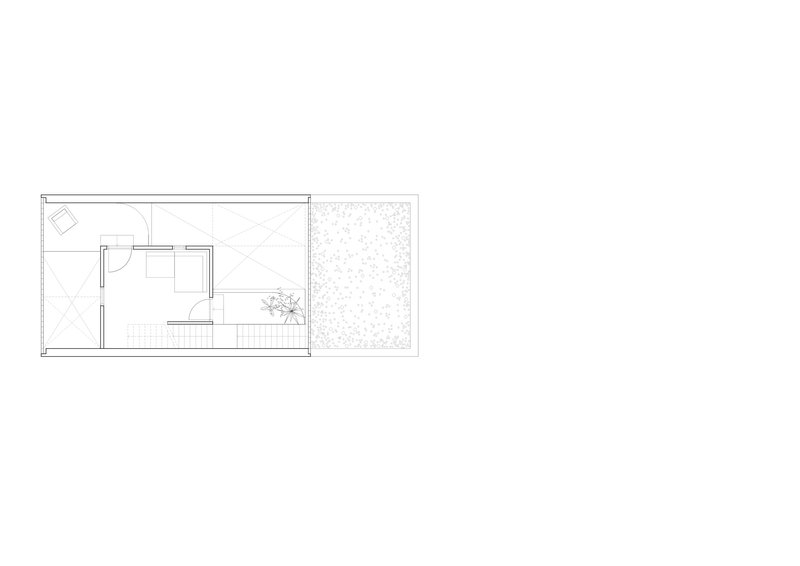
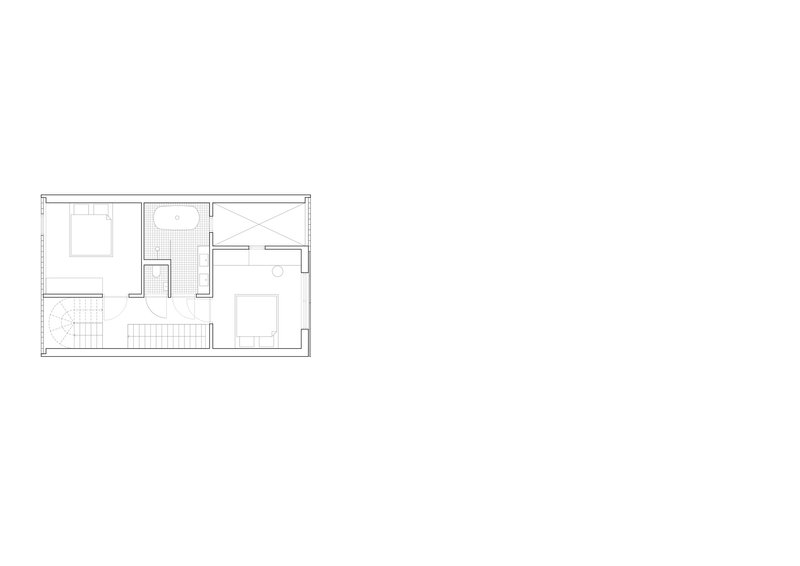
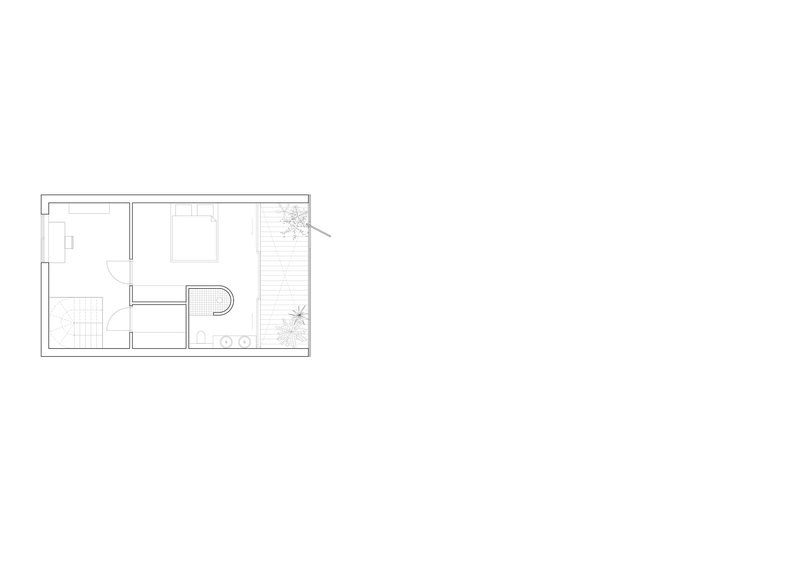
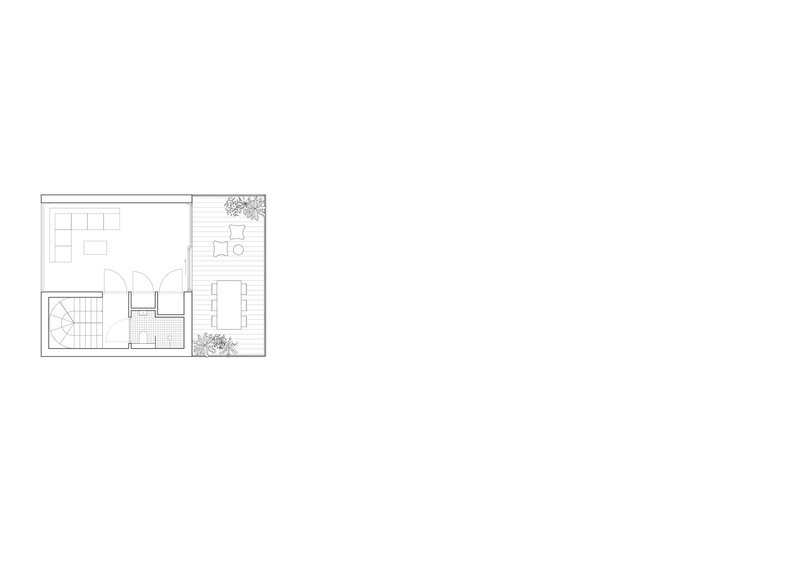
The section drawings make the stacking logic legible in a way the photographs cannot. Staggered volumes step back and forth across the building's narrow footprint, creating double-height voids, mezzanines, and terraces at unpredictable intervals. Programmatic icons scattered across the sections show how each box maps to a different mode of domestic life. The axonometric series is particularly revealing: they peel back the enclosure to expose how the courtyard, the roof terrace, and the internal voids carve space out of what would otherwise be a solid extrusion. Floor plans confirm the discipline of the narrow lot, with rooms organized around a central stair core and outdoor pockets pushed to the edges.
Why This Project Matters
Light House is a convincing argument that the tall, narrow urban house does not have to feel like a compromise. By treating each floor as an autonomous room with its own spatial character, Studioninedots turns the vertical dimension from a constraint into a design opportunity. The family moves through a sequence of distinct atmospheres rather than repeating the same floor plate at every level, and the glass brick voids keep the whole composition knitted together with light and sight lines. It is a house that rewards the climb.
More broadly, the project demonstrates what a self-build district can produce when ambitious clients meet a studio willing to rethink domestic typology from first principles. The modular, demountable construction system means the house is not only tailored to this family's life today but adaptable to whoever lives here next. On Centrumeiland, where every plot is an experiment, Light House sets a high bar: architecture that is simultaneously personal and replicable, specific and systemic.
Light House by Studioninedots, located in Amsterdam, The Netherlands. 257 m², completed in 2025. Photography by Sebastian van Damme.
About the Studio
Share Your Own Work on uni.xyz
If projects like this are the kind of work you want to make, uni.xyz is a place to publish your own, find collaborators, and enter design competitions.



Popular Articles
Popular articles from the community

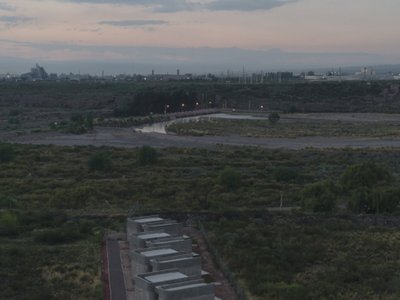
ONA Threads Four Board-Formed Concrete Cabins Along a 260-Meter-Deep Site in Mendoza
At the edge of Argentina's wine country, a set of curved concrete lodges negotiate a razor-thin parcel between city and mountain.

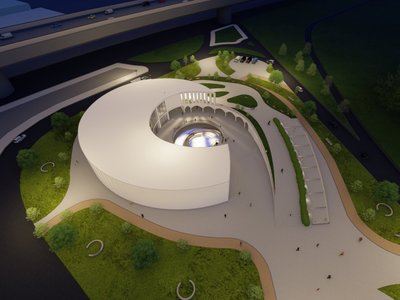
The Heart of Milano: Slow Fashion Architecture for a New Circular Culture
The Heart of Milano turns slow fashion architecture into a civic landmark where learning, making, sharing, and circular culture meets daily.
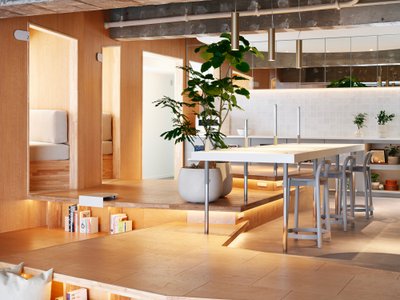
R/URBAN DESIGN OFFICE Carves a Communal Living Room from a Tokyo Corporate Dormitory
In Shinagawa's Oi district, a 35-year-old reinforced concrete tower becomes a 49-unit rental residence with shared spaces that redefine cohabitation.
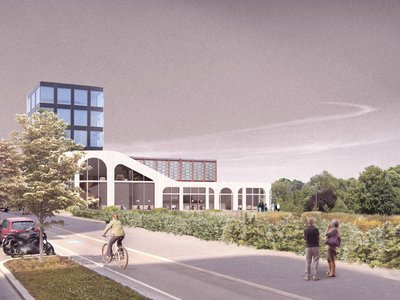
The Flow: Coffee Shop Interior Design Where Time, People, and Process Intertwine
The Flow reimagines Viennese coffee culture through arched forms, warm interiors, music, reading, work, and social gathering.

Similar Reads
You might also enjoy these articles
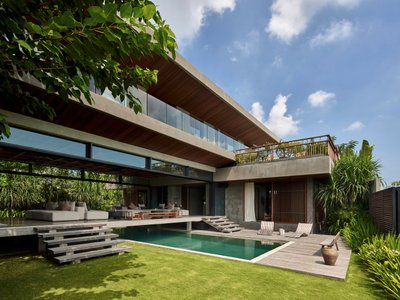
Freebird Residence by Alexis Dornier: A Tropical Modernist Sanctuary in Bali
Floating living pavilion above pool anchors H-shaped tropical villa, blending Japanese minimalism, sustainable strategies, lush landscape, and sculptural interiors.
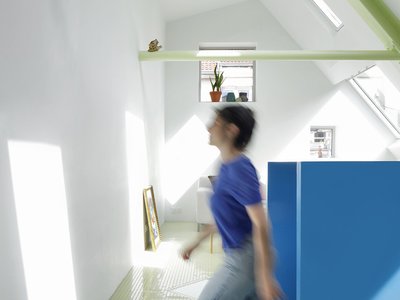
127af Flips a Tiny Bagnolet Rowhouse Upside Down with a Handcrafted Roof Extension
A 55-square-meter terraced house on the edge of Paris gains a luminous upper living floor through lightweight timber and steel.
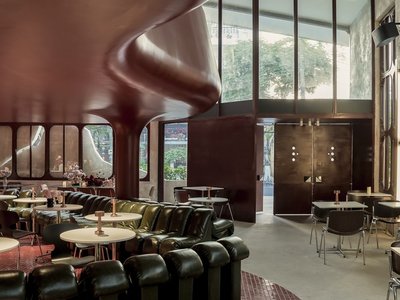
1.61 Design Workshop Wraps a 600-Square-Meter Café in Vietnam in Sculptural Burgundy Drama
Reden Café & Bistro pairs a helical staircase, mosaic floors, and deep red interiors to rethink Vietnamese hospitality space.

The Unbound Brain: A School Shaped by Cognitive Architecture
Cylindrical learning pods radiate like neurons from a central cortex, turning the floor plan into a spatial model of human thought.
Explore Architecture Competitions
Discover active competitions in this discipline




The International Standard for Design Portfolios


The Global Benchmark for Architecture Dissertation Awards


The Global Benchmark for Graduation Excellence

Challenge to design mud housing for contemporary communities
Comments (0)
Please login or sign up to add comments
No comments yet. Be the first to comment!