

Study Pavilion TU Braunschweig – A Flexible, Sustainable Learning Hub for the Future
Innovative steel-wood hybrid pavilion fostering collaboration, sustainability, and flexible learning at TU Braunschweig with open, light-filled, adaptable spaces.


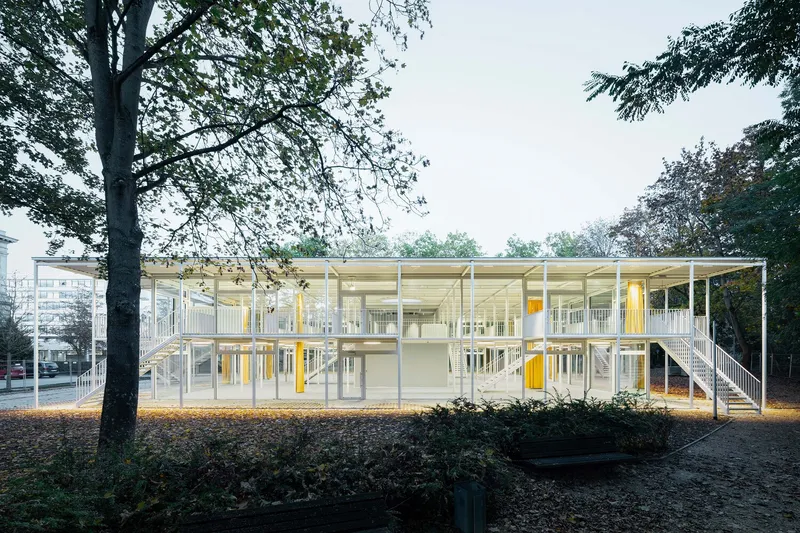
The Study Pavilion at the Technical University of Braunschweig, designed by Berlin-based architects Gustav Düsing and Max Hacke, is a forward-thinking addition to the university’s central campus. Completed in 2022, this 1,000 m² two-story pavilion redefines the role of physical learning spaces in an era shaped by digital education, artificial intelligence, and shifting academic dynamics.
Situated in a prime location, the Study Pavilion acts as a new campus landmark, seamlessly connecting with existing pedestrian pathways while offering an accessible, open, and interdisciplinary environment for students and faculty. Unlike traditional lecture halls or libraries that prioritize one-way knowledge transfer, the pavilion fosters interaction, collaboration, and spontaneous exchange of ideas.
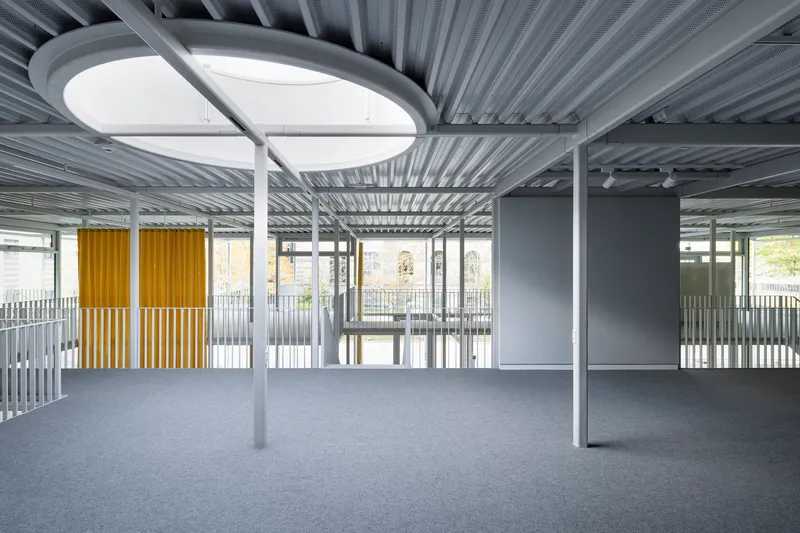

A New Campus Typology for a Post-Pandemic World
The project responds directly to the challenges of the post-pandemic academic landscape, where online lectures and remote collaboration have reshaped how students engage with education. The architects envisioned a contemporary, flexible learning hub that accommodates diverse activities — from group discussions and seminars to individual study, presentations, and social interactions.
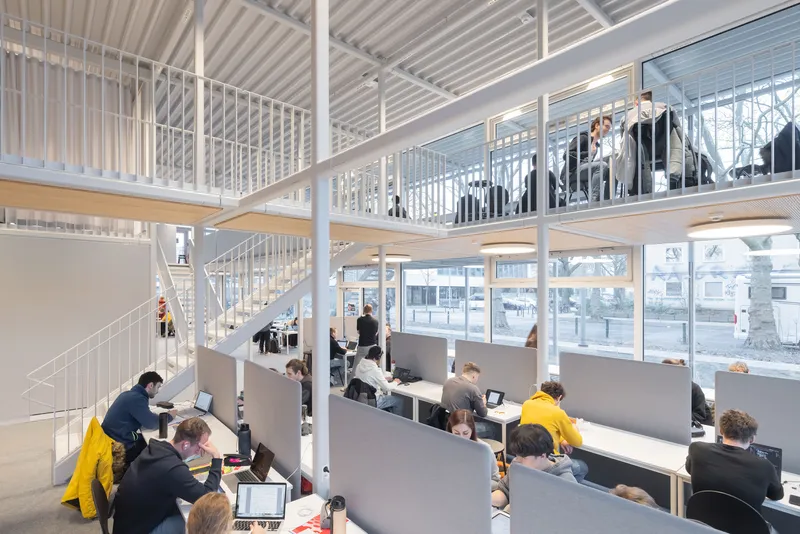
The design follows a flat spatial hierarchy, removing the physical and symbolic divisions between students and faculty. This openness encourages interdisciplinary dialogue and allows for the organic mixing of different disciplines within a single shared space.
Open, Uniform, and Adaptable Interior Design
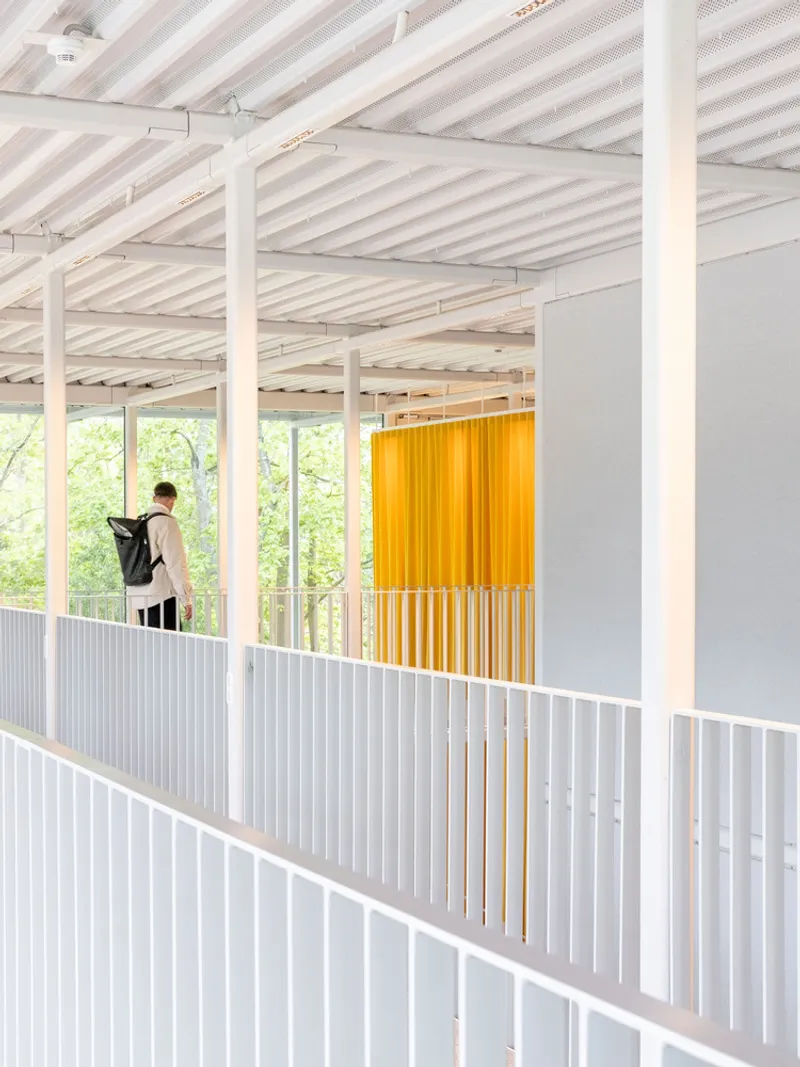
The pavilion eliminates traditional corridors and isolated classrooms. Instead, it features a continuous interior with a range of zones — from spacious double-height areas to intimate reading corners. Each zone is accessible via its own staircase and entrance, allowing users to navigate freely and create their own preferred work environment.
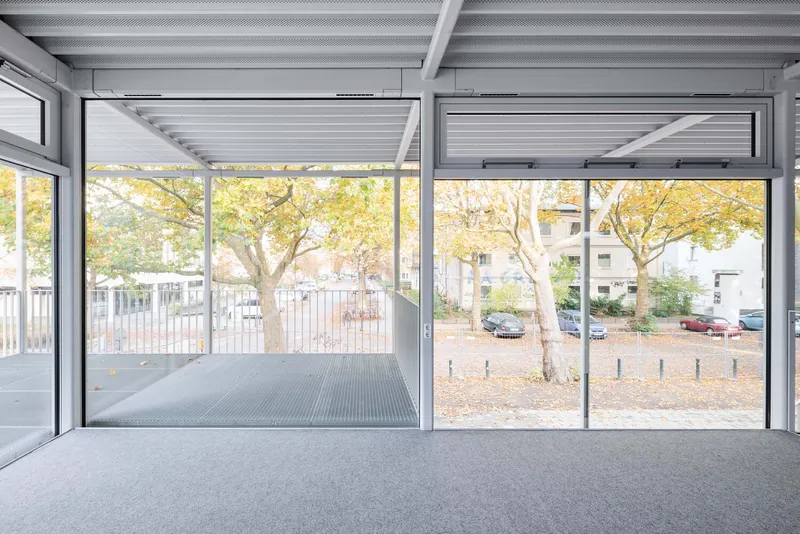
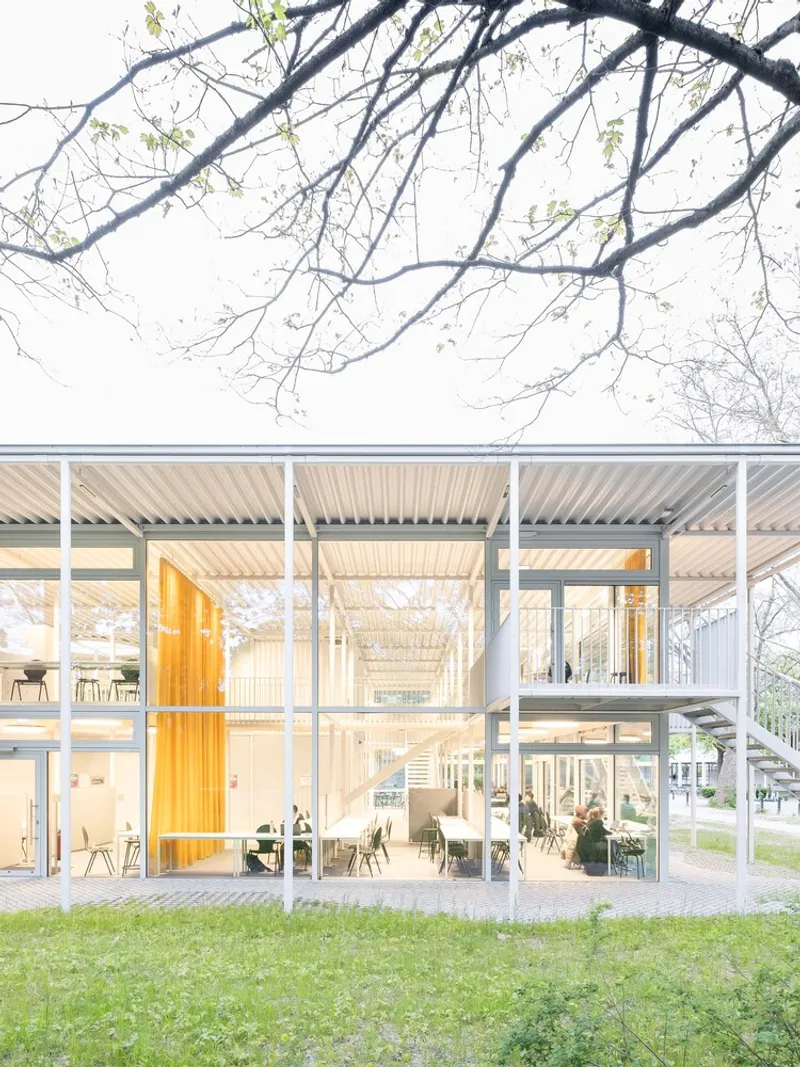
The fully glazed façade maximizes daylight and establishes a strong visual connection with the surrounding campus landscape. Acoustic curtains, carpeted floors, and soft ceiling materials create a comfortable sound environment, making it easy to hold conversations without disturbing others.
A Superstructure for Continuous Reconfiguration
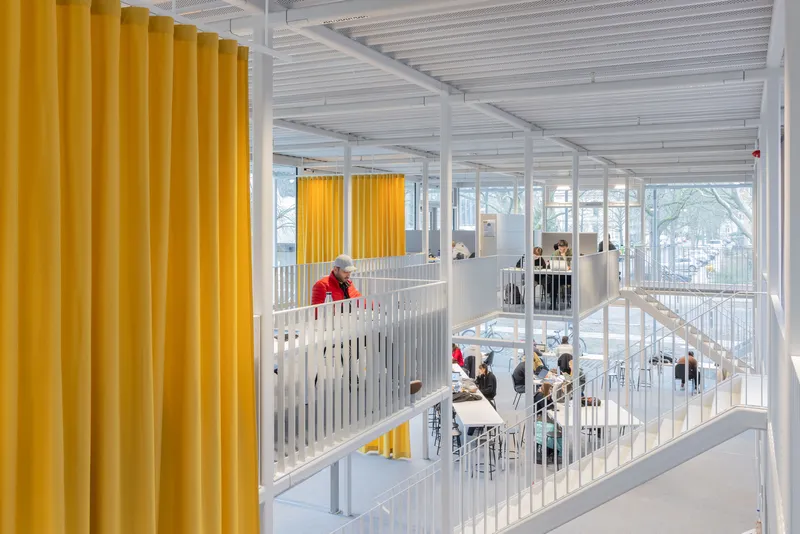
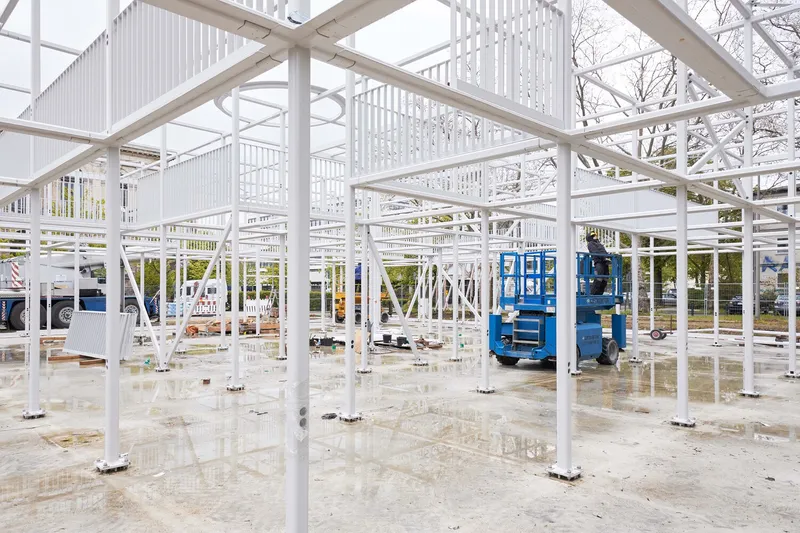
A central design principle is the superstructure concept, which allows the interior to be easily reconfigured as needs evolve. This ensures the building remains a long-term, relevant asset to the campus.
Constructed as a steel-wood hybrid, the pavilion follows the “design for disassembly” approach, meaning it can be dismantled, relocated, or rebuilt in the future. The modular primary support structure is arranged on a 3x3-meter grid, enabling the reuse of beams, columns, façade panels, stairs, and platforms — a perfect example of circular construction in academic architecture.

Sustainable, Passive Climate Strategies
The pavilion incorporates multiple energy-efficient systems to minimize environmental impact:
- District heating sourced from 80% renewable energy.
- Ground probes for summer cooling.
- 3-meter-deep arcades and balconies for natural shading in summer and passive solar gain in winter.
- Natural ventilation through tilt windows and a central skylight dome.
All photographs are works of Leonhard Clemens, Lemmart, Iwan Baan


Popular Articles
Popular articles from the community


Cloaked Colonization: A Mobile Underwater Habitat That Moves Like a Fish
Micah Abaya's shortlisted EHC Pacific entry reimagines ocean settlement as a dispersed network of self-sustaining architectural organisms.
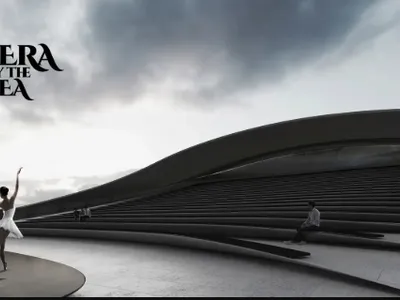
Opera by the Sea Estonia: Three Shells Dissolving Architecture into Tallinn's Coastline
A winning opera house proposal replaces monumental form with interconnected shells that blur the boundary between building, park and Baltic Sea.

Singing Woman: Contemporary Architecture Inspired by Estonia’s Voice and the Sea
Singing Woman turns Estonia’s song culture into flowing opera house architecture, blending public life, landscape, sea, and national memory.

The Amber Palace Opera: A Geological Fiction Surfaces on Tallinn's Baltic Waterfront
Pierre Brillard reimagines a Baltic legend as a public landscape, opera house, and waterfront promenade rooted in Tallinn's coastal identity.

Similar Reads
You might also enjoy these articles


Hodi-Mandai Geram
Project Function: Preservation and revitalization of the Intangible heritage and socio-spatial identity of the Hodi by Housing, Cultural Memory Center, Sacred Grove, landscape, local tourism economy


Olio Towers: A Mid-Rise for Performers That Fuses Housing, Rehearsal, and Stage
Located blocks from Houston's Theater District, this modular tower stacks living units around a central performance atrium.

Oasis: Modular Green Housing Carved into Dhaka's Urban Fabric
A shortlisted Plugin Housing entry reclaims unauthorized settlements in Dhaka with stepped concrete volumes, green roofs, and ventilation-driven design.

Black Hole: A Floating Megastructure for the Post-Physical Era
Emiliano Mazzarotto envisions a spherical, self-scaling arena where e-sports, digital hotels, and holographic stadiums replace traditional public space.

Explore New Bauhaus Competitions
Discover active competitions in this discipline

Challenge to reimagine the Iron Throne

Photograph architecture without architects

Illustrate the lost glory of Angkor Wat - Render Challenge

Design challenge to reuse E-waste
Comments (0)
Please login or sign up to add comments
No comments yet. Be the first to comment!