
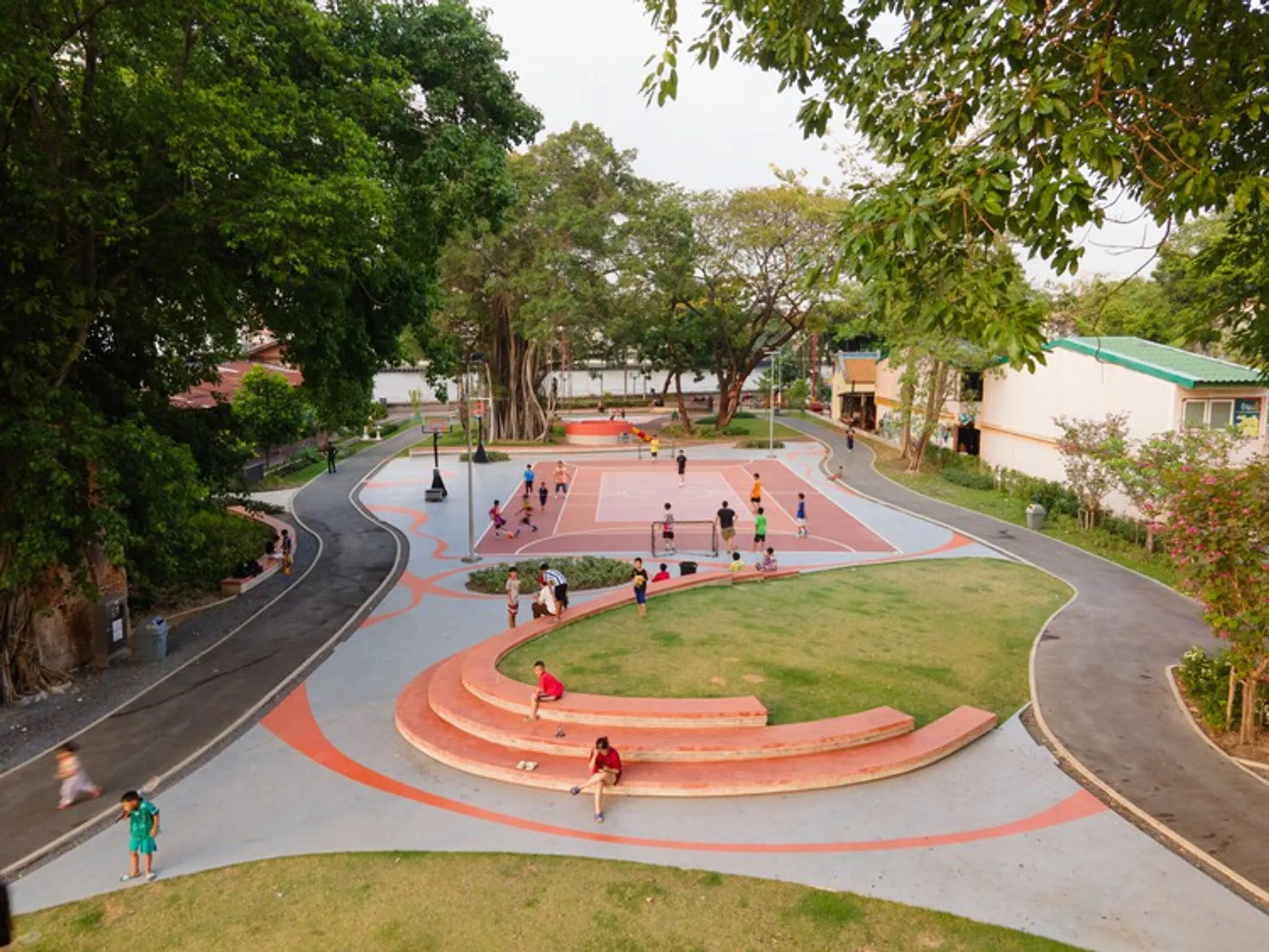
Suan San Pocket Park by Shma Company Limited — Transforming Wasteland into a Green Urban Haven
Shma Company Limited transforms an abandoned Bangkok warehouse into Suan San Pocket Park—an inclusive, sustainable, and community-driven urban green space.


A Green Vision for Bangkok’s Future
Bangkok has long struggled with a critical shortage of public green spaces. With only 7.49 square meters of green space per person, the city falls short of the World Health Organization’s recommendation of 9 square meters. To address this, the Bangkok Metropolitan Administration (BMA) launched the ambitious goal of increasing this to 10 square meters per person by 2030.
One of the most innovative steps toward achieving this target is the “15-Minute Park” initiative—a network of small, accessible green pockets designed to be within a 15-minute walk of every resident. Among these, Suan San Pocket Park stands out as a shining example of urban renewal through community-driven landscape design.
From Abandoned Warehouse to Community Oasis
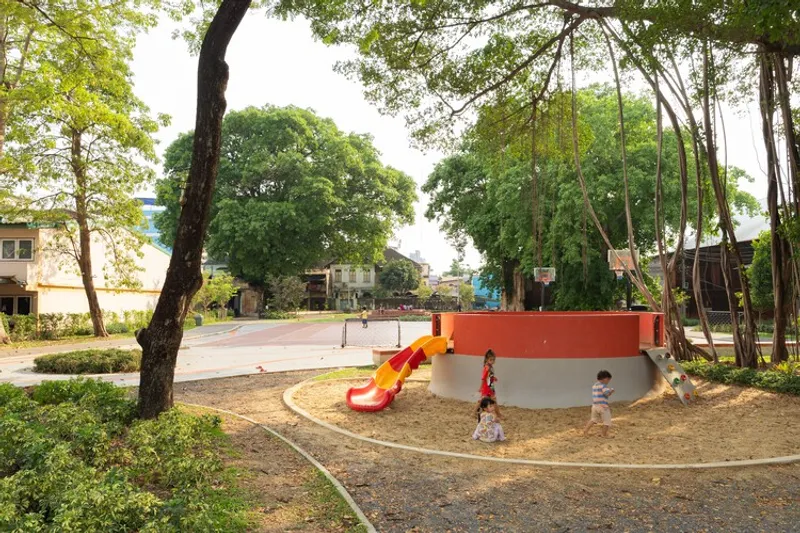
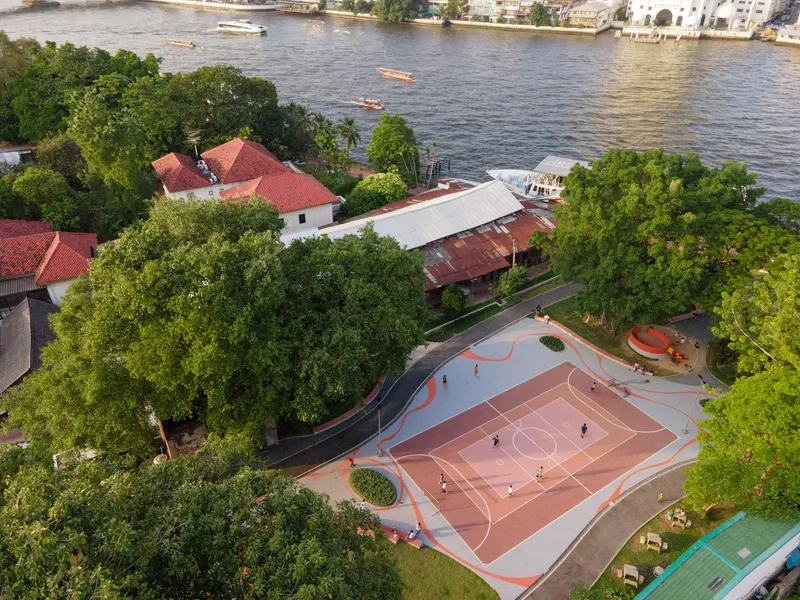
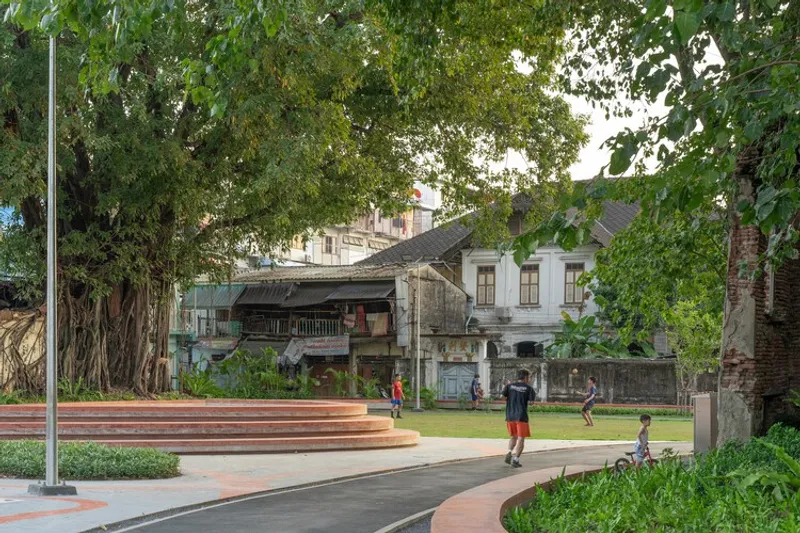
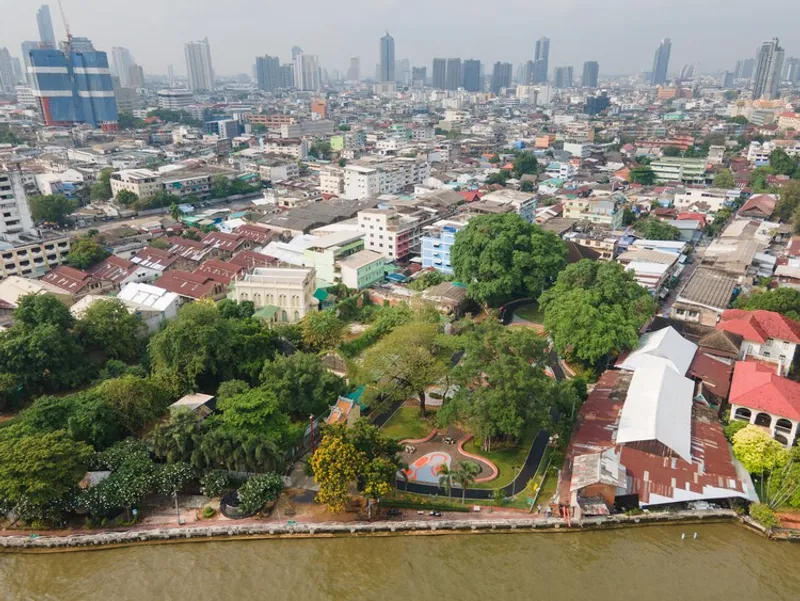
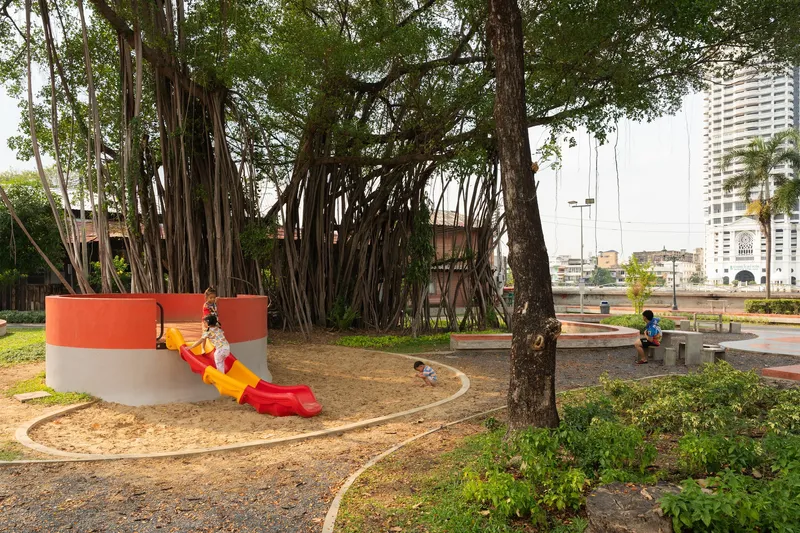
Located in the historic Klong San–Tha Din Daeng neighborhood, Suan San Pocket Park occupies a 3,894-square-meter site once used as a rice and corn warehouse. After years of neglect, the area became a garbage dump—unsafe, unsightly, and prone to fires due to its narrow access roads.
Recognizing the site’s potential, a private entity donated the land for public use for 10 years, allowing the BMA and Shma Company Limited to transform it into a thriving pocket park. The project symbolizes how collaborative urban design can revive decaying land into sustainable, inclusive, and community-centered green infrastructure.
“Suan San” — The Concept of Connection
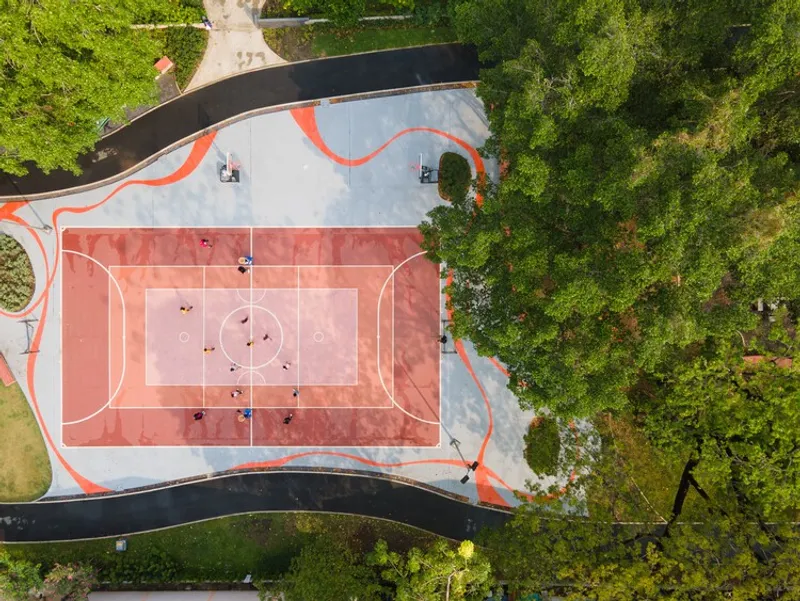
The word “San” (สาน) in Thai means to weave or to connect, and it perfectly encapsulates the park’s philosophy. The design embodies three core principles—Weaving Relationships, Weaving Past and Present, and Weaving Lives.
1. Weaving Relationships
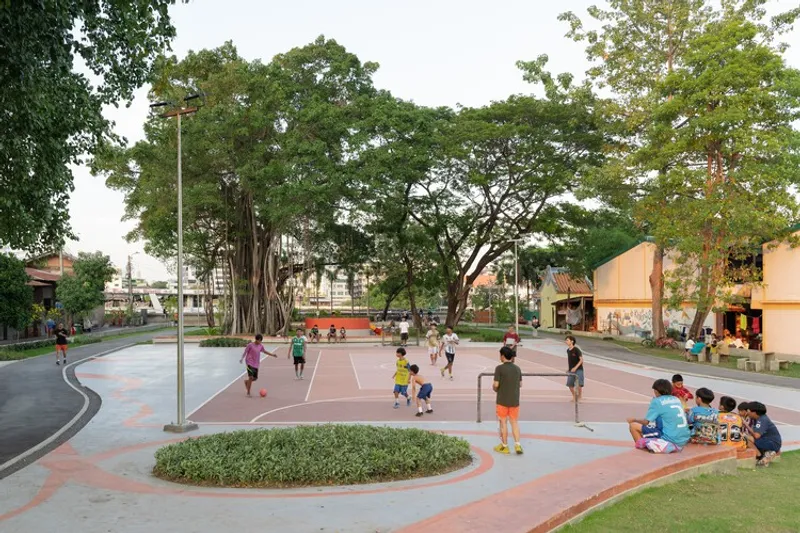
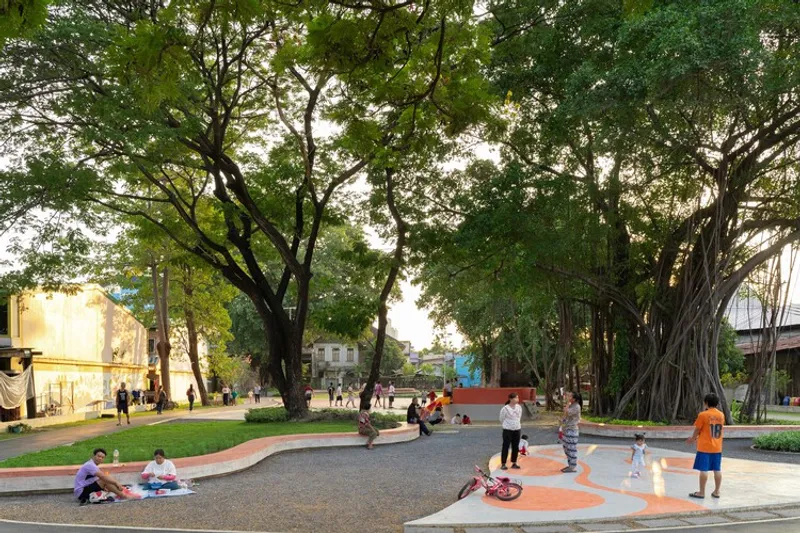
Suan San reconnects the neighborhood through multiple entry points and open visibility, ensuring safety and accessibility. The old boundary walls have been redesigned as seating elements—inviting and multifunctional. The park encourages both planned and spontaneous interactions, fostering a strong sense of community ownership.
2. Weaving Past and Present
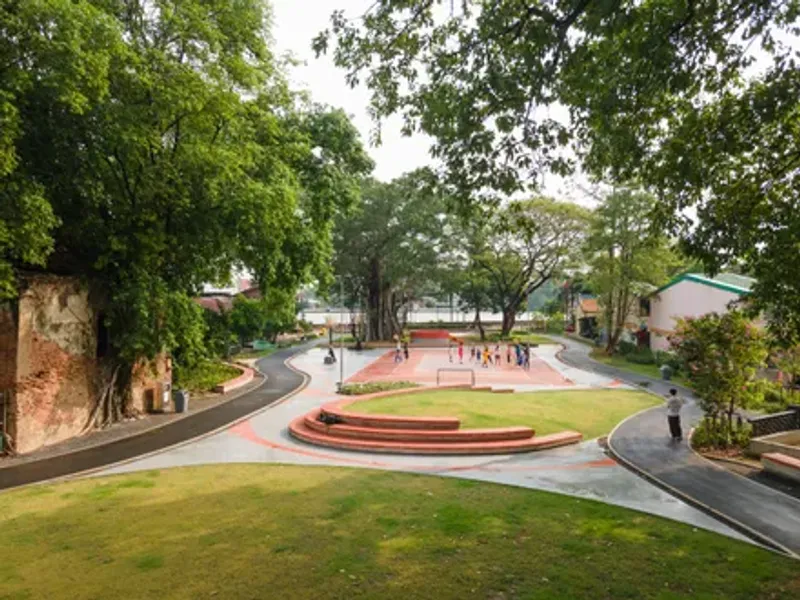
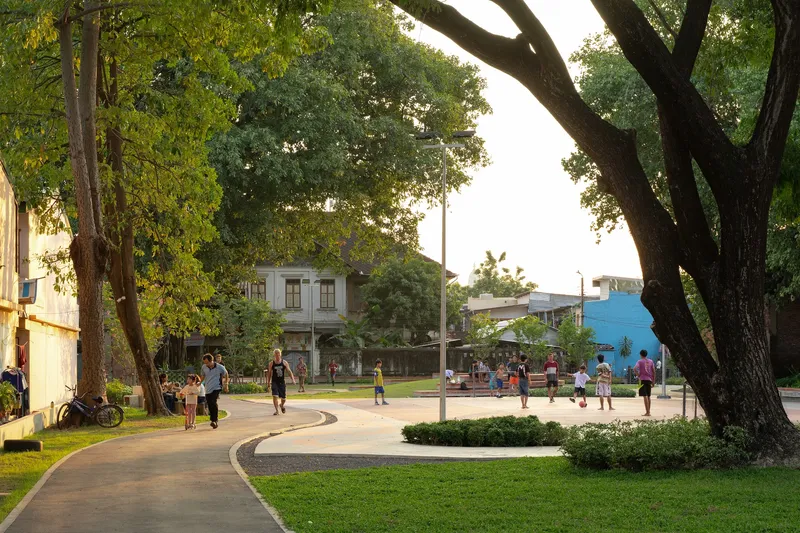
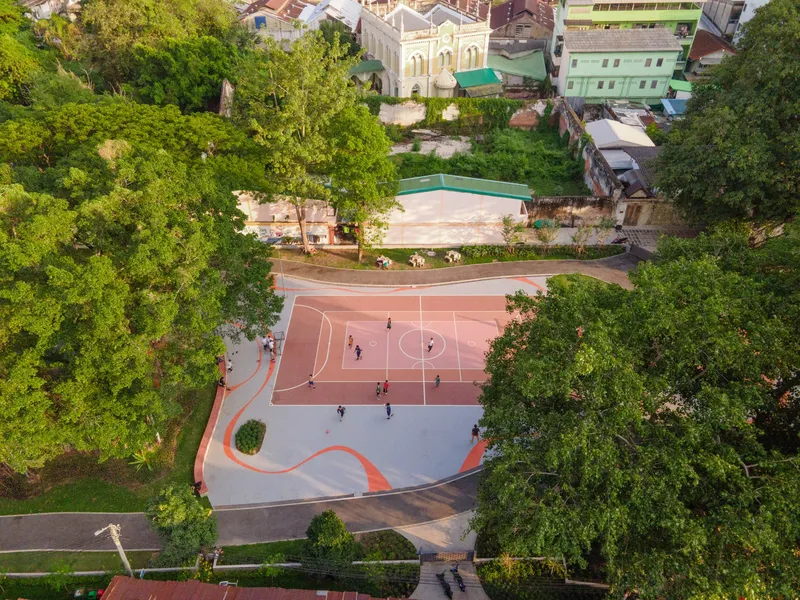
Preserving the neighborhood’s 200-year-old heritage was a key goal. Existing trees were carefully maintained, the heritage building retained, and the site’s industrial legacy subtly integrated into the landscape design. Suan San serves not just as a park but as a living history classroom, celebrating Klong San’s rich cultural identity.
3. Weaving Lives
The park is divided into three functional zones to enhance physical, mental, and social well-being:
- Active Zone: Open lawns and fitness areas for movement and play.
- Eco-Learning Zone: Spaces for environmental education and mindfulness.
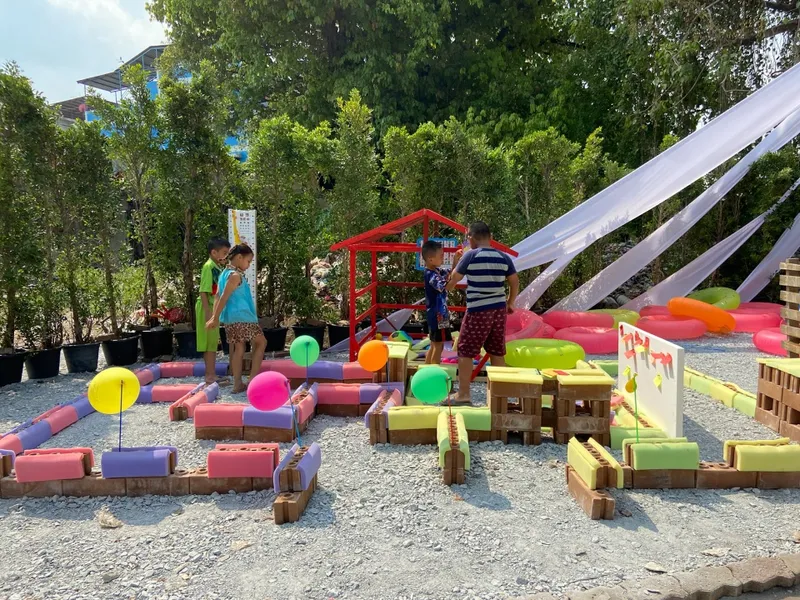
- Co-Creation Zone: Flexible pavilions for art, community workshops, and cultural events.
These areas evolve through continuous feedback from local residents, ensuring that the community remains the co-designer of the space.
Sustainability and Safety by Design
Suan San’s success lies in its participatory process. From early workshops to public hearings, residents directly contributed to the design, leading to features that reflect their daily needs—ample lighting, open sightlines, and low-maintenance greenery.
The park also acts as a model for adaptive management, ensuring long-term care through community involvement rather than relying solely on municipal maintenance.

A Green Connector in the City’s Urban Fabric
Beyond being a neighborhood park, Suan San plays a pivotal role as a Park Connector, linking Bangkok’s growing green network. It connects to major nearby destinations like the Chao Phraya Sky Park, Princess Mother Memorial Park, and Kuan Yim Shrine. Smaller green nodes such as schoolyards, temple gardens, and tree-lined streets further extend its reach, creating a cohesive urban ecosystem.
From a neglected warehouse site to a vibrant urban sanctuary, Suan San Pocket Park redefines what small-scale urban green spaces can achieve. It serves as a prototype for Thailand’s future community parks, aligning ecology, culture, and inclusivity.

All the photographs are works of Nawin Deangnul



Popular Articles
Popular articles from the community


Conexión: Biophilic Design Reimagines High-Rise Living in Hong Kong
Conexión reimagines high-rise living in Hong Kong through biophilic design, green facades, shared spaces, daylight, water and nature within.

Co-Life: Senior Housing Design That Reconnects Older Adults With the City
Co-Life reimagines senior housing design through healing gardens, shared streets, workshops, and a sustainable community across generations.

EW PARK: Sustainable Architecture Reimagines the Future of Urban Parking
EW PARK reimagines city parking as a modular wooden tower combining automation, solar energy, electric mobility, and adaptable urban design.

The Earth Pod: 3D Printed Homes for Resilient Refugee Communities
The Earth Pod reimagines refugee housing through 3D printed homes made from clay, combining resilience, self-sufficiency, and rapid shelter.

Similar Reads
You might also enjoy these articles


Hodi-Mandai Geram
Project Function: Preservation and revitalization of the Intangible heritage and socio-spatial identity of the Hodi by Housing, Cultural Memory Center, Sacred Grove, landscape, local tourism economy


Olio Towers: A Mid-Rise for Performers That Fuses Housing, Rehearsal, and Stage
Located blocks from Houston's Theater District, this modular tower stacks living units around a central performance atrium.

Oasis: Modular Green Housing Carved into Dhaka's Urban Fabric
A shortlisted Plugin Housing entry reclaims unauthorized settlements in Dhaka with stepped concrete volumes, green roofs, and ventilation-driven design.

Black Hole: A Floating Megastructure for the Post-Physical Era
Emiliano Mazzarotto envisions a spherical, self-scaling arena where e-sports, digital hotels, and holographic stadiums replace traditional public space.
Explore Public Park Competitions
Discover active competitions in this discipline


Challenge to design locus for the upliftment of human rights


Challenge to reimagine the Iron Throne


Photograph architecture without architects


Illustrate the lost glory of Angkor Wat - Render Challenge
Comments (0)
Please login or sign up to add comments
No comments yet. Be the first to comment!